
Imagine, if you will, a roomful of marketing executives, PR gurus and recruitment consultants all clustered round a flip chart. Too terrible to contemplate already? Bear with me, as this only imaginary. Their task? To come up with crime fiction’s next female superstar private investigator. A Jack Reacher in a skirt, a John Rebus in a Kylie Jenner-endorsed little black dress, maybe? Never in all their hours of creative brainstorming would they have come up with Annie Hauxwell’s Catherine Berlin. She is as cranky as hell, rather bedraggled, and just a few months short of her concessionary bus pass. Oh, yes, I almost forgot. She is an addict – her drug of choice, or perhaps necessity, is heroin, but she will make serious inroads into a bottle of Talisker if the China White is not available. Or – and this is in extremis – a few codeine will have to do.
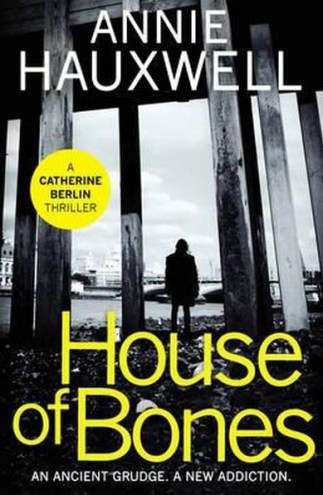 It’s always fun to come late to an established series that has many established followers, if only to see what all the fuss is about. I had covered Catherine Berlin in writing brief news grabs, but House of Bones was to be my first proper read. There is a wonderfully funereal atmosphere throughout the book. Sometimes this is literal, as at the beginning:
“Catherine Berlin followed a hearse through the grand arch of the City of London Cemetery and Crematorium. She wondered how long it would be before she passed under it feet first.”
One of the corpses in the narrative – and there are several – is found in the crypt of St Bride’s, Fleet Street, and later in the novel Berlin gatecrashes a society funeral and allows her few remaining heart strings to be tugged when she hears the evocative words of her mother’s favourite hymn:
“Where is death’s sting? Where, grave, thy victory?
I triumph still, if thou abide with me.”
The dark, end-of-days mood of the book is underlined by the dismal weather. I was reminded of the old soldiers’ song from The Great War, sung to the tune of ‘Holy, Holy, Holy, Lord God Almighty.’ They sang:
“Raining, raining, raining: always bloody well raining:
Raining all the morning, and raining all the night.”
Hauxwell gives us London rain, cold, dispiriting, grey and naggingly pervasive. She also gives us Hong Kong rain, which is hot, loud and has the intensity of special effects in a disaster movie. Berlin’s London milieu is bleak. She treads the streets of Limehouse, Wapping, and Leyton. These eastern parts have modern millionaire housing developments and expensively imagined conversions of a Victorian past, but that past is never far away, like a cold sore disguised with cosmetics. The river is also a baleful presence in what becomes a nightmarish environment.
Berlin is hired by Burghley LLP:
“ a boutique outfit established by spooks and former Whitehall types. They offered discreet investigative and intelligence services. Deep pockets essential.”
Her task? To investigate the strange case of a teenage boy who has been arrested for assault. He is Chinese, and attends an exclusive public school. All fees are provided by an apparently charitable organisation which takes Chinese orphans and gives them a sociological blood transfusion, the plasma being supplied by the British aristocracy. The problem is, though, Philip Chen’s alleged victim has disappeared, and only exists on grainy footage from a CCTV camera. Who is he? Where is he? What provoked the violent assault?
Berlin rapidly becomes aware that Philip’s most visible patron is a prodigiously wealthy and well connected member of the House of Lords, Jack Haileybury. He sits, spiderlike, in a web of his own creation, which is actually a converted warehouse in Wapping. He has expensive tastes, both in narcotics, oak-aged single malt whisky and, more troubling, teenage boys.

Sometimes aided and sometimes hindered by a manic and rather disturbed policeman, DC Terence Bryant, Berlin hacks her way through the long grass of the British establishment to uncover an abomination which dwarfs some of the recent real-life exposures of what celebrities get up to. She travels to Hong Kong, and then mainland China in pursuit of the truth, but when she finally has it, she is made to wish she had looked the other way. The title? It becomes horribly appropriate only in the last few pages of the novel, but to say more would be to spoil your experience of Annie Hauxwell’s dark and compelling piece of English Noir.


 and Selena’s qualifications as a psychologist made them the go-to people for corporations and wealthy families who had fallen foul of the highly lucrative business of international kidnapping. But then, on a blisteringly hot morning in Brasilia, it all went badly wrong. Selena went shopping for children’s toys prior to her addressing a meeting of fellow professionals in the afternoon. While she was selecting gifts for their little daughters, the bad guys attacked the hotel and conference centre, shooting, bombing and delivering a stark message. “You may think you are smarter than us, but look at the body count, and then tell us how clever you are.”
 One of the many delights of this excellent novel is that Finna Hale and Leah Mackay are brother and sister. Finn has leap-frogged his sister in the promotion stakes, despite her evident superiority – evident, that is, to us readers, but not the local constabulary personnel department. Kavanagh plays the relationship between the siblings with the touch of a concert violinist. There are all manner of clever nuances and deft little touches which enhance the narrative.
 Watch Her Disappear, the latest episode in the career of Zigic and Ferreira is expected to be on the shelves in January 2017, and it reminds us that hate crime can involve other issues than the colour of someone’s skin or the language they speak. A wave of sexual assaults has left Peterborough women wary and fretful, but when the next victim – a fatality – is revealed to have been a genetic man, the case becomes something different altogether.


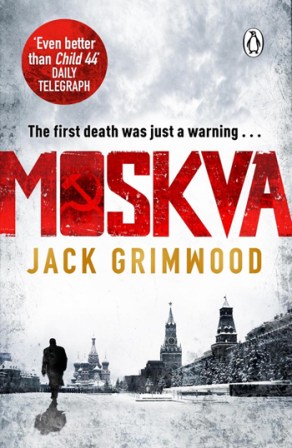 Jack Grimwood’s Moskva sets out to convince us that there is room for one more tale of conflicted lives in a modern Russia full of paradox and uncertainty. The book came out in hardback earlier this year, and is now available in paperback, from Penguin. Does Grimwood, who made his name writing science fiction and fantasy novels, hit the spot?
 The breadth of this novel in terms of time sometimes makes it hard to work out who has done what to whom. Patience – and a spot of back-tracking – will pay dividends, however, and the narrative provides a salutary reminder of the sheer magnitude of the numbers of Russian dead in WWII, and the resultant near-psychosis about The West. To top-and-tail this review and answer the earlier question as to whether Jack Grimwood (right) “hits the spot”, I can give a resounding “Yes!”. Yes, the plot is complex, and yes, you will need your wits about you, but yes, it’s a riveting read; yes, Tom Fox is a flawed but engaging central character, and yes, Grimwood has sharp-elbowed his way into the line-up of novelists who have written convincing crime novels set in the enigma that is Russia.


 This, then, is the England of Handel and Hogarth (at least he was English) and the looming threat from the Jacobites north of the border. Author Robin Blake, (left) however resists the easy win of setting his story in the bustle of London. Instead, he takes us to the town of Preston, sitting on the banks of the River Ribble in Lancashire.
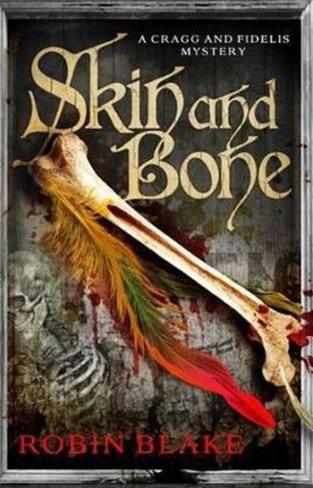 The investigations carried out by Cragg and Fidelis reveal a growing schism between the tanners and the wealthy men of property who run the town’s affairs. The leather workers are an inward looking community. This state is mostly driven by the fact that they live and work alongside the noisome waste materials – mostly faeces and urine – which are essential to the tanning process, and therefore most local people literally turn up their noses at the tanners. The burgesses and council-men of Preston, on the other hand, have their eyes on what they believe to be an acre or so of valuable land – ripe for redevelopment – currently occupied by the tannery.
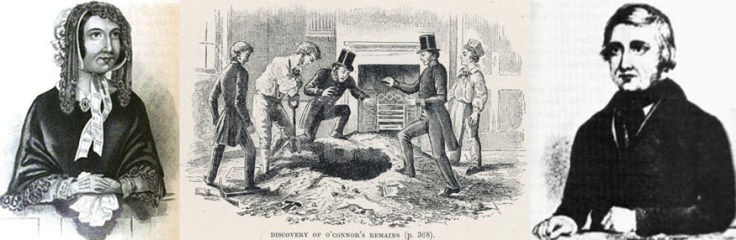 This is the tale of a ghastly pair of opportunists in Victorian London. Frederick Manning turned a blind eye to his wife, Marie, while she dispensed her favours to a rich customs official, Patrick O’Connor. The pair prepared a grave for him under their kitchen floor, and having murdered him, tried to escape with all his money. Inevitably, they were caught, and provided yet another job for William Calcraft, the Lord High Executioner.
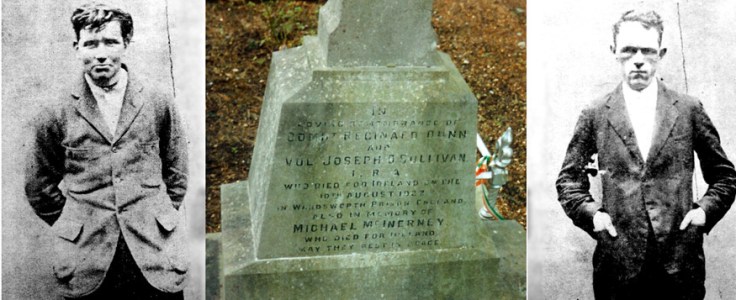
 The sounds and sweet airs might have been provided by Haydn Woods’ A Brown Bird Singing or, if you were more disposed towards the art of Edith Sitwell, William Walton’s setting of her poetry – Façade. The discordant sounds of the thousand twangling instruments could have come from several sources; possibly the thousands of impoverished ex-servicemen sold short by the country they had fought for; perhaps, however, the isle which was most full of noises was that of Ireland, and in particular the newly formed Irish Republic.
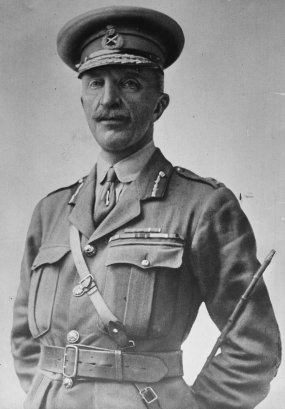 Sir Henry Wilson was a former General in the British Army, and his contribution to events in The Great War divides opinion. Some have him firmly in the ‘Butchers and Bunglers’ camp, a stereotypical Brass Hat who send brave men off into battle to meet red hot shards of flying steel with their own mortal flesh. Others will say that he was part of the combined military effort which defeated Germany in the field, and led to the surrender in the railway carriage at Compiègne in 1918. Whatever the truth, Wilson was never a field commander. He was much more at home well behind the front line, hobnobbing with politicians and strategists.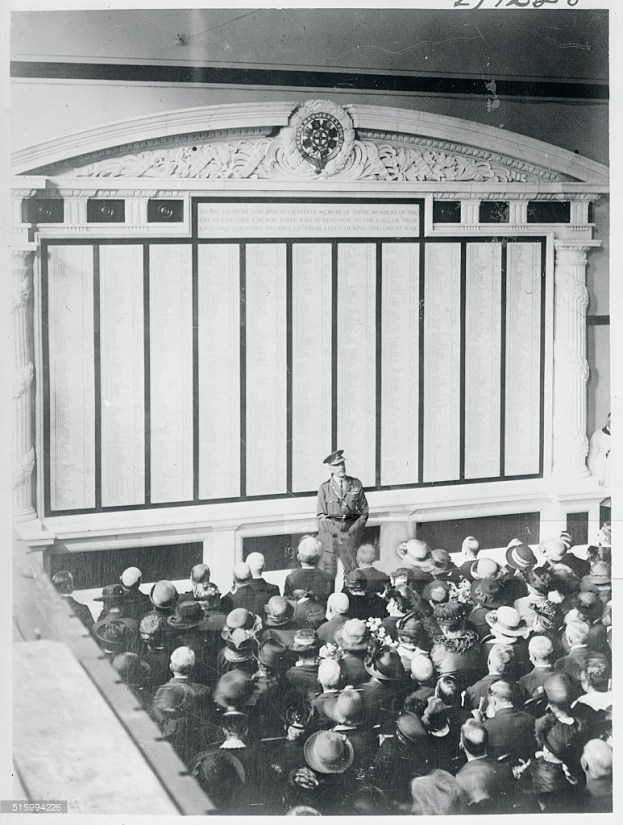



 fullybooked2017