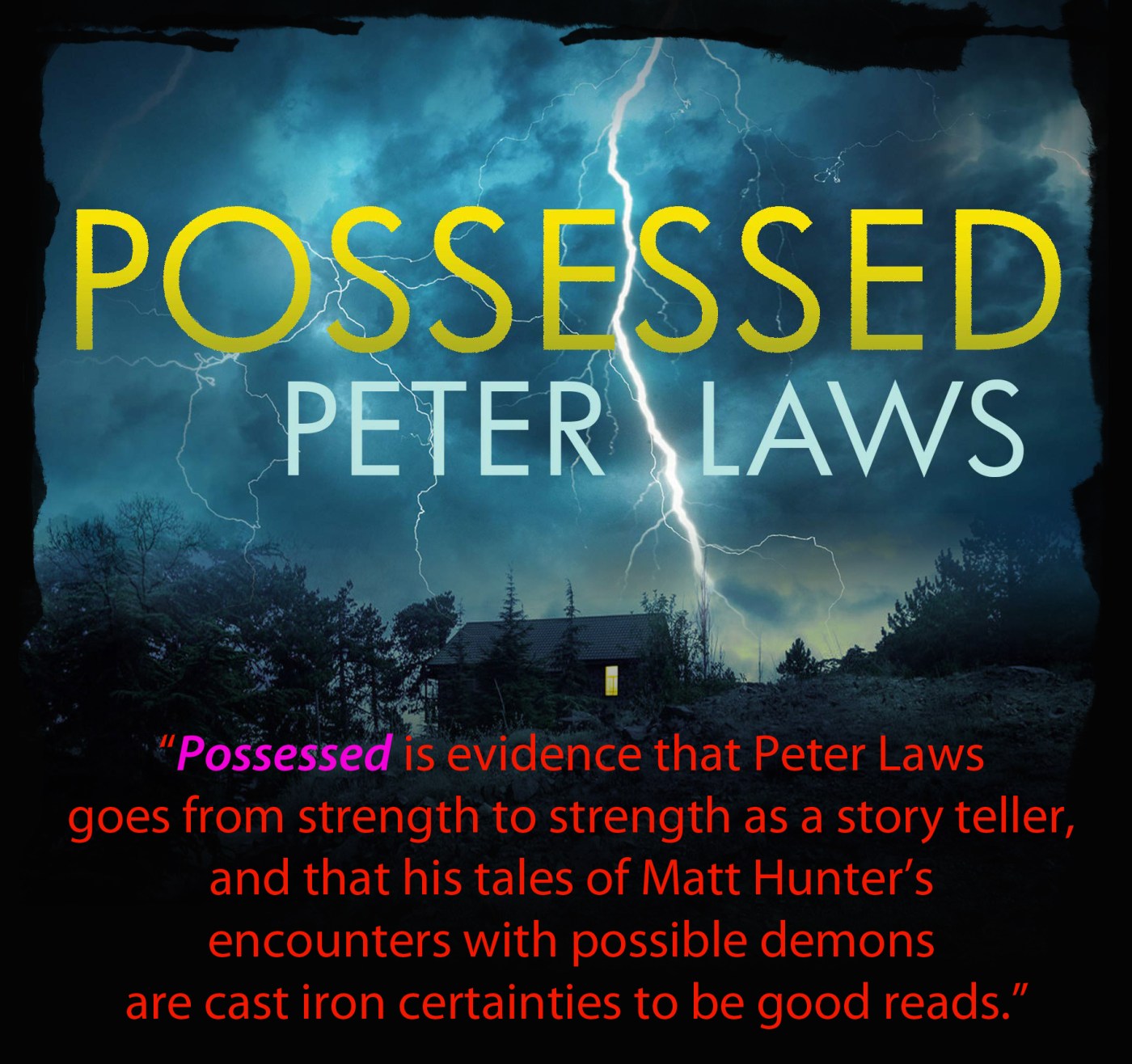
 Peter Laws introduced us to Matt Hunter in Purged (2017) and we learned that he is a former priest whose total loss of faith coincided with tragic personal events. Now, he lectures in the sociology of religion and belief systems, and has a reputation (one which does not sit lightly with him) for being the go-to guy when the police have a case which is ‘not dream’t of in our philosophy’.
When a good old fashioned milkman, driving his ecological sound electric milk float, makes an horrific discovery in a suburban greenhouse, the result is that the police have an apparently raving madman on their hands. He is emaciated, disheveled and both frightened and frightening. This creature from hell does, however, have a day job. Tom Riley is the chef at a local pub and has, apparently, a Shepherds’ Pie to die for. When the baffled police summon Matt Hunter to talk to this fellow he finds him manacled to a chair and spitting out Exorcist-style obscenities.
 unter discovers that Riley is a devotee of a local church, one which, depending on your view might be termed either ‘charismatic’ or ‘a bunch of eyeball-rollers’. Things take a dramatic turn for the worse when Riley’s wife is discovered, horribly mutilated, in one of the customer chairs of her home hairdressing salon.
As the case begins to attract lurid national interest, Hunter is roped into a no-holds-barred reality TV show, to be one of the talking heads in an investigation into demonic possession. While stoutly sticking to his sceptical opinions Hunter is swept along in the flood-tide of the media frenzy, and comes face to face with an infamous American evangelist who makes a living from casting out demons. The TV company, cameras eagerly devouring every second of the interplay between the apparently tormented victims of demonic possession and their potential saviour, book a rural retreat for a blockbuster special which will see Good and Evil come face to face, interrupted only with tasteful ads from the show’s sponsors.
 hat happens next is violent, bloody, improbable – but totally gripping. Of course, Matt Hunter survives to return to his delightful wife and children, but not before he is forced to question his firmly-held disbelief in ‘ghoulies and ghosties, and long-leggedy beasties, and things that go bump in the night.’
There are two interlinked paradoxes in Possessed. The first is that Matt Hunter is a disbeliever in all things paranormal and in any possibility that there are any beings or forces outside man’s own imagination and mental state. He is, however,the creation of an ordained church minister whose own sense of the spiritual life is, I assume, central to his faith. Secondly – and do read the afterword to Possessed which is separate from the usual authorial Oscars speech thanking all and sundry – behind all the comic book gore and satirical swipes at the grossness of TV reality shows, Laws makes a serious point about troubled people searching desperately for supernatural answers to problems which come from within themselves.
 Laws (right) doesn’t exactly play it for laughs, but amid the knockabout spookery and Hunter’s own predilection for making wisecracks, there is serious stuff going on. It is worth comparing Matt Hunter with another fictional investigator of strange things – Phil Rickman’s Merrily Watkins. Like the real life Peter Laws, Merrily Watkins is a priest. Like Matt Hunter, merrily doesn’t necessarily believe in the supernatural, but she is totally convinced that some folk do.
Possessed is evidence that Peter Laws goes from strength to strength as a story teller, and that his tales of Matt Hunter’s encounters with possible demons are cast iron certainties to be good reads. Possessed is published by Allison & Busby and is out now.
Read more about the previous Matt Hunter novels by clicking this link.



 ames Oswald’s Edinburgh copper Tony McLean is something of a fixture in the crime fiction firmament these days, and Bury Them Deep is the tenth in the series. For those readers picking up one of his cases for the first time, a little of his back story might be helpful. He is based in Edinburgh and now, of course, works for Police Scotland. He was (unhappily) educated in English independent schools thanks to his wealthy family, some of whose riches he has inherited, thus making him ‘a man of means’. He lives in an old and impossibly roomy house, left to him by his grandmother. He has a fragile relationship with partner Emma, and it is fair to say that their life together has been punctuated by both drama and tragedy. McLean drives a very plush Alfa Romeo, enjoys an occasional glass of cask-strength single malt whisky and, aside from his instinct for police work, has been known to be susceptible to stimuli and influences that are not, as Hamlet remarked, “dreamt of in your philosophy.” After many successful cases, he is now Detective Chief Inspector McLean, but if his superiors imagine he will settle for a life behind a desk, they are very much mistaken.
 Anya Renfrew is a rather dowdy and dull police civilian worker who seems devoted to her job, which is mastering the many databases which keep investigations fed with information. She has never had a day off in her life, and so when she goes missing it is considered rather unusual. Her mother is a former – and legendary – police superintendent, but Grace Ramsay is now old and infirm, living in a care home. Police are never more active than when investigating actual or possible harm to one of their own, and when McLean searches Anya’s house, what he finds hidden in her wardrobe indicates that Ms Renfrew’s private life was more exotic – and dangerous – than colleagues might have imagined.
 cLean’s professional life already has one big complication. A five-times serial killer called Norman Bale is in a secure mental hospital, thanks to McLean’s diligence and bravery. Now, he asks to speak to McLean, and what he has to say is both shocking and improbable. Are his words just the ramblings of a psychological disturbed killer, or does his suggestion – that Anya Renfrew’s disappearance and the moorland bone-pit are linked to a sinister piece of folklore – have any substance?
 t takes a bloody good writer to mix crime investigation with touches of the supernatural. John Connolly, with his Charlie Parker books is one such, but James Oswald (right) makes it work equally as well. The finale of this novel is as deeply frightening as anything I have read for a long time. Despite the drama, Oswald can use a lighter touch on occasions. There is dark humour in the way McLean sometimes needs to ingratiate himself with Edinburgh’s smart set. At an art gallery opening night he listens politely as two guests discuss one of the objets d’art: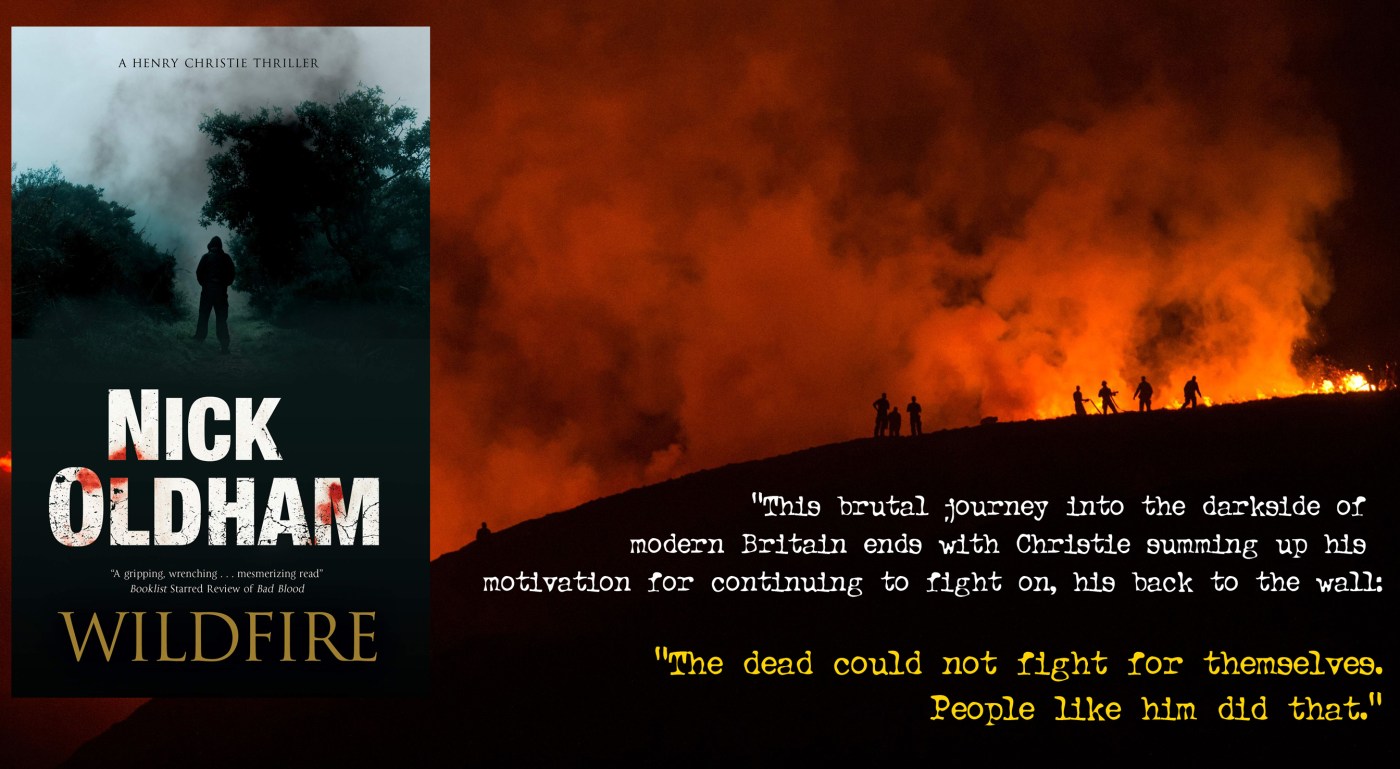

 ack in the day, before authors and their publishers trusted me with reviewing novels, I did what the vast majority of the reading public did – I either bought books when I could afford them or I went to the local library. I had a list of authors whose latest works I would grab eagerly, or take my place in the queue of library members who had reserved copies. In no particular order, anything by John Connolly, Jim Kelly, Phil Rickman, Frank Tallis, Philip Kerr, Mark Billingham, Christopher Fowler and Nick Oldham would be like gold dust.
 Oldham’s Henry Christie was a particular favourite, as his adventures mixed excellent police procedure – thanks to Oldham’s career as a copper – a vulnerable and likeable hero, and an unflinching look at the mean and vicious streets of the Blackpool area in England’s north-west. Wildfire is the latest outing for Henry Christie, who has retired from the police and now runs a pleasant village pub set in the Lancashire hills.
 ventually, the wildfires of both kinds are extinguished, at least temporarily, but not before Henry Christie is forced, yet again, to take a long hard look at himself in the mirror, and question if it was all worth the effort.
 his brutal journey into the darkside of modern Britain ends with Christie summing up his motivation for continuing to fight on, his back to the wall:
 artre insisted that the celebrated line from his 1944 play Huis Clos (No Exit), “L’enfer, c’est les autres.” was forever misinterpreted, but the idea that hell is other people has stuck, despite the protestations of the Great Existentialist. Some, like Jo Spain in her latest novel Six Wicked Reasons, would suggest – to mix and match poets – that Dante’s Nine Circles of Hell could be condensed into an overpowering tenth – Family.
 The Lattimer family, patriarch Frazer, sons James, Adam and Ryan, daughters Ellen, Kate and Clíodhna – Clio – have assembled at the family home in south east Ireland overlooking the waters of Spanish Cove in the Irish Sea, so called because of its earliest recorded casualties – sailors from a Spanish galleon blown adrift from the Armada and then shattered on the hidden rocks.
 eaders new to Jo Spain’s novels will welcome the apparently straightforward back-stories of Frazer Lattimer’s children, and their motives for wanting him dead. Those who know that the author is The Mistress of Misdirection will suspect, correctly, that this is only the start. But, for the record, I give you the Lattimer children. James is a big media name, with TV screenwriting and production credits on his CV. Lives in Dublin, of course with ex-model wife and step daughter. Adam – now there’s a tale. He now lives abroad, making money for fun, but he disappeared ten years earlier, broke the heart of his late mother Kathleen, and has now re-appeared, equally mysteriously, and it is his return ‘from the dead’ which has prompted the reunion. Ryan, alas poor Ryan. Drug addicted as a teenager, he has somehow survived industrial intakes of pharmaceuticals, and now lives in Italy, just about getting by as an odd-job man.
 llen Lattimer is the female equivalent of the Prodigal Son’s brother. Remember, the bloke who stayed at home while his brother was out on the town, giving it all away? Ellen has stayed at home, cleaning, cooking, dusting – and paying for the upkeep of the house. She is prim, joyless, and what Private Eye used to call “tight-lipped and ashen-faced.” Kate, on the other hand, has spread her wings and learned to fly. Having overcome a teenage weight problem which caused her to be known locally as King Kong, she is now svelte, lean and lovely. Also, married to a filthy rich Chinese businessman with a chain of luxury hotels. Clio, though has been in the wars. Summoned from a dingy bedsit in downtown New York to attend the family gathering, she is the most volatile of the children, the antithesis of the line from the old hymn which described Our Lord as “slow to chide and swift to bless.”
 s an amateur wordsmith I can only guess at Jo Spain’s writing technique; her prose is so assured, so fluent and has that sense of flair that cannot, surely, be the result only of endless hours of editing. No matter how long you spend polishing a piece of coal, you will never transform it into a gem stone. Six Wicked Reasons is a diamond, multi-faceted and reflecting both the light and the darkness of the human soul. It is
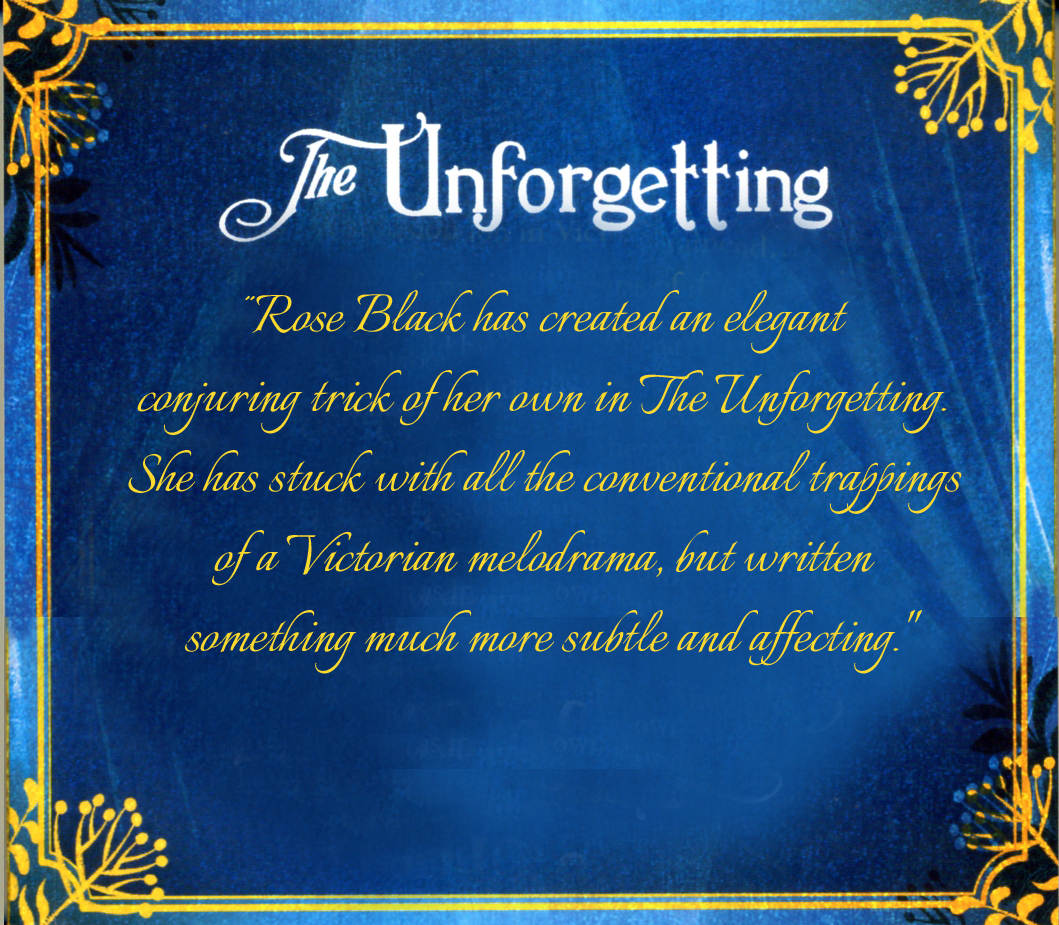

 s she gazes up at her bedroom ceiling, Lily Bell daydreams of becoming an actress. She is, to be sure, beautiful enough, with her long almost-white blond hair and her flawless complexion, but for the stepdaughter of a struggling artist in the London of 1851, her dreams of becoming Ophelia, Juliet or Desdemona are just foolish fantasies. Until the day her penniless stepfather receives a visit from one of his creditors, a mysterious self-styled Professor – Erasmus Salt. Salt is actually a theatrical showman, with a macabre interest in that overwhelming Victorian obsession, communicating with the dead. He offers Alfred Bell respite from the debt in return for Lily accompanying Salt and his spinster sister Faye to become the star of a new production, in which he will convince audiences that he has raised the dead.
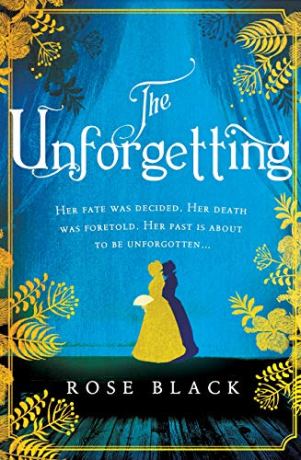 Despite her misgivings, Lily is intrigued by what appears to be a chance to achieve her ambition. After all, Salt’s theatrical illusion may be faintly sinister, but who knows what career doors it might unlock? Bell, despite the tears and misgivings of his wife, cannot get Lily out of the door fast enough, and soon the girl is on her way south, to the seaside town of Ramsgate, where Salt’s production is due to be presented at The New Tivoli theatre.

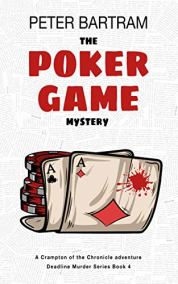 One of the many joys of the Colin Crampton novels is that Peter Bartram usually manages to set the tales against actual circumstances appropriate to the period and, sometimes, we have a very thinly disguised version of a real person. In this case, we meet an outlandish minor aristocrat, heir to daddy’s millions but, more luridly, a fancier of young women. He collects them, rather like a lepidopterist collects butterflies, but rather than sticking his prizes into a display case with a pin, he keeps his young lovelies in cottages the length and breadth of the extensive estate, and has managed to organise one for each day of the week. For the life of me, I can’t think of whom Peter might have as his template for this roué, but I expect it will come to me in the middle of the night, rather like Ms Monday and the others do to their lord and master.
 ided by his feisty (and rather beautiful) Australian girlfriend, Crampton is up to his neck in a sea of trouble involving, among other things, dead bodies, wartime gold bullion, a predatory newspaper baron, and the arcane skill of doctoring a set of playing cards. It’s wonderful stuff – not just a crime caper, but another fine novel from a writer who wears his learning lightly.
 Colin Crampton’s Brighton is slightly down at heel but all the more charming for not yet having succumbed to the deadening hand which has now made it the world capital of all things green, ‘woke’, diverse and inclusive. There are still saucy postcards to be bought at the sea-front newsagent, and incorrect jokes to be delivered by Brylcreemed comedians in faded variety halls. Peter Bartram (right) has set the bar very high with his previous Crampton novels but he just gets better and better, and The Poker Game Mystery clears that bar with loads to spare. We even have a finale worthy of Indiana Jones, albeit in a murky tunnel somewhere in Sussex rather than in some more exotic location. A word of warning. If the words Atrax Robustus make you feel queasy, then you might need someone to mop your fearful brow while you read the final pages. Clue – not all of Australia’s exports are as cuddly as Crampton’s gorgeous girlfriend, Shirley Goldsmith.


 eaders of a Simon Kernick thriller should know by now what they are getting. There will be violence a-plenty, betrayal, corrupt cops, unscrupulous politicians, improbable escapes from certain death and a narrative style which grips the reader from start to finish. Like many popular writers he has separate series on the go, but Kernick isn’t averse to cross-referencing characters. By my reckoning, Die Alone is the eleventh book to feature the abrasive and resourceful Tina Boyd – once a copper but, in this novel a private investigator. The main man I Die Alone is another copper – Ray Mason. He first featured in The Witness (2016). Then came The Bone Field (2017) and The Hanged Man (2018) but with Tina Boyd – and her former lover Mike Bolt – in attendance.
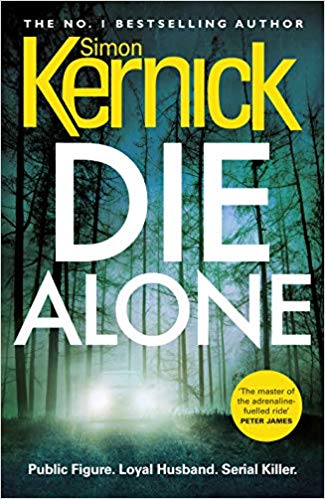 We start with Mason in the Vulnerable Prisoner wing at a high security British prison. He is serving life sentences for the killing of two deeply unpleasant characters in the course of his duties. The deaths were judged not to be judicial, and so Mason inhabits a world shared with paedophiles, rapists, child pornographers – and disgraced coppers. When he is injured on the periphery of a prison riot, he is taken off to hospital in a supposedly secure van, which is then hijacked – the target being Mason himself. He is taken to what seems to be some kind of safe house run on government lines and, after being well fed and housed for a couple of days, he is given an ultimatum by the masked official who is in charge of things – carry out a hit on a Very Important target. He is left in no doubt as to what will happen if he refuses, but he takes little persuading, as the intended victim is someone whose life Mason would have little compunction in ending.
 y now Kernick has introduced us to the repulsive Alastair Sheridan, a millionaire former hedge fund manager who has found his niche in politics and is regarded as everyone’s favourite to reach the top because of his affable style, movie star good looks and undoubted charisma. What the adoring public, and a bevy of fellow MPs who are about to support his leadership don’t now is that Sheridan is a sadistic sexual killer with links to organised crime and some of the most evil people in Europe.
 ecuring the help of former colleague Tina Boyd gets Mason out of one scrape, but as he avoids the clutches of one set of villains, the next shootout or escape in the boot of someone’s car is just around the corner, with the action ranging from oily Tottenham car workshops, to rural Essex and then via Brittany to the bloodstained hills surrounding Sarajevo.


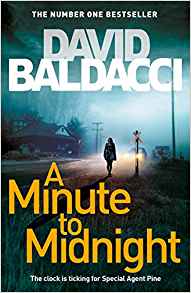 Atlee Pine has anger management issues, and A Minute To Midnight begins as she is put on gardening leave for kicking the you-know-what out of a child rapist. She decides to use this enforced leisure time in another attempt to find out what happened on the fateful night when her sister was abducted and she was left with a fractured skull. Accompanied by her admin assistant Carol Blum, she revisits the scene of the trauma, the modest town of Andersonville, Georgia. Tumbleweed is the word that first comes to mind about Andersonville, but it scrapes a living from tourists wishing to visit the remains of the Confederate prisoner of war camp which, in its mere fourteen months of existence, caged over thirty thousand Union prisoners of whom nearly thirteen thousand were to perish from wounds, disease and malnutrition.
 A series of apparently motiveless murders in Andersonville diverts Pine from the search for her own personal truth, and she is soon enlisted to help the understaffed and under-resourced local cops. The first murder victims – a man and a woman – are killed elsewhere but then delivered to Andersonville bedecked as bride and groom respectively. When it turns out that they were both involved in the porn industry, what first appears to be a significant lead runs into a brick wall.

 immy Mullen has been round the block. In the Falklands War his ship takes a direct hit from an Argentine fighter bomber and he watches his mates consumed by the ensuing fireball. Back home recuperating, with a pittance of a pension, he stacks supermarket shelves, battles with his nightmares and presides over the slow erosion of his marriage as drink becomes his only solace. Walking home one night from the boozer, he intervenes to prevent a girl being slapped around by her boyfriend. All very gallant, but the result is the boyfriend (an off-duty copper) lying insensible on the pavement in an expanding pool of blood.
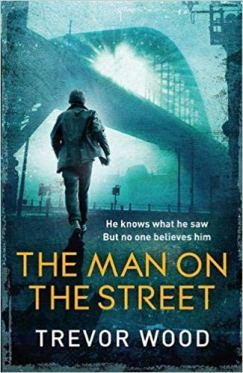 After the inevitable prison sentence Jimmy is now out on early release, but homeless, his ex-wife now remarried, and his daughter a complete stranger to him. Home is anywhere he can kip out of the rain. His social circle? A few fellow vagrants, raddled by drink, mental instability, drugs – or a toxic combination of all three. Their home-from-home is a charity called The Pit Stop where volunteers provide, food, showers and clothing.
 ome time later Jimmy sees a newspaper article featuring a young woman appealing for news about her missing father. The picture she is holding is of a man Jimmy thinks he recognises. It is the smaller man from the argumentative pair who disturbed his sleep a few weeks since. Or is it? With the help of a couple of his more social-media-savvy pals from The Pit Stop, Jimmy contacts the woman – Carrie Carpenter – and they are drawn into a mystery involving police (both complacent and corrupt), environmental activists, crooked businessmen and – as we learn near the end of the book – grim sexual deviancy.
 uthor Trevor Wood (right) has lived in Newcastle for 25 years and considers himself an adopted Geordie, though he says that he still can’t speak the language. Despite this, his phonetic version of the unique Geordie accent is good. Normally, I shy away from books where writers try too hard to convey accents in dialogue, but I think Trevor Wood does rather well here. Perhaps this is a result of my addiction to my box set of When The Boat Comes In.


 fullybooked2017