
Search

fullybooked2017

Tag

Maine

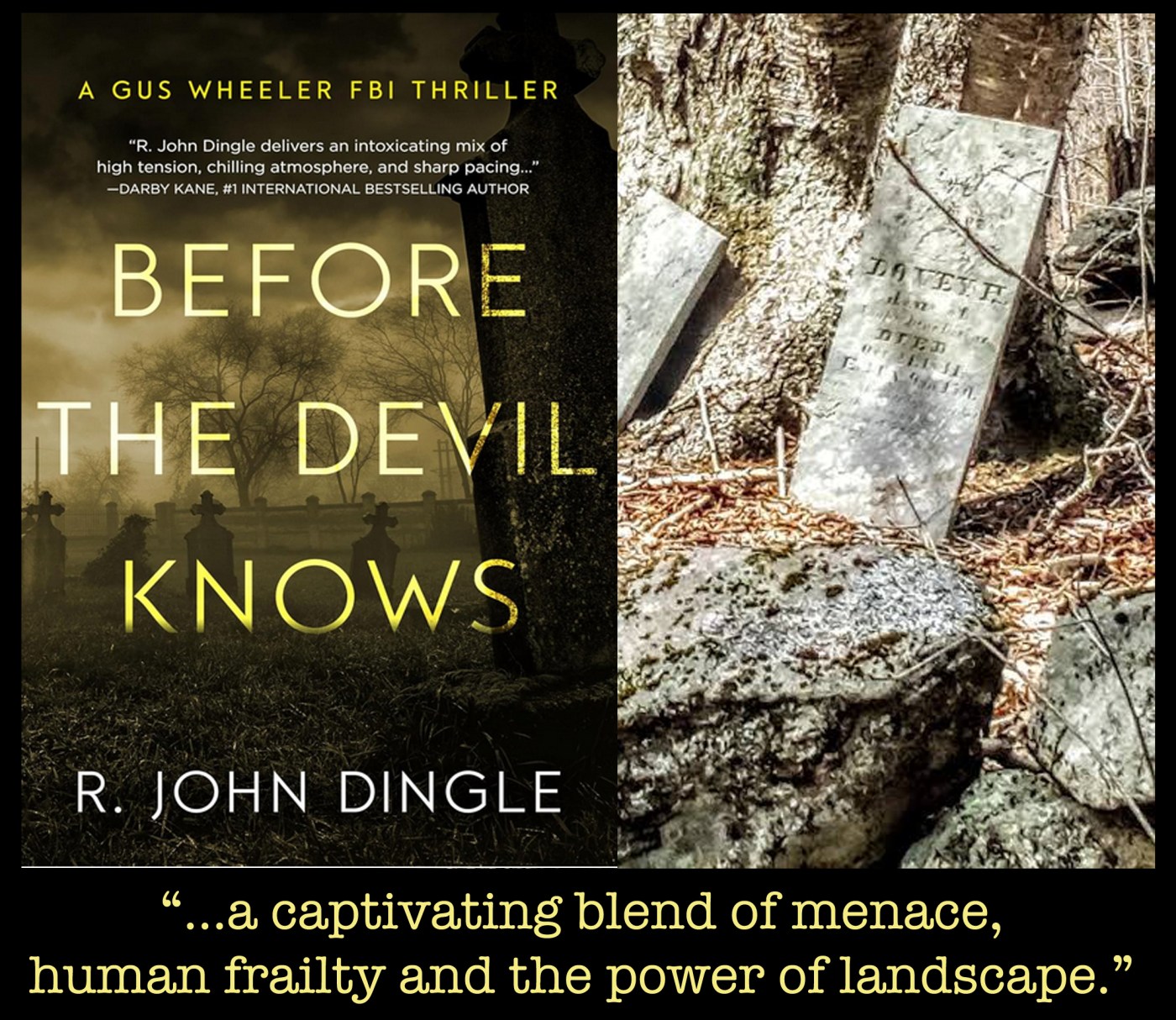
BEFORE THE DEVIL KNOWS . . . Between the covers

“May you be in heaven half a full half hour before the devil knows you’re dead”
(Traditional Irish toast)

In this thriller, FBI partners Gus Wheeler and Vanessa Lambert travel to rural Maine to investigate the death of a teenage boy, whose shallow grave has been discovered by scavenging animals. His face is unrecognisable and, lying on his chest inside the rough pine coffin is a cross made of lead. He is eventually identified as Adam Carson. On arrival in Maine, the two agents, who might actually be on the young side to get the movie reference, realise that they are about to drive into what we older mortals might call ‘Deliverance Country’.

Fans of John Connolly’s superb Charlie Parker novels will be familiar with the forests of Maine, with its decaying cemeteries, isolated communities and memories of ancient evil. The author gives us little opportunity to draw breath. Adam Carson’s girlfriend has also gone missing, but neither her parents or their neighbours seem particularly bothered. Then, two more bodies are discovered. One is male, purely skeletal, and has been dead for some time. The second, a woman is equally unidentifiable, but for a different reason. Her corpse is charred beyond recognition, but the pathologist delivers a disturbing conclusion. She was standing while she burned.

If there was any lingering doubt in the minds of Wheeler and Lambert that they are – literally – in a dangerous place, their motel room is firebombed and they are lucky to escape with their lives. Stories of unspeakable deeds committed by religious zealots, using their faith as an excuse, are nothing new in crime fiction. An essential staple of such plots is the existence of a spiritually powerful central figure, revered but his or her congregation. The minister of the Slaves of the Secret Heart of Jesus is a forbidding character called Father Benedict, a former Jesuit now excommunicated by the Roman Catholic Church.

Few thriller writers can resist the trope of a bad guy hiding within the ranks of the good men and true. The trope works best when it comes as a complete surprise, with readers being given few if any clues, and so it is here. Authors with musical axes to grind can be mildly irritating. The late Peter Robinson’s Inspector Banks had a very individual CD collection and, of course, Morse was a music lover. Mark Billingham’s Tom Thorne’s almost perpetual depression was usually accompanied by the lonesome tenor of Hank Williams. Gus Wheeler, however is a jazz man, and a string bass player. He even takes a rather dismal fold-up bass with him on his assignments. In my (probably limited) view, jazz died with Bix Beiderbecke, and so I couldn’t connect to Wheeler’s obsession, but that didn’t ruin a good novel, which has a captivating blend of menace, human frailty and the power of landscape.

R. John Dingle lives and writes from a restored 200 year-old house, on a small island in Mid-Coast Maine. The often-haunting themes of the rocky coast, as well as a lifetime of experiences in and around New England’s small towns, farms, and cities, provide excellent inspiration for the tones and moods reflected in Dingle’s mysteries and psychological thrillers. The two previous novels in this series are Karma Never Sleeps and Wings of Madness. Before The Devil Knows will be published by Tule Publishing on 29th July
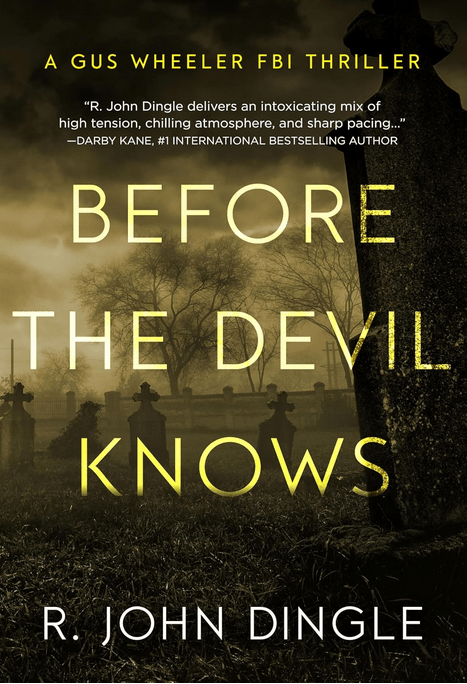
The book will be available from Tule Publishing from 29th July.


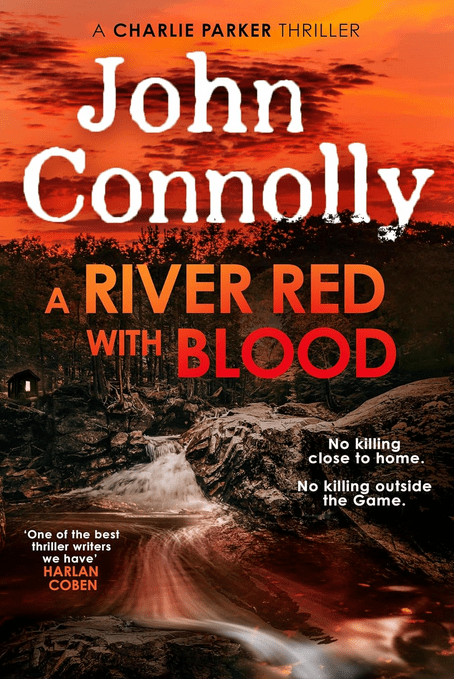
A RIVER RED WITH BLOOD . . . Between the covers

This is the twenty-third in a series that began in 1999, with Every Dead Thing and here, our man investigates the apparent drowning of a troubled teenager, Scott Thierault, who had absconded from an institution set up to provide ‘hard love’. His father, a career criminal serving a jail term, hires Parker out of a mix of deep parental guilt, and a sense that something is ‘just not right’. In an apparently unconnected thread we meet three men who call themselves ‘The Game’. They were once a quartet, but that is another story. Kenney, Teal and The Saint are sexually sadistic serial killers. They target prostitutes, vulnerable addicts and other women who are on ‘the wrong side of society’. Their kills are planned with military precision, forensic awareness, and scrupulous attention to local CCTV capability.

We don’t have to wait long before learning the link between the players of The Game and Parker’s new case. When he does his preliminary research into the death of Scott Theriault Parker discovers that another Maine teenager, Mallory Norton, went missing at about the same time.


Meanwhile, in a Detroit bar, Teal and Kenney are wondering if their partner The Saint has gone rogue, and may be responsible for whatever has happened to Mallory Norton. We learn about The Spero, the institution from which Scott Theriault absconded. The building itself seems to be cursed. It had been built by the Cistercians in the 1950s, but by the 1990s they had given up on the insect ridden summers and bitter winters, and moved out. It became a National Guard training HQ but, likewise, those tough guys couldn’t hack it. The present owners bought it for a song, and it must be said that Spero School LLC are categorically not a ‘not for profit’ educational provider.


We are less than halfway through the book when we learn two things; the identity of The Saint, and what happened to Scott Theriault. Also, a spiritualist medium called Sabine Drew is at work in the county, attempting to ‘get a sense’ of what happened to Scott and Mallory. Unfortunately for Kenney and Teal, their last victim, a woman they took to be a prostitute, was something else altogether, and now they have some very dangerous people, with limitless resources, on their track.

Parker’s connection to the world of the supernatural is, of course central to the series, and you either get it or you don’t. Way back in the day, Parker’s wife and daughter were brutally murdered, and now Jennifer, his daughter, occasionally appears to him as some kind of dark angel, not malevolent, but often the harbinger of bad things which are about to happen to her father.


The best thing about the Charlie Parker novels is the peerless prose, sometimes poetic, often violent, but always – always – beautifully addictive. A close second, though, comes the reliable repertory company of subsidiary characters. There’s Moxie Costin, Parker’s lawyer: sharp as a tack, as slick as oil, but actually a deeply moral man. As for the Fulci brothers, Tony and Paulie, they are barrel-shaped human wrecking balls: men who are easy with violence but, once again, with a strange ethical perspective. Then we come to Parker’s longstanding confreres, Louis and his life partner Angel. Louis is, again, a man of violence, his nature tempered by his memories of racial intolerance in The South: Angel; scruffy, Latino, but with an intense intelligence nurtured in a criminal past. Readers, we are in impressive company.


There are two endings to the story, neither of which contradicts the other; the first is purely human and criminal, while the second definitely belongs in another world altogether. A River Red With Blood will be published by Hodder and Stoughton on 7th May. Reviews of earlier novels in the series can be found here.

THE INSTRUMENTS OF DARKNESS . . . Between the covers

Connolly spine049 copy

For those new to the series, Charlie Parker is a private investigator from Portland, Maine. He is haunted by a the past, chiefly the murder of his wife and daughter many years ago. In this, the twenty-second in the series, he is hired by lawyer Moxie Costin to investigate the disappearance of a toddler, Henry Clark. After a blanket soaked in his blood is found in the boot of her car, his mother, Colleen, is suspected of his murder, although no body has been found.

Connolly is a master at sowing seeds of doubt and tension. I can think of only one other writer as capable of subtle suggestions of menace and foreboding, and he – Montague Rhodes James – died in 1936. This is a house in the Maine woods, where we suspect evil lurks:

“Some places discourage curiosity. They trigger an ancient response, one that advises us not to linger, and perhaps not even to mention what we might have discovered. Pretend you will never hear, a voice whispers, and it takes us a moment to realise that it is not our own. Be on your way. If you forget me, I might forget you in turn.”

As the search for Henry takes a disturbing turn, It’s not until page 247 that Parker makes the phone call hardened fans of the series have been waiting for. He calls New York and tells Tony Fulci, “They’re on their way.” ‘They’, of course, being Parker’s long time allies, Angel and Louis. They have a certain effect on people. A woman Parker has been interviewing catches site of Angel and Louis outside a store.
“Are they with you?” Beth asked.
“They’re my associates.”
“They don’t look like private detectives. Don’t take this the wrong way, but they look like criminals. If they came into the store, I’d lie down on the floor with my hands behind my head.”
“Sometimes,”I said, ”that’s precisely the effect we seek.”

One of the joys of reviewing the Charlie Parker series is that one can simply let the author speak for himself. Here are a couple of examples where Connolly is in full Raymond Chandler mode:

“Optimistically, if nothing else, the town also posted two inns. Judging by the pictures on its website, the first promised prison mattresses and food to match, while the second screamed Gay Couple Heading For A Messy Divorce. We picked the latter.”

Parker describes a dingy bar:
“Its interior smelled of dust, urine, and drain cleaner, the floor was permanently littered with fragments of shattered glass and broken dreams, and even the furniture had tattoos.”

With the help of an enigmatic woman called Sabine Drew, who has a kind of second sight, Parker realises little Henry’s disappearance is connected to a strange relationship between his father, and a mysterious woman called Mara Teller. It seems that Teller can shape-shift between a desirable delegate at an upmarket business conference, and an unremarkable woman called Eliza Michaud who lives with her brother and sister in an isolated house deep in the forest near the town of Gretton. By the time Parker and his buddies have made the connection between the Michaud family and Henry’s disappearance, warfare has broken out between the Michauds and a collective of far-right hoodlums who have established a camp on the other side of a creek that divides the properties.

John Connolly combines the Meccano nuts and bolts of putting a crime novel together with a poetry that dazzles. Perhaps you don’t believe in the supernatural, but he takes your disbelief, and shakes it to death like a terrier gripping a rat. No living writer connects us to evil in the same way. This is a deeply scary book. It is published by Hodder & Stoughton and will be out on 7th May

I

Blog at WordPress.com.

Up ↑