

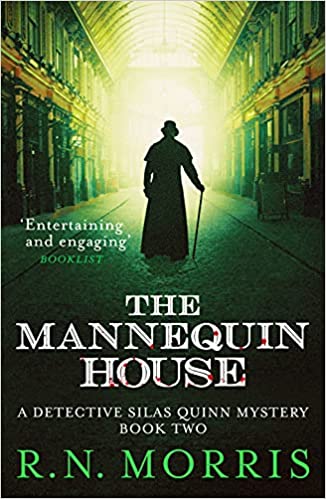
I do love the mysterious world of Detective Inspector Silas Quinn, RN Morris’s rather distinctive London copper from the 1900s. For reviews of earlier novels Summon Up The Blood, The White Feather Killer and The Music Box Enigma click the links. I say “earlier”, but it’s not that simple, as the Silas Quinn books are being reissued by a new publisher, having coming out a few years ago, but since the events they describe are all from a very narrow time frame, the actual chronology doesn’t matter too much.
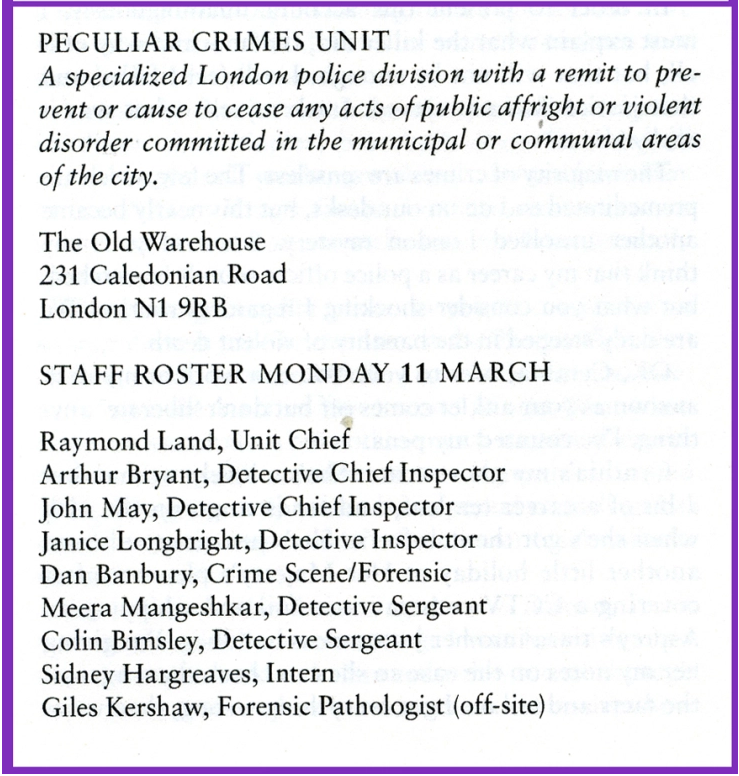
 Quinn and his sergeants – Inchball and Macadam – are The Special Crimes Department of the Metropolitan Police. This department has a passing resemblance to Christopher Fowler’s Peculiar Crimes Unit (Rest In Peace) insofar as the unit has been constructed around the unique talents of its lead investigator. Like Arthur Bryant, Silas Quinn has strange gifts, and is just as likely to exasperate his superior officers as win their praise, but he is a bloody good copper.
It is March 1914, and most of the citizens of London go about their bustling business oblivious to the gathering storm which would break over their heads in just a few months. Blackley’s Emporium is one of the most successful department stores in the city. You can buy anything and everything that is made, mined or grown on God’s earth, and you may even be greeted by the beaming proprietor himself as you walk through the doors. You can even – should you be minded to take a break from spending money – visit the in-house menagerie which is full of weird and exotic creatures.
One of Benjamin Blackley’s most profitable departments is his haute couture fashion house, where (plus ça change) slender young women wearing must-have gowns and fripperies parade in front of not-so-slender older women. Blackley ‘keeps’ – and I use the word advisedly – his slips of things in a suburban house, presided over by a formidable matron. When the most beautiful of these mannequins – Amélie – doesn’t turn up for work, and her room is found locked from the inside, the police are called. Two things happen when the door is eventually opened. First, an enraged Macaque monkey runs screaming from the room and, second, Amélie has a very good excuse for missing work, as she is dead on her bed, strangled with a silk scarf.The subsequent post-mortem examination reveals that the girl may have been raped, and also that she has maintained her desirability as a fashion model by disastrous self-abuse of her body.
Morris takes the classic ‘locked room’ trope and has his wicked way with it. There is some knockabout comedy in this book, particularly with Quinn’s wildly contrasting underlings Inchball and Macadam, but there is a vein of darker material running through the narrative. Quinn may be a clever copper, but he is also psychologically damaged from a traumatic childhood. The uneasy personal dynamics between fellow lodgers at the house where Quinn sleeps are a signal that the detective is not at ease with other people. It has to be said, that later (already available) Silas Quinn novels shine a revealing light on this situation. There is great fun to be had within the pages of The Mannequin House, but we are never far away from the evil that men (and women) do, and you must be prepared for a rather shocking and violent end to the story.
As ever, Roger Morris gives us a delicious mystery, a totally authentic background and an absorbing book into which we can escape for a few precious hours. The Mannequin House was first published in 2013, but this new paperback edition from Canelo is out now.









 We are in London in the summer of 1879, and young Holmes has yet to meet the man who will write up his greatest cases. Holmes works for a guinea a day, and is striving to build his reputation. Within the first few pages, he has been hired to investigate two cases on behalf of a man who was already a celebrity, and another who would become infamous in his lifetime, but revered and admired after his death. The celebrity is Albert Edward, Prince of Wales, the future King Edward VII, a notorious Lothario whose battleground has been country houses and mansions the length and breadth of the country, the vanquished being a long list of cuckolded husbands. It seems that the heir to the throne has been in the habit of entering his sexual achievements in a diary – a kind of fornicator’s Bradshaw, if you will – but it has gone missing, and Holmes is charged with recovering it.
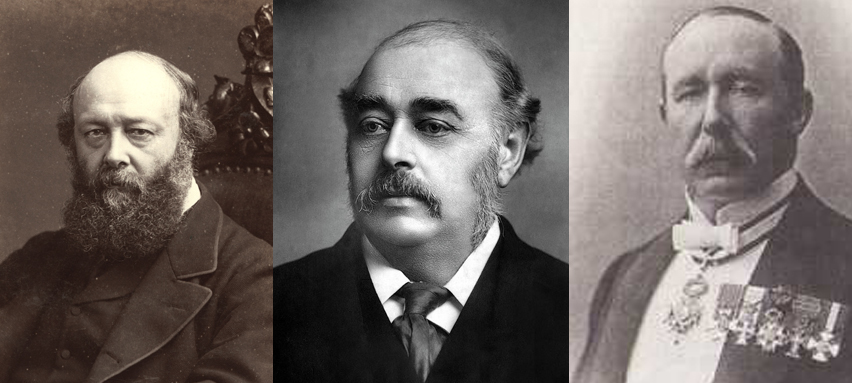
 One hundred pages in, and it is clear that the author is enjoying a glorious exercise in name-dropping. James McNeill Whistler, Lillie Langtry, Francis Knollys, Patsy Cornwallis-West, Frank Miles, Sarah Bernhardt, John Everett Millais and Rosa Corder (right) are just a few of the real life characters who make an appearance, and it is clear that ‘Sherlock Holmes’ moves in very elegant circles.
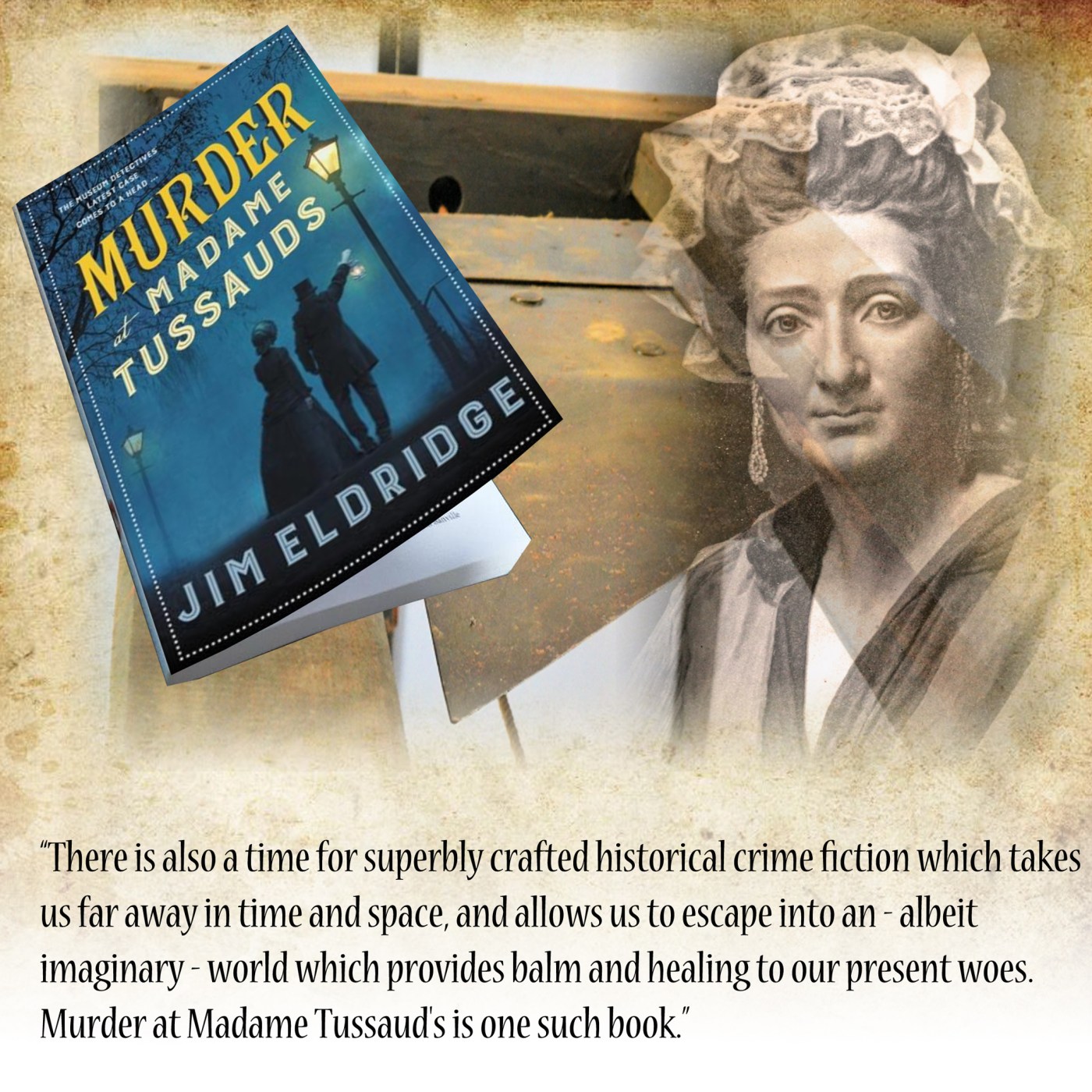
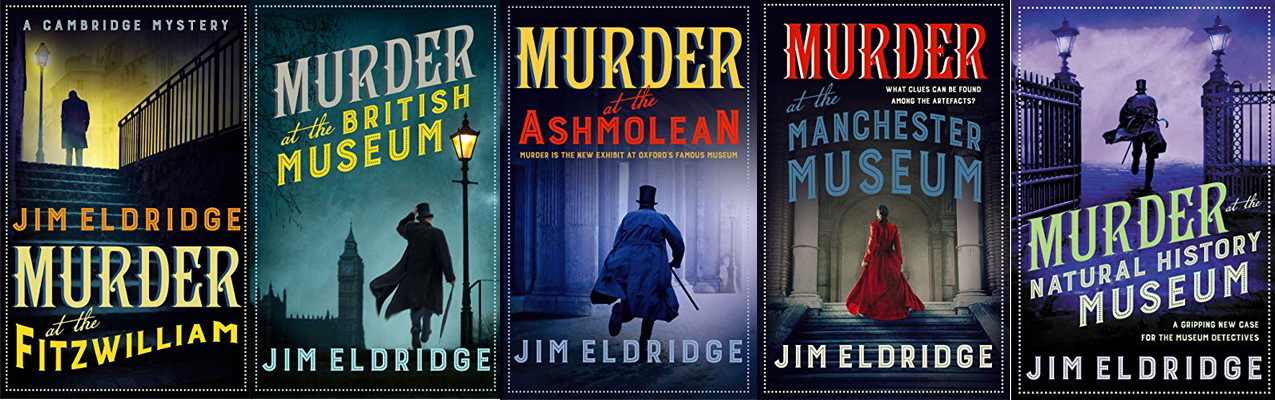
 This shouldn’t be dismissed as ‘comfort reading’. Yes, we know what we are going to get – the atmospheric late Victorian setting, the warm human chemistry between Daniel and Abigail, the absence of moral ambiguity and the certainty that good will prevail. Any genuine reader of fiction – and in particular, crime fiction – will know that, rather in the manner of Ecclesiastes chapter III , there is a time for everything; there is a time for the dark despair of Derek Raymond, there is a time for the intense psychological dramas of Lisa Jewell, and a time for workaday police procedurals by writers like Peter James and Mark Billingham. There is also a time for superbly crafted historical crime fiction which takes us far away in time and space, and allows us to escape into an – albeit imaginary – world which provides balm and healing to our present woes. Murder at Madame Tussaud’s is one such book. It is published by Allison & Busby and is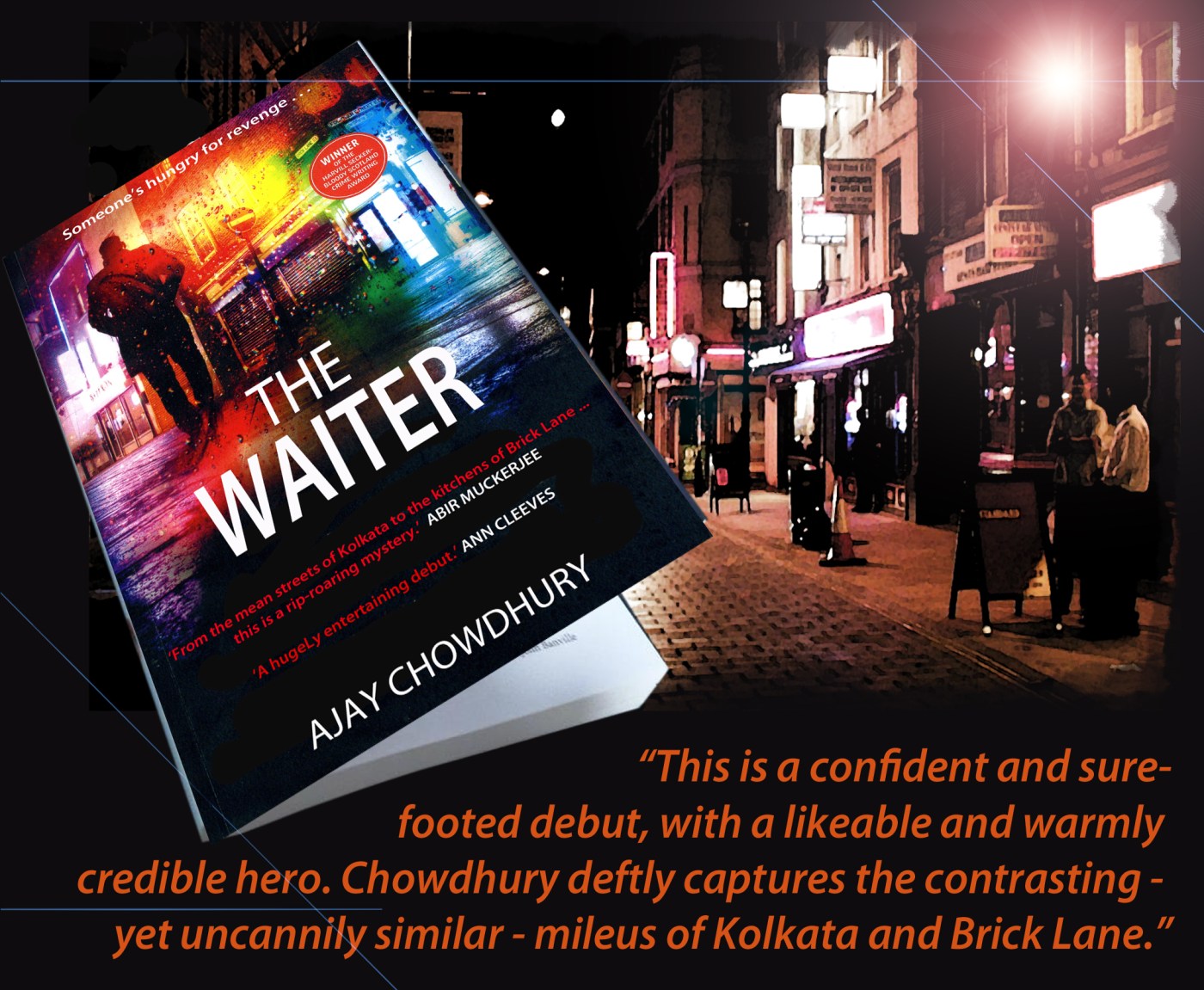

 The restaurant is run by his relatives Saibal and Maya, with help from their daughter Anjali. At this point is worth reminding people that families are the big thing in the sub-continent, and most of the characters in the book are related in one way or another. The story starts on the evening that the restaurant has been booked to provide the food for the lavish 60th birthday party of rich entrepreneur Rakesh Sharma. He and his new wife Neha – half his age – are installed in a lavish mansion on Billionaire’s Row near Hampstead Heath. It’s also worth mentioning at this point that Sharma’s first wife (and son by that union) are still very much on the scene.


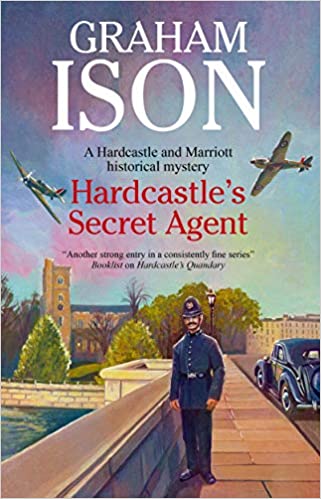 We are, as ever, in London, but it is 1940. The Phony War is over, and the Luftwaffe are targetting industrial sites they believe to be involved in making parts for military aircraft. When several important employees of one such factory are burgled – clearly by an expert – but with nothing other than trinkets stolen, Hardcastle believes he may be on the track of a German spy on the look-out for plans, blueprints or important military information. Hardcastle has to deal with The Special Branch, but finds them about as co-operative as they were with his father a couple of decades earlier. This has a certain tinge of irony, as part of the author’s distinguished police career was spent as a Special Branch Operative.


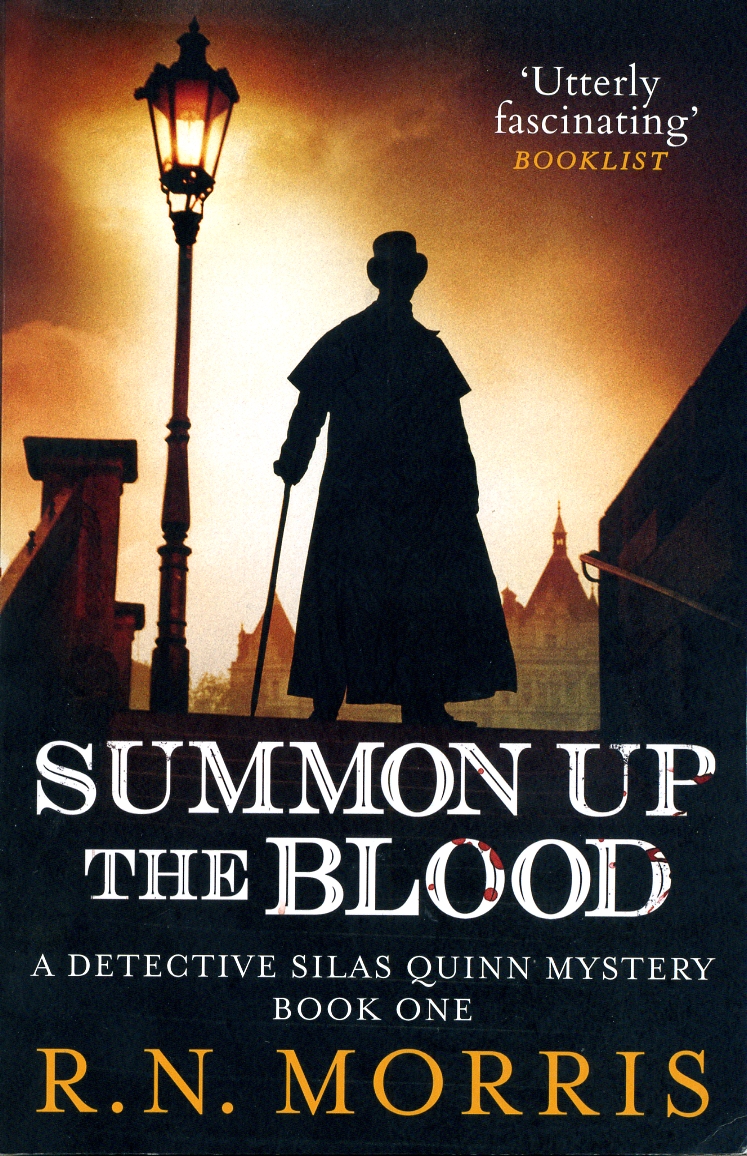 When a rent boy is found dead, his throat cut from ear to ear, there is initially little interest by the police, as the lad is just assumed to have paid the price for being in a risky line of business, but when the post mortem reveals that he has had every drop of blood drained from his body, Quinn is summoned and told to investigate. After a droll episode where Quinn decides to pose as a man smitten by “the love that dare not speak its name”, and blunders around in a dodgy bookshop, but he does find out that the dead youngster was called Jimmy, and had links to a ‘gentleman’s club’ where he would find men appreciative of his talents.
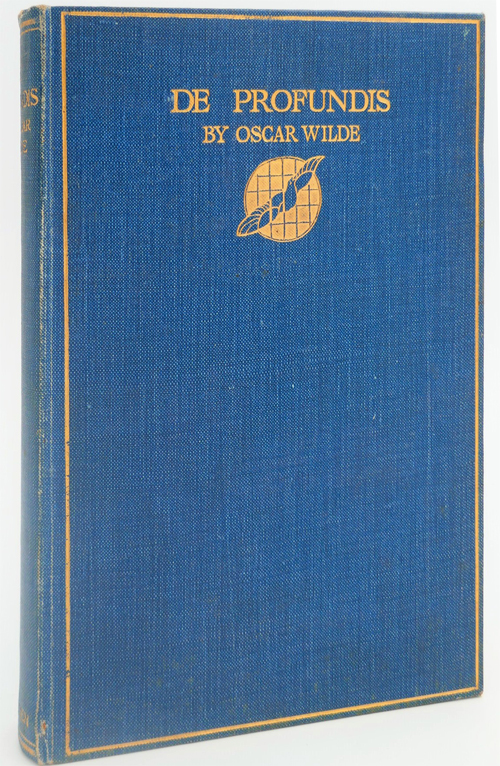 Thankfully, Morris makes no attempt to get in the politics of homosexuality and the law: his characters simply inhabit the world in which he puts them, and their thoughts, words and deeds resonate authentically. In 1914, remember, the trial of Oscar Wilde and the Cleveland Street Scandal were still part of folk memory. It’s an astonishing thought that had Morris been writing about similar murders, fifty years later in 1964, virtually nothing would have changed – think of the scandals involving such ‘big names’ as Tom Driberg, Robert Boothby and Ronnie Kray, and how their lives have been written up by such novelists as Jake Arnott, John Lawton and James Barlow.



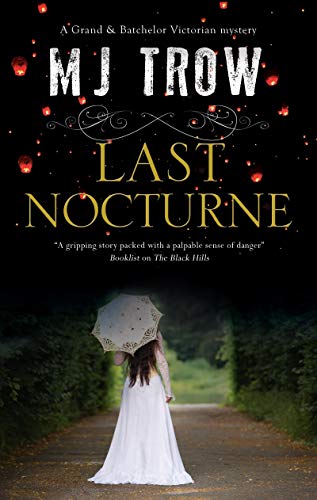 Grand & Batchelor are private investigators based in 1870s London and – much to the relief of James Batchelor, who is a terrible traveller – Last Nocturne has its feet securely on home soil. Grand is from a wealthy New England family, and fought bravely for the Union in The War Between The States, while Batchelor is a journalist by trade. Murder – what else? – is the name of the game in this book, and the victims are, you might say ‘on the game’. Cremorne Gardens were popular pleasure gardens beside the River Thames in Chelsea, but after dark, the ‘pleasure’ sought by its denizens was not of the innocent kind. ‘Ladies of the Night’ are being murdered – poisoned with arsenic – but the killer doesn’t interfere with them, as the saying goes, but instead leaves books by their dead bodies.


 fullybooked2017