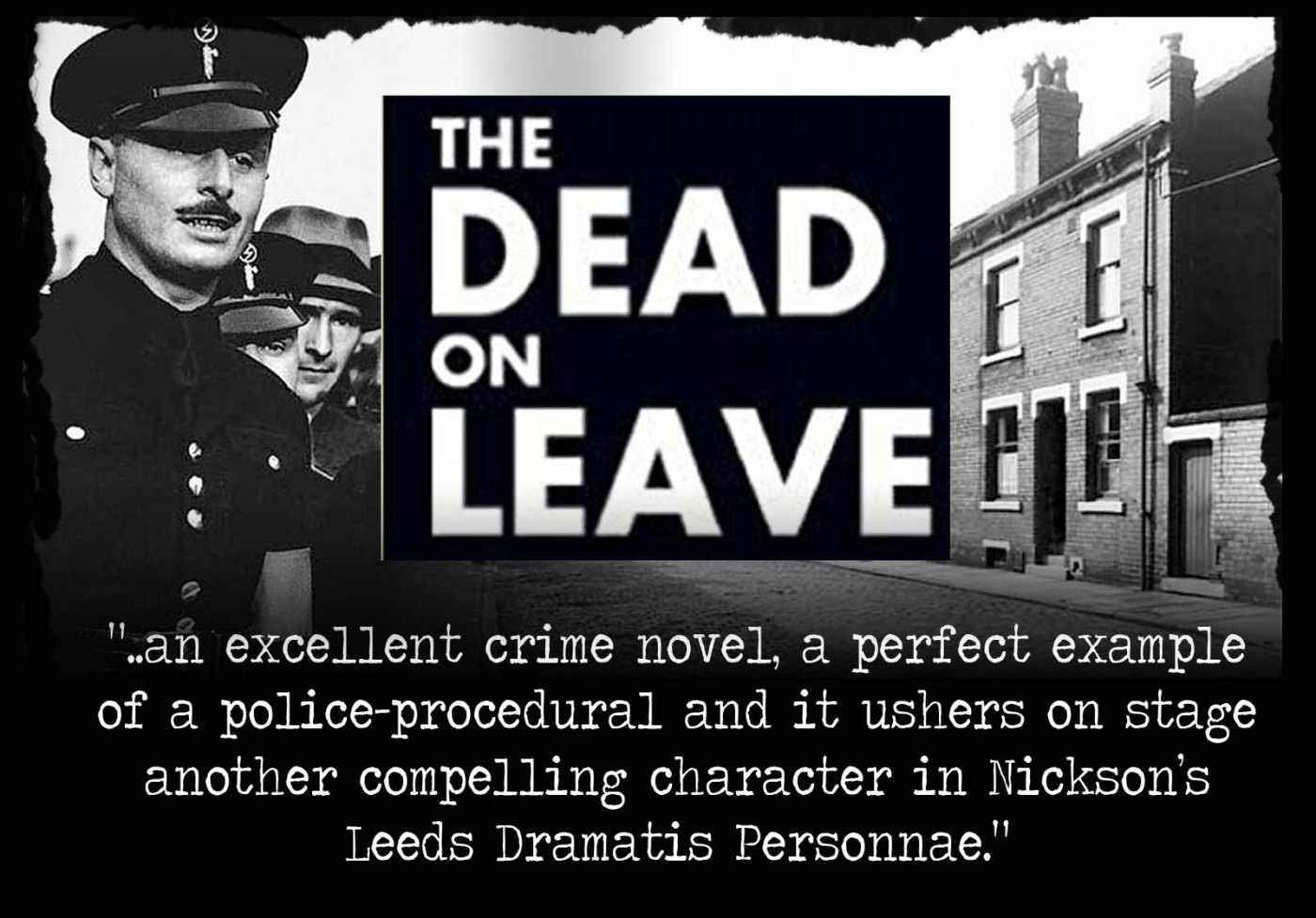

Leeds, Yorkshire. 1936. The once thunderous clatter of its mills and factories is now a hesitant stutter. Although the Great Depression is over, like the plague passing over biblical Egypt it has left many victims. Work is scarce, and men live in fear of being unable to put bread on the table for their wives and children. There is state relief, but it is a grudging pittance. When a widely disliked Means Test Inspector – a man paid to snoop around people’s houses rooting out efforts to cheat the system – is found garotted, there are few to mourn him. But murder is murder, and police detective Urban Raven must find the killer.
 It appears the dead man is a would-be follower of Sir Oswald Mosley, charismatic leader of the British Union of Fascists and, after an appearance in Leeds by Mosley and his Blackshirts turns into a riot, it is tempting for the police to think that the murder is politically inspired. As Raven tries to make sense of the killing, he has his own demons to face. Like many other Yorkshiremen, Raven is a Great War veteran, even though his war was brief and horrific. Only able to see active service in the dog-days of the conflict, he was unlucky enough to be close to a fuel dump which was hit by a stray shell. There’s a line from a song about that war, which goes,
“Never knew there was worse things than dying..”
Those words might be an extreme take on the scars of war, but Urban Raven’s face is a shiny and distorted mass of scar tissue, and he has become adept at ignoring the fascinated horror on people’s faces when they see him for the first time. His disfigurement might do him no favours with ordinary people, but has learned that it gives him an extra edge when dealing with criminals.
Against a fascinating background of the attempts by British fascists to emulate their German and Italian counterparts, and the ongoing saga of a member of the royal family who wants to marry an American divorcee (plus ça change?) Raven’s problems become deeper and wider as he falls foul of the secretive Special Branch, begins to suspect his wife’s fidelity and then – as if his problems weren’t serious enough – finds himself mired in a a political and criminal conspiracy.
As in every other Chris Nickson novel I have read, the city of Leeds is the central character. Whether it’s Richard Nottingham, Tom Harper, Lottie Armstrong or, now, Urban Raven treading its grand thoroughfares and mean ginnels, Leeds remains gritty, grimy, home to all manner of beauty and bestiality, but always vibrant. There is a wonderful feeling of continuity running through the books; it’s as if each police officer is carrying the baton handed on by a predecessor; Nottingham to Harper, Harper to Raven, Raven to Armstrong. The characters inhabit the same city, though; The Headrow is ever present, as are Briggate and Kirkgate, their suffixes names testifying to their antiquity.
 The Dead On Leave is very bleak in places. Hope is in short supply among the working people in Leeds, and men have no qualms about building a wooden platform for Moseley to rant from, because a job is a job; consciences are a luxury way beyond the reach of folk whose families have empty bellies. Nickson (right) is a writer, with social justice at the front of his mind and he wears his heart on his sleeve. I doubt that he and I agree on much in today’s political world, but I can think of no modern British author who writes with such passion and fluency about historical social issues.
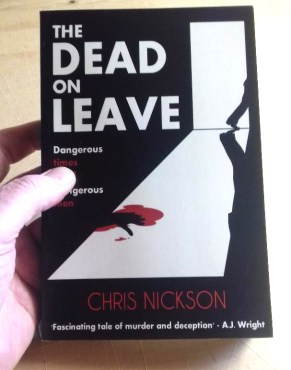
Make no mistake, though. The Dead On Leave is not a sermon, and it does not wag a finger in admonition. It is an excellent crime novel, a perfect example of a police-procedural and it ushers on stage another compelling character in Nickson’s Leeds Dramatis Personnae. The book is published by Endeavour Quill and is available now in Kindle and as a paperback.


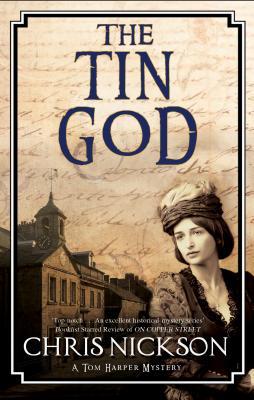 Outraged leading articles appear in local newspapers, but someone believes that the sword – or something equally violent – is mightier than the pen, and a homemade bomb destroys a church hall just before Annabelle Harper is due to speak to her supporters. The caretaker is tragically killed by the explosion, and matters go from bad to worse when more bombs are found, and several of the women candidates are threatened.


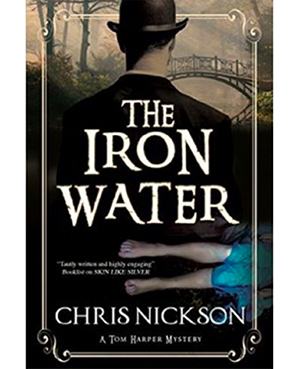


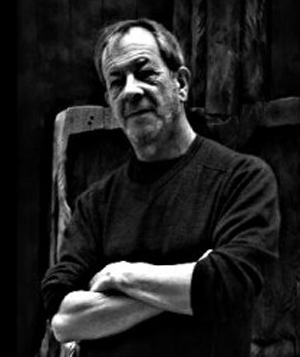 I have become a huge admirer of the writing of Chris Nickson (left) . He says on his website:
 You will be pushed to find better opening words to a novel even were you to search all year:
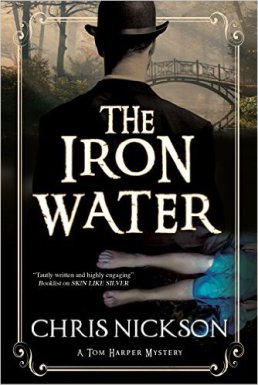

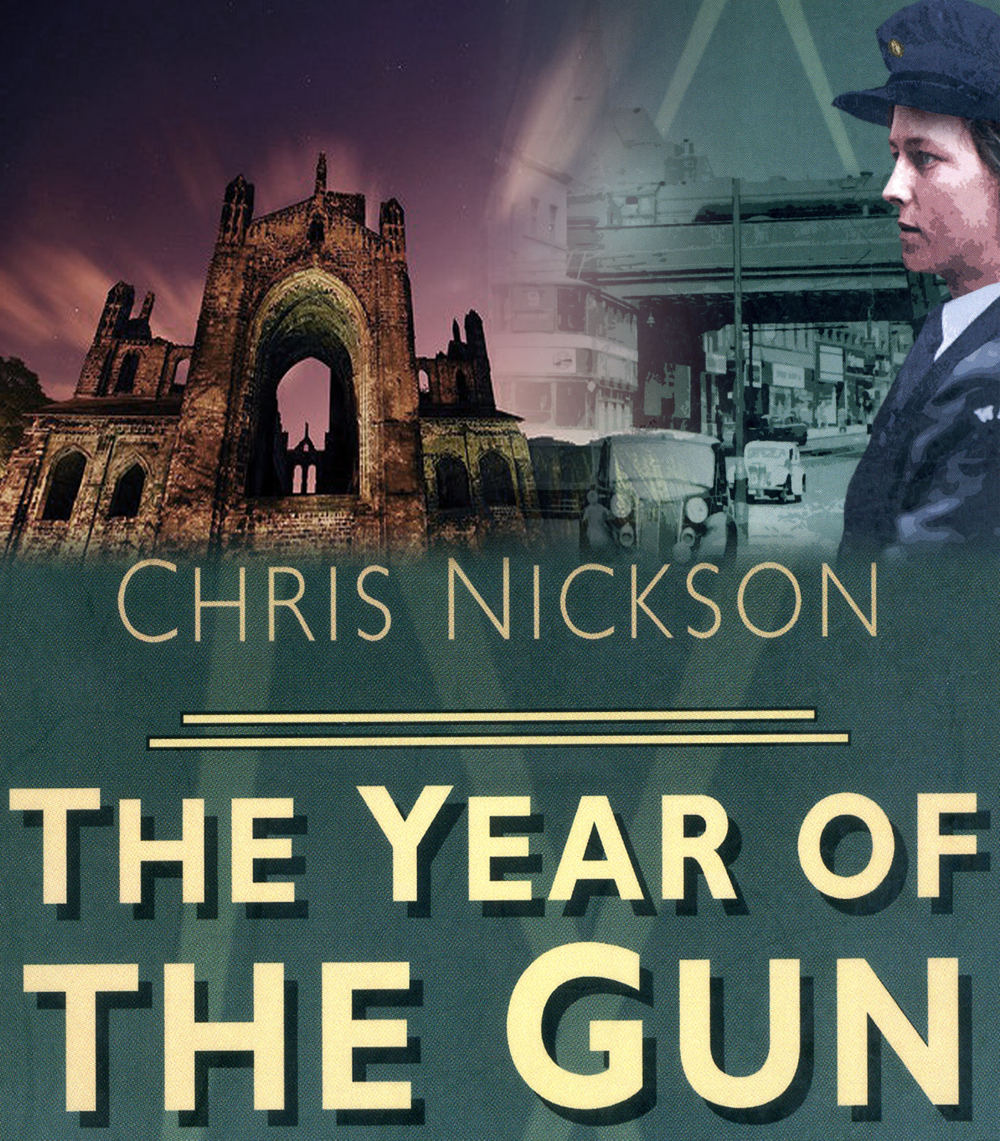
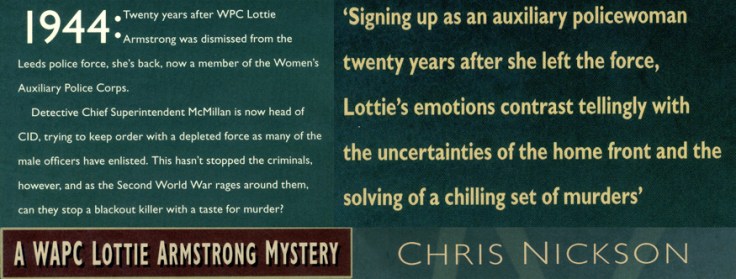
 So, Lottie is back in uniform again, but this time as a lowly member of the Women’s Auxiliary Police Corps. Her main job is to drive her boss, Detective Superintendent McMillan, to wherever he needs to go. McMillan, a veteran of The Great War, certainly needs his transport as a killer seems to be stalking vulnerable young women across the city. Kate Patterson, a Private in The Auxiliary Territorial Service (ATS) is found dead in the sombre ruins of the medieval Kirkstall Abbey. She is the first victim, but others follow, and Lottie and McMillan are soon convinced that the killer is a member of the American forces based in the city.
 You will note the date – spring 1944 – and will not need a degree in military history to work out what those ‘vital operations’ might be. Invasion or no invasion, McMillan still has a job to do, and the murderer is eventually cornered. Don’t anticipate a comfortable outcome, however. Nickson (right) doesn’t do cosy, and the conclusion of this fine novel is as dark as a blacked out city street.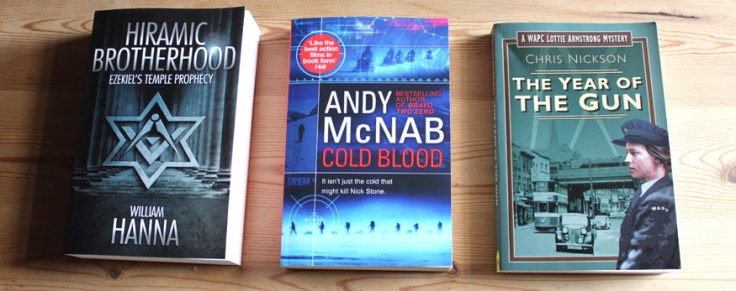
 HIRAMIC BROTHERHOOD, Ezekiel’s Temple Prophecy – written by
  COLD BLOOD – written by
  THE YEAR OF THE GUN – written by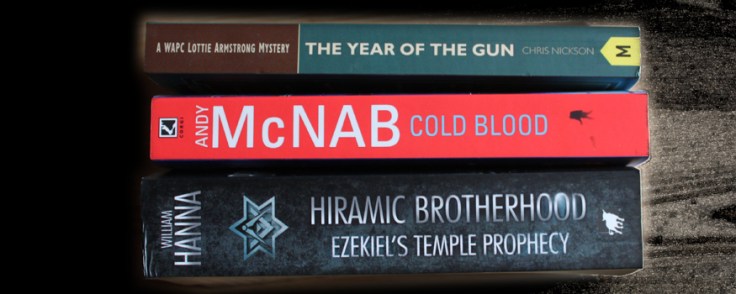


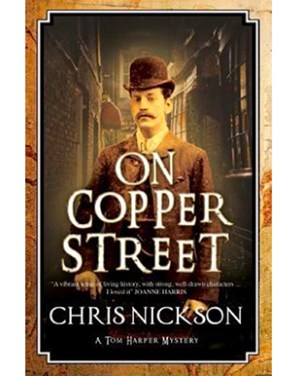
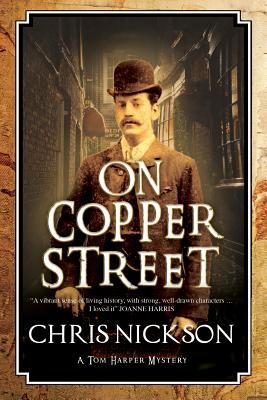
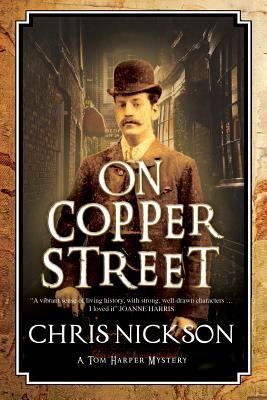 On Copper Street opens in grim fashion, with death and disfigurement. The dead pass in contrasting fashion. Socialist activist Tom Maguire dies in private misery, stricken by pneumonia and unattended by any of the working people whose status and condition he championed. The death of petty crook Henry White is more sudden, extremely violent, but equally final. Having only just been released from the forbidding depths of Armley Gaol, he is found on his bed with a fatal stab wound. If all this isn’t bad enough, two children working in a city bakery have been attacked by a man who threw acid in their faces. The girl will be marked for life, but at least she still has her sight. The last thing the poor lad saw – or ever will see – is the momentary horror of a man throwing acid at him. His sight is irreparably damaged.
 Nickson is a master story teller. There are no pretensions, no gloomy psychological subtext, no frills, bows, fancies or furbelows. We are not required to wrestle with moral ambiguities, nor are we presented with any philosophical conundrums. This is not to say that the book doesn’t have an edge. I would imagine that Nickson (right) is a good old-fashioned socialist, and he pulls no punches when he describes the appalling way in which workers are treated in late Victorian England, and he makes it abundantly clear what he thinks of the chasm between the haves and the have nots. Don’t be put off by this. Nickson doesn’t preach and neither does he bang the table and browbeat. He recognises that the Leeds of 1895 is what it is – loud, smelly, bustling, full of stark contrasts, yet vibrant and fascinating. Follow this link to read our review of the previous Tom Harper novel,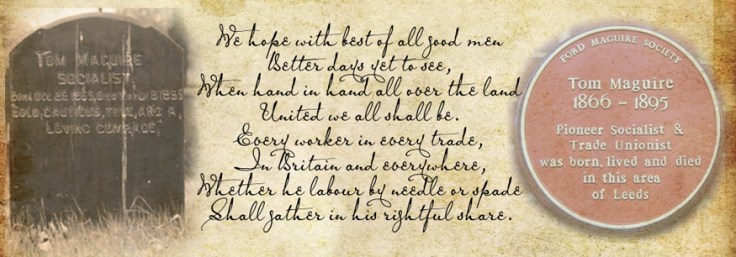


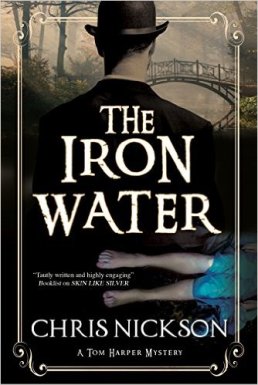 Two gang bosses, one of Irish heritage and the other local, are engaged in a tense truce. They will hold off attacking each other while Harper and his fellow officers track down the mysterious copper-headed man who appears to be connected to the deaths. Time is running out, however, and there is an even more calamitous threat hanging over the heads of the police. The powers-that-be want answers, and as Harper runs around in ever decreasing circles, he is told that if he doesn’t find the killer, then men from Scotland Yard will travel north and take over the case. This, for Harper and his boss Superintendent Kendall, will be the ultimate disgrace.


