

The idea of an investigating detective having what some people see as a disability is an interesting one. Jeffrey Deaver’s Lincoln Rhyme is a tetraplegic who, effectively, cannot do ‘normal detective things’; Nero Wolfe is morbidly obese and rarely leaves his apartment – his cases are solved by his brain power and Archie Goodwin‘s leg-work; more recently, Harry Bingham’s Fiona Griffiths suffers from Cotard’s Delusion, aka Walking Corpse Syndrome, which gives her telling insights into murder investigations. Tim Sullivan introduced us to Detective Sergeant George Cross in The Dentist (2021). Cross has Asperger’s Syndrome* I will say now that this was one of those rare book that I simply didn’t want to end. I noted the advance of my bookmark through the pages with definite sadness.
*Symptoms include an inability to understand figurative speech, obsession with detail, difficulty with recognising emotional responses and lack of social awareness and empathy.
Author Tim Sullivan, very cleverly, pairs George Cross with fellow DS Josie Ottey, a married woman who is as ‘normal’ as Cross is ‘odd’. She acts as a kind of buffer between Cross and the people he must question as part of the job. What Cross brings to the party, however, is a kind of cold objectivity which, to counteract his inability to read a facial expression or tone of voice, gives him a laser-like clarity regarding the truth and logic of what witnesses or suspects tell him. The Monk is set in the Bristol area, and a body is found in the intriguingly named Goblin Combe*, a rural beauty spot beloved of hikers and tourists.
*A small dry valley beneath a hill. Commonly used in southern and south western England.
The body, brutally beaten, is found strapped to chair and abandoned in a ditch. It turns out to be that of a Benedictine monk, Brother Dominic, who had only recently been reported missing from a nearby monastic community, St Eustace’s Abbey. The victim was killed elsewhere and the corpse dumped. There only a dozen members of the order, all men who, for whatever reason, have chosen to reject the modern world in favour of a life of prayer and contemplation. George Cross rapidly sees that there are two obvious lines of enquiry; was Brother Dominic killed because of something that happened within the walls of the monastery, or did his murder relate to something in his previous life, where he was a very successful investment banker?
 Without giving the game away, it is in Brother Dominic’s previous life where the clues are to be found, but answers don’t come easy for Cross and Ottey. Although there was a very clever plot twist involving the identity of the killer, I was far more involved with George Cross as a person than wondering who murdered Brother Dominic.The relationship between Cross and his father, the discombobulating effect of the re-emergence of his mother – lost to him since she left the family home when he was five – and his attraction to the unambiguous world of order, silence and simplicity of Dominic’s fellow monks, all contribute to the power of this compelling read.
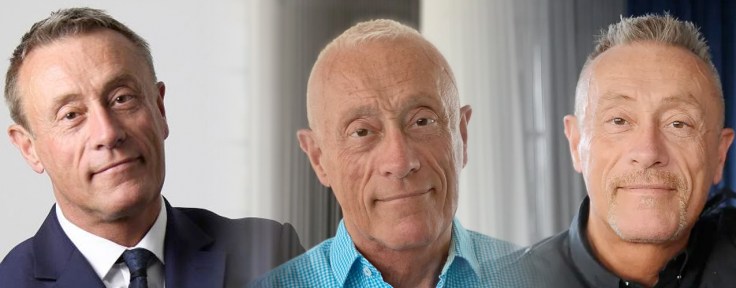
The book is full of little treats and bonuses. Rather in the same way that The Nine Tailors doubled as a treatise on the arcane art of bell ringing, we learn that George Cross is an accomplished church organist, despite the concept of religious faith being totally alien to him. He spends his spare time by pushing the murder case to a corner compartment of his mind, and patiently dismantling the dysfunctional abbey pipe organ, then cleaning and re-assembling the separate parts so that the instrument can once again play a part in the liturgy. Sullivan (above left) also gives the staple of police procedural novels – the recorded interview – a new twist; Cross’s ‘disability’ is a blessing when it comes to his interview technique, as neither the suspect nor the duty lawyer can make head nor tail of his literal approach to everything that is said. Mistaking him for an idiot, however, becomes a serious error of judgment.
Sullivan’s experience as a film director and screenwriter gives the narrative an intensely visual feel, but he wisely lets us picture George Cross in our own way, providing little or no physical description of him. The Monk is a brilliant police procedural with an engaging central character and a clever plot. Published by Head of Zeus, it will be out on 27th April.



 Leigh Russell (right) studied literature at university, and spent four years immersed in books. After that,she became a teacher, a career that enabled her to share her enthusiasm for books with teenagers. For years, she read other people’s books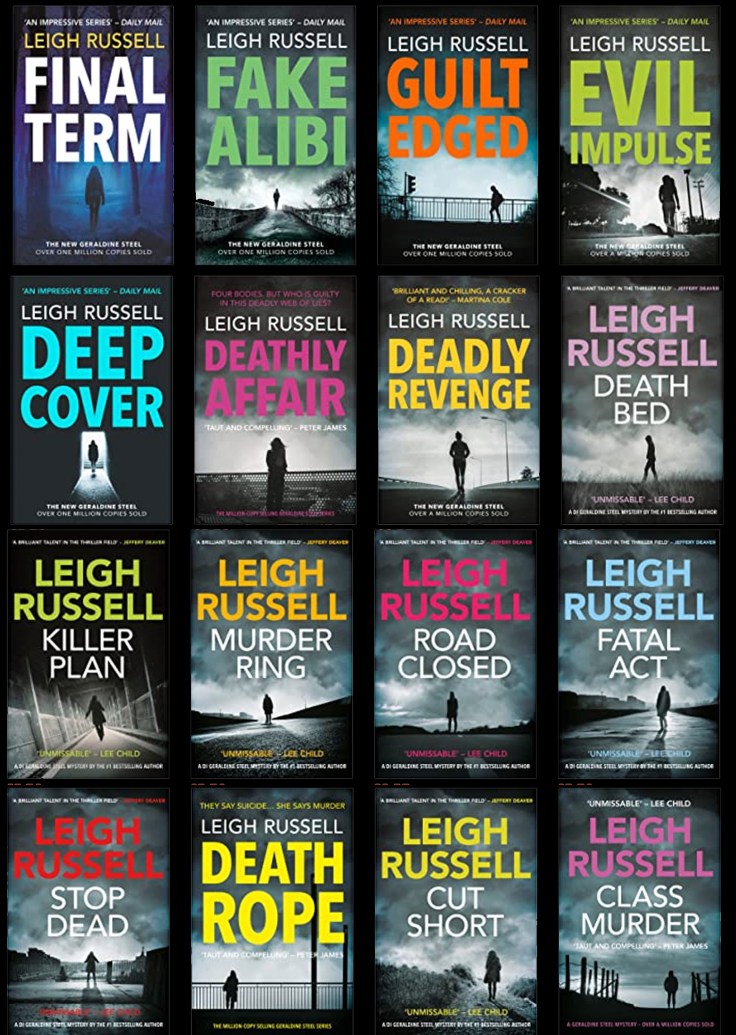





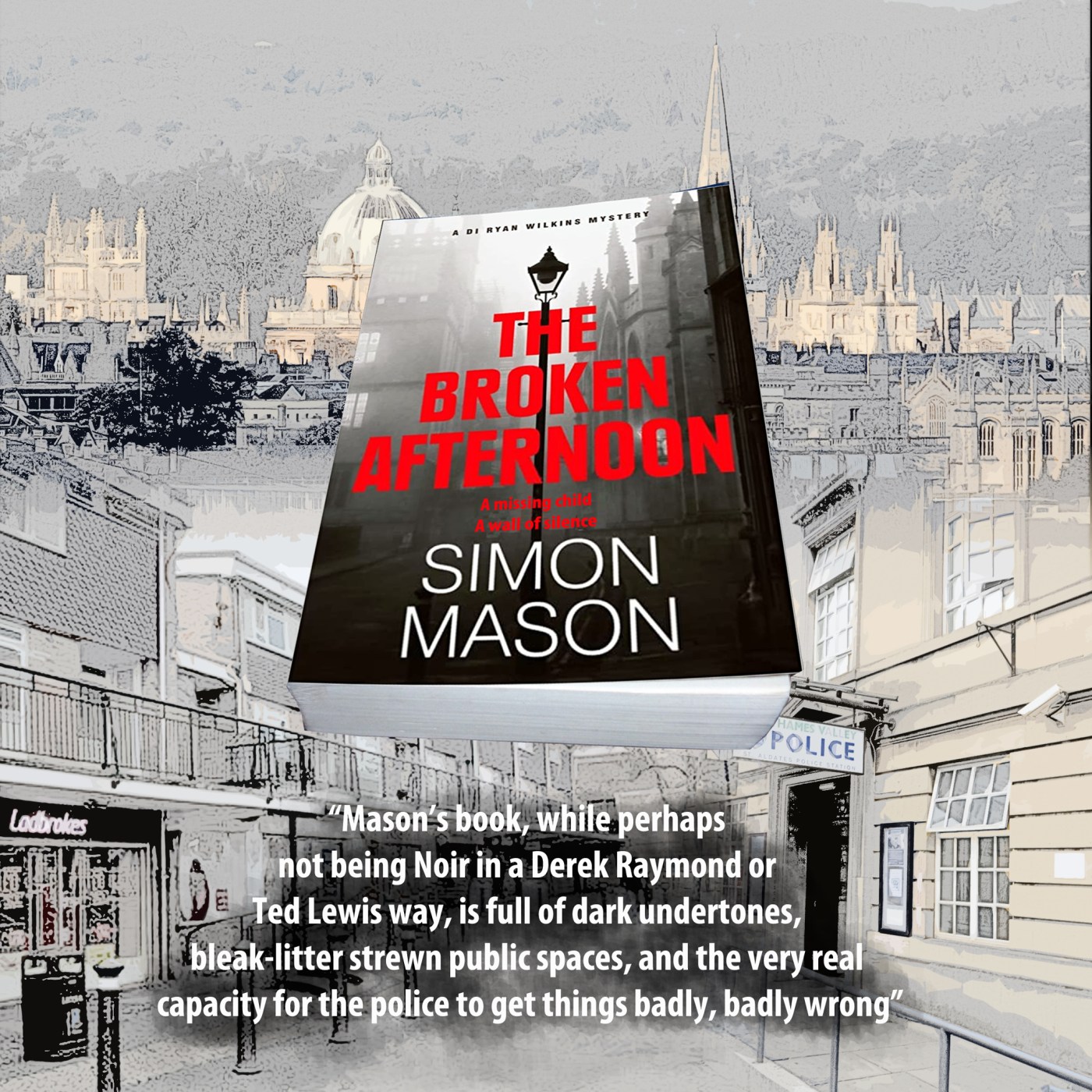

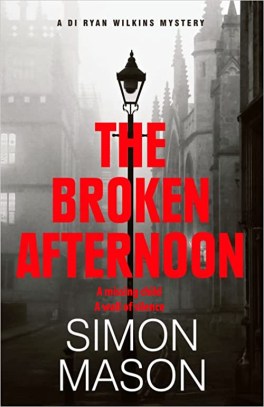 In Simon Mason’s A Killing In November we met Oxford DI Ryan Wilkins, and the book ended with his dismissal from the force for disciplinary reasons. In this book he is still in Oxford, but working as a security guard/general dogsbody at a van hire firm. His former partner, also named Wilkins, but Ray of that ilk, is now heading up the team that was once Ryan’s responsibility, and it is they who are tasked with investigating the abduction of a little girl from her nursery school.
 I am sorry, but that is not how I see this book. Yes, it is set in and around Oxford, but apart from The Broken Afternoon being every bit as good a read as, say, The Silence of Nicholas Quinn or The Remorseful Day, that’s where the resemblance ends. Mason’s book, while perhaps not being Noir in a Derek Raymond or Ted Lewis way, is full of dark undertones, bleak litter strewn public spaces, and the very real capacity for the police to get things badly, badly wrong. Simon Mason (right) has created coppers who certainly don’t spend melancholy evenings gazing into pints of real ale and then sit home alone listening to Mozart while sipping a decent single malt.

 Dr Augusta Bloom is a psychologist who specialises in the criminal mind. Her business partner is Marcus Jameson, a former British intelligence agent. Bloom is often employed by the police as a consultant when a particular case demands her particular skill-set. The killers Bloom is requested to track down have struck twice, leaving only burnt matches as a clue. I use the plural ‘killers’ advisedly, as we know they are a team, but Bloom and the police have yet to discover this.
 Augusta Bloom is an interesting creation. She is a loner, and not someone who finds personal relationships easy, not with Marcus Jameson nor with her notional boss, DCI Mirza, who is deeply sceptical about Bloom’s insights. When the police finally join all the dots, they realise that rather than two killings, there have probably been as many as eleven, which ramps up the pressure on Bloom and Jameson. Leona Deakin, (right) as one might expect from a professional psychologist, has constructed an complex relationship between Bloom, Walker and Jameson. As readers, we are not spoon-fed any moral certainties about the trio. Rather, we infer that their boundaries are, perhaps, elastic. As John Huston (as Noah Cross) said in Chinatown:




 fullybooked2017