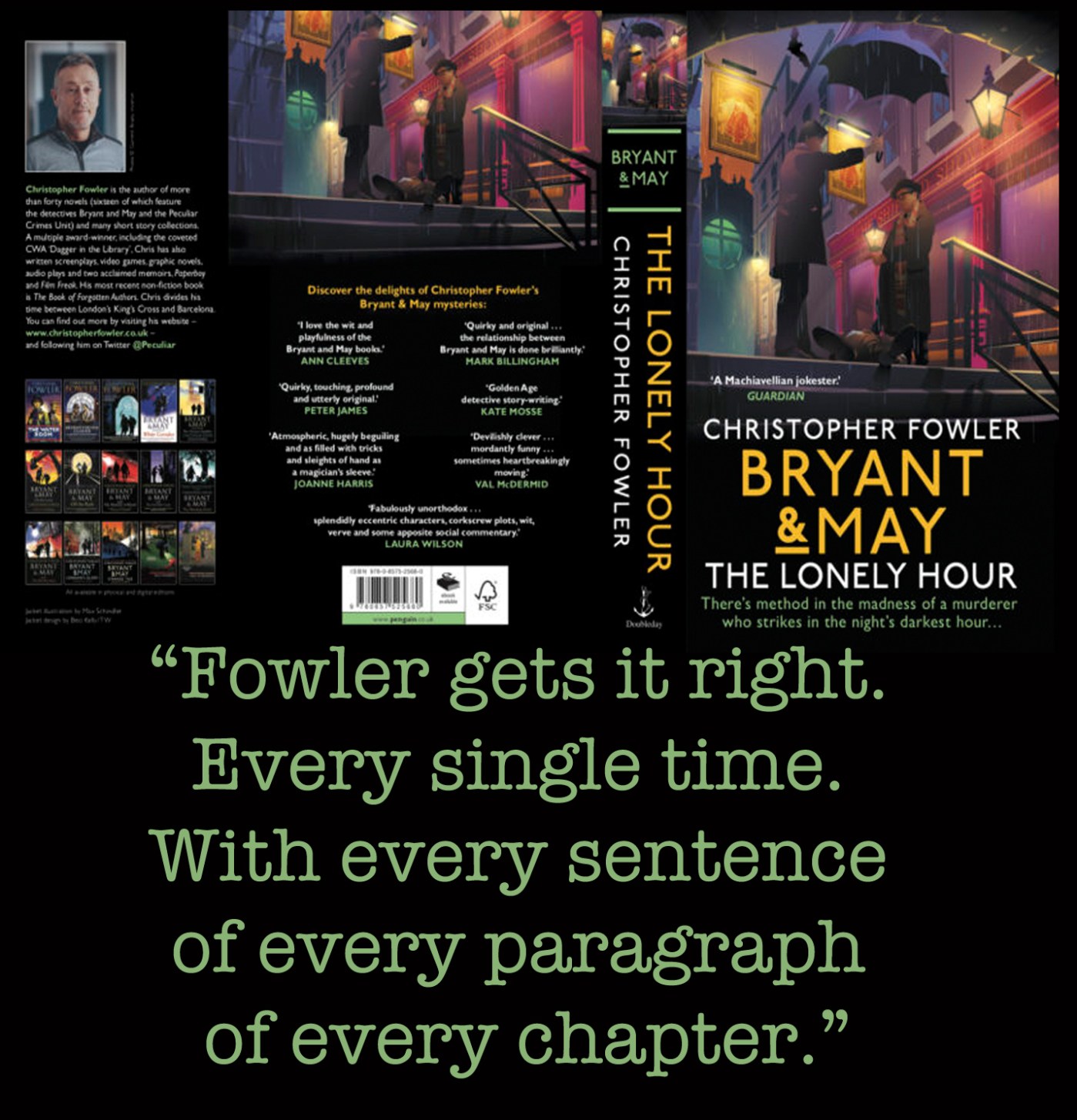
The impossibly geriatric constabulary codgers Arthur Bryant and John May return for another journey into London’s darkside in pursuit of those who kill. This time, the killer appears to be armed with a trocar – an obscure but deadly surgical instrument originally intended to penetrate the body allowing gases or fluid to escape. From the undergrowth of a copse on Hampstead Heath, and the unforgiving undertow of the Thames, via an exclusive multi-story apartment complex, to the pedestrian walkway of a Thames bridge, the victims seems to have nothing in common except the time of their demise – the deadly hour of 4.00 am.
 Bryant and May – and the rest of the Peculiar Crimes Unit – have been threatened with closure before, but this time their impatient and disapproving police bosses mean business. The PCU, both collectively and individually flounder around trying to work out what connects the corpses, and who is expertly wielding the trocar. Like Andrew Marvell’s ‘Time’s Winged Chariot’, the accountants and political schemers of the Metropolitan Police are ‘hurrying near’, and failure to catch this killer will certainly mean that the shambolic HQ of the Peculiar Crimes Unit on Caledonian Road will soon be in need of new tenants.
Don’t be misled by the jokes, delightful cultural references, and Arthur’s frequent put-downs of the PCU’s hapless boss, most of which go over Raymond Land’s head but, fortunately, not ours. Physicists will probably say that their world has different rules, but in literature light can only exist relative to darkness, and Fowler does not allow the chiffon gaiety within the Peculiar Crimes Unit to disguise a dystopian London woven from a much darker thread. He says:
“Approaching midnight, the black and grey striped concourse of King’s Cross Station remained almost as busy as it had been during the day. Some Italian students appeared to be having a picnic under the station canopy. A homeless girl ms on her knees next to a lengthy cardboard message explaining her circumstances. A Jamaican family dressed in home-made ecclesiastical vestments were warning everyone that hell awaited sinners. A phalanx of bachelorettes in tiny silver dresses, strappy shoes and bunny ears marched past, heading to their next destination like soldiers on a final tour of duty. Inside the station, tourists were still lurking round the Harry Potter trolley that had been originally set there as a joke by the station guards, then monetized when queues appeared. As flinty-eyed and mean as it had ever been, London was good at making everyone pay.”
If a better paragraph about London has been written in recent years, I have yet to read it
Fowler’s London is a place where the same streets, courtyards, alleys and highways have been walked for centuries; Roman legionaries, Norman functionaries, medieval merchants, Tudor politicians, Restoration poets, Georgian gamblers, Victorian philanthropists, Great War Tommies, and now City spivs with their dreams and nightmares spinning about in front of them on their smartphones – all have played their part in treading history down beneath their feet into a compressed and powerful seam of memory. This memory, whether they know it or not, affects the lives of those who live, work, lust, learn and – ultimately – die in London. Other writers, notably Peter Ackroyd, have been drawn to this lodestone and tapped into its power. Some authors have taken up the theme but befuddled readers with too much arcane psychogeography. Fowler gets it right. Every single time. With every sentence of every paragraph of every chapter.
Bryant is neither Mr Pastry, Charles Pooter nor Mr Bean. He is as sharp as a tack despite such running gags as his coat pockets being full of fluff covered boiled sweets long since disappeared from English shelves. If we knew no better, we might describe him as having a personality disorder somewhere on the autism spectrum, but there are precious moments in The Lonely Hour where the old man brings himself up short with the realisation that he is, most of the time, chronically selfish.
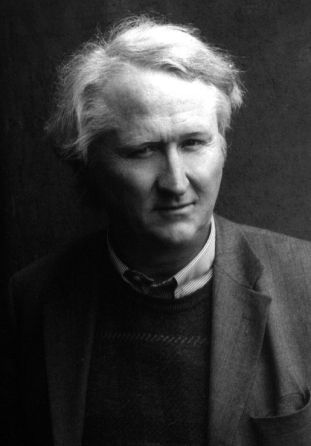
 Thanks to Bryant’s genius, the mystery is solved and the killer brought to justice, but these are certainly the grimmest days ever for the PCU, and as this brilliantly entertaining story reaches its conclusion, Fowler (right) slowly but irrevocably turns the tap marked Darkness to its fully open position. The Lonely Hour is published by Doubleday and is out now.
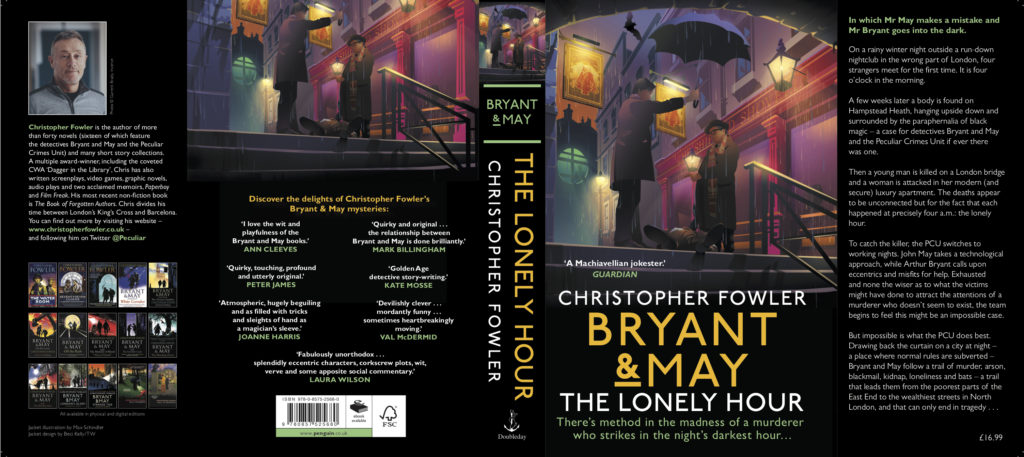










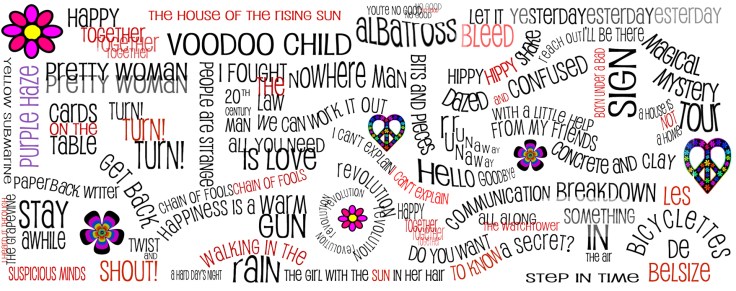
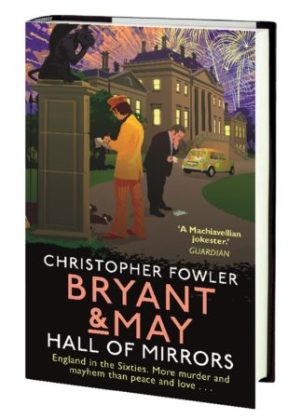 If a more extraordinary duo of fictional detectives exists than Christopher Fowler’s Bryant & May, then I have yet to discover them. The peculiar pair return in Hall of Mirrors for their fifteenth outing, and this time not only are they far from their beloved London, but we see a pair of much younger coppers on their beat in the 1960s. Fowler’s take on the period is typified by each of the fifty chapters of the novel bearing the title of a classic pop hit. We are also reminded of the strange fashions of the day.


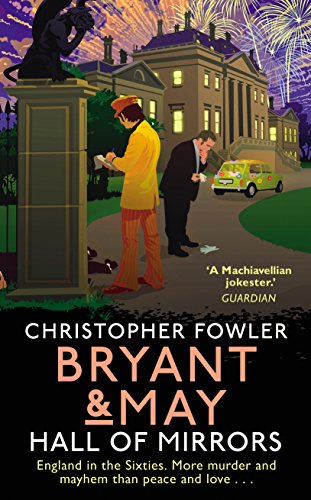 The dust jackets of the Bryant & May novels are a work of art in themselves, but between the covers is where the true genius lies. Arthur Bryant and John May are detectives working for the Peculiar Crimes Unit, an imaginary department of London’s Metropolitan Police. Their adventures take them mostly to curious and forgotten corners of London where the past is just below the modern surface. Fowler has many talents as a writer, not least of which is his comedic talent. He is a direct descendant of English humourists such as George and Weedon Grossmith and HV Morton, and the jokes come thick and fast amid the serious business of solving murders or strange crimes.

 The Urban Dictionary tells me that a “keeper” is
  STRANGE TIDE is set, as you may expect, in London, but it’s a London few of us will ever see. It’s a world of forgotten alleyways, strange histories, abandoned amusement arcades, inexplicable legends and murder – always murder. Strange Tide was my book of the year for 2016, and you can read my review of it by following

 Other murders follow, and each has been committed in one of the parks and gardens – the Wild Chambers – which are scattered throughout central London. Are the gardens linked, like some erratically plotted ley line? Why are the murders connected to a tragic freak accident in a road tunnel near London Bridge? Why are the murder sites speckled with tiny balls of lead?
 Along the way, Fowler (right) has the eagle eye of John Betjeman in the way that he recognises the potency of ostensibly insignificant brand names and the way that they can instantly recreate a period of history, or a passing social mood. At one point, Bryant tries to pay for a round of drinks in a pub:

 To London, and most elderly pair of investigators currently still working. Existing fans of Arthur Bryant and John May have come to expect quirky humour, clever wordplay, an unrivaled knowledge of the topography and history of London, and a Betjeman-esque poetry of description which sometimes appears humdrum, but is often very profound. Christopher Fowler loves jokes that involve popular culture and brand names, and readers of a certain age will know that even the naming of the two elderly investigators is a little gem of a joke. The cobwebby pair work for the Peculiar Crimes Unit, an esoteric (and purely fictional) branch of the Metropolitan Police. They are constantly under threat of being pensioned off, but their investigations always take them to mysterious parts of London (usually entirely factual). Arthur Bryant – as usual – baffles and exasperates his colleagues, but in this tale his arcane knowledge of London helps the Unit solve the open air version of The Locked Room Mystery. The title? This is from Fowler’s erudite and entertaining website.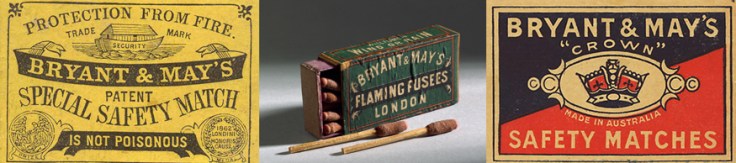
 This week’s award for the most menacing title must go to Peter Lovesey (right) and his Somerset and Avon copper, Peter Diamond. More used to solving high profile murder cases, Diamond is not best pleased when he is called in to investigate an apparent motoring accident. Tragically, a police vehicle, speeding late at night to a possible crime scene, spins off the road, killing one of the officers. Hours later, Diamond discovers that the officer is not the only victim. On an adjacent embankment, undiscovered by the emergency teams, is the rider of a motorised trike. The man is close to death, but Diamond administers CPR successfully enough for the victim to be taken to hospital, where he remains in a critical condition. Diamond, however, is not able to sit back and bask in the warm knowledge that he has carried out a valuable public service. His bosses are desperate that the whole RTA is not blamed on the police force, but what causes Diamond the most anxiety is the emerging likelihood that the man whose life he saved is almost certainly a serial killer.

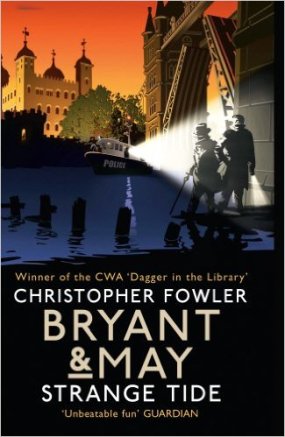 But all is not well. Arthur Bryant is physically sound enough, but his encyclopaedic mind is starting to betray him. He is suffering episodes of serious dislocation. He causes havoc in what he thinks is an academic library when he’s actually in the soft furnishings department of British Home Stores. While soaking up the ambiance of a Thames-side crime scene, all he can sense are the sights, sounds and smells of the early 20th century docks. John May and the more sprightly members of the PCU have to keep Arthur virtually under lock and key, for his own protection.


 fullybooked2017