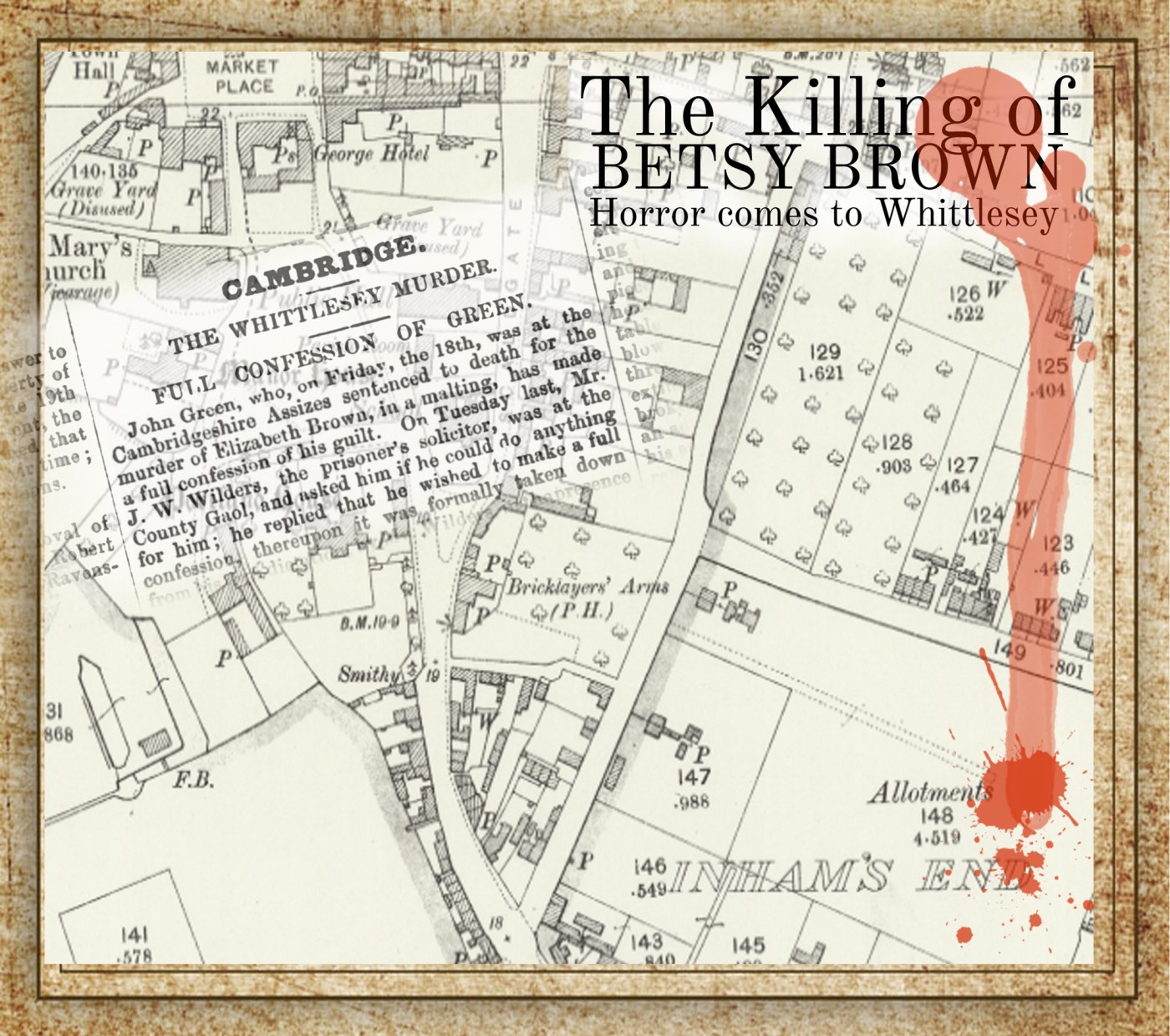
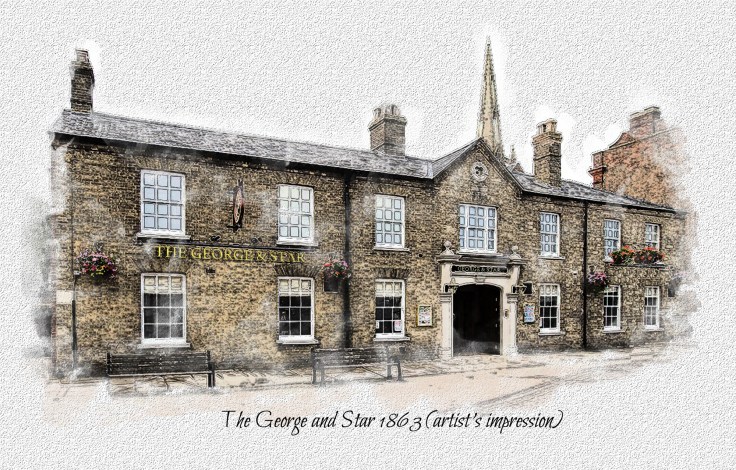
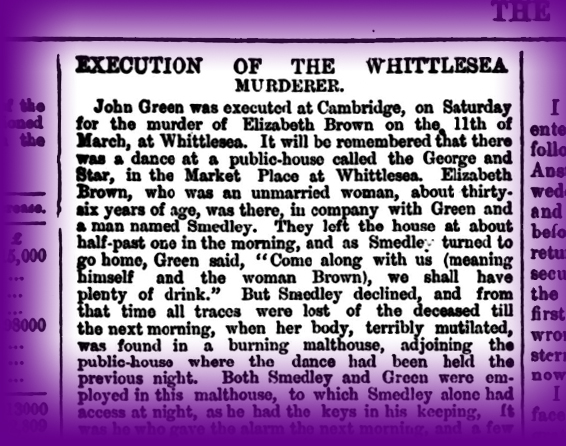
SO FAR – Cambridge, 1863. Whittlesey man John Green has been convicted at the Cambridge Winter Assizes of murdering Elizabeth ‘Betsy’ Brown on the night of 11th/12th March, in the maltings behind the George and Star inn.
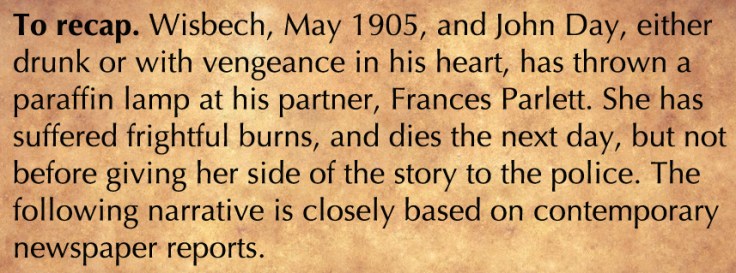
There was to be a final chapter in this horror story. While waiting for his rendezvous with Hangman Calcraft, Green asked to be allowed to make a full confession. It is highly unlikely that he was literate, so his solicitor, a Mr J. W. Wilders took his dictation, in the presence of the prison governor. It was grim stuff.
“Smedley and I locked up the malting on the night of the 11th March, about eight o’clock, and went together to the George and Star public-house, and I went into the store-room with Samuel Boyce to remove some forms up into the dancing room. At the time Boyce was taking the forms out of the store-room I drew a bucket full of gin from a puncheon in the same store-room. I then hid the pail of gin in corner behind some wood in the George and Star yard. I then went into the tap-room, where I saw Smedley, and told him what I had got.
Smedley and I then went together and took it to the malting and the malting door. I carried it, and he unlocked the door leading to the malting. When we got into the furnace room Smedley kept watch while I poured the gin into a stone jug covered by a whicker basket. We then sat down and drank a little, and then returned to the George and Star. Smedley said, “We won’t lock this (meaning the kiln door), as we may return again.: But we will lock the big gates.’
Smedley and I returned to the dancing room at the George and Star, and remained there until twelve o’clock, and I did not see Smedley afterwards. I then went down stairs into the tap-room and had some beer, and also some conversation with Elizabeth Brown and Ann MacDonald. About one o’clock in the morning the deceased, Mac Donald, and myself, went outside the George and Star door and had some conversation.
Elizabeth Brown said to me, “Can we get into the malting ?” and I said, “Yes, I have got a bottle of gin there,” and she replied, “Then let’s go.” She asked MacDonald to go with us, saying, “we shall have plenty to drink,’ and she said “No, one woman with one man is plenty;” and we then left MacDonald and went round Mr. Waddelow’s by the Church wall, through the little gate into the George and Star yard which adjoins the malting premises, and got on to the cow crib over the wall on to the kilderkin into the malting yard in the manner described at my trial, and went into the kiln through the door which Smedley and I had left unlocked.
 She (Brown) was at that time smoking a long pipe, and when we got into the furnace room, I drew a quart pitcher full of gin out of the bottle, and sat down on the settle and drank most of it, if not all of it, both of us smoking. We had sat down for half hour, when I wanted to have connection with her, but she would not. I pulled her off the settle. She kicked and knocked about, and got hold of my hair, and I tried and tried as long as I could to have connection with her, and when she would not, I hit her on the body with my fists, and she fell on the floor. I then kicked her on the body more than once. She did not scream out. I then felt so bad that I did not know what to do, as I felt I had killed her. I stooped down and got hold of her and shook her, and I found that she was really dead. I then drank hearty of some gin.
There were some sacks lying on the settle which I took off and put round her, and set fire to them, putting a shovel full of hot cinders on the sacks. I sat down on a block against the furnace and watched the burning. After I had watched the burning for about an hour, I got up and drank some more gin and stirred up the burning sacks. I then sat down again and went off to sleep, I expect. When I woke and got up from the block, I was so stifled with the smoke that I did not know where to go, and at last I found the door in the coke place leading into the yard, and got out and over the wall and went running home.”
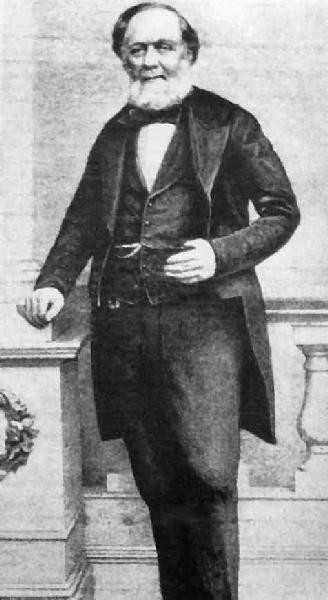
John Green was hanged at 9.00 am on Saturday 2nd January, 1864. The hangman was William Calcraft (above left)
FOR MORE INFAMOUS CAMBRIDGESHIRE MURDERS
CLICK THE IMAGE BELOW


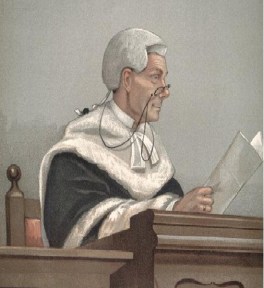
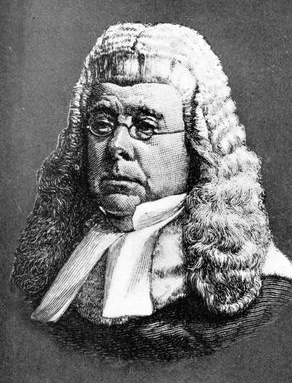 The presiding judge was Sir Samuel Martin QC (1801-1883), Anglo-Irish Baron of the Exchequer (left). The first thing he did was to dismiss all charges against William Smedley. He said: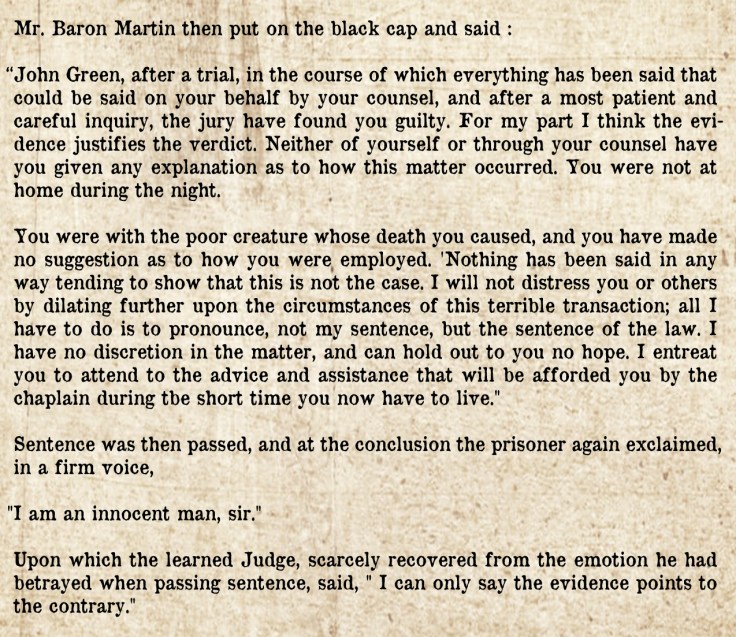






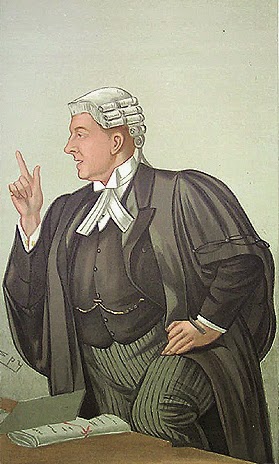
 “Charles Wright and George Oldham, two elderly men, were indicted for the manslaughter of Robert Roughton, at Wisbeach, on the 16th of December last. A bill for murder had been sent up to the Grand Jury, but was thrown out by them. Mr. Naylor appeared for the prosecution ; the prisoner Oldham was defended by Mr. Horace Browne. It appeared that a dispute had arisen between the prisoners and the deceased on the evening in question, and they were seen struggling together on the banks of the river, in which the body of the deceased was afterwards found on the 21st of January. The evidence showed that both the prisoners and the deceased were the worse for drink, and that the deceased, who was a much younger man than either of the prisoners, was the originator of the quarrel. The river bank at the place in question was sloping, and at the place where the cap of the deceased was found there was a gap in the rails by the river-side. Mr. Horace Browne, for the defence, urged that there was nothing in the evidence to show that it was any. thing but an accident. The Jury found the prisoners guilty, and his Lordship (Mr Justice Brett, left) passed a sentence of six months.”




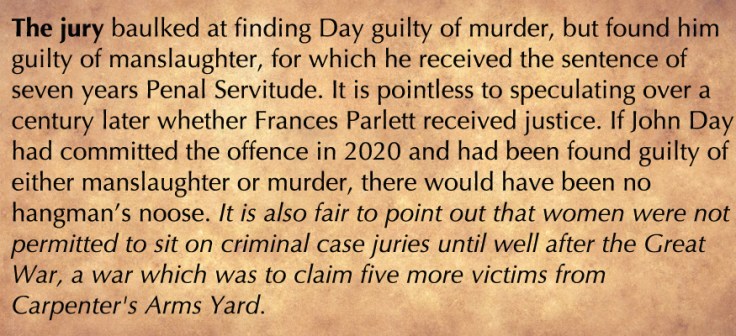
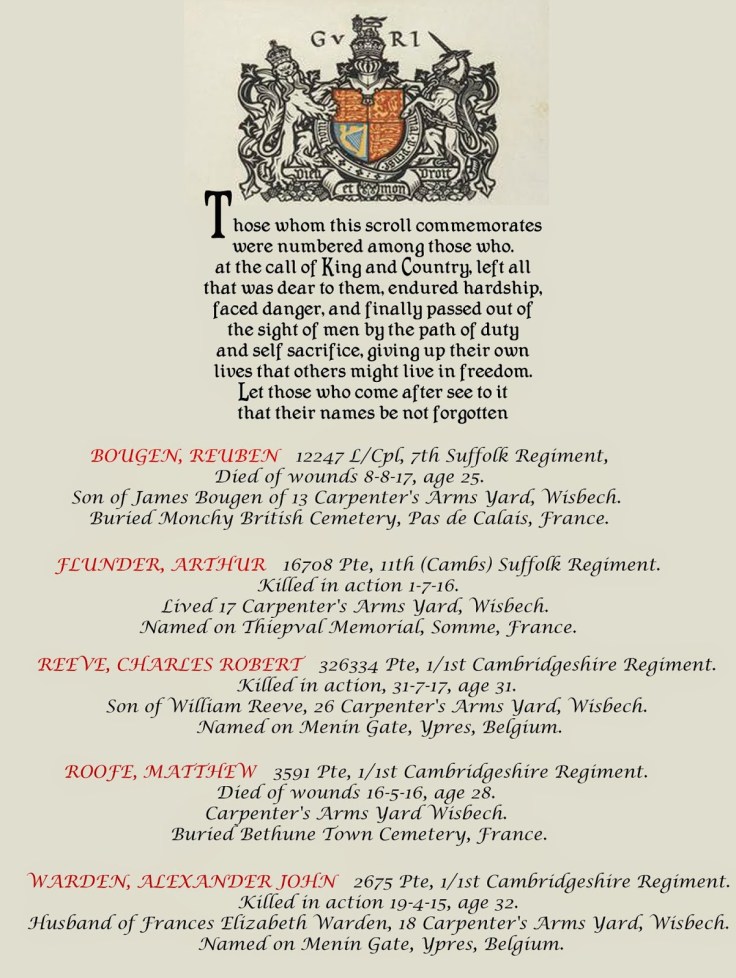
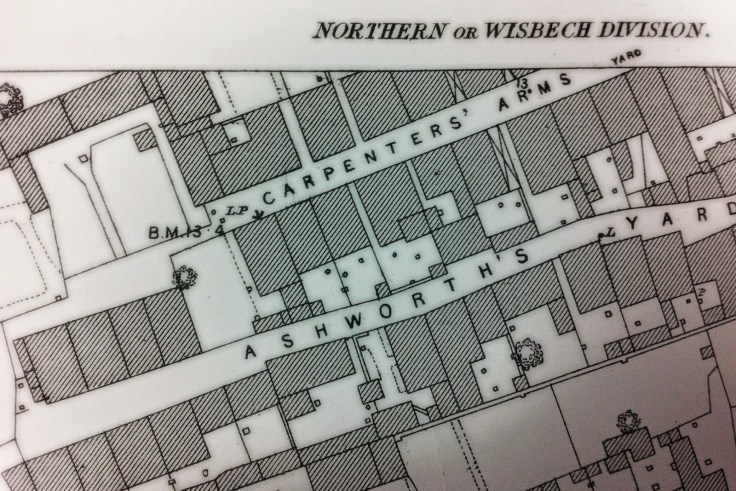
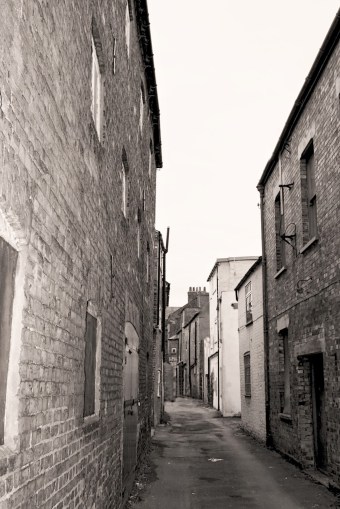 The photo on the right is of an existing Wisbech alley which, due to its central position has survived more or less intact, and gives us an idea of what the Yard might have looked like. Carpenter’s Arms Yard was earmarked for slum clearance in the late 1920s along with its near neighbour Ashworth’s Yard, and both were gone before the outbreak of World War II. What is now St Peter’s Road was probably more prosperous than either of the Yards, and its terraced houses were spared the redevelopments of the 1930s. It is tempting to look back and wish that more of old Wisbech had been preserved, but we would do well to remember that conditions in these old houses would be awful, even by standards of the time. Damp, insanitary and built on the cheap, these grim places contributed to the general poor health and high death rate of the time. The cemetery at the bottom of the slight slope of Carpenter’s Arms Yard was actually instituted as an overflow burial ground when a cholera epidemic struck the town earlier in the 19th century.

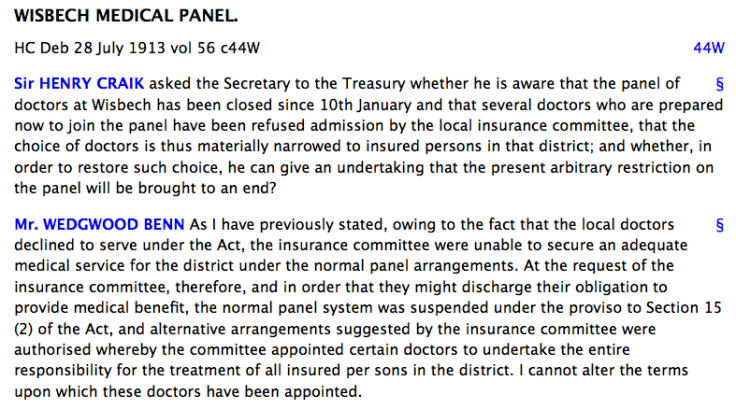
 In Wisbech this was a problem
 So, the people’s favourite,


 fullybooked2017