

 I was working in Australia when Peter Weir’s 1975 film Picnic At Hanging Rock premiered. I remember pub and dinner party talk for months after being dominated by interpretations and explanations about what might have happened to the ‘lost girls’. In the endpapers of Last Time I Lied American author Riley Sager, (left) acknowledges his debt to this film (and the short story on which it was based). Instead of a 1900 Melbourne, Sager beams us into up-country New York State in, more or less, our times.
When Emma Davis, a skinny and gawky thirteen year-old just on the verge of young womanhood, wins a place at a prestigious summer camp for privileged teenagers, she falls under the spell of three older girls with whom she shares a cabin. In particular, the assured and sexually aware Vivian captivates Emma, just as she has captivated the other two, Natalie and Allison.
Camp Nightingale was created by a timber baron in the early years of the twentieth century. His master design featured a lake and, as there wasn’t one to hand, he simply evicted the inhabitants of a nearby valley, dammed the river and created his own huge water feature, Lake Midnight. Now the property is in the hands of his descendant, Francesca Harris-White, who presides in benign dictatorship over the gathering of rich city girls every summer.
 Emma’s summer idyll is destined to come to an abrupt and tragic end, however, when the three older girls in the cabin disappear one night, never to return. Despite the massive search and rescue operation, Vivian, Natalie and Allison remain missing, and Franny is forced to close the camp in disarray.
Now, fifteen years on, Emma Davis is a successful artist who is on the verge of giving up her day job in an advertising agency to paint full time. Her huge canvases create a stir in the New York art world, but they contain a hidden image known only to the artist. Each painting begins as a depiction of the three missing Camp Nightingale girls, who are progressively painted over by ever more intense foliage until only tantalising glimpses of them remain.
Emma is shocked when she receives an invitation to have lunch with Franny, and her shock turns to panic when she learns that the heiress plans to reopen Camp Nightingale and wants Emma to return for the season as artist in residence. Can she bear to relive the tragic events of that fateful summer? What is Franny’s real motive for reopening the camp? And, most importantly for us as readers, is Emma providing us with a classically misleading unreliable narrative?
Emma does return to Camp Nightingale and, naturally enough, since this is a thriller all about fate and coincidence, she has to sleep in the cabin called Dogwood – the selfsame one which she shared with Vivian, Natalie and Allison. Her new companions are Miranda, Krystal and Sasha. But now, of course, they are the giggly fifteen year-olds, and she is the mature and experienced woman.
Riley Sager packs the story with the literary equivalent of Improvised Explosive Devices, destined to go off at any moment with devastating consequences. We have Theo, Franny’s adoptive son, the subject of Emma’s massive and breathless crush all those years ago. There is Ben, the moody ‘bit of rough’ who has always been the camp maintenance man. Added to the mix are Lottie and Becca, both ‘survivors’ of the first downfall of Camp Nightingale. Above all – or, better, beneath all – is the moody presence of Lake Midnight itself, beneath which lie the stone memories of the displaced villages from over a century ago. Incidentally, if anyone can think of something more dramatically Gothick than Sager’s drowned lunatic asylum, whose roof appears only when the lake suffers from drought, I will give them a prize!

Last Time I Lied cleverly alternates between Emma’s recollections and the present time. Events in the reopened Camp Nightingale come to resemble nothing more nor less than a disturbing re-enactment of a cold-case crime, where the spectral presence of the fifteen-years-lost girls looms larger and larger with every page.
The eventual solution to what happened to the three girls is dazzling, ingenious, gasp-provoking – and fairly improbable – but, hey, this is a cleverly constructed and blissfully entertaining novel and no lesser person than Aristotle, in his Poetics, declared
“for it is probable that many things may take place contrary to probability.”
Riley Sager is the pseudonym of a New Jersey author who has published several mysteries under his own name, Todd Ritter. Last Time I Lied is published by Ebury Press (an imprint of Penguin Random House) and will be out on 12th July.


 Alex Cross is in trouble. Big trouble. He is the victim of a beyond-the-grave revenge attack from his very first opponent, Gary Soneji. Gary is long dead, blown up by his own bomb in a subway. It is not beyond Patterson’s audacity to resurrect someone, but in this case it is supporters of the late Mr Soneji who are responsible for Cross being accused of homicide. He is lured to a warehouse where members of the Soneji cult are waiting for him. In the fire fight that follows, members of the cult are killed and wounded, but when Cross summonses emergency backup, no weapons other than Cross’s own can be found. The words happy, trigger and cop are immediately rearranged into a well-known phrase or saying by the sensation-hungry media.
 Hand on heart, I have to admit to really enjoying this book. Patterson (right) hasn’t achieved his world-wide pre-eminence as a best selling writer by not being able to tell a story. The action comes thick and fast and in this book at least, the portrayal of Cross disproves the old adage about familiarity breeding contempt. Yes, Nana Mama is still there, serving up delicious meals for all and sundry and being annoyingly stoical in the face of her grandson’s adversity. Yes, Cross’s annoyingly geeky nine year-old son spots something that a top FBI data analyst has missed, but at least our man’s current love interest seems to be a good sort.

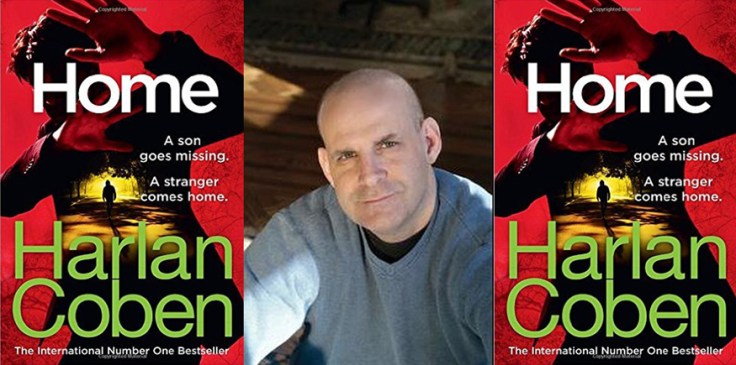
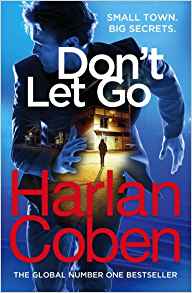 “Mr Nice Neighbour. See, I am that rarest of creatures in suburban towns – a straight, single, childless male is about as common out here as a cigarette in a health club – so I work hard to come across as normal, boring, reliable.”
 Coben is never anything but readable and he is great form here. This was one of those books which pose a delicious dilemma – do I carry on reading as the hook of the action bites deeper and deeper, or do I put it down for a couple of hours to make it last longer? As a regular reader of Coben’s books I knew that the big reveal – in this case the truth about the deaths of Leo and Diane – would be a definite “Oh, my God!” moment, but try as I might, I didn’t get close to guessing the actual shocking detail.

 Kristy puts food on the table and tries to make sure that Ryan isn’t disadvantaged. She has a job, and it is one that demands every ounce of her compassion and every droplet of her sang froid. Her official title? Public Information Officer for the Texas Department of Criminal Justice. If that sounds like some bureaucratic walk-in-the-park, think again. Acting as mediator between inmates, the press and the prison system is one thing, but remember that The Lone Star State is one of the thirty one American states which retains the death penalty. Consequently, Kristy not only has to manage the fraught liaison between prisoners on death row and the media, but she is also required to be an official witness at executions.
 It will come as no surprise to learn that Hollie Overton (right) is an experienced writer for TV. In The Walls every set-piece, every scene is intensely visual and immediate. With consummate cleverness she sets up two story lines which at first run parallel, but then converge. Two men. One is definitely guilty. One possibly innocent. Both are condemned to death. One by the State of Texas. The other by his battered wife.
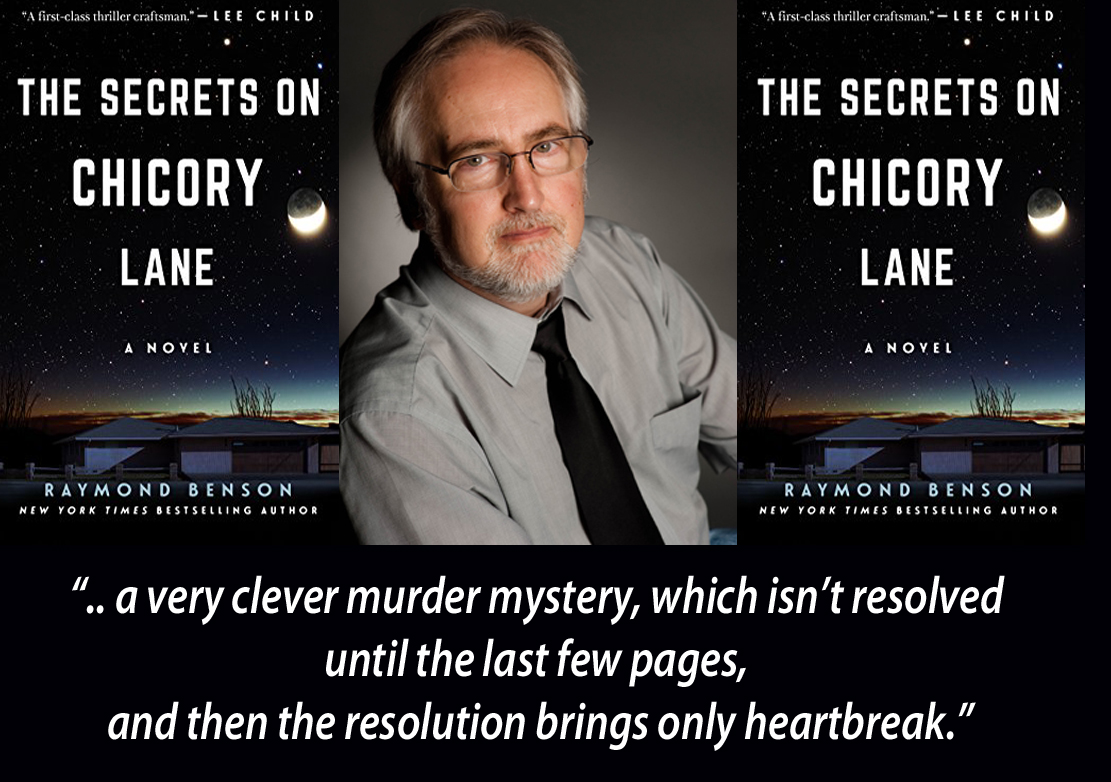

 Eddie is Eddie Newcott, the boy who used to live across the street in Chicory Lane, Limite. The boy who was just a bit different from all the other kids at school. The kid whose dad was a rough and abusive oilfield mechanic. The kid whose mom turned to the bottle to escape her violent husband and the beatings he handed out to their only child. But that was then. Now sees Eddie fallen on hard times. Times so hard that he achieved brief notoriety in the tabloid press, and has now been sentenced to death by lethal injection for murdering his pregnant girlfriend, slashing her open, dragging the foetus out and then arranging the two corpses on his front lawn, posed in an obscene mockery of a Nativity tableau. And it was Christmas Eve.
 Like Shelby Truman, Raymond Benson (right) is a highly successful writer. He has written thrillers under his own name, most notably his Black Stiletto Saga, and has also written novels based on video games. He has taken up the baton from authors who are no longer with us, like Tom Clancy, and has written several James Bond stories which have either been based on established screenplays – like Die Another Day – or standalone original stories such as The Man With The Red Tattoo.
 The muster room of hard-nosed female cops and investigators is not exactly a crowded place on Planet CriFi. Victoria Iphigenia Warshawski, Fiona Griffiths, Kate Brannigan, Cordelia Gray, Kay Scarpetta and Jane Marple have already taken their seats, but Temperance Brennan has, temporarily, given up hers for another child of her creator, Kathy Reichs (left). Sunday ‘Sunnie’ Night is a damaged, bitter, edgy and downright misanthropic American cop who has been suspended by her bosses for being trigger happy. She sits brooding, remote – and dangerous – on a barely accessible island off the South Carolina coast.
 Half way through the novel we realise the significance of the title. Sunnie Night is not waging this war alone: her twin brother Augustus ‘Gus’ Night is also on the case and, to use the cliche, he ‘has her back’. Together they are certainly a deadly combination. By this point, though, Reichs has bowled us an unreadable googly – or, for American readers, thrown us a curveball – and it isn’t until the closing pages that we realise that we have been making incorrect assumptions. Which is, of course, exactly what the author planned! Those last few pages make for a terrific finale, as the twins desperately try to prevent an atrocity being carried out at one of America’s most celebrated sporting occasions.
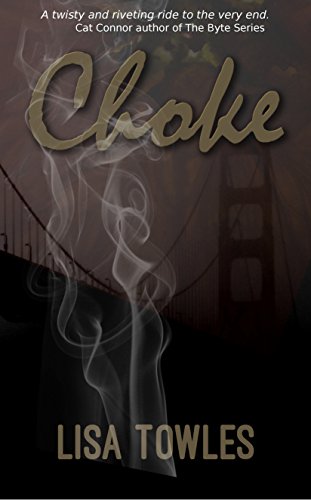

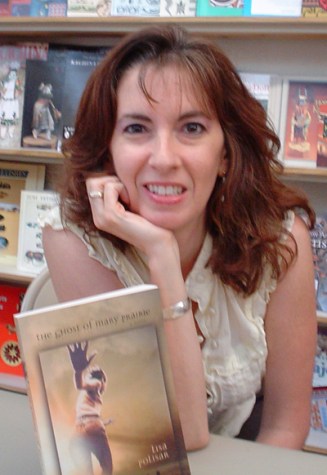 Lisa Towles is over-cautious. Said no-one, ever. In this beguiling and occasionally confusing novel she has assembled the ingredients thus: a small cup of altered reality, two large helpings of global conspiracy, three spoonfuls of domestic noir, just a drizzle of romance, two apparently unconnected plot lines, some roughly chopped historical legend and, most importantly, a generous dash of finely ground medical thriller.
 Multinational pharmaceutical companies and the giants of the tobacco industry have not achieved their wealth and success through philanthropy, however, and when they learn about Calhoun’s discovery there is only one solution that will prevent them from taking a huge commercial hit, and that is to eliminate Calhoun and destroy all evidence of his research. While he and his colleague Grace Matson are pursued by hitmen, Kerry Stine’s nightmare becomes ever more vivid and violent. She is kidnapped and drugged. In her more lucid moments, myriad questions spin and whirl around her brain. Who is the woman chained next to her in the darkness of her prison cell? What happened in her childhood that was so traumatic that it shut down all subsequent recall?
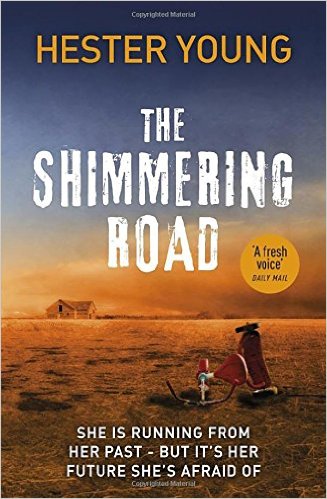
 Then, as Noah is trying to tempt Charlie into marrying him, and agree to their moving into a luxurious new home, comes the ‘phone call which triggers the enthralling next chapter in Charlie’s life. She takes a call from a distant aunt, and the news is that Charlie’s estranged mother Donna, and her half sister Jasmine, have been found shot dead in Jasmine’s Tucson apartment. There is another complication. Jasmine’s daughter Micky was also in the apartment but in another room. She is shaken, but very much alive, and has been taken into protective care.
 The greatest strength of the book is the magical spell Hester Young (right) casts as she links the reader to Charlie Cates. As a cynical, autumnal English male, with a downbeat view of life and the tricks it can play, I am not the obvious candidate to be entranced by a slightly manic, conflicted and complex American female journalist, but by the time the novel reached its gripping conclusion in the Arizona desert, I was ready to crawl over broken glass to make sure that Charlie survived with body and soul intact. Hester Young slaps a winning hand down on the green baize table – dry humour, suspense, atmosphere, superb characterisation – and deservedly rakes in all the chips.


 fullybooked2017