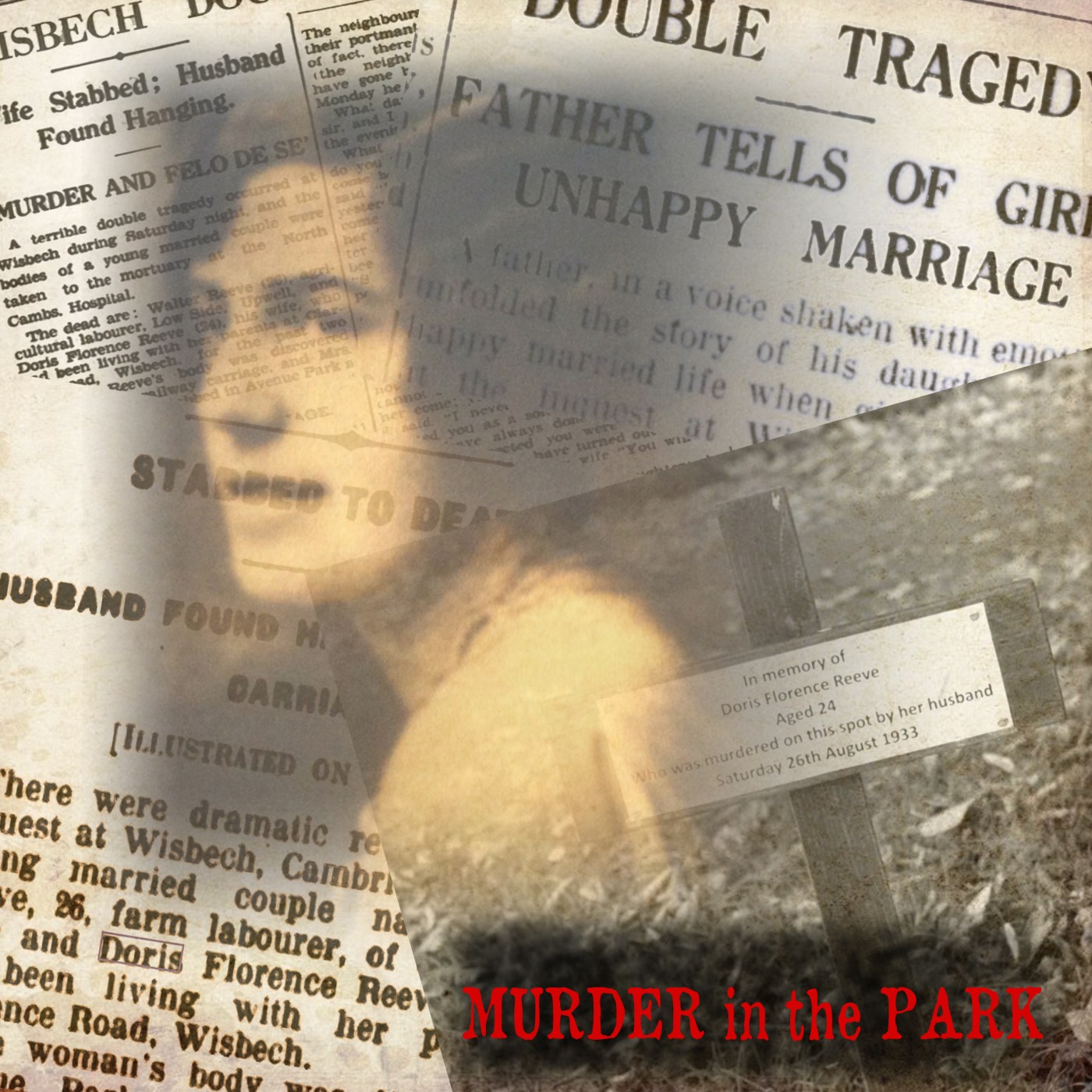
On the weekend of 13th and 14th September, 2014, something unusual surfaced on social media. On Facebook, someone reported a mysterious homemade memorial which had been placed on the grass at the edge of Wisbech Park. I went to have a look. It was a simple wooden cross, with a laminated printed message pinned to it.
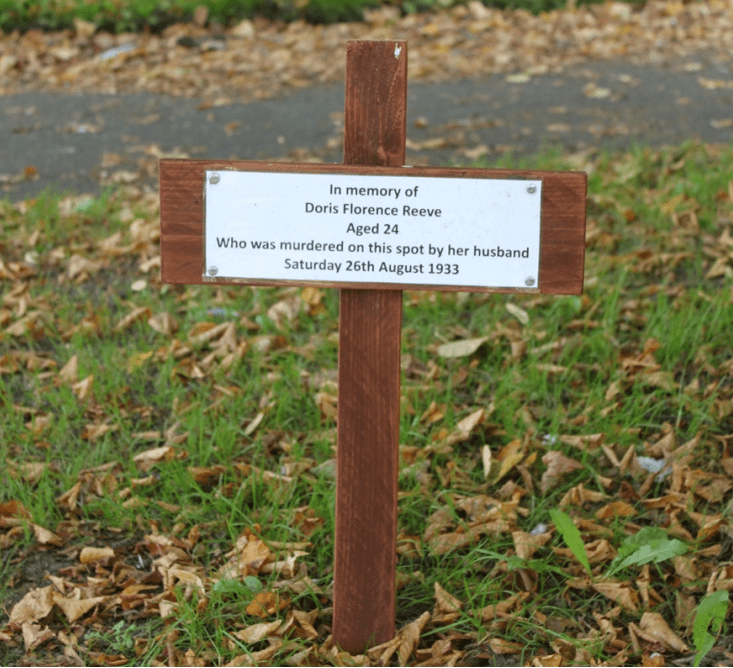
Strangely, the sign was only there for a couple of days, but research in newspaper archives led me back over eighty years.
It is August, 1933. The hit song of the year was Stormy Weather, sung by Ethel Waters. In the cricket, England beat the West Indian touring side with ease. Ramsay MacDonald was Prime Minister, while Winston Churchill’s speeches warning of the dangers of Germany’s re-armament had been largely ignored. In Wisbech, meanwhile, the local papers were full of the latest speculation about the health of the forthcoming harvest, while the Advertiser and the Standard were running weekly updates on what looked like being a bumper year for Bramley apples. At The Electric Theatre in town, cinema audiences were preparing to be terrified by the forthcoming feature – The Mummy – starring Boris Karloff. But those Wisbech folk were to have a horror – of a genuine kind – delivered to their doorsteps very soon.

Day broke, and as people gathered around the scene of the murder, none of them was to know that within a couple of hours, an equally macabre and disturbing discovery was to be made. Meanwhile, police had driven to the nearby village of Upwell, where Doris Reeve had been living with her husband Walter, aged 26. Getting no answer to their urgent knocking, the officers forced their way in, but found the house empty.
Another Wisbech Bobby, Police Constable Howard was called, at 10.30 am on that Sunday morning, and told that there was a man who appeared to have hanged himself in a railway carriage near Wisbech LNER station. When he went to investigate, he found that the carriage was the middle one of three, standing in a siding. and he was able to access the carriage without going through the station.he found a man hanging from a luggage rack, with a neck-tie and handkerchief used for the job. The man’s feet were dragging on the floor of the carriage, but his whole weight was on his neck. His right hand was resting on the seat, next to a knife, and his body was stiff and cold. He was wearing a pair of light grey flannel trousers, a vest and a shirt. Round his waist was a belt, with a sheath attached to it. His shirt was flecked with blood-stains and there was a knife wound on the left side of his chest. Cast to one side in the carriage compartment were a jacket, waistcoat and hat. In his possession were a wallet, ten shillings in small change, and a driver’s licence in the name of Walter Reeve, Low Side, Upwell.
The police now had two dead bodies on their hands, and people were able to reach their own conclusions about the circumstances of the deaths. It wasn’t until the inquest, however, that the full truth about the tragic events would be made public. The inquest was held at the North Cambridgeshire Hospital in Wisbech on Monday 28th August. By law, the deaths of Florence and Walter Reeve had to be considered separately. We can look at the evidence given in whichever order we choose. Firstly, the grim physical details of the deaths. Dr Butterworth, when he examined Doris Reeve, had found an incised wound, an inch long, over her third left rib, and another wound – of the same shape and size – more round to the side and between her eighth and ninth ribs. The wound over the third rib had been the fatal one, severing the pulmonary artery. The wounds had clearly been caused by a small – but very sharp – knife. Walter Reeve had died as a result of strangulation, but it also seemed that he had tried to inflict wounds on himself with the knife which was found on the seat beside his body. The doctor and the police were able to confirm that this knife was the one which had killed Doris Reeve.
In order to establish the state of the relationship between Doris and Walter Reeve, Doris’s father was called to the witness stand. He said that Doris had married Walter in January 1932, but the marriage was not one made in heaven. By June 1933 Doris had left their married home in Upwell, and moved back in with her parents at 21 Clarence Road, Wisbech. Doris’s father said that he had been largely unaware of events in his daughter’s life, because she was not n the habit of confiding in him. His first intimation that things were wrong was when he awoke from a nap one day to find Doris kneeling on the floor, with her head in her mother’s lap. Doris, however, would not tell him what had happened, but Mrs Reeve senior told him that Walter had knocked Doris down and taken money from her purse. He had only given her £1 for housekeeping that week rather than the usual thirty shillings. Doris returned briefly to Upwell, but she would come home each night to Wisbech, having been given the bus fare by her mother.
The double death in Wisbech made the national newspapers, and the Daily Mirror published this photograph of the murder site, but mistakenly sited Walter Reeve’s death to Upwell.

IN PART TWO
Two funerals, and the inquest concludes

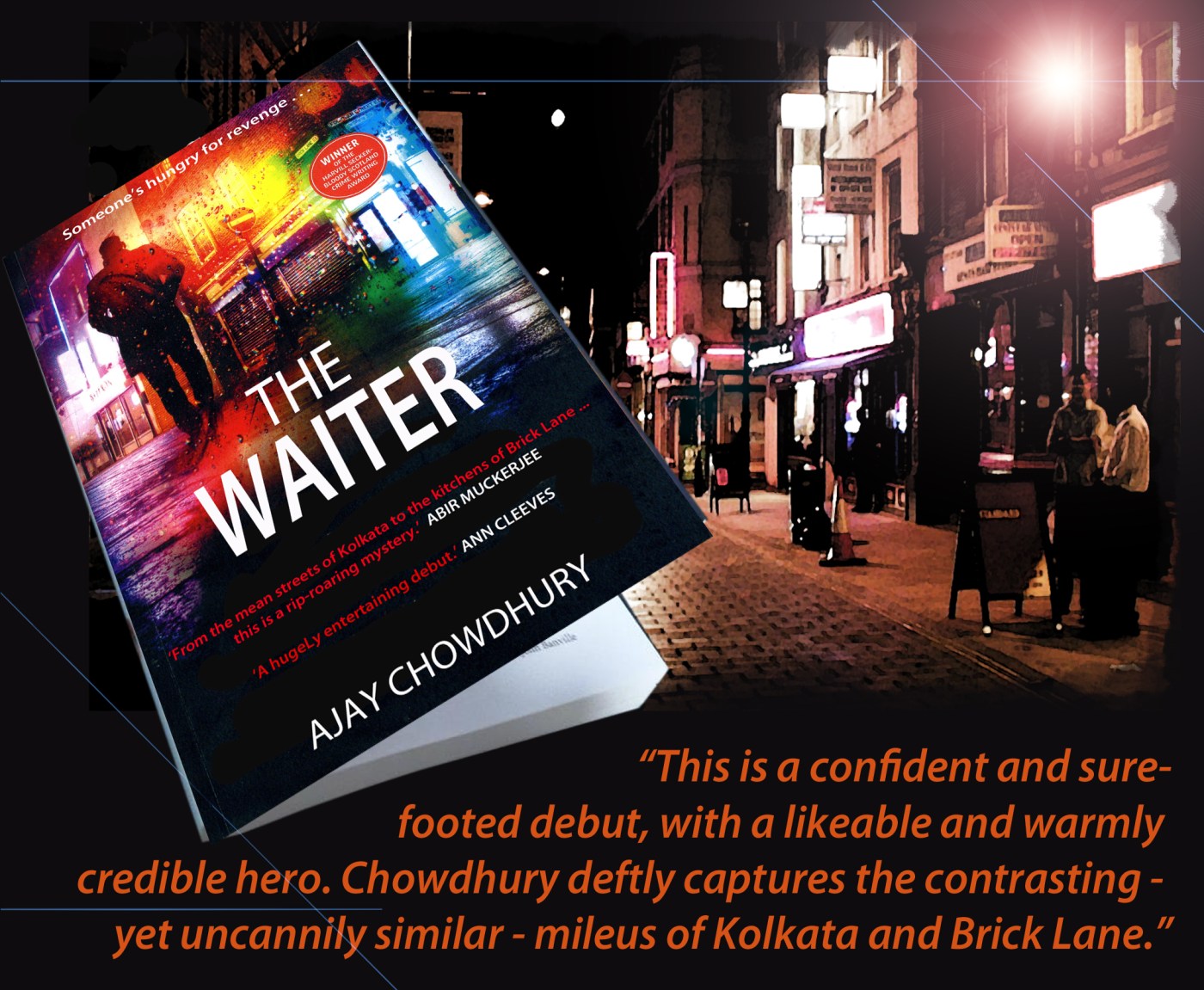

 The restaurant is run by his relatives Saibal and Maya, with help from their daughter Anjali. At this point is worth reminding people that families are the big thing in the sub-continent, and most of the characters in the book are related in one way or another. The story starts on the evening that the restaurant has been booked to provide the food for the lavish 60th birthday party of rich entrepreneur Rakesh Sharma. He and his new wife Neha – half his age – are installed in a lavish mansion on Billionaire’s Row near Hampstead Heath. It’s also worth mentioning at this point that Sharma’s first wife (and son by that union) are still very much on the scene.



 Satoshi ‘The Prince’ Oji is the darkest character of the five. He is utterly without compassion. Other human beings – school teachers, teenage friends, other adults – only have value to him in the sense that they can be used for his entertainment. He is highly intelligent, but one of the more malevolent fictional villains I have encountered in recent times. Everything is thought through and planned in the minutest detail, such as his grip on Kamura. The grizzled gangster could, physically, chew up Satoshi and spit out the bones, but the teenager convinces Kamura that he has an insider in the hospital where the man’s son is lying in a coma, and should Satoshi fail to answer periodic calls to his mobile ‘phone, then this insider will find a way to disconnect the little boy’s life support system.

 While reporting on the death and mutilation of a young rent boy, Russell is asked by a friend to take on another case, this time on behalf of a senior army officer whose daughter is missing. It is a delicate business, because there is a strong suspicion that Lili Zollitsch has run off with a boyfriend who is an active member of the Kommunistische Partei Deutschlands.

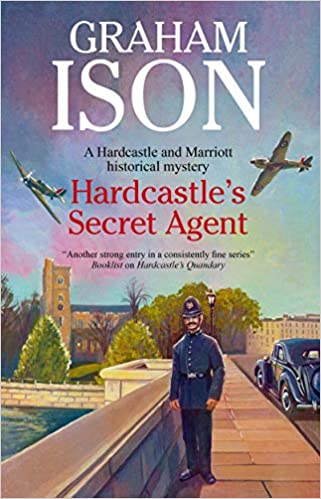 We are, as ever, in London, but it is 1940. The Phony War is over, and the Luftwaffe are targetting industrial sites they believe to be involved in making parts for military aircraft. When several important employees of one such factory are burgled – clearly by an expert – but with nothing other than trinkets stolen, Hardcastle believes he may be on the track of a German spy on the look-out for plans, blueprints or important military information. Hardcastle has to deal with The Special Branch, but finds them about as co-operative as they were with his father a couple of decades earlier. This has a certain tinge of irony, as part of the author’s distinguished police career was spent as a Special Branch Operative.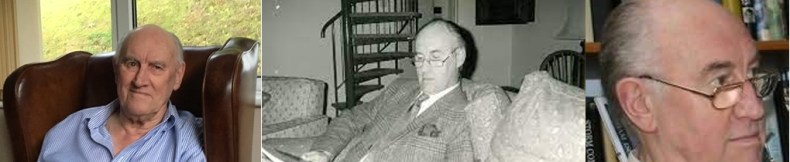


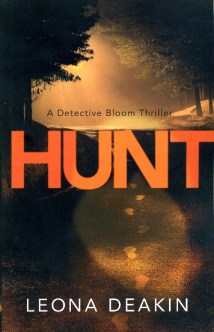 Enough of such morbid musings. There are books to look at! Leona Deakin’s character Dr Augusta Bloom first appeared in
  Vera Kurian’s book, according to the publicity, couldn’t be more different and, if I can be permitted to invent a triple-barreled genre, sounds as if it’s domestic-psycho-noir. Kurian, who is based in Washington DC, has penned a tale of a first year university student named Chloe. The blurb is very effective:

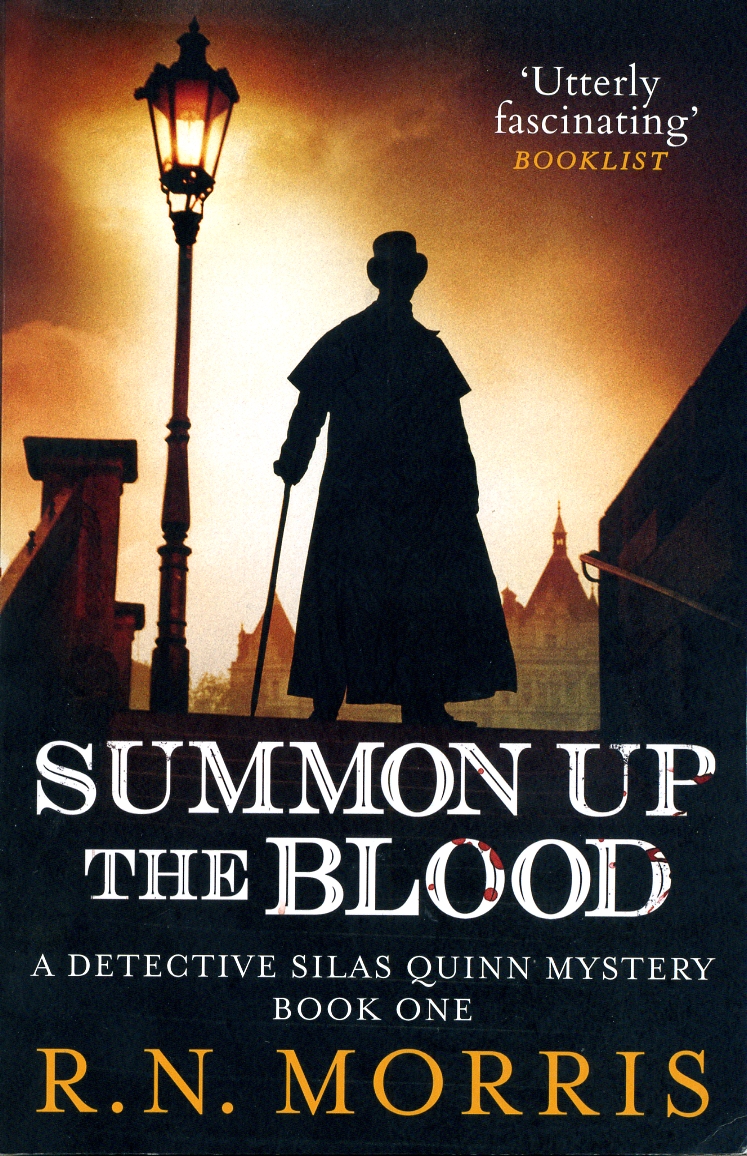 When a rent boy is found dead, his throat cut from ear to ear, there is initially little interest by the police, as the lad is just assumed to have paid the price for being in a risky line of business, but when the post mortem reveals that he has had every drop of blood drained from his body, Quinn is summoned and told to investigate. After a droll episode where Quinn decides to pose as a man smitten by “the love that dare not speak its name”, and blunders around in a dodgy bookshop, but he does find out that the dead youngster was called Jimmy, and had links to a ‘gentleman’s club’ where he would find men appreciative of his talents.
 Thankfully, Morris makes no attempt to get in the politics of homosexuality and the law: his characters simply inhabit the world in which he puts them, and their thoughts, words and deeds resonate authentically. In 1914, remember, the trial of Oscar Wilde and the Cleveland Street Scandal were still part of folk memory. It’s an astonishing thought that had Morris been writing about similar murders, fifty years later in 1964, virtually nothing would have changed – think of the scandals involving such ‘big names’ as Tom Driberg, Robert Boothby and Ronnie Kray, and how their lives have been written up by such novelists as Jake Arnott, John Lawton and James Barlow.


 fullybooked2017