

Having had the pleasure of meeting Jo Spain, I can tell you that she is a delightful person. That said, when she is in writing mode, don’t believe a word she says. Away from her superb police procedural series featuring Dublin copper Tom Reynolds, she has written several stand-alone thrillers, in which she practices to deceive. In The Perfect Lie, she bowled us a Googly or, for American readers, threw us a massive curve-ball:
In Don’t Look Back she runs through the complete repertoire of her trickery. She tells us the main characters are:
Luke Miller: A decent – but driven – investment banker who fall in love with, and marries –
Rose Miller: An Irish lass, née Gillespie, now a teacher in London and married to Luke, Has an abusive ex boyfriend called:
Kevin Davidson: A member of a rich and powerful Donegal family, whose wealth may not have been acquired entirely legally.
Mickey Sheils: A former lawyer, and onetime lover of Luke Miller. Originally from Ireland, now working in London to protect abused women from their abusive former partners. Able to act mostly pro-bono, thanks to her marriage to:
Nathan Sheils: A big man in The City, formerly Luke’s boss.
Be prepared, however, for some of these people to be – how best to put it? – not entirely who they appear to be. The story starts off in a fairly straightforward manner. Rose and Luke are married, but due to Rose’s trauma at the hands of Kevin Davidson, their courtship had been a case of two steps forward, one step back. Rose turns up at Luke’s workplace, complete with airline tickets and packed bags, and announces that she has arranged a super surprise – a delayed honeymoon on the idyllic Caribbean island of Saint-Thérèse. Their stay is blissful, but on the last night, Luke senses that Rose has become agitated and distracted. Then, she blurts out that they cannot possibly be on their return flight to London the next day.
The reason? Because on the floor of their bedroom in Luke’s flat, lying there since the day they left for Saint-Thérèse, is a corpse. It is the mortal remains of Kevin Davidson, who had been stalking Rose for weeks, and finally made his big appearance. They had fought, Rose had pushed him, he lost his footing and cracked his skull – with fatal consequences – on the sharp edger of a very solid piece of Edwardian furniture. Rose’s initial panic had metamorphosed into a plan. A desperate one, yes, but a temporary solution. Luke’s flat is the only one occupied on that floor, and its remoteness would give them at least a few days’ grace.

Luke books them out of their hotel and, despite having had a fairly frosty relationship with Mickey Sheils since he ended their affair, he calls her and asks her to go to his flat and investigate. Reluctantly, she does, but when she gets there, guess what? There is plenty of dried blood – but no body.
What follows is classic Jo Spain (left). One block at a time, she kicks away the supports of what we think we know about what is going on. I read the book on my Kindle, and even when it said 99%, there was time for one more surprise. This is wonderfully inventive stuff, and shows that one of Ireland’s finest writers is at the top of her game. As a footnote, I enjoyed the dramatic contrast in settings, with the tropical tourist paradise of Saint-Thérèse starkly juxtaposed against the bleak Donegal coast, where the icy horizontal rain takes no prisoners. Don’t Look Back is published by Quercus, and will be available on 11th May.


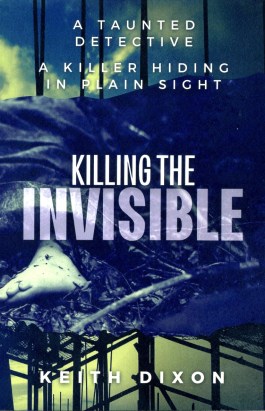 Keith Dixon’s Porthaven is a fictional town on England’s south coast. It doesn’t seem woke or disfunctional enough to be Brighton, maybe neither big nor rough enough to be Portsmouth or Southampton, so it’s maybe a mix of all three, seasoned with a dash of Newhaven and Peacehaven. Inspector Walter Watts is a Porthaven copper. He is middle-aged, deeply cynical, overweight, and a man certainly not at ease with himself – or many others – but a very good policeman. When a young woman, later identified as Cheryl Harris, is found murdered on a piece of waste ground, the only thing Watts accomplishes on his visit to the scene is that his sarcastic exchanges with a female CSI officer result in in an official complaint, and him being moved off the case. From the sidelines, Watts knows that whoever killed the young woman was definitely trying to pass on a message. The woman’s face has been obliterated by a concrete slab, with her mobile ‘phone jammed into what was left of her mouth.
 Watts was brought up by his father – and in boarding schools – after his mother left the home. There has been no contact with her from that day to this, until he receives a message from the desk sergeant at Porthaven ‘nick’ simply saying that his mother had ‘phoned, and would he call her back on the number provided. This thread provides an interesting and complex counterpoint to the police investigation into the killing of Cheryl Harris. It also allows Keith Dixon (right) to better define Watts as a person; on the one hand he is aloof, selfish, socially abrasive and enjoys showing his mental superiority; on the other, he is vulnerable, unsure, and shaped by a childhood lacking conventional affection.

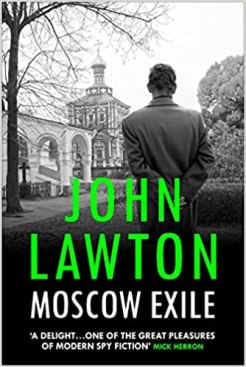 Some writers who have authored different series occasionally allow the main characters to meet each other, provided that they are contemporaries, of course. I’m pretty sure that Michael Connolly has allowed Micky Haller to bump into Harry Bosch, while Sunny Randall and Jesse Stone certainly knew each other in their respective series by Robert J Parker. Did Spenser ever join them in a (chaste) threesome? I don’t remember. John Lawton’s magnificent Fred Troy series ended with Friends and Traitors (2017), and since then he has been writing the Joe Wilderness books, of which this is the fourth. I can report, with some delight, that in the first few pages we not only meet Fred, but also Meret Voytek, the tragic heroine of A Lily of the Field, and her saviour – Fred’s sometime lover and former wife, Larissa Tosca. As an aside, for me A Lily of the Field is not only the best book John Lawton has ever written, but the most harrowing and heartbreaking account of Auschwitz ever penned. Click the link below to read more.

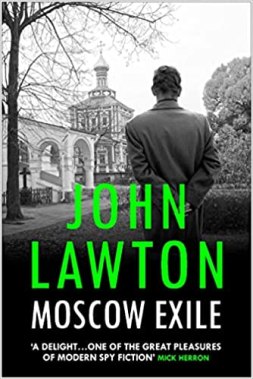 I believe that John Lawton’s novels are every bit as significant as Anthony Powell’s A Dance to the Music of Time sequence. Lawton’s books were never marketed in the same way – as a developing saga – but from start to finish, they all interconnect. Not all the characters appear in every book, but they are all there in the background. Moscow Exile is, notionally, one of the Joe Wilderness books, but within the first few pages we become reacquainted with familiar characters from the Fred Troy novels. The actions focuses on the spy game from the outbreak of WW2 to the Cold War in 1960s Berlin. I will post a full review soon, but for now, this is published by Grove Press and will be out on 4th May.
 The Bristol-based author is a former art historian and photographer who studied at Bristol University and the Courtauld Institute of Art in London. She now has a strict of bestselling psychological thrillers to her name, including What She Knew, The Perfect Girl and The Long Weekend. Her latest novel tells the tale of a couple who win a fortune on the lottery, and move into what they hope will be a dream home. When the husband – Tom – is found dead in their state-of-the-art pool – the police have no option but to focus their attention on his wife – Nicole – and thus her nightmare begins. The Fall is published by Century/Penguin Random House and will be on the shelves from 25th May.

 Without giving the game away, it is in Brother Dominic’s previous life where the clues are to be found, but answers don’t come easy for Cross and Ottey. Although there was a very clever plot twist involving the identity of the killer, I was far more involved with George Cross as a person than wondering who murdered Brother Dominic.The relationship between Cross and his father, the discombobulating effect of the re-emergence of his mother – lost to him since she left the family home when he was five – and his attraction to the unambiguous world of order, silence and simplicity of Dominic’s fellow monks, all contribute to the power of this compelling read.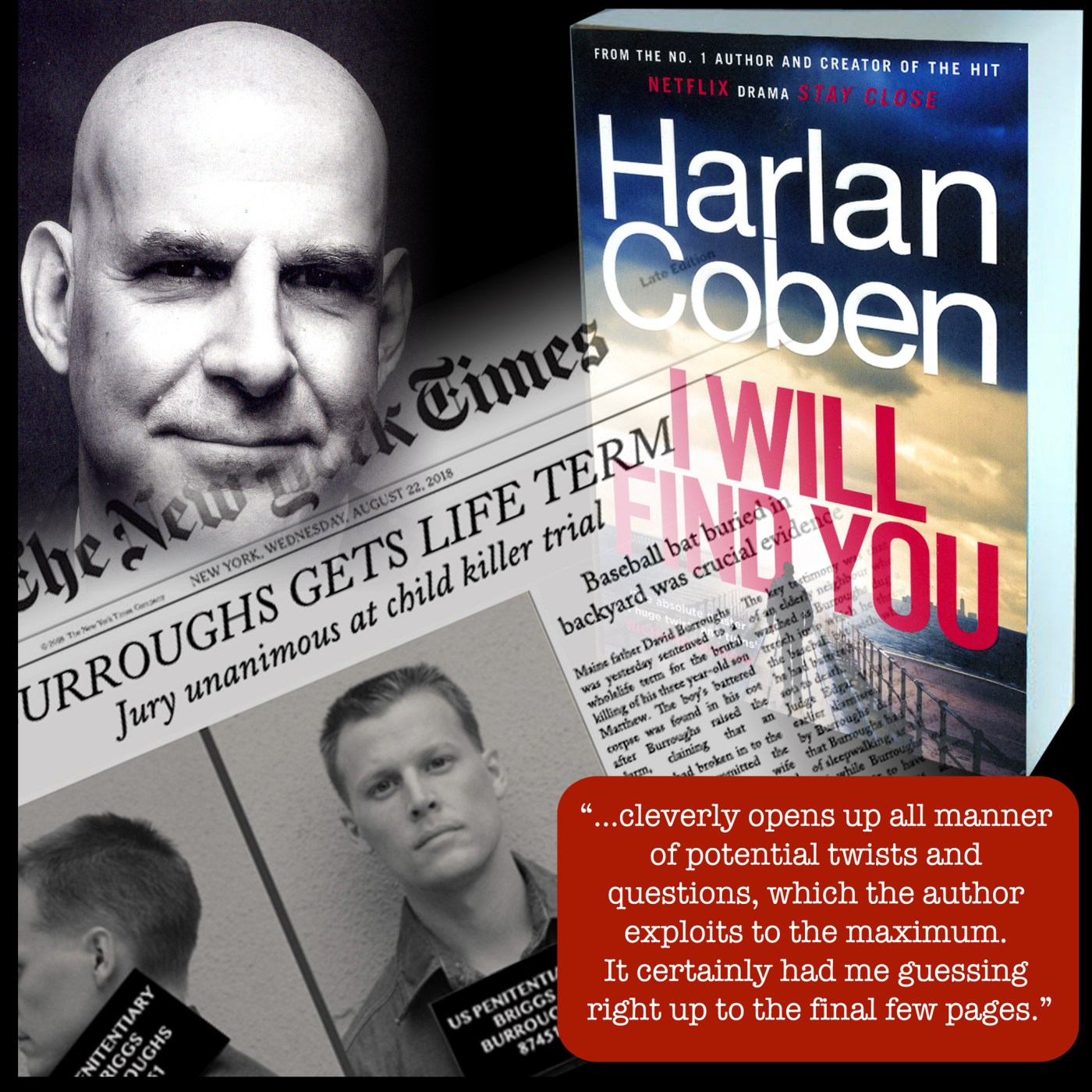





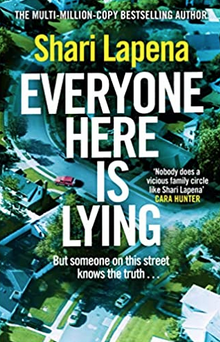 Back in 2020 I was thoroughly gripped by Shari Lapena’s The End of Her and I remember using the term ‘anxiety porn’. It looks as if there is more of the same here.


