Search

fullybooked2017

TWO MEN IN BERLIN . . . Bernie Gunther and John Russell (part two)

Berlin Header

In part one of this feature I looked at the two fictional characters Bernie Gunther and John Russell and what happens in the novels, by Philip Kerr and David Downing, both series being rooted in Berlin. There, I dealt with the two series separately, and here I look at what divides them, and what common ground they share

In an imaginary world the two men might have met but, of course, they never did, despite Gunther being House Detective for the celebrated Adlon hotel (below), an establishment sometimes patronised by Russell.

Screen Shot 2023-06-02 at 20.36.09

Both men fought (for opposing sides) in the Great War and, in theory, coul have faced each other on opposite sides of No Man’s Land. Both have indelible memories of comrades being blown away by artillery and their tunics smeared with the brains of best mates. Both have an almost umbilical connection with Berlin, its parks and rivers, its tram and railway stations and its monumental architecture.

Screen Shot 2023-06-02 at 20.37.30Gunther is on nodding terms with such Nazi luminaries as Joseph Goebbels, Rheinhardt Heydrich and Arthur Nebe. In contrast, John Russell operates well below this elevated level of the Nazi heirarchy, although he references such monsters as Beria and Himmler, and does have face to face meetings with Wilhelm Canaris, head of the Abwehr (left).

John Russell is, largely, lucky in love. True, he has a failed marriage behind him but Paul, the son conceived and born when he was still married to Ilse, is a huge part of his life. He is also madly in reciprocated love with a prominent German actress, Effi Koenen. In the final novel, Masaryk Station, they are married. Effi is safe and well in Berlin – albeit in a Berlin being carved up between the Americans, the British, the Russians and the communist Germans who would go on to rule East Germany until the fall of the Berlin Wall. John and Effi have an adopted daughter Rosa, and Paul, who served as a teenager with the Wehrmacht, has survived the cataclysm of Hitler’s strategic blunders in the last two years of the war, and by 1948  he is living in London.

Screen Shot 2023-06-02 at 20.39.03Gunther, in contrast, has known nothing but trauma in family terms. His wife dies in tragic circumstance and then his girlfriend – whi s regnant with his child –  dies in one of the most infamous acts of WW2 – the sinking (by a Russian submarine) of the Wilhelm Gustloff in 1945. This account, detailed in The Other Side of Silence (2016) is, for me, the most compelling part of any of the Gunther novels:

The Wilhelm Gustloff was a cruise liner pressed into service as a military transport vessel, and in January 1945 it attempted to sail across the Baltic from Prussia. It was overloaded with some 10,000 personnel, mostly Germans fleeing the advance of the Red Army. The Soviet submarine S-13, captained by a maverick drunk and against orders sent three torpedoes into the side of the Wilhelm Gustloff. The ship sank killing 9,400, and is the worst maritime disaster in history.

Gunther is not a sexual predator, but beds women when they they present themselves, wherever and whenever. Russell remains resolutely faithful to Effi, but as she is an improbably beautiful film star with a healthy sexual appetite, we should not be placing the martyr’s crown on Russell’s head just yet, but he always has someone to fight for – Effi and Rosa, and his son Paul. By contrast Gunther is mostly only fighting for himself and his tarnished ideas of what is right and what is wrong. When he dies, he suspects that there will be few mourners as his coffin is laid in earth.

As far as Berlin is concerned, the two series run on parallel tracks. They share the final decadence of the Weimar years, the descent into Nazi rule, the devastation after the spring of 1945, and the finger-on-the-trigger tensions of the 1960s.

Russell’s geographical stamping grounds are tight: his domain is Europe – Prague, Triest, Belgrade, Danzig, occasionally London but – of course – always Berlin. Gunther goes where the job – or his pursuers – send him. In the novels, we see him operating all over the world – Argentina, Cuba, Greece, the South of France and Russia. Neither David Downing nor Philip Kerr waste time on political posturing, but both remind us that no known measurement – not even the thickness of the proverbial Rizla cigarette paper – separates the degeneration of Hitler and Stalin. This is never more prominent than in A Man Without Breath in which Gunther is sent by Goebbels to Smolensk. His task? To prove that it was the Russians who murdered thousands of Polish officers and flung their corpses into deep trenches. In the real world, it was not until the 1990s that Russia admitted its guilt.

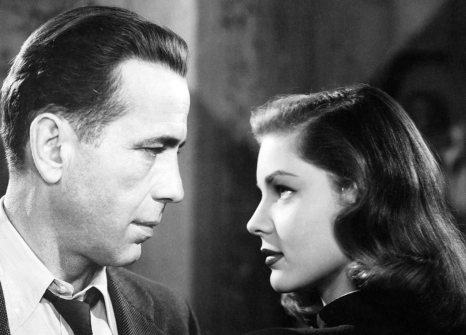
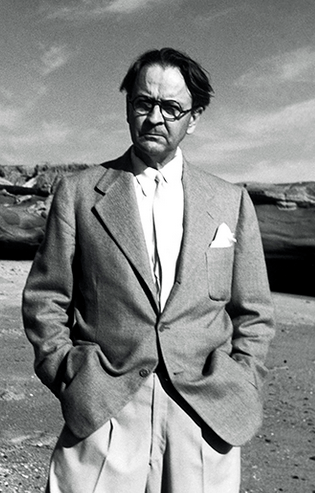
Gunther is – first and last – a cop. He is physically imposing and familiar with violence. Russell is – at least in his day job – a freelance journalist, and avoids physical confrontation if he possibly can. Stylistically, the novels are also chalk and cheese. We share Gunther’s world through his own voice while we learn what John Russell is up to via the invisible third party. There is another important difference in the way the two series sit in what could be called a family tree of thrillers. Philip Kerr shapes his man more in the image of Philip Marlowe, albeit a Marlowe much more enthusiastic about using his fists (or any other available weapon). Gunther also echoes Marlowe’s bitter poetry, and talent for memorable descriptions. This is Bernie Gunther on Heidrich:

“Tall, skeletally thin, his long, pale face lacking expression, like some plaster of Paris death mask, and his Jack Frost fingers clamped behind his ramrod-straight back, Heydrich stared outside for a moment or two, saying nothing to either of us.”

David Downing portrays the world of espionage in a way familiar to readers of John Le Carré; this world is undeniably dangerous and fatal to those who make mistakes, but it it is less overtly dramatic, and – although more subtle – nonetheless deadly. John Russell is – in his heart – a socialist, but one who despairs of the direction taken by post 1945 communist regimes. Bernie Gunther is resolutely German and someone who has suffered grievously at the hands of the Russians, but a man who has gazed into the depths of evil plumbed by Hitler and his minions and realises that there are four combatants in his particular battle – the Germans, the Russians, the Anglo-Americans – and himself.

David Downing’s series ends with John Russell and Effi, like tens of thousands of other Berliners, becoming engulfed by the total Russian shut-down of land access to the city in 1948 – the act that precipitated the legendary Berlin Airlift. Philip Kerr’s premature death in 2018 means we shall never know if Bernie Gunther eventually enjoyed his retirement, but David Downing is – happily – still with us, and an eighth novel, Union Station, is due in 2024, and jumps forward to 1953, with Russell living in California.


THE GREEN PENGUIN RETURNS

PENGREEN HEADER

Great news for classic crime fans – the people at Penguin are giving us brand new editions of some of the greatest crime and espionage novels ever written, and all under the banner of that distinguished green penguin. Yes, I know most of us have read these books, maybe, as in my case, decades ago, but what a joy it will be to revisit them. The reissues begin on 13th July.

Pengreen001

Pengreen002

Pengreen003

Pengreen004

Pengreen005

Pengreen006

THE ROOM WITH EIGHT WINDOWS . . . Between the covers

8windows header

December 1930. Henry Johnstone, a former Detective Chief Inspector with the Metropolitan Police, has been forced to resign due to a debilitating injury. Now, he ekes out a solitary existence in a crumbling Brighton house, empty except for a large library assembled by the former owner, the late Sir Eamon Barry. Johnstone’s task – one given to him by a friend, concerned about his mental state – is to catalogue the thousands of books in the library. He is convinced he is being stalked, perhaps by someone linked to an old case. Then, he disappears. We know how – if not why – but his friends, among them his sister Cynthia and his former Sergeant Mickey Hitchens, are left with few clues, but one – left behind by Johnstone – suggests there is a link to a mysterious death and disappearance five years earlier.

When Johnstone is eventually found, he has been beaten within an inch of his life by a criminal gang, and is in no fit state to help the investigation into what seems to be a brutal and very well organised smuggling cartel. England’s south coast has been the backdrop for smuggling for centuries. I am reminded of the romantic lines of Kipling:

“If you wake at midnight, and hear a horse’s feet,
Don’t go drawing back the blind, or looking in the street,
Them that ask no questions isn’t told a lie. Watch the wall my darling while the Gentlemen go by.
Five and twenty ponies,
Trotting through the dark –
Brandy for the Parson, ‘Baccy for the Clerk.
Laces for a lady; letters for a spy,
And watch the wall my darling while the Gentlemen go by!”

These days, sadly, the smugglers don’t tend to deal in the traditional commodities of brandy and tobacco, but in the more profitable contraband of human lives. I would like to think that back in the day, the profiteers were not aided and abetted by the historical equivalent of the RNLI and the Border Force, but that is a debate for another day As Henry Johnstone slowly recovers his strength, Hitchens – and his slightly odd (but learning something new every day) Sergeant Tibbs – eventually get to the root of the mystery, but not before more lives are lost.

As is only right and proper in novels set in the 1930s, Jane A Adams makes us aware that most of her protagonists have a shared history – that of The Great War. Those over the age of 35 will have either fought in that conflict or lost husbands and sons: Younger people will have fathers they will never see again, with only a marble gravestone somewhere in France as a far-away reminder of what they have lost.

The period details in The Room With Eight Windows are impressive and convincing, as are the quirks and foibles of the main characters. This excellent and atmospheric thriller will be published by Severn House on 4th July.

TWO MEN IN BERLIN . . . Bernie Gunther and John Russell (part one)

Berlin Header

Bernie Gunther is the anti-hero of fourteen novels by the late Philip Kerr. Berlin cop, turned private investigator, sometime employee of Goebbels and Heydrich, and finally an international pariah, Gunther’s exploits span post Great War Germany to international intrigue in the 1950s. John Russell is an Anglo American journalist who begins the series of seven books by David Downing based in Germany. The books are all named after railway stations and span the years 1938 – 1948.

BERNIE GUNTHER

Screen Shot 2023-06-02 at 20.14.08Philip Kerr’s Berlin Noir series was published between 1989 and 1991, and introduced the world to Bernie Gunther. Strangely, it wasn’t until 2006 that the books March Violets, The Pale Criminal and A German Requiem were followed up with The One from the Other, and until his death the Edinburgh-born author brought us regular episodes from the life of his tough, resourceful and compassionate hero. The final novel in the series, Metropolis, was published in 2019 after Kerr’s death and, ironically, is set in the earliest part of Gunther’s career.

To begin with, Gunther has survived two world wars and seen death in all its forms. However, what makes the series fascinating is the challenge he faces, which is to keep his moral compass steady. Uniquely amongst fictional detectives, Bernie has to operate during the dark and savage days of the Third Reich.

Having returned from the trenches of The Great War, Gunther becomes a member of Kripo (Kriminalpolizei), the investigative branch of the Berlin police. During the turbulent years of the 1930s, he tries to steer an even and honest course between the rival political thuggery of the Nazis and the Communists, and when Hitler seizes power he eventually finds himself forced to join the SD (Sicherheistdienst), the intelligence division of the SS. Sent to Ukraine as part of an extermination group but having no stomach for this, he is shunted into the Wehrmacht on the Eastern Front, and is captured by the Russians. After the War, his ambiguous record makes him a person of interest to the Americans, the Russians and the leadership of the GDR, and he leads a dangerous existence among Nazi refugees in Cuba and South America.

Like John Lawton and George Macdonald Frazer, with their respective Freddie Troy and Flashman series, Kerr places fictional characters within real events and alongside celebrated or notorious historical figures. And, he manages to do so in a fascinating and totally plausible way. Assuming that Gunther was born in the mid-to-late 1890s, he can still be at work in the mid 1950s, albeit a heavier, slower and more breathless version of his former selfa latter day Ulysses.

“Made weak by time and fate, but strong in will to strive, to seek, to find and not to yield,” writes Kerr of his hero.

Screen Shot 2023-06-02 at 20.15.51The author’s style, particularly his use of dialogue, set him apart from most contemporary writers. His books were genuine literature, although I suspect written without literary pretension. In Prague Fatale,  he described Gunther meeting an American war correspondent in a Berlin blackout:

“His Old Spice and Virginia tobacco came ahead of him like a motorcycle outrider with a pennant on his mudguard. Solid footsteps bespoke sturdy wing-tip shoes that could have ferried him across the Delaware….his sweet and minty breath smelled of real toothpaste and testified to his having access to a dentist with teeth in his head who was still a decade off retirement.”

In his toughness, moral strength and cynical view of the world, Gunther is very much the heir of Philip Marlowe. His descriptions, sarcasm and one-line put-downs can be very funny. This is a line from A Quiet Flame, which came out in 2008:

“The isosceles of muscles between her chin and her collar-bone had stiffened, like something metallic. If I’d had a little wand I could have used it to tap out the part for triangle in the Bridal Chorus from Lohengrin.”
For more on Bernie Gunther, click the link below

https://fullybooked2017.com/tag/bernie-gunther/

JOHN RUSSELL

Russell is an English journalist with an American mother. Until 1927 he was a member of the Communist Party but, like many others, he fell out of love with the kind of socialism being espoused by Stalin and his acolytes. After serving with the British army in The Great War, he moved to Berlin, married Ilse, and they had a son – Paul. The marriage didn’t last.

Screen Shot 2023-06-02 at 20.17.47In terms of the actual time setting, Wedding Station (2021) gives us the earliest glimpse of John Russell.It is just months after Hitler’s rise to power, and Russell watches the Reichstag burn. Four weeks after Hitler’s accession, brownshirt mobs stalk the streets and the press prints what the Party tells it to.

In the first book (in publication terms) in the series, Zoo Station (2007) we are are introduced to Russell. It is 1939, Berlin, and Russell is an accredited American journalist, safe (for now) from the excesses of Hitler’s government. He has a glamorous girlfriend in Effie Koenen, who is a rising star in German cinema, but he still has a relatively civilised relationship with Ilse – and her new husband – and has regular access to Paul.

His communist background, American passport and fluency in both Russian and German make John Russell a unique target for the intelligence services of all the major powers and, almost like a serial bigamist he becomes wedded to the Sicherheitsdienst, the NKVD, the Abwehr, and the OSS. He plays each one off against the other, more or less successfully and, along with Effie and son Paul, survives the war, but finds ‘the peace’ post 1945 just as traumatic. In Masaryk Station (2013) set in 1948, Russell is told by a Soviet stooge that there is still a war, but that it is different:

“That war is over. It’s time you realised that another struggle – one every bit as crucial – is now underway.”

Screen Shot 2023-06-02 at 20.18.57One of the main anxieties in Russell’s complex life is his son Paul. As the boy reaches his teens he becomes – like millions of other German lads – a member of the Hitlerjugend, and this threatens to drive a wedge between father and so. In Stettin Station (2009) we are in November/December 1941, and a famed German air ace of WW1, Ernst Udet is dead. In fact, he shot himself, disillusioned with Luftwaffe chief Goering, and the general conduct of the war, but for the purposes of national solidarity the official story is that he died in a plane crash. As his elaborate funeral cortege passes their viewing point, Paul chides his father for not making the Seig Heil salute with enough reverence. Russell dreads the day when Paul is conscripted to the army and sent to fight on the Eastern Front.

John Russell’s contact with senior Nazi officials is limited, but he does occasionally come face to face with Wilhelm Canaris, the head of the Abwehr, the intelligence service of the German army. One of Russell’s many uneasy allegiances is to the Abwehr which, in fiction if not in fact, has been seen as the acceptable face of the Third Reich. This is perhaps born out by the fact that Canaris was executed for treason on 9th April 1945, in the dying days of Hitler’s regime.

Russell’s connection with Joseph Goebbels is more distant, and it is through Effi Koenen. She is probably the most ‘box office’ star of German cinema, and Goebbels – as propaganda minister – has absolute control over what films can be made, and what message they send out. As such, Effi is much sought after. Again in Stettin Station David Downing presents us with the bitter irony that Effi – pale, dark haired and sexually vibrant – is required to play a Jewish woman in a film with a vehemently anti-Jewish screenplay. For full reviews of Silesian Station and Wedding Station click the link below.

https://fullybooked2017.com/tag/david-downing/

IN PART TWO OF THIS FEATURE
I will examine the differences – and similarities between Bernie Gunther and John Russell.

TO DIE IN JUNE . . . Between the covers

TDIJ header

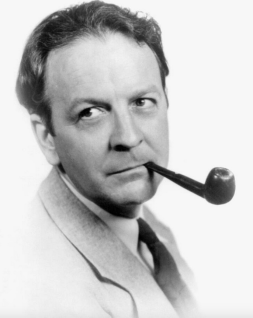
Screen Shot 2023-06-05 at 07.43.52Alan Parks (left) introduced us to Glasgow cop Harry McCoy in 2018 with Bloody January, and he has been resolutely working through the months with succeeding novels. Fictional Detective Inspectors in British crime fiction are many and varied. You would certainly need a fair sized village hall to seat them comfortably were they all to meet, so what about Harry McCoy? He has a fairly dark back-story. He was in and out of care institutions as a child. His mother is long dead, and his father – never the most consistent of parents – has now abandoned any sense of normality and is a homeless alcoholic. Through childhood connections – both were in care – he is connected to underworld boss Stevie Cooper. While not exactly in his pay, McCoy owes his old friend big-time, due to incidents in their shared past.

We are in the summer of 1975 so, in one sense this a historical novel, with many little period features that the author has to get right. No internet, computers or mobile phones, obviously, but early on in the story Parks sets the scene beautifully. McCoy has a celebrity girlfriend – a famous actress – and they are together at an showbiz awards function in the company of a young Billy Connolly, Stanley Baxter, Marie McDonald McLaughlin Lawrie (Google her) and Hamish Imlach. For those not versed in Scottish entertainers, Parks has Michael Aspel overseeing the evening.

McCoy has been transferred from his usual base to the insalubrious district of Possil, an area renowned for crime and deprivation. There is a purpose behind the move. McCoy’s boss, Chief Inspector Murray, believes that a group of detectives at the Possil station are corrupt, and he wants McCoy to infiltrate the cabal. Before McCoy can get close to the bent coppers, two urgent cases demand his attention. First, a vagrant is found dead, foaming at the mouth from having imbibed some kind of toxic drink. McCoy attends the scene, praying that the victim is not his dad. It isn’t, but the blasé dismissal of the case by the ‘experts’ as “just another alkie drank himself into an early grave” annoys him, and he senses something more sinister.

Then, a distraught woman presents herself at the station telling him that her young son has been abducted. Understandably, McCoy takes the woman at her word, and hits the panic button, with ensuing door-to-door, enquiries, blue lights flashing everywhere, and all leave cancelled. The woman then has some kind of fit and is hospitalised. When McCoy visits the home, and talks to the woman’s husband, the Reverend West, he is told that there is no son – never was – and that his wife has been  suffering with sever mental health issues for some years. West is the pastor at an obscure fundamentalist church, The Church of Christ’s Suffering.

When Mrs West throws herself to her death from a bridge, and more homeless men are found dead, McCoy hardly knows which way to turn. Added into the mix of his misery is that his old chum Stevie Cooper is about to initiate a turf war with a rival gangster, and expects McCoy to play his part. The plot twists this way and that, and there is a final hairpin bend which runs off the road anyone who is hoping for a warm and comfortable outcome to to this case for Harry McCoy.

lan Parks has created a complex and totally credible character in Harry McCoy. His every waking hour is buffeted by conflicts with his past, collisions with his present and justifiable trepidation about what is yet to come. To Die In June was published by Canongate on 25th May.

FLESH AND BLOOD . . . Between the covers

FABheader

This is book number eleven in the series, so a quick heads-up for new readers.
Time: the present
Place: Humberside
Main characters: Detective Inspector (recently promoted from DS) Aector McAvoy. He is a Scot, huge and bear-like, a gentle soul but a formidable copper. His wife Roisin; she is of Irish Gypsy stock, romantic but fiercely protective of Aector and their children – Fin and Lilah. Detective Superintendent Patricia ‘Trish’ Pharoah, thirty years in the force, and as tough as nails. Trish and Aector worship each other, but it is a purely platonic relationship. McAvoy is on holiday with his family in the Lake District, living in a traditional Romany Vardo.

In this book:
Reuben Hollow, a serial killer, serving several life sentences for murdering people he judged as having escaped justice. He was captured by McAvoy. Detective Chief Superintendent George Earl. Promoted because Trish Pharoah turned down the job. Earl is the very model of a modern media friendly senior police officer:

Trish is not immune to the pleasures of the flesh, and she is in bed with an Icelandic copper she met on a course. Their post coital bliss is disturbed by Trish’s car alarm going off, and Thor Ingolfsson runs downstairs to investigate. He is attacked with an adze and left for dead. Thor happens to be a dead ringer for Aector, and when the local police arrive to find the man face down in the road, they put two and two together, and make seventeen. Aector is very much alive and well, however and, despite being told to stay well away by Earl, he is determined to find out what is going on. David Mark’s description of Earl will ring horribly true to anyone who has experienced senior management in corporate services in recent years:

“George Earl is a tall, slim, straight-backed careerist who exudes the gentle earnestness and Anglican-priest sincerity of a Tony Blair. He has a habit of clasping his hands together when he talks, and makes a great show of telling his staff that his door is always open, and there’s no such thing as a stupid question.”

David Mark spent years as a crime reporter for a regional newspaper, and so he is well aware of the depths of villainy which are regularly plumbed by apparently ordinary and innocuous men and women. He also knows that – despite graduate entry – some of the people who are accepted as police officers are not “the brightest and best of the sons of the morning.” (Activists – please feel free to substitute the gender of your choice)

“The three uniformed constables milling around at the rear….he’s noticed that none of them seem to be able to breathe through their nose. All in their twenties and look as though they would be more comfortable working in a phone shop or flogging gloriously chavtastic trainers in a sports shop.”

What follows is pure mayhem. A former police colleague of Trish Pharoah meets an elaborate death by wood-carving chisels, McAvoy narrowly escapes death by hanging, in an execution house probably last used by Albert Pierrepoint, the chaos of Trish Pharoah’s previous life is laid bare to the world, and our man emerges – not unscathed – but able to fight another day.

Flesh and Blood veers violently between the darkest noir imaginable and a simple – but affecting – poetry. It is published by Severn House and will be available on 6th June. The final sentence sums up this brilliant series:

“And inside McAvoy’s head, another voice joins the chorus of the dead.”

https://fullybooked2017.com/tag/david-mark/

THE FALL . . . Between the covers

FALL spine035

The Lancaut peninsula is a real place. It was created back in geological time when the River Wye made a spectacular loop on its way south to merge with the Severn. On the eastern bank is Gloucestershire, and to the west lies Monmouthshire and Wales. Gilly Macmillan has taken taken this rather special and ancient place, and used it as a backdrop for this intriguing thriller. The houses she describes – The Manor and The Barn –  do not exist, but the beautiful landscape certainly does.

Screen Shot 2023-05-22 at 19.59.40

The Barn is an ultra-modern glass and steel construction, something from a modern architect’s wildest dream. Rarely do building designers have a free reign, but when Tom and Nicole Booth won millions on the lottery, they were happy for the brutalist architects to let rip. In contrast, a couple of fields away, is The Manor. A crumbling jumble of genuine styles dating back to Tudor times, it is owned by Olly Palmer and his partner Sasha Dempsey. Olly is an aspiring novelist, perhaps the next literary ‘big thing’, while Sasha runs yoga classes in the The Manor’s former Great Hall. Aspiring (and perspiring) middle-class ladies are happy to pay over the odds to work on their Asana, Bandha and Chakra in such a historic environment.

Nicole returns to The Barn after a day out at a local agricultural show to find Tom dead, floating in their creatively designed swimming pool. The police are called, and Nicole seeks temporary refuge with Olly and Sasha while the emergency services do their thing. The obvious question is, ‘Who killed Tom Booth?”, but the answer to that is saved until very late in the book. Meanwhile we enjoy the frisson of each of the central characters unraveling, one strand at a time.

In addition to all the lies and gaslighting going on between the occupants of The Barn and The Manor, the modern house takes on a demonic life of its own, as Tom and Nicole were persuaded to install a complex AI system where everything – windows, doors, blinds, the sound system and security – all operate by voice command. Except (of course) they don’t, and this allows Gilly Macmillan licence to create all manner of horrors for Nicole, who is very much low-tech.

As with all good psychological thrillers set in domestic situations, no-one – save the two investigating coppers Hal Steen and Jen Walsh – is quite who they appear to be, particularly The Manor’s much put upon housekeeper Kitty, aka – well, that’s for you to discover, but her real identity is central to the story. I have to be honest and say that when I turn a page and see the chapter heading ‘Five Years Earlier’, I am tempted to throw the book down and consign it to the charity shop. I hate split time narratives, but I confess that Gilly Macmillan makes it work here, probably because she uses the device sparingly.

There are enough ironic twists in this story of deception and violent death to earn a benevolent smile from Thomas Hardy as he gazes down from his seat with The Immortals, and I particularly liked the way the pesky voice controlled system in The Barn is used to commit a rather clever murder. The Fall is published by Century and is out on 25th May.

PAST TIMES – OLD CRIMES . . . 1974 and 1977 by David Peace

Screen Shot 2023-05-09 at 17.45.25

This occasional series of retrospective reviews seeks to ask and – hopefully – answer a few simple questions about crime novels from the past. Those questions include:
How was the book received at the time?
How does it read now, decades after publication?

OTOC header

Screen Shot 2023-05-09 at 20.02.45

I have departed from the usual format by examining two books, published in 1999 and 2000 by Serpents Tail. They were the first two in a quartet of novels by David Peace (left), which have come to be known as the Red Riding Quartet. The books are set in West Yorkshire, and each references real criminal events of the time

1974 is set in a bleak December in Leeds. Edward Dunford is the crime correspondent for a local paper which publishes daily morning and evening editions. He is keen to make his mark, but is overshadowed by his more experienced predecessor, Jack Whitehead. Mourning the recent death of his father, Dunford covers the abduction of a schoolgirl, Clare Kemplay, whose body is later found sexually assaulted and horrifically mutilated. Wings, torn from a swan in a local park, have been been crudely stitched to the little girl’s back. Dunford is convinced that the killing is connected to earlier missing children, but then his search for answers becomes tangled up with crooked property dealers, blackmail, corrupt politicians and a dystopian police force. Dunford receives several graphically described beatings, there is violent, joyless sex and, in almost constant rain, the neon-lit motorways and carriageways around Leeds and Wakefield take on a baleful presence of their own.

Screen Shot 2023-05-09 at 20.04.301974 was praised at the time – and still is – for its coruscating honesty and brutal depiction of a corrupt police force, bent businessmen who have, via brown envelopes, local councillors at their beck and call in a city riven by prostitution, racism and casual violence. In a nod to a real life case David Peace has a man called Michael Myshkin, clearly with mental difficulties, arrested for the Clare’s murder. It is obvious that this refers to the ordeal of Stefan Kiszko (right)  – arrested, tried and convicted for the murder of Lesley Molseed in 1975. He remained in prison until 1992, but was then acquitted and released after the case was re-examined.

1977 is a re-imagining of the how the Yorkshire Ripper murders began to imprint themselves on the public’s imagination, and baffle police for many years. It is the early summer and we are reunited with many characters from 1974, including Jack Whitehead, DS Bob Fraser and several of the senior police officers who made Eddie Dunford’s life a misery. Apart from the obvious mark of Peace’s style – jagged paragraphs of single figure words, stream of consciousness narrative, fevered sequences of bad dreams and relentless brutality, there are other thematic links. Eddie Dunford’s father has just died, shriveled to a husk by cancer; Bob Fraser’s father in law is just days away from death from the same disease. Both  Whitehead and Frazer have their sexual demons, and in Fraser’s case it is a prostitute called Janice who he first arrested, and then became transfixed by. She is murdered, and he is arrested.

When straightforward narrative clarity is abandoned in favour of literary special effects, the downside is that it is sometimes hard work to know who is imaging what. Someone in 1977 is referencing the Whitechapel murders of 1888 and, in particular, the destruction of Mary Jane Kelly in Millers Court. Likewise, someone is using the slightly artificial jollity of the Queen’s Silver Jubilee as a sour counterpoint to the carnage being inflicted on the back streets of Leeds. The novel ends inconclusively, but it seems that both Whitehead and Fraser become the victims of their obsessions.

Screen Shot 2023-05-11 at 21.08.47

It is worth looking at the chronology of what I call ‘brutalist’ crime fiction (aka British Noir). The grand-daddy of them all is probably Jack’s Return Home, (1970) later re-imagined as Get Carter, and featuring corrupt businessmen, although there is little or nopolice involvement. This was Ted Lewis’s breakthrough novel, but aficionados will argue that his GBH – a decade later – is even better. 1974 and 1977 are explicit, bleak and visceral, but we would do well to remember that I Was Dora Suarez, the most horrific of Derek Raymond’s Factory novels, was published in 1990, and featured a similar leitmotif to 1974 – that of wounds, pain and suffering. To revisit IWDS click the link below.

https://fullybooked2017.com/tag/i-was-dora-suarez/

Screen Shot 2023-05-11 at 21.11.52

As compelling as these two novels are, David Peace wasn’t exploring ground unvisited by earlier writers. Tastes and descriptions in crime fiction are all relative. Val McDermid’s excellent Tony Hill/Carol Jordan novels were lauded as visiting dark places where other writers had feared to tread, but they were relatively mild, at least in terms of gore and viscera. Great stories, yes, from a fine writer, but not exactly pushing boundaries. Given the free use of vernacular words to describe ethnicity and sexual preferences, had Peace’s novels been submitted by an unknown writer in 2023, it is improbable that the books would see the light of day, given the cultural eggshells on which mainstream publishers seem to tiptoe.

Final verdict? I’ll answer the two questions I posed at the top of this piece. Firstly, the contemporary reactions were pretty enthusiastic, and included, from Time Out (remember that?):
“The finest work of literature I’ve read this year – extraordinary and original”
The Independent on Sunday enthused:
“Vinnie Jones should buy the film rights fast!”
The Guardian offered:
“A compelling fiction – Jacobean in its intensity.”

They
are not wrong about the books, but I suspect that the soundbites were from reviewers who perhaps did not have a very great overview of what had gone before. As for how they read these days, I came to them new, via a Christmas present from my son, and they certainly grab you by the throat. I read both books in two days but did I care very much about what happened to Eddie Dunford, Jack Whitehead or Bob Fraser? Not much, to be honest. The Aeschylean/Shakespearean view of a tragic figure is that he/she is someone who is basically a decent person brought low by a combination of fate and accident. For me, Eddie, Jack and Bob might have appeared to tick the first box, but actually didn’t. The two later books in the quartet were published in 2001(1980) and 2002 (1983) so they fall outside this remit. As for Vinnie Jones buying the film rights, the books were filmed as a trilogy, more or less omitting 1977 altogether. They were broadcast in March 2009.


TOO GOOD TO HANG . . . Between the covers

TGTHheader

Confession time. I try to be honest and objective in my reviews, but there are certain authors who are so sure-footed that I know their novels will not disappoint, even before I have read the first page. One such is Sarah Hawkswood and her beguiling Bradecote series. They are not complicated. Central figure is Hugh Bradecote, noble of birth and Under-Sheriff of Worcestershire in the middle years of the 12th Century. I suppose he is the early medieval equivalent of a modern Detective Inspector and – like them – he has underlings. Bradecote is supported by the grizzled and worldly Sergeant Catchpoll and the Under Sergeant – a callow but rapidly maturing young man called Walkelin. My earlier reviews of the series can be found by clicking the link below:

https://fullybooked2017.com/tag/sarah-hawkswood/

This story begins in April 1145 with a terrible miscarriage of justice in a tiny hamlet called Ripple, the southernmost parish of Worcestershire. It is a real place, a beautiful village just north of Tewksbury. A young ploughman called Thorgar is about to be hanged for murder. He was found in the village church, crouched over the lifeless body of the priest, Father Edmund. Despite his protestations that he is unscyldig (Middle English – innocent), at the insistence of the Reeve, a man called Selewine, the villagers bear him away and he is hanged from an ancient oak tree. Thorgar’s sister Osgyth makes her way to Worcester and reports what she sees as the murder of her brother, which prompts Bradecote, Catchpoll and Walkelin to ride south to investigate.

They soon discover that Father Edmund’s death is linked to two deadly sins. The first is avarice; Thorgar, while ploughing has unearthed a treasure trove of silver artifacts – a priceless chalice, some coins and ornamental buckles dating back to Saxon times. The second is lust; this is far more sinister, as Father Edmund has been using his priestly influence to abuse young girls in Ripple, thus giving every angry father a motive for striking the ungodly cleric down.

Bradecote and his men eventually expose not one murderer – but two  – and there is a macabre finale when the respective killers are forced to disinter the mortal remains of their victims and take them to be given a Christian burial. Apart from the powerfully evocative atmosphere, this is a bloody good detective novel, but particularly impressive is the way Sara Hawkswood handles the dialogue. I suspect no-one has the faintest idea about how people spoke to each other in the 12th century, but the author establishes a style and sticks to it. As a long-time critic of what I consider to be botched attempts at authentic historical conversation in novels, I found Sarah Hawkswood’s method to be both satisfying and convincing.

EM Forster’s most celebrated – and enigmatic – dictum was, “Only connect.” Taking him literally, my goodness how Sarah Hawkswood connects. She connects us to the wonderful landscape of the Worcestershire/Gloucestershire borders, overlooked by the golden heights of the Malvern Hills. She connects us to the powerful – and sometimes destructive – presence of the River Severn. She connects us to a time when poor people lived hard-scrabble lives, totally dependent upon the whims of nature and weather and almost umbilically bound to the central focus of every town, village and hamlet – the church. She connects us to a world, perhaps not “better” than the one we live in, but one which had a firmer grasp of natural justice, common sense and spirituality. Too Good To Hang is a further gem in the crown of what is one of the best current historical series – the Bradecote novels. It is published by Allison & Busby and will be out on 18th May.

Blog at WordPress.com.

Up ↑