EVERYONE LOVES A GOOD LIST, and I’m no exception. To kick off a series of features on historical crime fiction, I am starting with my own favourite period – World War 2. I just missed it, by a couple of years, but both my mother and father served, as did my wife’s parents, and so ‘The War’, as it was always known in our house was – and remains – very much part of my consciousness. My selection is subjective, and there is no order of merit, but each of the five is a cracking read.
 A LILY OF THE FIELD by John Lawton
Lawton is a master of historical fiction set in and around the war. His central character is Fred Troy, a policeman of Russian descent. His emigré father is what used to be called a ‘Press Baron’. Fred’s brother Rod will go on to become a Labour Party MP in the 1960s, but is interned during the war. His sisters are bit players, but memorable for their sexual voracity. Neither man nor woman is safe from their advances.
Apart from being an elegant and sharp-tongued writer, Lawton’s great skill is to people his books with real personalities of the period. Sometimes they are thinly disguised, but more often than not they play themselves. Across the spread of Fred Troy novels, we meet, in no particular order, Nikita Kruschev, the entire Labour Shadow Cabinet, Winston Churchill’s gunmaker and an American presidential candidate.
Fred becomes one of London’s top coppers, but to categorise the novels as police procedurals is accurate only in as far as that there are policemen in the books, and they occasionally have procedures. All this being said, Troy is in the background during much of A Lily of the Field. We follow the life of teenager Méret Voytek, a brilliant young Viennese cellist. Through her own naivete and a tragic act of fate, she is caught holding a bundle of anti-Nazi leaflets while traveling on the tram. She is taken by the SS and ends up in Auschwitz. Meanwhile, her parents have been likewise detained, and their family home ransacked.
In the bitterest of paradoxes, the Auschwitz commandant, has a musical ear, and so he puts together an orchestra made up of the many skilled inmates. One of their bizarre duties is to play beautiful music as their less talented companions trudge off to work in the morning. Méret plays for her life, literally. The physical privations she undergoes are heart-breaking, but still she plays, still she clings on to what is left of life.
In January 1945, with the Russians approaching from the east, and the British and Americans from the west, the Germans realise that the game is up. Auschwitz inmates who are too infirm to walk are shot, and the remainder are sent out, under guard, to start the infamous Death March. In the freezing conditions few survive, but just as Meret is about to succumb, their column is overtaken by a Russian detachment. Salvation? Hardly. The first instinct of the Russian soldiers is to rape the women. Méret is saved by a no-nonsense officer. At this point, Fred Troy aficionados will recognise Major Larissa Tosca, Fred’s one-time lover. She has, in her time, spied for both America and for Russia, but here her cap bears the Red Star.
Long-time Lawton readers will know that he leaps about between the years with a sometimes bewildering agility. True to form, the climax of this book is played out in post war London and Paris. Méret’s rescue by the Russians has come at a price, and we find her tangled up in the spy ‘games’ which characterised much of the Cold War period. Lawton is much too clever a writer just to tell this one tale, however gripping it may be. Woven into the fabric is another thread which involves an interned Hungarian physicist, Dr. Karel Szabo, who ends up as a key figure in the American efforts to build and test the first atomic bomb.
One of the key figures from the spy ring of which Méret is a part is murdered in London, and it is then that Frec Troy becomes involved. For all his many qualities, Troy is an inveterate womaniser, but he is not a sexual beast, and the late scenes where he spends time with the fragile Méret, still beautiful but old before her time, are haunting in their compassion.
‘Troy had never heard her laugh. It was like that moment in Ninotchka when Garbo laughs on-screen for the first time. It is not merely that she laughs, but that she laughs so long and so loud.
As the laughter subsided she was grasping at words and not managing to get a sentence out.
“Oh, Troy ….oh, Troy..this is….this is a farce. Don’t you see? Viktor taught us the same part.”
“We’re two left-handed women trying to dance backward. Neither of us knows the man’s part.”
She reached up her sleeve for a handkerchief to dab her tears and found none. Troy gave her his, a huge square of Irish linen with an overfancy ‘f’ in one corner.
Being drunk did not make her loquacious. In that, she was like Troy. At two in the morning Voytek was deeply asleep in front of the fire. Troy picked her up, astonished at how little she weighed, carried her upstairs and slid her into the spare bed. She did not wake. He went to his own bed.’
A Lily of the Field is far from being a dry history novel where the factual details are more important than the plot and the dialogue. It is tense, funny, occasionally very violent, and written with a style and fluency which leaves lesser authors struggling in Lawton’s wake. A final little gem, which I only noticed recently. If you look closely at the cover, you can see Méret Voytek, in her red coat, moving away from us. With her cello slung over her shoulder, she walks into history.
A Lily of the Field is available in all formats, and John Lawton has his own Amazon page
and website.
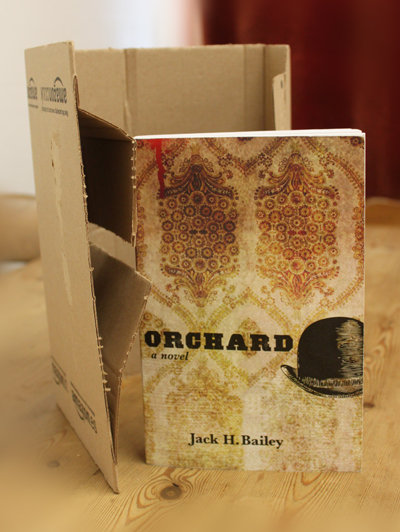

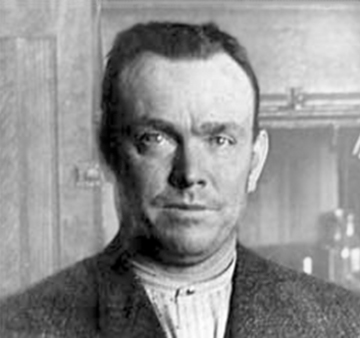 Orchard (right) had his mandatory death sentence commuted and he died in the state penitentiary in Boise, Idaho, on April 13, 1954, aged 88, over 48 years after his arrest. Jack Bailey’s novel is a fictionalised account of these momentous events, and will be available on Amazon from 26th July. Bailey himself had a long and varied career. An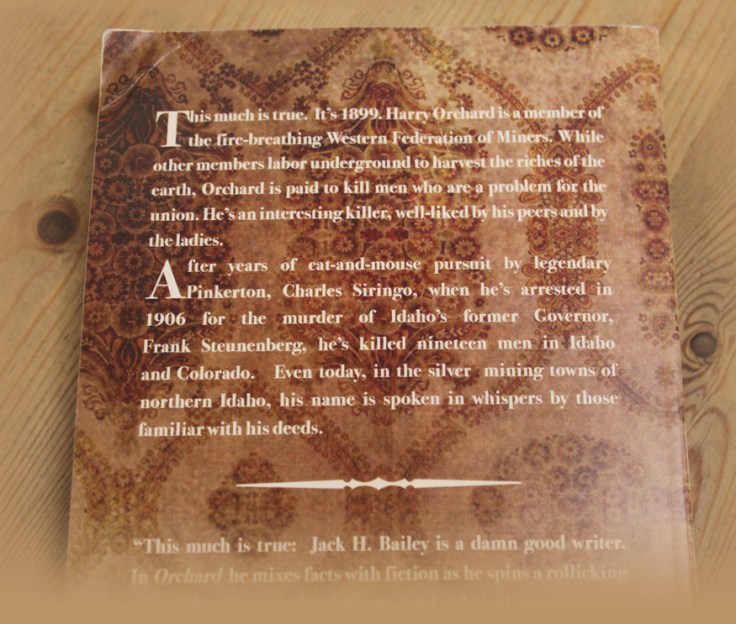

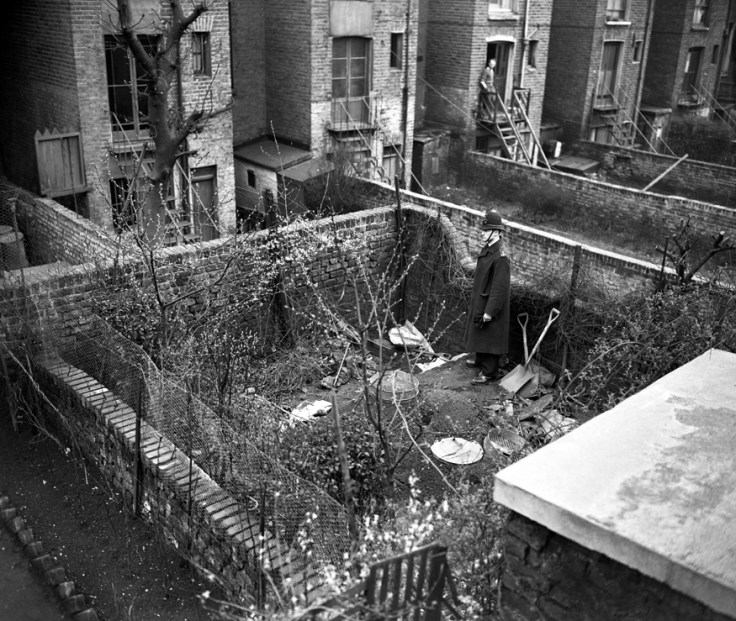
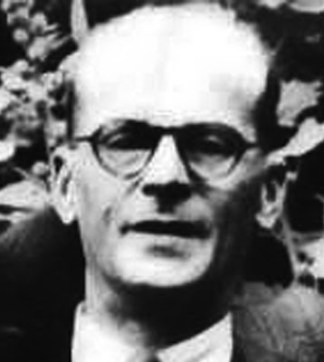 John Reginald Halliday Christie (left) moved to London in the 1920s, and developed into a career criminal, albeit of a petty sort. He had married Ethel Simpson in 1928, but they became estranged. They were reconciled, and set up home in a threadbare flat at 10 Rillington Place, Ladbroke Grove. It seems that Christie ticked a depressingly recurrent box on the checklist of serial killers. He was impotent under normal sexual circumstances, but seemed able to perform, after a fashion, with prostitutes.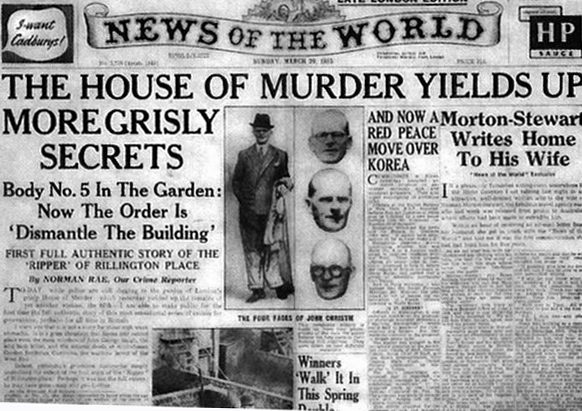


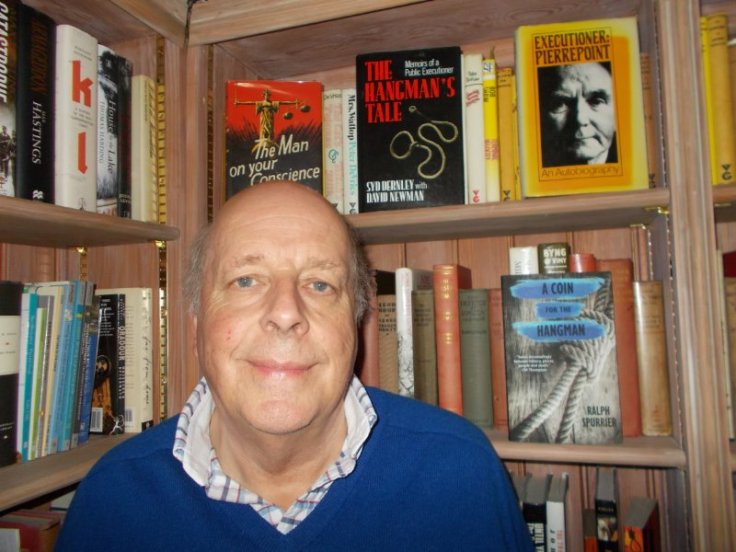
 A REAL LIFE SUSSEX BOOK DEALER called Ralph Spurrier has written a book. It starts in the present day, with a Sussex book dealer, name of – you guessed it – Ralph Spurrier, and Mr S has bought a job lot of books and bits. Their erstwhile owner is dead, and his bungalow and its contents are being sold at auction. The fictional Mr S – and probably his real-life doppelganger – make their livings by buying van-loads of books in the hope that somewhere in the pile of book club reprints and assorted dross there will be a first edition, something autographed, or another rarity which can be sold on to pay the bills.
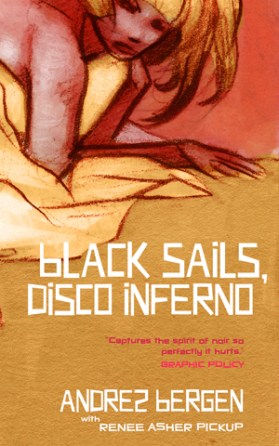 What noir enables me to do is isolate those genres and render them a little different, whether it be an homage to golden age comic books from the 1940s (Bullet Gal), or rebooting a medieval romance (Black Sails, Disco Inferno). The standards of noir – a certain sense of cynicism, the not-so-happy outcome, mood, drinks, and cutting dialogue – bring out the best in any such side-step.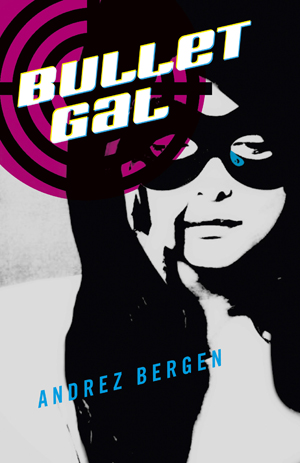

 REGGIE AND RONNIE KRAY have been the subject of almost as many books, documentaries and dramas as their 19th century near-neighbour Jack the Ripper. The East End that he – whoever he was – knew has changed almost beyond recognition. The Bethnal Green of the Krays is heading in the same direction, but a few landmarks remain unscathed. They were born out in Hoxton in October 1933, Reggie being the older by ten minutes. The family moved into Bethnal Green in 1938, and they lived at 178 Vallance Road. That house no longer stands, modern houses having been built on the site (left)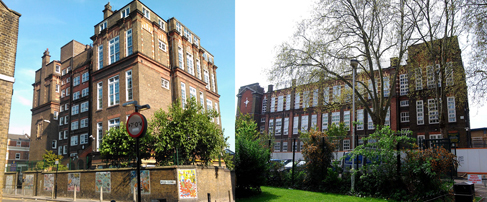
 George Cornell (right) had known the twins from childhood. Their careers had developed more or less on similar lines, except that Cornell became the enforcer for the Richardsons. On 7th March 1966 there was a confused shoot-out at a club in Catford. Members of the Kray gang and the Richardsons gang were involved. At some point, George Cornell had been heard to refer to Ronnie Kray as a “fat poof.” That might seem unkind, but was not totally inaccurate. Ronnie was certainly plumper than his lean and hungry twin, and his liking for handsome boys was well known.
 On the evening of 9th March, Cornell and an associate were unwise enough to call in for a drink at a The Blind Beggar pub on Whitechapel Road, very much in Kray territory. Some thoughtful soul telephoned Ronnie Kray, who was drinking in a nearby pub, The Lion in Tapp Street (left). Ronnie, pausing only to collect a handgun made straight for the Blind Beggar, strode in, and shot George Cornell in the head at close range. His death was almost instantaneous. Needless to say, no-one else in the pub had seen anything. Pictured below are a post mortem photograph of Cornell, and the bloodstained floor of The Blind Beggar. Below that is the fatal pub, then and now.
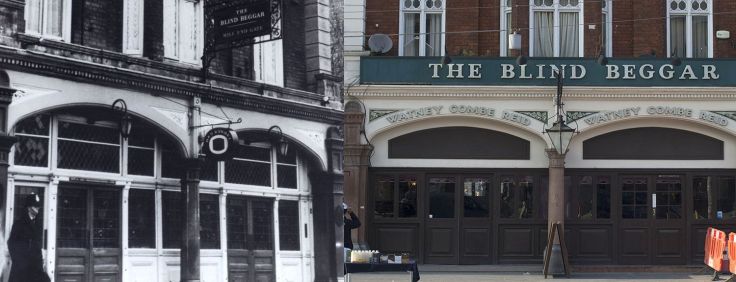
 Folklore has it that now that Ronnie had ‘done the big one’, there was pressure on Reggie to match his twin’s achievement. The chance was over a year in coming. Jack McVitie (right) was a drug addicted criminal enforcer who worked, on and off, for the Krays. His nickname ‘The Hat’ was because he was embarrassed about his thinning hair, and always wore a trademark trilby. McVitie had taken £500 from the Krays to kill someone, had botched the job, but kept the money. He had also, unwisely,been heard to bad-mouth the twins.
 On the night of 29th October 1967, McVitie was lured to a basement flat in Evering Road, Stoke Newington,(left) on the pretext of a party. There, he was met by Reggie Kray and other members of the firm. Kray’s attempt to shoot McVitie misfired – literally – and instead, he stabbed McVitie repeatedly with a carving knife. McVitie’s body was never found, and the stories about his eventual resting place range from his being fed to the fishes of the Sussex coast to being buried incognito in a Gravesend cemetery.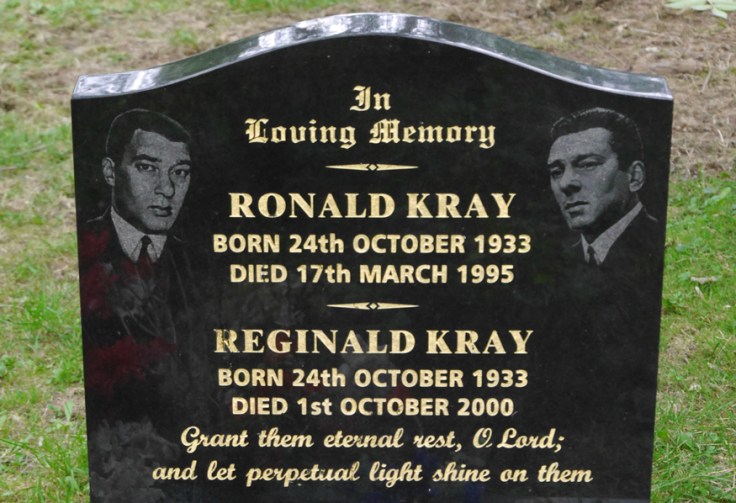

 WHEN LONDON BECAME THE PRIMARY TARGET of Luftwaffe bombers in World War II, one of the first responses of the government was to institute a night-time blackout. Given that the silvery ribbon of the River Thames couldn’t be hidden, and German knowledge of the whereabouts of factories and docks, the effect of the blackout was more psychological than practical. What it did do was to liberate criminals from the fear of being seen by what remained of the police force – bear in mind that most able bodied men of fighting age were very quickly drafted into the armed forces. Despite the affectionate folk myth of plucky Londoners ‘grinning and bearing it’, domestic crime rocketed. An often used wheeze was for criminals to dress up as Air Raid Wardens. In the darkness and confusion, they could raid shops and be about their dishonest business with a new freedom. Looting was not uncommon, and more than one gang discovered the effectiveness of going around the dark streets in a fake ambulance.
 Rather like the Whitechapel killer of 1888, the attacks became more frenzied and the mutilations more awful. Weapons used included razor blades, a can opener, a kitchen knife and a candlestick. After the frenzied killings of Margaret Lowe and Doris Jouannet, Sir Bernard Spilsbury (right), the most celebrated medical examiner of the century, remarked that the murders were the work of “a savage sexual maniac”. The press were quick to coin a new name for the killer, and for the brief period of his notoriety, he became known as ‘The Blackout Ripper’.
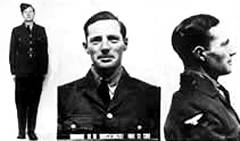 Cummins was tried at the Old Bailey in April 1942, and was very quickly found guilty. The judge was none other than Lord Chief Justice Humphreys, who had been involved in many of the most high profile trials of the century. On the day Cummins was hanged on the morning of 25th June, 1942, and the hangman was Albert Pierrepoint. It is said that an daytime air-raid raged overhead when Cummins died, a bitter irony given the circumstances of his crimes.


