The Britain of summer 1922 was, in some ways, similar to the island in The Tempest:
“the isle is full of noises,
Sounds and sweet airs, that give delight and hurt not.
Sometimes a thousand twangling instruments
Will hum about mine ears..”
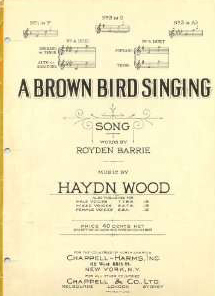 The sounds and sweet airs might have been provided by Haydn Woods’ A Brown Bird Singing or, if you were more disposed towards the art of Edith Sitwell, William Walton’s setting of her poetry – Façade. The discordant sounds of the thousand twangling instruments could have come from several sources; possibly the thousands of impoverished ex-servicemen sold short by the country they had fought for; perhaps, however, the isle which was most full of noises was that of Ireland, and in particular the newly formed Irish Republic.
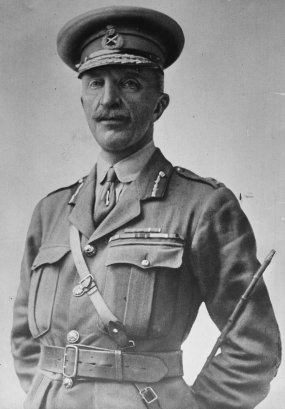 Sir Henry Wilson was a former General in the British Army, and his contribution to events in The Great War divides opinion. Some have him firmly in the ‘Butchers and Bunglers’ camp, a stereotypical Brass Hat who send brave men off into battle to meet red hot shards of flying steel with their own mortal flesh. Others will say that he was part of the combined military effort which defeated Germany in the field, and led to the surrender in the railway carriage at Compiègne in 1918. Whatever the truth, Wilson was never a field commander. He was much more at home well behind the front line, hobnobbing with politicians and strategists.
When the war ended, he was promoted to Field Marshall, and made a baronet. With Ireland beset by all manner of plots and factional fighting, he resigned his army post and was elected as MP for the Ulster constituency of North Down. He had made it very clear that he despised the Irish Republican movement, and had written in June 1919 that “Ireland goes from bad to worse” and that “a little bloodletting” was needed. His view of the British government’s attempts to deal peaceably with the Irish Problem is summed up by his belief that such peace moves were a “shameful & cowardly surrender to the pistol” by a “Cabinet of Cowards”. Ironically, his own demise was brought about by the pistols of two IRA killers.
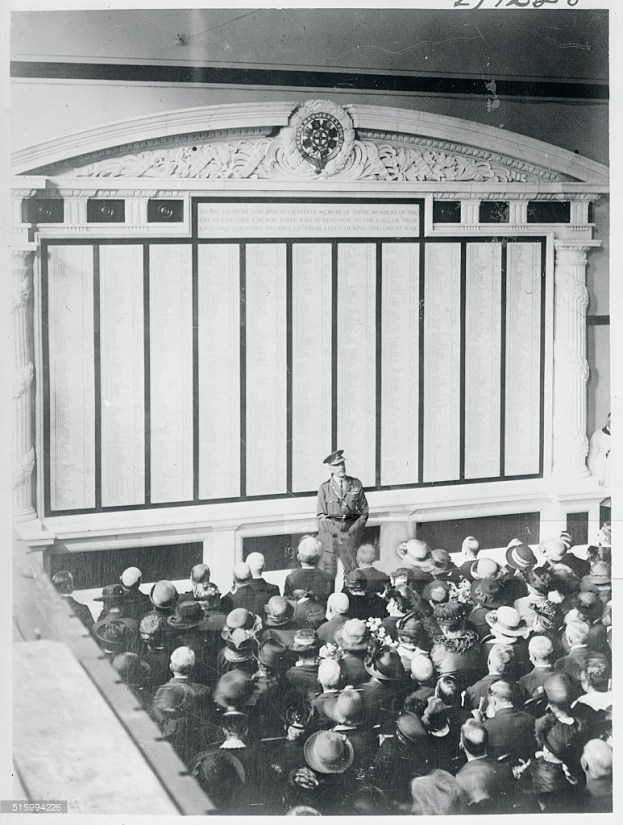
In the early 1920s, there was one common activity which retired army generals shared, and it was to travel far and wide across the country, sanctifying by their presence the hundreds of war memorials bearing the names of the 704,803 men who had perished while under their command in the recent conflict. Thus, on the morning of Thursday 22nd June, 1922, Wilson had traveled by cab to Liverpool Street Station, where he had been invited to unveil the memorial to the men of The Great Eastern Railway who had died in the war. Having done his duty, and addressed the crowd of relatives and well-wishers, he returned to his house in Eaton Place in London’s Belgravia.
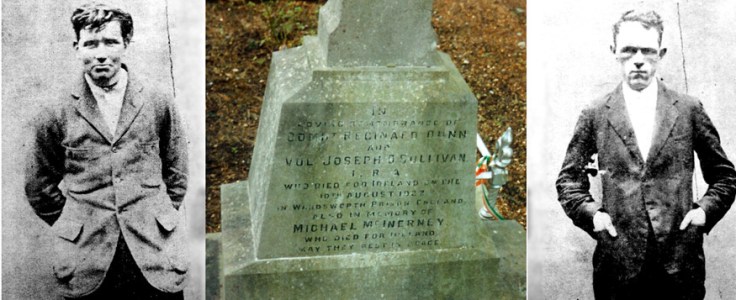
As the taxi pulled away, Sir Henry was attacked by two men, Reginald Dunne and Joseph O’Sullivan. He was shot nine times, and the killers made their escape, only to be arrested shortly after. Newspapers made much of the possibility that Sir Henry had drawn his ceremonial sword in his own defence, and had cried, “You cowardly swine!” as he was attacked, but only he and his assailants could verify that, and they are long gone from us.

Wilson’s murder outraged popular opinion in England, and polarised views on the situation in Ireland. It was a widely held belief that the murder had been carried out on the orders of the Republican firebrand Michael Collins. Collins himself, incidentally, had only a few more weeks to live, as in the August of 1922, he was murdered, probably by rival Irish factions. Wilson’s funeral was a public affair attended by Lloyd George and the cabinet. French Generals Foch, Nivelle and Weygand came to pay their last respects, as well as many of his former British army colleagues including French, Macready, Haig and Robertson. The Field Marshal was buried in the crypt of St Paul’s Cathedral.
And Sir Henry’s killers? They were duly tried and convicted of his death and hanged at Wandsworth prison on 10th August 1922, and buried in the prison grounds. As befits the adage that one man’s terrorist is another man’s freedom fighter, the remains of both Dunne and O’Sullivan were repatriated to the Irish Republic and given a heroes’ burial in 1967. A final irony in a case that is positively dripping with it, is that both men had fought for King and Country, with great gallantry in the war that had made Sir Henry Wilson such a prominent public figure.
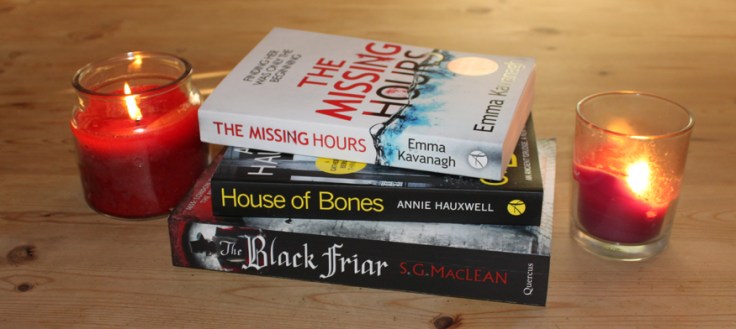

 House of Bones by Annie Hauxwell
 The Black Friar by S. G. MacLean

 A Ghostly Shade of Pale (2013)
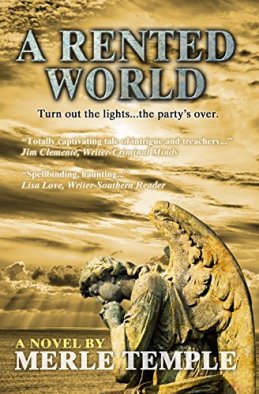 A Rented World (2014)
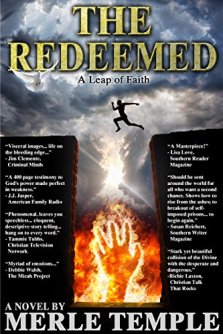 The Redeemed – A Leap of Faith (2016)

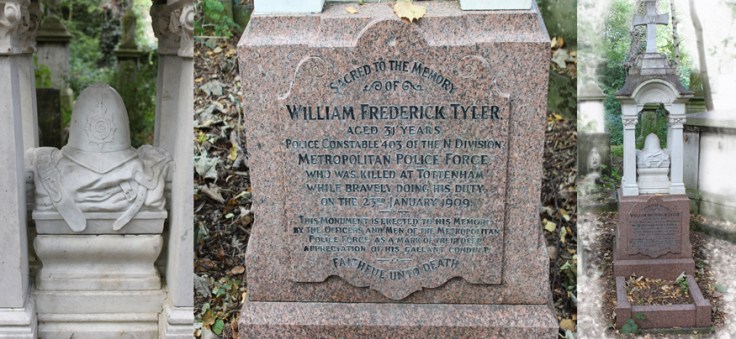


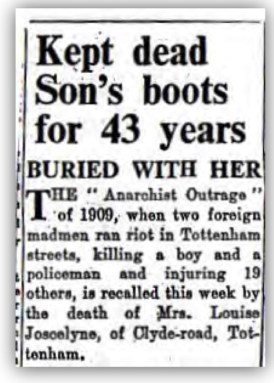 Ralph Joscelyne’s mother, Louise, was to raise another seven children, but she kept the pair of boots Ralph was wearing on the day he was killed. When she died in 1952, the boots were buried with her. In more recent times, both Joscelyne and Tyler have been commemorated. WIlliam Tyler has a plaque on the wall of Tottenham police station, while Ralph Joscelyne is remembered in a memorial outside a church in Mitchley Road. There is an abiding irony that the corner of Tottenham where the robbery occurred and the resultant chase began is exactly where the catastrophic riots of 2011 started. An initially peaceful protest by relatives of Mark Duggan, a gangster shot by police, did not get the required response from officers within the police station. It then, as they say, “all kicked off.”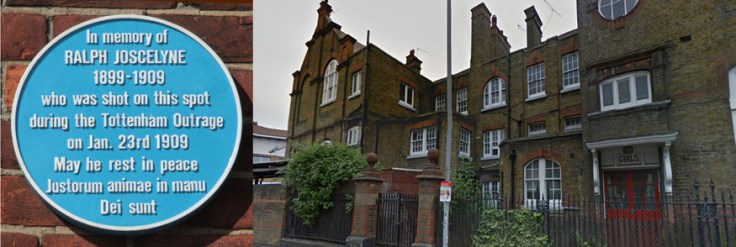

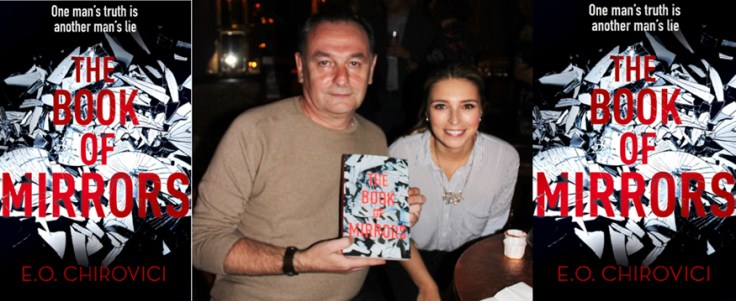

 So, in a spookily lit upper room we met the writer, who is not only an award winning economist and has penned best-sellers in his native Romania, but also the author of a stunningly good new novel – the first he has written in English. The book is set partly in the present and partly in 1987, and it tells the story of the murder of a controversial professor of psychology at New Jersey’s Princeton University. His death is observed by different narrators, and Chirovici (left) has constructed an ingenious literary version of the old fairground attraction of distorting mirrors, so that we reach the final pages still not really sure who is giving us the correct image of events on the fateful night.

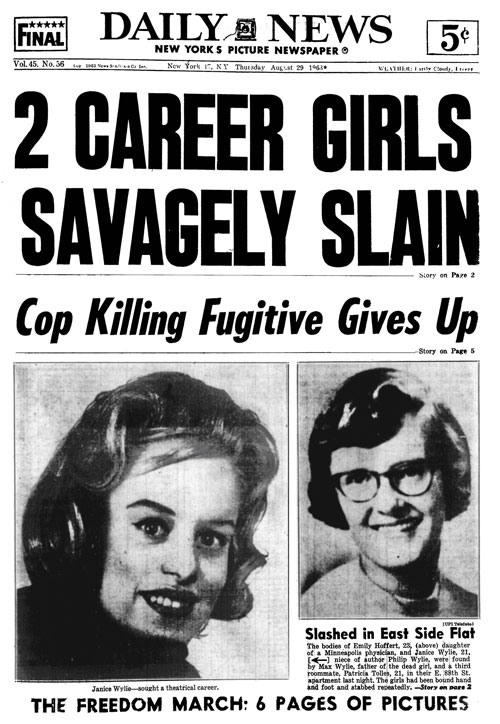
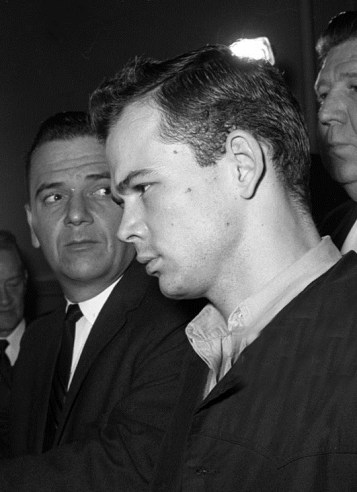 Yet, Mel Glass, a young Assistant District Attorney in Manhattan, not even assigned to the Homicide Bureau, was troubled by the investigation. With the blessing from legendary District Attorney, Frank Hogan, Glass tirelessly immersed himself in the case. So began an epic quest for justice, culminating in a courtroom showdown in which the Brooklyn arresting and interrogating cops refused to admit their flagrant missteps, providing a complete defense to the actual career criminal, vicious predator, murderer, Richard Robles.(pictured right)
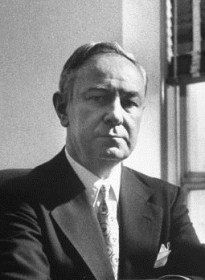 Important to note that District Attorney Hogan (left) was truly a legend long before Wylie-Hoffert occurred. Once convinced that Mel Glass’ gut-instincts and subsequent investigation was legitimate and that George Whitmore, Jr., was wrongfully indicted for the most gruesome and sensationalized double-rape murders in the media’s radar, Mr. Hogan was prepared to admit his mistake, possibly fracture his career’s reputation, and exonerate an impoverished young man with a very low I.Q. And why? Simply and manifestly because it was right, justice demanded it.
 Angeles and defended Amy Grossberg in her sensationalized baby death case. He was Assistant District Attorney in New York County in the office of legendary District Attorney Frank Hogan, where he ran the Homicide Bureau, served as Chief of the Criminal Courts, and was in charge of the DA’s legal staff training program. He served as Deputy Chief counsel for the Congressional Committee investigation into the assassinations of President John F. Kennedy and the Rev. Dr. Martin Luther King, Jr. He also served two terms as mayor of Beverly Hills and taught Advanced Criminal Procedure for four years at Boalt Hall School of Law, University of California, Berkeley, and has conducted continuing legal education (CLE) seminars for practicing lawyers in California, New York, and Pennsylvania. Born in Brooklyn, New York, Tanenbaum attended the University of California at Berkeley on a basketball scholarship, where he earned a B.A. He received his law degree (J.D.) from Boalt Hall School of Law at the University of California, Berkeley. For more information, please visit


 fullybooked2017