
A writer, whether novice or experienced often reads or hears the words: ‘find your own voice.’ So, what does that mean to the uninitiated? Our ‘voice’ is our manner of forming our words into phrases and sentences, or ‘lexicology’ as it is more loosely described. We grow as readers grasping our list of favourite authors. Many say: ‘I want to write like Katie Fford, Ian Rankin, Lee Child’ – as the case may be. We might be influenced by idols, but never should we write like them. Why would we? Do we not want to personally stamp our own creations?
As a teenager, I penned small shots of poetry, or lines of words I believed was poetry. My definition of the time: if it rhymes, it’s a poem. I had no idea about meter and cadence and sonnets and haiku. I progressed through teen and adult novels, gradually acquiring comfort with structure and grammar – the key ingredients of our voice. Only when a literary agent advised against my particular style, did I become more concerned with voice.
Voice is the perspective by which we construct our material. Most writers will adopt either ‘first person’ (a direct ‘live’ account) or ‘third person’ (an overall view). Various novels lend themselves to one or the other. I prefer ‘first person’ because I offer, in the main, live activities of the novel’s lead protagonist. Narrative is constrained though, to ‘direct’ events only, because ‘Joe’ or whoever, cannot possibly detail events that occur beyond his sphere of vision or knowledge.
 My crime / mystery novel, Beyond all Doubt, is written in third person, present tense. And it is adopting ‘present tense’ that saw me censored by the aforementioned literary agent. I was in a quandary: do I conform to a recommendation and lose the ‘voice’ of the work I had laboured over for many months, or do I back myself, take pride in my work and say: This is how I want to write. I believe in it.
Part of that ‘backing myself’ required selecting a publisher which would endorse my wish to publish my work in my own format. Sure, I am a debut author with no power to dictate how my work shall be produced, but Troubador Publishing has been magnificent in providing me a quality product with excellent support. Advance sales are rolling and reviews and feedback are most encouraging.
 I do not write crime as one who has jumped on the current-trend bandwagon. I was raised in a home of The Sweeney and The Bill. On migrating to Australia as a child there was weekly doses of Homicide, Division Four, and Matlock Police. My enjoyment of the genre comes not from wanting to venture into life’s darker side, but from my penchant for solving problems and conundrums. I confess though, that youthful aspirations saw me as a leading criminal lawyer. It transpired that I had neither the aptitude nor attitude to devote seven years to the cause. Ironically, I later devoted just as many years to writing and literary studies!
My lead protagonist is Olivia Watts, a detective sergeant with Worcester CID, who later resigns in favour of commencing her own investigations agency. It is through Olivia I am able to role-play my legal dreams – but without the financial reward. I like to create killings and murders that are not quite so mainstream as a straight-out shooting. Without giving too much away, I have shrink-wrapped a head (while the victim is alive) and I have woven copper thread through a bath mat to electrocute a victim after removing herself from the shower. Where’s she going to step? Straight on to the bathmat!) I guess most authors seek a distinctive edge; we each want to develop a niche that we happily settle into. I have found mine and have woven three different murders into Beyond all Doubt.
I write to entertain the reader as I want to be entertained. I create lively characters with realistic lifestyles, idiosyncrasies and flaws. I often diverge to far-off tangents (although still plot-related) to afford the reader light relief, and perhaps make him/her wonder where the heck the story is going. Beyond all Doubt devotes six pages to an interesting sidetrack.
I believe in authenticity, so research heavily to ensure that even in a fictitious setting, I give the reader a factual account of events. These ideals have been carried through to Whisper of Death, due for release in June 2017. Production of the ‘Watts Happening? Investigations’ series is scheduled through to November 2018.


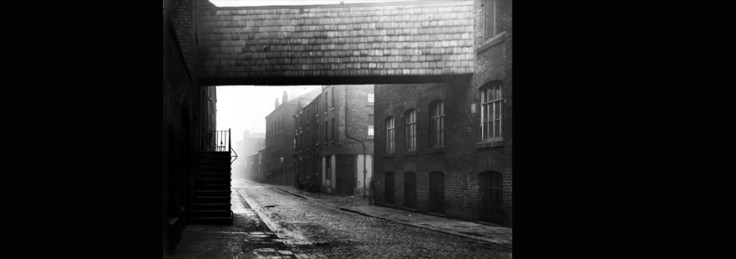
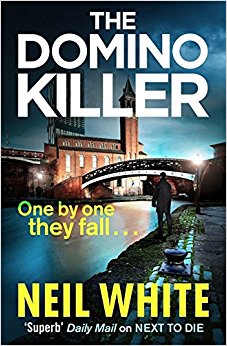 It is in Manchester that author Neil White introduces us to an unlikely crime fiction duo. Not Inspector and Sergeant, not toff and manservant. not analytical genius and bumbling foil, but brothers. With a difference. Sam Parker is a policeman, while his brother Joe has opted to on the other side of the tracks. Not a criminal himself, you understand, but a solicitor who earns his daily bread by being summoned to police stations across the city to try to advise felons on what they should and shouldn’t say in the interview room. The authenticity of Joe Parker as a character is boosted by the fact that Neil White, as well as writing CriFi bestsellers, is actually a criminal lawyer.
 The plot of The Domino Killer is full of scarcely plausible coincidences, but Neil White (pictured right) is a good enough writer to plough through these potential blockages and delivers a novel full of drama, suspense and prose which hooks the reader in, and doesn’t let go.

 There are few places more English than the lovely town of Evesham, the setting for Beyond All Doubt, by local author Paige Elizabeth Turner. The River Avon adds majesty to the Worcestershire town, but can also yield unpleasant discoveries, as when the bloated corpse of Juanita Morales is finally released by the riverbed weeds, much to the horror of passers by, and to the vexation of local police officers DI Marchant and DS Watts.
 COMPETITION – Win a copy of Mercy Killing by Lisa Cutts, and read how the apparent murder of a registered sex offender places huge strains on the community, and asks the local police force a big question about where their loyalties lie; to local people, or to the letter of the law? You can read our first take on Mercy Killing

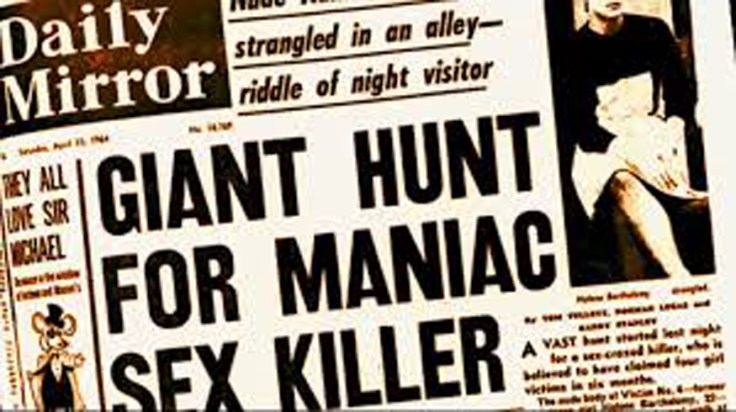
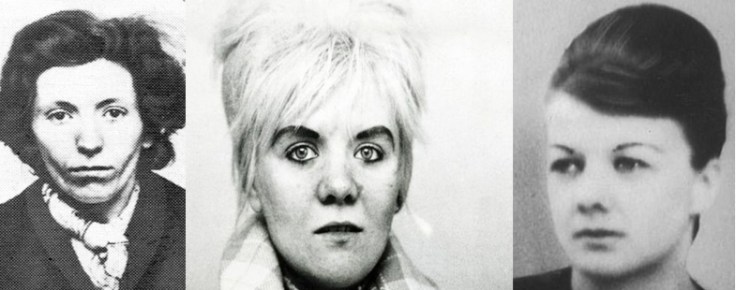
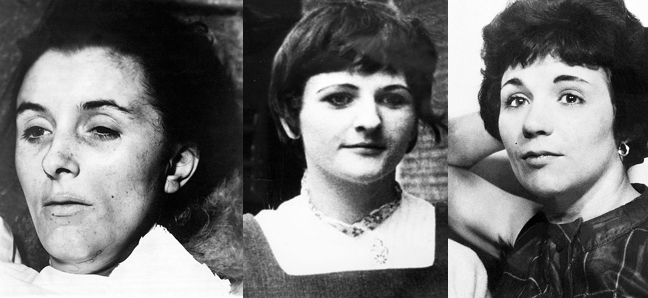
 Goodbye Piccadilly, Farewell Leicester Square (Anthony LeBern, 1966) is very loosely based on the Hammersmith Murders, and was later filmed as Frenzy (with many changes) by Alfred Hitchcock in 1972. The book title comes, of course, from the celebrated song It’s A Long Way To Tipperary.
 Bad Penny Blues (Cathi Unsworth, 2009) sticks much closer to the original events, and features several thinly disguised real-life celebrities of the time, including the artist Pauline Boty, David ‘Screaming Lord’ Sutch, Joe Meek, crooner Michael Holliday, and ex-boxer and TV personality Freddie Mills (pictured below). The connection to the crimes is provided by a young copper who is drawn into the circle of Notting Hill artists and bohemians while his day job is to try and find the killer.


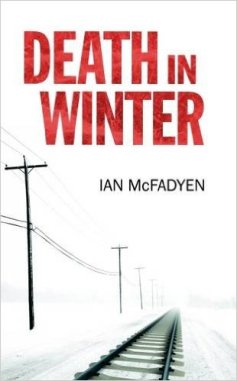 Hayley Bell has not returned home after a night out with some lady friends, and husband Duncan is seriously concerned. Mr Bell is a disagreeably pompous fellow with some serious affectations, such as calling four rooms in his grand house after the seasons, and decorating them accordingly. Carmichael and his team, however, have no reason to suspect Duncan Bell – despite his unpleasant manner – of having anything to do with his wife’s disappearance.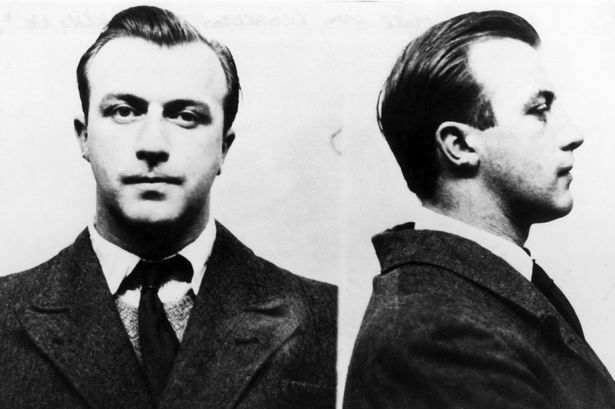


 March 1966. Cornell (right) was having a quiet drink in The Blind Beggar pub, well inside Kray territory on Whitechapel Road, when Ronnie walked in and put a bullet from a 9mm Luger into his head. Needless to say, none of the bar staff or other customers saw a single thing. Kray was eventually convicted of the murder when a barmaid, aware that Ronnie was already safely under lock and key for other misdeeds, testified that she had witnessed the killing.
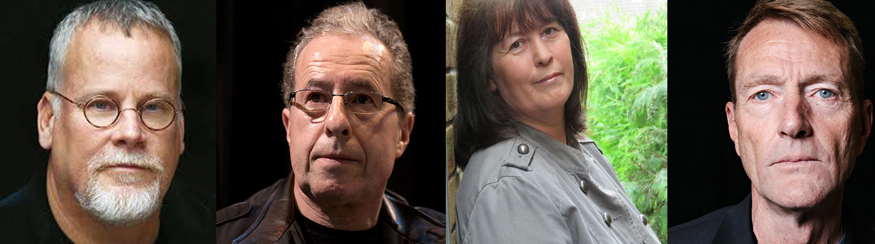
 Some authors save the best for last. Others, like Joseph Heller with Catch 22, produce such a devastatingly good first novel that the rest of their lives are spent trying to better it. Rachel Amphlett has a new novel out – watch out for our review of Scared To Death – but she has taken time out of her hectic schedule to look at a few brilliant ‘first in series’ crime novels.
 Michael Connelly – The Black Echo (Harry Bosch #1)
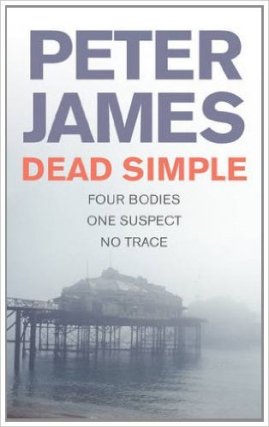 Peter James – Dead Simple (Roy Grace #1)
 Angela Marsons – Silent Scream (Kim Stone #1)


