
Newspapers, television, radio, bloggers – they’re all at it in these dog days between Christmas and New Year. Alert followers will have noticed that Fully Booked has a rather Post-Brexit feel to it, with content dating only from late June 2016. That is, as they say, is another story, but I have been reading and enjoying CriFi all year. Here are my views on the books that made a big impact during 2016. Six categories, and then one final book which, for me, was simply The Best.
BEST DIALOGUE
The Other Side of Silence by Philip Kerr
Kerr has cleverly positioned Bernie Gunther – former Berlin cop, soldier, lover and sometime anti-hero – squarely astride the most eventful years of the 20th century. This enables him to meet a stellar cast of fascinating historical characters, including Eva Peron, Adolf Eichmann, Reinhardt Heydrich, Paul von Hindenberg and now, in his latest saga, the celebrated writer W. Somerset Maugham. It is 1956 and Gunther is working under an assumed name as a concierge at a smart hotel in St Jean Cap Ferrat. As well as recognising that a hotel visitor is a former high ranking Nazi, Gunther discovers a plot to blackmail Somerset Maugham.His meetings with the great man are full of excellent verbal sparring.
“I dislike a man who’s not precise about what he wants to drink,” said Maugham. “You can’t rely on a man who’s vague about his favourite tipple. If he’s not precise about something he’s going to drink then it’s clear he’s not going to be precise about anything.”
 Gunther is something of a ladies’ man, and he usually manages to attract the attention of females, most of whom are either damaged, or damaging, and sometimes both. Here, he makes a night-time visit to an English woman who says that she is anxious to meet Somerset Maugham with a view to writing a biography.
“Oh, I’m glad it’s you, “ she said. “I thought it might be the gardener.”
“At this time of night?”
“Lately he’s been giving me a funny look.”
“Maybe you should let him water the flower beds.”
“I don’t think that’s what he has in mind.”
“The heat we’ve been having? He’s in the wrong job.”
“Did you come here to mow my lawn, or just to talk?”
Despite the smart talk and the wisecracks, there is always something deeply serious going on in the Gunther novels, and in this case it’s the fact that the former Nazi who Gunther recognises at the hotel was responsible for the death of his lover, a young woman who, along with 9,400 others, perished when the troop ship Wilhelm Gustloff was sunk in January 1945. Near the end of the book, Gunther confronts Harold Hennig.
“You’re not the type to kill me, remember?” He was starting to sound scared now. “You said so yourself, Gunther. You’re a decent man. I knew that the first time I saw you.”
“No, I said I wasn’t the type to leave a man to die chained to a radiator, like an abandoned dog. But this is different.” I pointed the gun at him.
“This is for those nine thousand people who died on the Wilhelm Gustloff in January nineteen forty-five. It’s been eleven years in coming, and for them this is an act of vengeance. But for Captain Achim von Frisch, Irmela Louise Schaper and her unborn child – my unborn child – it’s revenge, pure and simple.”
Gunther is a flawed hero, but a beguiling one, and his interactions with the famous and infamous men and women of the century are fascinating on their own, but in this novel, as in all the previous stories, it is Gunther’s speaking voice that brings the man to life. The Other Side of Silence is published by Quercus.

BEST HISTORICAL NOVEL
A Straits Settlement by Brian Stoddart
Superintendent Christian Le Fanu is an English policeman working in Madras. Despite considerable bravery during World War I, he has vowed never to set foot in the land of his birth again. His lover is a woman of mixed race, and he strives to do his job efficiently while treating law abiding Indian people with fairness and respect.
 He is asked to investigate a disappearance and a death. The disappearance is of a minor functionary of the Raj from the country town he helped administer, and the death is that of the son of a powerful – and widely disliked – British entrepreneur and colonialist. Le Fanu’s search for the missing Southlake, and the all-too-dead Hargood takes him far from Madras, and to the exotic Malay island of Penang, where he finds a beguiling mixture of colonial and Chinese culture. He also finds himself in the equally beguiling arms of a beautiful Chinese woman. Unfortunately, she is the daughter of a wealthy merchant who appears to be right at the centre of Le Fanu’s investigations.
Brian Stoddart is a university professor who has studied South Asia extensively, and his knowledge of India and its history is immense. The beauty of his writing, however, is that he shares his learning with the lightest of touches, so that after a chapter or two you’ll feel you know all the steps in the elaborate dance between the British administration and the steadily growing but irresistible forces of Indian nationalism.
The title refers to three British colonies at the time called Straights Settlements – Penang, Malacca and Singapore. Not least of Stoddart’s skills is his ability to weave together different themes to make a beautiful whole. Thus, we have a police procedural, a political thriller, an historical drama, a romance, and an intense portrait of a gifted but very complex man. No-one currently writing manages this with as little fuss and fanfare as Stoddart. A Straits Settlement is published by Crime Wave Press.

BEST PSYCHOLOGICAL THRILLER
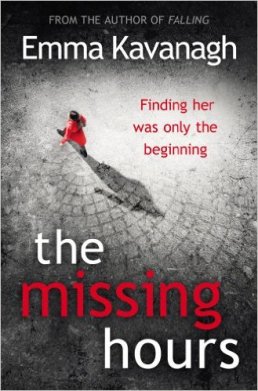
The Missing Hours by Emma Kavanagh
One of the most secretive service industries in the modern world is that of K & R consultants. The initials stand for kidnap and ransom, and the operatives who pit their wits against kidnappers play their cards very close to their collective chests. Emma Kavanagh trained as a psychologist and, after leaving university, started her own business as a psychology consultant, specialising in human performance in extreme situations. For seven years she provided training and consultation for police forces and NATO and military personnel throughout the UK and Europe. Here, in this tense and nerve-tingling novel, she puts all her insights and experience to good use, telling the tale of a woman who disappears, but then mysteriously reappears, but with no recollection of the intervening hours.
Selena Cole is a widow, her husband having been killed while working for The Cole Group. Since his death she has pretty much handed over the running of the group to her sister-in-law, Orla Britten, and her husband Seth. Their centre of operations is the Cole’s elegant period house in a village not far from Hereford. Then, Selena goes missing. One minute she is watching her girls Heather and Tara play on the swings in the playground. The next, she is gone, and a neighbour has gathered up the distressed children, and the police are called.
 The police investigation into Selena’s disappearance is handled by an unusual crime fiction pairing. Finn Hale and Leah Mackay are brother and sister. Finn has leap-frogged his sister in the promotion stakes, despite her evident superiority – evident, that is, to us readers, but not the local constabulary personnel department. Kavanagh plays the relationship between the siblings with the touch of a concert violinist. There are all manner of clever nuances and deft little touches which enhance the narrative.
Kavanagh reveals the inner workings of K & R consultants by letting us browse through the files of The Cole Group in between chapters focusing on one or other of the main characters. The police procedural aspect of the novel is sure-footed and convincing, while the touches of domestic noir work well, despite following a well-trodden path. After all, who has ever read a novel where a detective has a blissfully happy marriage with a fully supportive spouse?
The plot twists come, as they should, at regular intervals, but we see the big reveal with only a few pages to go. By then you will have been totally hooked by the excellent writing, Kavanagh’s well-tuned ear for dialogue and her handling of the intricate plot. The Missing Hours is published by Century.

 Miss Christie Regrets by Guy Fraser-Sampson
 presented. This is the debut novel from Joseph Knox (right) and by contrast with Miss Christie Regrets and its golden tinge, this is very much noir territory. The book opens in a bleak Manchester street and, as you might expect, it’s raining. DC Waits, a young Manchester detective is drawn into an investigation of the disappearance of Isabel Rossiter and he finds that her home life is complex. Meeting her rich and influential father, Waits has to mine down beneath the conventional surface of the Rossiter family until the truth begins to emerge – and it is far from pretty.


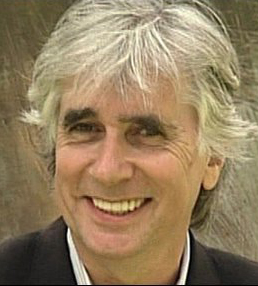
 Murder In Mt Martha is one such book. For those who have never visited Melbourne, Mount Martha is a town on the Mornington Peninsula, best known as what we Brits would call a seaside town. The ‘Mount’ is a shade over 500 ft, and is named after the wife of one of the early settlers. Author Janice Simpson (left) has taken a real-life unsolved murder from the 1950s as one thread, and created another involving a present day post-grad student who is interviewing an old man about his early life in the post-war Victorian city. Simpson has woven the two threads together to create a fabric that shimmers, shocks and surprises.
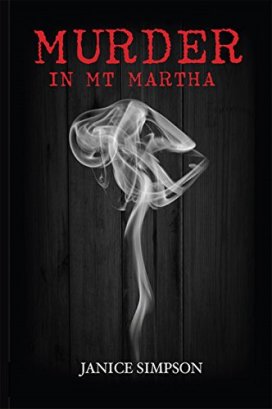 Simpson keeps Szabo blissfully unaware that Arthur Boyle is a relative of Ern Kavanagh. Arthur only recalls him in fits and starts, believing that he was his uncle, but Simpson lets us into the secret as she describes Ern’s life over half a century earlier. The book opens with a graphic description of the brutal murder of an innocent teenager whose parents have reluctantly allowed her to travel alone to her first party. There is never any doubt in our minds that Ern Kavanagh killed the girl, but we are kept on a knife-edge of not knowing if he will get away with the murder.
 Highbridge, by Phil Redmond
 Down, But Not Out, by Gary Tulley
 All Of A Winter’s Night, by Phil Rickman
 My crime / mystery novel,
 I do not write crime as one who has jumped on the current-trend bandwagon. I was raised in a home of The Sweeney and The Bill. On migrating to Australia as a child there was weekly doses of Homicide, Division Four, and Matlock Police. My enjoyment of the genre comes not from wanting to venture into life’s darker side, but from my penchant for solving problems and conundrums. I confess though, that youthful aspirations saw me as a leading criminal lawyer. It transpired that I had neither the aptitude nor attitude to devote seven years to the cause. Ironically, I later devoted just as many years to writing and literary studies!

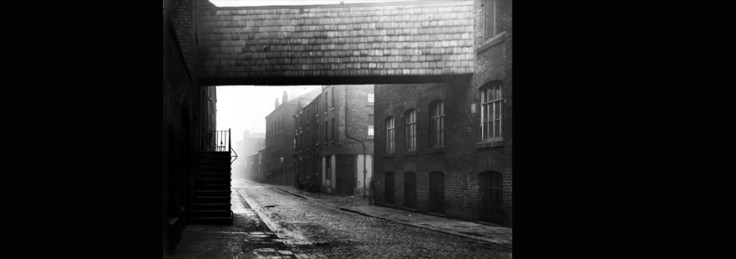
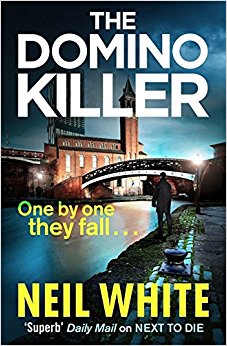 It is in Manchester that author Neil White introduces us to an unlikely crime fiction duo. Not Inspector and Sergeant, not toff and manservant. not analytical genius and bumbling foil, but brothers. With a difference. Sam Parker is a policeman, while his brother Joe has opted to on the other side of the tracks. Not a criminal himself, you understand, but a solicitor who earns his daily bread by being summoned to police stations across the city to try to advise felons on what they should and shouldn’t say in the interview room. The authenticity of Joe Parker as a character is boosted by the fact that Neil White, as well as writing CriFi bestsellers, is actually a criminal lawyer.
 The plot of The Domino Killer is full of scarcely plausible coincidences, but Neil White (pictured right) is a good enough writer to plough through these potential blockages and delivers a novel full of drama, suspense and prose which hooks the reader in, and doesn’t let go.

 There are few places more English than the lovely town of Evesham, the setting for Beyond All Doubt, by local author Paige Elizabeth Turner. The River Avon adds majesty to the Worcestershire town, but can also yield unpleasant discoveries, as when the bloated corpse of Juanita Morales is finally released by the riverbed weeds, much to the horror of passers by, and to the vexation of local police officers DI Marchant and DS Watts.
 COMPETITION – Win a copy of Mercy Killing by Lisa Cutts, and read how the apparent murder of a registered sex offender places huge strains on the community, and asks the local police force a big question about where their loyalties lie; to local people, or to the letter of the law? You can read our first take on Mercy Killing


 fullybooked2017