
 The town of Kiewarra is a dusty five hour drive from Melbourne. Five hours. Six, maybe, if you weren’t that anxious to get there. Five hours, under the same relentless sun, but it might as well be fifty, for all the similarity there is. Melbourne, with its prosperity, its glass and steel central business district, its internationally renowned restaurants and its louche air as a cosmopolitan city. Kiewarra. A pub, a couple of bottle shops and a milk bar; a run-down school, starved of funds; a farming economy choked and parched by two years without rain; families turned bitter and taciturn by the shared misery of failed crops and burgeoning overdrafts. Author Jane Harper (left) takes us right into the deep dark blue centre of this community.
It is to Kiewarra that Federal Agent Aaron Falk returns. It is his home town, but he expects no palm leaves to be strewn in his path, no hymns of rejoicing. The only hymn he hears is the obligatory and badly sung offering at the funeral of an old friend, Luke Hadler. Falk and Hadler grew up together. Hadler stayed to work the family farm, while Falk and his father left for Melbourne under a very dark cloud.
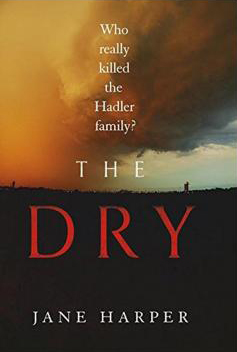 Seeing the coffin of a contemporary being carried through the church is bad enough for Falk, but when it is followed by two smaller ones, one being very much smaller, that is a different thing altogether. For the other two coffins are occupied by Hadler’s wife Karen, and his young son Billy. The story has played out across the mainstream media as a suicide-killing. Luke Hadler, driven mad by debt, failure, jealousy, despair – who knows? – has shot dead his wife and son, and then turned the gun on himself, albeit leaving his thirteen month old daughter Charlotte in her cot, screaming, terrified, but very much alive.
Falk’s ambivalence about returning to his home town is because of the death of a teenage girl, decades earlier. Ellie Deacon was found drowned in the local river, heavy stones crammed into her pockets. She, Falk and Hadler were inseparable companions at junior school, but as their teenage years triggered the inevitable hormones, their relationship became more complicated. The scribbled name “Falk” on a note found among Ellie’s possessions led local people to suspect that Aaron – or his father – had been involved in the death. Aaron and Luke had given each other unshakable alibis for the day of Ellie’s death, but local gossip and suspicion had forced the Falks out of town, never to return. Until now.
In the face of considerable aggression from local people, for whom the distant tragedy might have happened only yesterday, Falk is drawn into a re-investigation of the Hadler killings. Alongside a supportive local copper, Falk uncovers inconsistencies in the various stories people have told about the fatal day, even down to the hours and minutes before the carnage at the Hadler farmhouse was uncovered. As he goes about his work, however, the truth about what really happened on the day Ellie Deacon died hangs over our heads, as readers, like a miasma, malign and reeking of corruption.
This novel is a triumph on so many levels. It is a very clever and subtle whodunnit, and unless you cheated and skipped to last few pages, I doubt you will pick up the clues as to who killed the Hadlers. It is also a poignant elegy for youth, memory and the golden past which, when examined closely, loses some of its apparent lustre. It is an acutely accurate portrait of Australian rural life and how, at the margins, people with European urban lifestyles and ambitions are at the total mercy of the elements. The physical landscape could not be more real. We shield our eyes from the relentless glare of the sun, we feel the crackle of dead and desiccated vegetation under our feet, we hear the relentless drone of the blowflies who seem to be the only flourishing life form in town.
Sometimes, novels which emerge to the echoes of a great media fanfare don’t live up to the glory and resonance of the musical accompaniment. The Dry, I am happy to say, is not one of those. It is a brilliant and haunting masterpiece.

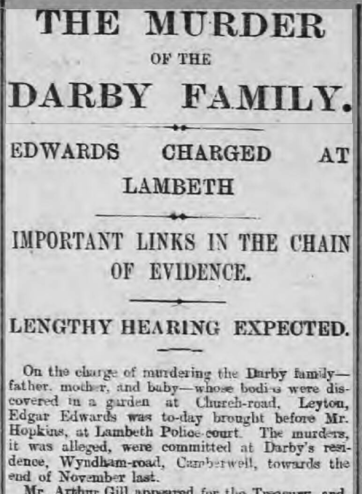 Having done the deed, Edwards concealed the bodies in a room above the shop, and installed his shop manager, a man named Goodwin. Goodwin and his wife ran the business for a few days, presumably oblivious of the dead bodies lying above the shop. In the meantime, Edwards had taken Darby’s gold watch and chain, and pawned it for cash. He had also rented a separate premises in the east London borough of Leyton, and on 10th December he explained to Goodwin that he was going to sell the Camberwell shop.
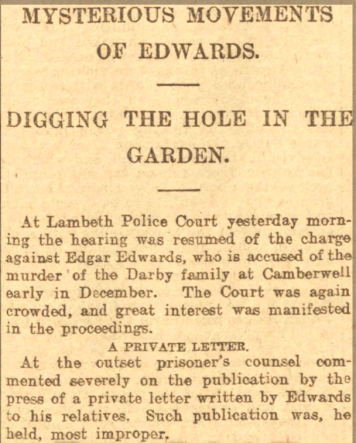 His trial at The Old Bailey was something of a foregone conclusion, brightened only by speculation as to whether Edwards would plead insanity. It was revealed that there was a strong streak of mental illness in his family. His mother and an aunt had died insane; one of his cousins was in an asylum and two others were what contemporary newspapers called “mental defectives”. Edwards was found guilty and apparently burst into manaical laughter when he was sentenced to death. As he stood on the scaffold on 3rd March 1903, it is alleged that he turned to the prison chaplain, giggled, and said, “I’ve been looking forward to this lot!”

 It seems from Sirens that you have a love-hate relationship with Manchester. Give us some idea of your impressions of the city. Was it a wrench to move to London, or a relief?
 Sirens is a great title. Are we talking blue flashing lights or voluptuous ladies luring sailors to their death?


 So, Waits plays a dangerous double game which involves being undercover yet in full view. This paradox is essential. Obviously drug lord Zain Carver will know that Waits is a suspended copper; the deception will only work if Waits can convince the gangster that he is prepared to damage his former employers with leaked information. It requires no acting ability whatsoever for Waits to appear dissolute, addicted and troubled – that is his normal persona. However, a big problem looms. A rich and influential Member of Parliament has “lost” his teenage daughter. Isabelle Rossitter is one of the satellites fizzing around the planet Carver. Daddy is desperate to get her back, and Waits is given the task.
 The first Fully Booked competition for 2017 has a fantastic prize – the eagerly awaited fourth novel from a writer who is regarded as one of crime fiction’s fastest rising stars – Eva Dolan. Watch Her Disappear is not on sale until 26th January, but you could be well ahead of the game if you win this competition.


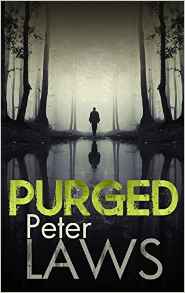
 Ordained Baptist minister Peter Laws (right) has produced a 110mph debut crime thriller featuring Matt Hunter, a former clergyman and now devout sceptic who, like most fictional crime consultants, has special skills which make him invaluable to the police in murder cases. I don’t know if Laws has himself gone down the same Road to Damascus In Reverse as his fictional character, but the depth and bitterness of Hunter’s scepticism about God and all His works certainly makes for compelling reading.
 First, an anorexic teenage girl goes missing, and then a lesbian artist who is in the terminal throes of stomach cancer disappears. Matt Hunter is sucked into the investigation via the simple ruse that photos of the missing women turn up as attachments in his email box. They stay there for a few hours but then mysteriously morph into pictures of a rainbow accompanied by a smiley face GIF.
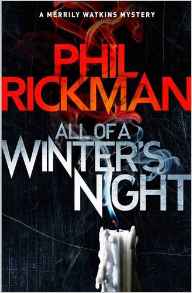

 All Of A Winter’s Night is the latest episode in the turbulent career of the Reverend Merrily Watkins. Her philandering husband long since dead in a catastrophic road accident, Merrily has a daughter to raise and a living to make. Her living has a day job and also what she refers to as her ‘night job’. She is Vicar of the Herefordshire village of Ledwardine, but also the diocesan Deliverance Consultant. That lofty term is longhand for what the tabloids might call “exorcist”. If you are new to the series, you could do worse than follow the link to our readers’ guide to


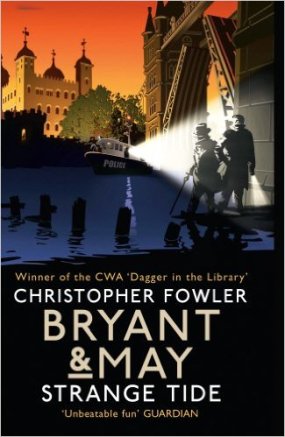 But all is not well. Arthur Bryant is physically sound enough, but his encyclopaedic mind is starting to betray him. He is suffering episodes of serious dislocation. He causes havoc in what he thinks is an academic library when he’s actually in the soft furnishings department of British Home Stores. While soaking up the ambiance of a Thames-side crime scene, all he can sense are the sights, sounds and smells of the early 20th century docks. John May and the more sprightly members of the PCU have to keep Arthur virtually under lock and key, for his own protection.

 The past times take us back to the 1950s, both in Melbourne and then further north in rural Queensland. We enter the home of the young Arthur Boyle, who is looked after by his adult sister. Also resident in the Melbourne home is Ern Kavanagh, a twenty-something young man who has ambitions to be something other than a car mechanic. He then leaves Victoria and travels north, in search of fortune, if not fame in Queensland.
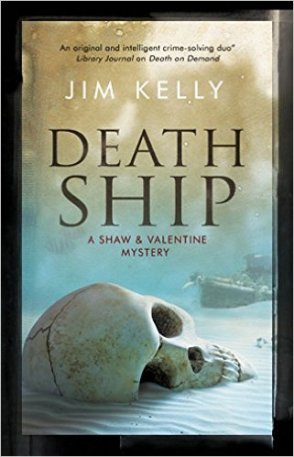 In Death Ship, as with all the previous books, the sea is never far away. The seaside town of Hunstanton has been literally rocked by an explosion on its crowded beach. Something buried deep beneath the sand is triggered by some boys determined to dig a sink-hole sized pit before the tide sweeps in. There is a brief moment when something metallic and shiny appears in the wall of their excavation, but then hell is unleashed. Miraculously, no-one is seriously hurt, but the beach is closed to holidaymakers while forensic experts and a bomb disposal team from the army do their stuff.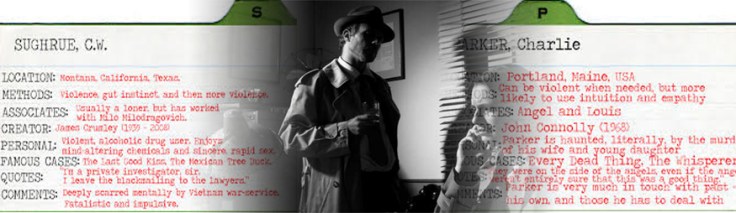
 Parker’s ghosts are those of his wife and daughter, brutally and shockingly murdered years ago by men whose physical presence was all too temporal, but men whose puppet strings were being pulled by evil forces not entirely of this world. In this novel, Parker is contacted by a former public hero who went from hero to zero when child pornography was found on his computer. Jerome Burnel was given a long jail sentence and suffered the usual fate at the hands of other prisoners for whom sex crimes against children are worse than murder.


 fullybooked2017