

This is the final part of Frank Westworth’s startling Killing Sisters trilogy, in which JJ Stoner – a black ops ex-SAS type – pits his wits against the physical wiles and mental agility of three violent sisters, known as Charm, Chastity and Charity. Readers new to the series are warned not to expect a hero they are likely to fall in love with any time soon. Stoner lives – unencumbered by the burden of empathy – in an existentialist world of which he is the deep dark blue centre.
“He simply appeared to lack both curiosity – which was famously fatal to felines – and appeared also to be wondrously capable of detaching himself from everything unimportant to him.”
 He has killed at the bidding of his masters, who are shadowy government types, but now things have changed. Stoner has been stitched up, people close to him have been badly hurt, and he has retreated from the his former world. He is shattered, mentally and physically.
Exactly what is Stoner’s world? In physical terms, it consists of a love for Harley Davidson motorcycles, a serious coffee addiction, and a passion for blues guitar. He still owns the Blue Cube, a jazz and blues nightspot, keeps many of the tools of his trade in a former workshop tucked away in an anonymous industrial estate, and has among his acquaintances many strange and shadowy people, including the enigmatic pair Menace and Mallis, who orchestrate violence in the smoky limbo which exists between the authorities and others who seek only subversion. Then, of course, we have the sisters.
Charity has died. She was not killed in the line of dubious professional duty, but from a particularly virulent cancer, although her actual death was at the hands of her sister, by way of a mercy killing. The two remaining sisters are polar opposites in looks and demeanour. Chastity is a blonde hardbody with a ripped physique and a penchant for violent – and sometimes bloody – sex. Charm, while equally amoral, sexually voracious and manipulative as her surviving sister, has the outward appearance and manner of an attractive middle class suburban housewife.
The plot is jarringly simple. It is a variation on the trope whereby a retired special operative comes back from his rural retreat to do one final job. This is by no means a criticism because the book is a long highway of intense dialogue and character, with rest areas offering wild violence and inventive eroticism. The final job in this case is the hunting down of an almost mythical Irish killer called Blesses, who served her apprenticeship in The Troubles.
“She has a way with her eyes – I can’t tell you how it works – because I don’t understand it – but it was brilliant as a way of getting information from reluctant Provos. She didn’t need to screw them, thus revealing to us how crap was the UK’s honey-trap technique, but somehow made them want to talk to her about … well … everything. I mean that. Everything. Anything.”
We learn that it is her manipulation of people’s minds and bodies which has led to Stoner’s retirement, before which he was forced to watch a video showing his girlfriend being first raped and then – literally – gutted.
I have to declare an interest here. In terms of motorcycles, I never advanced beyond an inoffensive Honda back in the 1970s, but I do love JJ Stoner’s passion for guitars, and his creator’s lovely name-dropping of snatches of 1960s pop lyrics. There’s even a series of chapter headings all taken from one of the great songs – She’s Not There. You aren’t that old? That’s no crime, but take a listen, while you ignore the awful miming. Click on the image to watch the video.

The novel is both stylish and stylised. The dialogue is mannered and full of whip smart responses and put-downs. Despite the immediate plot being simple, the backstory has more than just a drizzling of Twin Peaks about it. If we think we know what is going on, then we probably don’t, but we come to expect appearances by random enigmatic characters who must be significant, but we are never quite sure why.
 Like its two predecessors, The Redemption of Charm is immensely entertaining and another bravura performance from Frank Westworth (right), who shares his creation’s love of Harleys and fine guitars. We are led to believe that a love of killing and a knowledge of inventive ways to use an SAS dagger are skills that, to date, divide the two men.
Frank Westworth wrote an entertaining piece for Fully Booked, in which he outlined his favourite – theoretical – ways of killing people. Follow the link to read Killing Me Softly.
A Last Act of Charity was published in September 2014, details here.
The Corruption of Chastity was published in September 2015, details here.
The Redemption of Charm is out now, details here.
All three books are published by Book Guild Publishing.

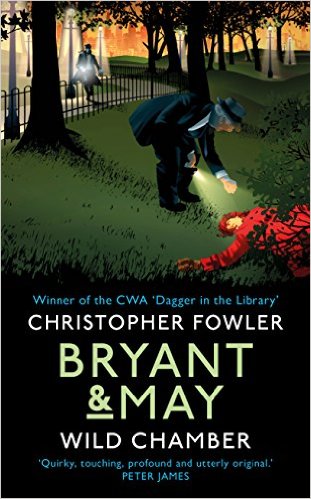

 Other murders follow, and each has been committed in one of the parks and gardens – the Wild Chambers – which are scattered throughout central London. Are the gardens linked, like some erratically plotted ley line? Why are the murders connected to a tragic freak accident in a road tunnel near London Bridge? Why are the murder sites speckled with tiny balls of lead?
 Along the way, Fowler (right) has the eagle eye of John Betjeman in the way that he recognises the potency of ostensibly insignificant brand names and the way that they can instantly recreate a period of history, or a passing social mood. At one point, Bryant tries to pay for a round of drinks in a pub:


 Brunetti is feeling his age, and the constant pressure of the expectations of his bosses in


 In 1997, at the long-delayed inquest into the murder, the five men suspected of the killing refused to co-operate and maintained strict silence. Despite direction to the contrary by the Coroner, the jury returned the verdict that Stephen Lawrence was killed “in a completely unprovoked racist attack by five white youths.” Later that year, The Daily Mail named the five as Stephen’s killers, and invited them to sue for defamation. Needless to say, none of the five took up the challenge. Below, the five suspects run the gauntlet of a furious crowd after the inquest.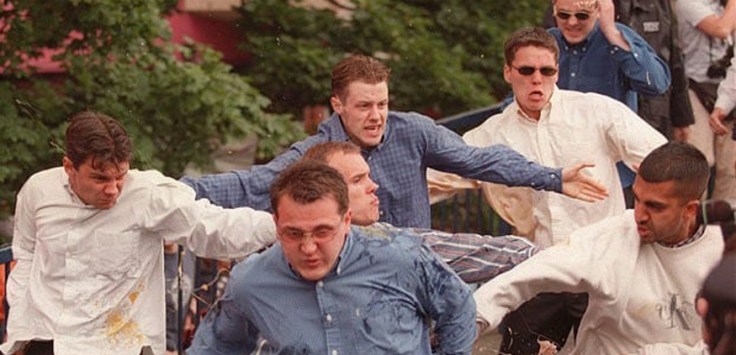




 SKELETON GOD by ELIOT PATTISON
 FATAL PURSUIT by MARTIN WALKER
 AMNESIA by MICHAEL RIDPATH
 DEFECTORS by JOSEPH KANON

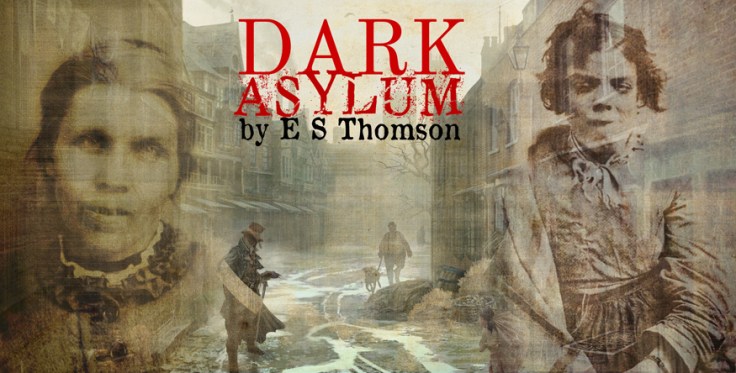
 As I got further into the book, I was beginning to wonder just what the point was of having Jem Flockhart cross-dressing, as it didn’t seem to have any real bearing on events. Just at the point when I was about to dismiss the idea as a conceit, Thomson delivered a beautifully written scene which made sense of Flockhart’s subterfuge, and added extra poignancy to the relationship between Jem and Will.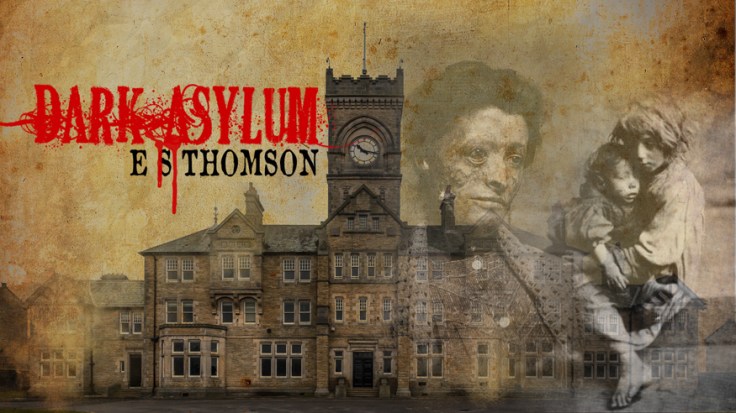


 A 15 year-old girl, Tania Mills, walks out of her front door and out of the lives of her parents, her family and her friends. She becomes just another statistic. Just another missing person for the police to make a dutiful attempt to appear involved. Just another file, first of all gathering dust on a shelf, and then occupying a tiny space on someone’s hard drive.


 There have been many murders where a perpetrator has been allowed to roam, free to kill despite – with the glorious clarity afforded by hindsight – there being loud alarm bells ringing throughout the criminal justice system and, sadly, the offices of mental health professionals. One grim and grisly case was the double murder of two French students in New Cross in 2008. Laurent Bonomo (left) and Gabriel Ferez were gifted research scientists from Clermont Ferrand University finishing their Masters Degrees at Imperial College London.
 Bonomo and Ferraz (right) were tied up, gagged, tortured and then subject to frenzied multiple stabbings over several hours. They were then doused in an accelerant, and set fire to. Their bodies were discovered by firefighters attending the blaze in their rented apartment at Sterling Gardens, New Cross, on 29th June 2008.
 On 10 July, Nigel Edward Farmer, 33, (left) unemployed and of no fixed abode, was charged with double murder, arson and attempting to pervert the course of justice when he appeared before Greenwich Magistrates’ Court. He was remanded in custody until 16 October, at which point the case would be transferred to the Old Bailey.


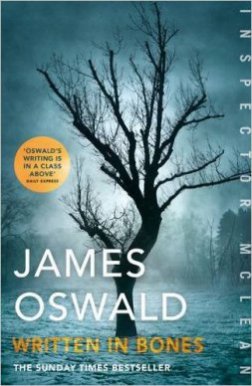 As the pathologists – literally – piece together the evidence they conclude that the shattered remains in the tree is that all that is left of Bill Chalmers, a copper who was not so much bent as tangled and doubled up on himself. After surviving a jail sentence for his misdeeds, he used his connections and his wits to found a drug rehabilitation charity, which drew immense support from the community.


 fullybooked2017