
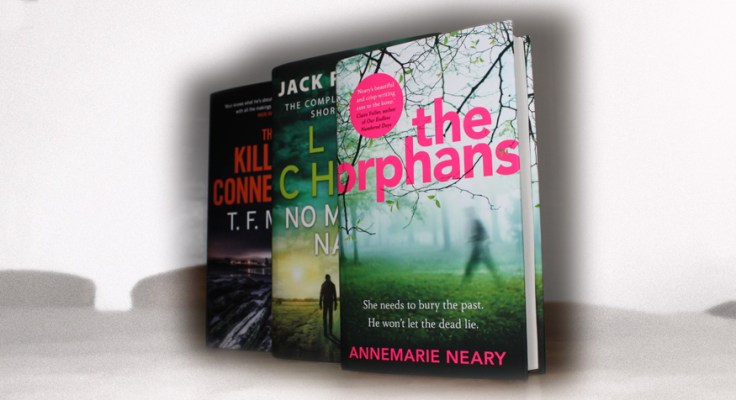
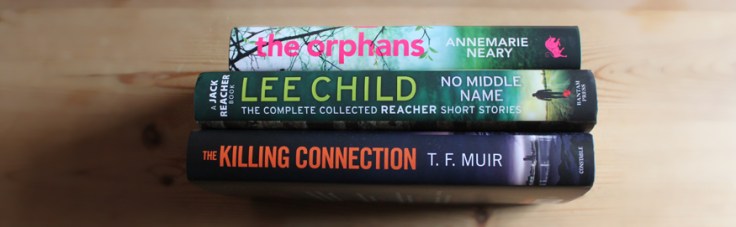
 Annemarie Neary (left) is an Irish-born novelist and short story writer. She studied literature at Trinity College Dublin before qualifying as a lawyer and moving to London. Her two previous full length novels are A Parachute In The Lime Tree (2012) and Siren (2016). The Orphans tells the tale of two children, Jess and Ro, brother and sister, whose parents mysteriously disappear while the family are staying on the island of Goa. Years later, the two children have gone in different directions. Jess has become a successful lawyer, and is married with
 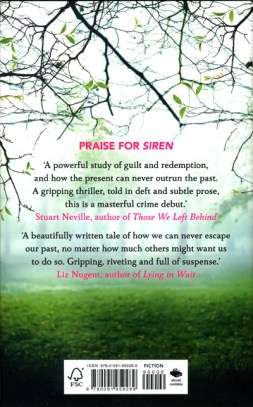 children of her own. Her brother Ro (short for his nickname Sparrow) has spent his adult life searching for his missing mother, and this obsession has taken him all over Europe, including their old home town in Ireland. The last thing Jess needs is for Ro to reappear in her life, armed with a renewed conviction that their mother is still alive out there somewhere. But this is precisely what he does, and it triggers a dramatic and dangerous downturn in their lives – and the lives and well being of those around them. The Orphans is published by Hutchinson, and will be out in July.
Scottish police procedurals are many and varied these days, and they tend to be fiercely local affairs. John Rebus patrols Edinburgh and Fife, as do James Oswald’s Tony McLean and Quintin Jardine’s Bob Skinner. The Granite City of Aberdeen is home to Stuart MacBride’s Logan McRae,  while Alex Gray’s Bill Lorimer has the Glasgow beat. Not to be outdone, TF Muir (left) has put the university town of St Andrews firmly on the crime fiction map with his series featuring DCI Andy Gilchrist. The Killing Connection is the seventh of these, and Gilchrist is investigating the death of an unknown woman washed up on the rocks near the castle ruins. When another woman comes forward with information about the death, Gilchrist breathes a sigh of relief. His sense of well-being is short lived, however. His would be informant disappears, and then she, too, turns up dead. The Killing Connection is published by Constable and will be available early in June.
Fans of the invincible former military policeman will want to get their mitts on this new piece of Reacherabilia, which is the complete collection of short stories featuring the big guy. The stories range in length and location, but two in particular stood out for me. High Heat is set in a steamy New York City on the night Wednesday July 13th, 1977. Why so precise? That night in the real world, a lightning induced power outage affected over 9 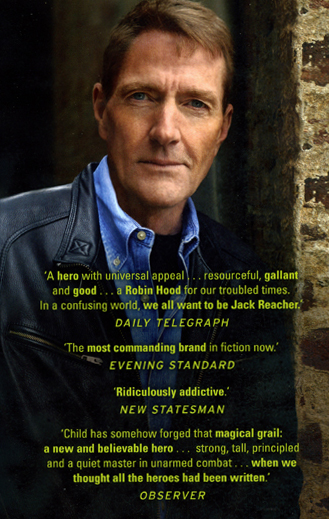 million New Yorkers, and was the backdrop – or maybe blackdrop – to over 26 hours of looting. Returning to the story, we have an extremely young Jack Reacher, just a few weeks short of his seventeenth birthday, out on the town. In addition to helping a suspended FBI agent take out a top mafioso, the young man also manages to point the authorities in the direction of David Berkowitz, the infamous Son of Sam killer.
In Maybe They Have A Tradition our man, now much older, dates a KLM air stewardess and blags a free flight to Amsterdam, but instead gets diverted to England because of snow. It is Christmas Eve, and in the closest Reacher will ever come to a Golden Age mystery, he invites himself to an isolated country mansion, helps deliver a baby, and solves an apparent jewel heist.
The full provenance of the twelve stories is as follows. Everyone Talks appeared in Esquire magazine in 2012, Maybe They Have A Tradition was published in Country Life in 2016. No Room At The Motel appeared in Stylist in 2014, while The Picture Of The Lonely Diner was part of a 2016 collection called Manhattan Mayhem. Second Son (2011), High Heat (2013), Deep Down (2012, Small Wars (2015) and Not A Drill (2014) were all exclusive eBooks. Too Much Time is published here for the first time. No Middle Name is published by Bantam on 18th May. Full details available here.
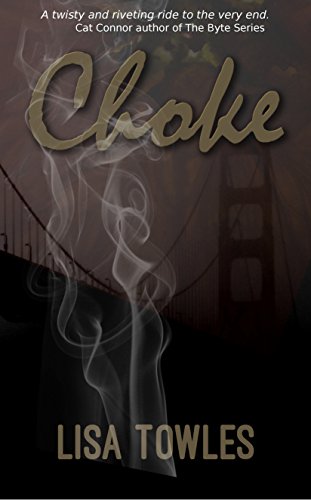

 Lisa Towles is over-cautious. Said no-one, ever. In this beguiling and occasionally confusing novel she has assembled the ingredients thus: a small cup of altered reality, two large helpings of global conspiracy, three spoonfuls of domestic noir, just a drizzle of romance, two apparently unconnected plot lines, some roughly chopped historical legend and, most importantly, a generous dash of finely ground medical thriller.
 Multinational pharmaceutical companies and the giants of the tobacco industry have not achieved their wealth and success through philanthropy, however, and when they learn about Calhoun’s discovery there is only one solution that will prevent them from taking a huge commercial hit, and that is to eliminate Calhoun and destroy all evidence of his research. While he and his colleague Grace Matson are pursued by hitmen, Kerry Stine’s nightmare becomes ever more vivid and violent. She is kidnapped and drugged. In her more lucid moments, myriad questions spin and whirl around her brain. Who is the woman chained next to her in the darkness of her prison cell? What happened in her childhood that was so traumatic that it shut down all subsequent recall?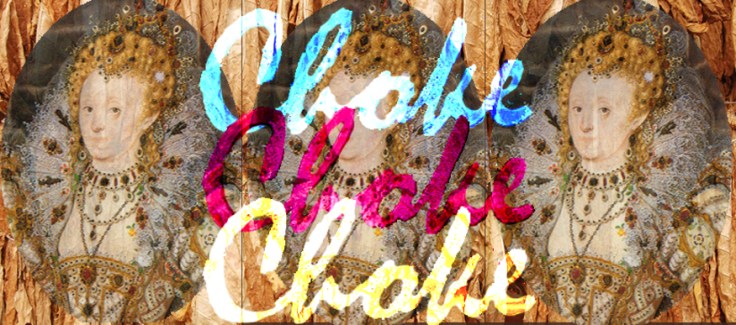


 Thrill Kill is a brisk, no-nonsense police procedural thriller set amidst the hurley burley of Carnival season in New Orleans. Homicide cop Quentin ‘Q’ Archer sets out to bring to justice a serial killer whose calling card is a can of aerosol coolant – tradename ‘Chill’ – beside the bodies of his victims. Archer burns the midnight oil to solve the crime, but it is not the only thing on his mind. He is not a native of The Big Easy, but a displaced person from Detroit, where his police career became violently complex when his wife was mown down by a car, and Archer was forced to turn against his own family in a personal war against police corruption, drugs and racketeering.
 Don Bruns himself (right) is an interesting character. As well as the first book in the Quentin Archer series Casting Bones, he has written two other series, Caribbean and Stuff. He describes himself as “a musician, song writer, advertising guru, painter, cook, stand-up comic and novelist who has no idea what he wants to be when he grows up.” His music is mainstream country, but with a little twist of this and that to spice things up. You can hear


 It is the summer of 1939. In Germany, the bitter ashes which have been smouldering for two decades since the punitive reparations after Versailles have been fanned into flames, and the fire is set to spread across Europe. As Hitler prepares to march into Poland, in Britain the world carries on as normal, although few would know that this would be the last summer of peace for more than six years.
 Rachel Rhys (right) is nothing if not a skilled storyteller, but we should not be surprised as Dangerous Crossing is no debut novel. Under her real name, Tamar Cohen, she has written a string of best selling psychological thrillers. So, as the Orontes proceeds on its stately voyage to Australia, we share Lily Shepherd’s mixture of discomfort and amazement as she goes onshore to visit such exotic places as Pompeii, Cairo and Colombo. Rather after the fashion of a modern day Patricia Highsmith, Rhys has the main players gradually revealing their secrets to one another. The rack turns, one ratchet at a time, but so elegantly and cleverly are things concealed that the crime, when it does happen, is completely shocking and unexpected.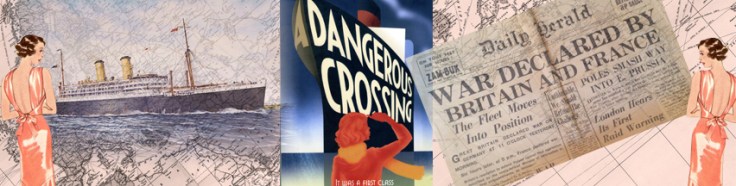

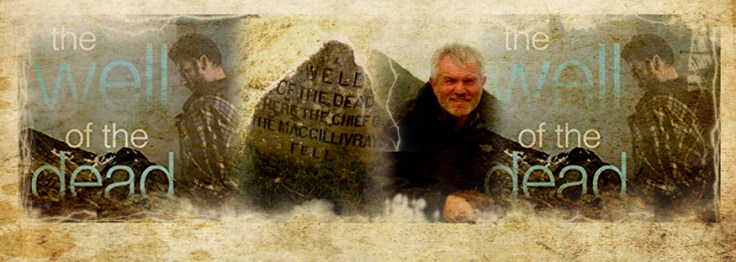
 In the icy Scottish dawn of 16th April 1746, the last battle to be fought on British soil was just hours away. The soldiers of the Hanoverian army of William Duke of Cumberland were shaking off their brandy-befuddled sleep, caused by extra rations to celebrate the Duke’s birthday. Just a mile or two distant, the massed ranks of the Scottish clans loyal to Charles Edward Stuart, the Young Pretender, were shivering in their plaid cloaks, wet and exhausted after an abortive night march to attack the enemy.
 The Well Of The Dead is a winning combination of several different elements. It’s a brisk and authentic police procedural, written by someone who clearly knows how a major enquiry works. For those who enjoy a costume drama with a dash of buried treasure, there is interest a-plenty. Military history buffs will admire the broad sweep of how Allan (right) describes the glorious failure that was the Jacobite rebellion, as well as being gripped by the detailed knowledge of the men who fought and died on that sleet-swept April day in 1746, bitter both in the grim weather conditions and what would prove to be a disastrous legacy for the Scottish Highlanders and their proud culture.

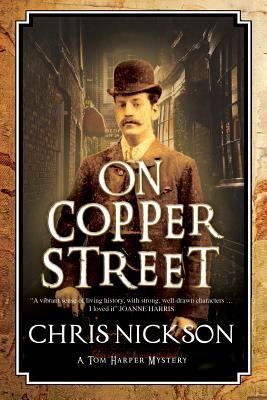 On Copper Street opens in grim fashion, with death and disfigurement. The dead pass in contrasting fashion. Socialist activist Tom Maguire dies in private misery, stricken by pneumonia and unattended by any of the working people whose status and condition he championed. The death of petty crook Henry White is more sudden, extremely violent, but equally final. Having only just been released from the forbidding depths of Armley Gaol, he is found on his bed with a fatal stab wound. If all this isn’t bad enough, two children working in a city bakery have been attacked by a man who threw acid in their faces. The girl will be marked for life, but at least she still has her sight. The last thing the poor lad saw – or ever will see – is the momentary horror of a man throwing acid at him. His sight is irreparably damaged.
 Nickson is a master story teller. There are no pretensions, no gloomy psychological subtext, no frills, bows, fancies or furbelows. We are not required to wrestle with moral ambiguities, nor are we presented with any philosophical conundrums. This is not to say that the book doesn’t have an edge. I would imagine that Nickson (right) is a good old-fashioned socialist, and he pulls no punches when he describes the appalling way in which workers are treated in late Victorian England, and he makes it abundantly clear what he thinks of the chasm between the haves and the have nots. Don’t be put off by this. Nickson doesn’t preach and neither does he bang the table and browbeat. He recognises that the Leeds of 1895 is what it is – loud, smelly, bustling, full of stark contrasts, yet vibrant and fascinating. Follow this link to read our review of the previous Tom Harper novel,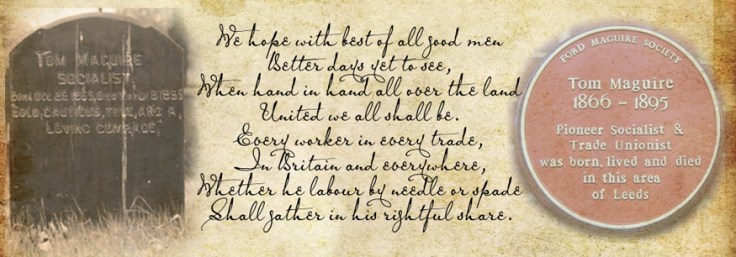
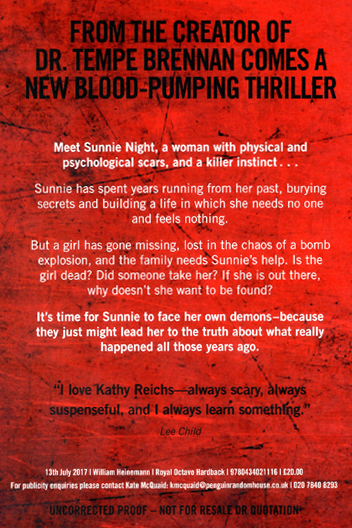
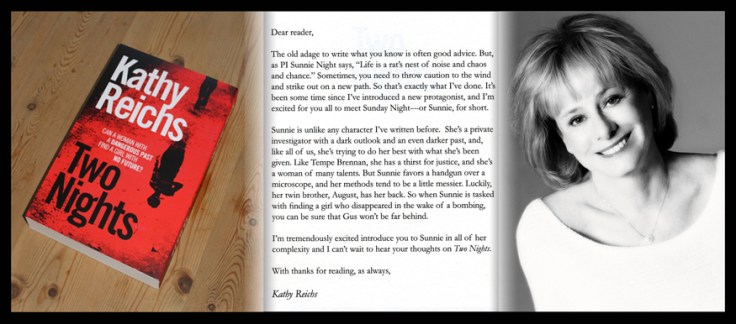
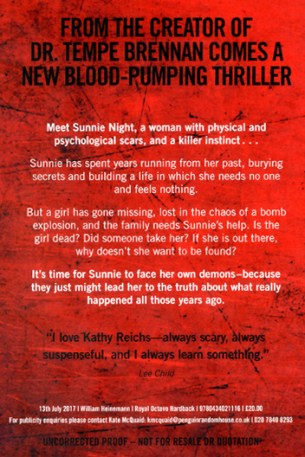 Fans of Kathy Reichs and Dr Tempe Brennan will be relieved that Dr Brennan is merely resting, and will be intrigued by the new girl on the block, PI Sunnie Night. Sunnie – which is short for Sunday, by the way – has a seriously traumatic back story which includes physical and mental scars inflicted while in the military.


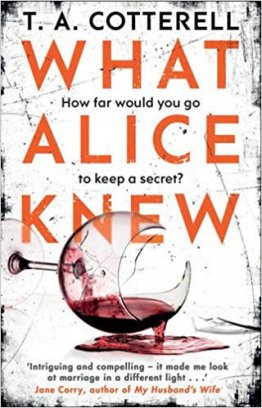 Back in late 2016, I had the pleasure of listening to T A Cotterell read an extract from his debut novel, What Alice Knew. He made it clear that this was a book about secrets, and about that strange beast, family life. Family life. The words are anodyne, mild and reassuring, but we all know that many families are not what they seem to be to an outsider. Cotterell’s question, though, is simply this: “How well do members of a family know each other?”
 From this point on, the dreamy soft-focus life of the Sheahan family descends into a nightmare reality, all jagged edges and harshly grating contrasts. The visual metaphor is actually totally appropriate, as one of the great strengths of the novel is how Alice sees much of life through her painterly eyes. Rose madder, cadmium yellow, viridian, alizarin crimson and flake white. Alice’s world is the world of the quaintly named oil paints on her palette. It came as no surprise to me to learn that Cotterell (right) studied History of Art at Cambridge.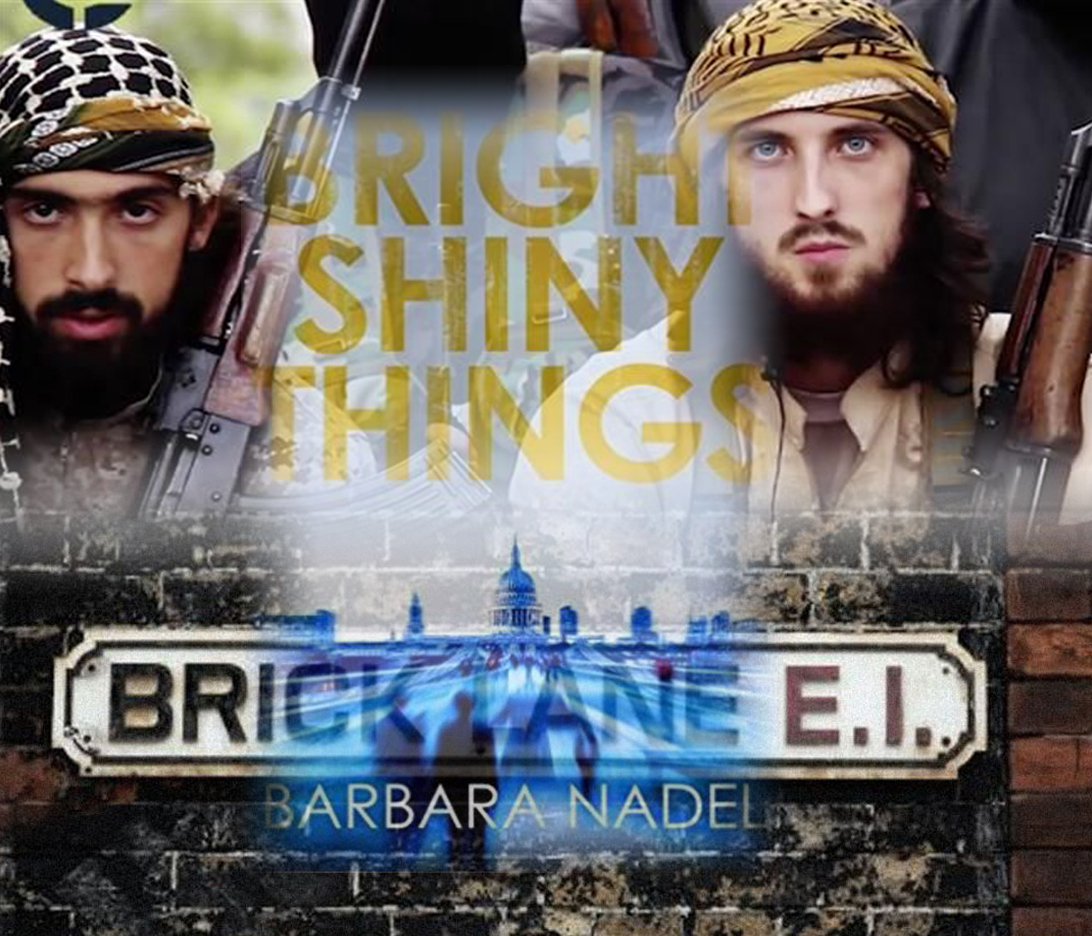

 Barbara Nadel (left) has created one of the more adventurous pairings in recent private eye fiction. The pair return for another episode set in the modern East End of London. Lee Arnold is a former soldier and policeman but now he is the proprietor of an investigation agency, partnered by a young Anglo Bengali widow, Mumtaz Hakim. Abbas al’Barri was an interpreter back in the first Gulf War, where he became close friends with Arnold. He escaped from Iraq with his family, and settled in London, but now he has a huge problem for which he requires the services of Arnold and Hakim. Fayyad – Abbas’s son – has become radicalised and gone to wage jihad in Syria. After receiving a mysterious package containing a significant religious artifact, Abbas and his wife are convinced that it represents a cry for help from Fayyad who, they believe, is desperate to return home.
 Their plan, it must be said, is fraught with danger and is almost bound to go pear-shaped, but within the confines of crime fiction thrillers, makes for a nail-biting narrative. What could possibly go wrong with Hakim befriending Abu Imad on Facebook and pretending to be a starstruck Muslim lass called Mishal who would like nothing better than to travel out to Syria to be at her hero’s side? Facebook leads to Skype, and with the help of make-up and a head covering, ‘Mishal’ arranges to travel to Amsterdam, complete with Abu Imad’s shopping list from Harrods. As you might expect, everything then goes wrong, in bloody and spectacular fashion.


 fullybooked2017