
Fer-de-Lance was published in 1934 by Farrar & Rinehart, Inc. I doubt there will be any readers living for whom this novel was their introduction to the series. Most, like me, will have read one of the other 45 first. I mention this because it is astonishing how Stout brings the curtain up on the whole Wolfe household so that we feel we have known them for ever. Not for him the clumsy explanations or contrived insertion of the back-story. “Here they are”, he seems to say, “.. let’s get on with the story.”
 And what a story it is. A wealthy and highly regarded academic, Peter Oliver Barstow dies from an apparent heart attack while he is engaged in a foursome on a golf course. Meanwhile, an Italian metalworker, Carlo Maffei, has disappeared, but then turns up – as a corpse – murdered, if the knife embedded in his chest is anything to go by. As Wolfe uses his phenomenal intellect to link these cases, we learn that he is partial to a glass (or six) of beer. Bear in mind that Prohibition in America had only ended in 1933. Wolfe, perhaps disheartened by the lack of a decent drink, decides to cut down on his intake:
“I’m going to cut down to three quarts a day. Twelve bottles. A bottle doesn’t hold a pint. I am now going to bed.”
Archie is sent (because Wolfe rarely if ever leaves the house) to interrogate the residents of the house where Maffei lived. Archie Goodwin, remember, is the sole narrator of these stories. He sums up Anna Fiore:
“I went over and shook hands with her. She was a homely kid about twenty with skin like stale dough, and she looked like she’d been scared in the cradle and never got over it.”
It turns out that Barstow was killed by a poison dart which was loaded into the specially prepared shaft of a golf club. The club’s shaft was adapted by the late Carlo Maffei to release its deadly projectile when the face of the club head made contact with the ball. Wolfe directs operations from the brownstone house, where he sits like a fat spider at the centre of a deadly web. When it emerges that Barstow was not the intended victim, and that the truth behind the killing implicates so many people, Wolfe pronounces:
“It is an admirable dilemma; I have rarely seen one with so many horns and all of them so sharp.”
Eventually, of course, after encounters with a deadly snake and a a scheming attorney, the mystery is solved, but not before Wolfe demonstrates that he is prepared to dispense his own rather harsh brand of justice. We are also treated to his own lordly – and almost Dickensian – use of language:
“I have just being explaining to Mr Anderson that the ingenious theory of the Barstow case which he is trying to embrace is an offence to truth and an outrage to justice, and since I cherish the one and am on speaking terms with the other, it is my duty to demonstrate its inadequacy.”
The relationship between Archie Goodwin and Nero Wolfe lies at the heart of these novels. There is a sense of servant and master, and Goodwin clearly worships the ground that Wolfe walks on, despite his frequent frustrations and occasional attempts to ruffle Wolfe’s imperious demeanour. In his own magisterial way, Wolfe treats Goodwin like a much-loved but slightly wayward son. This affection occasionally gives way to acerbic put-downs:
“Some day, Archie, when I decide you are no longer worth tolerating, you will have to marry a woman of very modest mental capacity to get an appropriate audience for your wretched sarcasms.”
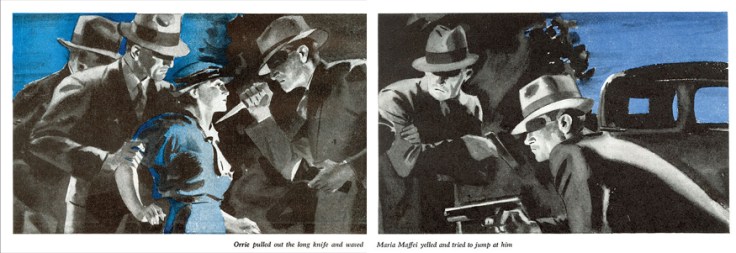
Stout always had a weather eye open for commercial opportunities, and he was able to arrange for an abbreviated version of this story to be re-hashed as a pulp short story re-named Point of Death – complete with illustrations.
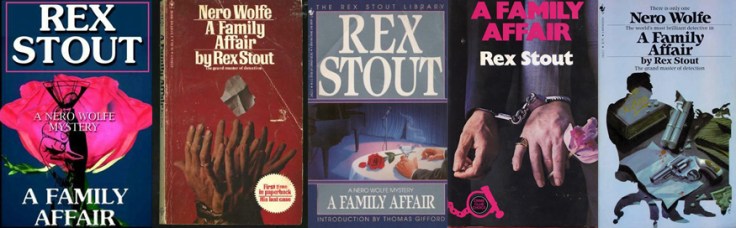
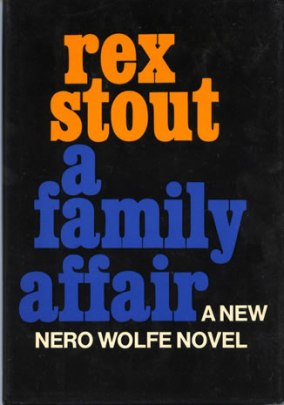 Almost the first thing which strikes you as you settle in to read A Family Affair (1975) is the sheer breadth of real life events straddled by the Nero Wolfe novels. When Fer de Lance was published America was in the dying throes of Prohibition, John Dillinger, Bonnie Parker and Clyde Barrow had only recently been shot dead, but Pretty Boy Floyd was still at large. By the time Stout’s final novel was published, America was still reeling from the Watergate scandal, Nixon had resigned, The Rocky Horror Show had opened on Broadway, and a man called Bill Gates was playing around with words which could describe his new micro software.
If you want a literally explosive opening to a novel, look no further. Late at night, Paul Ducos, a waiter from Wolfe’s favourite New York restaurant, rings the bell on the front door of the old brownstone, and beseeches Archie to let him speak to Wolfe. He says his life is in imminent danger. Fearful of waking his boss at such an inhospitable hour, Archie compromises, and allows the fearful Frenchman to stay the night in a spare room, with the promise of an audience with Wolfe in the morning.
As Archie prepares for bed, the house shakes and there is a terrible noise. The spare bedroom being bolted from the inside, he clambers in through the shattered window via the fire escape, and sees Ducos lying on the floor:
“He had no face left. I had never seen anything like it. It was about what you would get if you pressed a thick slab of pie dough on a man’s face and then squirted blood on the lower half.”
We learn fairly quickly that Ducos has been killed by a bomb he was inadvertently carrying. A doctored aluminium cigar tube had been planted in his jacket. He discovered it and, fatally, unscrewed the cap. Wolfe reacts to the death with barely suppressed fury. Ducos is dead, yes, but the real assault is on his sanctuary, his own home, the place he values so much that he rarely leaves it.
Archie – assisted by the usual supernumaries Saul Panzer, Fred Durkin and Ollie Cather – is turned loose to find out who killed Paul Ducos. One of the leads takes Archie to the dead man’s home which he shares with his father and daughter. The old man is wheelchair bound, and speaks no English, and the young woman is unwilling – or unable to help. Archie is unimpressed by the contents of her bookshelves and has something to say about Lucile Ducos’s espousal of the feminist agenda:
“All right, she’s a phony. A woman who has those books with her name in them wants men to stop making women sex symbols, and if she really wants them to stop she wouldn’t keep her skin like that, and her hair, and blow her hard-earned pay on a dress that sets her off. Of course she can’t help her legs. She’s a phony.”
It becomes clear that Paul Ducos was a bit-player in a wide screen drama involving senior industrialists and lawyers, one of whom died the week before the waiter was killed. When Lucile Ducos is also killed, Archie and Wolfe find themselves not working alongside the local cops, but prime suspects, and they spend several uncomfortable hours under lock and key. When they are released, and despite the demands of the case, Wolfe does not lose his appetite, neither does master chef Fritz Brenner succumb to the pressure:
“He tasted his lunch, alright. First marrow dumplings, and then sweetbreads poached in white wine, dipped in crumbs and eggs, sautéed and then doused with almonds in brown butter.”
This is one of the more serious and deadly episodes in the career of New York’s most celebrated private investigator, but there is still time for humour. Wolfe’s magisterial demeanour and studied delivery does not go un-noticed or unchecked by his right-hand man:
“’Whom did you hear say what?’
I have tried to talk him out of “whom”. Only grandstanders and schoolteachers say “whom”, and he knows it. It’s the mule in him.”
The Goodwin-Wolfe partnership has never come under such strain, and the servant comes within a couple of breaths of finally severing ties with his master but, thanks to a social link with Archie’s long-time lady friend. Lily Rowan, it dawns on all concerned that the villain of the piece is not one of the highly placed lawyers or politicians, but someone much closer to home. By the by, Archie’s admiration for Lily Rowan is unashamed, but he cannot resist a seasoning of irony:
“I’d buy a pedestal and put her on it if I thought she’d stay. She would either fall off or climb down. I don’t know which.”
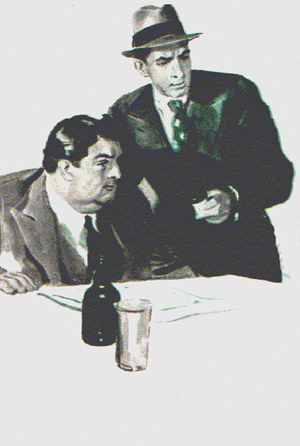 Eventually, in a chilling and brutal conclusion, justice of a kind is served. Wolfe and Archie escape the clutches of the District Attorney and his officers, but there is a final knock on the door from an angry policeman. Fully aware of his machinations but frustrated by Wolfe’s ability to enforce his own law while remaining invulnerable to the laws of the city of New York, Inspector Cramer lashes out, bitterly, but his barb simply bounces off and rolls harmlessly into a dark corner of the office:
“He went and got his coat and put it on and came back, to the corner of Wolfe’s desk, and said, ‘I’m going home and try to get some sleep. You probably have never had to try to get some sleep. You probably never will.’”
This is the last episode in the long and illustrious career of the gargantuan, pompous – but eerily perceptive consulting detective. Of his origins we learn little, except that he is, by origin, a Montenegran, and that he has an aged mother living in Budapest to whom he sends money. It is tempting to ascribe elegiac qualities to Wolfe’s last bow. Rex Stout was to die in the same year as the novel was published. Wolfe had survived the greatest challenge – a challenge made from within his trusted family, and a challenge aimed at the high altar of his own church – the brownstone on West 35thStreet. That altar has been desecrated but, in the end, Wolfe clings to his certainties.
“When the sound came of the front door closing, Wolfe said,
‘Will you bring brandy, Archie?’”
The last word should go to Thomas Gifford (1937 – 2000) who was no slouch at crime writing himself.
“Through Wolfe and Archie, Stout shows you how people are supposed to behave. How grownups act when the pressure is on. So in the very best and wisest sense, and quite painlessly too, Stout shares his code with you, and you are improved a bit.. You would be hard pressed to find another popular writer of his era who more subtly and ably defined what it was to be civilised, to have standards.”
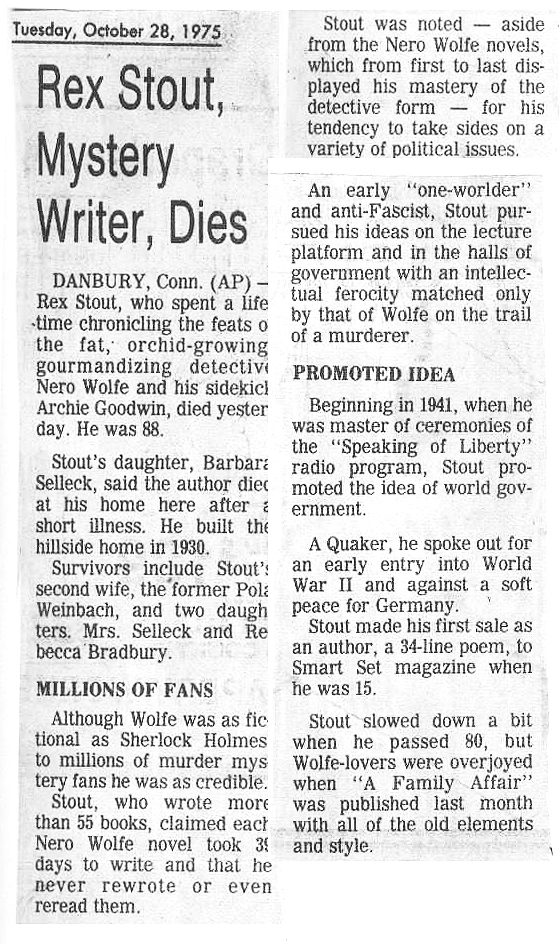
PART ONE of our celebration of the Nero Wolfe novels is HERE


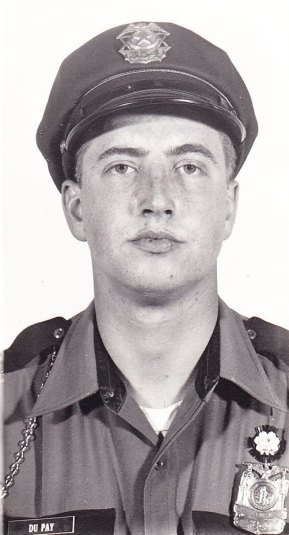 “April 6, 1961, I was sworn in as a brand new police officer in a ceremony held in the office of Ray Smith, the city auditor, in City Hall. I was nervous, proud of myself for passing all the tests, not least of all surviving an interview with the shrink, and now I stood with my hand up, swearing to serve the citizens in an honorable manner.”
 Dupay was convinced that Manning had been killed for some infraction or a bad debt in the violent and ruthless world of those who deal in narcotics. But why were senior officers of the Portland Police Bureau determined to bury the case? Why did Dupay arrive at the office the day after the body had been found, and found that all the details had been wiped from the status board listing ongoing and unsolved cases?
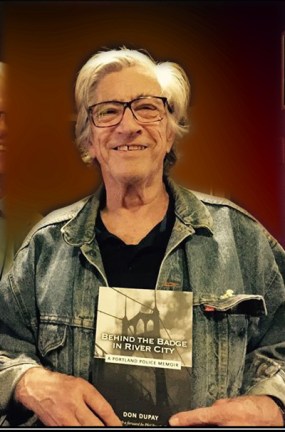 “I tossed my badge on the Captain’s desk, telling him that I was sick of the job and tired of the hypocrisy of people like him. I told him my health had been suffering and I hated the work, only because I hated some of the people I was forced to work with. I also hated being told that I could not investigate a particular 1975 ‘suicide’ that I knew to be a murder.”


 I used to be a massive fan of Patterson and his Washington DC profiler Dr Alex Cross, and particularly when he was battling his two most deadly opponents Kyle Craig and Gary Soneji. Recently, though, I have felt that Patterson, particularly with his collaborative novels, has spread himself a bit thin. I am mindful, however, of the massive work he does for charities, and no-one can accuse him of just wanting to make money. This is the first Alex Cross novel I have been sent for a long time, and I am actually looking forward to renewing my acquaintance with Dr C, and his regular cast of co-stars. Although the saturnine Gary Soneji is long dead, he still has followers, and it is after a shoot-out with them that Cross finds himself on the wrong side of the court room. The People vs Alex Cross is published by Century, and will be
  This is the third outing for Dublin copper Inspector Tom Reynolds. He first appeared in With Our Blessing in 2015, and you can read our review of the second in the series,
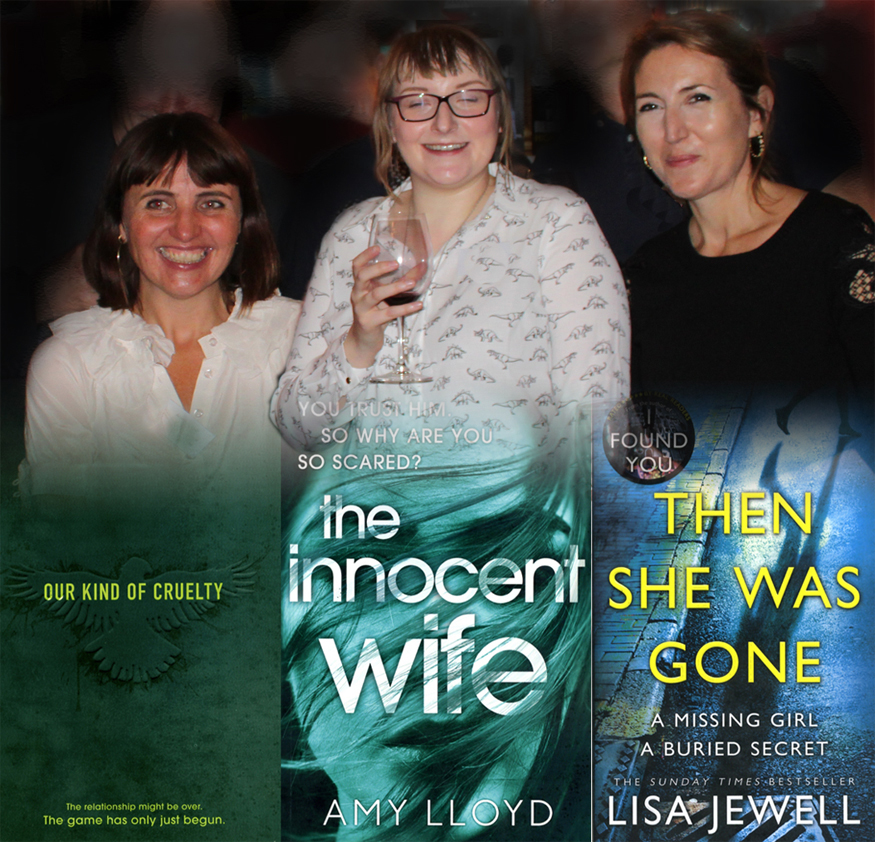

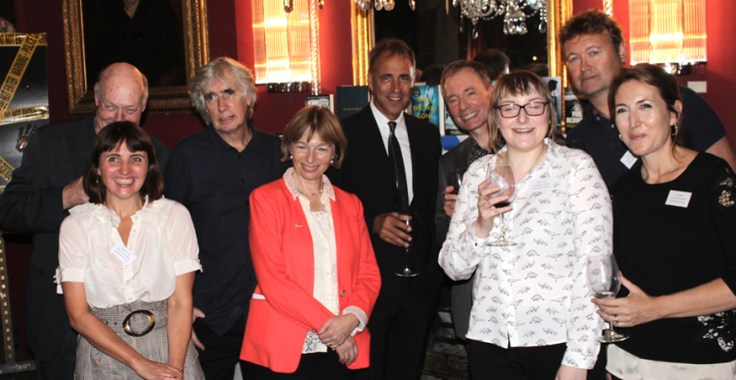
 It was a privilege to talk to two authors who represent the next generation of fine crime writers. Amy Lloyd is from Cardiff, but her debut novel is set far, far away in the badlands of Florida. The Innocent Wife tells the story of a convicted killer whose claims to innocence attract the attentions of the worldwide media – and those of Samantha, a young woman from England. She is obsessed with his case and, after an intense relationship based on letters, she leaves home and marries him. It is only when the campaign for his release is successful that Samantha’s problems begin in a deadly fashion. Amy, by the way, has already won the Daily Mail and Penguin Random House First Novel Competition with The Innocent Wife.
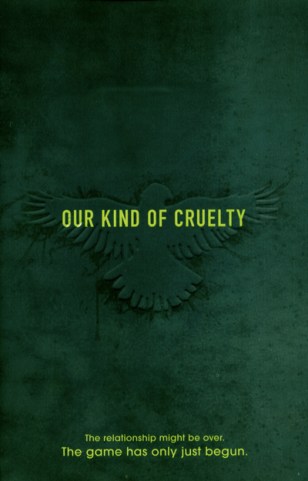 Araminta Hall is no novice author, as she has written successful psychological thrillers such as
 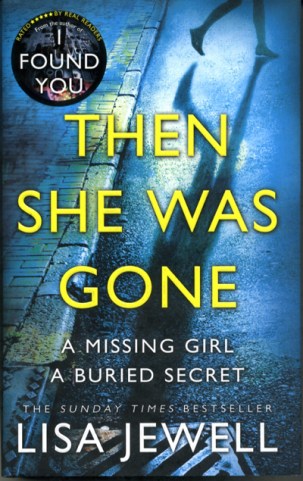 Lisa Jewell knows a thing or three about locating the strings that pull on a reader’s senses, particularly those of anxiety, sympathy and tension. In

 There is, however, that strange smell. A certain je ne sais quoi which will not go away, despite the couple’s best efforts. When Jack finally plucks up the courage to climb up into the roof space, he finds the physical source of the smell but unpleasant as that is, he also finds something which is much more disturbing. Simon Lelic (right) then has us walking on pins and needles as he unwraps a plot which involves obsession, child abuse, psychological torture and plain old-fashioned violence.


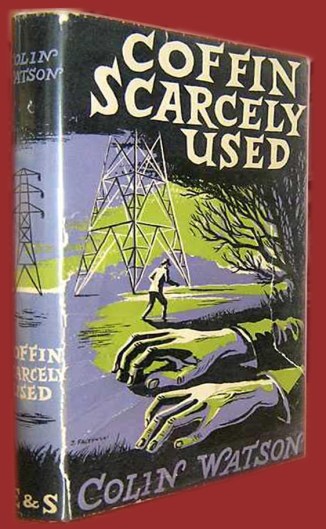 Coffin Scarcely Used – the first of The Flaxborough Chronicles – begins with the owner of the local newspaper dead in his carpet slippers, beneath an electricity pylon, on a winter’s night. Throw into the mix an over-sexed undertaker, a credulous housekeeper, the strangely shaped burns on the hands of the deceased, a chief constable who cannot believe that any of his golf chums could be up to no good, and a coffin containing only ballast, and we have a mystery which might be a Golden Age classic, were it not for the fact that Watson was, at heart, a satirist, and a writer who left no balloon of self importance unpricked.
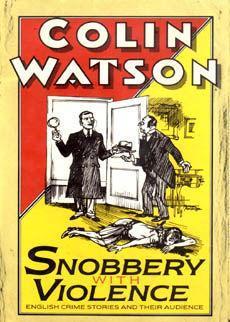 In addition to such delightful titles as Broomsticks Over Flaxborough and Six Nuns And A Shotgun (in which Flaxborough is visited by a New York hitman) Watson also wrote an account of the English crime novel in its social context. In Snobbery With Violence (1971), he sought to explore the attitudes that are reflected in the detective story and the thriller. Readers expecting to find Watson reflecting warmly on his contemporaries and predecessors will be disappointed. The general tone of the book is almost universally waspish and, on some occasions, downright scathing.
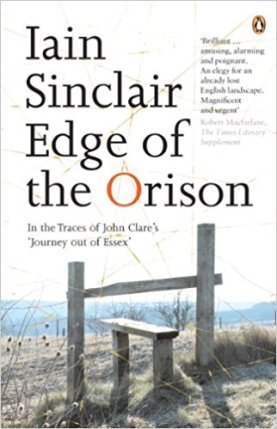 In the end, it seems that Watson had supped full of crime fiction writing. Iain Sinclair sought him out in his later years at Folkingham, and wrote

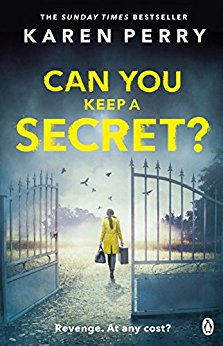 Lindsey Morgan is our narrator. She is a photographer with the Irish police, the Garda Síochána, and her frequent visits to gory crime scenes mean that she must don a cloak of cold objectivity as she looks through her camera at the damage people do one another. The distance between the person behind the viewfinder and the scene captured by the lens is a key motif in the story, as you will discover when you read the book.

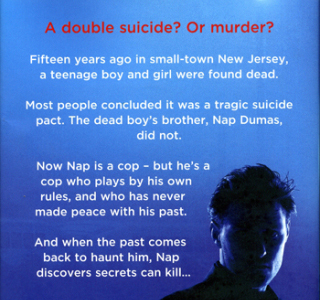

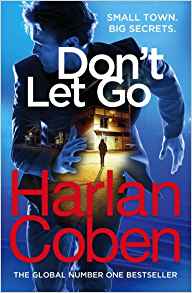 “Mr Nice Neighbour. See, I am that rarest of creatures in suburban towns – a straight, single, childless male is about as common out here as a cigarette in a health club – so I work hard to come across as normal, boring, reliable.”
 Coben is never anything but readable and he is great form here. This was one of those books which pose a delicious dilemma – do I carry on reading as the hook of the action bites deeper and deeper, or do I put it down for a couple of hours to make it last longer? As a regular reader of Coben’s books I knew that the big reveal – in this case the truth about the deaths of Leo and Diane – would be a definite “Oh, my God!” moment, but try as I might, I didn’t get close to guessing the actual shocking detail.


