Search

fullybooked2017

THE SECRETS SHE KEEPS . . . Between the covers

TSSC header

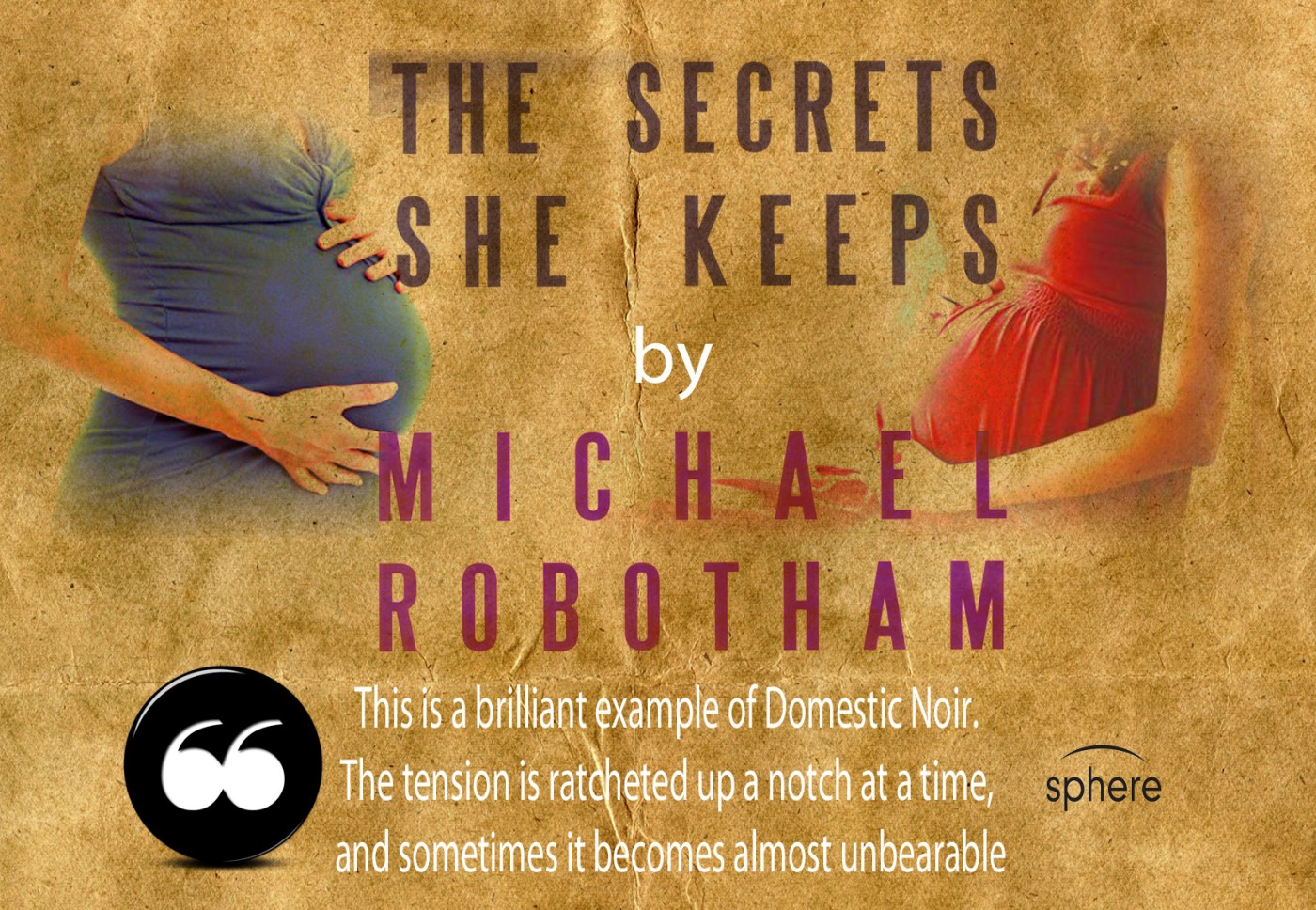
Two women. Two lives. Two worlds. Two pregnancies. Two sets of very different secrets.

Meghan Shaughnessy is a former journalist but now something of a super-mum via her blog about family life. Her husband Jack is an ambitious and confident sports presenter for a television company. They live, comfortably and pleasantly, with their two existing children, in an affluent district beside the River Thames, a district so full of delis, bookshops, fine restaurants and boutiques that the residents, rightfully smug about their little enclave, have added the word ‘Village’ to the perfectly acceptable name by which it has been known since being recorded in The Domesday Book.

Meghan’s third pregnancy is something of an accident but nonetheless welcomed. She has been advised by her obstetrician to have a Caesarian section this time, to avoid the painful tearing she has suffered at the the previous births, but she is anxious to explain this to her thousands of blog readers, as she doesn’t want them to think that she is Too Posh to Push.
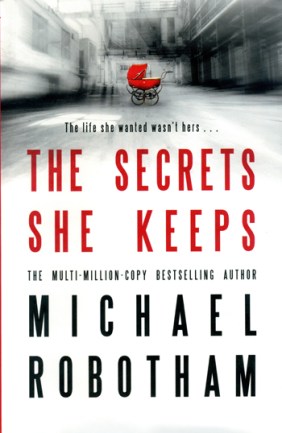
Secrets coverAgatha Fyfle works for peanuts in a ‘Village’ supermarket but Mr Patel, her boss, is not the kind of man to be offering generous maternity leave. He is so tight that he once docked her pay for putting the wrong price on a tin of peaches. The father of her baby is far, far away on a Royal Navy ship patrolling the Indian Ocean, chasing Somali pirates. Despite her nothing job and the desperate ordinariness of her life, Agatha has her imagination and her dreams:

“Shrugging on my winter coat, I slip out of the rear door, skirting the rubbish bins and discarded cardboard boxes. Pulling my hood over my head, I imagine I look like Meryl Streep in The French Lieutenant’s Woman. She was a whore abandoned by a French ship’s officer, and she spent her life staring out to sea, waiting for him to return. My sailor is coming home to me and I’m giving him a baby.”

Agatha lives in a shabby flat, and her life would be as grey as a December dawn were it not for one simple blessing:

“I love being pregnant, feeling my baby inside me, stretching, yawning, kicking. It’s like I’m never alone any more. I have someone to keep me company and listen to my stories.”

Agatha ‘knows’ Meghan in the sense that she comes into the shop to buy essentials, but they have never spoken. Agatha also knows that frumpy women stacking shelves are rarely – if ever – noticed by customers, but sometimes, of a morning, she watches wistfully through the window as Meghan takes her children Lucy and Lachlan to their highly regarded schools. Some days Meghan goes off to her yoga group, other days she meets other Yummy Mummies for skinny cappucinos, chai lattes and pots of herbal teas.

Robotham tells his tale through alternate chapters spoken by Agatha and Meghan. The two women are due to give birth at around the same time, and as their due dates come nearer, we learn more and more about their families, their childhoods, their hopes and fears. And their secrets. Ah yes, those secrets. Those mistakes, those misfortunes, those cruelties of Fate, even those occasional acts of mad jealousy collison between which turn lives on their heads, and inseminate the body with an embryonic demon who grows daily stronger and more malevolent until it is time to burst out and cause devastation to both the host and their nearest and dearest.
TSSK middle

Robotham orchestrates a collision between the lives of Agatha and Meghan. The two ships are slowly and inexorably heading towards each other and by the time they realise what is happening, there is no time to turn.

It would be an act of criminal irresponsibility to reveal any more about the plot. Suffice it to say that Robotham boxes very cleverly for several chapters, but then unleashes a series of crunching blows which put our preconceptions on the canvas. To say the plot twists would be an understatement – it spins, but always in a stable way, a little like a gyroscope, dizzyingly fast but always under control.

This is a brilliant example of Domestic Noir. The tension is ratcheted up a notch at a time, and sometimes it becomes almost unbearable. We know what is about to happen but, like Meghan and Agatha, we are powerless to alter the course of events. Readers of Robotham’s Joseph O’Loughlin novels will not be surprised at the psychological intensity in The Secrets She Keeps. Readers new to the author need to be prepared for an uncomfortable few hours.

We reviewed Close Your Eyes, a novel featuring Robotham’s forensic psychologist O’Loughlin, a little earlier and you can check buying choices for The Secrets She Keeps by clicking this link.

TSSC footer

THE MUSIC OF CRIME FICTION

TMOCF header

IV. SCHERZO

I like to think I have a wide taste in music, and can get something out of almost every genre and style. I do draw the line at ‘modern’ jazz, however. My view is – and I show my age by borrowing a phrase from the 1957 Wolfenden Report – that it should be permissible only between consenting adults, and very definitely in private. So, no Crime Fiction set around an alto sax player who plays thirty-five minute solos (sadly, he’s not fictional, but he is certainly committing a crime.)

51G3AhWKo0L._SX311_BO1,204,203,200_I do love Operas, though – at least those written up to the death of Giacomo Antonio Domenico Michele Secondo Maria Puccini (who would be just as wonderful even if he didn’t have six christian names.) I would add the personal caveat that for me it is sometimes better heard than seen, as stage productions can sometimes demand too much suspension of disbelief. Our chosen book, then, is Spur Of The Moment by David Linzee, and it is set around the St Louis Opera company as they prepare a performance of Bizet’s wonderful, preposterous, exhilarating four-act classic, Carmen.
The central character in the book is Renata Radleigh, an English mezzo-soprano who is employed by the St Louis Opera to sing the relatively minor role of Mercédès. Her brother, fellow ex-pat David, is also employed by the SLO, but his task is to tout far and wide for commercial sponsorship.

When a key company patron Helen Stromberg-Brand is found brutally murdered, the police suspect David Radleigh and arrest him. His motive? It seems that Helen – nicknamed Sturm und Drang – and her husband were on the verge of cancelling a huge donation. Could they have argued? Did David lose his temper with the headstrong woman?

But there could be another motive. Helen Stromberg-Brand was a national celebrity, at least in the field of pharmaceutical research. She and her team were on the threshold of patenting a revolutionary drug to combat urinary tract infection in women. In partnership with the charismatic billionaire Keith Bryson – who has the casual dress sense, long hair and boyish charm of Richard Branson – Helen’s unit at the Adams University Medical Centre were about to find even greater fame and riches. Now she lies in the police mortuary, her head shattered by a heavy glass bowl.

Renata is not the world’s most loving sister, but she refuses to accept that David could have killed Sturm und Drang, if only because he is far too wet and wimpy for murder. Together with a former reporter, Peter Lombardo, she thinks the lady’s demise was less to do with the SLO, and more to do with the cut-throat world of drug patenting.

DLDavid Linzee has himself been a ‘supernumary’ – basically the opera equivalent of a spear carrier – and he enjoys several digs at the way an opera company in a mid-sized city is run. I particularly enjoyed his jibes at the ubiquitous need for sponsorship. Linzee (right) explains that the SLO has to make sure that literally every brick in the building has corporate support. Thus we have the Peter J Calvocoressi Administration Building, the Charles Macnamara III Auditorium and – best of all – the Endeavour Rent-a-Car Endowed Artist. In this case it’s Amy Song, the woman playing Carmen.


By the time Renata and Peter think they have unraveled the mystery of who killed the formidable Mrs Stromberg-Brand, the unorthodox stage set of the Carmen production experiences a malfunction. A giant playing card land on the heroine’s head. An all-points-bulletin is issued for the only actress who can replace the stricken Ms Song – none other than our very own Renata Radleigh. Renata takes the stage in triumph, but before the distraught Don José can plunge his stage dagger into Carmen’s heart, a real killer pre-empts the drama at the bull-fighting arena.

SOTM middle

If anything, the plot of Spur Of The Moment is even more unlikely than the full blooded passion and drama taking place on stage between the doomed gypsy girl and her battling lovers, but what the tabloid press might call THE SHENANIGANS IN SEVILLE make a wonderful backdrop for this beautifully written and sharply funny murder mystery. A tad cosy, perhaps? Maybe, but when something is as well written as this, you won’t hear me complaining. A final word, if I may. Try to get to a production of Bizet’s masterpiece as soon as you can. Why the hurry? Well, it stands to reason, surely? Not only was Bizet not Spanish, his opera may well come to be classified as ‘cultural appropriation’ as well as making harmful stereotypes of people from Seville, women who make cigars, gypsies, policemen and bullfighters. Don’t say you weren’t warned.

Spur Of The Moment is published by Coffeetown Press and is available here.

You can catch up with the previous parts of this series by clicking the links.

I. PRELUDE and FUGUE
II. MARCHE FUNEBRE
III. RONDO

SOTM footer

THE MUSIC OF CRIME FICTION

TMOCF header

III. RONDO

Existing fans of Phil Rickman’s superbly evocative Merrily Watkins novels can skip this paragraph. As in all the best fiction series, there is a stable cast of recurring characters. So, for new readers, the Rickman Repertory Company is led by the Reverend Merrily Watkins: widow, mother, parish priest and Dioceson Deliverance officer (modern C of E speak for exorcist). Then comes Jane, her teenage daughter and inveterate dabbler-into-things-she-oughtn’t-to-be-dabbling-in. Gomer Parry, local drainage contractor, voice of common sense and elderly savant. Representing the forces of law and order is Frannie Bliss, detective with the Herefordshire Constabulary, scouser and all-purpose square peg. The musical director of this ensemble is Lawrence ‘Lol’ Robinson, dazzling guitarist, singer songwriter, sometime depressive, sufferer from paralysing stage fright – and the long term boyfriend of Merrily.

Lol has a serious back-story. In To Dream of The Dead, Rickman spells it out in stark clarity:

“Barely twenty and convicted of sexually assaulting a fourteen-year-old girl while on tour with Hazey Jane. An offence actually committed, while Lol was asleep, by the band’s bass player, who’d walked away, leaving Lol on probation, unjustly disgraced, disowned by his creepy Pentecostalist parents, swallowed by the psychiatric system. His career wrecked, his spirit smashed.”

As he creates Lol’s complex character, Rickman wants us to think of a real-life singer and guitarist, Nick Drake. Cynics might say that when the Gods take young musicians, it is a cast iron guarantee that both victim and music will achieve a kind of immortal celebrity that they may not have reached had they lived. Who can say with certainty that Eddie Cochran, Buddy Holly, Janis Joplin, Marc Bolan, Jimi Hendrix and others in the pantheon of dead rock stars would now be as famous in life as they have become in death?

Lol Robinson shares Nick Drake’s intensity, delicate guitar playing, haunting voice and sense of sublime anxiety about himself and the world he lives in. But, thanks to the support of Merrily Watkins and others, Lol comes through his bad times and lives to perform and record again. As he emerges from the darkness, he almost becomes as one with his guitar. Like Frank Westworth, Phil Rickman clearly knows, loves and plays the instrument, and he gifts Lol a beautiful hand-made guitar. Its maker is Al Boswell, a unique craftsman; part gypsy, part mystic and a man whose hands seem guided by forces older than any skills learned in a school woodwork class.

LOL

Not content with making one of the spear-carriers in his ensemble a fascinating and compelling character, Rickman goes one step further. He has actually recreated Lol’s band Hazey Jane, and they have made videos and sound recordings to prove the point.

https://www.youtube.com/watch?v=5ND_CkcUb78

Click on the image below to visit Phil Rickman’s own site, and learn more – and hear more – about Lol Robinson and Hazey Jane II.

Screen Shot 2017-06-30 at 21.01.10

philrickmanBefore he had the brainwave which gave us Merrily Watkins in The Wine of Angels (1998), Rickman wrote several standalone novels. The most music-centred one was December (1994). It begins on the evening of Monday 8th December, 1980. For most people of a certain age, that date will be an instant trigger, but Rickman (right) sets us down in a ruined abbey in the remote Welsh hamlet of Ystrad Ddu, which sits at the foot of one of The Black Mountains, Ysgyryd Fawr – more commonly known by its anglicised form The Skirrid. Part of the medieval abbey has been fitted out as a recording studio and, in a cynical act of niche marketing, a record impresario has contracted a folk rock band, The Philosopher’s Stone, to record an album of mystical songs in the haunted building, and he has stipulated that the tracks must be laid down between midnight and dawn.

Shortly before 4.00am, as the band are playing a song which relates the tragic story of Aelwyn, a young Celtic man who was hacked to death in the abbey grounds by Norman invaders in 1175, what was already a fractious and uneasy atmosphere turns distinctly sinister. Acoustic guitarist Dave Reilly is overcome by disturbing visions and, as he escapes the studio to shelter under an ancient oak tree, over three thousand miles away it is 10.50 pm and a disturbed young Hawaiian man called Mark David Chapman is pumping four bullets into former Beatle and musical legend, John Lennon.

As if the ill-fated recording session is not already attracting enough malevolent vibrations, things are about to get worse – much, much worse. Lead guitarist Tom Storey – as notorious for his abuse of drink and drugs as he is celebrated for his guitar virtuosity – has had enough. He has left his pregnant wife Deborah in a nearby hotel and, angry at the shambolic and disturbing recording session, commandeers a Land Rover and storms off to be with her. Deborah, meanwhile has decided to come out to Ystrad Ddu to ‘rescue’ her husband. As John Lennon is bleeding to death in the back of a police car, Tom’s Land Rover smashes into Deborah’s Lotus sports car.

“Twenty yards away, the old blue Land Rover driven by Tom Storey has brought down a low, sleek Lotus Elan, like a lion with a gazelle. The Land Rover has torn into the Lotus and savaged it and its guts are out and still heaving, and Dave can see flames leaping into the vertical rain …..”

December middle.jpg

Rickman takes us forward to the present day. The Philosopher’s Stone is no more. It died on that fateful December night. Tom Storey has remarried, but lives as a recluse in a Cotswold mansion with his second wife and daughter Vanessa, removed from the dying body of her mother but afflicted with Down’s Syndrome. Singer Moira Cairns has flirted with the folk music scene, but has largely retreated from public life. Dave Reilly has eked out a threadbare living as a musician, but is cursed with an ability to sense the supernatural, and his ‘gift’ has done him no favours. Bass player Simon St John has abandoned music altogether (apart from in the privacy of his own room) and has taken holy orders.

Novels and, indeed, films, would not be able to create their magic were it not for the priceless ability of fictional characters to make decisions which turn out to be disastrous – and often fatal – mistakes. So it is in December. An unscrupulous music executive, desperate for something that will give his flagging career an edge, discovers a box of tapes, all that remains of the fatal pre-dawn music making in December 1980. A highly respected producer, Ken ‘Prof’ Levin (who features as a mentor to Lol Robinson in the Merrily Watkins novels) is persuaded to restore the tapes. To say that all hell breaks loose as a consequence is putting it mildly. Ghosts don’t like being woken from their dreamless sleep by money-grubbing mortals, and they exact a high price for their inconvenience.

Amid all the psychic mayhem, this is unashamedly a novel about guitars and their magic. We have Stratocasters, Martins, Takemines, Ovations, Telecasters and Les Pauls. Rickman’s fascination with his chosen instrument shines through, and his enthusiasm will inspire many a lapsed player to blow the dust off their guitar case, open it up and coax an old tune from their neglected lover.

Check out the buying options for December, and other Phil Rickman novels, here.

You can also read the Fully Booked review of the most recent Merrily Watkins novel
All Of A Winter’s Night

You can catch up with the previous parts of this series by clicking the links.

I. PRELUDE and FUGUE
II. MARCHE FUNEBRE

Guitars

THE BREAKING OF LIAM GLASS … Between The Covers

Liam Glass header

For the eternal pessimist Thomas Hardy it was simply ‘fate’. For the American sociologist Robert K. Morton, however it was The Law of Unintended Consequences. For single mum Katriona ‘Kati’ Glass, sitting in her dispiriting and down-at-heel London flat in an area known as ‘The Estates’, it was a simple mistake, a memory lapse, a silly slip of the mind, a tired thought from a tired woman living a tired life. She forgets that the pizza delivery man takes plastic.

HarrisCharles Harris (right), a best-selling non-fiction author and writer-director for film and television sets in train a disastrous serious of mishaps, each of which stems from Kati’s ostensibly harmless error. Too exhausted from her daily grind making sure that Every Little Helps at everyone’s favourite supermarket, she sends her hapless son, Liam, off to the cashpoint, armed with her debit card and its vital PIN. Sadly, Liam never makes it home with the cash, the pizza guy remains unpaid, and Kati Glass is pitched into a nightmare.
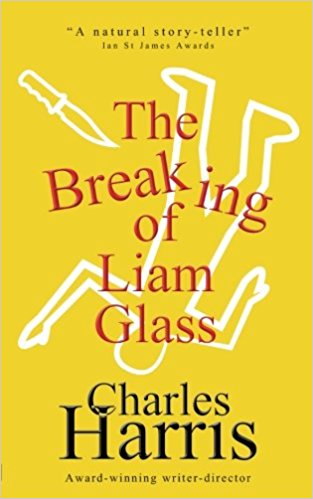
Liam is found stabbed and minutes away from death. What follows is not so much a conventional crime novel, but a journey through a dystopian world inhabited by people who we might spot in a crowded street and think, “I know that person, but where did we meet?” Central to the story is Jason Worthington, a journalist on a London local paper, The Camden Herald. The Herald is struggling to survive in a world where news – both false and otherwise – is flashed around the city from phone to phone before the conventional press can even tap out the beginnings of a story. Everything he ever wanted to be as a reporter – courageous, hard-hitting, a fighter for justice – is blocked by his newspaper bosses who, terrified of upsetting their advertisers, want only stories about cuddly kittens, school nativity plays and giant cheques being presented to worthy causes.

TBOLGTrying to find out who stabbed Liam Glass is Detective Constable Andy Rackham. He is a walking tick-box of all the difficulties faced by an ambitious copper trying to please his bosses while being a supportive husband and father. The third member of this unholy trinity is Jamila Hasan, an earnest politician of Bengali origin who senses that the attack might be just the campaign platform she needs to ensure that she is re-elected. But what if Liam’s attackers are from her own community? Sadly, in her efforts to gain credibility on the street, Jamila has been duped.

‘“Respec’ for the brothas and sistas that fight the cause. Dis am Gian’killa Mo broadcastin’ from Free Sout’ Camden …..” For months Jamila had listened to Gian’killa Mo, broadcasting illegally from the Estates. It had made her feel in-with-the-hood, until the day she visited a small flat above Sainsbury’s Local, where Gian’killa Mo turned out to be a fifty-three-year-old white primary schoolteacher with a degree in Greek drama and a room full of old valve radios.’

As Liam Glass lies in his hospital bed, kept alive only by a bewildering array of tubes and bleeping monitors, Worthington, Rackham and Hasan flutter around the light of the central tragedy like so many moths. Each is dependant on Liam’s fate in their desperate scrambling for the next rung on their career ladder. Harris has clearly spent many a productive hour in the company of journalists and he lampoons the peculiar language beloved of tabloid headline writers. Should Liam’s absent father actually prove to be a football star, how best to head up the story? Two reporters toss ideas back and forth between them:

“Premiership Love Rat Abandoned Son To Life Of Violence,’’ added Zoe with more relish than Jason thought was necessary.
‘We don’t want to be too hard on the father,’ he offered with a tremor of concern. ‘What about “Top Player’s Pain Over Stabbed Son”?’
‘” Love Child Booted Into Touch”,’ said Snipe. ‘”Cast Off Son Pays Ultimate Penalty”,’
‘” Secret Grief Of England Star”?’ suggested Jason hopefully.

In the wake of the attack on Liam Glass, tensions rise on The Estates. Jamila convenes a meeting which she hopes will calm tempers and cast her in the role of peacemaker. Inevitably, the meeting descends into chaos and then farce, as the different factions shake each other warmly by the throat. Harris saves his fiercest scorn for the concept of Community Leaders. Observing that solid, upstanding suburbs have little need for anyone to lead them, he says:

“The Estates….spawned dozens, scores, hundreds. They boasted elected leaders and appointed leaders, self-styled leaders and would-be leaders. They acquired a couple of reluctant leaders (usually the best, and in short supply). They developed voluble leaders and argumentative leaders, attractive leaders, inspirational leaders and scary leaders. There were even a few leaders who knew what they were talking about.”

The back cover of the novel likens this book to Catch 22. That claim may be a little ambitious, but The Breaking of Liam Glass is a brilliant satire on modern Britain, scabrously funny, full of venom and a crunching smack in the mouth for those who seek to protect certain ideas and practices from criticism. Perhaps nothing will ever rival Joseph Heller’s masterpiece, but Harris’s novel shares one vital element. Remember how, after hundreds of pages of surreal humor, Catch 22 suddenly darkens, and leads readers into one of the blackest places they will ever have visited? So it is with The Breaking of Liam Glass. You will laugh at the knockabout fun that Harris has with the ridiculous state of modern Britain, but in the final pages all fades to black and a shiver will run through your bones.

The Breaking of Liam Glass is from Marble City Publishing, and is available here.

MCP


THE MUSIC OF CRIME FICTION

TMOCF header

II. MARCHE FUNEBRE

Stoner044Jean-Jacques ‘JJ’ Stoner is a stone cold killer. His creator, Frank Westworth gives us a first glimpse of him as an army sergeant serving in Iraq. One of his squad has just been fatally wounded by a knife thrown by one of a group of Iraqis who:

“….. plainly considered that the knife’s flight was the result of heavenly intervention and that they were all witnesses to a miraculous act, rather than a clever murderous attempt.”

The sergeant quietly but forcefully demands information:

“His words produced only more theatrical incomprehension. Five sets of open palms were paraded before the sergeant; all of them as innocent as the other, was the suggestion. A single shot interrupted the stage grief; one of the Iraqis sagged from seated to fallen, his dark blood draining from his exploded head into the sands of his native home. The sergeant held his smoking handgun in plain view, spread his arms wide to express his regret, his masculine sorrow.”

Sergeant Stoner assassinates the remaining Iraqis with neither hesitation nor sentiment. Shortly after, he is recruited by a government official we come to know as The Hard Man. Stoner’s new job is to use sharp blades and blunt instruments to discreetly resolve difficult situations for the British government. If Stoner has a gruesome talent for taking life, he also has a paradoxical skill which requires sensitivity, a delicate touch and an awareness of the human soul and its emotional depths; he is a gifted guitarist. In one of Westworth’s short stories, First Contract, Stoner uses his musical ear to imitate a Belfast accent when in a pub full of staunch Republicans:

“Beaming broadly, Stoner took a seat with the band. His lady companion ….. watched with some surprise as Stoner changed the tuning on the borrowed acoustic guitar, acknowledged a generous introduction from the leader of the band, then launched into a medley of furious Provo protest songs, familiar to all in that Catholic bar, all with their choruses to share.”

In the short story Two Wrongs Stoner is in America and we are introduced to a character who appears regularly in the Stoner stories, the navy SEAL known as Stretch. He and Stoner are in a bar, tangling with an agent from the FBI. Stoner, though, always has time for music:

“ Stoner finished his Bud, smacked his lips, and moved smoothly through the quietened attentive crowd to the stage, where he picked up the borrowed Fender Telecaster, smacked it a little to confirm the inaccuracy of its tuning, and launched into a spontaneous version of Johnny B. Goode set to a strange rolling rockabilly rhythm which found Stretch running, actually running from the restrooms to the stage in what proved to be a successful attempt to save the song from the amused Englishman’s attempt to publicly destroy such an important icon of American history.”

Westworth header

Westworth’s skill as a writer of quirky thrillers is shown to best effect in his Killing Sisters trilogy. In A Last Act of Charity (2014), The Corruption of Chastity (2015) and The Redemption of Charm (2017) Stoner encounters three sisters who are just as deadly and homicidal as he is. We also learn that in his downtime, when he is not despatching people who are being an embarrassment to HM Government, he is running a jazz and blues club called The Blue Cube. The closest thing that Stoner has to a girlfriend is a diminutive bass player called Bili who plays in the house band from which Stoner is often conspicuously absent due to his murderous day job.

“Bili swung her big red Rickenbacker bass into what might have been a comfortable playing position, and all three looked to far stage left, where Amanda rolled her eyes, took a deep breath and surprised them all by blasting from her shiny tenor saxophone the opening stanza of Baker Street, one of the most recognisable lumps of sax music of all time.”

Westworth realIt doesn’t take a genius to work out that Westworth (right) is deeply immersed in the lore and legend of pop music as well as knowing his guitars. The Killing Sisters books are scattered with references – some subtle, but others more obvious – to great songs and singers. Later in The Redemption of Charm, Stoner renews his acquaintance with his favourite guitar:

“His old Fender guitar sat easily in his lap as he tuned, fingered a few chords, tuned again, hummed a few verses, tuned some more, strangely restless. The guitar felt odd … polished maybe. The strings were certainly new enough, although of the correct weight for his taste. He replaced it in its case, wandered around and discovered another case, standing by the closed piano, this one containing an acoustic guitar, a fine blonde Gibson model unfamiliar to him.”

 Stoner is gloomy, and overcome with melancholy, states of mind with which he is unfamiliar, and strange moods sit heavy on his shoulders:

“He played a finger-picked instrumental tune he half remembered from the days before his playing focused entirely on electric solid-bodied guitars. A famous tune by Davey Graham dedicated to some woman called Anji. Unbidden and unwelcome somehow, his memory unearthed a series of images of women to whom he’d dedicated the song down the years.”

 You can follow the blue links to the Amazon pages for Westworth’s novels, and on Fully Booked we have a detailed review of The Redemption of Charm, and an entertaining piece by the author on how to kill people, again borrowing from the title of a classic song – Killing Me Softly.

Next up in our musical journey is the story of a gifted singer-songwriter whose career has been shattered by depression and stage fright, and the sombre tale of a band whose obsession with the Dakota Building and the death of John Lennon takes them to a very dark place.

Check out PRELUDE AND FUGUE,
the first movement in this composition.

THE MUSIC OF CRIME FICTION

TMOCF header

I -PRELUDE AND FUGUE

This look at how music features as a soundtrack to many crime fiction novels will ignore works which simply have song titles or lyrics as chapter headings, or books which mention various popular songs merely as a device to establish the authenticity of the era in which the action takes place. Also, we will largely leave alone the police procedurals of the maverick Detective Inspector type where the cop in question wears his musical taste not perhaps on his sleeve but certainly on the pages of the narrative. Much to the distaste of most of his colleagues, Mark Billingham’s Tom Thorne has a penchant for country music, particularly the lonesome heartbreak of Hank Williams, while his Yorkshire counterpart Alan Banks veers in the more sophisticated direction of niche blues and jazz. Neither of these performs music, however, except perhaps humming along to something on the car music player.

While everyone is familiar with dear old Endeavour Morse, particularly in his John Thaw personification, glumly consoling himself with his precious recordings of Mozart and Wagner, he squeezes in as a performer of music only because of the TV adaptations. In the novel The Dead of Jericho (1981) he meets the soon-to-be-murdered Anne Scott at a party, but the TV version has them both as members of an Oxford choir.

Death and the MaidenColin Dexter’s stories of the wonderful curmudgeon are among the widest read in the last quarter of the 20th century, but less well known are the Vienna-set novels of Frank Tallis featuring policeman Oskar Rheinhardt and his young pyschiatrist friend Dr Max Liebermann. The younger man often plays piano for Rheinhardt melodic baritone as they seek solace from the stresses and strains of catching murderers.
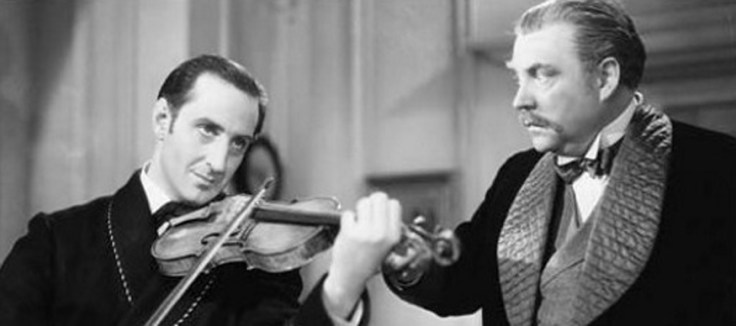
Not only are the pair devotees of their sublime fellow townsman Schubert, but Death And The Maiden (2011) actually features a walk-on part by none other than Gustave Mahler, as Liebermann and Rheinhardt track down the killer of a diva from The State Opera. Among other police officers and investigators who can do rather more than knock out a tune we must include James Patterson’s prolific profiler Alex Cross who, when the mood takes him, plays a mean jazz piano. The violin offers our own Sherlock Holmes a more healthy alternative stimulus to one, two or even three pipes of his favourite tobacco, or a syringe full of his opiate of choice. In A Study In Scarlet we learn:

“His powers upon the violin were very remarkable, but as eccentric as all his other accomplishments. When left to himself he would seldom produce any music or attempt any recognised air ….he would scrape carelessly at the fiddle which was thrown across his knee.”

In the next movement we will hear of the embittered intelligence operative who not only plays a mean Fender Stratocaster, but also owns a jazz/blues club in London.

Holmes Violin

THE ORPHANS … between the covers


Orphans031

A beach in Goa, 1992. A boy and a girl, a brother and his older sister, are amusing themselves at the water’s edge. Their parents, unconventional, more in love with their own escapist lifestyle than they are with their children, are nearby. But then they aren’t nearby. They are gone. What happens next is a blur of childlike confusion, incomprehension and false memory. But Jess and Ro are now orphans.

The years pass. The remains of the children’s father are eventually discovered in the jungle not far from the beach, but of their mother, Sophie, not a trace. Well meaning but reluctantly relatives have cared for and schooled Jess and Ro until they pass from their scarred childhood into the uncertainty of adulthood. Jess, though has made a success of her life. She is a successful commercial lawyer, has a treasured daughter with husband Charlie, and she lives in a delightful house just on the edge of Clapham Common in south London.

But little brother Ro – short for his nickname, Sparrow – has fared poorly. His school days were troubled and tormented, and he has carried the trauma of that hazy day on a tropical beach like a monster clinging to his back. He has led a largely nomadic life and, like the obsessed Captain Ahab, he travels the world in search of his lost mother. His most recent attempt to track her down leads him to a hamlet in rural Ireland where Sophie Considine was known. This particular trip ends badly, however, and he makes his way to England.

Annemarie-NearyAnnemarie Neary gives us a chilling sense of separate events which are not fatal in themselves but deadly when they collide, and while Ro is making his way to Clapham, the normally self-assured Jess is in trouble at work. She has rejected the advances of a senior partner at an office social, and he uses the rebuff to light a fire under Jess’s professional life.

Ro arrives at his sister’s home and Neary skilfully describes how the young man’s near-autism and utter self-obsession starts to undermine the household. Charlie already holds Ro in contempt after previous clashes but the live-in au pair, a balefully unpleasant young Brazilian woman called Hana, is the final ingredient in a the shaking up of a poisonous cocktail of guilt, lust and fractured relationships.

Sensing that he has at last found gold at the end of his rainbow, Ro projects his fixation on Maya, the wife of an old family friend, Eddie. The fact that Eddie was part of the loose community of beach bums in Goa convinces Ro that Maya – complete with a tell-tale scar where a tattoo has been removed – is his mother.

Neary has a silken touch and she spins a web of potential tragedy that is gossamer light, shot through with poetry, but one that will draw you, the reader, into its folds and not let you escape. Here, she describes Ro’s conviction that his lonely quest is over.

“And as he passes under the great avenue of chestnuts, his heart rises like freshly baked bread and he imagines himself a stork, not a swallow. If he were a stork, with a sash in his beak, this is where he would take his mother. He would carry her up into the high branches, make a nest there for her. He would keep her safe from predators, out of the reach of the grubby little world.”

The book succeeds on every level: it is near perfect as a tragedy in that it has the three Aristotelian demands of drama – the unities of time, place and action. Like the tragic figures of Hardy and Shakespeare the doomed protagonist is not totally devoid of human decency, and this makes their downfall ever more bitter because we onlookers can see that it is preventable. The Orphans is a tale as dark as ebony, and as convincing a description of a descent into madness as I have ever read. It is published by Hutchinson and will be available in July as hardback, paperback and Kindle.

Orphans footer

THE LIGHTERMAN … Between the covers

Lighterman header

I’ll have to come clean, declare an interest, turn out my pockets and put my hand up. Having now run out of colloquialisms I will state that I am sucker for books set in London. Leaving aside the great storytellers of the distant past, my shelves are stacked with the Bryant & May stories by Christopher Fowler, John Lawton’s masterly Fred Troy novels, the bleak and compelling Factory novels by Derek Raymond, and the Peter Ackroyd journeys through a London where the past has a mystical effect on the present. It will be no surprise then when I admit to being hooked from the very beginning of The Lighterman by Simon Michael.

Our first view of London is in 1940 and from several thousand feet above. It is through the eyes of a Luftwaffe pilot. From the cockpit of his Dornier 215, he watches as the bomb aimer releases its deadly payload on the helpless Londoners. This opening chapter is a skillful – and terrifying – piece of descriptive writing, but it also introduces us to the man who will be the chief character in the book. Charles is the elder son of Harry and Millie Horowitz, respectively tailor and milliner of British Street, Mile End. He is twelve years old, and he and his family survive the bombs relatively unscathed.

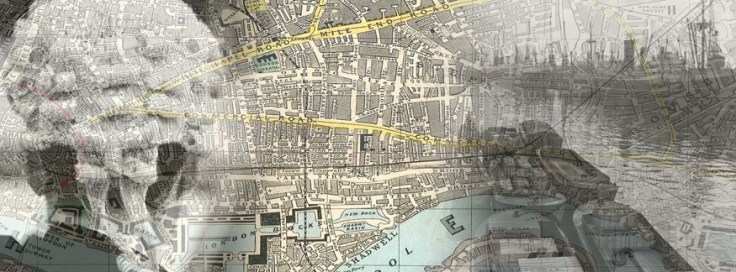
TLWhen we next meet Charles it is 1964, and much has changed. The streets of the old East End, having been substantially rearranged by Hitler’s bombs, have been redeveloped. More significantly, the Jewish people have largely moved on. Many families have prospered and they have moved out to the comfortable suburbs. Charles Horowitz has also prospered, after a fashion. His chosen career is Law, and in order to rise through the ranks of the socially and ethnically tightly knit Inns of Court, he has abandoned Horowitz and reinvented himself as Charles Holborne.
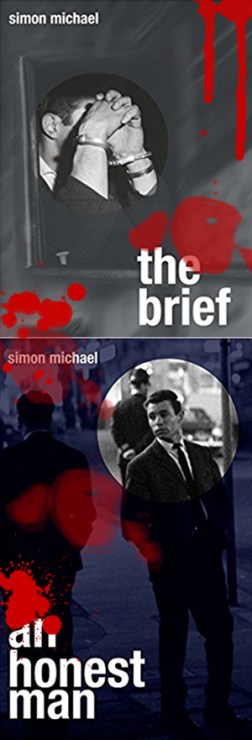
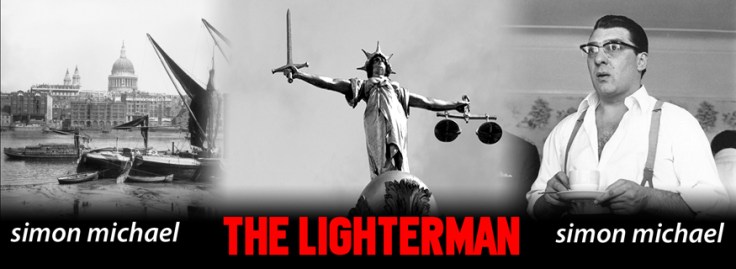
At this point, the author reminds us that Charles has a back-story. The two previous novels in the series, The Brief (2015) and An Honest Man (2016) are there SM booksfor those who want to complete the picture, but with The Lighterman it is sufficient to say that Charles has made a very undesirable enemy. It is probably merely an exercise in semantics to distinguish between the equally awful twin sons of Charles David Kray and Violet Annie Lee, but most casual observers agree that Ronnie was the worst of two evils. The homosexual, paranoid and pathologically violent gangster has a list of people who have upset him. The first name on that list is none other than Charles Holborne aka Horowitz, and the brutal East End hoodlum is determined that Charles must be done away with.

Charles finds himself forced into defending a man on what seems to be a cut-and-dried charge of murder. If he wins the case, then Ronnie Kray’s rage will be incandescent; if he loses, then someone close to his heart will go to the gallows.

SMSimon Michael (left) combines an encyclopaedic knowledge of London, with an insider’s grasp of courtroom proceedings. I cannot say if it was the author’s intention – only he can concur or disagree – but his writing left me with a profound sense of sadness over what London’s riverside and its East End once were – and what they have become. This is a beautifully written novel which succeeds on three different levels. Firstly, it is a superb recreation of a London which is just a lifetime away, but may as well be the Egypt of the pharaohs, such is its distance from us. Secondly, it is a tense and authentic legal thriller, with all the nuances and delicate sensibilities of the British legal system pushed into the spotlight. Thirdly – and perhaps most importantly – we meet characters who are totally convincing, speak in a manner which sounds authentic, and have all the qualities and flaws which we recognise in people of our own acquaintance. The Lighterman is published by Urbane Publications and is available here.
Lighterman footer


THE POSTMAN DELIVERS … Wood and Beck

TPD footer

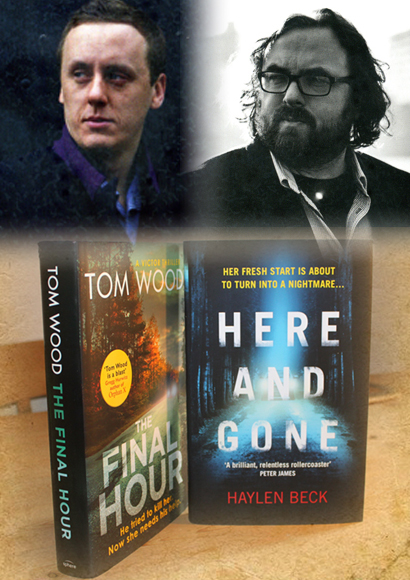
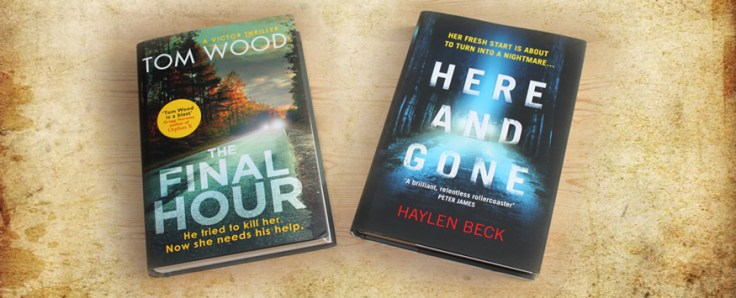
It was huge relief and a welcome distraction from the spin-speak, false sincerity and empty promises of a dire General Election campaign when two beautifully designed new hardback novels came this week. If they read as impressively as they appear at first glance, then I have some much needed hours of distraction ahead.

Tom Wood books

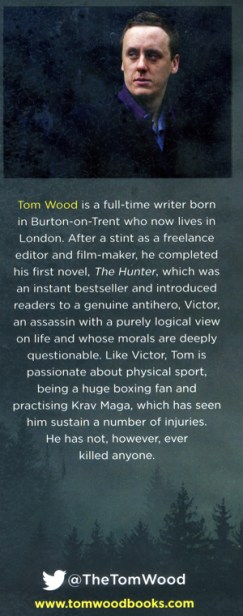
Tom Wood041The first is The Final Hour by Tom Wood. It is apparently the seventh in a series of thrillers centred on an international assassin called Victor. I confess that I am new to the books, but it seems that Victor, after a string of successful ice-cold hits has developed a painful affliction for any paid killer – he has started to show remorse. CIA man Antonio Alvarez is as remorseless a hunter – but in the cause of good – as Victor, but now circumstances dictate that their orbits will collide, with devastating effect. The Final Hour is published by Sphere, and is out on 29th June.

Here and Gone040As I flicked through the pages of Here and Gone I saw the author photo on the back inside cover, and I thought, “hang on, I know that bloke..” I’ve not had the pleasure of meeting Stuart Neville in person, but I have become a great admirer of his crime thrillers set in Ireland, both north and south of the border. But now, here he is, under the name of Haylen Beck, with a novel which he says is inspired by his love of American crime fiction.

The plot? A young mother sets off on a perilous journey across the badlands of Arizona. In the back of her car, her two kids. Sean and Louise are strapped in safely, but they are dimly aware that their mum, Audra, is escaping the verbal and physical assaults of their father. As Audra drives on through the night, she is pulled over by the cops. Enter that most reliable trope of American crime novels, the sinister and crooked Sheriff. Audra is about to learn that her troubles are only just beginning.

Depending on which Amazon page you click on, Here and Gone is out in hardback on either 20th June or 13th July. The ubiquitous internet retailer also tells us that it is published by Harvill Secker and the Crown Publishing Group, but since both are in the Penguin Random House stable, I suspect that we are looking at the same thing.

TPD header

Blog at WordPress.com.

Up ↑