Here’s the FULLY BOOKED Christmas card for 2016. There’s also a song to go with it!


Here’s the FULLY BOOKED Christmas card for 2016. There’s also a song to go with it!
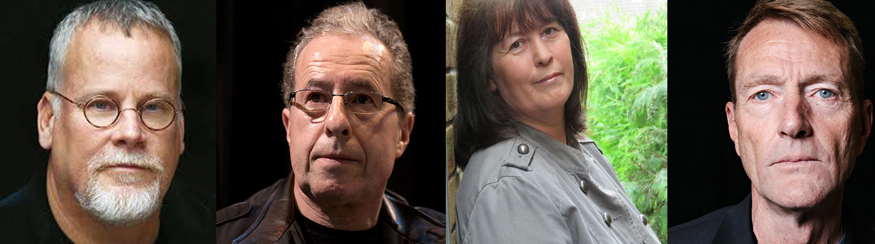
 Some authors save the best for last. Others, like Joseph Heller with Catch 22, produce such a devastatingly good first novel that the rest of their lives are spent trying to better it. Rachel Amphlett has a new novel out – watch out for our review of Scared To Death – but she has taken time out of her hectic schedule to look at a few brilliant ‘first in series’ crime novels.
We’re getting ready to move house in the New Year, which means at some point I’m going to have to box up all eight bookshelves of crime and thriller books that are currently lining the walls of one of the rooms downstairs.
After sorting out which books would have to go to the charity shop – unless scientists work out a way to clone me in the next fifty years, there’s a very good chance I’ll never get to these a second time around – I was left with some of the crime series that have stayed with me for years, and that I’ll be hanging onto for a long time yet.
This got me thinking: what is it about these first in series novels that still capture my imagination after all this time? And what is it about these books that influence my own writing?
 Michael Connelly – The Black Echo (Harry Bosch #1)
Connelly captures so much about his famous detective Harry Bosch in this first novel in the series, but does so without making you feel bombarded by information.
Once a “tunnel rat” in the Vietnam jungle, and now a police detective with the LAPD, Harry Bosch isn’t what I’d call a dynamic character, but he is compelling. It’s his careful consideration of each case that crosses his desk, and the way in which he cares about every single victim no matter their background.
Equally as compelling as Harry Bosch is Connelly’s descriptions of the cityscape within which the stories are based; each location is described in such a way that, for example, by the time you read about Harry heading home of an evening in the latest book in the series, you almost know which CD track he’s going to put on to listen to. What have I learned from reading the Harry Bosch books? Setting is as important as character.
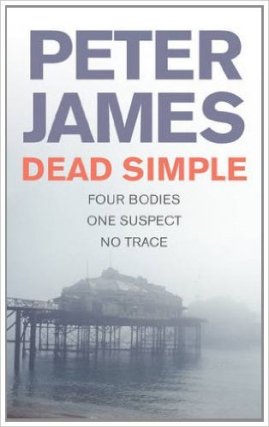 Peter James – Dead Simple (Roy Grace #1)
Maybe not a book to give to your fiancée before his stag night…
The first chapter of this book has to be one of the most memorable introductions to a detective series I’ve ever come across, and I won’t spoil it here by telling if you if you haven’t yet read it. At the end of the first chapter, you’re left in total shock and dying to know what happens next. Told from several points of view, the whole story is turned on its head about two-thirds of the way through and then it’s a fast-paced page-turning read to the end.
What have I learned from reading the Roy Grace books? The books may be named after Roy Grace, but there’s a great ensemble cast, and this is something that felt natural to me as I wrote the first in the Kay Hunter series. I wanted those co-stars to be considered just as important as Kay. After all, no police detective works alone, and there are myriad experts on hand to help solve the case.
 Angela Marsons – Silent Scream (Kim Stone #1)
Angela’s Kim Stone books are modern twisty thrillers that bring the genre bang up to date into the twenty-first century and I’ve no doubt this series will endure for a long time yet.
I remember when the first in the series, Silent Scream, was published – everyone was utterly blown away by the story and I recall seeing the book cover everywhere online. In Silent Scream we meet Kim Stone for the first time and quickly realise that if she is to stop a sadistic killer, she’s going to have to confront some very dark memories of her own. Kim Stone is ruthless in her quest for justice for the victims in these novels, and her investigations lead her into dangerous physical and emotional places.
What have I learned from reading the Kim Stone series? The modern detective story has evolved for the twenty-first century, and so have female protagonists.
Lee Child – Killing Floor (Jack Reacher #1)
I remember picking up a second hand copy of Killing Floor about three years after it was first published, and it really was the first time I’d ever heard of this strange lone wolf character by the name of Jack Reacher.
What have I learned from reading the Jack Reacher books? Use short sentences to keep the action moving along. You don’t often see long sweeping sentences in Lee Child’s novels – they’re punchy, to the point, and don’t waste time. A bit like Jack Reacher, you might say…


For me, the most beautiful tune ever written. It is heartbreakingly beautiful, tinged with passion and more than a little regret. Elgar wrote so many fine tunes, but this one is intimate and personal. It seems like one person simply telling another person, “I love you.”

Everyone loves the countdown to Christmas, even if in many UK supermarkets it starts the second all the Halloween tat has been cleared away. But Advent has a deeper and more lasting significance. It is a time of looking forward, of anticipation, but also of reflection. You can click on a daily window to discover a fine crime novel – and a beautiful piece of music. Both choices are mine, and I make no claim that the 25 books are the best of anything, and neither are they in order, but I offer them as a personal selection of what I consider to be the very best of crime fiction.











A mentor of mine – a brilliant trauma psychologist – used to say to me that in every traumatic event, there is always that moment, that split second in which everything shifts from normal to terrifying. And that in that moment, everything we have ever known of ourselves is called into question.
I have always been fascinated by that moment, by what it does to us, and what follows on from it.
 In The Missing Hours, both Ed Cole and Beck Chambers have experienced their fair share of trauma. For Ed it was the experience of war and its physical effects. For Beck, a war and a hostage experience. Both men handle things very differently. One surviving, thriving even. The other turning to drugs and alcohol.
For me, my trauma was giving birth. When my son was born and my bleeding wouldn’t stop and suddenly doctors filled the room. I watched the colour drain from my husband’s face, heard the midwives voices climb in register and I believed that I was about to die.
That I didn’t die (obviously!) made little difference to my perception of the event. I was left with nightmares, anxiety, a trail of obsessive thoughts that began and ended in the delivery room. I did not have Post Traumatic Stress Disorder (PTSD). I was, however, traumatised.
Terrifying events do not have to push us into mental illness to have an effect on us. The belief that one is about to die brings with it repercussions. As do car crashes and break ups and betrayals. In each of these events, our bodies sense danger. Our adrenal glands release adrenaline, noradrenaline and cortisol. They prepare us to fight or to flee. But when there is nothing to fight, nowhere to flee, these physiological reactions can lead us into longer term effects.
Following on from a traumatic event, things like a loss of appetite, diarrhoea, an increased startle reaction and mysterious aches and pains are common. For me it was sleep that suffered. I would lay awake nights reliving the pooling blood, the doctor saying “It’s not stopping.” The obsessive thoughts circled constantly, invading in each quiet moment. I became anxious and experienced a sadness that was a hair’s breadth from depression. Others may become angry, feel out of control, attempt to isolate themselves, or, as in Beck Chambers’ case, use drugs and alcohol to cope with their feelings.
Remember, that in any traumatic event, there comes that moment in which the entire world shifts off its axis and nothing is quite as it was before. That is a huge thing to cope with. We have to learn to process what has happened – the cancer diagnosis, the loss of a loved one, the attack that came from nowhere. We have to allow our brains to twist it and turn it, and create a new understanding of our world that now includes this dreadful thing.
Such things are not done in a day.
Trauma changes who we are. But that does not necessarily have to be a bad thing. In The Missing Hours, Ed has survived terrible injuries and yet has thrived in the face of them, building a family and a business. Beck, on the other hand, has struggled, beaten down by his experiences. So it is with the world – some will have their lives ruined by traumatic stress, others will show remarkable resilience in the face of it.
Much of this comes down to personality and to history. Risk factors for suffering from traumatic stress include already being under a heavy stress load or lack of social support. The experience of childhood trauma is perhaps one of the biggest risk factors – exposure to trauma in the early years re-shapes our brain, changing the way in which it operates, and making us more prone to react to later negative events.

Then there are the resilience factors – the ones that help people to survive and even to thrive. A strong social support network is a big one – having the ability to talk through your feelings, finding others with similar experiences, receiving love and feeling validated, all of these things act as a buffer, protecting us from psychological harm. Many people who have thrived in the aftermath of traumatic events can point to a role model – a parent, a grandparent – whose behaviour gave them a blueprint of how to be strong. Having a generally positive view of yourself and confidence in your ability to solve problems also means that your are more likely to attempt to deal with your issues head on, rather than trying to deny they exist.

Now I find myself asking – am I Ed or am I Beck? Did I thrive? Or was I crippled? In truth, for a while there, I was Beck (although without the substance abuse issues). Birth was supposed to be a joyous event. How could I possibly feel so scarred by it?
It took me many months to come to a point at which I could talk about the nightmares, about the obsessive thoughts. In fact, for months, I didn’t talk about my son’s birth at all. I just couldn’t. Then one day I sat down with my best friend and told her everything. Then I told her again, then again. Then I talked to my health visitor. Then my GP. Then a midwife. Turned out, birth trauma is a very real, very common thing.
The good thing about resilience, about learning to survive traumas, is that we can build it up. We can make ourselves resilient. And talking about it to people who will understand, that’s a great way of helping yourself recover. Another key thing is to use an active coping style – don’t let the trauma cut you off from people, don’t deny it or refuse to think about it. In active coping, you identify the problem (‘I’m haunted by my son’s birth’) and then you go about finding solutions (ie, talking to friends, experts, seek guidance). Accepting the emotional fall-out is important too. The world has shifted. It will take some time before everything settles down again.
 When you do experience a traumatic event, remind yourself that, at some point in the future, this will all be just a story that you will tell. My favourite mantra has become “This too shall pass.”
Psychologists have found that a powerful way of building up our own resiliency is by a process known as ‘Required Helpfulness’. It was discovered during World War 2 that those who cared for others after bombardments suffered less post traumatic stress than did those who were not care-giving. Channeling your energies into caring for others can help your self esteem and self-worth.
I recovered from that trauma. I even went onto have another child. My eldest son is now 5 years old and I’m doing fine.
Traumatic events are an intrinsic part of life. We cannot escape them. Fortunately we can learn to build up our own resiliency so that, when the worst does happen, we are in the best possible position to survive and even to thrive.

The kind people at Michael Joseph were good enough to invite me to a drinks party right in the heart of London’s theatreland, literally a stone’s throw from the glitter of The Royal Opera House, and the more forbidding bulk of the former Bow Street Magistrates Court, surely haunted by the phantom of many infamous defendants, including Roger Casement, William Joyce and the Kray twins.

 Up on the third floor of The Covent Garden pub, however, the crime was purely fictional, in the shape of forthcoming novels from the Michael Joseph stable. Canadian Elan Mastai (pictured above)has already achieved fame as a screenwriter for such films as The F Word (starring Daniel Ratcliffe) and Fury (starring Samuel L Jackson), but his debut novel All Our Wrong Todays is already generating a considerable buzz in the book world. It concerns a young man called Tom who seizes the opportunity to energise his glum present day existence with the help of his father’s time machine. Mastrai gives us the top notes of a contemporary thriller, with the more complex harmonies of the differences between dull but predictable reality, and the altogether more dangerous world of dreams.

More conventionally ‘crimey’ is Blue Light Yokohama – also a debut – by Nicolás Obregón (pictured above). The novel is based on Japan’s most infamous unsolved crime in recent decades – the Setagaya Family Murder. Mikio Miyazawa, 44, his 41-year-old wife Yasuko, 8-year-old daughter Niina, and 6-year-old son Rei, were found dead on the morning of Dec 31, 2000. Miyazawa’s son had been strangled, and the other three had been stabbed to death. Fingerprints and other evidence in the home indicate the killer used the computer and ate ice cream after the attack on Dec 30, spending up to 11 hours before leaving the next morning.
 Approximately 190,000 officers have been involved in the case to date, and police have received more than 16,000 pieces of information from the public, yet the killer remains at large. Fifty police officers are still assigned to the case to follow up on any leads. The reward was raised from the initial 3 million yen to 10 million yen for information which leads to the killer or killers’ arrest.
Into the middle of this true crime scene, Obregón pitches Inspector Kosuke Iwata, a policeman racked with personal pain and guilt. He senses that his integrity and persistent search for the truth will upset senior colleagues, and he knows the clock is ticking down towards his own ruin – or a fresh atrocity. The title? Obregón tells me it is a popular song from the 1960s, best described as Japanese country and western.
Both books are due out in the spring of 2017, and you will be able to read full reviews on Fully Booked nearer the time. For information on All Our Wrong Todays contact Ellie Hughes at EHughes@penguinrandomhouse.co.uk, and Gaby Young at GYoung@penguinrandomhouse.co.uk for Blue Light Yokohama.
 Mark Edwards writes psychological thrillers in which terrifying things happen to ordinary people. His first solo novel, The Magpies (2013), reached the No.1 spot on Amazon UK as did his third novel Because She Loves Me (2014). He has also co-written various crime novels with Louise Voss such as Killing Cupid (2011) and The Blissfully Dead (2015).
Mark grew up on the south coast of England and starting writing in his twenties while working in a number of dead-end jobs. He lived in Tokyo for a year before returning to the UK and starting a career in marketing. As well as a full-time writer, Mark is a stay at home dad for his three children, his wife and a ginger cat. Mark speaks to Fully Booked about his life and his writing.
As a six word story, explain what The Devil’s Work is about.
Dream job becomes a terrifying nightmare. (My original pitch was ‘The Devil Wears Prada rewritten by Stephen King’ but that’s eight words!)
As opposed to other types of fiction, what do you think is the appeal of psychological thrillers?
Psychological thrillers are hot right now because readers want to connect with stories in which they can imagine themselves. Marriage, relationships with friends and children, co-workers and lovers…Psychological thriller writers take ordinary situations and add a layer of fear and darkness – from the toxic marriage in Gone Girl to the everyday voyeur in Girl on the Train, readers like those familiar situations and characters and thinking about what they would do if it were them. I think it’s a reaction to the Dan Brown years, which were followed by the Stieg Larsson-fuelled Scandinavian noir period – we’ve gone from worldwide conspiracy theories and outlandish situations to what is now called domestic noir. It’s not new but it’s never been more popular.
What made you want to set the majority of this novel in a publishing house?
I used to work in publishing, although we didn’t publish fiction. Like Sophie in The Devil’s Work I was a marketing manager. More importantly, I have been involved in the world of fiction publishing, as a writer, for years, so know that world well. I think it’s a world that readers are interested in too. It’s certainly more interesting than reading or writing about an insurance company. The thing that unites everyone who works in publishing is they loves books. They love to read, and they love books as objects. I’m like that too. If I wasn’t a writer I would want to work on the other side. People who work in publishing are like kids who say they want to work in a candy factory, doing the job they always dreamed of. But, of course, I needed something nasty to be going on in the background of my publishing company.
 What was the most important aspect of The Devil’s Work that you hoped to get right–the characterization/the thrill/the mystery?
I wanted to ensure all of the elements of the book worked, but it was particularly important to get Sophie’s voice right. This is the first novel I’ve written from the point of view of a woman, and I knew the whole book would fall apart if Sophie wasn’t convincing. I read a lot of books by female writers, with female protagonists, and noticed there are a number of differences between male and female narrators. For example, women tend to write more about how they feel physically, especially if they feel discomfort. That’s just a small thing but as most of my readers are women I was determined to ensure nothing about Sophie’s voice jarred.
Which authors inspire you?
I read a lot of my peers’ novels and am constantly inspired by great writing, interesting characters and original ideas. I’m always trying to improve my writing and love reading books that make me feel the need to raise my game. An example would be I Let You Go by Clare Mackintosh; the twist in that book made me feel inspired to come up with a really great twist in The Devil’s Work.
My writing heroes are Stephen King, Ira Levin and Donna Tartt. King for how he puts normal people in scary situations, and because he’s had such a long, prolific career. Levin because he came up with the most fantastic concepts and executed them brilliantly. Tartt because she is so good at creating atmosphere and flawed by likeable characters. The Secret History is my favourite book and it inspired me to start writing again in my twenties.
You’ve written multiple thriller titles–did you approach The Devil’s Work differently?
The Devil’s Work is one of my ‘from hell’ books – I’ve done neighbors from hell, relationships, vacations and now co-workers – so I approached it like those. I always start out with a person or couple in an idyllic situation, full of hope and optimism, and then begin to dismantle that until everything goes horribly wrong. But with each book I put pressure on myself to get better, to create creepier situations and surprise the reader more. This book was the hardest to write because it had the most complex plot and it’s the first one I’ve written with two timelines that interweave. That was challenging. I actually wrote all of the university chapters first, and then started to write the present day story. That meant that by the time I started to write the main narrative I knew Sophie really well.
What type of advice would you give to an aspiring thriller author?
I’d give any aspiring writer the same piece of advice: only do it if you are absolutely driven, if it’s an itch that you have to scratch. Writing is hard. All the stuff that goes with writing – rejection, disappointment, criticism – is even harder. All the writers I know, no matter how successful, are dissatisfied but we can’t help ourselves. If I was unable to put them off, I would advise reading as much as they can. That’s the best way to learn.
 What is the most surreal thing about being a published author?
The most surreal thing about being a writer is how ordinary it is. I used to have this idea that it would be glamorous, but it’s the exact opposite of that! I get up, drive the kids to school, sit in my dining room (I don’t have my own office because it got turned into a nursery) with a view of a derelict building and a busy street, fending off demands from my three-year-old for snacks. Sometimes I go and write in Starbucks, so I at least feel like Carrie in Sex and the City. Having said all that, going to festivals in places like New Orleans, or having lunch with my publisher, the time my agent held a champagne reception for me after I sold my millionth book…that’s when I feel like a proper writer. But most of the time I wonder when I’m going to get the keys to my ivory tower (answer: never!).
You’ve traveled and lived abroad. Do you think aspiring writers should move outside their comfort zone in order to better their writing?
Living through difficult situations definitely helps you write better. It’s harder to write convincingly about emotions, places and relationships without experiencing them in some way. However, you don’t need to be well-traveled to write about the world, and you don’t necessarily need to have suffered to write about pain. The imagination is a wonderful thing. But I think that writers who have stepped outside their comfort zone and felt daunted or scared can draw on those feelings to give their books an air of truth that might otherwise be lacking.
Having said all that, writers can make the mistake of doing something they think was interesting and assuming the rest of the world will be fascinated. I tried to write a book about my year in Japan and it was the worst thing I’d ever done. It read more like a travel diary and was only interesting to me. It’s like showing someone your vacation snaps. Readers want stories they can relate to. You should only write about your true-life experiences if it makes a great story; otherwise, it’s better to take something from it and use that to invent a story around it.
What is one thing you’d love to write but haven’t gotten around to it yet?
I’ve had this idea floating around in my head for years. It’s high concept, a speculative fiction novel, with what I think is a great hook. I just haven’t figured out what to do with it yet, or where it goes. This sometimes happens: an idea can gestate for years. Sometimes they go nowhere. Or maybe I’ll suddenly work out what to do with it. But I have a feeling this particular idea could turn into something epic if I ever have the flash of inspiration that will bring it to life.
 What is the most important element of a story to you that must be in every novel you write?
All of my books are about ordinary people in scary situations, so it’s important that the story is grounded in a reality that readers can identify with. The main character needs to be an everyman or woman, not a chiseled action hero or superstar. The most important element in my books is that I make these identifiable characters confront terrifying situations. It’s also important that, although there are hints of otherworldly goings-on, nothing is supernatural. There is always a rational explanation for everything that happens – otherwise it would feel like cheating. Each of my books describes a nightmare that could happen to anyone. It could happen to you.
Are you secretive about your writing or do you need to share and bounce ideas off of people?
I find it essential to have someone to discuss ideas with – particularly problems. My wife, who studied creative writing and is very well-read, is great for this. She works from home too and quite often, during the working day, I will seek her out and describe how I’m stuck, or run ideas past her. Sometimes the very act of verbalizing the problem helps me solve it. She just has to sit there and listen. But often we will talk it through and she will help me figure it out. Apart from my wife, I don’t let anyone else see what I’m working on until I feel it’s ready, usually after I’ve written two or three drafts. I discuss initial ideas with my editor and agent and then vanish until the book is finished.
The Devil’s Work and Mark’s author page can be found on Amazon.
 Simon Kernick has become very much the go-to man for those who like taut thrillers that take no prisoners, and inhabit the landscape between regular police procedurals and the more cut-throat world of the intelligence agencies and counter terrorism. He has written a string of best sellers since his first novel, The Business of Dying, was published by Bantam in 2002. The Bone Field is his latest work, and will not be available until January 2017, but thanks to the good souls at Penguin Random House, my friendly postie dropped off a copy at the end of last week.
It is every parent’s nightmare, perhaps more so when daughters are concerned, that something awful will happen when their offspring is far from home, perhaps away volunteering, on a gap year, or maybe just taking a long back-packing trip to somewhere like Thailand. It is Thailand that initially takes centre stage here, because it was there that 21 year-old Katherine ‘Kitty’ Sinn was last seen, back in 1990.
Time, like an ever rolling stream, has born many of its sons – and daughters – away since 1990, and the case of Kitty Sinn is not so much cold as fossilised beneath the permafrost of unsolved crimes. But then her bones are discovered, not in what used to be called Indo-China, but six thousand miles nearer home, in the grounds of a Buckinghamshire school.
DI Ray Mason, of the Metropolitan Police Homicide Command would not normally be involved in cold case crime, but when Kitty’s former boyfriend, Henry Forbes, comes forward to state that he knows all the whys, whens and wherefores of her death, Mason has to listen. His attention turns from dutiful to totally riveted when both Forbes and his expensive lawyer are gunned down in a hit which is so proficient that it reeks of organised crime.
From here on in, Mason and his team realise that it is ‘game on’ as it is obvious that they are not dealing with a domestic tragedy, but a ruthless international crime gang led by a man whose cruelty stems from the fact that he believes himself to be untouchable.
There will be a full review of The Bone Field nearer to the publication date, but in the meantime you can pre-order a copy from Amazon, or contact Sam Deacon on 020 7840 8846


 Robin Blake (left) was born in Preston, Lancashire, and says that he belongs to a lucky generation that missed two world wars, benefited from the National Health Service, and entered their teens just in time for sex, drugs and rock n roll. His latest novel is set in his home town, but it is 1734, and we have another case for Titus Cragg and Lucas Fidelis.
The pair first appeared in A Dark Anatomy in 2012. Cragg is the Coroner for Preston and, among other duties, he must investigate suspicious deaths, while Fidelis is a young doctor who plays the role which in modern crime fiction is played by the pathologist.
The trade of tanning leather, so essential for thousands of years, has always set its participants apart from polite habitation due to the appalling smells which are created by the process of using urine and animal faeces to cure the leather, and so it is in Georgian Preston, where the tannery is banished to the banks of the River Ribble. When the body of a baby is found in one of the tanning pits, Cragg must defend the tanners against a murder charge, and tackle a ruthless group of local businessmen whose plans for the town will benefit their own pockets rather than the lives of ordinary citizens.
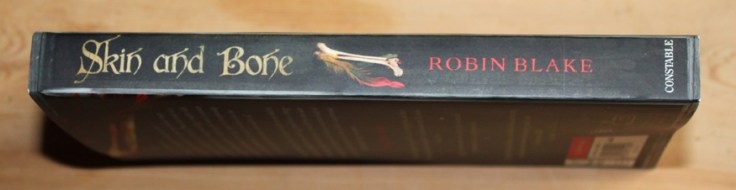
Skin and Bone is published by Constable, came out in Kindle earlier this year, and will be available in paperback from 3rd November.


 fullybooked2017