
Some novels tread a well-worn path. The path is well-worn because it is safe, easy to follow, and will guarantee that the traveller arrives at his or her destination with the minimum of unnecessary effort. Crime fiction genres tend to operate like paths, with familiar landmarks and way points. Just occasionally a book comes along which jumps away from these genres and, in doing so, steps off the path and heads off into unknown territory.
 Murder In Mt Martha is one such book. For those who have never visited Melbourne, Mount Martha is a town on the Mornington Peninsula, best known as what we Brits would call a seaside town. The ‘Mount’ is a shade over 500 ft, and is named after the wife of one of the early settlers. Author Janice Simpson (left) has taken a real-life unsolved murder from the 1950s as one thread, and created another involving a present day post-grad student who is interviewing an old man about his early life in the post-war Victorian city. Simpson has woven the two threads together to create a fabric that shimmers, shocks and surprises.
Nick Szabo is a pleasantly feckless second-generation Australian, whose parents and grandparents were Hungarian. His source of anecdotes and atmosphere is the elderly Arthur Boyle. Arthur lives alone apart from his cat, and watches with a mixture of incomprehension and anger modern Melbourne streams past his window.
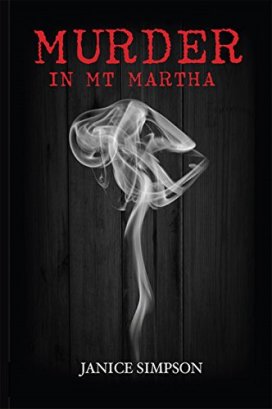 Simpson keeps Szabo blissfully unaware that Arthur Boyle is a relative of Ern Kavanagh. Arthur only recalls him in fits and starts, believing that he was his uncle, but Simpson lets us into the secret as she describes Ern’s life over half a century earlier. The book opens with a graphic description of the brutal murder of an innocent teenager whose parents have reluctantly allowed her to travel alone to her first party. There is never any doubt in our minds that Ern Kavanagh killed the girl, but we are kept on a knife-edge of not knowing if he will get away with the murder.
I have to declare an interest and say that I lived and worked in Melbourne back in the day, and so the minutiae of suburban life, particularly the way people spoke, the obsession with horse-racing and, of course, the ‘footy’, struck a chord with me. I would like to think, however, that readers who have never been within a thousand miles of Australia will be convinced and drawn in by Simpson’s superb writing.
Aside from the murder mystery, there is a beguiling sub-plot involving Szabo, his determinedly Hungarian grandmother, and a visitor from Budapest who may be about to turn on its head their conception about their family tree. Again, history is embedded in the narrative. In 1956, when Melbourne hosted the Olympic Games, there was international turmoil when 48 Hungarian athletes chose not to return home. ‘Home’ was, of course, suffering under the brutal Soviet repression of a national uprising against communist rule.
The writing is beautifully nuanced throughout. The dialogue, whether it is contemporary or taking place in a suburban 1950s kitchen, zings with authenticity. This is not a long novel, being just short of 300 pages, but it is one that hooked me in very quickly, and I was genuinely sad to reach the end. That being said, there are few crime novels whose structure and substance allow them to be read through again at a later date, but I suspect that is one such novel.
Without, I hope, spoiling the conclusion to this remarkable book, it might be said that justice was eventually done, albeit in a roundabout sort of way. But then again, the last hanging in the state of Victoria was in 1967; depending on one’s views of capital punishment, a convincing argument could be therefore made that justice was not only blind, but bereft of its other senses too.
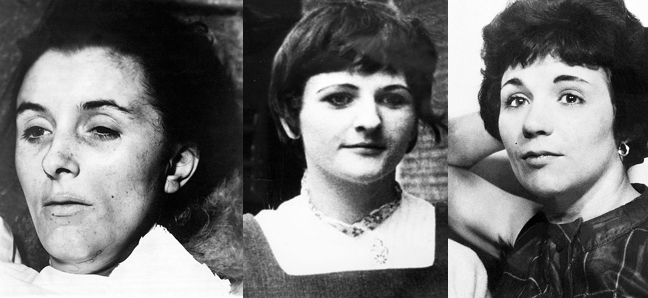
 Goodbye Piccadilly, Farewell Leicester Square (Anthony LeBern, 1966) is very loosely based on the Hammersmith Murders, and was later filmed as Frenzy (with many changes) by Alfred Hitchcock in 1972. The book title comes, of course, from the celebrated song It’s A Long Way To Tipperary.
 Bad Penny Blues (Cathi Unsworth, 2009) sticks much closer to the original events, and features several thinly disguised real-life celebrities of the time, including the artist Pauline Boty, David ‘Screaming Lord’ Sutch, Joe Meek, crooner Michael Holliday, and ex-boxer and TV personality Freddie Mills (pictured below). The connection to the crimes is provided by a young copper who is drawn into the circle of Notting Hill artists and bohemians while his day job is to try and find the killer.
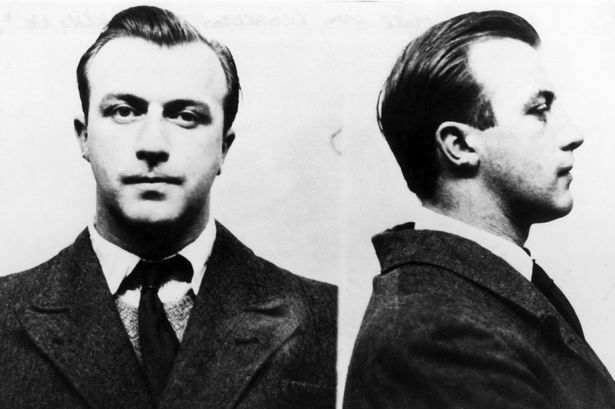


 March 1966. Cornell (right) was having a quiet drink in The Blind Beggar pub, well inside Kray territory on Whitechapel Road, when Ronnie walked in and put a bullet from a 9mm Luger into his head. Needless to say, none of the bar staff or other customers saw a single thing. Kray was eventually convicted of the murder when a barmaid, aware that Ronnie was already safely under lock and key for other misdeeds, testified that she had witnessed the killing.
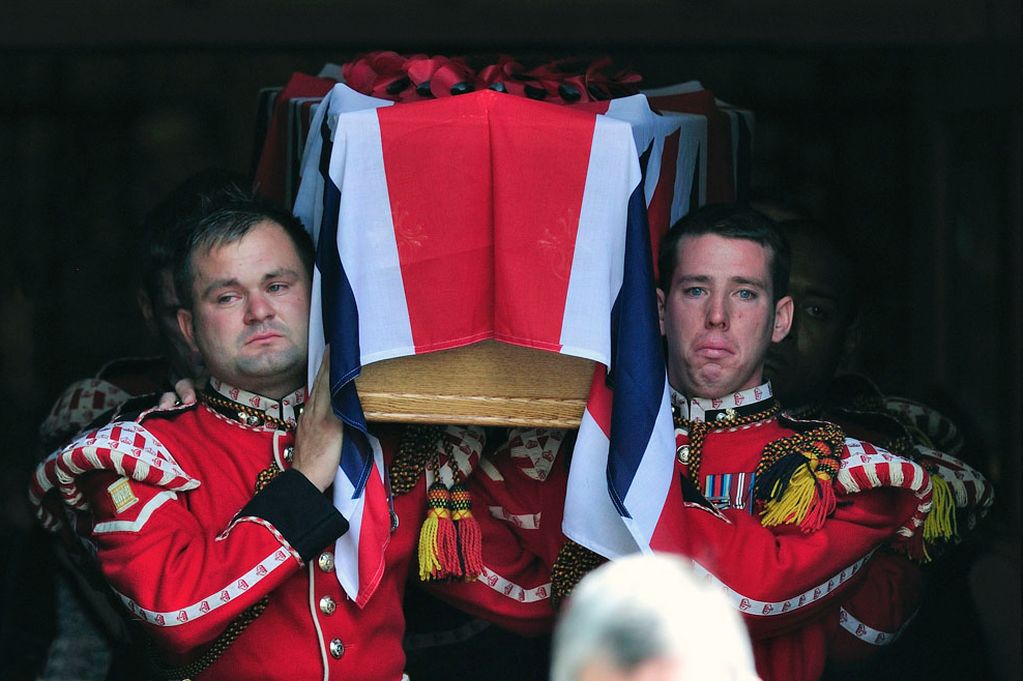
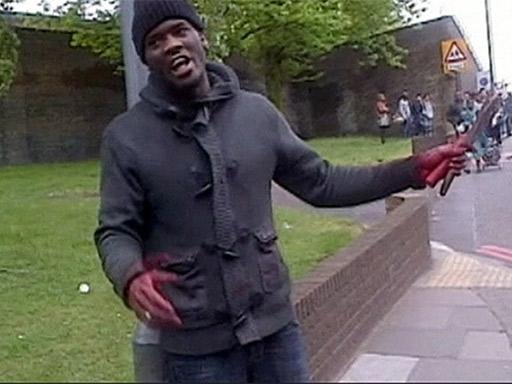
 Such a crime took place on a calm May afternoon in 2013. The place? A nondescript suburban street in south-east London. The victim? A 25 year-old soldier, in civilian clothes, returning to his Woolwich barracks after a spell of ceremonial duty at The Tower of London.

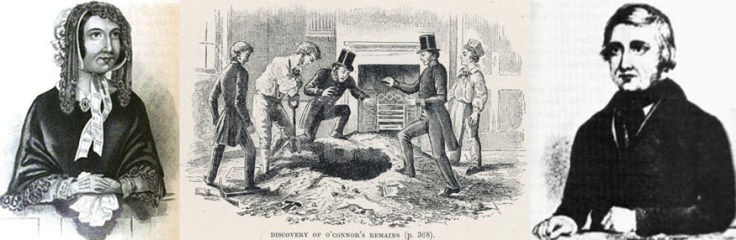 This is the tale of a ghastly pair of opportunists in Victorian London. Frederick Manning turned a blind eye to his wife, Marie, while she dispensed her favours to a rich customs official, Patrick O’Connor. The pair prepared a grave for him under their kitchen floor, and having murdered him, tried to escape with all his money. Inevitably, they were caught, and provided yet another job for William Calcraft, the Lord High Executioner.
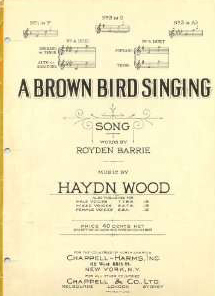 The sounds and sweet airs might have been provided by Haydn Woods’ A Brown Bird Singing or, if you were more disposed towards the art of Edith Sitwell, William Walton’s setting of her poetry – Façade. The discordant sounds of the thousand twangling instruments could have come from several sources; possibly the thousands of impoverished ex-servicemen sold short by the country they had fought for; perhaps, however, the isle which was most full of noises was that of Ireland, and in particular the newly formed Irish Republic.
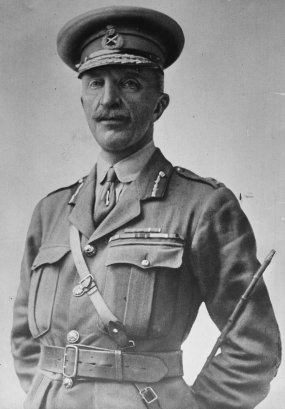 Sir Henry Wilson was a former General in the British Army, and his contribution to events in The Great War divides opinion. Some have him firmly in the ‘Butchers and Bunglers’ camp, a stereotypical Brass Hat who send brave men off into battle to meet red hot shards of flying steel with their own mortal flesh. Others will say that he was part of the combined military effort which defeated Germany in the field, and led to the surrender in the railway carriage at Compiègne in 1918. Whatever the truth, Wilson was never a field commander. He was much more at home well behind the front line, hobnobbing with politicians and strategists.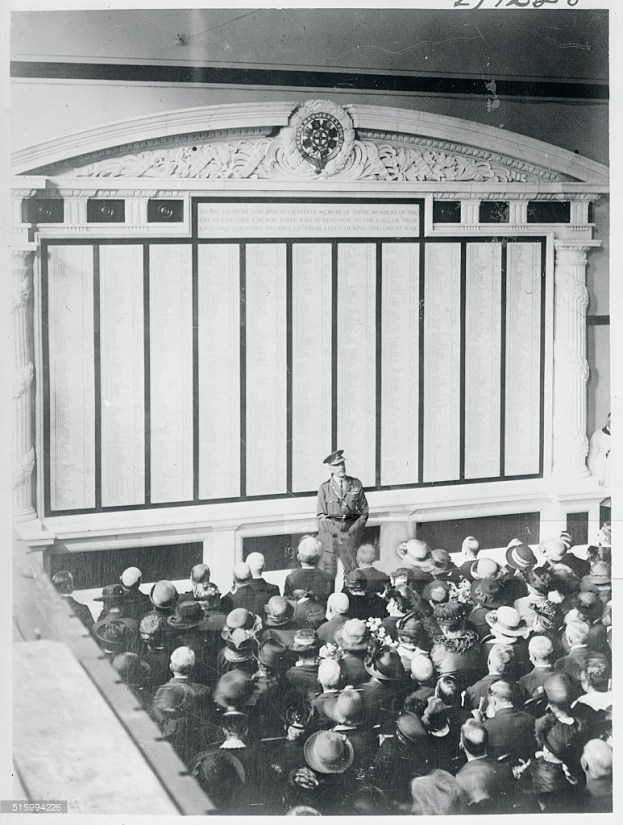

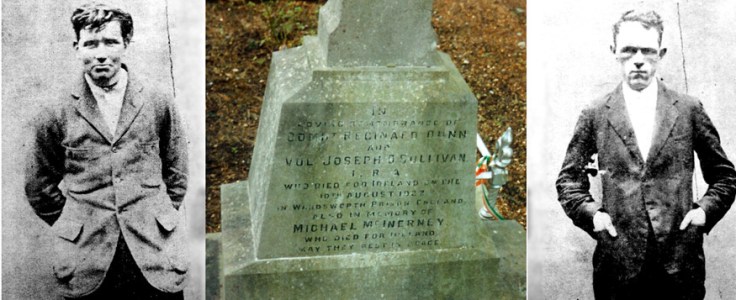

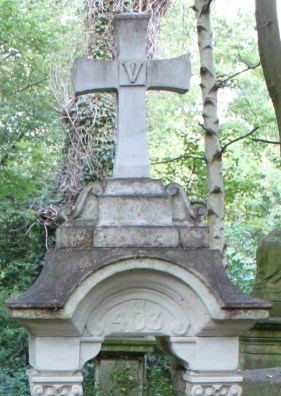
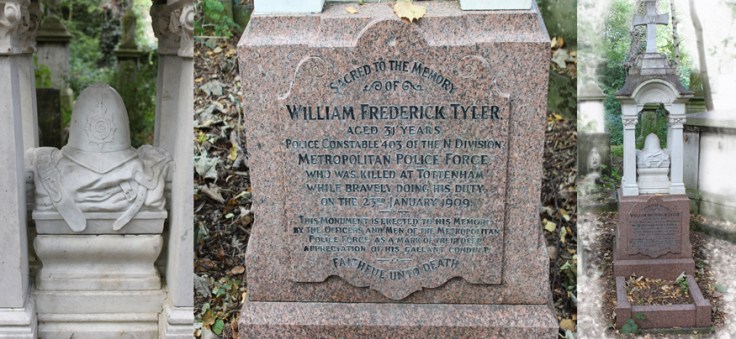


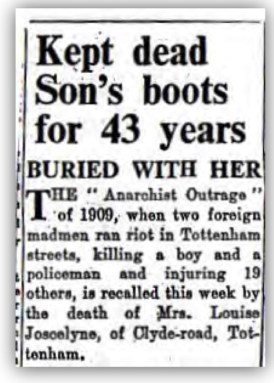 Ralph Joscelyne’s mother, Louise, was to raise another seven children, but she kept the pair of boots Ralph was wearing on the day he was killed. When she died in 1952, the boots were buried with her. In more recent times, both Joscelyne and Tyler have been commemorated. WIlliam Tyler has a plaque on the wall of Tottenham police station, while Ralph Joscelyne is remembered in a memorial outside a church in Mitchley Road. There is an abiding irony that the corner of Tottenham where the robbery occurred and the resultant chase began is exactly where the catastrophic riots of 2011 started. An initially peaceful protest by relatives of Mark Duggan, a gangster shot by police, did not get the required response from officers within the police station. It then, as they say, “all kicked off.”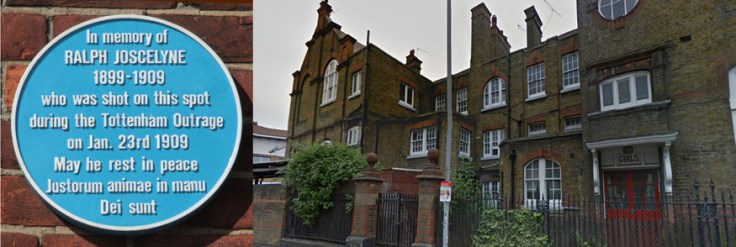

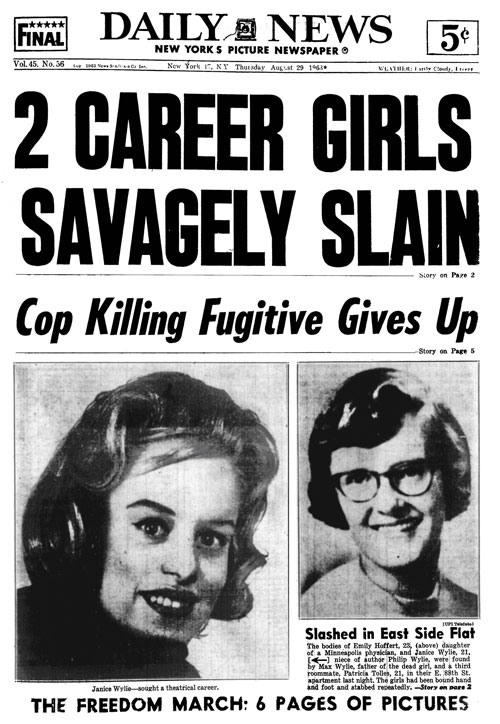
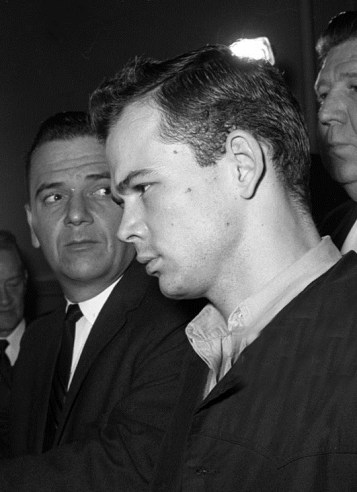 Yet, Mel Glass, a young Assistant District Attorney in Manhattan, not even assigned to the Homicide Bureau, was troubled by the investigation. With the blessing from legendary District Attorney, Frank Hogan, Glass tirelessly immersed himself in the case. So began an epic quest for justice, culminating in a courtroom showdown in which the Brooklyn arresting and interrogating cops refused to admit their flagrant missteps, providing a complete defense to the actual career criminal, vicious predator, murderer, Richard Robles.(pictured right)
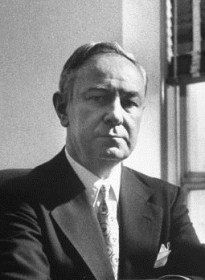 Important to note that District Attorney Hogan (left) was truly a legend long before Wylie-Hoffert occurred. Once convinced that Mel Glass’ gut-instincts and subsequent investigation was legitimate and that George Whitmore, Jr., was wrongfully indicted for the most gruesome and sensationalized double-rape murders in the media’s radar, Mr. Hogan was prepared to admit his mistake, possibly fracture his career’s reputation, and exonerate an impoverished young man with a very low I.Q. And why? Simply and manifestly because it was right, justice demanded it.
 Angeles and defended Amy Grossberg in her sensationalized baby death case. He was Assistant District Attorney in New York County in the office of legendary District Attorney Frank Hogan, where he ran the Homicide Bureau, served as Chief of the Criminal Courts, and was in charge of the DA’s legal staff training program. He served as Deputy Chief counsel for the Congressional Committee investigation into the assassinations of President John F. Kennedy and the Rev. Dr. Martin Luther King, Jr. He also served two terms as mayor of Beverly Hills and taught Advanced Criminal Procedure for four years at Boalt Hall School of Law, University of California, Berkeley, and has conducted continuing legal education (CLE) seminars for practicing lawyers in California, New York, and Pennsylvania. Born in Brooklyn, New York, Tanenbaum attended the University of California at Berkeley on a basketball scholarship, where he earned a B.A. He received his law degree (J.D.) from Boalt Hall School of Law at the University of California, Berkeley. For more information, please visit


 fullybooked2017