 Nick Fennimore is a forensic psychologist, and a Professor at the University of Aberdeen. His past gives him a painful and heartfelt stake in the hunt for a serial killer, as his own wife and child were snatched. Both are now lost to him; wife Rachel, because her body was found shortly after the abduction., and daughter Suzie – well, she is just lost. Neither sight nor sound of her has been sensed in the intervening years, but Fennimore clutches at the straw of her still being alive, and he feverishly scans his own personal CCTV footage of the Paris streets and boulevards in the hope of catching a glimpse of her.
Fennimore has an uneasy relationship with DI Kate Simms, a senior police officer now working in Manchester. They too have a past, but Kate is unhappily married to Keiron, an ambitious schoolteacher who seems more concerned with his own professional advancement than keeping their marriage alive. Keiron may have a justifiable grievance, as Kate has only just returned from a high profile secondment to America, while he has been left to keep the home fires burning, and their two children fed and watered.
Julia Myers and her six year-old daughter Lauren have been taken, perhaps by the same killer who inflicted such trauma on Fennimore. Just as in the Fennimore abduction, the mother – Julia – turns up dead, but where is the daughter? We have the occasional chapter narrated in Lauren’s voice, and Garrett captures her intensity, bafflement and frustration perfectly.
Fennimore has been pursued by a persistent Essex reporter, Carl Lazko, who wants to make a headline-grabbing story out of the wreckage of Fennimore’s personal life, in addition to mounting a campaign to prove that a man called Graham Mitchell is innocent of a murder which has no connection with Fennimore but has all the hallmarks of the academic’s family tragedy.
Josh Brown is a research assistant to Fennimore and as part of his campaign to get the academic on-side, Lazko reveals that Josh is on a witness protection programme and is a member of a notorious Essex crime family. Josh has turned Queen’s Evidence, thus indicting several close family members, hence his new life and new identity. When they appear, in the later part of the book, Josh’s family – his brothers, no less – are chillingly depicted as murderous and callous hooligans. As a Briton, I do sometimes ask the question, “What is it about Essex?” That I fully expected the vindictive brothers to be thoroughly odious probably tells its own story. As I write, I can tell you that there is currently a pressure group working hard to force the removal of the term ‘Essex Girl’ from a popular and inclusive dictionary.

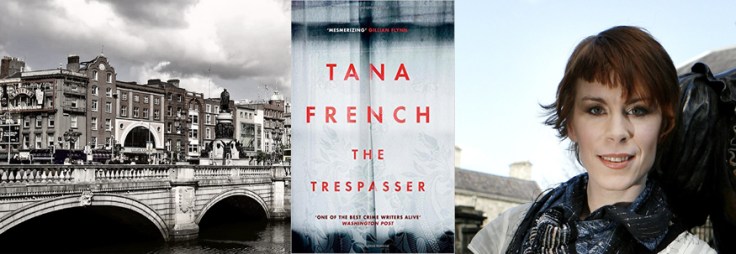
A.D. Garrett is the pseudonym for prize-winning novelist Margaret Murphy (above left), working in consultation with policing and forensics expert, Helen Pepper (above right). I found their latest novel well-paced and accurately researched with intense scientific detail, as one would expect from a novel co-authored by a scientist. My only criticism is that the abduction case is eventually solved in a very dramatic fashion, and this was a master-class in how an author should bring a plot to a thrilling – and bloodstained – conclusion. But then, just as we – that’s you and me, the readers – are calming down after a thrilling denouement, the authors decided to wrap up Fennimore’s own personal obsession – the whereabouts of his daughter. This is done at 110 mph, in very few pages, and I felt that it could easily have been left to another day and another novel, to allow its dramatic potential to be fully exploited.
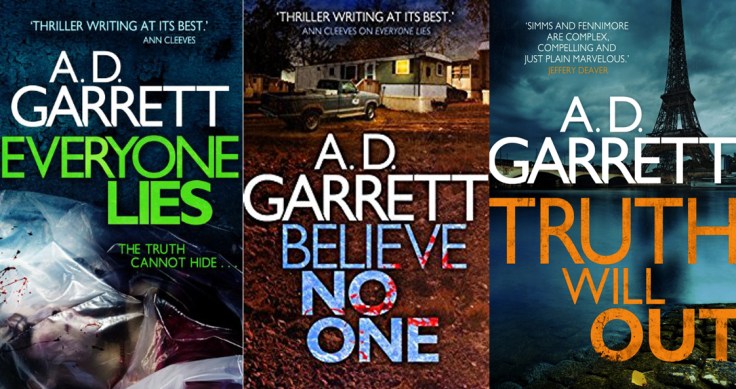
The two previous books in the series are Everyone Lies (2013) and Believe No One (2014). Truth Will Out will be available from 3rd November in hardback and Kindle, with a paperback version promised for early 2017. The novels are published by Corsair, which is an imprint of the Little Brown Group.

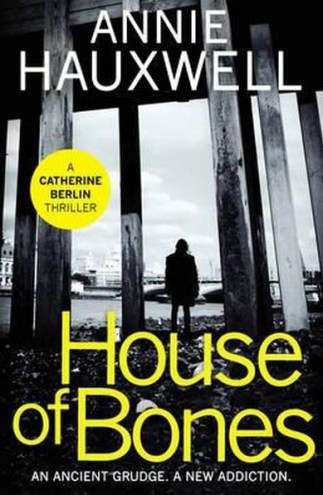 It’s always fun to come late to an established series that has many established followers, if only to see what all the fuss is about. I had covered Catherine Berlin in writing brief news grabs, but House of Bones was to be my first proper read. There is a wonderfully funereal atmosphere throughout the book. Sometimes this is literal, as at the beginning:

 and Selena’s qualifications as a psychologist made them the go-to people for corporations and wealthy families who had fallen foul of the highly lucrative business of international kidnapping. But then, on a blisteringly hot morning in Brasilia, it all went badly wrong. Selena went shopping for children’s toys prior to her addressing a meeting of fellow professionals in the afternoon. While she was selecting gifts for their little daughters, the bad guys attacked the hotel and conference centre, shooting, bombing and delivering a stark message. “You may think you are smarter than us, but look at the body count, and then tell us how clever you are.”
 One of the many delights of this excellent novel is that Finna Hale and Leah Mackay are brother and sister. Finn has leap-frogged his sister in the promotion stakes, despite her evident superiority – evident, that is, to us readers, but not the local constabulary personnel department. Kavanagh plays the relationship between the siblings with the touch of a concert violinist. There are all manner of clever nuances and deft little touches which enhance the narrative.

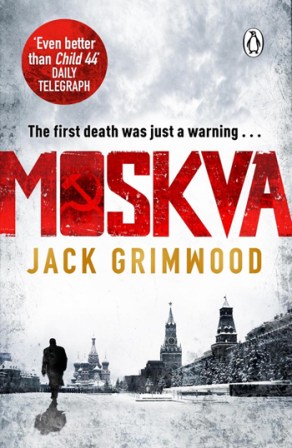 Jack Grimwood’s Moskva sets out to convince us that there is room for one more tale of conflicted lives in a modern Russia full of paradox and uncertainty. The book came out in hardback earlier this year, and is now available in paperback, from Penguin. Does Grimwood, who made his name writing science fiction and fantasy novels, hit the spot?
 The breadth of this novel in terms of time sometimes makes it hard to work out who has done what to whom. Patience – and a spot of back-tracking – will pay dividends, however, and the narrative provides a salutary reminder of the sheer magnitude of the numbers of Russian dead in WWII, and the resultant near-psychosis about The West. To top-and-tail this review and answer the earlier question as to whether Jack Grimwood (right) “hits the spot”, I can give a resounding “Yes!”. Yes, the plot is complex, and yes, you will need your wits about you, but yes, it’s a riveting read; yes, Tom Fox is a flawed but engaging central character, and yes, Grimwood has sharp-elbowed his way into the line-up of novelists who have written convincing crime novels set in the enigma that is Russia.


 This, then, is the England of Handel and Hogarth (at least he was English) and the looming threat from the Jacobites north of the border. Author Robin Blake, (left) however resists the easy win of setting his story in the bustle of London. Instead, he takes us to the town of Preston, sitting on the banks of the River Ribble in Lancashire.
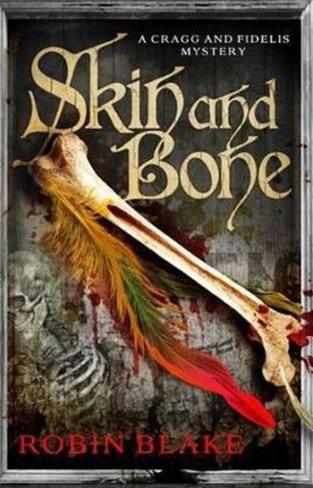 The investigations carried out by Cragg and Fidelis reveal a growing schism between the tanners and the wealthy men of property who run the town’s affairs. The leather workers are an inward looking community. This state is mostly driven by the fact that they live and work alongside the noisome waste materials – mostly faeces and urine – which are essential to the tanning process, and therefore most local people literally turn up their noses at the tanners. The burgesses and council-men of Preston, on the other hand, have their eyes on what they believe to be an acre or so of valuable land – ripe for redevelopment – currently occupied by the tannery.
 Philip Kerr’s Bernie Gunther novels bestride the 20th century, from the rise of the Nazis in 1930s Germany to the post war period when many countries still sheltered mysterious German gentlemen whose collective past has been, of necessity, reinvented. Gunther is a smart talking, smart thinking policeman who has kept his sanity intact – but his conscience rather less so – by dealing with such elemental forces as Reinhardt Heydrich, Joseph Goebbels, Juan and Evita Peron, and Adolf Eichmann.
 A Man Without Breath (2013) sees Gunther is working for an organisation whose very existence may seem improbable, given the historical context, but Die Wehrmacht Untersuchungsstelle (Wehrmacht Bureau of War Crimes) was set up in 1939 and continued its work until 1945. In 1943, on a mission from the Minister for Propaganda, Joseph Goebbels, Gunther is sent to Smolensk and entrusted with proving that the thousands of corpses lying frozen beneath the trees of the nearby Katyn Forest are those of Polish army officers and intellectuals murdered by the Russian NKVD, and not those of Jews murdered by the SS.
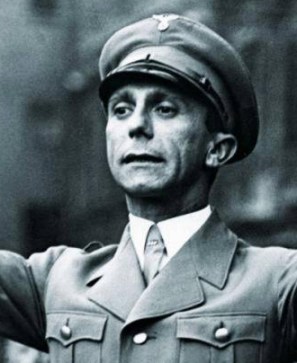 the German military that Hitler is a dangerous upstart who has already damaged the country beyond repair, and must be stopped. Adrift on a sea of violent corruption, Gunther constantly plays the role of the decent man, but in the end, he follows one theology, and one theology only. If he wakes up the next day with his head firmly attached to his shoulders, and has feeling in his extremities, then he has done the right thing. His conscience has not died, but it is far from well; it competes a whole chorale of competing voices in his head, each wishing to be heard. As he is left helpless by the world of spin and disinformation orchestrated by Dr Goebbels, (right) he must resort to his basic copper’s instincts to protect himself and uncover the truth.
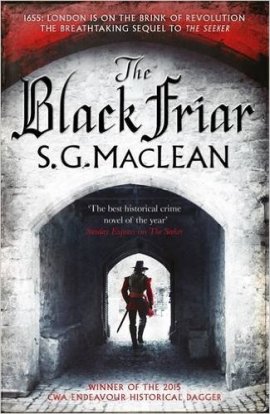 Shona MacLean opens the door of her time machine and takes us to the city of London in the third year of Oliver Cromwell’s Protectorate, 1655. It is almost exactly six years since the severed head of King Charles was shown to the crowd around the scaffold in Whitehall, but Cromwell’s England is still a troubled place. There are still pockets of secret Royalist sympathy up and down the land, and the dead king’s son is in exile, waiting his moment to return.
 MacLean (right) has great fun with prominent real-life characters who would certainly have been involved in affairs of state at the time. We have a nicely imagined Andrew Marvell, the poet best known for his erotic supplication To His Coy Mistress, and a walk on part for Samuel Pepys. The great diarist is merely a clerk at The Exchequer, but his later reputation as a serial seducer of young women is hinted at. We see the spymaster John Thurloe apparently at death’s door with some unspecified illness, but in real life he was to survive the restoration of the monarchy, and died peacefully in his bed in 1668.