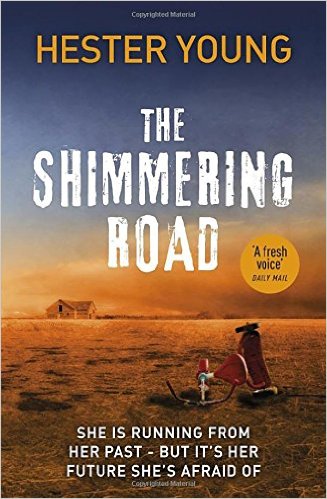
Charlotte ‘Charlie’ Cates has plenty of experience in holding the shitty end of life’s stick. Her childhood was scarred with rejection and loss and , talking of loss, the sudden death of her son the previous summer has proved to her that while fate can take, it can also take some more. But now, circumstances have partnered her in a bewildering kind of dance; she has given up her job as a journalist on a sleek New York magazine; she has a new partner, a rough and tumble Mr Nice Guy from Sidalie, Texas, who, in addition to running a very successful landscaping firm, is ridiculously rich. Charlie is also 32 weeks pregnant, albeit accidentally, with a baby daughter for her and Noah Palmer.
 Then, as Noah is trying to tempt Charlie into marrying him, and agree to their moving into a luxurious new home, comes the ‘phone call which triggers the enthralling next chapter in Charlie’s life. She takes a call from a distant aunt, and the news is that Charlie’s estranged mother Donna, and her half sister Jasmine, have been found shot dead in Jasmine’s Tucson apartment. There is another complication. Jasmine’s daughter Micky was also in the apartment but in another room. She is shaken, but very much alive, and has been taken into protective care.
So, Charlie and Noah head off to Arizona to try to make sense of the shattered family that Charlie hardly knew she still had. They meet, in no particular order, the strangely savant Micky, Donna’s lesbian lover, Jasmine’s cop boyfriend, and an apparently saintly woman who runs a refuge for battered women. What follows is a brilliantly plotted journey into the murky world of USA-Mexican social politics and the disturbing lengths which people will go to in order to have children, when nature has ordained that it simply ain’t gonna happen.
For the book to burn on full heat, you have to accept that Charlie Cates is, to an extent, governed by what could be dreams, or maybe fleeting out-of-body experiences. Charlie confides:
“My dreams are not like other people’s. They show me things.”
She has a terrifying recurring nightmare which involves her – and her unborn daughter – being shot dead while taking a shower. At other times she meets, on this spectral level, other key characters in the story. Some of them are alive, but some of them are dead. Personally, I have no problem with this. Two of my favourite writers, John Connolly with his doom laden PI Charlie Parker, and Phil Rickman with his delightful-but-slightly-scary Merrily Watkins, both take thrilling liberties with our working hypothesis that The Dead are dead and The Living are living.
Hester Young writes like an angel, even if that celestial being has a distinctly dark tinge to its wings. There are sharp observations on some of the absurdities of the American way of life. This is a Texan realtor (estate agent to us Brits):
“Brandi Babcock may possess the name of a porn star, but she has the body of a butternut squash, a solid top that flares out into an epically large backside.”
 The greatest strength of the book is the magical spell Hester Young (right) casts as she links the reader to Charlie Cates. As a cynical, autumnal English male, with a downbeat view of life and the tricks it can play, I am not the obvious candidate to be entranced by a slightly manic, conflicted and complex American female journalist, but by the time the novel reached its gripping conclusion in the Arizona desert, I was ready to crawl over broken glass to make sure that Charlie survived with body and soul intact. Hester Young slaps a winning hand down on the green baize table – dry humour, suspense, atmosphere, superb characterisation – and deservedly rakes in all the chips.
The Shimmering Road is out now in Kindle and paperback format.



 The remains of Daniel Cardozo are hauled off to the city morgue to join those of several of his professional associates who have met a similar fate in recent months. Penley and his new partner Detective Paula Newberry know only that the killer is also a butcher, perhaps not by trade, but certainly by intent. They also become aware that the human remains are minus their soft tissue organs – hearts, livers, kidneys.
 The author (right) certainly knows his way around the American justice system, with his background in probation, parole, investigation and prison operation. An experienced Associate Warden, Chief of Institution Operations, Hostage Negotiator and Director of Parole, he has also done extensive homework on the medical background to the complex world of organ donation and transplants. The plot rattles along with scarcely a breath being drawn, and in Penley and Newberry, L’Etoile has created a partnership which is complex and attractive enough to feature in more adventures further down the line.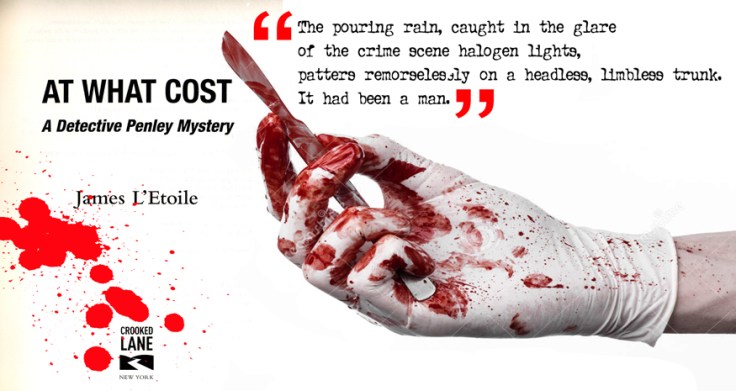


 Inspector Kosuke Iwata’s personal life is as scarred and trauma-ridden as the human tragedies he faces daily as a member of the Homicide division of the Tokyo Municipal Police Department. He was abandoned by his mother in a bus station when he was a child, but has become partly Americanised since she reappeared, now married to a prosperous US citizen, to reclaim him. In the intervening years, Iwata grew up in a Catholic orphanage, and his sleep is frequently disturbed by fretful dreams of those days, with the voices of both his disturbed best friend, as well as the abusive head of the institution, forever whispering in his ear.
 This a superb novel and goes way beyond the restraints and conventions of crime fiction. In his afterword, Obregón says of Iwata:


 Not the least of Eva Dolan’s achievements in this remarkable novel is to pinpoint with painful accuracy and honesty what happens to children and wives when a father – originally Colin Sawyer – decides to abandon the male role and become a woman. Even after the nightmare scene where Sawyer’s daughters come back to the house unexpectedly, and find their father en femme at the sink, doing the dishes, Jessica and Lily have come to think of their dad as ‘mum’. The pain that this must cause a biological mother in this situation can only be imagined, and it is interesting that Nina Sawyer is drawn as a fairly unpleasant piece of work.
 Aside from the nuanced description of gender politics and psychological challenges faced by the characters in this novel, we have to ask the burning question. Does Watch Her Disappear work as a crime story? My answer is a resounding and emphatc ‘Yes”. The whodunnit aspect of the story is teasingly effective, with Dolan (right) scattering little hints, false leads and blind alleys in her wake as she races along ahead of us. Crime fiction is full almost to the brim with Detective Inspectors and their trusty Sergeants, but Dolan breathes on those particular embers and makes them fire up afresh in the shape of Detective Inspector Dushan Zigic and Detective Sergeant Mel Ferreira of the Hate Crimes Unit. The neat twist is, of course, that both Zigic and Ferreira are themselves children of immigrants, and the chemistry between the two is potent and complex.

 Being as this book is, in one sense, a police procedural, an introduction to the investigating officers is essential. Detective Sergeant Karen Willis is an elegant and well educated woman, whose personal life is complex. She is courted by two suitors; the first, Dr Peter Collins, is a consultant psychologist who, although undeniably clever, may not be entirely of sound mind himself, as he is prone to nervous attacks. When with Karen, he also tends to drop into a Lord Peter Wimsey persona and, yes, he does insist on calling Karen “Harriet”. The other claimant to the hand of Willis is Detective Inspector Bob Metcalfe, a much more grounded fellow who certainly does not mimic characters from Golden Age fiction. In fact, he could be said to be very worthy, but rather dull. Overseeing the investigations is Detective Superintendent Simon Collison, an urbane and civilised man who is regarded with a certain suspicion by more belt-and-braces officers such as Chief Inspector Tom Allen. One stock police character who is very much noticeable by his absence is a badly dressed, misanthropic and foul mouthed Detective Inspector type, much loved of many crime authors. If any such person did operate out of Hampstead nick, he must long ago have been transferred elsewhere.

 The town of Kiewarra is a dusty five hour drive from Melbourne. Five hours. Six, maybe, if you weren’t that anxious to get there. Five hours, under the same relentless sun, but it might as well be fifty, for all the similarity there is. Melbourne, with its prosperity, its glass and steel central business district, its internationally renowned restaurants and its louche air as a cosmopolitan city. Kiewarra. A pub, a couple of bottle shops and a milk bar; a run-down school, starved of funds; a farming economy choked and parched by two years without rain; families turned bitter and taciturn by the shared misery of failed crops and burgeoning overdrafts. Author Jane Harper (left) takes us right into the deep dark blue centre of this community.
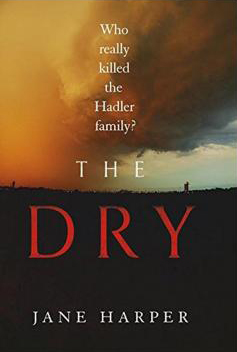 Seeing the coffin of a contemporary being carried through the church is bad enough for Falk, but when it is followed by two smaller ones, one being very much smaller, that is a different thing altogether. For the other two coffins are occupied by Hadler’s wife Karen, and his young son Billy. The story has played out across the mainstream media as a suicide-killing. Luke Hadler, driven mad by debt, failure, jealousy, despair – who knows? – has shot dead his wife and son, and then turned the gun on himself, albeit leaving his thirteen month old daughter Charlotte in her cot, screaming, terrified, but very much alive.

 So, Waits plays a dangerous double game which involves being undercover yet in full view. This paradox is essential. Obviously drug lord Zain Carver will know that Waits is a suspended copper; the deception will only work if Waits can convince the gangster that he is prepared to damage his former employers with leaked information. It requires no acting ability whatsoever for Waits to appear dissolute, addicted and troubled – that is his normal persona. However, a big problem looms. A rich and influential Member of Parliament has “lost” his teenage daughter. Isabelle Rossitter is one of the satellites fizzing around the planet Carver. Daddy is desperate to get her back, and Waits is given the task.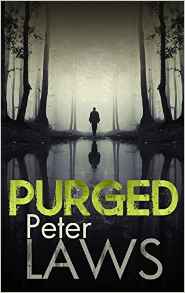
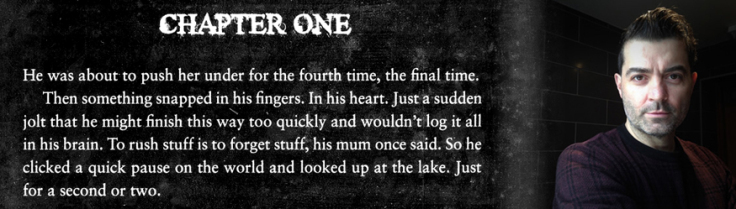
 Ordained Baptist minister Peter Laws (right) has produced a 110mph debut crime thriller featuring Matt Hunter, a former clergyman and now devout sceptic who, like most fictional crime consultants, has special skills which make him invaluable to the police in murder cases. I don’t know if Laws has himself gone down the same Road to Damascus In Reverse as his fictional character, but the depth and bitterness of Hunter’s scepticism about God and all His works certainly makes for compelling reading.
 First, an anorexic teenage girl goes missing, and then a lesbian artist who is in the terminal throes of stomach cancer disappears. Matt Hunter is sucked into the investigation via the simple ruse that photos of the missing women turn up as attachments in his email box. They stay there for a few hours but then mysteriously morph into pictures of a rainbow accompanied by a smiley face GIF.
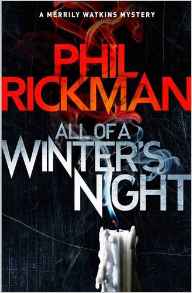

 All Of A Winter’s Night is the latest episode in the turbulent career of the Reverend Merrily Watkins. Her philandering husband long since dead in a catastrophic road accident, Merrily has a daughter to raise and a living to make. Her living has a day job and also what she refers to as her ‘night job’. She is Vicar of the Herefordshire village of Ledwardine, but also the diocesan Deliverance Consultant. That lofty term is longhand for what the tabloids might call “exorcist”. If you are new to the series, you could do worse than follow the link to our readers’ guide to


 fullybooked2017