

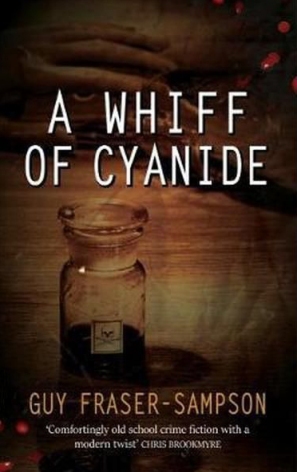
 Readers of the two previous books in the Hampstead Murders series, Death In Profile and Miss Christie Regrets, will know what to expect, but for readers new to the novels here is a Bluffers’ Guide. The stories are set in modern day Hampstead, a very select and expensive district of London. The police officers involved are, principally, Detective Superintendent Simon Collison, a civilised and gentlemanly type who, despite his charm and urbanity, is reluctant to climb the promotion ladder which is presented to him. Detective Sergeant Karen Willis is, likewise, of finishing school material, but also a very good copper with – as we are often reminded – legs to die for. She is in love, but not exclusively, with Detective Inspector Bob Metcalfe, a decent sort with a heart of gold. If he were operating back in the Bulldog Drummond era he would certainly have a lantern jaw and blue eyes that could be steely, or twinkle with kindness as circumstances dictate.
Not a police officer as such, but frequently the giver of expert advice is Dr Peter Collins, who is le troisième in the ménage of which Karen Willis and Bob Metcalfe make up le premier and le deuxième. In another era, Collins would be described as ‘highly strung’. His sensitivities sometimes lead him to believe that he is Lord Peter Wimsey – and that Willis is Harriet Vane – but this eccentricity aside, he frequently has insights into murder cases which remain hidden to his more workaday colleagues.
The plot? With such delightful characters, it is almost a case of “who cares?”, but we do have an intriguing story. At a crime writers’ convention in a London hotel the Dowager Duchess of English crime novels, Ann Durham, is far from happy. For the first time in recent memory, her position as Chair of The Crime Writers’ Association is being challenged – disgracefully, she feels – by upstarts who have been churlish enough to ask for a democratic vote.
As the luminaries assemble for pre-dinner drinks, Durham takes an elegant sip of her gin and tonic, utters a dramatic shriek – and falls down dead. Peter Collins is a dinner guest, due to his authorship of a forthcoming book on The Golden Age of Crime Fiction. His partner for the evening is, naturally, Karen Willis, and with Ann Durham lying dead on the floor, her police training kicks in and she soon has the scene secured.
 Collison, Metcalfe, Willis and Collins have an ever lengthening list of questions to be answered. Why was Ann Durham brandishing a bottle of cyanide as she presided over one of the convention panels? Who actually wrote her most popular – and best selling – series of novels? Fraser-Sampson (right) spins a beautiful yarn here, with regular nods to The Golden Age during a convincing account of modern police procedure. Not only is the crime eventually solved, but he provides us with a delightful solution to the Willis – Metcalfe – Collins love triangle.
Not the least of the many delights to be found in this novel is the author’s sardonic wit. His take on the whole crime writers’ festival ambience will strike a chord with many who attend such events. He arranges several distinct characters on his canvas: busy PR types – perhaps upper class gels with a humanities degree – bob and weave among the notables, gushing about this and that; we have La Grande Dame, the celebrated author with millions in the bank who disdains to rub shoulders with the hoi poloi; she is drawn in stark contrast with writers who are hungry for success and are only too happy to meet and greet the punters if it will sell a few books. Fraser-Sampson fires one or two deadly accurate arrows, but my favourite was this barb from one of the characters:
“I expect half the writers of this Nordic Noir stuff actually have names like Smith or Higginbotham and live in ghastly places like Watford or Cleethorpes. Publishers are funny like that, you see ……. if you can tick the Nordic Noir box, they know exactly which neat little compartment to fit you into and in all their marketing blurb they can call you the next Jo Nesbo.”
Some people might view books like this as a guilty pleasure, but guess what? I loved every page of it, and I sleep soundly at night with not even a wisp of guilt to darken my contentment. A Whiff of Cyanide is published by Urbane Publications, and you can check purchase options here. While you are in the mood, why not read our review of an earlier novel in the series, Miss Christie Regrets



 Now, Thorne becomes involved in another kind of hell on earth, and one where all absent devils have been called home, all leave cancelled, and any recently retired fallen angels pressed back into duty. The fires stoked in this particular hellish pit illuminate the ghastly world inhabited by some British Asian communities who sanction murder in the name of their warped concept of family honour. Among the ghosts which inhabit the darker parts of Thorne’s memory is that of Meena Athwal. She was killed, he is certain, at the behest of her family, but her death remains unavenged in a court of justice.


 Perhaps the world has shrunk, or maybe it is that organised crime, like politics, has gone global, but more recent British mobsters have become bigger and, because we can hardly say “better”, perhaps “more formidable” might be a better choice of words. No-one typifies this new breed of gang boss than John “Goldfinger” Palmer. His name is hardly on the tip of everyone’s tongues, but as this new book from Wensley Clarkson shows, Palmer’s misdeeds were epic and definitely world class.
 Meanwhile, Palmer had not been idle, at least in the sense of criminality. He had set up in the timeshare business, perpetrating what was later proved to be a massive scam. When he was eventually brought to justice, it was alleged that he had swindled 20,000 people out of a staggering £30,000,000. In 2001 he was sentenced to eight years in jail, but his ill-gotten gains were never recovered.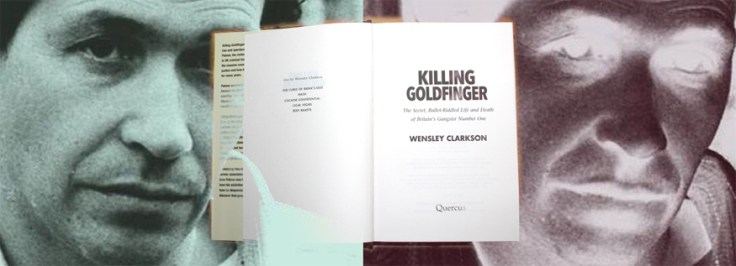
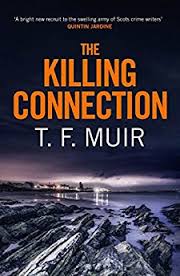
 The woman is eventually identified as Alice Hickson, a journalist, and the woman who provided the ID, a literary editor called Manikandan Lal, is flying home from holiday to give further background to her friend’s disappearance and death. ‘Kandi’ Lal fails to make her appointment with Gilchrist, however, and soon the police team realise that they may be hunting for a second victim of whoever killed Alice Hickson. Gilchrist’s partner, DS Jessie Janes has problems of own, which are become nagging distractions from her professional duties. As if it were not bad enough to learn that her junkie mother has been murdered by a family member, Jessie is faced with the heartbreaking task of explaining to her son that an operation to correct his deafness has been cancelled permanently.
 Detective Inspector characters have become a staple in British crime fiction, mainly because their position gives them a complete overview of what is usually a murder case, while also allowing them to “get their hands dirty” and provide us readers with action and excitement. So, the concept has become a genre within a genre, and there must be enough fictional DCIs and DIs to fill a conference hall. This said, the stories still need to be written well, and Frank Muir (right) has real pedigree. This latest book will disappoint neither Andy Gilchrist’s growing army of fans nor someone for whom reading The Killing Connection is by way of an introduction.
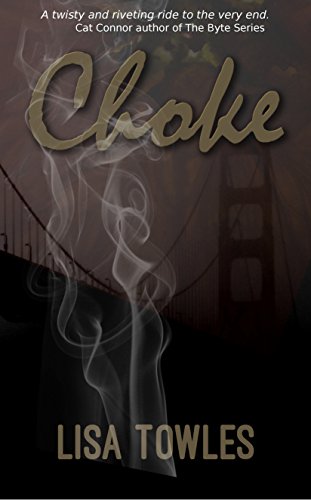

 Lisa Towles is over-cautious. Said no-one, ever. In this beguiling and occasionally confusing novel she has assembled the ingredients thus: a small cup of altered reality, two large helpings of global conspiracy, three spoonfuls of domestic noir, just a drizzle of romance, two apparently unconnected plot lines, some roughly chopped historical legend and, most importantly, a generous dash of finely ground medical thriller.
 Multinational pharmaceutical companies and the giants of the tobacco industry have not achieved their wealth and success through philanthropy, however, and when they learn about Calhoun’s discovery there is only one solution that will prevent them from taking a huge commercial hit, and that is to eliminate Calhoun and destroy all evidence of his research. While he and his colleague Grace Matson are pursued by hitmen, Kerry Stine’s nightmare becomes ever more vivid and violent. She is kidnapped and drugged. In her more lucid moments, myriad questions spin and whirl around her brain. Who is the woman chained next to her in the darkness of her prison cell? What happened in her childhood that was so traumatic that it shut down all subsequent recall?


 Thrill Kill is a brisk, no-nonsense police procedural thriller set amidst the hurley burley of Carnival season in New Orleans. Homicide cop Quentin ‘Q’ Archer sets out to bring to justice a serial killer whose calling card is a can of aerosol coolant – tradename ‘Chill’ – beside the bodies of his victims. Archer burns the midnight oil to solve the crime, but it is not the only thing on his mind. He is not a native of The Big Easy, but a displaced person from Detroit, where his police career became violently complex when his wife was mown down by a car, and Archer was forced to turn against his own family in a personal war against police corruption, drugs and racketeering.
 Don Bruns himself (right) is an interesting character. As well as the first book in the Quentin Archer series Casting Bones, he has written two other series, Caribbean and Stuff. He describes himself as “a musician, song writer, advertising guru, painter, cook, stand-up comic and novelist who has no idea what he wants to be when he grows up.” His music is mainstream country, but with a little twist of this and that to spice things up. You can hear


 It is the summer of 1939. In Germany, the bitter ashes which have been smouldering for two decades since the punitive reparations after Versailles have been fanned into flames, and the fire is set to spread across Europe. As Hitler prepares to march into Poland, in Britain the world carries on as normal, although few would know that this would be the last summer of peace for more than six years.
 Rachel Rhys (right) is nothing if not a skilled storyteller, but we should not be surprised as Dangerous Crossing is no debut novel. Under her real name, Tamar Cohen, she has written a string of best selling psychological thrillers. So, as the Orontes proceeds on its stately voyage to Australia, we share Lily Shepherd’s mixture of discomfort and amazement as she goes onshore to visit such exotic places as Pompeii, Cairo and Colombo. Rather after the fashion of a modern day Patricia Highsmith, Rhys has the main players gradually revealing their secrets to one another. The rack turns, one ratchet at a time, but so elegantly and cleverly are things concealed that the crime, when it does happen, is completely shocking and unexpected.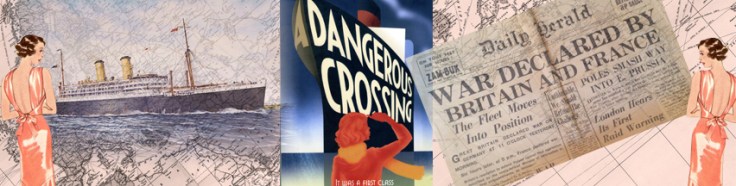

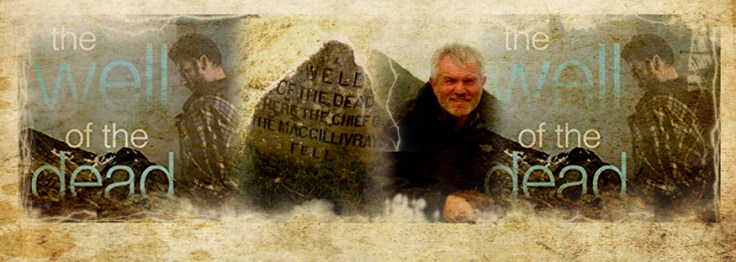
 In the icy Scottish dawn of 16th April 1746, the last battle to be fought on British soil was just hours away. The soldiers of the Hanoverian army of William Duke of Cumberland were shaking off their brandy-befuddled sleep, caused by extra rations to celebrate the Duke’s birthday. Just a mile or two distant, the massed ranks of the Scottish clans loyal to Charles Edward Stuart, the Young Pretender, were shivering in their plaid cloaks, wet and exhausted after an abortive night march to attack the enemy.
 The Well Of The Dead is a winning combination of several different elements. It’s a brisk and authentic police procedural, written by someone who clearly knows how a major enquiry works. For those who enjoy a costume drama with a dash of buried treasure, there is interest a-plenty. Military history buffs will admire the broad sweep of how Allan (right) describes the glorious failure that was the Jacobite rebellion, as well as being gripped by the detailed knowledge of the men who fought and died on that sleet-swept April day in 1746, bitter both in the grim weather conditions and what would prove to be a disastrous legacy for the Scottish Highlanders and their proud culture.

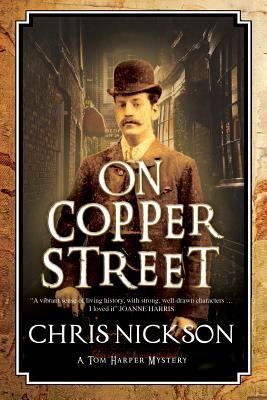 On Copper Street opens in grim fashion, with death and disfigurement. The dead pass in contrasting fashion. Socialist activist Tom Maguire dies in private misery, stricken by pneumonia and unattended by any of the working people whose status and condition he championed. The death of petty crook Henry White is more sudden, extremely violent, but equally final. Having only just been released from the forbidding depths of Armley Gaol, he is found on his bed with a fatal stab wound. If all this isn’t bad enough, two children working in a city bakery have been attacked by a man who threw acid in their faces. The girl will be marked for life, but at least she still has her sight. The last thing the poor lad saw – or ever will see – is the momentary horror of a man throwing acid at him. His sight is irreparably damaged.
 Nickson is a master story teller. There are no pretensions, no gloomy psychological subtext, no frills, bows, fancies or furbelows. We are not required to wrestle with moral ambiguities, nor are we presented with any philosophical conundrums. This is not to say that the book doesn’t have an edge. I would imagine that Nickson (right) is a good old-fashioned socialist, and he pulls no punches when he describes the appalling way in which workers are treated in late Victorian England, and he makes it abundantly clear what he thinks of the chasm between the haves and the have nots. Don’t be put off by this. Nickson doesn’t preach and neither does he bang the table and browbeat. He recognises that the Leeds of 1895 is what it is – loud, smelly, bustling, full of stark contrasts, yet vibrant and fascinating. Follow this link to read our review of the previous Tom Harper novel,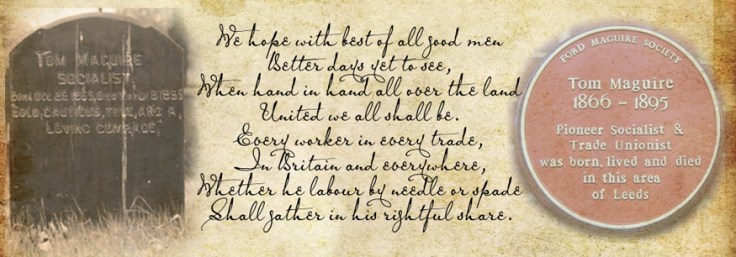


 fullybooked2017