
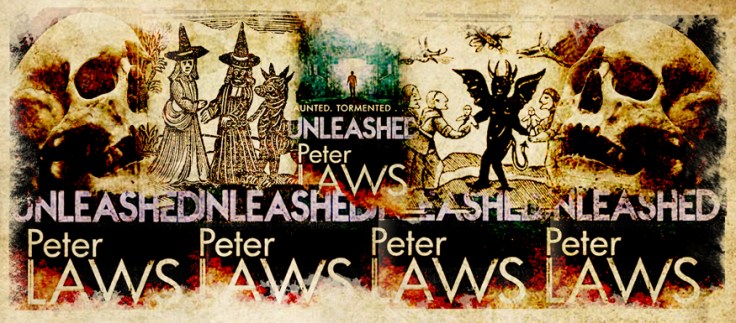
Matt Hunter was once a man of God. Now he is a man of gods. The beliefs that led him to ordination and the ministry of the church have, like Prospero’s insubstantial pageant,
“ .. melted into air, into thin air:
And, like the baseless fabric of this vision,
The cloud-capp’d towers, the gorgeous palaces,
The solemn temples, the great globe itself,
Yea, all which it inherit, shall dissolve
And, like this insubstantial pageant faded,
Leave not a rack behind.
“Not a rack behind…”? Not strictly true. His former faith has left a bequest in the form of an encyclopaedic knowledge of religious symbols, liturgies both sacred and profane, and profound knowledge of different theologies across the world. The former Reverend Hunter is now Professor Hunter, and he lectures in the Sociology of Religion. He also acts as unpaid advisor to the police in cases where there seems to be a supernatural element.
 If the South London suburb of Menham could be described as unremarkable, then we might call the down-at-heel terraced houses of Barley Street positively nondescript. Except, that is, for number 29. For a while, the home of Mary Wasson and her daughters became as notorious as 112 Ocean Avenue, Amityville. But the British tabloid press being what it is, there are always new horrors, fresh outrages and riper scandals, and so the focus moved on. The facts, however, were this. After a spell of unexplained poltergeist phenomena turned the house (almost literally) upside down, the body of nine year-old Holly Wasson was found – by her older sister Rachel – hanging from a beam in her bedroom.
Now, years later, Menham hits the headlines again. At an otherwise uneventful open evening for future parents of a local primary school, events take a tragic and horrific turn. A much loved music teacher is found dead in her own store cupboard, the life ripped out of her, apparently by her own pet dog. The dog, crazed and covered in blood, is battered to death by panic-stricken dads who, expecting a recorder ensemble, are instead treated to a scene more suited to the hellish imagination of Hieronymus Bosch.
The local police are totally unable to make any sense of the carnage in the classroom and are puzzled by several pieces of evidence which seem to indicate a supernatural – or at least Satanic – element to the death of Steph Ellis. Investigating officer DS Larry Forbes enlists the help of Matt Hunter, who soon discovers a sinister collection of potential ‘persons of interest’, including a pair of self-styled demonologists and a troubled – and troubling – evangelical sect. For good measure we have a dark history of child abuse carried out in old air-raid shelters far beneath the local park, and a terrifying witch’s familiar straight from the pages of a seventeenth century grimoire.
 Laws (right) takes a leaf out of the book of the master of atmospheric and haunted landscapes, M R James. The drab suburban topography of Menham comes alive with all manner of dark interventions; we jump as a wayward tree branch scrapes like a dead hand across a gazebo roof; we recoil in fear as a white muslin curtain forms itself into something unspeakable; dead things scuttle and scrabble about in dark corners while, in our peripheral vision, shapes form themselves into dreadful spectres. When we turn our heads, however, there is nothing there but our own imagination.
Unleashed is terrific entertainment. Laws lays on the shocks thick and fast, but never loses sight of the fact that he is writing a well-plotted crime story. We certainly have victims but, in the end, we also have flesh and blood criminals. Unleashed is out now, and you can read a review of the first Matt Hunter novel, Purged, by clicking the blue link.
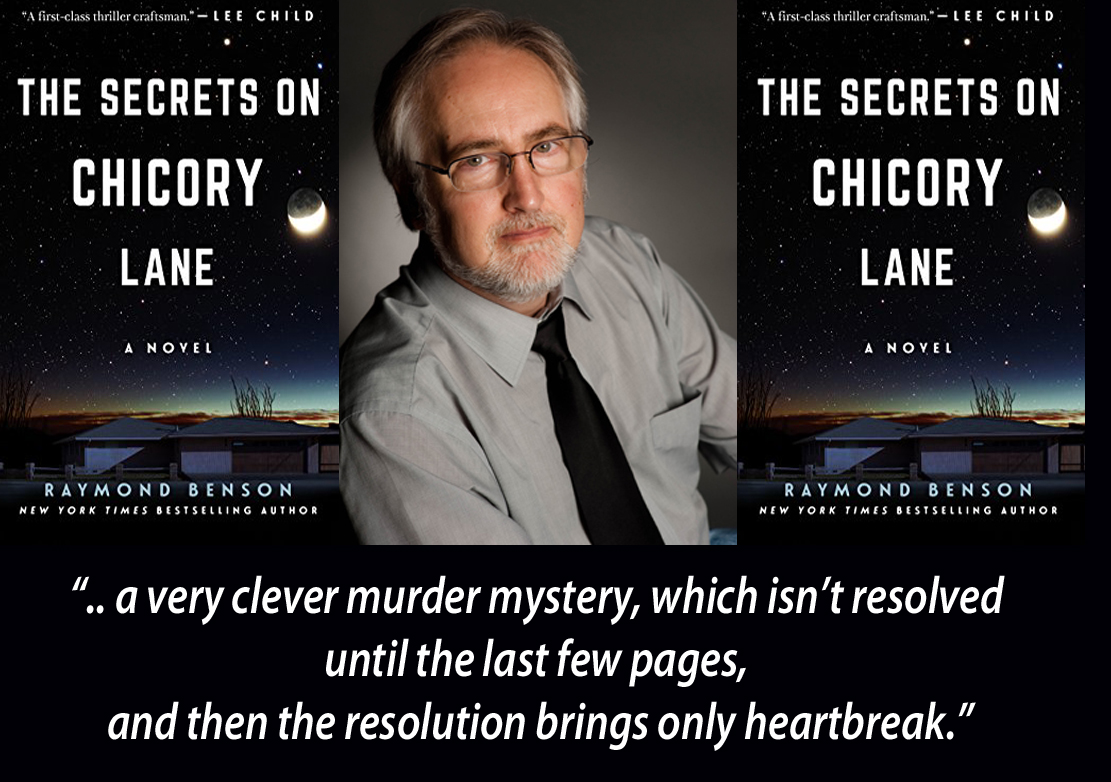

 Eddie is Eddie Newcott, the boy who used to live across the street in Chicory Lane, Limite. The boy who was just a bit different from all the other kids at school. The kid whose dad was a rough and abusive oilfield mechanic. The kid whose mom turned to the bottle to escape her violent husband and the beatings he handed out to their only child. But that was then. Now sees Eddie fallen on hard times. Times so hard that he achieved brief notoriety in the tabloid press, and has now been sentenced to death by lethal injection for murdering his pregnant girlfriend, slashing her open, dragging the foetus out and then arranging the two corpses on his front lawn, posed in an obscene mockery of a Nativity tableau. And it was Christmas Eve.
 Like Shelby Truman, Raymond Benson (right) is a highly successful writer. He has written thrillers under his own name, most notably his Black Stiletto Saga, and has also written novels based on video games. He has taken up the baton from authors who are no longer with us, like Tom Clancy, and has written several James Bond stories which have either been based on established screenplays – like Die Another Day – or standalone original stories such as The Man With The Red Tattoo.

 So, when Gabriel answers the door bell one day only to behold the wedge-shaped and granite faced personage of Farrelly – chauffeur, enforcer and general gofer for Frank Parr – he is led, like a naughty boy tweaked by his ear, to Parr’s sumptious office building. To say that Parr – now a respectable media mogul – has something of a history, is rather like saying that Vlad The Impaler was someone of interest to Amnesty International. Parr made his money – loads of it, and of the distinctly dirty variety – by publishing magazines which were not so much Top Shelf as stacked in the stratosphere miles above the earth’s surface.
 “For a while, I wandered the streets of Soho, as I had on the day I’d first visited forty years ago. Doorways whispered to me and ghosts looked down from high windows.”

 When the battered body of teenager Melanie Cooke is found amid the garbage bins in a seedy Bristol alleyway, it is obvious that she has been murdered. Only fourteen, she is dressed in the kind of clothes which would be considered provocative on a woman twice her age. Vogel goes to make the dreaded ‘death call’, but he only has to appear on the doorstep of the girl’s home for her mother and father to sense the worst. Like many rebellious teenagers before her, Melanie has told her parents that she is going round to a mate’s house to do some homework. When she failed to come home, their first ‘phone call confirmed Melanie’s lie, and thereafter, the long dark hours of the night are spent in increasing anxiety and then terror, as they realise that something awful has happened.
 The book actually starts with a prologue which at first glance appears to be nothing to do with Melanie’s death. It is only later – much later – that we learn its true significance. Bonner (right) is determined not to give us a straightforward narrative. The progress of Vogel’s attempts to find Melanie’s killer are sandwiched between accounts from three different men, each of whom is living a life where all is not as it seems.

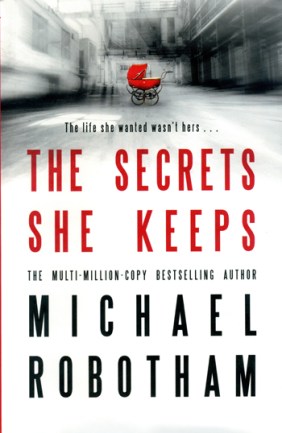 Agatha Fyfle works for peanuts in a ‘Village’ supermarket but Mr Patel, her boss, is not the kind of man to be offering generous maternity leave. He is so tight that he once docked her pay for putting the wrong price on a tin of peaches. The father of her baby is far, far away on a Royal Navy ship patrolling the Indian Ocean, chasing Somali pirates. Despite her nothing job and the desperate ordinariness of her life, Agatha has her imagination and her dreams:


 Charles Harris (right), a best-selling non-fiction author and writer-director for film and television sets in train a disastrous serious of mishaps, each of which stems from Kati’s ostensibly harmless error. Too exhausted from her daily grind making sure that Every Little Helps at everyone’s favourite supermarket, she sends her hapless son, Liam, off to the cashpoint, armed with her debit card and its vital PIN. Sadly, Liam never makes it home with the cash, the pizza guy remains unpaid, and Kati Glass is pitched into a nightmare.
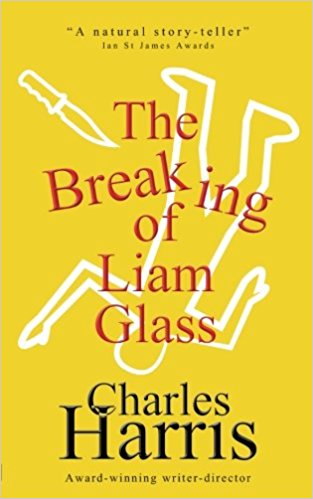 Trying to find out who stabbed Liam Glass is Detective Constable Andy Rackham. He is a walking tick-box of all the difficulties faced by an ambitious copper trying to please his bosses while being a supportive husband and father. The third member of this unholy trinity is Jamila Hasan, an earnest politician of Bengali origin who senses that the attack might be just the campaign platform she needs to ensure that she is re-elected. But what if Liam’s attackers are from her own community? Sadly, in her efforts to gain credibility on the street, Jamila has been duped.


 Annemarie Neary gives us a chilling sense of separate events which are not fatal in themselves but deadly when they collide, and while Ro is making his way to Clapham, the normally self-assured Jess is in trouble at work. She has rejected the advances of a senior partner at an office social, and he uses the rebuff to light a fire under Jess’s professional life.

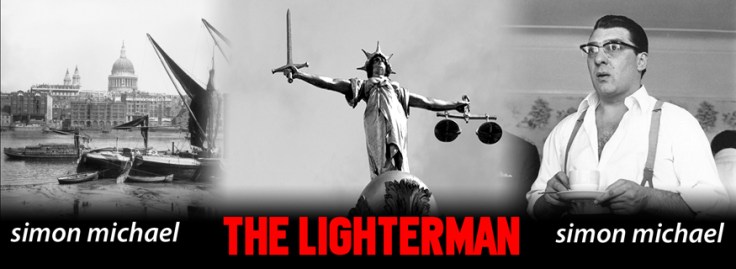
 When we next meet Charles it is 1964, and much has changed. The streets of the old East End, having been substantially rearranged by Hitler’s bombs, have been redeveloped. More significantly, the Jewish people have largely moved on. Many families have prospered and they have moved out to the comfortable suburbs. Charles Horowitz has also prospered, after a fashion. His chosen career is Law, and in order to rise through the ranks of the socially and ethnically tightly knit Inns of Court, he has abandoned Horowitz and reinvented himself as Charles Holborne.
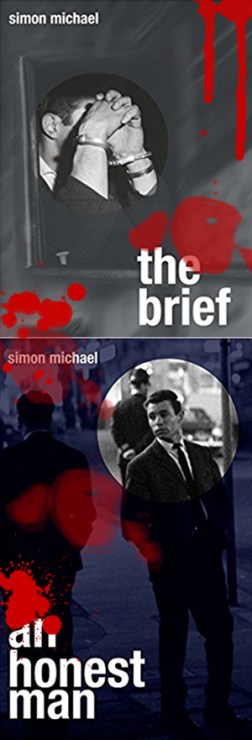 for those who want to complete the picture, but with The Lighterman it is sufficient to say that Charles has made a very undesirable enemy. It is probably merely an exercise in semantics to distinguish between the equally awful twin sons of Charles David Kray and Violet Annie Lee, but most casual observers agree that Ronnie was the worst of two evils. The homosexual, paranoid and pathologically violent gangster has a list of people who have upset him. The first name on that list is none other than Charles Holborne aka Horowitz, and the brutal East End hoodlum is determined that Charles must be done away with.
 Simon Michael (left) combines an encyclopaedic knowledge of London, with an insider’s grasp of courtroom proceedings. I cannot say if it was the author’s intention – only he can concur or disagree – but his writing left me with a profound sense of sadness over what London’s riverside and its East End once were – and what they have become. This is a beautifully written novel which succeeds on three different levels. Firstly, it is a superb recreation of a London which is just a lifetime away, but may as well be the Egypt of the pharaohs, such is its distance from us. Secondly, it is a tense and authentic legal thriller, with all the nuances and delicate sensibilities of the British legal system pushed into the spotlight. Thirdly – and perhaps most importantly – we meet characters who are totally convincing, speak in a manner which sounds authentic, and have all the qualities and flaws which we recognise in people of our own acquaintance. The Lighterman is published by Urbane Publications and is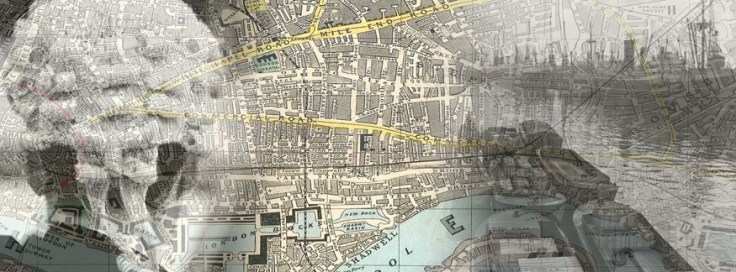

 The muster room of hard-nosed female cops and investigators is not exactly a crowded place on Planet CriFi. Victoria Iphigenia Warshawski, Fiona Griffiths, Kate Brannigan, Cordelia Gray, Kay Scarpetta and Jane Marple have already taken their seats, but Temperance Brennan has, temporarily, given up hers for another child of her creator, Kathy Reichs (left). Sunday ‘Sunnie’ Night is a damaged, bitter, edgy and downright misanthropic American cop who has been suspended by her bosses for being trigger happy. She sits brooding, remote – and dangerous – on a barely accessible island off the South Carolina coast.
 Half way through the novel we realise the significance of the title. Sunnie Night is not waging this war alone: her twin brother Augustus ‘Gus’ Night is also on the case and, to use the cliche, he ‘has her back’. Together they are certainly a deadly combination. By this point, though, Reichs has bowled us an unreadable googly – or, for American readers, thrown us a curveball – and it isn’t until the closing pages that we realise that we have been making incorrect assumptions. Which is, of course, exactly what the author planned! Those last few pages make for a terrific finale, as the twins desperately try to prevent an atrocity being carried out at one of America’s most celebrated sporting occasions.


 fullybooked2017