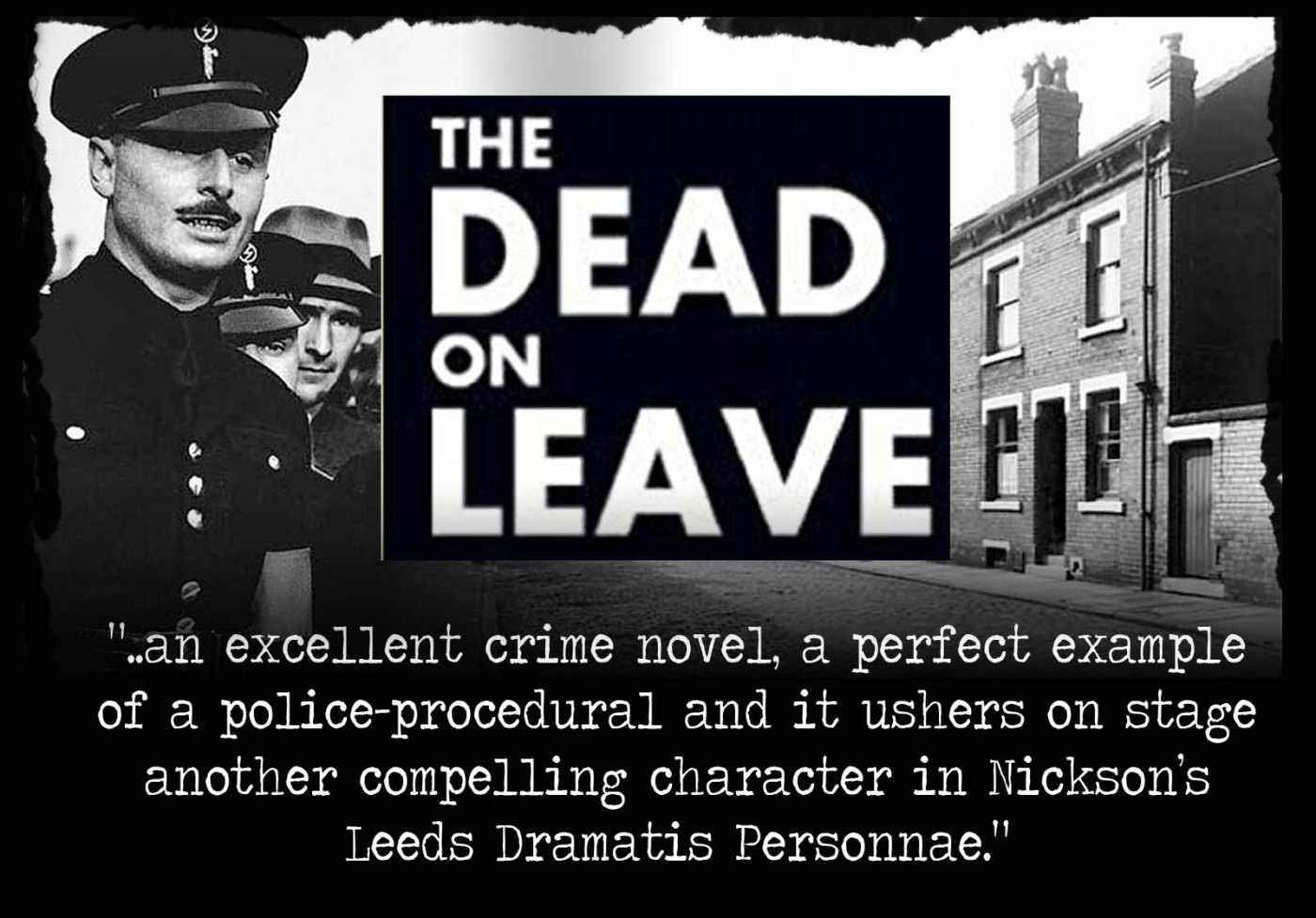

Leeds, Yorkshire. 1936. The once thunderous clatter of its mills and factories is now a hesitant stutter. Although the Great Depression is over, like the plague passing over biblical Egypt it has left many victims. Work is scarce, and men live in fear of being unable to put bread on the table for their wives and children. There is state relief, but it is a grudging pittance. When a widely disliked Means Test Inspector – a man paid to snoop around people’s houses rooting out efforts to cheat the system – is found garotted, there are few to mourn him. But murder is murder, and police detective Urban Raven must find the killer.
 It appears the dead man is a would-be follower of Sir Oswald Mosley, charismatic leader of the British Union of Fascists and, after an appearance in Leeds by Mosley and his Blackshirts turns into a riot, it is tempting for the police to think that the murder is politically inspired. As Raven tries to make sense of the killing, he has his own demons to face. Like many other Yorkshiremen, Raven is a Great War veteran, even though his war was brief and horrific. Only able to see active service in the dog-days of the conflict, he was unlucky enough to be close to a fuel dump which was hit by a stray shell. There’s a line from a song about that war, which goes,
“Never knew there was worse things than dying..”
Those words might be an extreme take on the scars of war, but Urban Raven’s face is a shiny and distorted mass of scar tissue, and he has become adept at ignoring the fascinated horror on people’s faces when they see him for the first time. His disfigurement might do him no favours with ordinary people, but has learned that it gives him an extra edge when dealing with criminals.
Against a fascinating background of the attempts by British fascists to emulate their German and Italian counterparts, and the ongoing saga of a member of the royal family who wants to marry an American divorcee (plus ça change?) Raven’s problems become deeper and wider as he falls foul of the secretive Special Branch, begins to suspect his wife’s fidelity and then – as if his problems weren’t serious enough – finds himself mired in a a political and criminal conspiracy.
As in every other Chris Nickson novel I have read, the city of Leeds is the central character. Whether it’s Richard Nottingham, Tom Harper, Lottie Armstrong or, now, Urban Raven treading its grand thoroughfares and mean ginnels, Leeds remains gritty, grimy, home to all manner of beauty and bestiality, but always vibrant. There is a wonderful feeling of continuity running through the books; it’s as if each police officer is carrying the baton handed on by a predecessor; Nottingham to Harper, Harper to Raven, Raven to Armstrong. The characters inhabit the same city, though; The Headrow is ever present, as are Briggate and Kirkgate, their suffixes names testifying to their antiquity.
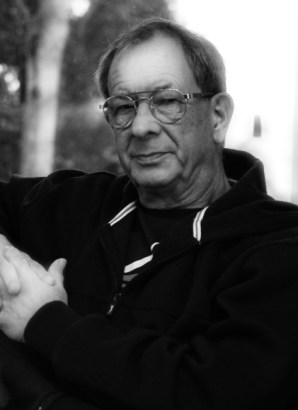 The Dead On Leave is very bleak in places. Hope is in short supply among the working people in Leeds, and men have no qualms about building a wooden platform for Moseley to rant from, because a job is a job; consciences are a luxury way beyond the reach of folk whose families have empty bellies. Nickson (right) is a writer, with social justice at the front of his mind and he wears his heart on his sleeve. I doubt that he and I agree on much in today’s political world, but I can think of no modern British author who writes with such passion and fluency about historical social issues.
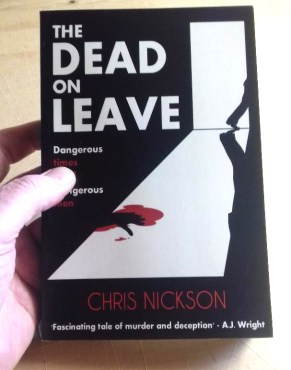
Make no mistake, though. The Dead On Leave is not a sermon, and it does not wag a finger in admonition. It is an excellent crime novel, a perfect example of a police-procedural and it ushers on stage another compelling character in Nickson’s Leeds Dramatis Personnae. The book is published by Endeavour Quill and is available now in Kindle and as a paperback.

 Hal Westaway is no crook. She is not an opportunist. She has a conscience. She instinctively understands the difference between meum and teum. And yet. And yet. The gangster from whom she unwisely took out a desperation loan is angry and anxious for his 300%. Hal’s Brighton flat has already been turned over, and she knows that broken bones are next on the agenda. So, she accepts the invitation from the late Mrs Westaway’s solicitor to travel down to Cornwall to meet the family she never knew she had.
 Ruth Ware (right) is not the first writer – nor will she be the last – to explore the lurid charms of a decaying mansion, its ghosts both real and imagined, and the dusty terrors of death, but she makes a bloody good job of it in The Death of Mrs Westaway. Hal Westaway is a delightful character, and you would require a heart of the hardest granite not to sympathise with her and the exquisite dilemma she faces. The plot is a dazzling mix of twists, surprises, and just the right amount of improbability. The Death of Mrs Westaway is a thriller which makes you keep the bedroom light on, and long for the safety of daylight. It looks like being another bestseller for Ruth Ware, and you can judge for yourselves on June 28th, when the book will be published by


 Clare Hills is an archaeologist who is struggling to hold her life together after the death of her husband. Her grief at his passing is tempered by the fact that he has left her virtually penniless. When she is invited by her former tutor, Dr David Barbrook, to help explore and archive the papers of Gerald Hart, she welcomes the chance to use her expertise. Hart was a gentleman archaeologist whose Palladian villa, Hungerbourne Manor, was the centre of his life’s work – investigating the Hungerbourne Barrows. The Bronze Age burial sites were Hart’s obsession, but whatever secrets they held, he seems to have taken them with him to his grave.
 I have many guilty pleasures, and one of them is being a sucker for a crime novel where the landscape plays a vital part in the plot. My two particular favourite writers in this regard are Phil Rickman and Jim Kelly, but with this excellent debut novel, Nicola Ford (right) has elbowed herself into their company.


 I was working in Australia when Peter Weir’s 1975 film Picnic At Hanging Rock premiered. I remember pub and dinner party talk for months after being dominated by interpretations and explanations about what might have happened to the ‘lost girls’. In the endpapers of Last Time I Lied American author Riley Sager, (left) acknowledges his debt to this film (and the short story on which it was based). Instead of a 1900 Melbourne, Sager beams us into up-country New York State in, more or less, our times.
 Emma’s summer idyll is destined to come to an abrupt and tragic end, however, when the three older girls in the cabin disappear one night, never to return. Despite the massive search and rescue operation, Vivian, Natalie and Allison remain missing, and Franny is forced to close the camp in disarray.


 Side by side with a pharmaceutically-addicted genius called Dante Torre she attempts to solve a grotesque mass murder. The express train from Milan to Rome arrives safely. Safe, that is, except for the passengers in the first class compartments who have all died in grotesque agony. Their bodies are discovered by an officer of the Railway Police and when he alerts his superiors,“la merda colpisce il ventilatore..” as they might (but probably don’t) say in Rome. Ironically, it is the fan from the air conditioning unit which has spread the deadly gas.
 Kill The Angel, translated from the Italian by Antony Shugaar (right), is ridiculously entertaining. The narrative constantly breaks the speed limit, and Colomba Caselli and Dante Torre are wonderfully imagined character. We can boo and hiss as Colomba is screwed – in all senses of the word – by sinister global forces, but she is a truly modern kick-arse (‘ass’ for US readers) heroine and she scorches her way across the pages of this gripping novel.

 The Thorne novels have a recurring cast list. As Salvatore Albert Lombino, aka Ed McBain said, quoting a 1917 popular song, “Hail, Hail, The Gang’s All Here!” Indeed they are. Its members include Helen, Tom Thorne’s long suffering partner plus little boy Alfie, and the bizarrely tattooed and pierced Mancunian pathologist Phil Hendricks. We have Nicola Tanner the police officer scarred by the murder of her alcoholic partner, Susan, and the perpetually cautious DCI Russell Brigstocke. Between them, they pursue two killers; one who murders losers-in-the-Game-of-Life on the periphery of a drugs gang, and another who seems to be targeting lonely women via a match-making service.
 Just when you think that he has provided all the answers to the complex plot, and the characters are, to quote the only bit of Milton I can remember from ‘A’ Level, “calm of mind and all passion spent,” Billingham (right) provides a breathtaking epilogue which, in addition to turning my preconception on its head, (feel free to add your own metaphor) bites you on the bum, punches you in the gut, hits you over the head with a piece of four by two, takes the wind out of your sails and grabs you by the short-and-curlies. Hopefully recovering from this multiple assault, you will be hard pushed to disagree with me that this is a brilliant crime thriller written by a master storyteller at the very top of his game.


 It is 1964, and Alec Douglas-Home’s Conservative government is on its last legs. The sex scandals which brought down his predecessor Harold Macmillan may have faded, but another one threatens to be just as explosive. Holborne is persuaded to defend a teenage boy accused of murdering one of the Krays’ stooges, but the fact that the youngster is what we would now call a rent boy sees Holborne accused of bringing his chambers into disrepute.
 Charles Holborne is a powerful and attractive central figure, but he is far from perfect. His chaotic private life reveals both passion and weakness. His judgement of human character also leaves something to be desired, as Simon Michael (right) shows, with a delicious and unexpected plot twist in the final pages of the novel. Corrupted is published by Urbane Publications
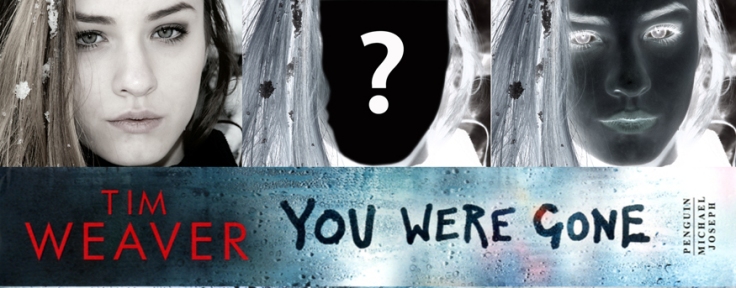
 But he has, as far as is possible, moved on. He has an unexpected family in the form of a daughter from an early relationship, and he keeps his chin up and his eyes bright. Because to do otherwise would mean self destruction, and he owes the physically absent but ever-present spirit of Derryn that much. His world, however, and such stability as he has been able to build into it, is rocked on its axis when a woman turns up at a West End police station claiming to be his wife. Derryn. Dead and buried these nine years. Her fragile remains consigned to the earth. He sees the woman through a viewing screen at the police station and he is astonished. In front of him sits his late wife, the love of his life, and the woman for whom he has shed nine years of tears.
 So many questions. The answers do come, and the whole journey is great fun – but occasionally nerve racking and full of tension. Tim Weaver (right) has crafted yet another brilliant piece of entertainment, and placed a further brick in the wall built for people who know that there is nothing more riveting, nothing more calculated to shut out the real world and nothing more breathtaking than a good book.

 While Elder whittles away his time helping out the local police force with difficult cases, and his wife gets on with her own life, Katherine is eking out an existence in a North London flat share, trying to hide the scars – both real and figurative – of her abduction. She has taken to modelling for life drawing classes in an effort to pay the rent independent of her mother’s generosity, and this has led her into a relationship with a highly respected artist whose career is on a definite upward surge.
 Body and Soul also takes an unflinching look at how love in itself is sometimes not enough – or possibly too much. I read elsewhere that this is to be John Harvey’s last novel. If this is the case then regret is permissible, but dismay would be churlish. We can only thank John Harvey (right) for his matchless legacy. Body and Soul is published by William Heinemann,


 fullybooked2017