

The idea of an investigating detective having what some people see as a disability is an interesting one. Jeffrey Deaver’s Lincoln Rhyme is a tetraplegic who, effectively, cannot do ‘normal detective things’; Nero Wolfe is morbidly obese and rarely leaves his apartment – his cases are solved by his brain power and Archie Goodwin‘s leg-work; more recently, Harry Bingham’s Fiona Griffiths suffers from Cotard’s Delusion, aka Walking Corpse Syndrome, which gives her telling insights into murder investigations. Tim Sullivan introduced us to Detective Sergeant George Cross in The Dentist (2021). Cross has Asperger’s Syndrome* I will say now that this was one of those rare book that I simply didn’t want to end. I noted the advance of my bookmark through the pages with definite sadness.
*Symptoms include an inability to understand figurative speech, obsession with detail, difficulty with recognising emotional responses and lack of social awareness and empathy.
Author Tim Sullivan, very cleverly, pairs George Cross with fellow DS Josie Ottey, a married woman who is as ‘normal’ as Cross is ‘odd’. She acts as a kind of buffer between Cross and the people he must question as part of the job. What Cross brings to the party, however, is a kind of cold objectivity which, to counteract his inability to read a facial expression or tone of voice, gives him a laser-like clarity regarding the truth and logic of what witnesses or suspects tell him. The Monk is set in the Bristol area, and a body is found in the intriguingly named Goblin Combe*, a rural beauty spot beloved of hikers and tourists.
*A small dry valley beneath a hill. Commonly used in southern and south western England.
The body, brutally beaten, is found strapped to chair and abandoned in a ditch. It turns out to be that of a Benedictine monk, Brother Dominic, who had only recently been reported missing from a nearby monastic community, St Eustace’s Abbey. The victim was killed elsewhere and the corpse dumped. There only a dozen members of the order, all men who, for whatever reason, have chosen to reject the modern world in favour of a life of prayer and contemplation. George Cross rapidly sees that there are two obvious lines of enquiry; was Brother Dominic killed because of something that happened within the walls of the monastery, or did his murder relate to something in his previous life, where he was a very successful investment banker?
 Without giving the game away, it is in Brother Dominic’s previous life where the clues are to be found, but answers don’t come easy for Cross and Ottey. Although there was a very clever plot twist involving the identity of the killer, I was far more involved with George Cross as a person than wondering who murdered Brother Dominic.The relationship between Cross and his father, the discombobulating effect of the re-emergence of his mother – lost to him since she left the family home when he was five – and his attraction to the unambiguous world of order, silence and simplicity of Dominic’s fellow monks, all contribute to the power of this compelling read.
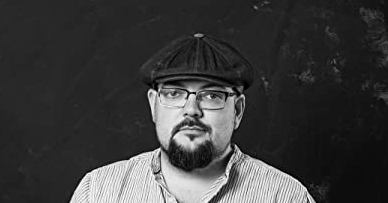
The book is full of little treats and bonuses. Rather in the same way that The Nine Tailors doubled as a treatise on the arcane art of bell ringing, we learn that George Cross is an accomplished church organist, despite the concept of religious faith being totally alien to him. He spends his spare time by pushing the murder case to a corner compartment of his mind, and patiently dismantling the dysfunctional abbey pipe organ, then cleaning and re-assembling the separate parts so that the instrument can once again play a part in the liturgy. Sullivan (above left) also gives the staple of police procedural novels – the recorded interview – a new twist; Cross’s ‘disability’ is a blessing when it comes to his interview technique, as neither the suspect nor the duty lawyer can make head nor tail of his literal approach to everything that is said. Mistaking him for an idiot, however, becomes a serious error of judgment.
Sullivan’s experience as a film director and screenwriter gives the narrative an intensely visual feel, but he wisely lets us picture George Cross in our own way, providing little or no physical description of him. The Monk is a brilliant police procedural with an engaging central character and a clever plot. Published by Head of Zeus, it will be out on 27th April.








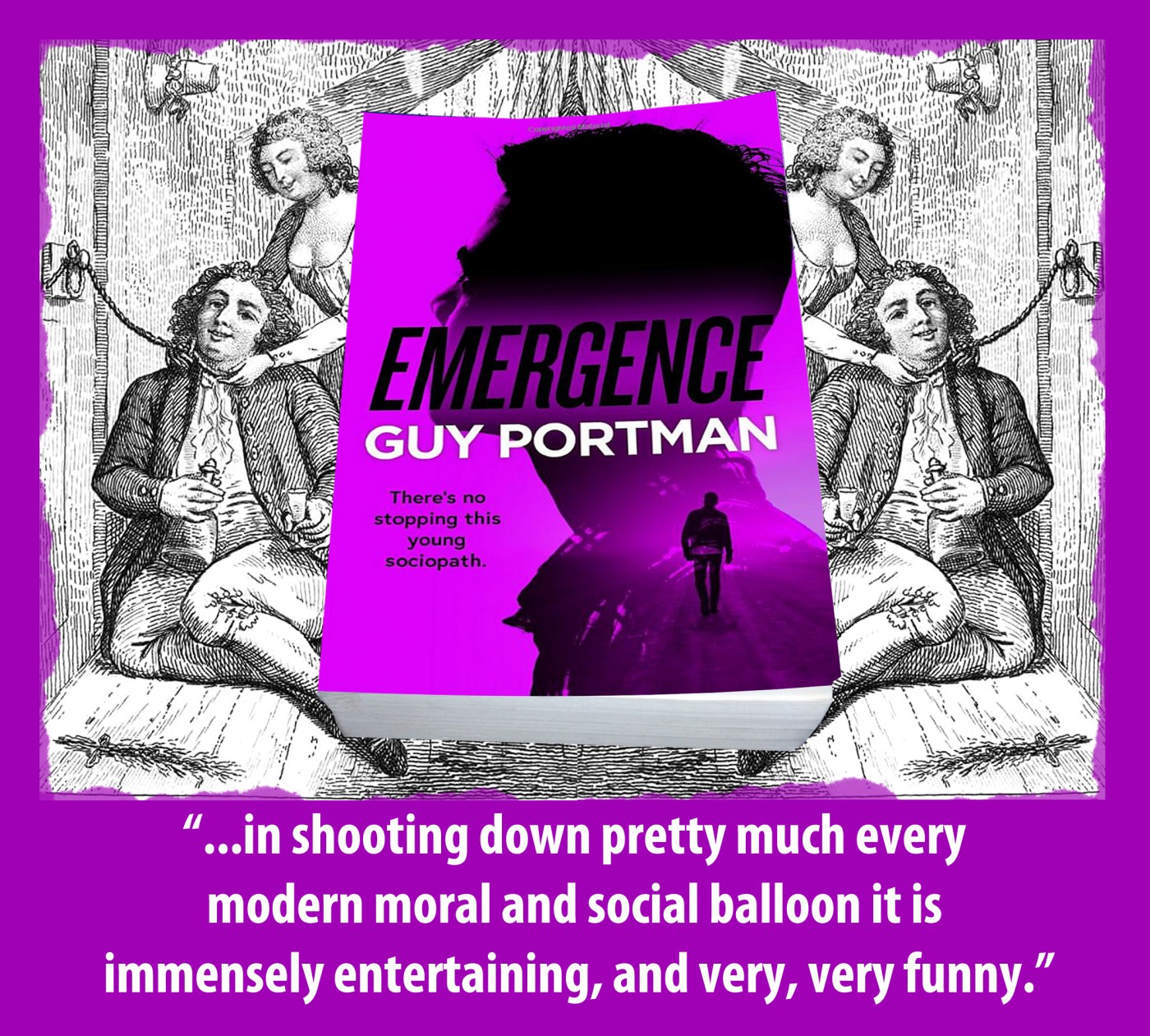



 This is the fourth book in a series featuring Norfolk copper DCI Greg Geldard, but author Heather Peck (left) wastes no time in providing all the back-story we need. Geldard is divorced from his former wife, Isabelle, who is a professional singer. She has now remarried a celebrated orchestral conductor, with whom she has a child, while Geldard is in a relationship with one of his colleagues, DS Chris Mathews. When he gets an early morning ‘phone call from Isabelle saying she and her son have been threatened by a foreign criminal connected to one of Geldard’s previous cases, he is forced to stay at arm’s length, but is disturbed to hear from a colleague that Isabelle may be making the story up.




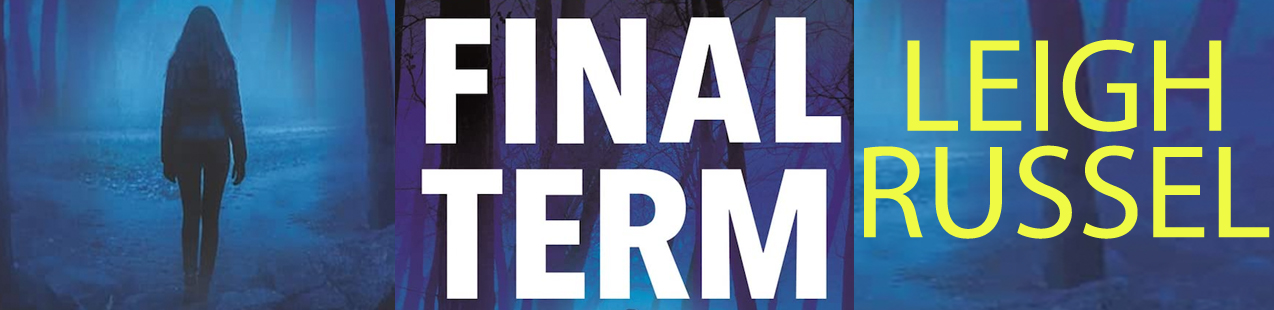
 Leigh Russell (right) studied literature at university, and spent four years immersed in books. After that,she became a teacher, a career that enabled her to share her enthusiasm for books with teenagers. For years, she read other people’s books


 fullybooked2017