
III. RONDO
Existing fans of Phil Rickman’s superbly evocative Merrily Watkins novels can skip this paragraph. As in all the best fiction series, there is a stable cast of recurring characters. So, for new readers, the Rickman Repertory Company is led by the Reverend Merrily Watkins: widow, mother, parish priest and Dioceson Deliverance officer (modern C of E speak for exorcist). Then comes Jane, her teenage daughter and inveterate dabbler-into-things-she-oughtn’t-to-be-dabbling-in. Gomer Parry, local drainage contractor, voice of common sense and elderly savant. Representing the forces of law and order is Frannie Bliss, detective with the Herefordshire Constabulary, scouser and all-purpose square peg. The musical director of this ensemble is Lawrence ‘Lol’ Robinson, dazzling guitarist, singer songwriter, sometime depressive, sufferer from paralysing stage fright – and the long term boyfriend of Merrily.
Lol has a serious back-story. In To Dream of The Dead, Rickman spells it out in stark clarity:
“Barely twenty and convicted of sexually assaulting a fourteen-year-old girl while on tour with Hazey Jane. An offence actually committed, while Lol was asleep, by the band’s bass player, who’d walked away, leaving Lol on probation, unjustly disgraced, disowned by his creepy Pentecostalist parents, swallowed by the psychiatric system. His career wrecked, his spirit smashed.”
As he creates Lol’s complex character, Rickman wants us to think of a real-life singer and guitarist, Nick Drake. Cynics might say that when the Gods take young musicians, it is a cast iron guarantee that both victim and music will achieve a kind of immortal celebrity that they may not have reached had they lived. Who can say with certainty that Eddie Cochran, Buddy Holly, Janis Joplin, Marc Bolan, Jimi Hendrix and others in the pantheon of dead rock stars would now be as famous in life as they have become in death?
Lol Robinson shares Nick Drake’s intensity, delicate guitar playing, haunting voice and sense of sublime anxiety about himself and the world he lives in. But, thanks to the support of Merrily Watkins and others, Lol comes through his bad times and lives to perform and record again. As he emerges from the darkness, he almost becomes as one with his guitar. Like Frank Westworth, Phil Rickman clearly knows, loves and plays the instrument, and he gifts Lol a beautiful hand-made guitar. Its maker is Al Boswell, a unique craftsman; part gypsy, part mystic and a man whose hands seem guided by forces older than any skills learned in a school woodwork class.

Not content with making one of the spear-carriers in his ensemble a fascinating and compelling character, Rickman goes one step further. He has actually recreated Lol’s band Hazey Jane, and they have made videos and sound recordings to prove the point.
https://www.youtube.com/watch?v=5ND_CkcUb78
Click on the image below to visit Phil Rickman’s own site, and learn more – and hear more – about Lol Robinson and Hazey Jane II.

 Before he had the brainwave which gave us Merrily Watkins in The Wine of Angels (1998), Rickman wrote several standalone novels. The most music-centred one was December (1994). It begins on the evening of Monday 8th December, 1980. For most people of a certain age, that date will be an instant trigger, but Rickman (right) sets us down in a ruined abbey in the remote Welsh hamlet of Ystrad Ddu, which sits at the foot of one of The Black Mountains, Ysgyryd Fawr – more commonly known by its anglicised form The Skirrid. Part of the medieval abbey has been fitted out as a recording studio and, in a cynical act of niche marketing, a record impresario has contracted a folk rock band, The Philosopher’s Stone, to record an album of mystical songs in the haunted building, and he has stipulated that the tracks must be laid down between midnight and dawn.
Shortly before 4.00am, as the band are playing a song which relates the tragic story of Aelwyn, a young Celtic man who was hacked to death in the abbey grounds by Norman invaders in 1175, what was already a fractious and uneasy atmosphere turns distinctly sinister. Acoustic guitarist Dave Reilly is overcome by disturbing visions and, as he escapes the studio to shelter under an ancient oak tree, over three thousand miles away it is 10.50 pm and a disturbed young Hawaiian man called Mark David Chapman is pumping four bullets into former Beatle and musical legend, John Lennon.
As if the ill-fated recording session is not already attracting enough malevolent vibrations, things are about to get worse – much, much worse. Lead guitarist Tom Storey – as notorious for his abuse of drink and drugs as he is celebrated for his guitar virtuosity – has had enough. He has left his pregnant wife Deborah in a nearby hotel and, angry at the shambolic and disturbing recording session, commandeers a Land Rover and storms off to be with her. Deborah, meanwhile has decided to come out to Ystrad Ddu to ‘rescue’ her husband. As John Lennon is bleeding to death in the back of a police car, Tom’s Land Rover smashes into Deborah’s Lotus sports car.
“Twenty yards away, the old blue Land Rover driven by Tom Storey has brought down a low, sleek Lotus Elan, like a lion with a gazelle. The Land Rover has torn into the Lotus and savaged it and its guts are out and still heaving, and Dave can see flames leaping into the vertical rain …..”

Rickman takes us forward to the present day. The Philosopher’s Stone is no more. It died on that fateful December night. Tom Storey has remarried, but lives as a recluse in a Cotswold mansion with his second wife and daughter Vanessa, removed from the dying body of her mother but afflicted with Down’s Syndrome. Singer Moira Cairns has flirted with the folk music scene, but has largely retreated from public life. Dave Reilly has eked out a threadbare living as a musician, but is cursed with an ability to sense the supernatural, and his ‘gift’ has done him no favours. Bass player Simon St John has abandoned music altogether (apart from in the privacy of his own room) and has taken holy orders.
Novels and, indeed, films, would not be able to create their magic were it not for the priceless ability of fictional characters to make decisions which turn out to be disastrous – and often fatal – mistakes. So it is in December. An unscrupulous music executive, desperate for something that will give his flagging career an edge, discovers a box of tapes, all that remains of the fatal pre-dawn music making in December 1980. A highly respected producer, Ken ‘Prof’ Levin (who features as a mentor to Lol Robinson in the Merrily Watkins novels) is persuaded to restore the tapes. To say that all hell breaks loose as a consequence is putting it mildly. Ghosts don’t like being woken from their dreamless sleep by money-grubbing mortals, and they exact a high price for their inconvenience.
Amid all the psychic mayhem, this is unashamedly a novel about guitars and their magic. We have Stratocasters, Martins, Takemines, Ovations, Telecasters and Les Pauls. Rickman’s fascination with his chosen instrument shines through, and his enthusiasm will inspire many a lapsed player to blow the dust off their guitar case, open it up and coax an old tune from their neglected lover.
Check out the buying options for December, and other Phil Rickman novels, here.
You can also read the Fully Booked review of the most recent Merrily Watkins novel
All Of A Winter’s Night
You can catch up with the previous parts of this series by clicking the links.
I. PRELUDE and FUGUE
II. MARCHE FUNEBRE


 Jean-Jacques ‘JJ’ Stoner is a stone cold killer. His creator, Frank Westworth gives us a first glimpse of him as an army sergeant serving in Iraq. One of his squad has just been fatally wounded by a knife thrown by one of a group of Iraqis who:
 It doesn’t take a genius to work out that Westworth (right) is deeply immersed in the lore and legend of pop music as well as knowing his guitars. The Killing Sisters books are scattered with references – some subtle, but others more obvious – to great songs and singers. Later in The Redemption of Charm, Stoner renews his acquaintance with his favourite guitar:
 Colin Dexter’s stories of the wonderful curmudgeon are among the widest read in the last quarter of the 20th century, but less well known are the Vienna-set novels of Frank Tallis featuring policeman Oskar Rheinhardt and his young pyschiatrist friend Dr Max Liebermann. The younger man often plays piano for Rheinhardt melodic baritone as they seek solace from the stresses and strains of catching murderers.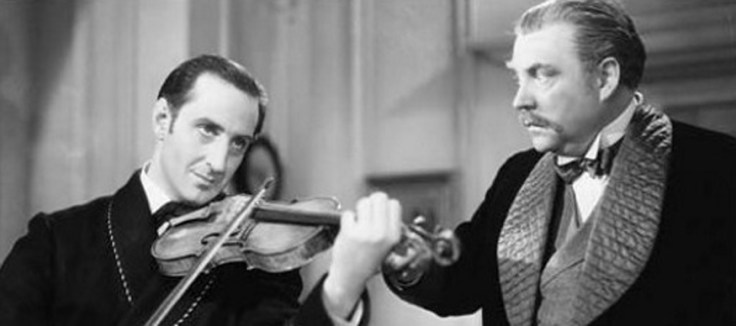
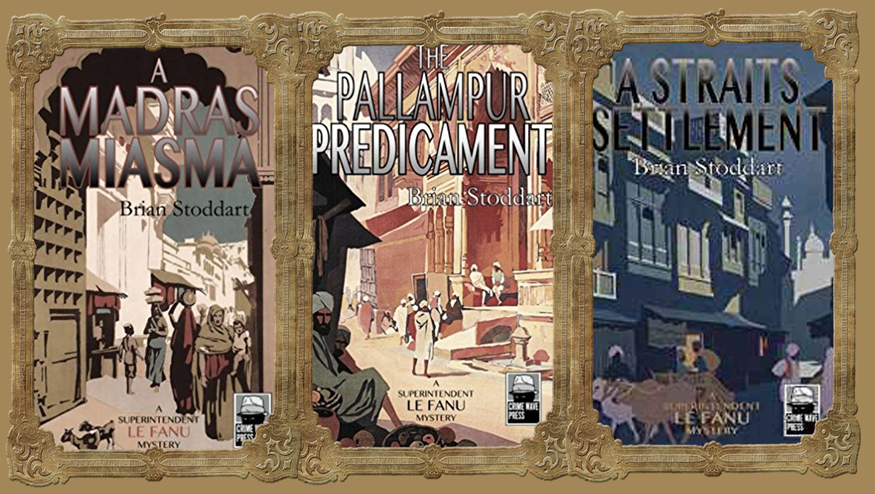
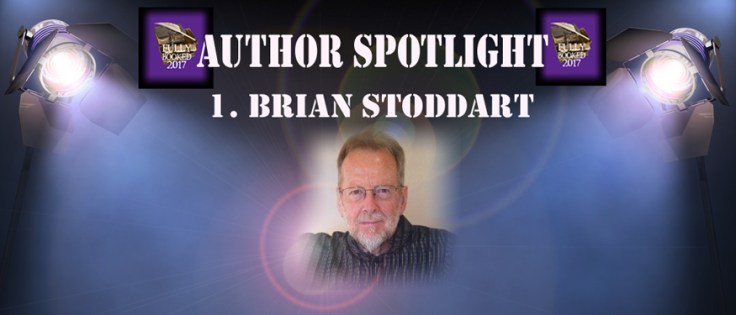

 Stoddart wears his scholarship lightly in the crime novels, but he is a gifted and compelling writer when dealing with the real world. In A House in Damascus – Before the Fall (2012) he examines the tragedy of the Syrian conflict and its effect on ordinary people for whom the complex political issues mean nothing but shattered lives, hardship – and death.
 steel and bullets with nothing but their manly chests. Don Bradman and Bill Woodfull, plucky Australian lads, direct descendants of the ANZACS, faced the barrage of Larwood and Voce with nothing but a small piece of shaped willow wood. Stoddart co-authored, with Ric Sissons, Cricket and Empire, an account of this bitter battle.


 A 15 year-old girl, Tania Mills, walks out of her front door and out of the lives of her parents, her family and her friends. She becomes just another statistic. Just another missing person for the police to make a dutiful attempt to appear involved. Just another file, first of all gathering dust on a shelf, and then occupying a tiny space on someone’s hard drive.

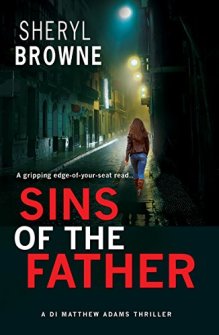 Detective Inspector Matthew Adams is slowly picking up the pieces from a case that nearly cost him the lives of his entire family and his own sanity too. On the surface, he seems to be moving on, but he drinks to forget – and when he closes his eyes, the nightmares still come.


 But all is not well. Arthur Bryant is physically sound enough, but his encyclopaedic mind is starting to betray him. He is suffering episodes of serious dislocation. He causes havoc in what he thinks is an academic library when he’s actually in the soft furnishings department of British Home Stores. While soaking up the ambiance of a Thames-side crime scene, all he can sense are the sights, sounds and smells of the early 20th century docks. John May and the more sprightly members of the PCU have to keep Arthur virtually under lock and key, for his own protection.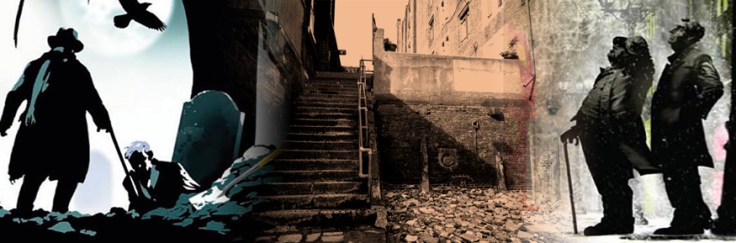

 The past times take us back to the 1950s, both in Melbourne and then further north in rural Queensland. We enter the home of the young Arthur Boyle, who is looked after by his adult sister. Also resident in the Melbourne home is Ern Kavanagh, a twenty-something young man who has ambitions to be something other than a car mechanic. He then leaves Victoria and travels north, in search of fortune, if not fame in Queensland.
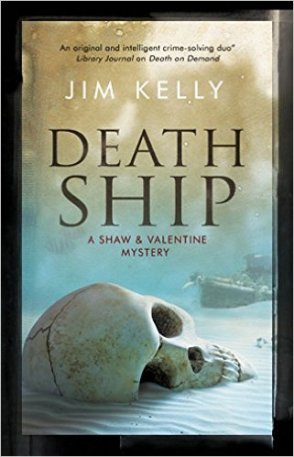 In Death Ship, as with all the previous books, the sea is never far away. The seaside town of Hunstanton has been literally rocked by an explosion on its crowded beach. Something buried deep beneath the sand is triggered by some boys determined to dig a sink-hole sized pit before the tide sweeps in. There is a brief moment when something metallic and shiny appears in the wall of their excavation, but then hell is unleashed. Miraculously, no-one is seriously hurt, but the beach is closed to holidaymakers while forensic experts and a bomb disposal team from the army do their stuff.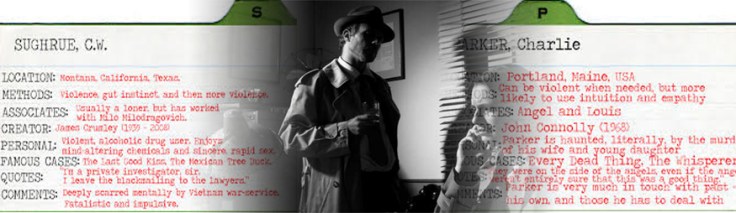
 Parker’s ghosts are those of his wife and daughter, brutally and shockingly murdered years ago by men whose physical presence was all too temporal, but men whose puppet strings were being pulled by evil forces not entirely of this world. In this novel, Parker is contacted by a former public hero who went from hero to zero when child pornography was found on his computer. Jerome Burnel was given a long jail sentence and suffered the usual fate at the hands of other prisoners for whom sex crimes against children are worse than murder.
 Gunther is something of a ladies’ man, and he usually manages to attract the attention of females, most of whom are either damaged, or damaging, and sometimes both. Here, he makes a night-time visit to an English woman who says that she is anxious to meet Somerset Maugham with a view to writing a biography.
 He is asked to investigate a disappearance and a death. The disappearance is of a minor functionary of the Raj from the country town he helped administer, and the death is that of the son of a powerful – and widely disliked – British entrepreneur and colonialist. Le Fanu’s search for the missing Southlake, and the all-too-dead Hargood takes him far from Madras, and to the exotic Malay island of Penang, where he finds a beguiling mixture of colonial and Chinese culture. He also finds himself in the equally beguiling arms of a beautiful Chinese woman. Unfortunately, she is the daughter of a wealthy merchant who appears to be right at the centre of Le Fanu’s investigations.
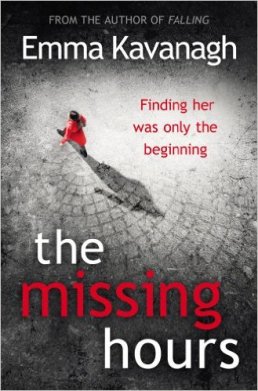 The police investigation into Selena’s disappearance is handled by an unusual crime fiction pairing. Finn Hale and Leah Mackay are brother and sister. Finn has leap-frogged his sister in the promotion stakes, despite her evident superiority – evident, that is, to us readers, but not the local constabulary personnel department. Kavanagh plays the relationship between the siblings with the touch of a concert violinist. There are all manner of clever nuances and deft little touches which enhance the narrative.


 fullybooked2017