
There are 25 delightful windows for you to open in the countdown to Christmas. Each one reveals an excellent crime fiction novel, with a few seasonal images and some beautiful music thrown in for good measure. Here are the windows for Week 2.







There are 25 delightful windows for you to open in the countdown to Christmas. Each one reveals an excellent crime fiction novel, with a few seasonal images and some beautiful music thrown in for good measure. Here are the windows for Week 2.

Wiley Saicheck talks to Lawrence Kelter, who has written a novel featuring the characters from the hit movie My Cousin Vinny. The 1993 legal comedy starred Joe Pesci, Ralph Macchio, Marisa Tomei, Mitchell Whitfield, Lane Smith, Bruce McGill, and Fred Gwynne.

How did the chance to write BACK TO BROOKLYN come about?
 Lawrence Kelter: There was one specific project I always wanted to be involved in, but like the rock star dream and the Super Bowl victory, I thought it was not to be. You might think this silly or lame. And maybe it is. There was a film I enjoyed so much that every time it popped up on TV, it made me late for an appointment because I just couldn’t pull myself away. I knew the script verbatim and often incorporated the better-known lines into my everyday conversation. That movie is My Cousin Vinny.
It popped up on the tube about two years ago, and I decided to email the screenwriter/producer to tell him how much I loved his film, thinking, Hollywood screenwriter—I’m dirt beneath his boot—He’ll never reply.
But he did.
And somehow we forged a connection. Emails led to conversations. He discussed his upcoming projects with me, and I with him. One day he called up and said, “Hey, I read one of your books and you’re pretty f***king funny.”
“So how about you let me turn My Cousin Vinny into a book series?”
“Make me an offer.”
Four attorneys and fourteen months later, BACK TO BROOKLYN was delivered to Eric Campbell, publisher of Down & Out Books.
What was the most rewarding part of writing established characters like Lisa and Vincent? The most challenging part?
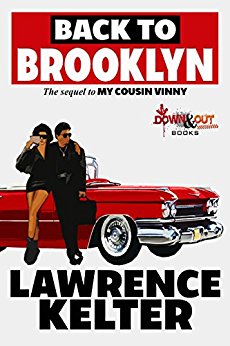 Lawrence Kelter: Writing BACK TO BROOKLYN was the most fun I’ve ever had sitting in front of a keyboard. I have high hopes for this book. After all, I love the characters and the backstory—not to mention the two years I have invested in the project. But where it goes from here… I’ve received a great deal of feedback from readers. Almost universally they tell me that that they can hear Lisa and Vinny in their heads playing that cat and mouse game–they visualize Marisa Tomei and Joe Pesci as they’re reading. Nothing could be more rewarding than that.
At the onset there were two big challenges that gave me pause. (1) I had to get the voices just right–my Vinny and Lisa had to sound exactly like Vinny and Lisa from the film with the same type of smart Alec rhetoric and the same colloquialisms. They had to think alike and react alike. In the words of Beechum County DA Jim Trotter III, they had to be, “IDENTICAL!” 2) The movie reveal was just so damn clever and startling that it was a real challenge to develop a plot that felt like the original but was completely different, and at the end … well, it was a serious undertaking to reveal the true villain and his MO without relying on “magic grits” and “Positraction.”
Why should fans of My Cousin Vinny read BACK TO BROOKLYN?
Lawrence Kelter: Fans of the film will instantly fall back in love with Vinny and Lisa and hopefully laugh just as hard as they did the first time they saw the film. In the words of New York Times bestselling author William Landay: “Like visiting with old friends, BACK TO BROOKLYN captures the fun and spontaneity of every lawyer’s favorite legal comedy, My Cousin Vinny. As surefooted as a ’63 Pontiac with Positraction.”Have you heard feedback on BACK TO BROOKLYN from the original movie cast?
Lawrence Kelter: Both Ralph Macchio and his wife have both read the novel and reported that they really enjoyed it. I tried to get in touch with Joe and Marisa but was unsuccessful. On a lighter note, Nelson DeMille gave his copy of the book to his mother after he read it and she reported, “Nelson, this guy knows Brooklyn a hell of a lot better than you do!”
What are you working on now? Will we see further adventures with Vinny and Lisa?
Lawrence Kelter: I’m working on four or five new books at once. OMG, it’s scary that I can’t remember how many books I’m working on. They’re all in different states of completion. Next up is (insert drumroll) the novelization of My Cousin Vinny. Why you ask? Because it’s bigger, and fresher, with additional scenes, lots of new humor, and sneak peeks into Vinny and Lisa’s history that was not revealed in the film. It’s due for release in March of next year.
About BACK TO BROOKLYN (Down & Out Books, May 2017)
“Fans of the movie will enjoy Vinny and Lisa’s further adventures.” —Publishers Weekly
Gambini is back! Hot on the heels of rescuing his cousin Bill and Bill’s friend, Stan from an Alabama electric chair, our wildly inappropriate hero, Vincent Gambini heads home to Brooklyn where he attempts to establish a successful law career. Meanwhile, Lisa aches to have a wedding band placed around her finger and her biological clock is still ticking away like mad. Vinny and Lisa have been together ten long years. She’s waited so very patiently for him to complete law school and pass the bar. Winning his first case was the last piece of the puzzle, and now nothing can stand in the way of true love, except that between them they don’t have two nickels to rub together, and Vinny is about as romantic as a box of frogs.
In the course of building his practice, Vinny is reunited with Joe, his walking, talking embarrassment of a brother, Lisa’s nudging parents, Ma and Augie, and his dear old friend Judge Henry Molloy, who refers him the mother of all capital murder cases.
Theresa Cototi is young and pretty but far from innocent, and darn her luck … her boyfriend has just been scraped off the pavement after taking a header from eight- stories up. You’d better believe she’s going to trial, charged with murder one.
Aided by Lisa and a ragtag team of misfits, Vinny defends his client against overwhelming odds. Our endearing neophyte attorney must match wits with a cunning DA and a formidable influence peddler, who appears to anticipate his every move. In the balance hangs the life of a woman he believes to be innocent. Or is she?
Yes, Vinny may have finally won his first case but his and Lisa’s story is far from over.
About the author
Lawrence Kelter never expected to be a writer. In fact, he was voted the student least likely to step foot in a library. Well, times change, and he has now authored several novels including the internationally bestselling Stephanie Chalice and Chloe Mather Thriller Series.
He’s lived in the Metro New York area most of his life and relies primarily on familiar locales for story settings. He does his best to make each novel quickly paced and crammed full of twists, turns, and laughs.
Find Lawrence Kelter online …
Website: http://lawrencekelter.com/
Facebook: https://www.facebook.com/lawrencekelter/
Twitter: https://twitter.com/LarryKelter
Amazon Author Page: https://www.amazon.com/Lawrence-Kelter/e/B0058Q8IIW
Goodreads Author Page: https://www.goodreads.com/author/show/673845.Lawrence_Kelt

There are 25 delightful windows for you to open in the countdown to Christmas. Each one reveals an excellent crime fiction novel, with a few seasonal images and some beautiful music thrown in for good measure. Here are the windows for Week 1.






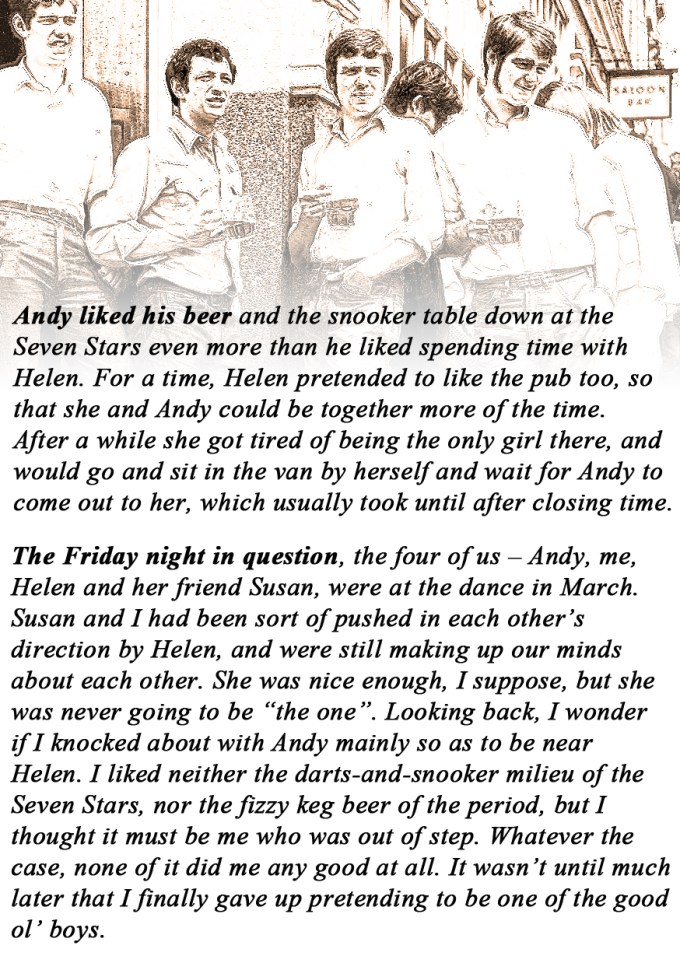
Andy and I were up at the bar as usual, while Helen and Susan were in the dance hall itself. The worst thing about these dances was that, sooner or later, the lads from March would pick a fight with the lads from Guyhirn or wherever, usually on the pretext that somebody had tried it on with their girlfriend or sister or whatever. Lads were always trying to get off with Helen, and would then fall out on Andy or me in a fit of jealous resentment. I noticed two or three groups from previous encounters. The atmosphere was tense, threatening. It was time to exit the premises.
Andy has had a fair bit to drink, but he knows the road across the fen and home to Christchurch like the back of his hand, could do it blindfold. We’re cruising along, no problems, when a white Ford Escort pulls alongside and a lager can smashes against Andy’s side window. The Escort is crammed full of goons from the dance-hall, shouting and screaming foul abuse, mainly directed at Helen. They want us to chase them, want a race. Sober Andy wouldn’t have risen to the challenge, but drunk Andy does.
The back roads across the Fens are dead-straight, but narrow and undulating, being laid down right on top of the river-banks, where the alluvial silt provides a firmer base than would the peat-soil of the adjacent fields, most of which have shrunk and subsided down to a level well below that of the roadway, or even of the rivers themselves. It is easy to go off the road and plunge down into the river on the one side, or into the deep, steep-sided ditches draining the adjacent fields on the other side. Sections of the tarmac have subsided, or are crumbling at the edges, through lack of maintenance. I never understood why they wasted so much time at school warning us about unsafe sex and drugs when far and away the commonest cause of early death amongst our schoolmates was through motor accidents, cars going off the road and ending upside-down in a freezing-cold river or ditch.

It takes me a while to come to, something warm trickling down my face. My right leg is at an unlikely angle and there are white shards of bone sticking out through my trouser-leg, below the knee, although I can’t feel anything yet. Andy is up against the steering-wheel, blood coming out of his mouth. Helen is between us, her head under the dashboard, not moving. Susan is lying on her front out on the bonnet; she must have gone straight through the windscreen, which is completely shattered. I can’t see her face, which is probably just as well.
A police car arrives, followed by an ambulance. I can only hear their voices, can’t see anything now.“Smells like a brewery in here – suppose they’re all pissed as usual. Cover that one’s face, for God’s sake, I can’t look at her like that. It’s worse when it’s a girl.”
 Andy was killed in a motor accident shortly after his 23rd birthday, when his car went off the Ramsey Forty-Foot road in the middle of the afternoon; no other vehicle was involved, but none of us was greatly surprised.
The Friday night dances were a cruel lesson in the realities of life and about where you stood in the pecking-order. Lads fought and competed over the lovely Helen Atkins, who wanted no-one but Andy, who in turn was inseparable from his drinking-mates down at the Seven Stars. Nice, plain-faced girls went home alone while the local lads drank themselves into a coma or got into fights with lads from neighbouring villages and towns. Nobody got what they wanted. As youngsters, we aimed high, stars in our eyes. Most of us learned to lower our sights and settled for the kind of life that was available to the likes of us, something on our level, somebody of our own class. We spent our salad days chasing rainbows, in pursuit of the lovely Helen, or others like her; but we mostly ended up marrying and settling down with one of those plump, plain-faced local girls, for better or worse. Some of us went away for a time, but we all came back sooner or later, because here is where we belong.
The back road between the Old and New Bedford rivers, my road home, is on a slightly lower level than the surrounding fields and water-meadows. Floodwater begins to spill off the fields and starts to trickle over the lowest section of the road ahead. Time to be getting back. This is what it will feel like when the world ends. This is what it will feel like for the last man left alive, as tidal waves cascade over the last remaining hillock of dry land.

But the worst is behind me now. The road rises steeply to the bridge across the Old River and the lights of the Lamb & Flag. So good to see the road surface again, and to feel dry land under my boots. Safe on the bridge, I look back at the opaque watery blackness and shiver.

CLICK THE IMAGE BELOW TO READ PART ONE OF BACK TO THE FEN



There didn’t seem to be a great deal to look forward to; no proper jobs, not for we lads, anyway; no real prospect of getting a place of your own unless you settled for being trailer-trash, stuck in a freezing cold caravan in some farmer’s cow field. The Fen villages were just fading away. The smaller ones always had a kind of half-hearted or make-do appearance, like temporary staging posts in some dead-loss location in the Wild West of America. But now you could draw up a check-list and watch one thing disappear after another; High St. shops, family businesses from way back, the train service into town, the railway station itself, the late bus, then all the buses, the secondary school, the primary school, the cottage hospital, the doctor’s surgery, the public library, the banks, the police station, the vicar, then the church itself, the Post Office and then, the last thing of all to go, the pubs.
We all knew of local lads, older brothers, whatever, who had moved to the city, Peterborough or further away, to find a job and a place of their own. They had a hard time finding work as a country boy with no local contacts, nobody to pull strings or put in a word for them. You had to live in a bedsit or whatever for years before they’d even put you on the waiting list for a council place, and even then, the best you could hope for was a flat on the worst crime & drugs-infested high-density estate on the outer edge of the city. So there we all were, stuck, with no way out, or round, or through. Whether you moved or stayed, there wasn’t much to get enthusiastic about.

What is it that draws us back to the water, again and again? Why do we feel such a sense of peace and tranquility here, and nowhere else but here? Is this where the ancestral fish-thing in each of us feels most at home? Or are there still fishy things deep in there now, calling us home?
The Fen villages stand on what used to be islands of higher ground, surrounded until quite recently by marsh and fen. They were isolated communities, cut off from the outside world by the surrounding marshland and water. In the past, the Fens were a place of refuge for fugitives, outlaws and persecuted religious groups. The Fen people were nicknamed “yellow-bellies” on the basis of their aquatic way of life and because their ancestors were supposed to have interbred with the water-dwelling local wildlife of frogs, newts and toads. More to the point, the isolated character of the Fen villages, and the difficulty of travelling from one village to another, meant that the Fen communities were prone to in-breeding. This problem was eventually diminished by the draining of the Fens for purposes of agriculture and, as in other rural areas, by the advent of the bicycle, which allowed eager young lads access to girls in more distant communities and to distribute their genetic inheritance more widely in the process; but people still say that babies in the remoter villages are born with webbed feet.
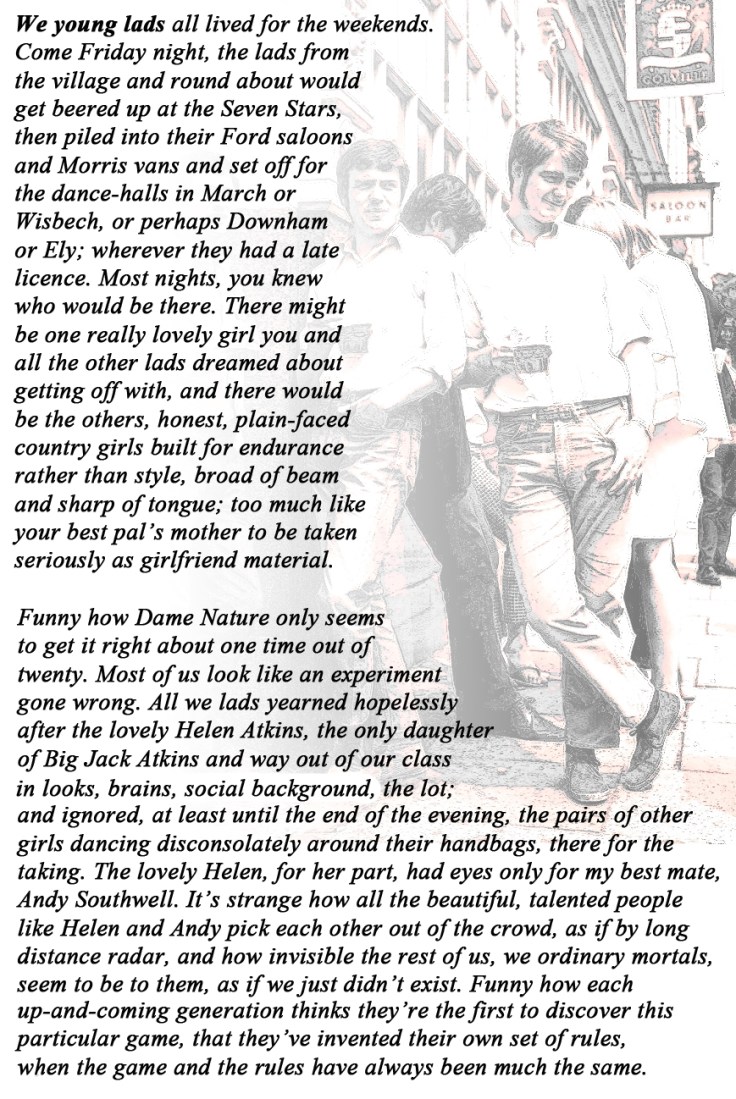
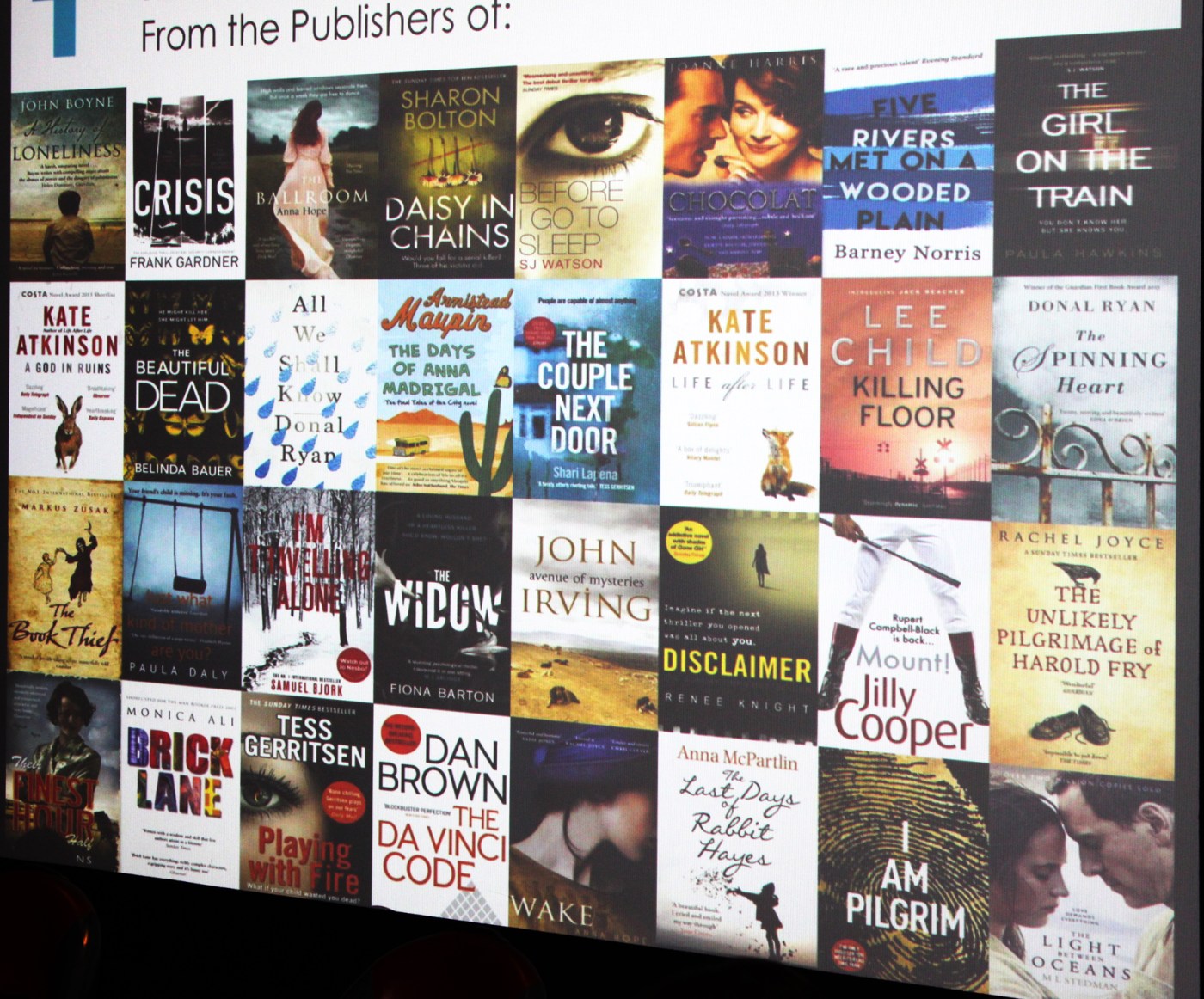

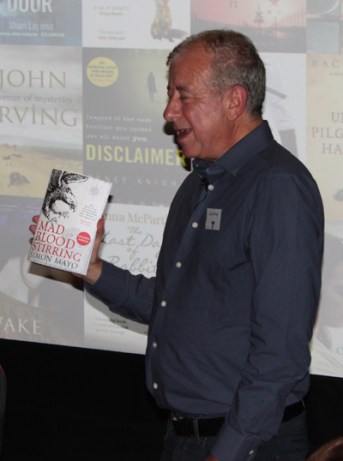 I was lucky enough to be invited to the distinctly upmarket Charlotte Street Hotel in London’s Fitzrovia, as a guest of Transworld for their evening showcasing what they hope will be their best-sellers for 2018. Managing Director Larry Finlay (left) took the stage first, and showed his perfectly justifiable pride in how the group’s editors had managed to pick some astonishingly successful novels over the last few years. Judging what readers might want to read months – if not years – ahead, taking a punt on the talent of someone as yet unknown to book fans, and then backing your judgment with publicity and marketing; these are the skills by which publishers stand or fall, and Larry and his team at Transworld seem to be getting the hard bits right.
Journalist, editor and host of The Vintage podcast, Alex Clark, then invited the featured authors to join her on-stage. Ruth Jones is no stranger to the world of entertainment. Television viewers will know her as writer and co-star of Gavin and Stacey, and her compelling portrayal of Hattie Jacques in Hattie. Her debut novel, Never Greener is all about the dangers of taking second chances in life. Referring to the grass implied by the title, she says,”It’s still grass. Just a different patch of it, that’s all.” As to her writing, she says that she falls in love with her characters, and relishes the fact that this work doesn’t require the make-up trolley. Her tip? Always make a note of every experience, no matter how inconsequential – you never know when it will come in handy.

Karen Cleveland had the furthest to travel for the event – a little matter of 4,000 miles or so – from her home in Virginia. Avid readers of espionage thrillers will be well aware of the principle employers in the town of Langley, Virginia – none other than the staple ingredient of most international conspiracy novels, The Central Intelligence Agency. Karen actually spent years behind The Agency’s high security gates, working as an analyst and specialising in identifying potential foul play from Russia. It’s no surprise then, that her debut novel Need To Know describes a young mother and CIA analyst digitally searching files in hopes of unmasking a Russian sleeper cell in the US, but then making a shocking discovery that threatens her job, her family and her life. Karen’s tip for tyro authors – fit in your writing in any time you can, no matter what other balls you have in the air at the same time.

Anne Youngson is one of my generation – she has reached her biblical allowance of three score and ten – but she is living proof that it is never to late to write a debut novel. Unsurprisingly, Meet Me at the Museum features two people with more of their lives behind them than ahead. Anne has a formidable CV away from her writing; she worked for Land Rover, as Chief Engineer, Defender replacement and, finally, MD of the Special Vehicle Operations. Her two fictional protagonists make an unexpected connection through a love of ancient history, personal treasures, and nature. Anne’s writing tip is simple, but powerful – the more you write, the better you get.

There is nothing more intriguing than other people’s houses. A bourgeois obsession, maybe, but one to which many of us, given the thumbscrew treatment, would reluctantly admit. Rebecca Fleet’s debut novel makes the most of the darker side of the swap. A failing marriage, a mutual loss of faith, no future except one in which personal conflicts guarantee to destroy love; Caroline and Francis hope that new surroundings will provide a jump start to their stalled relationship. Marrying domestic noir with the psychological drama, The House Swap is guaranteed to chill and thrill in equal measure. Rebecca was happy to quote Samuel Johnson as her writing tip.
“A man may write at any time if he will set himself doggedly to it.”

Simon Mayo is a widely respected radio presenter. His weekly good-natured sparring with Mark Kermode on Friday afternoons on BBC Radio Five Live are not to be missed. But Mayo the writer? I have to put my hand up and say that I was unaware of his popular young adult fiction. My excuse is that I am certainly not young, and my detractors will query my being described as adult. However, Simon Mayo’s forthcoming debut in adult fiction sounds fascinating. The Anglo-American conflict of 1812 is one of history’s forgotten episodes, but as well as The White House being torched by British troops, many Americans were taken prisoner and shipped back to Britain, where they were incarcerated within the iconically grim granite walls of Dartmoor Prison. The Shakespearean title of Mayo’s novel is Mad Blood Stirring (Romeo and Juliet) and it tells the story of the violent consequences that followed the segregation of black and white prisoners in Dartmoor. Mayo offers this advice to aspiring novelists. (1) Write to find out, (2) Never be intimidated – if you have an idea that you believe in, stick with it, hold on to it, and to hell with the detractors.



 “April 6, 1961, I was sworn in as a brand new police officer in a ceremony held in the office of Ray Smith, the city auditor, in City Hall. I was nervous, proud of myself for passing all the tests, not least of all surviving an interview with the shrink, and now I stood with my hand up, swearing to serve the citizens in an honorable manner.”
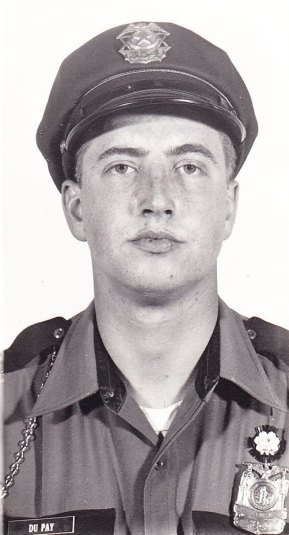
Thus begins a memoir by Don DuPay, (pictured left as a rookie patrolman) He served the people of Portland, Oregon faithfully and well all through the turbulent sixties and seventies, but his time with the police was not to end with a gold watch and choruses of “For he’s a jolly good fellow..” from his fellow officers. Although Don’s book is full of insights into his years of policing Portland, the case which effectively ended his career is worth a detailed look. In 1975, DuPay had investigated the death of a black youth called Zebedee Manning. The fifteen year-old was found in his bedroom, laid out with his arms and hands folded across a sawn-off .22 rifle that lay on his chest. The eyes were shut and he could see the boy had been shot at point blank range directly through the centre of his forehead. Manning (below, photographed at the funeral home) was already in a full tail spin down through a spiral of drug abuse, petty criminality and despair.

Dupay was certain that the Manning crime scene had been set up – unconvincingly – by someone who was keen to have the death recorded as a suicide. He was shocked when he was told by a senior officer that Manning’s death was just that:
“It’s over, DuPay. Go work on something else. He’s just another nigger dope dealer who cashed in his chips – so what?”
Angered and astonished by the callous dismissal of a young boy’s life and death, DuPay resolved to work the case on his own. DuPay knew that the boy’s bedroom had not witnessed a suicide, but something more sinister. There were four key pieces of evidence which were screaming “murder!” to Dupay, if to no-one else.
(1) Who shoots themselves through the forehead, and then manages to rearrange their hands to cradle the weapon?
(2) Downstairs on the kitchen table were four empty glasses and half a bottle of whisky. Manning’s mother, Annie Mae, had been at work and came home, only to discover her son’s body. She insisted that alcohol was never allowed in the house. Who, then, were the drinkers?
(3) There were two bullet holes in Zebedee’s room, one in the wall and one in the ceiling. Was this Zebedee practicing, or could they have come from someone firing the gun to frighten him?
(4) DuPay found three car titles in the boy’s room. These are the American equivalent of UK vehicle registration documents, and were commonly used as collateral in drug dealing.
 Dupay was convinced that Manning had been killed for some infraction or a bad debt in the violent and ruthless world of those who deal in narcotics. But why were senior officers of the Portland Police Bureau determined to bury the case? Why did Dupay arrive at the office the day after the body had been found, and found that all the details had been wiped from the status board listing ongoing and unsolved cases?
There could only be one logical answer, and it sent an icy chill down DuPay’s spine. Zebedee Manning was dead, because he had been involved in some kind of drug scam which involved officers from the PPB. DuPay’s suspicions were as good as confirmed when he was abruptly busted down from the Homicide division to work in the dog-end department of Burglary. DuPay stuck it out for another few years, but his faith and trust had been irrevocably shattered. By April 1978, he’d had enough:
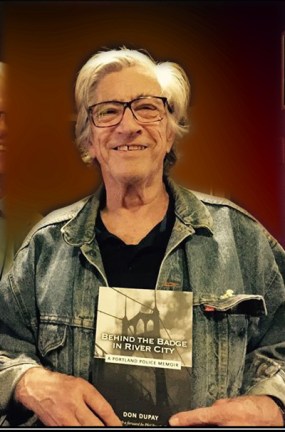 “I tossed my badge on the Captain’s desk, telling him that I was sick of the job and tired of the hypocrisy of people like him. I told him my health had been suffering and I hated the work, only because I hated some of the people I was forced to work with. I also hated being told that I could not investigate a particular 1975 ‘suicide’ that I knew to be a murder.”
Don DuPay left the police force and found that his skills and experience were in demand elsewhere, in the private sector. His memoir is brimful of stories of brave men trying to confront villainy on mean and dangerous streets. He writes with disgust of people in power who have traded trust for expediency. He exposes a culture deeply embedded in a police force which viewed the folk on the streets as potential enemies at the worst, and at best time wasters and irrelevant small fry. To this day, no-one has been convicted of the killing of Zebedee Manning.

and from
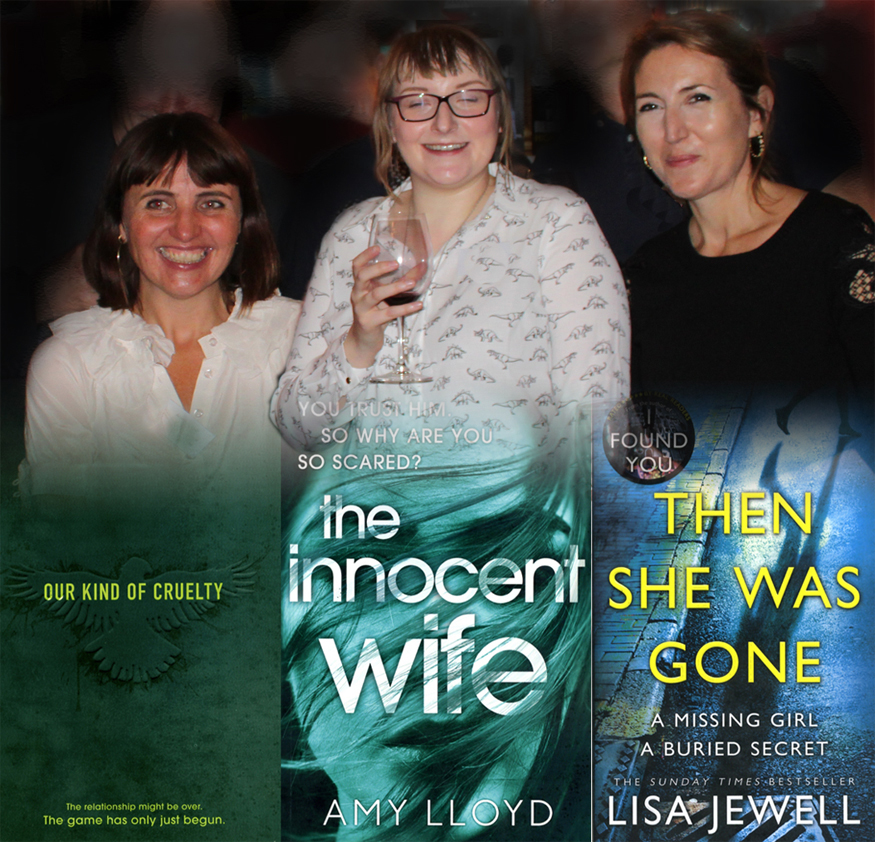

I was lucky enough to receive an invite to Crimenight, an event hosted by Cornerstone, which is part of the Penguin group and one of the most successful commercial imprints in the UK. It was a chance to rub shoulders and swap yarns with some of the biggest names in crime fiction – and a couple of people who have a foot on the first rungs of the ladder.
Back L-R: John Harvey, Phil Redmond, Anthony Horowitz, Tony Parsons, Simon Kernick
Front L-R: Araminta Hall, Selina Walker (Publisher, Century and Arrow), Amy Lloyd, Lisa Jewell

Getting the celebrity name-drop out of the way first, it was brilliant to be able to shake hands and chat with Tony Parsons, one of my favourite current UK crime writers – check out the review of his most recent Max Wolfe novel Die Last, and you can see why. He is a genuinely nice guy and right up at the top of my list. Was I starstruck? Well, yes, just a little, because in addition to Tony, John Harvey, the creator of Charlie Resnick and Frank Elder, was in attendance, as was thriller specialist Simon Kernick, award-winning producer and screenwriter Phil Redmond (Grange Hill, Brookside and Hollyoaks look pretty good on his CV),and Lisa Jewell, who has a string of best-selling domestic thrillers like The Third Wife and I Found You under her belt. You can win a copy of her latest, Then She Was Gone, at the end of this feature.
The amazingly versatile Anthony Horowitz was another of the guests who has featured on Fully Booked before. Horowitz, as well as having millions of us glued to the small screen on Sunday nights with his brilliant Foyle’s War series, and writing the best selling Alex Rider novels aimed at young adults, has also written Sherlock Holmes adventures and stand-alone CriFi. Take at a look at our review of The Word Is Murder, his most recent novel.
 It was a privilege to talk to two authors who represent the next generation of fine crime writers. Amy Lloyd is from Cardiff, but her debut novel is set far, far away in the badlands of Florida. The Innocent Wife tells the story of a convicted killer whose claims to innocence attract the attentions of the worldwide media – and those of Samantha, a young woman from England. She is obsessed with his case and, after an intense relationship based on letters, she leaves home and marries him. It is only when the campaign for his release is successful that Samantha’s problems begin in a deadly fashion. Amy, by the way, has already won the Daily Mail and Penguin Random House First Novel Competition with The Innocent Wife.
 Araminta Hall is no novice author, as she has written successful psychological thrillers such as Everything and Nothing. Her latest novel Our Kind Of Cruelty is due to be published in 2018, and it concerns a couple, Mike and Verity, whose relationship features a deadly game called the Crave. Mike describes the rules:
“The rules of the Crave were very simple. V and I went to a nightclub in a pre-determined place a good way from where we lived, but entered separately. We made our way to the bar and stood far enough apart to seem that we weren’t together, but close enough that I could always keep her in vision.”
Verity basically makes herself very visible, catching the eyes of any lone male who might be interested, and then drawing him into her web with her stunning looks and overt sexuality. Then, the game kicks in:
“We have a signal: as soon as she raises her hand and pulls on the silver eagle she always wears around her neck I must act. In those dark throbbing rooms I would push through the mass of people, pulling at the useless man drooling over her, and ask him what he was doing talking to my girlfriend.”
When the relationship eventually sours, and Verity needs to move, she finds to her cost that the perverse twist in her relationship with Mike cannot be simply cast off like an unwanted piece of clothing.
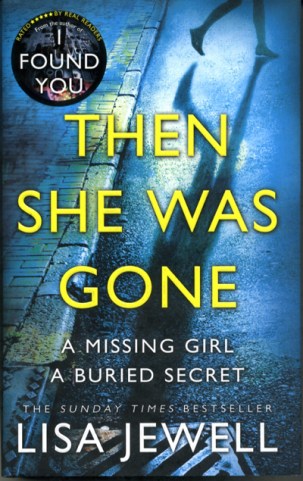 Lisa Jewell knows a thing or three about locating the strings that pull on a reader’s senses, particularly those of anxiety, sympathy and tension. In Then She Was Gone she tweaks these strings to maximum effect with the story of a woman whose life is shattered when her fifteen year-old daughter disappears without trace or reason. Ten years pass and, while Laurel will never come to terms with Ellie’s disappearance, she has learned to live with the numbness. Her life seems to be taking a turn for the better when she is begins a relationship with an intriguing man called Floyd. The intrigue, however, turns to shock when she meets his young daughter – who is the spitting image of the her missing Ellie.
To win a hardback copy of Then She Was Gone, simply email us at the address below, putting Lisa Jewell in the subject box, or go to the Fully Booked Facebook page and ‘like’ the post. The winner will be drawn from all entries received. The competition closes at 10.00pm GMT on Sunday 8th October. On this occasion, we will be unable to send the prize to the USA due to postal costs.


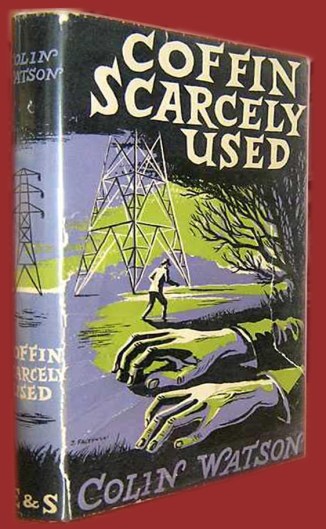 Coffin Scarcely Used – the first of The Flaxborough Chronicles – begins with the owner of the local newspaper dead in his carpet slippers, beneath an electricity pylon, on a winter’s night. Throw into the mix an over-sexed undertaker, a credulous housekeeper, the strangely shaped burns on the hands of the deceased, a chief constable who cannot believe that any of his golf chums could be up to no good, and a coffin containing only ballast, and we have a mystery which might be a Golden Age classic, were it not for the fact that Watson was, at heart, a satirist, and a writer who left no balloon of self importance unpricked.
The permanent central character of Inspector Walter Purbright is beautifully named. ‘Purbright’ gives us a sense of sparky intelligence gleaming out from a solid, quintessentially English, impermeable foundation. He is described as a heavy man, with corn coloured hair. He has a deceptively reverential manner when dealing with the aldermen and worthies of Flaxborough, but he is no-one’s fool.
The sheer joy of this book in particular, and the Flaxborough novels in general, is the language. Perhaps it looks back rather than forward, but there are many modern writers who would happily pay homage to the unobtrusive Lincolnshire journalist. Of Mr Chubb, the Chief Constable, Watson observes:
“Not for the first time, he was visited with the suspicion that Chubb had donned the uniform of head of the Borough police force in a moment of municipal confusion when someone had overlooked the fact that he was really a candidate for the curatorship of the Fish Street Museum.”
Of the detecting skills of Sergeant Love, Purbright’s long-suffering subordinate, we learn:
“The sergeant was no adept of self effacing observation. When he wished to see without being seen, he adopted an air of nonchalance so extravagant that people followed him in expectation of his throwing handfuls of pound notes in the air.”
With such an ability to turn a phrase, it is almost irrelevant how the book pans out, but Watson does not let us down. Purbright uncovers a conspiracy involving loose women, a psychotic doctor and a distinctly underhand undertaker – hence the title. Watson himself remains mostly unknown to today’s reading public, but is rightly revered by connoisseurs of crime fiction. He was politically incorrect before the phrase was even invented and, although his pen pictures of self important provincial dignitaries are sharply perceptive, they also portray a fondness for the mundane and the ordinary lives lived beneath the layers of pretension.
There were to be be eleven more Flaxborough novels, and the final episode was Whatever’s Been Going On At Mumblesby? It again features Mr Bradlaw, the shamed undertaker from the very first novel. He has served his time for his part in those earlier misdeeds, however, and has returned to Flaxborough, thus giving the series a sense of things having come full circle. In 2011, Faber republished the series digitally, but the Kindle versions are not cheap and you might be better off seeking a secondhand paperback.
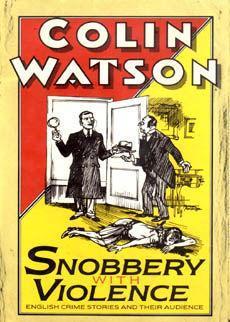 In addition to such delightful titles as Broomsticks Over Flaxborough and Six Nuns And A Shotgun (in which Flaxborough is visited by a New York hitman) Watson also wrote an account of the English crime novel in its social context. In Snobbery With Violence (1971), he sought to explore the attitudes that are reflected in the detective story and the thriller. Readers expecting to find Watson reflecting warmly on his contemporaries and predecessors will be disappointed. The general tone of the book is almost universally waspish and, on some occasions, downright scathing.
He is particularly unimpressed by the efforts of writers such as H C McNeile (Sapper), Arthur Henry Sarsfield Ward (Sax Rohmer) and E W Hornung. Whereas modern commentators might smile indulgently at the activities of Bulldog Drummond, Denis Nayland Smith and Arthur J Raffles, and view them as being ‘of their time’, Watson has none of it. He finds them racist bullies, insuperably snobbish and created purely to pander to the xenophobic and blinkered readership of what we would now call Middle England.

Watson’s apparent contempt for the Public School ethos prevalent in these writers of the first part of the twentieth century seems, at first glance, strange. He was educated at Whitgift School in Croydon, but in his day the school was a direct grant school, meaning that its charter stipulated that it provide scholarships for what its founder, Archbishop John Whitgift, termed,”poor, needy and impotent people” from the parishes of Croydon and Lambeth. The school has been fully independent for many years, but in Watson’s time there may have been an uneasy mix of scholarship boys and those whose wealthy parents paid full fees. Despite Watson and other local lads having gained their places by virtue of their brains, it is quite possible that they were looked down on by the ‘toffs’ who were there courtesy of their parents’ wealth.
As Watson trawls the deep for crime writers, even Dorothy L Sayers doesn’t escape his censure, as he is irritated by Lord Peter Wimsey’s foppishness and tendency to make snide remarks at the expense of the lower classes. Edgar Wallace and E Phillips Oppenheim who, between them, sold millions of novels, are dismissed as mere hacks, but he does show begrudging admiration for the works of the woman he calls ‘Mrs Christie’, despite rubbishing her archetypal English village crime scene, which he scorns as Mayhem Parva. Watson admires Conan Doyle’s clever product placement, Margery Allingham’s inventiveness and ends the book with a reasonably affectionate study of James Bond, although he is less than sanguine about 007’s prowess as a womaniser:
‘The sexual encounters in the Bond books are as regular and predictable as bouts of fisticuffs in the ‘Saint’ adventures or end-of-chapter red herrings in the detective novels of Gladys Mitchell, and not much more erotic.”
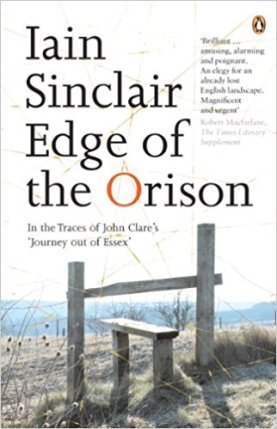 In the end, it seems that Watson had supped full of crime fiction writing. Iain Sinclair sought him out in his later years at Folkingham, and wrote
“Gaunt, sharp-featured, a little wary of the stranger on the step, Watson interrupted his work as a silversmith. Eyeglass. Tools in hand. He couldn’t understand where it had all gone wrong. His novels were well-received and they’d even had a few moments of television time, with Anton Rodgers as the detective. The problem was that Watson, lèse-majesté , had trashed Agatha Christie in an essay called ‘The Little World of Mayhem Parva’.
Watson put away his instruments, took me upstairs to the living room. He signed my books, we parted. He was astonished that all his early first editions were a desirable commodity while his current publications, the boxes of Book Club editions, filled his shelves. He would have to let the writing game go, it didn’t pay. Concentrate on silver rings and decorative trinkets.” (Iain Sinclair “Edge of the Orison” Hamish Hamilton 2005.)



 fullybooked2017