
The most sinister fictional hitmen usually only have a surname, and if that name is a harsh monosyllable, then all the better. Kale is one such, and Peter May introduces him to us in his latest novel, The Man With No Face. Kale, who learned his trade in the British Army, is sent to Brussels to carry out a double killing.
The central character is not the malevolent Kale, but a Scottish journalist, Neil Bannerman, who is sent to Brussels, partly to keep him out of the way of his paper’s thrusting new editor, but also to delve for sensational stories of immorality and incompetence among the myriad employees of what we now call the European Union.
 Bannerman initially lodges with an embittered fellow journalist, Tim Slater, who shares his apartment with his autistic daughter Tania. The child is looked after by a young Englishwoman, Sally Robertson, with whom Bannerman strikes up a relationship. Kale’s victims are Slater himself and a senior British politician but when he strikes he is unaware that Tania is watching from the next room. Mute, she is later unable to tell the police anything, but she draws a picture of what she has seen. The drawing is intensely detailed and very graphic with one exception. The killer has no face.
Peter May aficionados will probably recognise this book in its earlier manifestations; firstly as Hidden Faces, published by Piatkus in 1981 and again with its current title a year later, but this time under the imprint of St Martin’s Press.
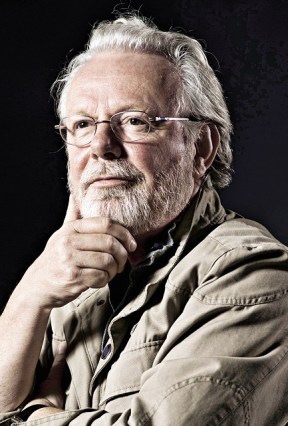 How has the book fared, nearly forty years on? Whatever revisions the author has made, he hasn’t pushed the time slot on by four decades, so we are still in the late 1970s, so in a sense the book has become historical crime fiction by default. I don’t know what Peter May (right) thinks about the vexed question of Brexit, but here he paints a picture of the EEC in its all-too-familiar guise as a fraud-riven monolithic haven for thousands of bureaucrats, men and women pushing paper around at huge expense to taxpayers across the continent, but achieving very little except the perpetuation of their own jobs.
The vexed question of Britain’s relationship with southern Africa in the 1970s is now little more than a footnote in the history of the 20th century, but May uses it to good effect here. The setting of The Man Without A Face is a wintry Brussels that, quite literally, chills us to the bone. The snow, sleet, bitter winds and the hazy winking of car tail lights as they battle with the frozen city streets will make you want to reach for an extra layer of warm clothing. In keeping with the weather, there is a distinct noir-ish feel about much of the book, and the existential musings of Kale as he goes about his bleak business reminded me very much of Derek Raymond. Bear in mind, though, that Raymond’s classic Factory novels post date this, making me think that perhaps Peter May was ahead of the game.
Back in 1981, the trope of the mute, blind or disabled witness to a crime had already been explored, most memorably in the Audrey Hepburn film Wait Until Dark (1967), but our current awareness of the complex issue of people with Autism was not mainstream in the 1980s. Leaving aside the socio-cultural background, The Man With No Face is a cracking thriller now, as it must have been then. It is published by riverrun, which is an imprint of Quercus. and it’s out on 10th January.


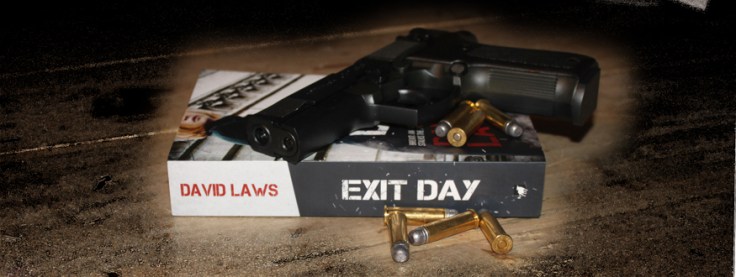
 Those last seven words kill, and journalist David Laws (left) has written a novel about the “passionate intensity” which sparks political assassination. The fateful day of Britain’s exit from the EU is dawning, and a vicious conspiracy is about to make all the previous months of political bickering seem like a garden party in comparison. Inadvertently, a journalist called Harry Topp has embedded himself at the heart of the plot, and he blunders on in search of a lifetime scoop, blissfully unaware of what is unfolding around him.
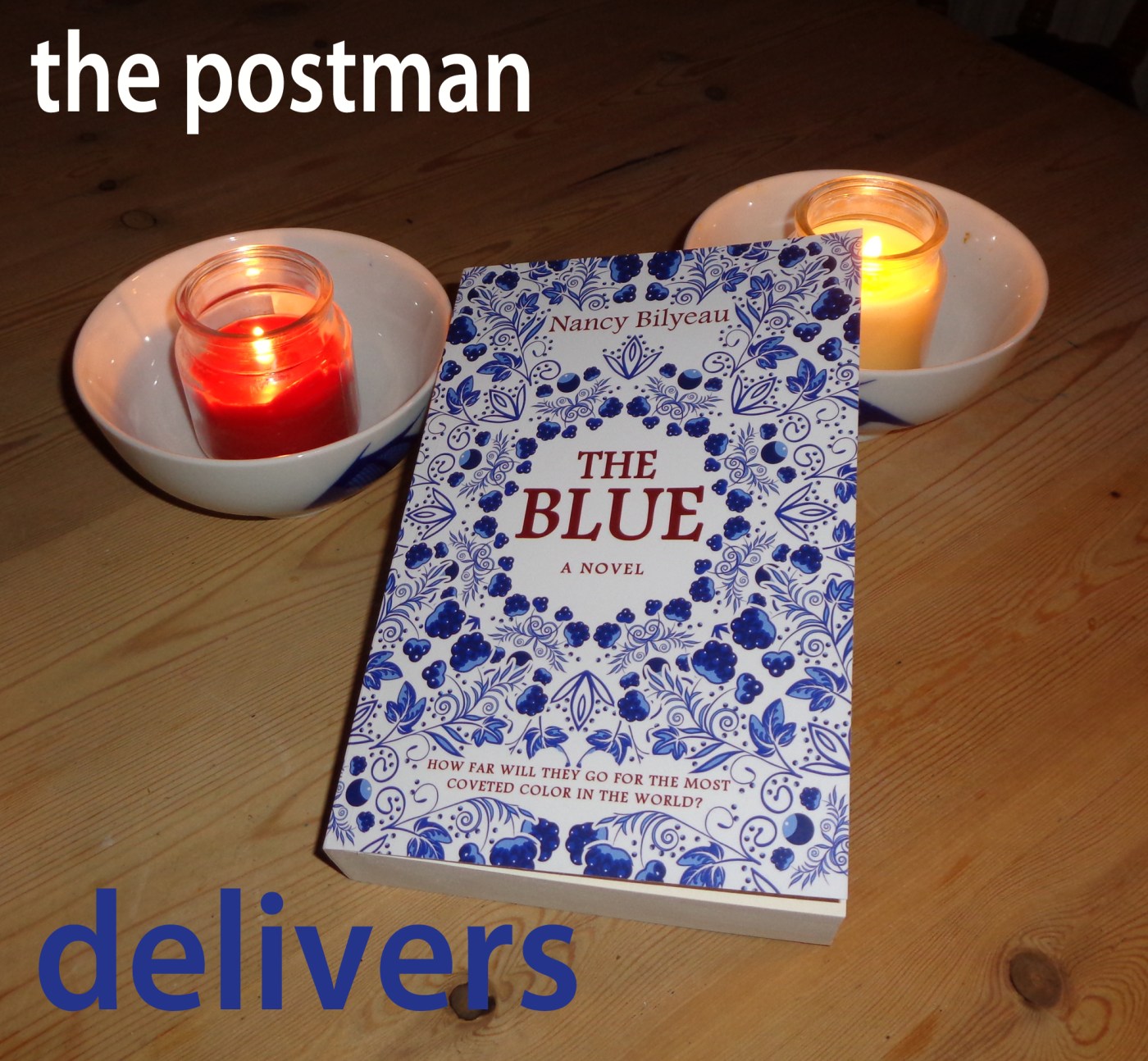

 The Blue by Nancy Bilyeau is a perfect novel for those long winter evenings, even though The Great Darkness is getting slightly shorter as each day passes. Lovers of historical adventure and romance should find plenty to engage them in this story of Genevieve Planché, a young and rebellious Huguenot artist on a quest for a colour: the most exquisite shade of blue.
 Her ambition is to travel to Venice to learn the secrets of Tintoretto, Veronese and Giorgioni, but her only chance is in the hands of an urbane – but possibly dangerous – English aristocrat, Sir Gabriel Courtenay.

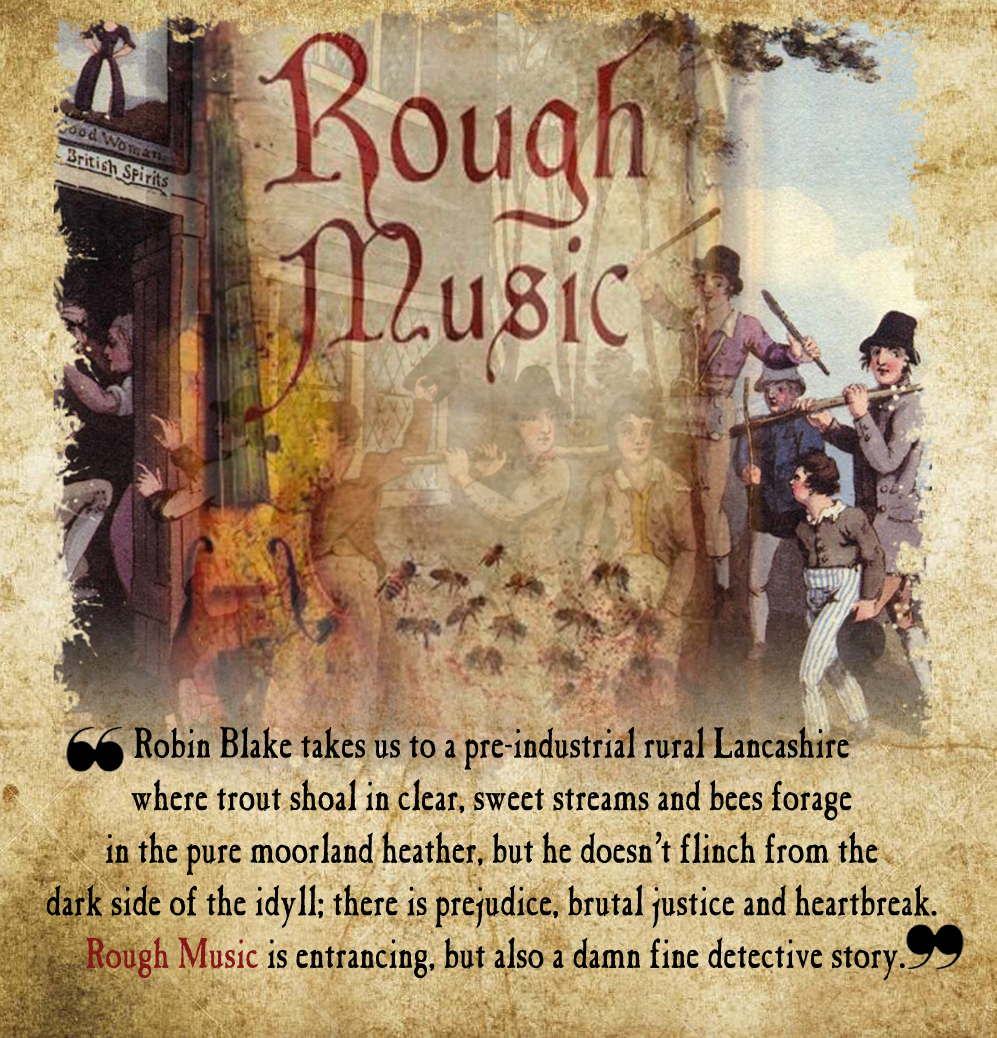

 Robin Blake (left) introduced us to Preston coroner Titus Cragg and his physician friend Luke Fidelis in A Dark Anatomy back in 2015, and the pair of eighteenth century sleuths are back again with their fifth case, Rough Music.
 Titus Cragg with his wife and child have retreated from Preston to escape the ravages of a viral illness which has claimed the lives of many infants. They have fetched up in a rented house in Accrington, then little more than a scattering of houses beside a stream. Cragg is drawn into the investigation of how it was that Anne Gargrave died at the hands of her fellow villagers, but his work is complicated by a feud between two rival squires, a mysterious former soldier who may have assumed someone else’s identity, and the difficulty created by Luke Fidelis becoming smitten by the beguiling – but apparently mistreated – wife of a choleric and impetuous local landowner.
 I have to admit to a not-so-guilty-pleasure taken from reading historical crime fiction, and I can say with some certainty that one of the things Robin Blake does so well is the way he handles the dialogue. No-one can know for certain how people in the eighteenth century- or any other era before speech could be recorded – spoke to each other. Formal written or printed sources would be no more a true indication than a legal document would be today, so it is not a matter of scattering a few “thees” and “thous” around. For me, Robin Blake gets it spot on. I can’t say with authority that the way Titus Cragg talks is authentic, but it is convincing and it works beautifully.

 Australian crime fiction suffered two body blows in 2018 when the two great Peters – Temple and Corris – died within months of each other. While they can never be replaced, there is, thankfully, a younger generation stepping up to the plate, and Candice Fox (left) is in the first rank of these. No-one needs to be reminded of the great detective duos of the past, but Fox has created a partnership for the 21st century in the persons of Ted Conkaffey and Amanda Pharrell.
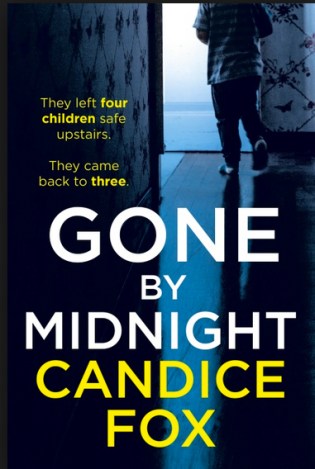 Richie Farrell’s disappearance is less of a conundrum than a downright impossibility. There is no obvious motive, no forensic evidence, and no sign of him – or his abductor – on the plentiful CCTV footage in and around the hotel. When the solution does come, it is extremely ingenious, and owes its surprising nature to the characters in the story – and us readers – making the kinds of assumptions that the great consulting detective of 221B Baker Street was so good at avoiding.

















 fullybooked2017