Manchester writer Chris Simms intoduced us to Detective Constable Sean Blake in Loose Tongues (Severn House, 2018) where he was making his debut in the city’s Serious Crimes Unit. Crime buffs will know that Simms has been around for a while, building a serious readership with his books about another Manchester copper, the rather more senior Detective Inspector Jon Spicer, as well as earlier novels featuring DC Iona Khan of the Manchester Counter Terrorism Unit.
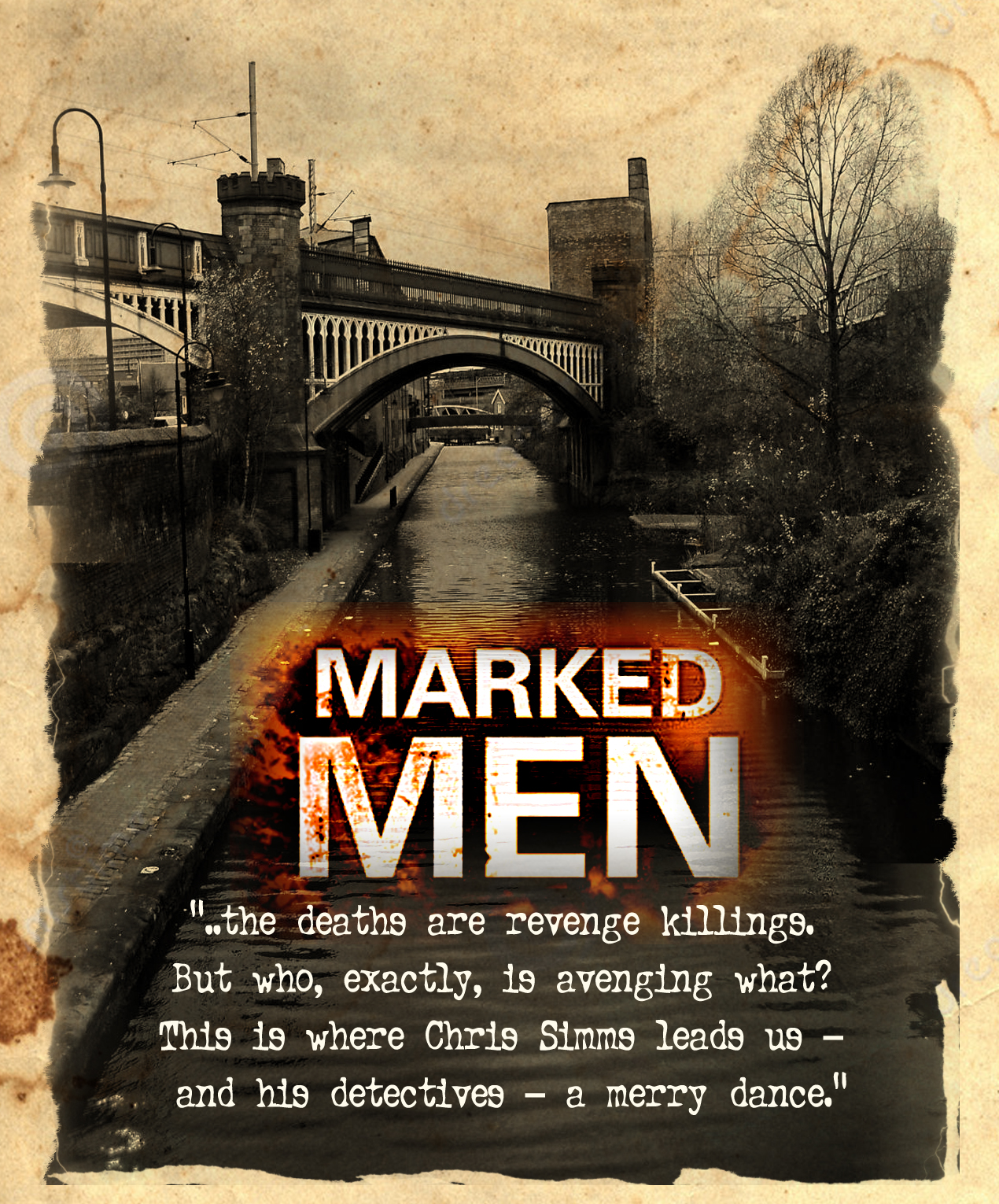
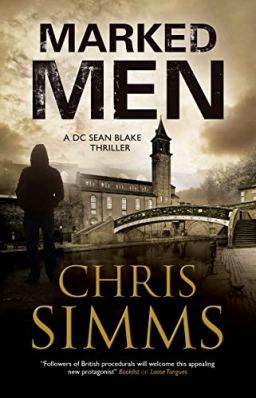 Marked Men begins on an idyllic Spanish beach, but then switches to the less salubrious setting of urban Manchester, and we only learn the significance of the opening much later in the plot. This way of starting a novel has become rather well-worn, but Simms handles it well and times to perfection the revelation of its significance. The Manchester action begins with Blake in waders and hard hat at the bottom of a drained lock on a local canal. There is a body, naturally, with more to follow, and as Blake and his immediate boss, DS Dragomir criss-cross the city trying to make sense of the crime scenes we – like them – are drawn into thinking that the deaths are revenge killings. But who, exactly, is avenging what? This is where Chris Simms leads us – and his detectives – a merry dance. There is a clue, but I have to confess I didn’t get it any quicker than did Blake and Dragomir.
Police procedurals come and go; some writers, in an effort to take the genre in a new direction, make the featured police officers ever more quirky and disagreeable, to the extent that they are barely functioning as normal human beings. Simms has a steadier hand, and is happy to have Sean Blake as thoroughly decent fellow, perhaps a tad naïve at times, but – as an officer – alert and intelligent. The shadow of his late mother is slowly receding as he makes his on way through the complex office politics of the police station. For a boy brought up in rural Sussex and then spending his university days in Newcastle, Simms certainly knows his Manchester and, as in the Jon Spicer novels – he makes the city a strong and vibrant character.
Marked Men will be published by Severn House in hardback at the end of March, while Kindle users will have to wait for the Darling Buds of May to open before they get their chance. Chris Simms has his own website, a Facebook page, and is also on Twitter. Click on the images below to find out more.






 I would be lying if I said I hadn’t been counting the days until this arrived. Kerry Hood at Hodder & Stoughton is to be commended for showing great patience in the face of my impatience, but it finally arrived. Kerry had mentioned that it might be something special, but then publicists always say that, don’t they? So, ripping off the sturdy cardboard wrapper ….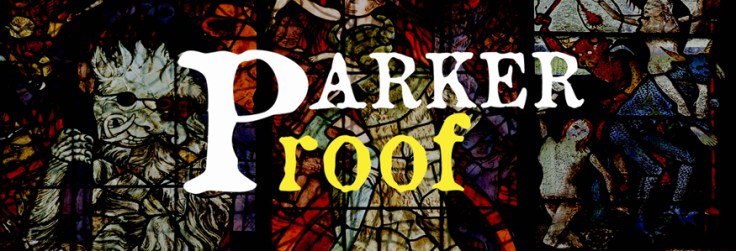
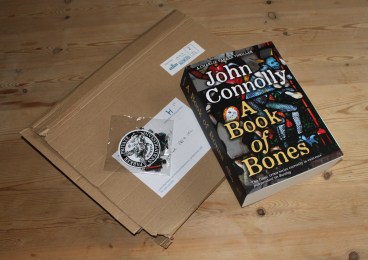 Ta-da! And there it was, the long awaited latest journey into the darkness of men and angels for the Maine PI, Charlie Parker. The adjectives are easy – haunted, conflicted, convincing, troubled, angry, brave … fans of the series can play their own ‘describe Charlie Parker’ game, but most importantly, our man is back.
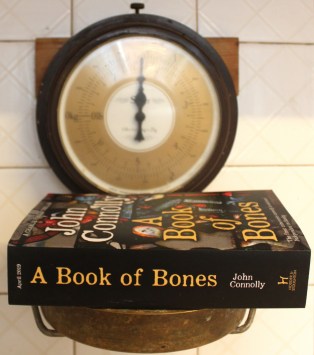 Charlie Parker is back, and how! I was advised that I might want to set aside a fair amount of time to read A Book of Bones but, blimey, Kerry was not wrong. At a little short of 700 pages, and weighing nearly 2lbs in old money, the book is certainly a big ‘un. New readers shouldn’t be daunted, though. John Connolly couldn’t write a dull sentence even if he went off to his Alma Mater, Trinity College Dublin, to do a doctorate in dullness.
 But there was more! Book publicists are an inventive lot, and over the years I’ve had packets of sweets, tiny vials of perfume, books wrapped in funereal paper and black ribbon, facsimiles of detective case files – but never a jigsaw. Wrapped up in a cellophane packet with a lovely Charlie Parker 20 year anniversary graphic were the pieces.
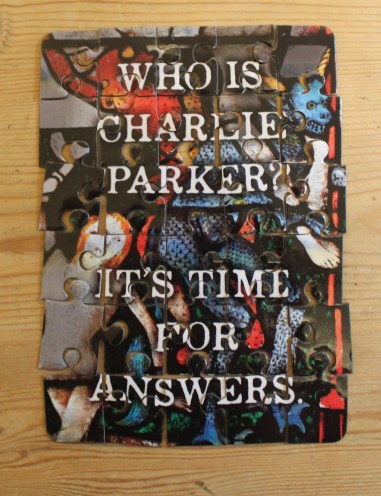 As I was always told to do by my old mum, I isolated the bits with the straight edges first. There was clearly a written message in there, set against the lovely – but sinister – stained glass background. Confession time; although the puzzle didn’t have too many pieces, I got stuck. Fortunately, Mrs P was taking a very rare day off work with a flu bug, and as she is a jigsaw ace, she finished it off for me.
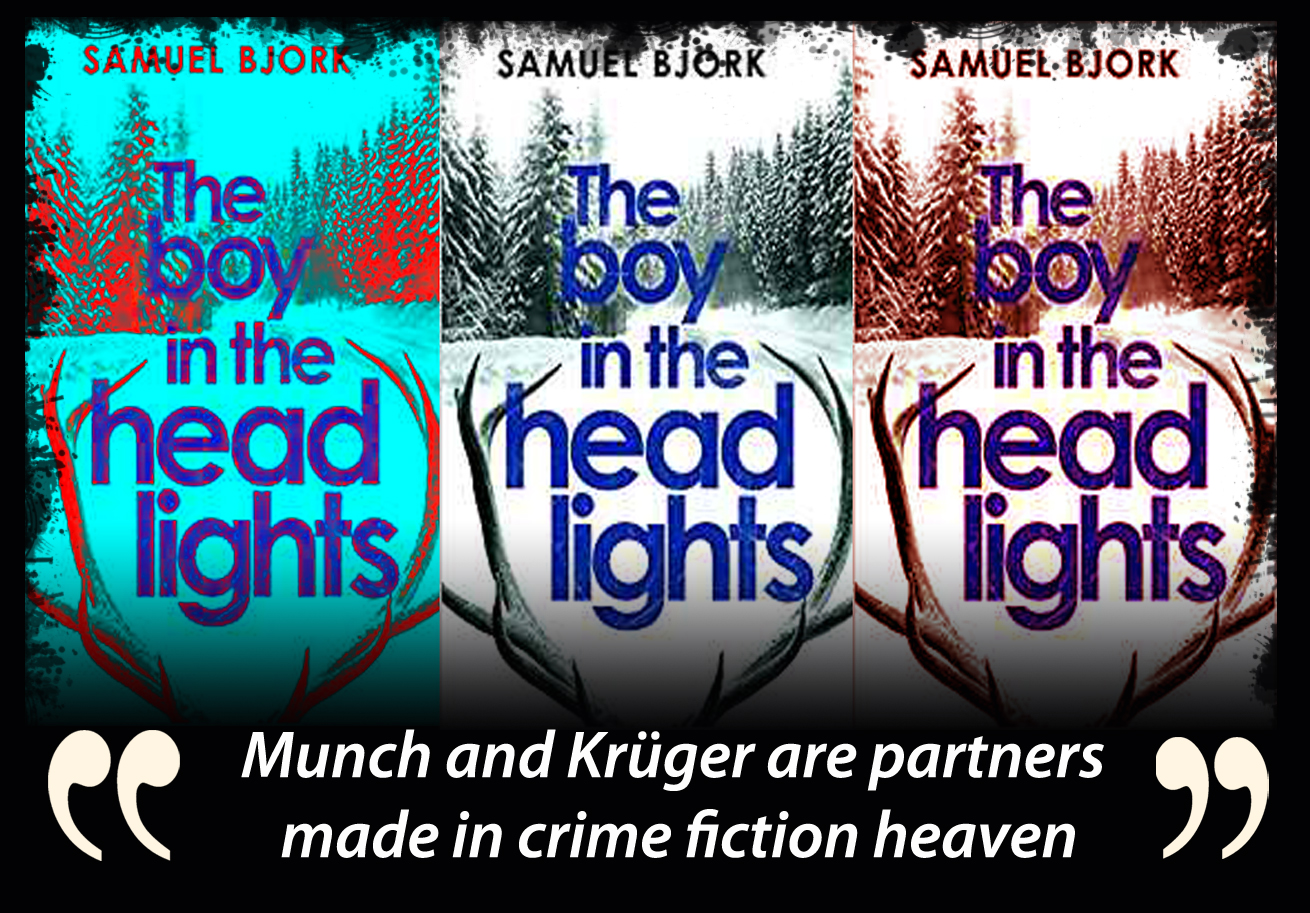

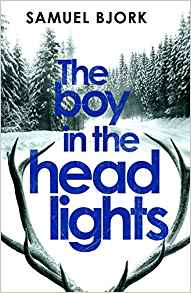 Norway’s Samuel Bjork ticks the boxes with his Olso cops Holger Munch and Mia Krüger. Munch is a bearded bear of a man, overweight and stuffed into his habitual duffel coat like a fat foot into a shoe two sizes too small. His home life is in disarray. Separated from his wife, his daughter Miriam recovering from a serious injury, he seems to treat those people with – at best – edgy tolerance, but his obsession is with the job, and catching criminals. Krüger’s back story makes Munch’s people look like candidates for a TV breakfast cereal advert emphasising warm family values. The story opens with her recovering from – in no particular order – alcoholism, a fatal shoot-out after which she was accused of murder, and the haunting death of her sister, victim of Oslo’s drug scene.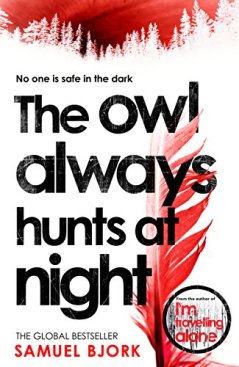






 JO BAKER was born and raised in Lancashire, and was educated at Queen Elizabeth School, Kirkby Lonsdale, and Somerville College, Oxford. The Body Lies is her seventh novel, and her best-seller Longbourn is a highly individual reshaping of Pride and Prejudice as seen through the eyes of the “below stairs” staff in the Bennet house. Jo Baker has
 TINA BEATTIE was born in 1955 in Lusaka, Zambia. Her parents were economic migrants from post-war Scotland. She is now Professor of Catholic Studies at the University of Roehampton in London, and has written widely on theology and the Roman Catholic faith. Her writing, particularly with regard to women’s rights and feminism have often brought her into conflict with the more conservative wing of her church. Her Amazon page is
 MP MILES is from a small town in Dorset.

 Forced to play cherchez-la-femme, the detectives stumble down one blind alley after another, but as they do so they learn a few home truths about the fate of the young men who went to fight in the war-to-end-all-wars, and returned home to find that their birthplace was not the ‘land fit for heroes’ glibly promised by politicians. There is a peacetime army with no place for young officers whose courage was welcome in the trenches, but whose humble upbringing is now seen as an embarrassment as the cigars are lit, and the port passed in the correct direction at mess dinners. Such young men, not all heroes, but men nevertheless, are forced to find civilian employment which is neither honest, decent nor lawful.
 Graham Ison is a master story-teller. The Hardcastle books contain no literary flourishes or stylistic tricks – just credible characters, excellent period detail and an engaging plot. Cosy? Perhaps, in the sense that we know how Hardcastle and his officers are going to react to any given situation, and their habits and small prejudices remain unchanged. Comfortable? Only because novels don’t always need to shock or challenge; neither do they always benefit from graphic descriptions of the damage humans can sometimes inflict on one another. Ison (right) credits his readers with having imaginations; he never gilded the lily of English life in the earlier Hardcastle cases which took place during The Great War, and he doesn’t start now, nearly a decade after the final shots were fired. The suffering and trauma of those four terrible years didn’t end at the eleventh hour on that eleventh day; they cast a long and sometimes baleful shadow which frames much of the action of this novel.


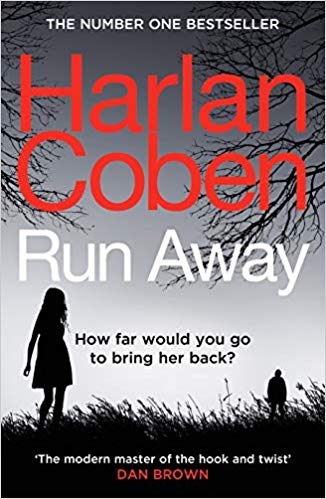 Start a 366 page book like that, and you might be making a rod for your own back, one that will whack you squarely between the shoulder blades if you don’t keep up the poetic intensity. Does Coben manage it? Of course he does – and with the stylish flourishes and narrative élan we have come to expect from one of the great crime writers of out time.
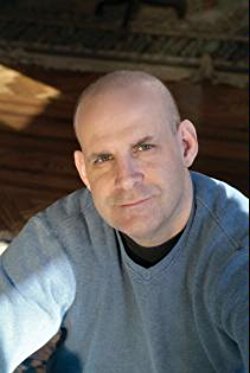 Harlan Coben (right) has thirty or so best selling crime thrillers behind him, but we must never, ever, take him for granted. There is no formula, no template, and no literary flat-pack easy-to-assemble ‘give-the-audience-what-it-wants’ sameness. He takes us to uncomfortable places and introduces us to people who are not stereotype heroes or villains. He is unafraid to give us a rough ride along roads traveled by complicated people who frequently confound our perceptions. Runaway is, quite simply, a brilliant read. It is published by Century and will be out in

 #Taken kicks off, appropriately enough, when a young ballet dancer, Jessica Lyle, is snatched from her borrowed car just yards from the gated luxury home she shares with another girl. From here, Wolfe and his alcoholic boss DCI Pat Whitestone face a veritable University Challenge of questions. Their starter-for-ten is to decide if Jessica was actually the intended victim. Although her father is a retired copper who may have run up an impressive list of enemies, isn’t it more likely that Jessica was mistaken for her flatmate, Snezia? After all, Snezia is not only a dancer of a different kind from Jessica (think ‘gentlemen’s’ clubs, tiny thong and shiny pole) but she is the mistress of fabled former gang boss Harry Flowers. Jessica was driving Snezia’s car when she was taken. Isn’t this just another example of the stupidity of hired thugs?

 “Begin as you mean to go on” says the old adage, and Jim Kelly sets himself a hard task with the brilliant and evocative first paragraph of The Mathematical Bridge. The beautiful use of language aside, Kelly’s first 126 words convey a wealth of information. A country at war. Midwinter. A city preparing for an attack from the air. A policeman out and about when honest men are abed.
 This is writing of the highest quality. Not just with the lame caveat ‘for a crime novel’ but writing with a touch of poetry and elegance gracing every line. Even when the crime is solved, the perpetrators are behind bars, and the delightfully complex contradictions of the plot have been explained, Kelly (right) still has the emotional energy to give us a last scene which manages to be poignant but, at the same time, life-affirming.


 fullybooked2017