
 he name Maurice Procter is not one that is regularly bandied around at crime fiction festivals when the Great and The Good are discussing pioneering and innovative writers of the past. He is, just about, still in print thanks to the wonders of Kindle and specialist reprinters such as Murder Room. I’m reluctant to use the fatal words “in his day”, but Procter was a prolific and popular writer of crime novels between 1947 and 1969.
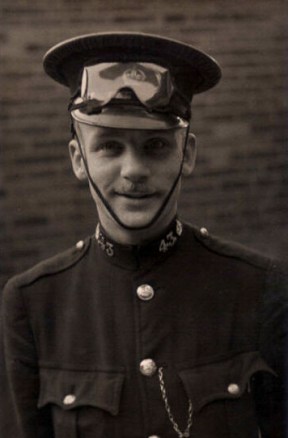 Born in the Lancashire weaving town of Nelson, Procter (left) joined the police force in nearby Halifax in 1927 and remained a serving officer until the success of his novels enabled him to write full time. In 1954 he published the first of a fifteen book series of police procedurals featuring Detective Inspector Harry Martineau. Martineau is a detective in the city of Granchester. Replace the ‘Gr’ with “M’ and you have the actual location pegged.
Hell Is A City is a dark tale which pivots around the enmity between Martineau and a violent and resourceful criminal called Don Starling. Starling is as hard as nails and doesn’t shrink from brutality towards fellow men – or women. Starling is ‘doing time’ but acts like a reformed man in order to escape close prison supervision. Naturally, he seizes his moment and goes over the wall and on the run.

 tarling wastes no time in organising his next heist, and it is a daring cash grab. The victims are two hapless young clerks who work for city bookmaker Gus Hawkins. On their way to the bank with a satchel full of takings from Doncaster races, they are waylaid. Colin Lomax is coshed and left with a serious head injury but Cicely Wainwright fares even worse. Because the money bag is chained to her wrist, she is flung into the back of the getaway van and is killed by Starling as the gang make their escape over the moors to the east of the city. The bag is cut from Cicely’s wrist, and her body is dumped. Of course, this ups the stakes, much to the discomfort of Starling’s gang members, each of whom realises that they face the hangman’s noose if they are caught and convicted as accessories to murder. The hangman, by the way, is a well-known local resident:
“Clogger and Jakes turned their heads quickly, their smiles fading. They stared. Then Jakes pulled Starling’s knee aside and looked down at the girl’s face.
‘Cripes!,’ he said unhappily, “She’s croaked.’
Starling nodded. ‘Some time ago,’ he said.
‘You bloody fool,’ said Jakes, his voice rising with panic.
‘Hell fire!’ Clogger whispered, and he had indeed turned pale. ‘You didn’t have to do that, did you?’
Laurie Lovett was silent. He kept his eyes on the road as if nothing had happened. But a muscle of his jaw had started to twitch.
The same fear was upon them all. They were reminded of a man they knew by sight. He kept a pub in Hollinwood. The name of the pub was Help The Poor Struggler. The man’s name was Albert Pierrepoint.”
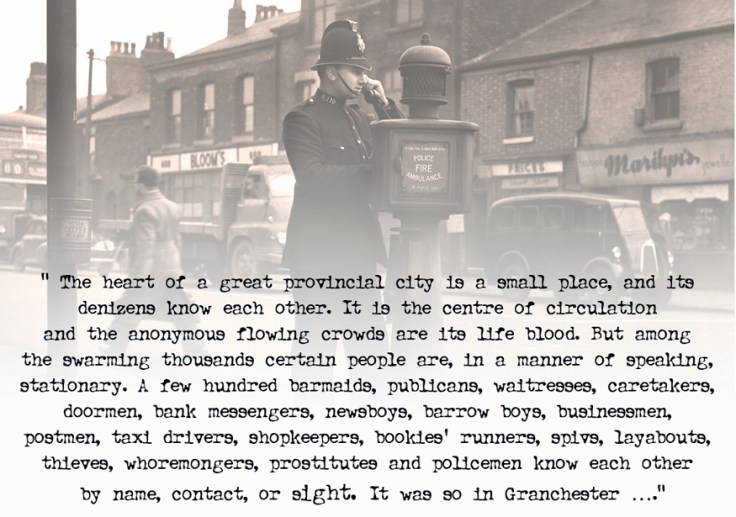
 I was quickly hooked by this novel, for a variety of reasons. Anyone who has driven east out of Manchester in the direction of Sheffield (which makes a brief apparance as Hallam City) will recognise the changeless face of the moors, with their isolated pubs and gritstone houses clinging to the roadside. What has changed, however, is the view back towards Manchester. Where, in the early 1950s Martineau saw mill chimneys belching smoke, today we could probably, apart from the haze of vehicle emissions , see almost to the Irish Sea. We also know that Cicely Wainwright’s’s body would not be the last to be abandoned in the cottongrass, heather and bilberry of the Dark Peak.
CriFi buffs know that fictional Detective Inspectors are meant to have disfunctional personal lives. Few and far between are happy family men and women with faithful and understanding spouses who understand and compensate for the rigours of police work. Intriguingly, it is Martineau’s wife who is, at least initially, the guilty party. She is vain, socially over-conscious and, perhaps, sexually repressed.
“Julia Martineau was not unfaithful and it was impossible to suspect that she ever would be. She was only interested in fine clothes, social standing, attractive houses, and the affairs of her acquaintances. The connubial behaviour of other people (as a topic of scandalous conversation) was of more interest to her than her own or her husband’s. She was rarely aroused. The conjugal act was sometimes a duty, sometimes a favour to be granted, and always a ceremony which she allowed to be performed after it had been suitably prayed for. Lately, Martineau had ceased to pray.”
here are few happy marriages or standard relationships in Hell Is A City. Gus Hawkins has a young wife is a libidinous and money-grabbing charmer who has history with the dangerous Starling. Martineau’s driver and gofer, DC Devery, has a loving but precarious relationship with the beautiful Silver, who is a deaf mute. By the by, your Starter For Ten: which legendary fictional policeman is married to a beautiful deaf mute? No prizes, but that detective operates a long, long way from Manchester.
It would be pretentious and anachronistic to push this novel into the category box labelled Noir. That said, its low-key realism and unflinching depictions of the criminal class not only reflects Procter’s time with the police service but a reveal a gift for brevity and the essentials of story-telling which mark him out as a natural author, untaught but with an acute ear for dialogue and a genuine sense of the rough edges and frailties of human lives where unfulfilled aspirations nag away at happiness.
Murder Room do a budget-printed paperback of Hell Is A City, and second-hand editions are also available if you are prepared to splash the cash. The novel was made into a film, starring Stanley Baker as Martineau, and I will write about that in a later post.
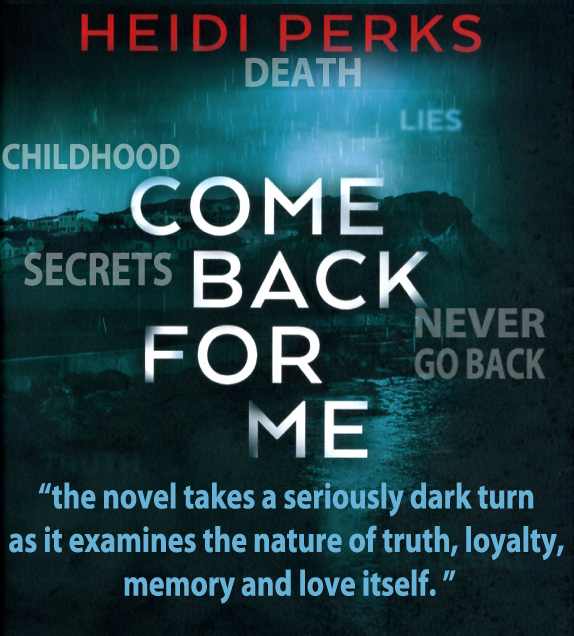
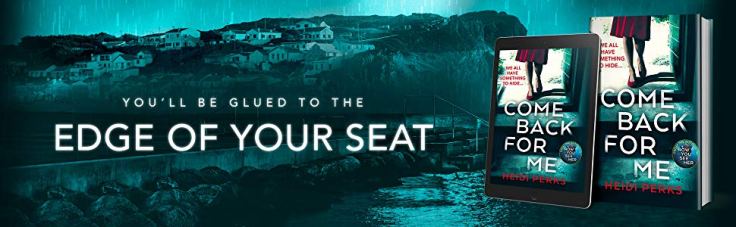
 On a tiny island off the Dorset coast of southern England, a little girl lives a dream childhood. Loving parents, the beauty of the sea and the sky, and the cloudless blue optimism of the young. But then, one terrible night, Stella Harvey’s idyll is shattered. On a September evening, with a violent storm lashing the tiny harbour of Evergreen Island, David Harvey ushers his family on board the ferry he runs for a living, and takes them away to the mainland. For ever.
 ears have flown by. Stella is now a consulting psychotherapist. Sister Bonnie is married with children. Their mother, Maria, is long dead, killed in a road accident. Father David, having left Maria for another woman, is now in the throes of dementia.
 nevitably, as night follows day, Stella’s arrival on Evergreen is not a joyful homecoming, and several skeletons come dancing and rattling their bones out of the cupboard to which time has consigned them. Firstly, Stella learns the tragic reason why her best friend and sworn blood-sister never replied to any of the letters she sent when the Harvey family began their new life on the mainland. Then, with the cruel perceptiveness of adulthood stripping away the illusions of youth, Stella looks on with horror as, first, the grisly remains are identified and personalised and then, second, questions from the past, smothered by time for so long, leap out into the present and demand answers.
 When Stella’s long-since-estranged brother, Danny, is drawn into what has become a murder investigation, the novel takes a seriously dark turn as it examines the nature of truth, loyalty, memory and love itself. Heidi Perks (right) has written a novel which will entrance readers who like a good psychological thriller, and she leaves us with a sense of sadness, certainly, but also an affirmation that, in the words of St Paul:


 For Agent Maddox, however, The FBI Experience is something other than a theme park visit. Gender equality has come at a price, and she is viewed with a certain degree of suspicion by many of her male colleagues, particularly as she is – and feel free to use the ‘woke’ description of your choice – a single mother, lone parent or head of a one-parent family. The blunt truth is that Steph has brought up Zachary largely on her own from day one. Not only that, but she has steadfastly refused to reveal the identity of his father.

 aren Cleveland, to say the very least, knows of what she writes. She is a former CIA analyst herself, and her experience translates into a swiftly moving and convincing narrative. Steph Maddox is torn between fighting her son’s corner – he is innocent, surely? – and preventing a major terrorist assassination attempt. As in the real world of political and military intelligence gathering, nothing is what it seems, and no-one is above suspicion.






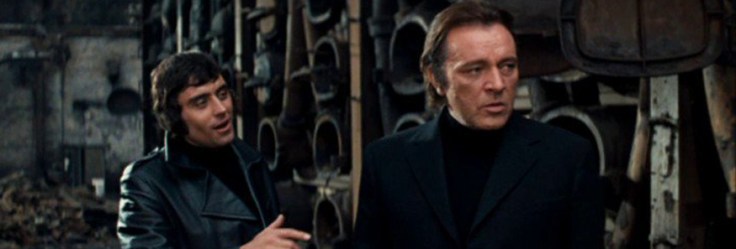

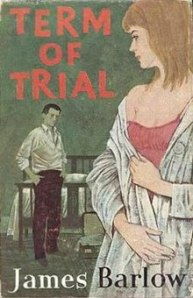 In 1968 Hamish Hamilton (by then part of the Thomson Organisation and subsequently to be bought by Penguin) published The Burden Of Proof, a novel by the Birmingham born author James Barlow. The firm had something of a hit seven years earlier with Barlow’s Term of Trial. That novel, about a teacher accused of indecency with a pupil, was made into a successful film starring Laurence Olivier, Simone Signoret, Sarah Miles and Terence Stamp. The Burden Of Proof was a different beast altogether, but first a little bit of history.
 n 8th May 1968, led by Detective Chief Superintendent Leonard ‘Nipper’ Read, the Metropolitan Police arrested Reg and Ron Kray, along with sundry members of their gang. Neither of the Kray twins was ever to see freedom again, apart from when Reg spent his final hours dying from cancer in the honeymoon suite at the Beefeater Town House Hotel in Norwich. In 1968, the particular character of Ron Kray was not widely known to the general public, as the whole Kray ‘industry’ of ghosted memoirs and personal accounts of ‘The Twins I Knew’ by minor London villains had yet to take wing. Ron Kray was a homosexual psychopath, and it’s as simple as that. Whether brother Reg was any better for being heterosexual is neither here nor there, but Ron’s peccadillos were mirrored in dramatic fashion in The Burden Of Proof.
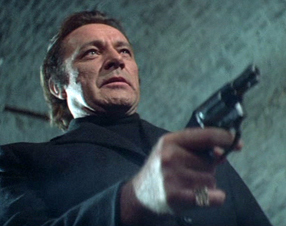 Vic Dakin is a London gangster who has political connections, and has yet to have his collar properly felt, despite a string of serious crimes. He also enjoys a spot of sexual sadism, usually with his unofficial boyfriend, Wolfie, who accepts the beatings as a fact of life. Oh yes, and before I forget, Vic loves his dear old mum (who is blissfully unaware of Vic’s career choices) In the novel, Vic plans a daring wages raid on a suburban factory, in between doing all kinds of other unpleasant things to people he both likes and dislikes. Before we turn to the movie version of the book, check out my review of
 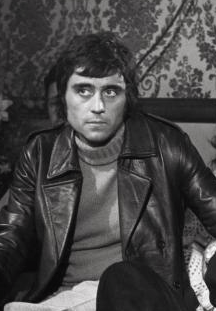 With a link worthy of BBC Radio 4, I can reveal that the role of Vic Dakin’s much-abused boyfriend in Villain was played by none other than the excellent Ian McShane (right), whose many credits include the long running Sunday night TV show, Lovejoy. Back to the film, directed by Michael Tuchner (Fear Is The Key, Mister Quilp). The supporting cast was stellar. The two coppers pursuing Dakin were the much-missed. moustache-twirling Nigel Davenport and Colin Welland. The villains were equally stalwarts of the day; TP McKenna as Frank Fletcher and Joss Ackland as Edgar Lowis, not to mention Donald Sinden as the compromised politician, and regular ‘baddies’ such as Tony Selby and Del Henney (composite below)

 id the film work? For me, it was something of a Curate’s Egg. Despite his passable snarling London accent, Burton never totally convinced me, even though he was never less than mesmeric when on screen. Villain will never be known as ‘the great London gangster movie’ – nothing will ever surpass The Long Good Friday – but that doesn’t make it a bad film. Donald Sinden was wonderful as the oily and glib politician, and Davenport and Welland were convincing, if hardly original, as the coppers. A final word of praise for the late, great TP McKenna. Check his filmography. He was never just the stage Irishman, but brought dignity and conviction to every role he played.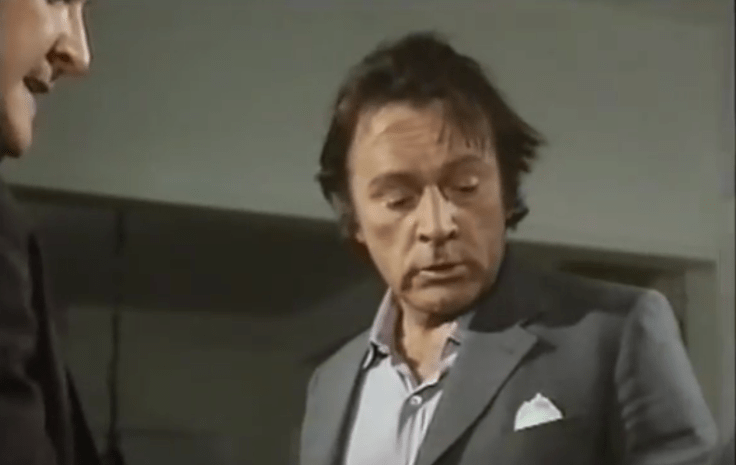


 Together with his grotesque partner and immediate boss, DI Peter Sutcliffe, Waits always gets the shitty end of the stick. ‘Sutty’ Sutcliffe is, you might say, a good old fashioned copper. Waits goes to meet him in a dingy rock-and-roll boozer:
 hy is Aidan Waits such a tortured character? Well, how long have you got? His childhood was loveless and chaotic, and spent largely in institutions where he rubbed shoulders with trainee failures, malcontents and killers. Echoing Nietzsche’s chilling remarks about the moral abyss, Waits has, more recently, gazed too long into a chasm inhabited by a repellent Manchester crime lord called Zane Carver. Carver has fed Waits’s drug habit, and the two have fought over women. Carver has a particular talent with women:
 s distinctive as Knox is as a stylist, and as much as he is a master of the inky black metaphor, he has a tale to tell and a plot to spin. The sepulchral calm of Martin Wick’s closely guarded hospital room is shattered by a savage attack which Waits survives, but puts him at the head of the queue as the police and the gutter press search for scapegoats. With Carver having decided to exact revenge on Waits by donning his black cap and pronounced the death sentence, Waits is on the run both from the gangster and, no less implacably, his politically motivated senior officers, but he keeps them at bay. He discovers faint-but-fatal fault lines in the original case against Martin Wicks, and finds that both Kevin Blake, the detective who brought Wicks to justice, and Frank Moore, the father of the murdered children, still have songs to sing.
 Joseph Knox writes like an angel. Possibly an Angel of Death, but he grasps the spluttering torch of English Noir once carried by such writers as Derek Raymond, and runs with such vigour that the flame burns brightly once again. He is not without humour, and there are many – if unrepeatable – gags exchanged between the cynical cops and their low-life prey. The politically correct nature of modern policing doesn’t escape his attention, either:


 has written a starkly brilliant account of Nazi oppression in Central Europe in the late 1930s. He achieves his broad sweep by, paradoxically focusing on the fine detail. One family. One teenage boy, Otto Schalmek. One fateful knock on the door while Vienna and most of Austria are waving flags to welcome ‘liberation’ in the shape of the Anschluss.
 The Schalmek family are Jewish. That is all that needs to be said. The family becomes just a few lines on a ledger – immaculately kept – which records the ‘resettlement’ of Jewish families. Otto is taken to Dachau and then to Birkenau. His ability as a cellist precedes him, and he is sent to play in the house of Birchendorf, the camp Commandant. His wife Katja is the artistic one, and her husband merely seeks to keep her entertained by using Schalmek as a kind of performing monkey who plays Bach suites on the cello in between sanding floors and mopping up shit in the latrines.
 oodman’s book spans the years and the continents. Having been shown the shattering of the Schalmek family we go from the Nuremburg trials to late 1940s Canada and then, via Sydney in the 1960s, on to 1990s California, where Katja’s grand-daughter Rosa, an eminent writer and musicologist, seeks an audience with the elusive and very private genius Otto Schalmek. Rosa Cline is determined to write the definitive biography of Otto Schalmek, but their relationship takes an unexpected turn.
 is a distinctive and beautifully written novel, full of irony, heartbreak and a scholarly brilliance in the way it portrays the human devastation of Hitler’s assault on the Jews. Yes, there is the almost obligatory account of the depravity and sheer horror of the camps, but Goodman also brings a sense of great intimacy and a telling focus on the small personal tragedies and discomforts – an interrupted family meal, a tearful and hurried “goodbye”, and a new grandchild never to be cuddled by grandparents. Crime fiction? Probably not, in the scheme of things. Thrilling, often painful, and full of psychological insight? Certainly. J SS Bach is published by
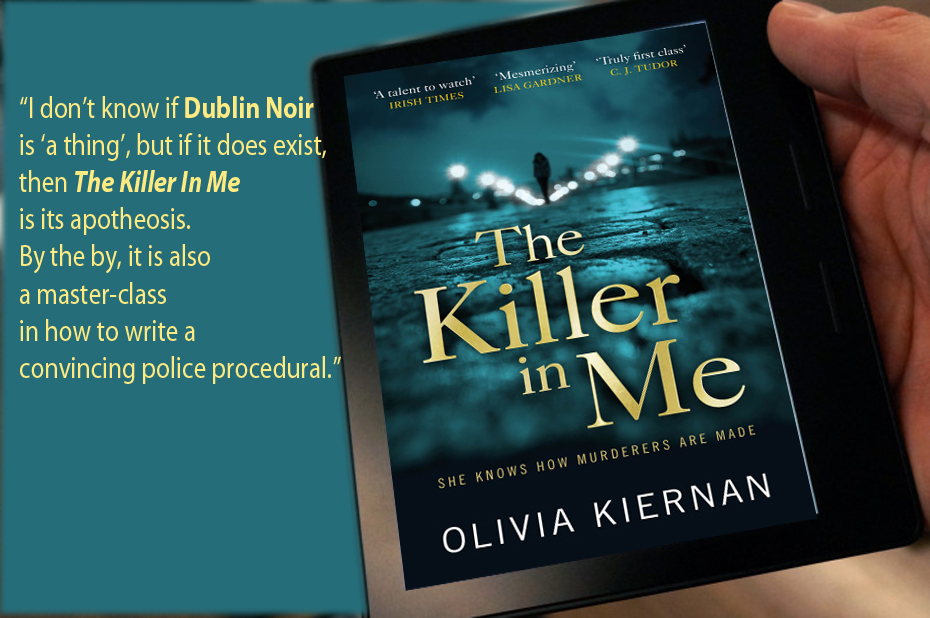

 hief Superintendent Frankie Sheehan is the leader of an elite crime unit of Dublin’s An Garda Síochána, known as The Bureau. She has been asked by her sister in law – who works for a human rights group called Justice Meets Justice – to look over the evidence and paperwork related to a horrific historic crime, where a teenager called Seán Hennessy was convicted of the savage murder of his mother and father, and the attempted murder of his young sister. Now, Hennessy has been released, and he is the latest cause célèbre for JMJ. Sheehan reluctantly agrees, but her attention is quickly diverted to a double murder.
 Two bodies have been found in a church in the well-to-do coastal suburb of Clontarf. The victims are identified as a local woman and her husband, but their deaths seem strangely disconnected. Geraldine Shine has been stabbed, but her husband Alan was strangled, has been dead for much longer, and his corpse shows every sign of having been kept in a freezer.
 I don’t know if Dublin Noir is ‘a thing’, but if it does exist, then The Killer In Me is its apotheosis. By the by, it is also a master-class in how to write a convincing police procedural. Sheehan shares her modus operandi when interviewing a reluctant suspect:


 t takes a very ingenious – not to say devious mind – to fashion a fiction plot which meshes together a whole bagful of disparate elements to make a satisfying whole that challenges the imagination but does not exceed it in possibility. Adam Loxley has done just that in his latest thriller The Artemis File. George Wiggins is Mr Ordinary. He lives in what would have been called, years ago, a bijou residence in the twee Kentish town of Tenterden. He is not Mr Stupid, however. He travels into ‘town’ each day to sit at his desk in Fleet Street where he composes the daily crossword for The Chronicle under his pseudonym Xerxes. Aficionados know that in reality, all that is left of the newspaper industry in Fleet Street are the buildings, and the use of the term to denote popular journalism, but we can forgive Loxley for having the good, old-fashioned Chronicle hanging on by the skin of its teeth when all its fellows have decamped to Wapping or soulless suburbs somewhere off a dual carriageway.
 When George has a rather startling experience in his local pub after a couple of pints of decent beer, the other elements of the story – MI5, the CIA, Russian agents, immaculately dressed but ruthless Whitehall civil servants and, most crucially, the most infamous unsolved incident of the late 20th century – are soon thrown into the mix. Such is George’s conformity, it is easily compromised, and he is blackmailed into writing a crossword, the answers to which are deeply significant to a very select group of individuals who sit at the centres of various spiders’ webs where they tug the strands which control the national security of the great powers.
 eorge Wiggins might have been easily duped and he has few means to fight back, but he recruits an old chum from the Chronicle whose knowledge of the historical events of the 1990s proves key to unraveling the mystery of who wanted the crossword published – and why. While the pair rescue a dusty file from an obscure repository and pore over its contents, elsewhere a much more visceral struggle is playing out. A ruthless MI5 contract ‘fixer’ called Craven is engaged on a courtly dance of death with a former CIA agent, current American operatives and their Russian counterparts.


 fullybooked2017