

 We first met London’s Detective Inspector Jake Porter and Sergeant Nick Styles in Robert Scragg’s debut novel What Falls Between The Cracks (review here) almost exactly a year ago. This description of the pair is from that book:
“Styles had his weakness for all things Hugo Boss, his image neat and orderly, close cropped hair, number two all over. A few had referred to him as the Met’s answer to Thierry Henry, until they saw him play five-a-side football. Porter was from Irish stock, his wardrobe more high street fashion and his appearance, while not unkempt, had a more lived-in feel to it; hair so dark it bordered on black, refusing to be fully tamed by gel, but with a sense of messy style to it.”
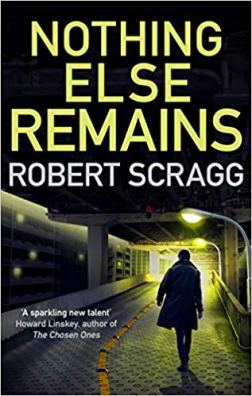
 orter is still haunted by the death of his wife in a hit-and-run accident and, like all good fictional DIs, he is viewed by his bosses – in particular the officious desk jockey Milburn – as mentally suspect. He is forced to go for a series of counselling sessions with the force’s tame psychologist, but after one hurried and fruitless encounter, he becomes totally immersed in a puzzling case which involves an old friend of his, Max Brennan. Brennan has arranged to meet his long-estranged father for the first time, but the older man fails to make the rendezvous. When Brennan’s girlfriend is abducted, he turns to Porter for help.
The heavy stone that Porter turns over in his search for Brennan’s missing father reveals all kinds of nasty scuttling things that recoil at the daylight. Principal among these is a list of missing people, all businessmen, whose common denominator is that they have each resigned from their jobs with minimal notice given, citing personal health issues as the reason.
 eanwhile, Styles has a secret. His wife is expecting their first child and she has grave misgivings about her husband continuing as Porter’s partner, as their business puts them all too often – and quite literally – in the line of fire. Understandably, she recoils at the possibility of raising the child alone with the painful duty, at some point, of explaining to the toddler about the father they never knew. Styles has accepted her demand to transfer to something less dangerous, but as the Brennan Affair ratchets up in intensity, he just can’t seem to find the right moment to break the news to his boss.
 his is a well written and entertaining police procedural with all the necessary tropes of the genre – maverick cop, desk-bound boss, chaotic personal lives, grimy city background and labyrinthine plot. Naturally, Porter finally gets to the bottom of the mystery of the missing businessmen, but this point was reached with a fair few pages left to go, so clearly something else is about to happen. Sure enough, it does, and it is clever plot twist which I certainly didn’t see coming. Robert Scragg may be a relative novice in the crime fiction stakes but, to mangle a metaphor, he casts his red herrings with the ease and accuracy of an expert.
Nothing Else Remains is published by Allison & Busby and is available now.


 lan Mart is a bookish, completely unmiitary young man who, fresh from Cadet College, is posted as a Second Lieutenant to an Indian Army Battalion in the autumn of 1941. The Japanese army is on the move, but are still believed to be just swarms of little yellow men who will melt away when faced with troops led by decent British officers. Mart is taken under the wing of Acting Captain Sam Holl:
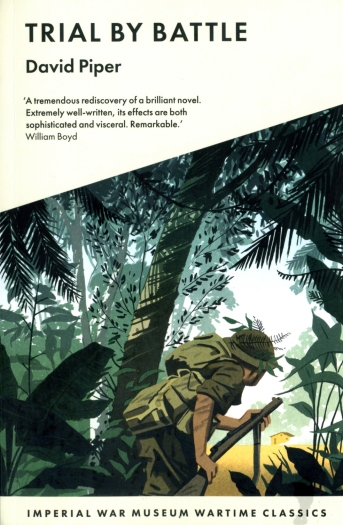 The figure of Sam Holl struck an immediate chord with me, and I wondered momentarily where I had met him before. He is a more warlike version of Guy Crouchback’s brother in arms, Apthorpe. In Men At Arms (1951) and Officers And Gentlemen (1955) Evelyn Waugh gives us a pompous and priggish chap with completely bogus military and social airs and graces. He invites us to scorn Apthorpe and his pretensions while slyly revealing the pathos of Apthorpe’s real identity; probably an orphan, brought up by an elderly aunt; sent to a very minor public school, and packed of, virtually penniless, to serve in some down at heel colonial service. When Apthorpe dies in hospital as a result of Crouchback having smuggled him a bottle of whisky, the comedy turns to tragedy, and our mockery turns to shame-faced guilt.
 espite Alan Mart being our eyes and ears as the real war gets nearer and nearer to the battalion, Holl is, literally and metaphorically, a towering figure. He has the worst aspects of the blinkered British imperialist, but he displays immense physical courage. His bluster, near alcoholism and debased view of native women contrast poignantly with moments of extreme social vulnerability:
 hen Mart and Holl reach Malaya they learn many things, few if any of them to their advantage. The sparkling new radio sets abjectly refuse to work over any distance further than the line of sight and, more disturbing still, the despised little yellow men are resolutely disinclined to scatter at the bark of a British military command. Quite the reverse; they are numerous, well trained, superbly equipped, utterly remorseless and, seemingly, irresistible.
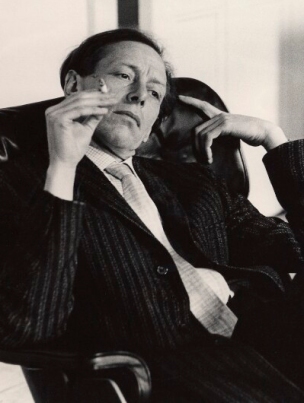 David Piper’s biography is covered comprehensively in the publicity for this series, so suffice it to say he writes of what he knows. I am reminded of the lines from the old hymn;

 his 1948 best seller echoes Alexander Baron’s own military career as it follows a battalion of a fictional infantry brigade as they prepare for – and then take part in – D Day in the summer of 1944. The Fifth Wessex is, as the book’s title suggests, made up of a mixture of clumsy red-cheeked farm boys from the chalk uplands, well-read introverts who keep themselves to themselves, streetwise chancers and bewildered lads who are virgins in both bedroom and battlefield. They could be soldiers from earlier wars, and their ancestors might have known Agincourt, Marston Moor, Malplaquet, Talavera, Spion Kop and Arras. Baron has no time for the thinly veiled homo-eroticism of some of the Great War writers. His men can be uncouth, foul-mouthed, brutalised by their social background, yet given to moments of great compassion and charity.
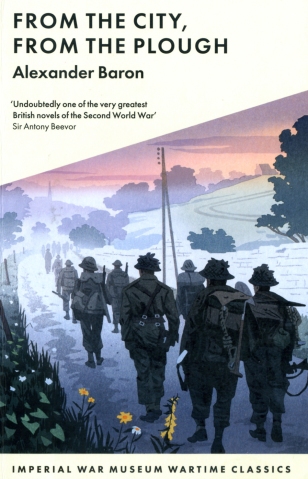 The British officer class have been long the object of scorn in both poetry and prose, but Baron deals with them in a largely sympathetic way. Those leading the Fifth on the ground are decent fellows; people who are only too aware of the frequently uneven struggle between shards of steel and the breasts of brave men. Even the Brigadier, whose plans prove so costly, is well aware of what he asks. He is, however, resolute in the way he shuts down his personal qualms in order to maintain the integrity of the battle plan. The one exception is the odious Major Maddison, a cold and sexually troubled narcissist whose demise is as satisfying as it is inevitable.
 aron writes lyrically about the midsummer grace of the French countryside, its orchards and abundance of wild flowers, some of which grace the helmets and tunics of the passing soldiers, their fragility which will contrast cruelly with the total vulnerability of the crumpled and shattered bodies of the men who wore them. For the driven and exhausted men of the Fifth Wessex, unlike their fathers before them, there is always a new unspoiled hillside, a grove of trees untouched by shellfire, a fresh sunken lane lined with roses and willow herb. For the war in Normandy is a war of movement. A field reeking with the blood of dead horses and cattle is soon left behind, as the Brigadier stabs his finger at the map and finds another bridge, another crossroads and another copse that must be taken.
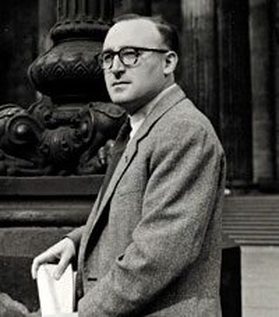 The heroes in From The City, From The Plough come in all shapes and sizes, but there are no winners. Let Alexander Baron (right) have the last word.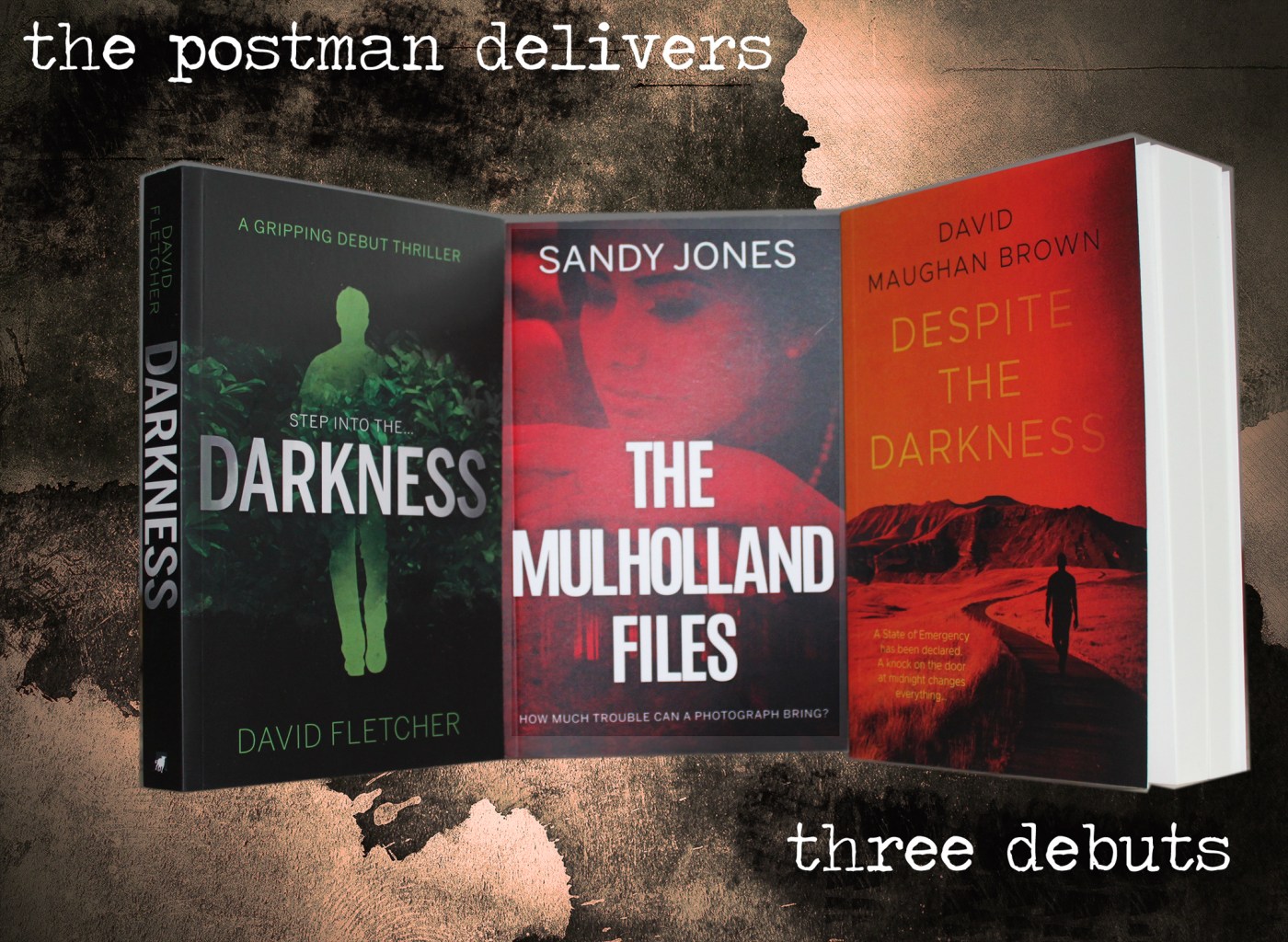

 o adapt the words of a former MP, and son of Hull:
 Back when I was at school, scratching on my slate, and climbing up chimneys as a weekend job – OK, OK, I’m exaggerating. My primary school had dip pens, porcelain inkwells and I was the ink monitor. The last bit is actually true, and it’s also true that we could refer to Africa as The Dark Continent without invoking the fury of The Woke. Working on the assumption that Africa was ‘darker’ the further you went into it, then the Congo was blacker than black. Conrad’s Heart of Darkness and Greene’s A Burnt-Out Case feasted royally on the remoteness of the Congo, and the consequent imaginings of a land where the moral code was either abandoned or perverted. David Fletcher’s Dan Worthington has suffered loss, heartbreak, and the almost surgical removal of his life spirit. A chance encounter offers him a renaissance and a reawakening, but there is a price to be paid. A flight to Brazzaville takes him to the divided modern Congo, and a sequence of events which will test his resolve to its core. Darkness came out on 13th August and is available
  When Edward Covington opens a letter one winter morning to find it contains only a photograph of an unknown woman he is curious, naturally, but no alarm bells ring. He clearly needs to read more thrillers, as we all know that this is just the beginning of his troubles. Violence, kidnap, ransom, secret codes, industrial espionage, international security alerts – all are about to break rather messily on Edward’s head. Author Sandy Jones (right) lives in the delightful county of Wiltshire, and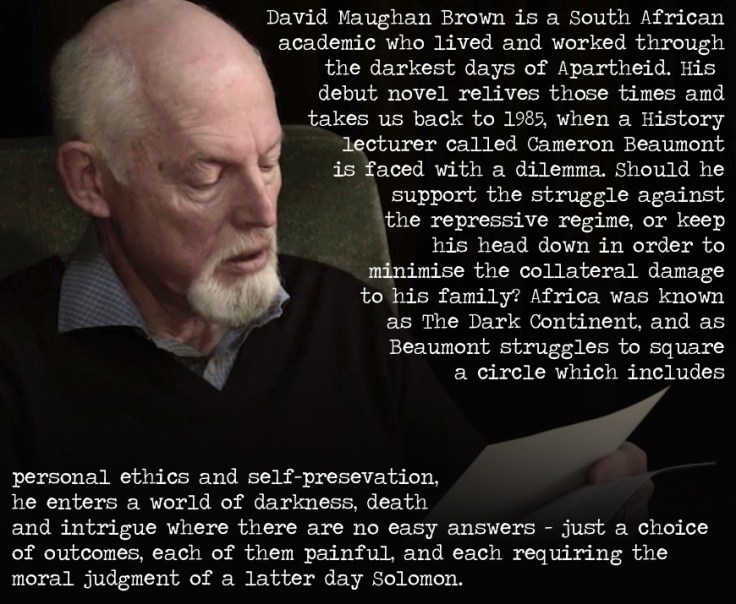





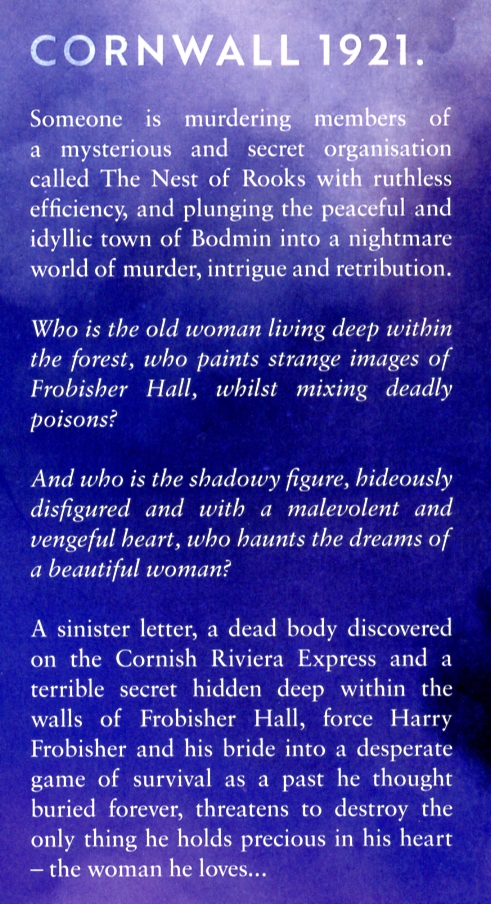
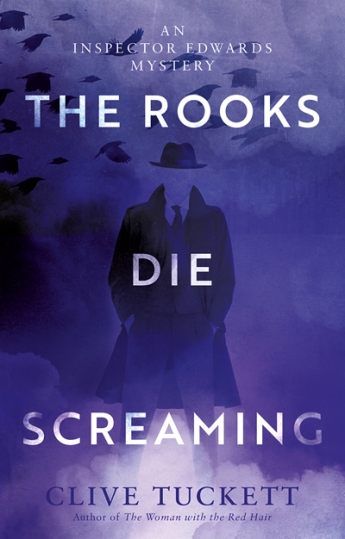 Morag is now Lady Frobisher. Her husband Harry, heir to The Fobisher Estate on the outskirts of Bodmin, is blind, victim of a grenade in the Flanders trenches. In the previous novel, Frobisher Hall was the scene of great torment for Morag, as she fell into the clutches of Morgan Treaves, an insane asylum keeper and his evil nurse. Treaves has disappeared after being disfigured with a broken bottle, wielded my Morag in a life or death struggle.
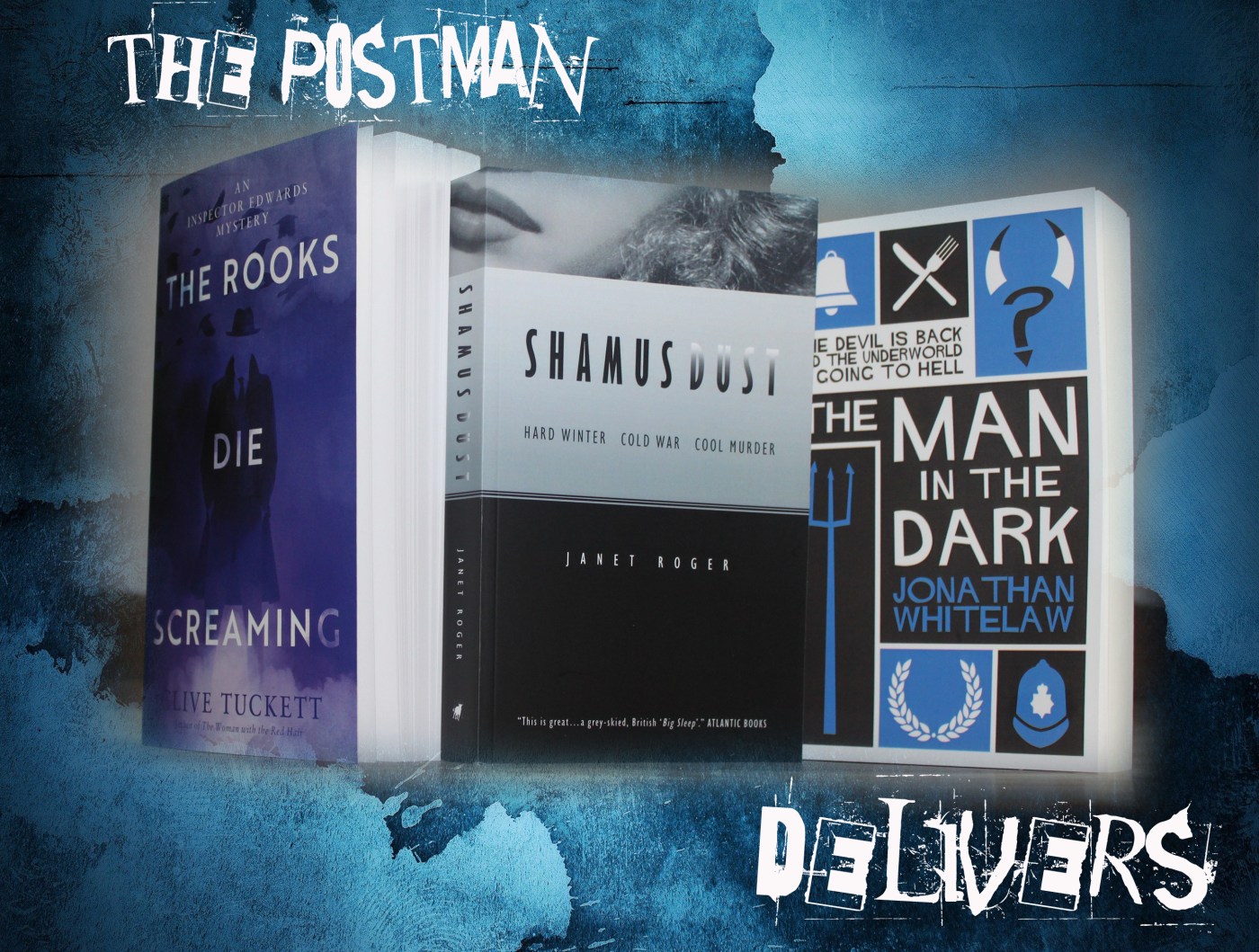
 That said, The Rooks Die Screaming is inspired escapist reading. It would be unfair to say that Tuckett (right) writes in an anachronistic style. This is much, much better than pastiche, even though there are elements of Conan Doyle, the Golden Age, John Buchan and even touches of Sapper and MR James. So, eventually, to the plot, but we need to know a little more about Cyril Edwards. Like many a fictional detective inspector he is his own man. In another nice cultural reference Tuckett adds a touch of Charters and Caldicott as Edwards explains to the bumptious Standish, a mysterious officer from Military Intelligence;
 tandish orders Edwards to investigate the possibility that Harry Frobisher is one of the Rooks, but one who has betrayed his country. Arriving in Bodmin his first task is to explain to the local police how a corpse found on a train is that of a notorious London contract killer. Tuckett’s Bodmin is full of stock characters, including a stolid police sergeant, an apparently tremulous clergyman and a punctilious but respected solicitor who is privy to all the secrets of the local gentry, but is oh, so discreet. To add to the fun, Frobisher Hall also has its requisite roll call of faithful retainers.




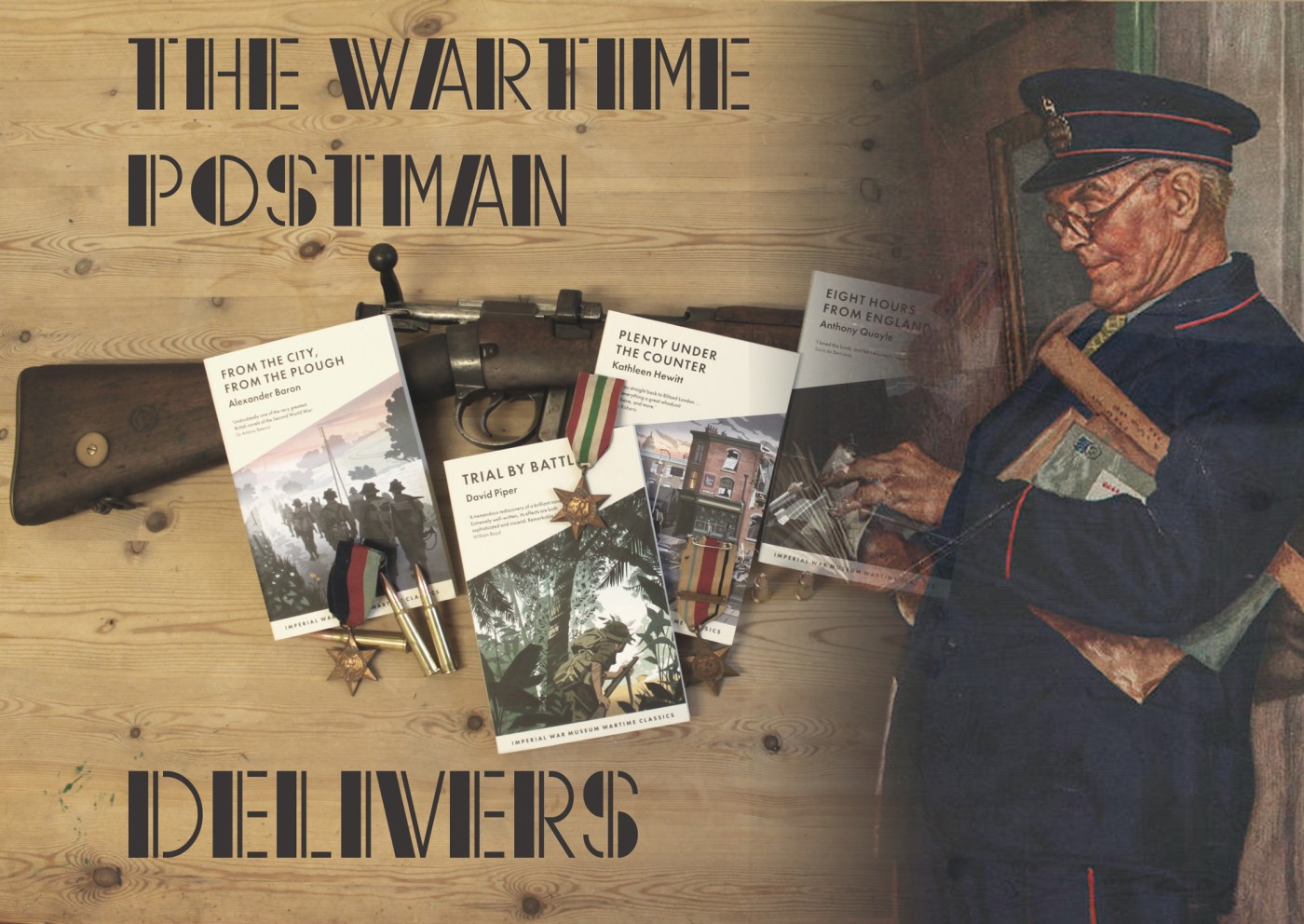
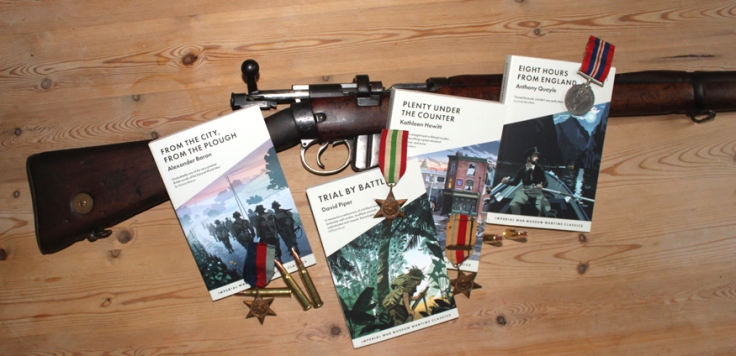
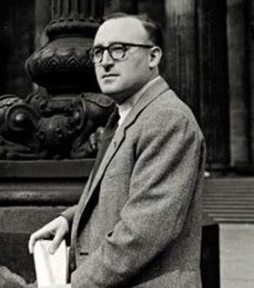 This is a vivid and moving account of preparations for D- Day and the advance into Normandy. Published in the 75th anniversary year of the D-Day landings, this is based on the author’s first-hand experience of D-Day and has been described by Antony Beevor as:
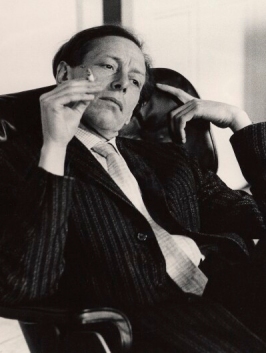 This quietly shattering and searingly authentic depiction of the claustrophobia of jungle warfare in Malaya was described by William Boyd as:
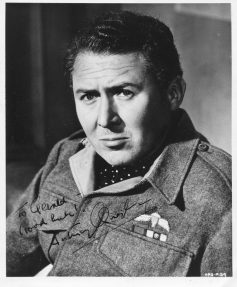 Anthony Quayle was a renowned Shakespearean actor, director and film star and this is his candid account of SOE operations in occupied Europe. Historian and journalist Andrew Roberts said:
 This murder mystery about opportunism and the black market is set against the backdrop of London during the Blitz.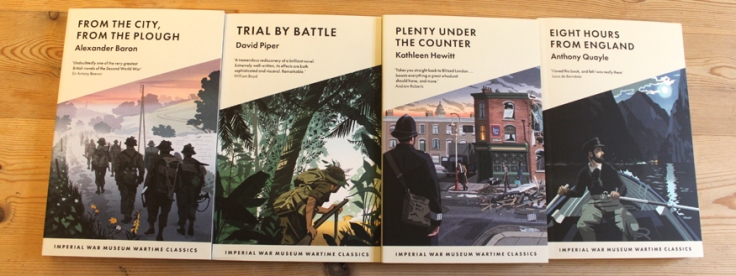


 al McDermid was anxious that over-enthusiastic reviewers and fans might give away the ending of her previous Carol Jordan and Tony Hill novel,
 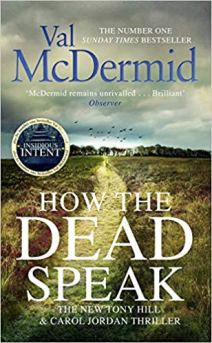 After the events of which we will not speak, Jordan’s Regional Major Incident Team has been disbanded while the woman who was its beating heart and soul keeps her fragile psyche from harm by continuing to renovate her home, a former barn on a heather covered northern hillside. Visitors are few and usually unwelcome, but none more so than Tony Hill’s vindictive and manipulative mother Vanessa who, after inflicting her abrasive personality on her son in a prison visit, coerces Jordan into using her investigative skills to track down a fraudster who has conned her out of a small fortune. Only slightly less welcome is Bronwen Scott, Tony Hill’s solicitor. She also has a job for Jordan, but this time it is to establish grounds for an appeal against a murder conviction handed down to a gay man who, the jury believes, has murdered a rent boy.


 fullybooked2017