

This is the third in a compelling series featuring police officer Owen Sheen. He is Belfast born and bred, but is currently employed by London’s Metropolitan Police. He has been seconded to work in his home city heading up SHOT – the Serious Historical Offences Team. Inevitably, these historical offences are all bound in to the horrendous sectarian violence committed during the bizarrely euphemistic ‘Troubles’. But now, since the Good Friday Agreement, hatchets are buried, enemies have become friends and all is serene on the sunlit uplands. Isn’t it? Actually, no. Former gunmen, torturers, knee-cappers, car-bombers and violent thugs are now in politics, schmoozing and shaking diplomatic hands at the highest level. But beneath the men in suits – yes, mostly men, because parts of Ulster society remains hugely patriarchal – there are still dozens of killers, some as yet uncaught, but others pardoned by political expediency.
Sheen’s latest case concerns an investigation into ‘The Cyprus Three’ – three IRA operatives gunned down by SAS men on a street in Cyprus. The official line is that the three were about to plant a huge bomb to destroy British troops.The courts decided that the killings were lawful, despite the three Irish people being unarmed. The more elderly among us will recognise that this scenario is a mirror image of a real event – the killing of three IRA members in Gibraltar in 1988.
 Sheen is given the task of re-investigating the Cyprus shootings, with a strong hint that it would suit the contemporary political narrative were the SAS men to be found guilty of unlawful killing. As he turns over the stones, Sheen isn’t surprised to see all kinds of unpleasant creatures scuttling away from the light. He has his own issues, as his own brother was the collateral damage of a terrorist bomb in their childhood street while they were kicking a football about.
As his investigation mines deeper into the landfill of lies and deception that makes up Belfasts’s political history, Sheen is drawn into the search for a legendary double agent, nicknamed TOPBRASS. He has played both sides – the IRA hierarchy and the British Special Branch. But why is he still ‘an item’ in the malevolent undertow of Ulster politics, and how high are his connections in ‘high places’?
 Donnelly has written a brilliant and terrifying novel that should remind people that despite the outward air of calm and reconstruction there is a parallel Belfast – a place where grievances are bone-deep and still burning white hot.
We can sit in our suburban homes and tut-tut about the barbarity of ISIS, Boko Haram or Hezbollah, but Gary Donnelly (right) reminds us that acts of incalculable horror were carried out on a regular basis on the streets of a British city by the IRA and its Unionist opponents. The only thing that I can take from this savage history lesson is that religious zealotry fuels bigotry, which in turn provides the spark to the tinder of sectarian violence. This is a great read, but not a happy one. Never Ask The Dead is published by Allison & Busby and is out now.



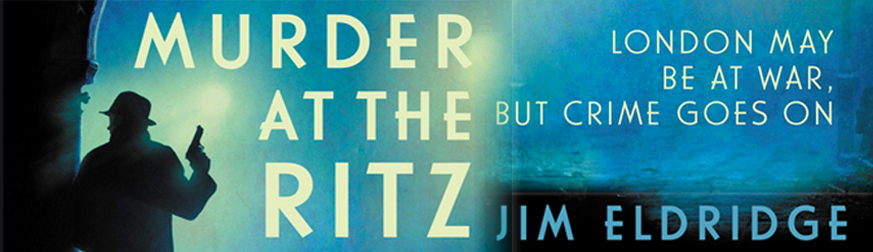
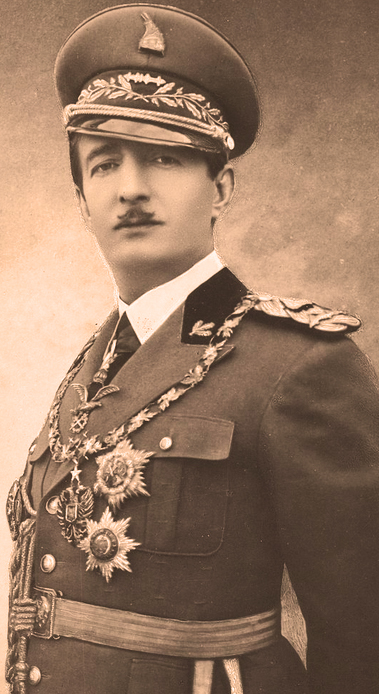 Any novel which features – in no particular order – Commander Ian Fleming, King Zog of Albania, a dodgy lawyer called Pentangle Underhill, and a Detective Chief Inspector named The Hon. Edgar Walter Septimus Saxe-Coburg promises to be a great deal of fun, and Murder At The Ritz by Jim Eldridge didn’t disappoint. It is set in London in August 1940, and Ahmet Muhtar Zogolli, better known as King Zog of Albania (left) has been smuggled out of his homeland after its invasion by Mussolini’s Italy, and he has now taken over the entire third floor of London’s Ritz Hotel, complete with various retainers and bodyguards – as well as a tidy sum in gold bullion.
  Back to the story, and when a corpse is discovered in one of the King’s suites, Coburg is called in to investigate. The attempt to relieve the Albanian monarch of his treasure sparks off a turf war between two London gangs who, rather like the Krays and the Richardsons in the 1960s, occupy territories ‘norf’ and ‘sarf’ of the river. After several more dead bodies and an entertaining sub-plot featuring Coburg’s romance with Rosa Weeks, a beautiful and talented young singer, there is a dramatic finale involving a shoot-out near the Russian Embassy. This is a highly enjoyable book that occupies the same territory as John Lawton’s






 When the body count starts to rise, Elin’s professional training kicks in and, after phoning the local police for permission, she takes charge of the investigation. With no access to forensic support or police databases, she has to make do with what she has – basically her own instincts as a copper. She suspects that whatever is motivating the killer lies in the history of the hotel. Sarah Pearse (right) exploits the conventions of the locked-down/cut-off-from-the-outside-world thriller for all she is worth, and we have hidden passage ways, disused tunnels, murderers in sinister masks, and the general sense that most of the key figures in the plot are hiding secrets of one sort or another.


 fullybooked2017