
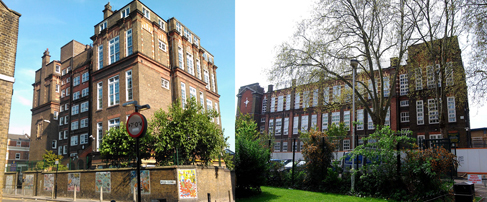
 REGGIE AND RONNIE KRAY have been the subject of almost as many books, documentaries and dramas as their 19th century near-neighbour Jack the Ripper. The East End that he – whoever he was – knew has changed almost beyond recognition. The Bethnal Green of the Krays is heading in the same direction, but a few landmarks remain unscathed. They were born out in Hoxton in October 1933, Reggie being the older by ten minutes. The family moved into Bethnal Green in 1938, and they lived at 178 Vallance Road. That house no longer stands, modern houses having been built on the site (left)
The schools they attended still stand, but with different names. Wood Close School (left) is now The William Davis School, while Daniel Street School (right) is now The Bethnal Green Academy.
Their life of crime is well documented elsewhere, but this brief guide focuses on the two ‘hands-on’ murders the twins committed. How many other deaths they were indirectly responsible for is a matter for others to catalogue.
Glib histories sometimes say that the Krays “ruled London’. That is totally inaccurate. Yes, they were very powerful within their own domain, and were well connected with several high profile personalities. But south of the river, the Richardson brothers, of whom more later, held sway. Generally, the two gangs acknowledged each other’s territory, if only for the reason that open warfare would benefit no-one. London is a big place, and there were plenty of pickings to be shared. Occasionally, though, personalities clashed, and it was one such example of personal antipathy which led to the first murder.
 George Cornell (right) had known the twins from childhood. Their careers had developed more or less on similar lines, except that Cornell became the enforcer for the Richardsons. On 7th March 1966 there was a confused shoot-out at a club in Catford. Members of the Kray gang and the Richardsons gang were involved. At some point, George Cornell had been heard to refer to Ronnie Kray as a “fat poof.” That might seem unkind, but was not totally inaccurate. Ronnie was certainly plumper than his lean and hungry twin, and his liking for handsome boys was well known.
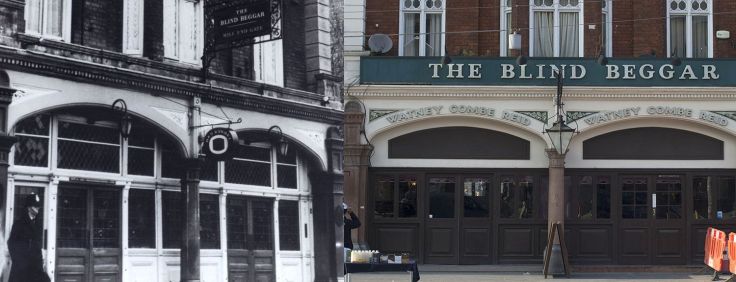
 On the evening of 9th March, Cornell and an associate were unwise enough to call in for a drink at a The Blind Beggar pub on Whitechapel Road, very much in Kray territory. Some thoughtful soul telephoned Ronnie Kray, who was drinking in a nearby pub, The Lion in Tapp Street (left). Ronnie, pausing only to collect a handgun made straight for the Blind Beggar, strode in, and shot George Cornell in the head at close range. His death was almost instantaneous. Needless to say, no-one else in the pub had seen anything. Pictured below are a post mortem photograph of Cornell, and the bloodstained floor of The Blind Beggar. Below that is the fatal pub, then and now.

 Folklore has it that now that Ronnie had ‘done the big one’, there was pressure on Reggie to match his twin’s achievement. The chance was over a year in coming. Jack McVitie (right) was a drug addicted criminal enforcer who worked, on and off, for the Krays. His nickname ‘The Hat’ was because he was embarrassed about his thinning hair, and always wore a trademark trilby. McVitie had taken £500 from the Krays to kill someone, had botched the job, but kept the money. He had also, unwisely,been heard to bad-mouth the twins.
 On the night of 29th October 1967, McVitie was lured to a basement flat in Evering Road, Stoke Newington,(left) on the pretext of a party. There, he was met by Reggie Kray and other members of the firm. Kray’s attempt to shoot McVitie misfired – literally – and instead, he stabbed McVitie repeatedly with a carving knife. McVitie’s body was never found, and the stories about his eventual resting place range from his being fed to the fishes of the Sussex coast to being buried incognito in a Gravesend cemetery.
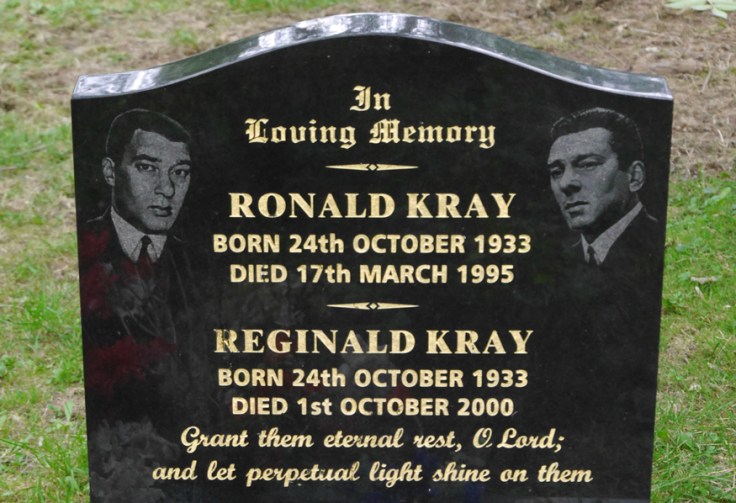
The murders were to be the undoing of the twins, but it wasn’t until May 1968 that Scotland Yard had enough evidence to arrest them. Once they were remanded behind bars, hundreds of witnesses who had hitherto imitated The Three Wise Monkeys, were suddenly available to give evidence. Reggie and Ronnie were sentenced to 30 years in prison. Ronnie died in a Berkshire hospital in March 1995, while Reggie was released on compassionate grounds in August 2000. He died of cancer in October of that year.

 WHEN LONDON BECAME THE PRIMARY TARGET of Luftwaffe bombers in World War II, one of the first responses of the government was to institute a night-time blackout. Given that the silvery ribbon of the River Thames couldn’t be hidden, and German knowledge of the whereabouts of factories and docks, the effect of the blackout was more psychological than practical. What it did do was to liberate criminals from the fear of being seen by what remained of the police force – bear in mind that most able bodied men of fighting age were very quickly drafted into the armed forces. Despite the affectionate folk myth of plucky Londoners ‘grinning and bearing it’, domestic crime rocketed. An often used wheeze was for criminals to dress up as Air Raid Wardens. In the darkness and confusion, they could raid shops and be about their dishonest business with a new freedom. Looting was not uncommon, and more than one gang discovered the effectiveness of going around the dark streets in a fake ambulance.
 Rather like the Whitechapel killer of 1888, the attacks became more frenzied and the mutilations more awful. Weapons used included razor blades, a can opener, a kitchen knife and a candlestick. After the frenzied killings of Margaret Lowe and Doris Jouannet, Sir Bernard Spilsbury (right), the most celebrated medical examiner of the century, remarked that the murders were the work of “a savage sexual maniac”. The press were quick to coin a new name for the killer, and for the brief period of his notoriety, he became known as ‘The Blackout Ripper’.
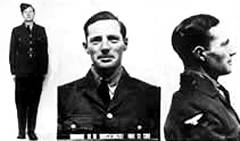 Cummins was tried at the Old Bailey in April 1942, and was very quickly found guilty. The judge was none other than Lord Chief Justice Humphreys, who had been involved in many of the most high profile trials of the century. On the day Cummins was hanged on the morning of 25th June, 1942, and the hangman was Albert Pierrepoint. It is said that an daytime air-raid raged overhead when Cummins died, a bitter irony given the circumstances of his crimes.


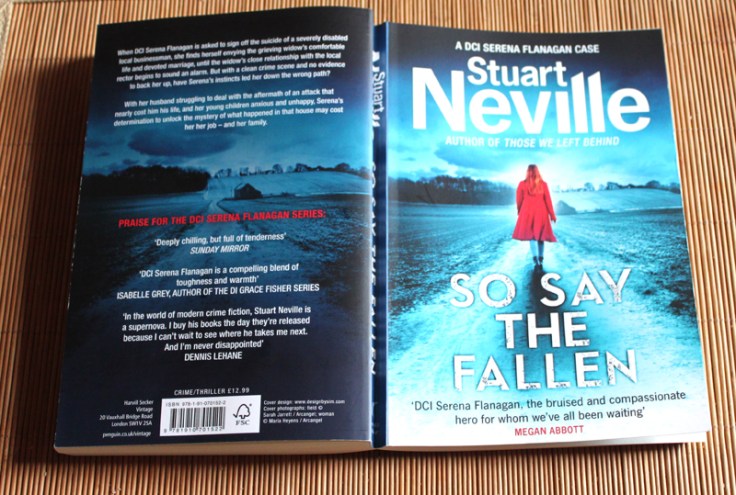
 Stuart Neville (left) returns with another hard-bitten and edgy tale of life and crimes in Northern Ireland. Set in a fictional village on the edge of Belfast, we are reunited with DCI Serena Flanagan, who first appeared in Those We Left Behind. Like much of life in Ulster, fictional and real, religion and the stresses and strains it places on secular life is never far from the surface. The sacred influence in this case is provided by the Reverend Peter McKay. The clergyman is a widower, but we find that he has been taking his parochial duties above and beyond what is normally expected. The recipient of his pastoral care is Roberta, the attractive wife of Henry Garrick.
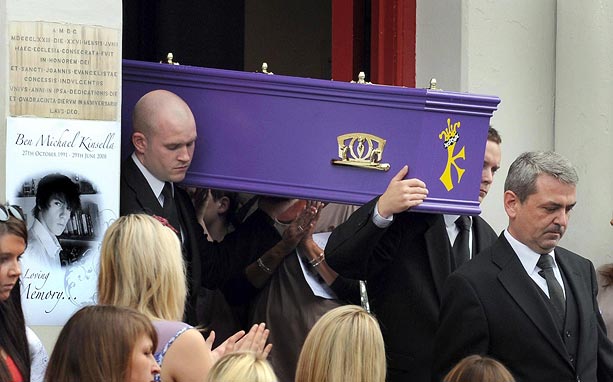
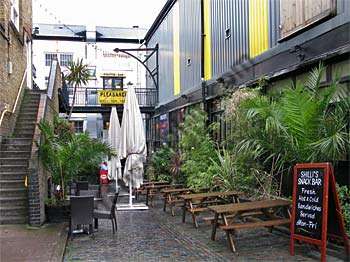 As they say, in America, “School’s Out!” On the evening of Saturday 28th June 2008, school was pretty much out for a group of teenage London boys. Their GCSE exams were finally over and, despite nor being legally old enough to drink, they were having a night out to celebrate. They went to Shillibeers (left), a popular bar and brasserie in Holloway. Among the group was Ben Kinsella, a 16 year-old pupil at Holloway School.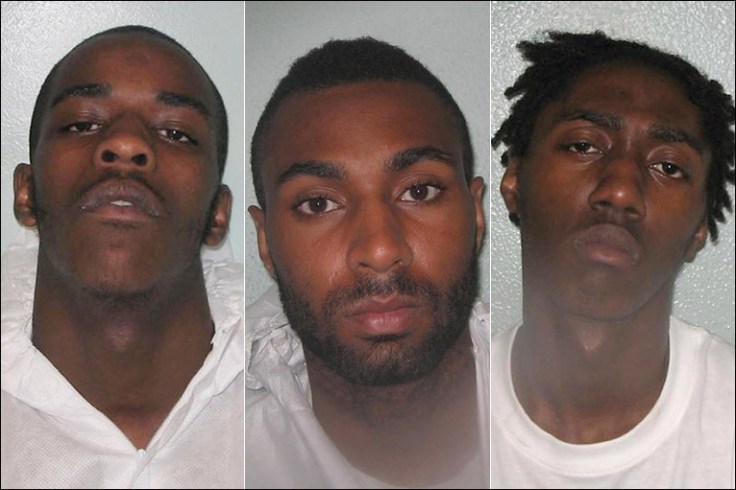

 A FULL REVIEW of this debut novel by the Toronto writer will be coming up here before too long. In the meantime, follow
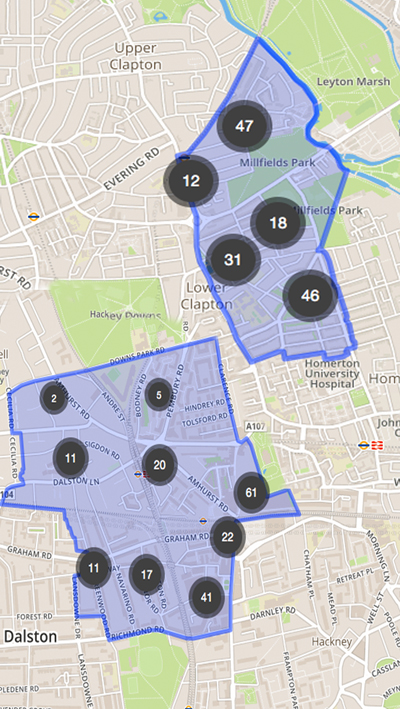 If you are a law-abiding person who stays away from dubious places after dark, and you have a good security system in your home, Hackney is probably a safe place to live. Provided, however, you are prepared to take your chances when out shopping, or otherwise about your lawful business. If you are a writer or artist who likes the kudos of having an address in a place which is seen as rather dangerous, and ‘cutting edge’ (literally) then your aspirations will be fulfilled. If you’re an estate agent who is selling the area as a vibrant, safe and stimulating place to bring up a family, then best of luck with that one.
 Ellis chose her path in adult life based on her natural vivacity and an appreciation that she could earn more from nude modelling and ‘clipping’ punters in a night club than she could by working in the typing pool or in a factory. As a child her home life had been chaotic, so she had developed the necessary survival skills to make her own way in the austere world of post-war Britain.
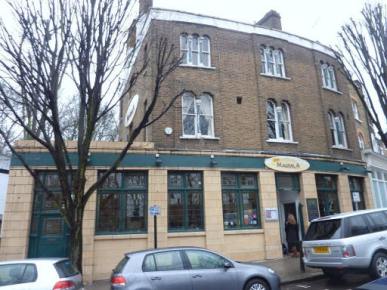 Ellis and Blakely became lovers, if not partners, but neither was faithful to the other. Blakely was physically violent; Ellis was violently jealous. On 10th April, 1955 – Easter Sunday – Ellis waylaid Blakely as he left a Hampstead pub, the Magdala. She shot him dead with a .38 Smith and Wesson revolver. Despite the day, there was to be no resurrection.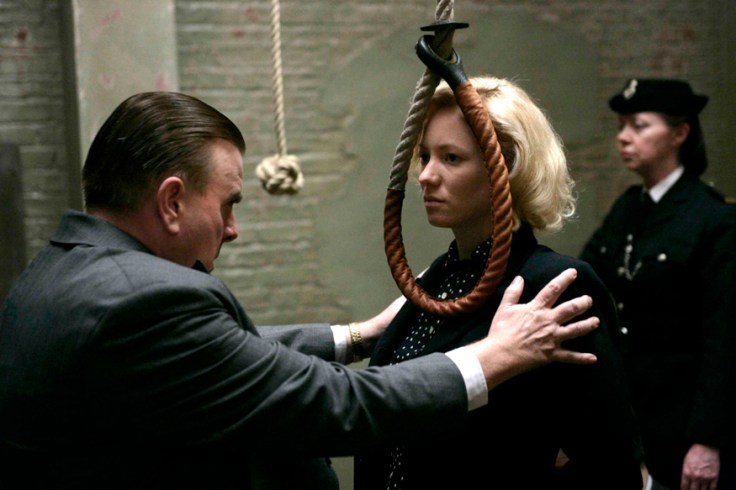
 Hawley Harvey Crippen was never a doctor, in the accepted sense. He was at best, a purveyor of quack medicines and homepathic cures to the gullible. He may even have been a backstreet abortionist, but that has never been proved. He was born in Michigan in 1862, but emigrated to England in 1897 with his second wife Cora. Cora was a second rate music hall entertainer and Crippen, tired of her charms, took up with a young typist named Ethel Le Neve.
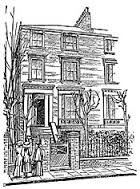 Crippen eventually raised the alarm, as she suspected foul play. The house was searched, and nothing was found. Crippen and Le Neve, however, were spooked, and fled to the continent, where they bought a passage on a steamer bound for Canada.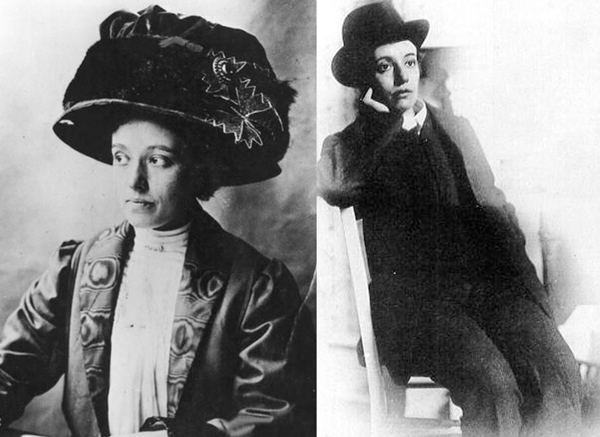


 fullybooked2017