Search

fullybooked2017

Author

fullybooked2017

A retired Assistant Head Teacher, mad keen on guitars. Four grown-up sons, two delightful grandchildren. Enjoys shooting at targets, not living things. Determined not to go gently into that good night.

THE POSTMAN DELIVERS … The Thieves of Threadneedle Street

YOU CAN GO VIA THIS LINK to the excellent feature our guest writer Nicholas Booth has written about one of the most daring attempts at fraud ever attempted in England. Had the gang succeeded, the British banking system might well have collapsed. As it was, those running The Bank of England were just made to look rather foolish.

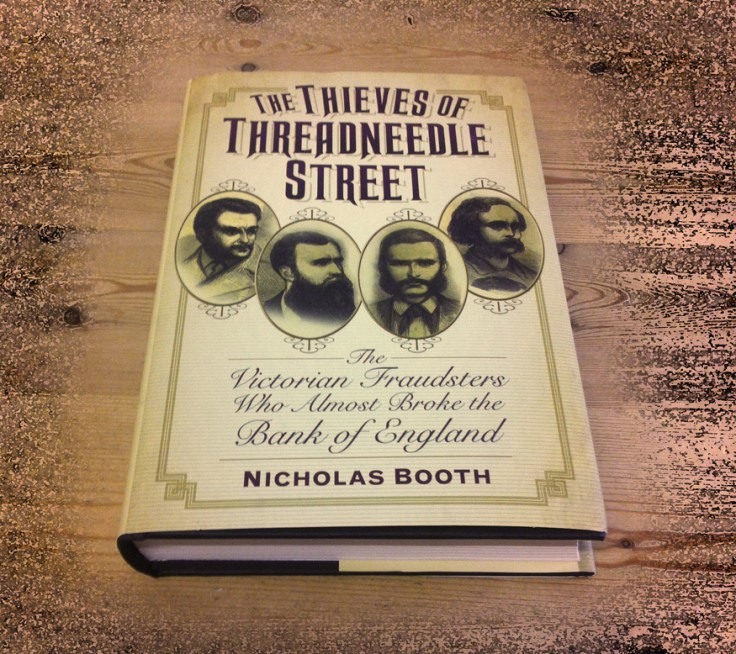
THE THIEVES OF THREADNEEDLE STREET is a beautifully produced book, and the cover shows a contemporary version of our modern court room sketches, and we can see the gang in all their bristling moustachioed glory.

TOTS

SOME BOOKS  feel good in the hands and are pleasing to the eye, even before you have turned the first page. This, published by The History Press, is one such book. It is impeccably researched and well sourced, with a comprehensive index. Nicholas Booth’s guest feature on Fully Booked is entertaining as it is, but it merely scratches the surface of an amazing episode in Victorian financial and criminal history.Head over to Amazon to see your options if you want to get your own copy of this book.

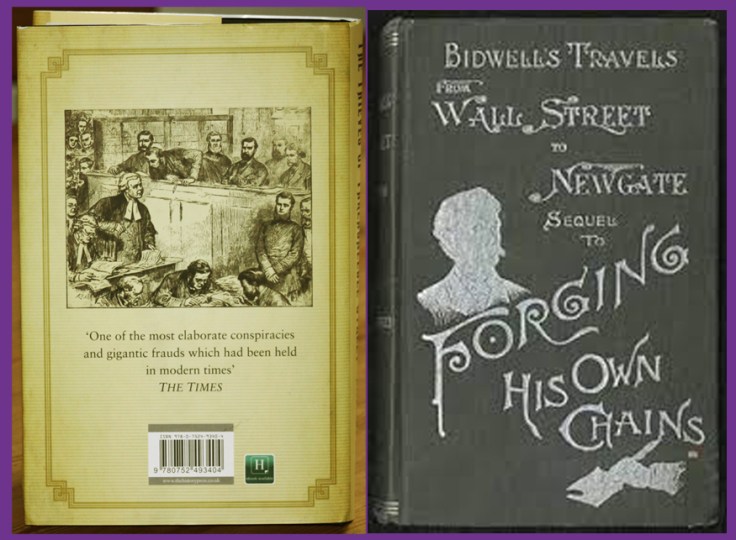
BIDWELL DID THE CRIME and served the time, but when he was finally released from prison, he didn’t waste a moment in putting his remarkably tale into print to try and cash in on his infamy. His book sits alongside the lovely back dustjacket of Nicholas Booth’s modern version of the story.

BidBooks


AUSTIN BIDWELL – The fraudster who fooled the Bank of England: part two


AUTHOR NICHOLAS BOOTH continues his amazing tale of a gang of Victorian fraudsters who made the Bank of England look very, very foolish.
Part one of the saga is HERE
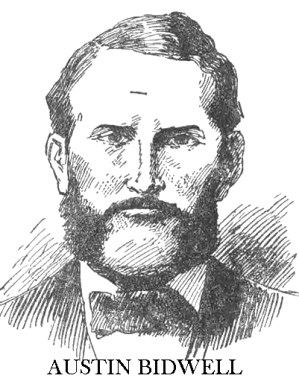
ABStill, even under lock and key in Spanish-ruled Havana, Austin Bidwell (right) thought he would get away with it. His absence from London at the most crucial juncture meant, in his estimation, that any evidence against him was hearsay. And, until my research, most of the accounts about the “great forgery” can be classed as the same. All the thieves of Threadneedle Street were inveterate liars and fantasists who shrouded their endeavours in mystery, but even Pinkerton was prone to self-aggrandisement.

For example, in Austin’s later version of events, Willie Pinkerton had suddenly appeared in Cuba, apologised for spoiling a dinner party and announced he had a warrant for the fugitive’s arrest. When offered a glass of wine by the urbane forger, the detective had supposedly agreed, adding: “I never drink anything but Clicquot” and then Austin had pulled a gun, shot a policeman and tried to escape. In Pinkerton’s later recollection, the detective claimed he had “passed the very ship that had Bidwell on board while rounding him into port” and arrested him there and then. But as his own files show, the detective didn’t actually arrive for another two weeks, by which time Austin Bidwell was in custody. Nor was anyone shot. In fact, Pinkerton really got his man by sowing doubts in the mind of his wife.

Jeannie Bidwell had never known what her husband had really been up to. The first she even learned of the great fraud was when American newspapers reported it. (It was to be headline news for weeks on both sides of the Atlantic.) “Who had the audacity to rob the Bank of England!” she exclaimed. “He ought to have a whipping!” Austin wisely said nothing. But when gossipy American expats asked who was behind it all, he smilingly conjectured that it was “some clever young scamp, with plenty of money of his own, who did it for the excitement of the thing and from a wish to take a rise out of John Bull”. Which, from such an incorrigible liar, wasn’t too far from the truth for once.

However, by the time Pinkerton met Jeannie in April 1873, her world had fallen apart – as we can see from hitherto unknown letters to her mother. “One evening we were romping, Austin and I, and a knock came very loudly,” she wrote. After opening the door, “in walked the [local] police”. By the time Pinkerton arrived, and it was left to the detective to explain Austin’s actions – and indeed to embellish them, with tales of bigamy and what Jeannie called “all those other women”.

When Jeannie reproached her husband with this in a letter to his cell, he replied: “Those children of mine and the wife that the detective spoke to you of are my brother’s property. You must allow yourself, dear, that if I was a father at twelve years of age, I began very young.”

Still, Pinkerton became a canny go-between, reading and copying their correspondence – which also revealed beyond any doubt that members of the New York Police Department were involved with the gang. Pinkerton himself promptly arrested a suspected New York “swell thief” who had come as an emissary from the underworld to spring their ally.

What then played out was a game of cat and mouse – and not just in Cuba. George Bidwell George Bidwell0(left)– a baleful influence on his brother – had what he later termed “a series of the most extraordinary adventures” across Ireland and Scotland (“a hell’s chase, and no mistake”) before lapping up the attention at his subsequent trial. Another of the gang, George Macdonnell (“a debonair scoundrel”) made it across the Atlantic where he handed his spoils to corrupt NYPD detectives. “I’m clean,” he taunted Pinkerton’s operatives. “You can’t prove anything on me.”

But Austin was dealing with more than just Pinkerton. As his nemesis – to quote the Bank’s solicitors, Freshfields – an “adversary whom the forgers had least of all suspected had sprung up: that is to say, [his] mother-in-law”.

Though she had reluctantly attended the Bidwells’ wedding, Mrs Devereux actually fainted during the ceremony and was certain that her son-in-law was up to no good. So when the police alerted the London press that Mr Warren/Horton had been “accompanied by a young woman 18 to 20 years, looks younger with golden hair”, Mrs Devereux knew perfectly well who that was and went to the nearest solicitors. Before long, a letter from Jeannie to her mother with a St Thomas stamp arrived, the search zeroed in on the Caribbean, and Pinkerton learned of a glamorous young couple who had recently arrived in Havana. An “all points” bulletin, issued on the evidence of Jeannie’s mother, led to Austin being put under guard. By the time he arrived in Cuba, Pinkerton was certain the authorities had been bribed to look the other way. Austin Bidwell had been allowed to spend the first night of his detention in his luxurious hotel, the Telegrafo. And when the police moved him to barracks, they failed to search him, provided him with gourmet meals and let him receive visitors. Pinkerton knew well what his quarry was capable of. Indeed, over Easter, Austin escaped, and he was only apprehended after crossing swords with a Cuban captain, some 50 miles from Havana.

In Austin Bidwell’s version of the escape, he had made a dramatic leap from a balcony into the crowded street below. As Pinkerton determined, the fall would have killed him, and he had simply bribed his warders. But then, money – and the want of it – was at the heart of Bidwell’s story. And even in what the Lord Chief Justice later described as “the most remarkable trial that ever occurred in the annals of England”, scant attention was paid to the human cost, certainly by the criminals. Both Bidwell brothers were sentenced to life with penal servitude (though they were released in the 1890s). And George later noted they had left behind “no ruined widows and orphans to linger out the remainder of their blighted lives in poverty”. Which was not quite true.

Bidwell Trial

The Bidwell gang stand trial in London

Jeannie endured a terrifying episode on the Bidwells’ return to London in May. (Austin was consigned to Newgate jail; she went back to her mother.) Having become pregnant in Cuba, one evening in September she went into labour. A little girl briefly came into the world and moments later passed away, while Jeannie herself nearly died. The dead infant was wrapped in a night shirt and dispatched by carriage to an undertaker, chosen at random from a directory. This was technically illegal, as she had not obtained a death certificate, and the police soon traced the unfortunate family.

Two weeks later, Jeannie Bidwell was arrested and taken to Bow Street Magistrates Court. Because she was so young and ill, and had already suffered so much, there was a great deal of sympathy. Jeannie’s mother – “a well dressed woman of respectable appearance” in one report – and a servant were also placed in the dock. All three were bailed but at the start of October, their cases were dismissed.
soanebankofengland

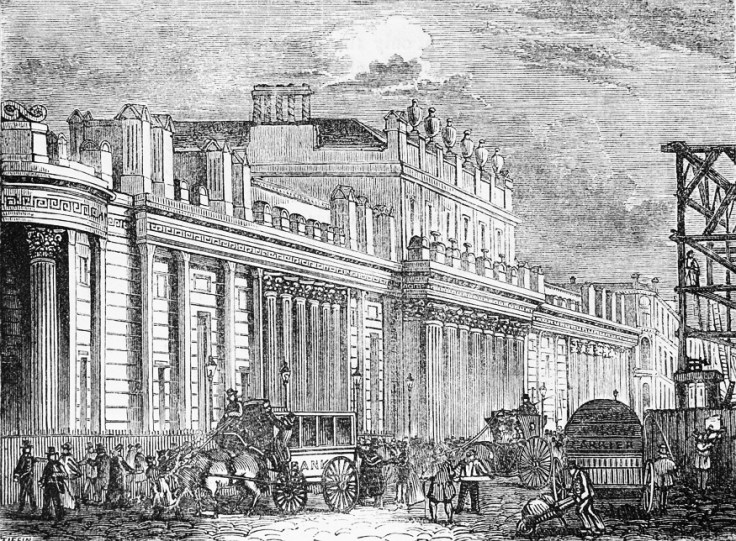
Wiser and cooler heads had prevailed. For once, the Victorian legal system was compassionate and realised that the poor girl had suffered enough. While Austin Bidwell found it amusing that he had embarrassed the Old Lady of Threadneedle Street (above)  by holding “up to the laughter of the whole world its red-tape idiotic management”, poor Jeannie Bidwell was sent to a workhouse in nearby St Giles, becoming the one indisputable victim of the greatest ever forgery in history.

The article first appeared in The Independent in 2015,
and is used with the permission of the author

For a closer look at Nicholas Booth’s comprehensive account of this remarkable case,
FOLLOW THIS LINK
 

JIM KELLY … A landscape of secrets

jim kelly Small_0JIM KELLY (above) grew up in the shadow of some of the worst criminal misdeeds the country had ever experienced and, as his childhood progressed, the evil that men do was seldom far away from the Kelly family. So, he had a brutal and disadvantaged upbringing? No, far from it – just the opposite. His father Brian was a top detective in the Metropolitan Police, and his maternal grandfather, too, had a background in keeping the peace as a special constable – he actually was there on the street, as it were, in 1911, when Home Secretary Winston Churchill and others managed to turn a hunt for anarchist criminals into the expensive and bungled farce that we know as the Siege of Sidney Street.

 Kelly was born in Barnet, originally a small Hertfordshire town, but now a borough long since absorbed into the suburban sprawl of north London. It was near Barnet on 14th April 1471, that one of the most influential battles of the Wars of The Roses secured the throne for the Yorkist King Edward IV. The only battles that Kelly recalls were, however, between his beloved Barnet Town Football Club and their rivals. ‘The Bees’ have been back and forth between league and non-league football over the years, with all the regularity of a fiddler’s elbow, but as long as hope springs eternal in the human breast, Barnet can be sure of at least one man’s loyalty.

Screen Shot 2016-08-18 at 19.40.08

After several years in journalism, which culminated in writing for The Financial Times, Kelly decided to put his skills to the ultimate test. He would become a full time novelist. By this time, he and his family had moved to the beautiful Cambridgeshire cathedral city of Ely, which had all the advantages of wide open spaces as well as the crucial railway connection to London. Before we continue, a word from one who knows. Ely is, geographically, in Fenland – an area of such fertile soil that it is said that a man only has to spit on the black soil for it to start growing into something productive. But Ely, with its tea-rooms, artisan bakeries, arts centre and elegant cafés may be in The Fens, but it is certainly not of The Fens. To explore the real Fenland, the traveler must visit such hard-scrabble towns and villages as Wisbech, Chatteris, March, Welney and Three Holes. It is among these sometimes insalubrious settlements that Kelly sets the series that first brought him to public attention.

Philip Dryden is the editor of Ely’s local newspaper. When he was first introduced, in The Waterclock (2002), local ‘rags’ had yet to feel the full force of digital competition, but they were already on the rocky road of no longer charging a cover price, but giving themselves away for nothing, hoping to cover costs from advertising revenue.

In Kelly’s books there is always a sense of déjà vu, of history coming back to bite people on the bum, and a telling awareness that despite tomorrow being another day, it is yesterday that casts the longer shadow on people’s lives. This is even evident in the fact that Dryden’s exotic wife Laura is lying alive, but insensate, in an Ely hospital. She is there as a result of a catastrophic road accident when she and Dryden ended up in a deep Fen ditch late on a winter’s night. When I first met Kelly, he came and spoke about his books at my local library. He revealed that one of his favourite authors is Dorothy L Sayers. And how does her most celebrated book begin?

“That’s torn it!” said Lord Peter Wimsey.
The car lay helpless and ridiculous, her nose deep in the ditch,
her back wheels cocked absurdly up on the bank,
as though she were doing her best to bolt to earth
and were scraping herself a burrow beneath the drifting snow.

Thus Lord Peter Wimsey and the faithful Bunter have to seek the help of the inhabitants of Fenchurch St Paul and, in doing so, become involved in the celebrated mystery of The Nine Tailors. The Sayers connection is further developed by Kelly in his novel The Funeral Owl (2013), the most recent Philip Dryden mystery, where much of the action is centred in the Fen village of Brimstone Hill. This village is easily identifiable on the ground as Christchurch, which is little more than a huddle of houses in the lonely expanse of flat farmland between March and Ely. And who was the Rector of the little Victorian church in the village (below), between 1917 and 1928? The Reverend Henry Sayers, whose daughter went on to become one of the great literary figures of her day, and also a member of the elite writers of Golden Age crime fiction.

christchurch_1

Like all amateur detectives, Dryden sticks his nose into places where it is likely to get stung or at least severely nipped. The fact that he lives on a houseboat moored on Ely’s River Great Ouse always adds a touch of the exotic, but his day job as newspaper man allows him access to places that mere interested passers by could never penetrate. After refusing ever to drive again after the accident which left his wife paralysed, Dryden relies for transport on an obese and sedentary taxi driver called Humph. Humph serves several functions, including playing the role of a Greek chorus, commenting on and observing at a small distance the complications and dramas with which his regular customer involves himself. On a less cerebral level Humph has an inexhaustible supply of snacks, as well as an impressive collection of spirit miniatures harvested during his frequent trips to Stansted airport.

Kelly’s other crime fiction series hovers closer to the police procedural landing strip than the Philip Dryden novels. Peter Shaw is a high-ranking detective based in King’s Lynn. He too has his Watson, but in this case it is in the form of the taciturn and misanthropic copper, Sergeant Valentine. Kelly’s portrayal of King’s Lynn is as accurate and revealing as his frank picture of the bleak, inhospitable, historically incestuous and endlessly resentful villages of Fenland. Lynn, as it is known to locals, is also a paradox. On the one hand we have the magnificent churches, the prestigious Festival, and the unbreakable connection with a certain family who have a country home just up the road in Sandringham. But we also have the rough estates, the ill-at-ease migrant workers, and the tough-as-teak descendants of the fishermen who once sailed out of Lynn in search of seafood for the tables of rich men in their castles.

Like Dryden, Shaw is a complex character. He conceals from his bosses the fact that he may be losing his sight as a result of an old injury. His father – like Kelly’s – was a hugely respected policeman. Unlike Detective Superintendent Brian Kelly, however, Shaw père may not have been as honest as the day is long. In recent Peter Shaw novels, readers have been taken away from King’s Lynn and led up the Norfolk coast to such places as Brancaster and Holme. This part of Norfolk has been called Chelsea-on-Sea, due to the rising numbers of wealthy second-homers who have invested money, if not time, in the area. Shaw’s beautiful wife, who runs a beach shop and store at Hunstanton, and our man’s part-time job as a member of the local lifeboat crew, certainly add depth to the character.

As a master of landscape and what has been called pyschogeography – the invisible pull that past deeds, embedded in the fabric of buildings and streets, exert on modern day events – Jim Kelly has only one equal, and that is Christopher Fowler, whose elderly detectives Bryant and May are always jerked this way and that by the powerful magnets of history which lie beneath the streets of London.

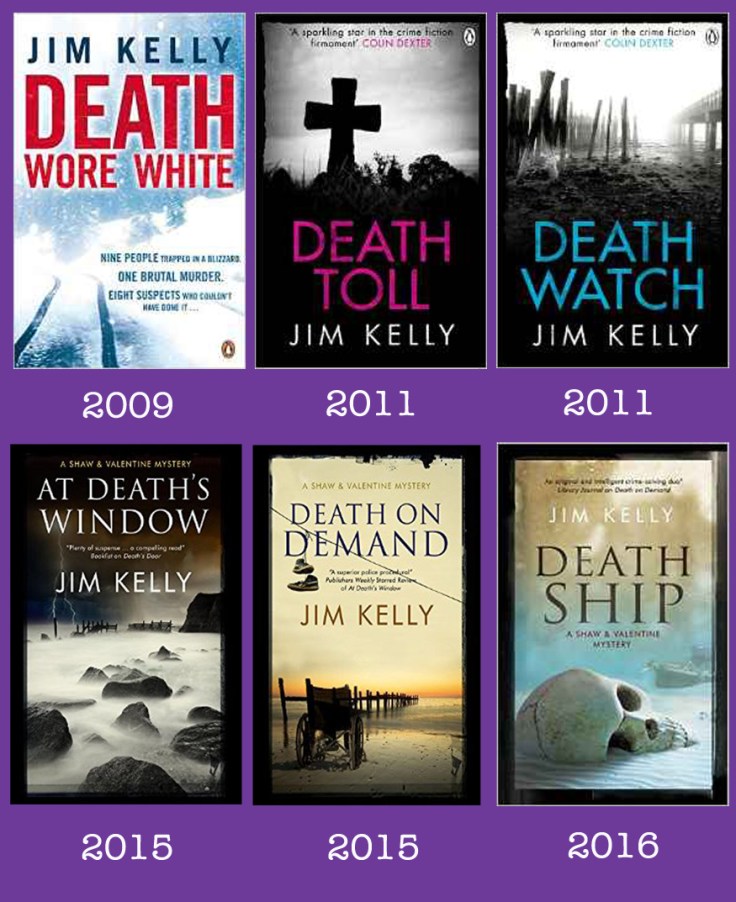
If you are yet to read one of Kelly’s novels, then you should do so as soon as possible. If, like me, you are a devout disciple, then I hope that I have summed up just a hint of the man’s magical writings.I am presenting the two series of novels as separate graphics, but you can find out more by visiting Jim Kelly’s Amazon page.

PHILIP DRYDEN NOVELS

Dryden

PETER SHAW NOVELS

Peter Shaw


THE POSTMAN DELIVERS … Beneath The Surface

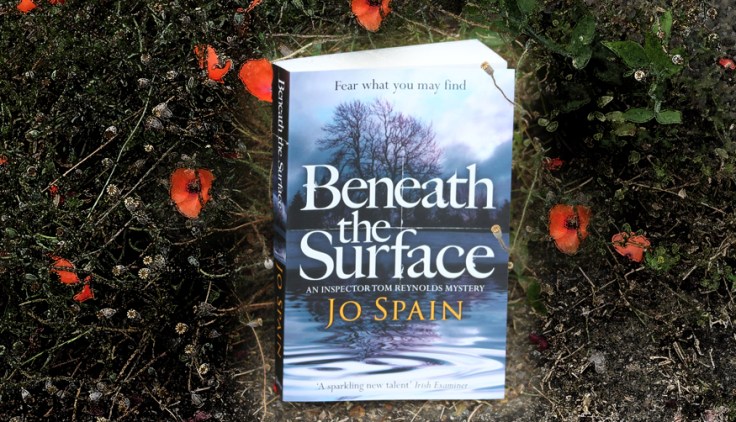
Beneath The SurfaceIRISH CRIME FICTION seems to be on a roll at the moment. With writers like Anthony Quinn, Stuart Neville, Ken Bruen, John McAllister and Sinead Crowley making headlines, it’s not too fanciful to see Ireland – North and South – rivaling its neighbour across the sea, Scotland, as everyone’s favourite setting for moody and intense crime tales. Is there room for one more at the top table of Irish crime? There certainly is, when it’s Jo Spain asking for a seat. Her debut novel With Our Blessing was named as an Irish Times crime fiction book of the year by Declan Burke in 2015, and achieved great critical acclaim.

Now, DI Tom Reynolds and his team return for another sortie against the many-headed monster of Irish crime. This time a government official is murdered in Leinster House, the former ducal residence in Dublin which has housed the Irish Parliament since 1922.

Everyone makes the assumption, that Ryan Finnegan’s death has been orchestrated by one of his political opponents, but before too long, Reynolds is uncovering evidence that points in a different direction altogether. The novel will be available very soon from the usual sources, and it looks from this angle that Jo Spain (below) and her publishers Quercus, have another hit on their hands. You can also keep in touch with Jo by following her on Twitter.

Jo Spain


AUSTIN BIDWELL – The fraudster who fooled The Bank of England

GUEST WRITER NICHOLAS BOOTH tells the tale of a plausible and devious rogue who made some of the modern chancers in The Square Mile look like boy scouts.

Prison

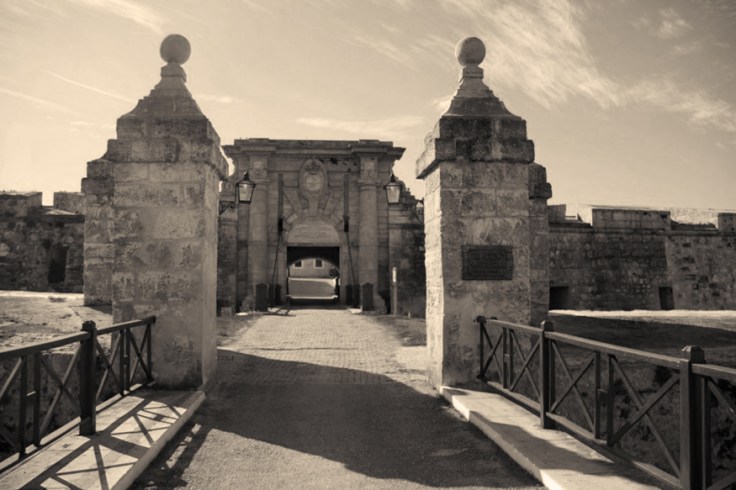
The two Americans who were jammed into the cramped cell of Havana’s military jail (above) had been adversaries for years – but only now, in the spring of 1873, had they finally caught up with each other. And the circumstances were extraordinary.

One had masterminded an astonishing heist, defrauding nearly £10m in today’s money from the Bank of England during a two-month window of opportunity. (Among the most audacious of daylight robberies, it was accomplished by trading forged foreign promissory notes for cash.) The other was, by repute, the greatest detective in America, who had instigated the remarkable manhunt leading to this meeting.

william_portraitStout, florid and perspiring in the heat, William Pinkerton, (left) scion of the famous detective dynasty, had been characteristically indefatigable in tracking down his quarry, travelling from New York to London, and thence to Havana. Glassy eyed, hollow -cheeked and very tired, his prisoner was, in one estimation, “a smooth, easy talker and a person who is likely to inspire confidence with anyone with whom he talked”.

As bankers all over the world – in Frankfurt, Liverpool, Manhattan, Rio, Paris and Chicago – could attest, that was putting it mildly. It was the prisoner’s incredible charm that explained how he had conned them in the past – and why he had been able to relieve more than £100,000 from the Old Lady of Threadneedle Street, where he had been known as Frederick Albert Warren. To the others who had fallen over backwards to lend him money, he was known as Charles J Horton. So far as bewildered officials were concerned, he was an international man of mystery. Following his plan’s collapse, they had discovered at least more 20 aliases. But his real name was Austin Biron Bidwell (below right),Bidwell he was just 27, and along with his eldest brother George (a serial womaniser and ne’er do well) and a couple of accomplices, he had – in Willie Pinkerton’s judgement – carried out the most daring forgery and fraud the world had ever known.

On the first day of March 1873, it was only the accidental omission of the date on a forged document that exposed the Bidwell operation. What resulted was “a worldwide hue and cry”, as one newspaper said at the time, playing out as a cross between Ocean’s Eleven and Sherlock Holmes. Except in this case, the real-life sleuth was Willie Pinkerton who, even now, had only caught up with Austin Bidwell after yet another escape, a chase across Cuba and a dramatic sabre fight.

Austin Bidwell’s life, to date, had “surpassed the imaginations of our famous novelists” in another contemporary appraisal. Indeed, Anthony Trollope would start The Way We Live Now a few weeks later as a thinly disguised parable based on his exploits. As one of his later prosecutors aptly put it, his story was a “capital instance of misapplied genius” – which in this case included silencing their best witness by marrying her. Jeannie Devereux Jeannie(left) was a beautiful, naive girl of 18 who had fallen for Austin in the summer of 1872. Austin was a professional American criminal who had recently moved his operations to London. Her family were living in genteel poverty near Marble Arch; and though he would have preferred her as his rich man’s plaything, she declined. It was marriage or nothing. Though assuaged by his self-evident wealth, only later did she find out that her honeymoon had been paid for with stolen money. But by then, it was too late to do anything.
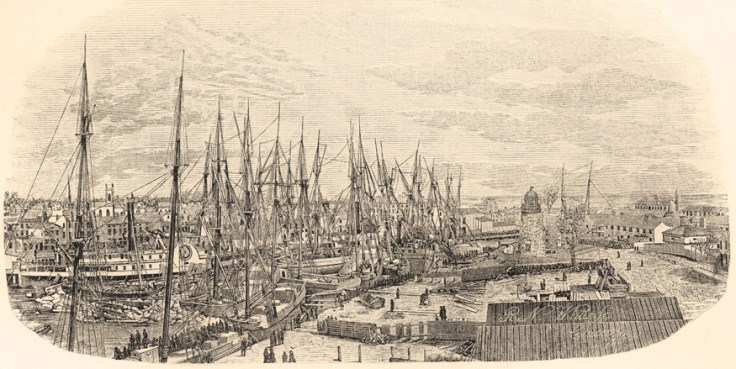

Austin Bidwell  was one of the most elusive criminals in history. However, throughout late 1872, his various unexplained disappearances and hastily-written letters from all over the world convinced Jeannie’s mother that he was up to no good. And so it was that, one January day in 1873 – when Austin and Jeannie were about to head for St. Martin’s-in-the-Field to get married – the screaming banshee that was Mrs Devereux suddenly appeared out of nowhere. “Just as I was stepping into a cab with my fair bride,” Austin later told Pinkerton, “along came the cruel mamma”, who grabbed her daughter and gave her “a fearful pounding”.

Prevented from marrying, the couple eloped to Paris, with Austin’s assurances buoying Jeannie up: “You will have plenty of money in your pocket, and that makes all the world your slaves and you can never be embarrassed.” And so it might have been, but for a simple slip. After the February ceremony in Paris, the rest of the gang returned to London, to complete the scam before the forged bills became “due”, while the newlyweds headed via Spain for the West Indies. When it all fell apart three weeks later – because a date was left off a forged document – one accomplice was arrested and the others scattered. And Willie Pinkerton had a pretty shrewd idea of who was behind it all.

Chicago

Pinkerton had first encountered the Bidwell gang in his native Chicago (above) and followed their forgeries, swindling and defrauding of banks for the best part of a decade. “So ingeniously were their schemes planned and so cleverly was their work executed,” he marvelled, “that for a long time, they escaped detection.” But thanks to his own unparalleled network of informants, in 1872 he learned something big was being planned in London and travelled there. In November of that year, he would later tell Austin, he had actually seen him on the Strand – to which his imprisoned charge, all colour drained from his face, replied: “Pinkerton, for God’s sake, why did you not speak to me? I would have given you $50,000 to mind your own affairs and not do as you have done.”

The article first appeared in The Independent in 2015,
and is used with the permission of the author

PART TWO OF THIS FEATURE IS HERE

COMPETITION …Win a copy of Charcoal Joe!

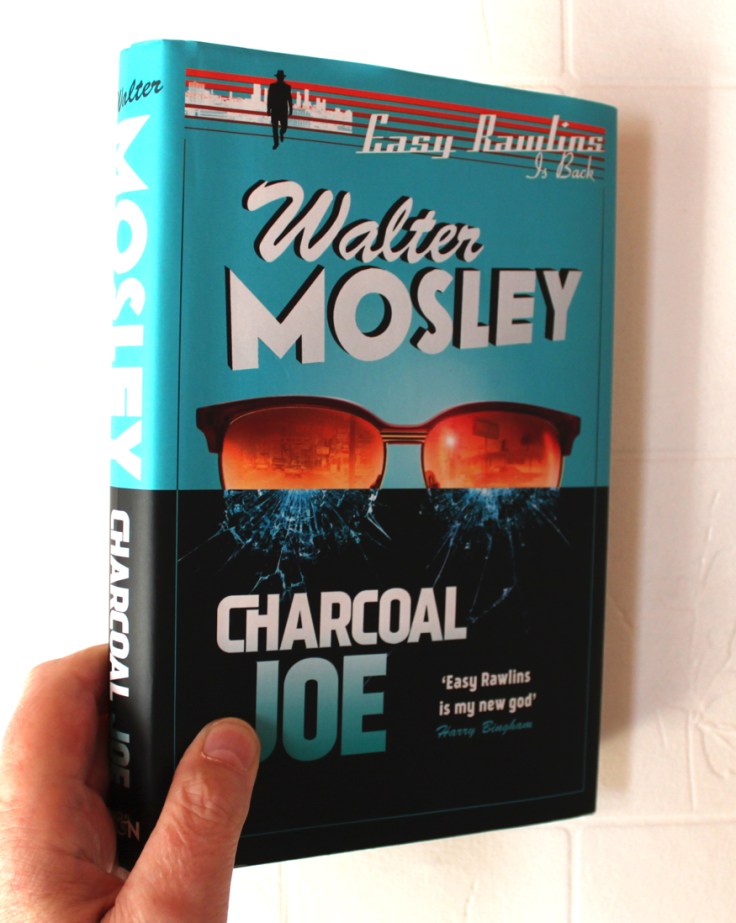
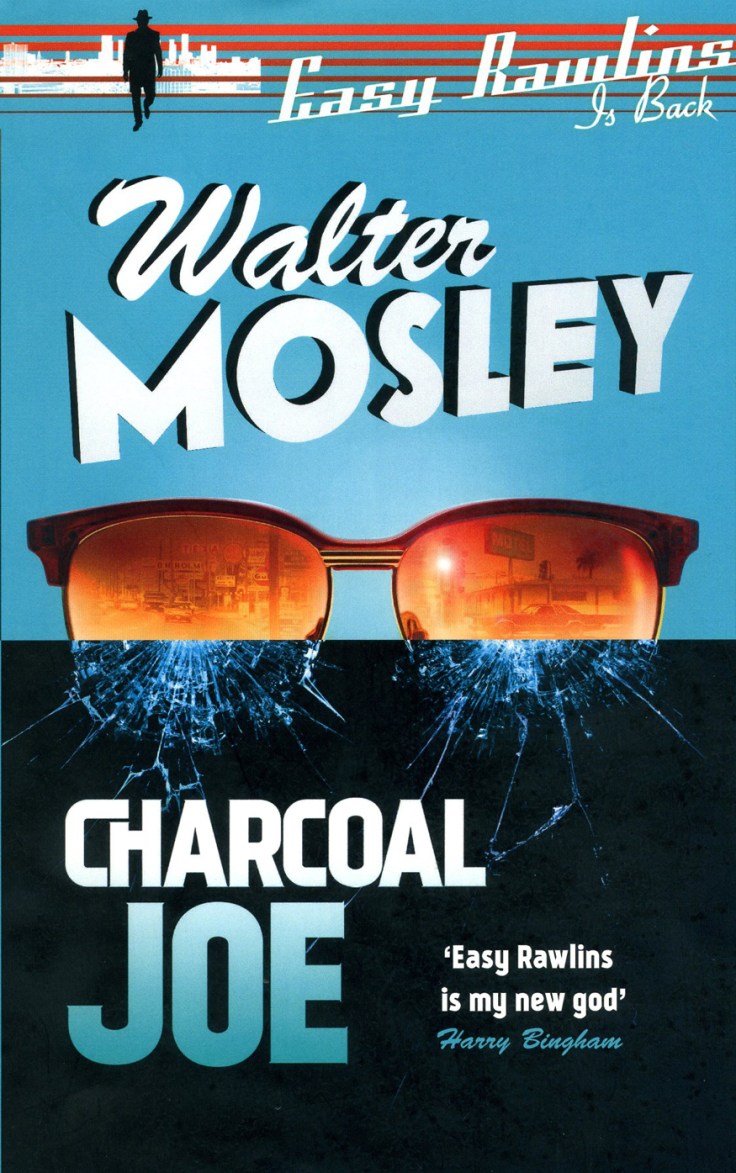
OUR COMPETITION couldn’t be more simple. The prize is a lovely hardback copy of Walter Mosley’s latest novel – Charcoal Joe. All you have to do is answer one question, which is:

Which world famous novelist became Walter Mosley’s mentor, and encouraged him to start writing?

Send your answer via email to fullybooked2016@yahoo.com

RULES

  1. Competition closes 10.00pm London time on Saturday 20th August 2016.
  2. One entry per competitor.
  3. All correct entries will be put in the proverbial hat, and one winner drawn.
  4. The winner will be notified by email, and a postal address requested.

BEST OF LUCK!

Compo

CHARCOAL JOE … Between The Covers

Mosley


“This money is from me, Easy. I’m the one hirin’ you”
“Cheddar or blue?” I asked, taking the cash.
“Say what?”
“I just wanna know what kind of cheese is in this trap.”

Thus Walter Mosley’s Los Angeles PI Ezekiel ‘Easy’ Rawlins takes a thick wad of cash from his long term buddy Raymond ‘Mouse’ Alexander, as a down payment on his latest case, to extricate 25 year-old Dr – of physics – Seymour Brathwaite from a murder rap. The fact that Easy, like a huge number of fellow Angelinos, could never say “no” to Mouse, is one thing; Mouse may well be the most dangerous man in the city, but the legendary Charcoal Joe is probably next in line. And it’s Joe who had called in a favour of Mouse.

Seymour Brathwaite has been found at a murder scene in Malibu beach with two corpses lying on the floor. When LAPD’s finest catch a black man at the scene of a shooting, that’s normally case closed, give or take a few minutes of paperwork, but this is different. Brathwaite has no connection with either the corpses or crime in general, and he seems to have a very powerful friend in underworld fixer, arranger of violent death and generally lethal string puller Rufus Tyler – better known as Charcoal Joe.

Joe is currently residing in one of LA’s more relaxed and well appointed correctional facilities, serving a short sentence for some minor infraction. Easy pays him a visit to learn more about why young Dr Brathwaite was in the wrong place at the wrong time, and finds Joe attended by his minders and gophers. He asks why Joe is so convinced of Seymour’ innocence.

“The young man is a doctor of science,” Rufus Tyler the prodigy intoned. “He’s teachin’ at UCLA right this semester while he finishes his postgraduate work. Now how’s a man like that gonna be some kinda niggah like the people you and me consort with?”
I could think of a dozen ways. The universities in the late sixties were hotbeds of bombers, Liberation bank robbers and stone-cold killers.

Despite his misgivings, Easy sets about his work. At this point, it may be the moment to bring people new to the series up to speed with the who, what and why of the world of Easy Rawlins. Our man fought for Uncle Sam in WW2, and returned to an America where the yoke of oppression may have been lifted in Western Europe, but not in hometown USA. Battling everyday racism, put-downs and casual affronts, he has survived death on several occasions by the thickness of a cigarette paper, managed to earn the grudging respect of certain members of the LAPD, and has raised a family – albeit an unconventional one. Conscious that his work is always attracting new readers Mosley – like the weaver of dreams he is – fills in the biography with the deftest of touches, as he goes along.

Inevitably, Easy is being lied to by pretty much everyone involved in the case of the naïve Dr Brathwaite. The body count is spectacular, and even as he mourns the loss of his best love, Easy manages to squeeze in a couple of ‘romantic encounters’. The euphemism is mine. One of Mosley’s skills is to dance his way deftly through the minefield that faces writers who tackle sex scenes. Where many tread too heavily and die, Mosley escapes unscathed.

Mosley009The plot, as they say, thickens – to the point where you may need to skip back a few pages just to be sure that you are certain who has done what to whom. To me, this is neither here nor there. Sometimes cliches are unavoidable because they tell a simple truth, and with any Easy Rawlins novel it is all about the journey rather than the destination. An Easy Rawlins tale is what you get when a poet writes crime fiction. If Raymond Chandler were a deity, then I would worship him, but I would be hard pressed to summarise the detailed plots of Philip Marlow’s cases. I could, however, rattle off a dozen one-liners and brilliant descriptions which have made Chandler immortal. So it is with Mosley.
Easy goes to an illegal club called The Black Door Bar, and is reunited with an old flame.

“Hey, Easy,” Louise Lash said.
She was maybe forty with a face that would be beautiful twenty years after her death. Her skin was black and flawless. Even when she wasn’t talking her mouth seemed to be saying something elusive.

Read this book, and cherish it. Mosley is not an old man by today’s standards, but there will come a time when there will be no more Easy Rawlins, and the world will be a poorer place for his passing.

Follow the link to get your copy of Charcoal Joe.

Mosley010.jpg


ON MY SHELF …13th August

OMS 9 August

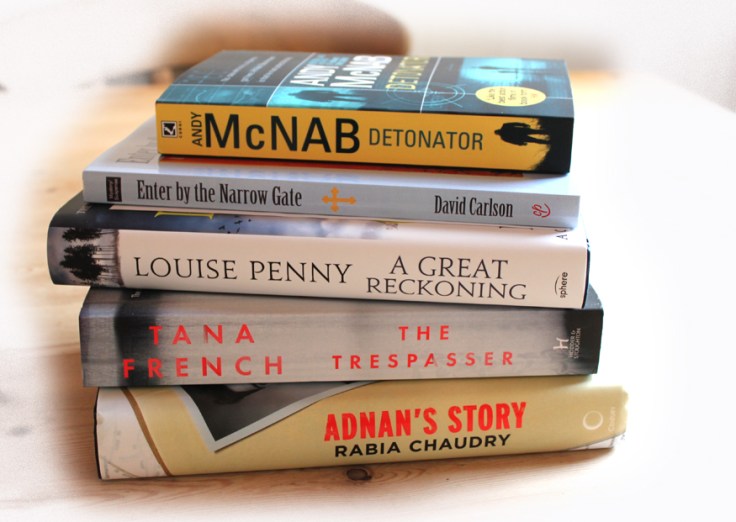
Adnan’s Story by Rabia Chaudry
We kick off with True Crime, and this is an account of the murder of a young Asian-American woman, Hai Min Lee. She was killed in January 1999, and her former boyfriend Adnan Syed was tried for her murder, and convicted. He has always protested his innocence, and the case has become a cause célèbre in America, and anyone who marvels at the complexities and contradictions of America’s legal system will enjoy this book. The case is still very much ‘live’, and there are almost daily developments, Rabia Chaudry’s book being just one strand in a case which seems as if it will run and run. You can find out more about the case here. Adnan’s Story has just been published by Century. Follow the link to see buying choices.

The Trespasser by Tana French
Tana French is the author of several best sellers set in the Irish capital city, Dublin. Don’t expect cheerful pub sing-songs and endless pints of Guinness, however, as French deals in the hard currency of violent death, and those who seek to bring killers to justice. Cops Stephen Moran and Antoinette Conway have crossed paths – and swords – before in French’s novels, but now they have to try to meld their spiky and abrasive personalities into a force that will bring to justice a stone-cold killer who is hoping that the police will fall into the trap he has laid for them, where the bait is a very obvious suspect. You’ll have to wait until late September to get your hands on a copy of The Trespasser, but you can pre-order by following the link. It’s published by Hodder & Stoughton.

A Great Reckoning by Louise Penny
The crime fiction landscape is, some might say, crowded with Detective Inspectors, but it seems our thirst for these middle-managers in police stations across the world seems unquenchable. Chief Inspector Armand Gamache of the Sûreté du Québec is as popular as any of his counterparts, and in this, his 17th outing, Gamache has a new job, as the new commander of the Sûreté Academy. He is well aware that there is a dangerous undertow of corruption and venality which sucks away at the integrity of young graduate officers, and he is determined to sweep the stable clean. All does not go according to plan, however, and when he is implicated in the death of a former Academy lecturer, his career – and life – come under severe threat. A Great Reckoning is published by Sphere and will be available at the end of August.

Enter By The Narrow Gate by David Carlson
To begin with, a little erudition, ‘Gate’ is a very common suffix in British street names, but the word does not refer to an opening, which can be opened and closed. Rather, it means a street, or thoroughfare, and is used thus in many biblical references, such as the title of this book.  With this in mind, readers will find they are in on the start of what may well be an attractive new series. Many of the best crime stories deal in partnerships, and the latest in a long line brings together a monk, Father Nicholas Fortis, and Lieutenant Christopher Worthy of the Detroit Police Department. The action, however, takes place in New Mexico – Santa Fe, to be precise – and the two apparently mismatched sleuths combine their very different skills to solve the violent death of a young nun. We are well ahead of ourselves here, as this will not be available until November, but Coffeetown Press are confident that they have a winner on their hands. You can pre-order here.

Detonator by Andy McNab
Since his authorial debut with Bravo Two Zero in 1993, the former SAS soldier’s real identity has become public knowledge, but he has reinvented himself, at least in fiction, with the derring-do of international operator Nick Stone. Fans of the genre will find that Detonator ticks all the boxes. We have lone-wolf terrorists, a resurgent and malevolent Russia, a  friend’s murder which cries out for vengeance, and enough exotic locations to satisfy a travel agent’s brochure. Detonator, published by Bantam Press, is the 17th adventure for Nick Stone and is already available to those who want a Kindle or a hardback. If you want the paperback edition, you’ll need to hang on until September.


THE POSTMAN DELIVERS … Out of Bounds

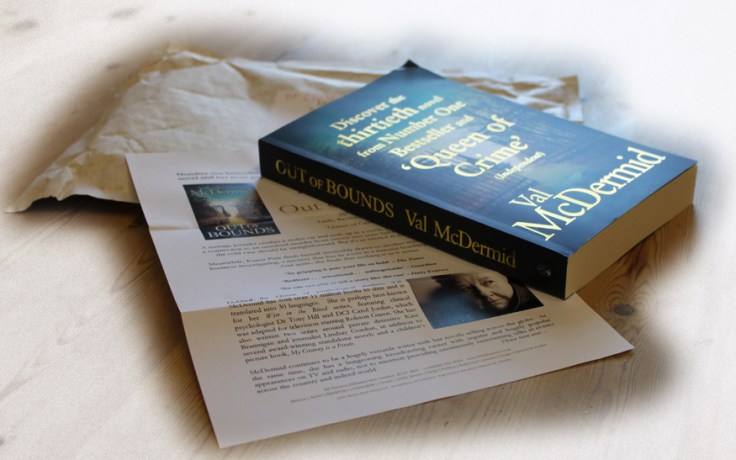
Val McDermidThere are just a handful of authors who, when you have their latest book in your hands, remind you of the sheer unalloyed pleasure that can come from reading. For me, that is the best feeling in the creative world, bar none – and that’s from someone who spent most of his professional life teaching and playing music. One of those treasured authors is Val McDermid, who you know is never going to let you down.

Her new book is the fourth case for Inspector Karen Pirie who, like her creator, is based in Fife, Scotland. A joyride for a local teenager ends in rather more than tears, as the unfortunate youth ends in a coma.No modern police novel is complete with the mystical world of DNA cropping up at some point, and in this case it links to a decades-old cold case and the terrible legacy of a terrorist bombing. Out of bounds will be available from 25th August, but can be pre-ordered here. Watch out for the full review on Fully Booked!

Blurb

Blog at WordPress.com.

Up ↑