 Some historical crime fiction takes us back to times way, way before our own memories could have any validity. Then there are stories set in periods that many of us could reasonably have experienced at first hand. With the former, it is simply the author’s research versus the depth – or lack of – our own historical knowledge. The latter is a much more tricky enterprise, as someone who sets their book in the 1960s, for example, can be exposed to a more searching light – that of readers who actually lived through the years in question.
Peter Bartram’s mileu of choice is the early 1960s. We are in Brighton, the celebrated seaside town on England’s south coast. Its days of fame as the Gay capital of Western Europe, and infamy as the first large local authority to be mismanaged by the Green Party were yet to come, but the seeds of eccentricity have already been sown. Our guide through the Sussex town is Colin Crampton, the scoop-hungry reporter for The Evening Chronicle – a Brighton newspaper. He is a thoroughly engaging character with a quick wit, and it isn’t too fanciful to imagine that he might resemble the author in his younger days. If you read Bartram’s biography, you will be forgiven for thinking that if Crampton is not Bartram, then he is someone who the author knew very well in his early days as a journalist.
The basic plot is that we have a long-retired star of What The Butler Saw machines – Marie Richmond – who dies in a mysterious road accident. Then, a machine featuring her in her prime is broken into, and the revealing footage is stolen. The man who should have been guarding the pier is found bludgeoned to death – with a coconut. Crampton/Bartram introduces us to some memorable characters, including a camp, overdressed theatre critic and a toupéed old thespian, both of whom are crying out for the much-missed talents of John Inman and Charles Hawtry to bring them to life.
As Crampton attempts to unravel the mystery of why the ample charms of a silent movie star should have given someone cause for murder, there are some delightful period references and jokes which made me laugh out loud, although younger readers might not get the gags unless they are students of British popular culture in the second half of the 20th century.
There may well be readers who, by this point, have been receiving ‘cosy’ messages on their genre radar. All well and good, as there are elements of cosy crime here. We have an unambiguously likeable central character, a familiar and lovingly-painted background, and a cast which includes several amiably odd characters. We reviewers love our genres, and some readers may even share this obsession, so I’ll pop Stop Press Murder into the Cosy pigeonhole, with one or two caveats. Although the tone is generally as gentle and as light as a Brighton breeze, Bartram finds enough dark corners in the seaside town to keep the interest of those who like their crime fiction with a harder edge. The style of the book reminds me very much of the sharply humorous writing of Colin Watson and his Flaxborough novels, which also delight in the dafter aspects of English life, as well as boasting a collection of folk with similarly improbable surnames
Crampton is convinced that there is a link between the odd events on the pier, and discovers that Richmond – or to use her real name, Sybil Clackett – has a twin sister who is no lesser personage than the Dowager Marchioness of Piddinghoe. The local police and the Chronicle’s rival newspapers are seeing the case differently, however, and Mr Figgis, Crampton’s boss, is becoming increasingly twitchy as he fears for his sales figures.
Peter Bartram explores all possibilities inherent in the twin sisters storyline, and delivers an excellent novel, full of twists and turns, plenty of action scenes, crackling dialogue – and a great sense of fun. I’m looking forward to yet more encounters with the Evening Chronicle’s star turn. You can find a copy of Stop Press Murder by following the link.
 By Peter Bartram
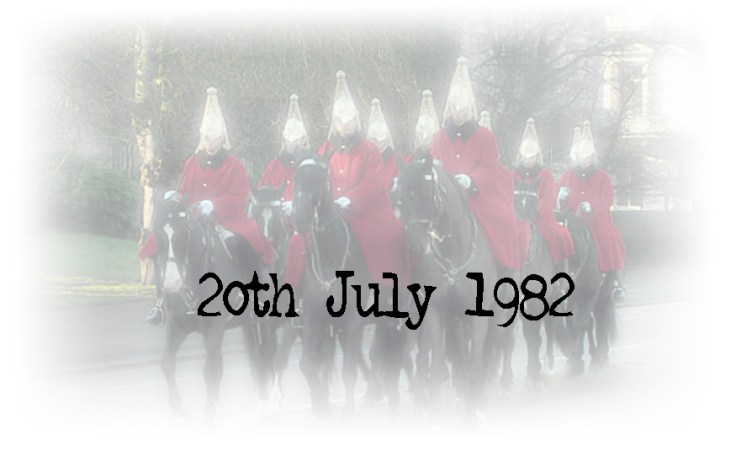 There is, perhaps, a legitimate debate to be had over what to call killings which are carried out in the name of a political cause. No-one in their right mind would label the millions of soldiers who died in the two world wars of the 20th century as murder victims. The wearing of a uniform, and the acceptance of the King’s shilling has always legitimised the act of pulling the trigger, firing the shell, or dropping the bomb.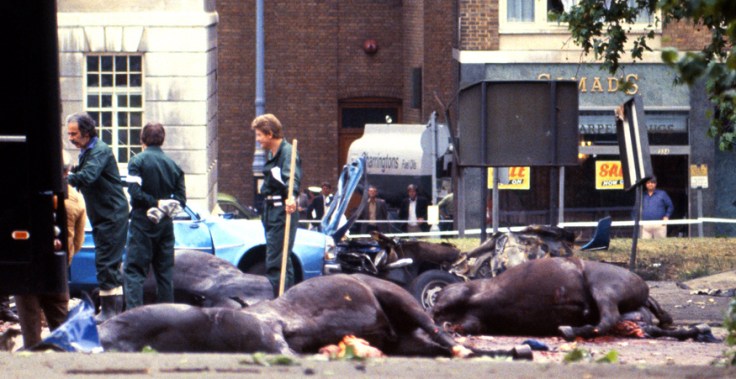

 Just a couple of hours later, as emergency services struggled to deal with the mayhem in South Carriage Drive, the terrorists struck again. It seems barely credible that in another part of the city, life was going on as normal. Remember, though, that these were the days before mobile ‘phones and social media, the days when news was only transmitted in print, by word of mouth and on radio and television. The regimental band of The Royal Green Jackets was entertaining a small crowd clustered round the bandstand in Regent’s Park. They were playing distinctly un-martial music from the musical ‘Oliver!’ when, at 12.55 pm, a massive bomb went off beneath the bandstand. The blast was so powerful that one of the bodies was thrown onto an iron fence thirty yards away, and seven bandsmen were killed outright. They were: Warrant Officer Graham Barker, Serjeant Robert “Doc” Livingstone, Corporal Johnny McKnight, Bandsman John Heritage, Bandsman George Mesure, Bandsman Keith “Cozy” Powell, and Bandsman Larry Smith.
 Downey (right) may or may not have been implicated in the Hyde Park murders. Only he knows for certain. At least he had the decency to cancel a party planned in his honour when he was released. He said:
 “Harry Roberts is our friend, is our friend, is our friend.
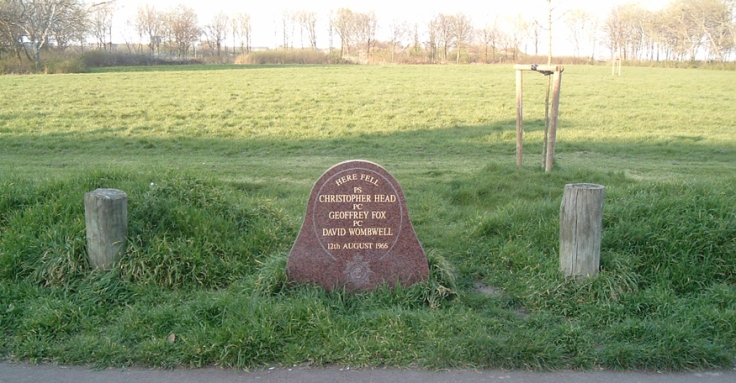
  aged 30, and 25-year-old Temporary Detective Constable David Wombwell were both members of the CID based at Shepherd’s Bush police station. Their driver was Police Constable Geoffrey Roger Fox, aged 41. As the unmarked police car pulled up nearby, DS Head and DC Wombwell got out and walked over to check the van. They noticed that it had no tax disc. While the officers were checking Jack Whitney’s documents, Roberts panicked, and shot DC Wombell with a Luger pistol. When DS Head ran back towards the police car, Roberts shot him, too. Duddy sprang from the back of the van, brandishing an old Webley revolver, and joined Roberts by the police car where, together, they shot dead PC Fox. The two killers ran back and got into the van, which Whitney drove away at high speed. (Below) The murdered officers PC Fox, DC Wombwell and DS Head, and their funeral cortege.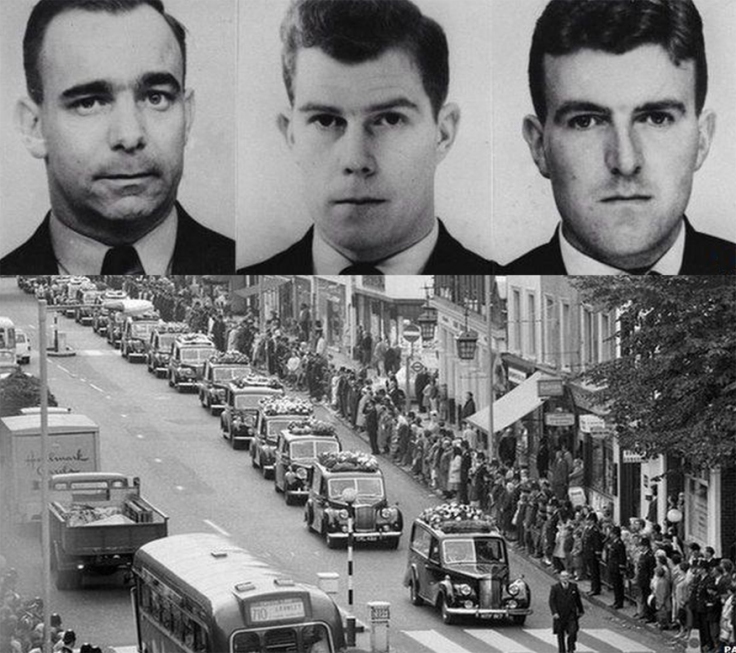
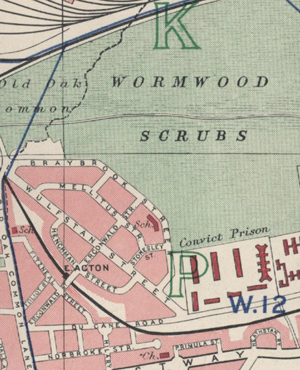
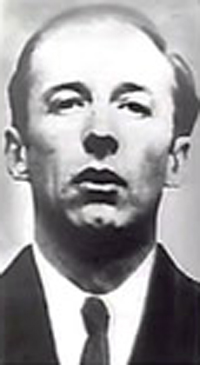
 What became of the Shepherd’s Bush Killers? It should be noted that the murders took place in Acton, but possibly because the dead officers were based at Shepherd’s Bush, that name has stuck. John Duddy (left) died in Parkhurst prison on the Isle of Wight in 1981, at the age of 53, while Witney, possibly because he never fired a shot back in 1966, was released in 1991. He had eight years left to enjoy his freedom before death was to seek him out.
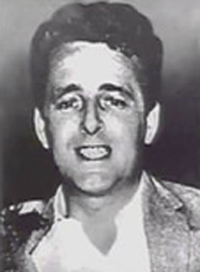
 of rent arrears. The two rowed over the money and daily household chores like washing up, Bristol Crown Court heard during Evans’ trial. Then, on August 15, 1999, Evans attacked Witney, (right) beating him around the head with a hammer. He grabbed him by the throat and Witney, who by then was quite frail, was throttled to death. Evans, aged 38, was found unanimously guilty, and given a life sentence.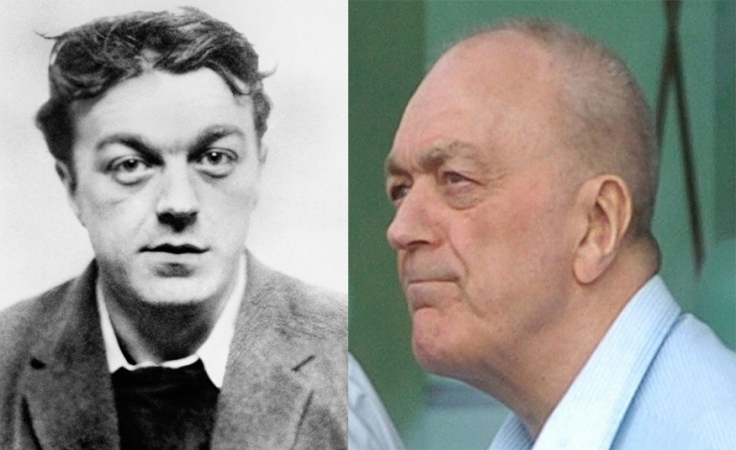
 THE 1999 SHOOTING OF A 16 YEAR-OLD BOY during an attempted burglary at a remote Norfolk farmhouse landed the unfortunate teenager in an early grave, and the farmer who fired the fatal shot was given a life sentence for murder.
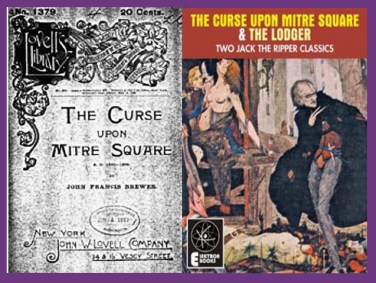 Kelly, met a bloody end in her Millers Court hovel. Of Brewer, we know very little, but his style can best be illustrated with a brief extract.
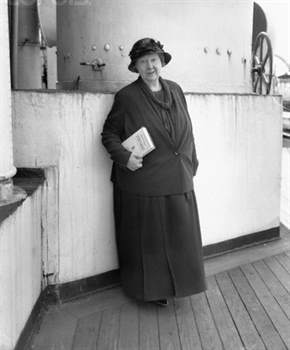 Belloc-Lowndes (right) was the older sister of the prolific writer and poet Hilaire Belloc, but she avoided her brother’s antimodern polemicism, and wrote biographies, plays – and novels which were very highly thought of for their subtlety and psychological insight into crime, although she preferred not to be thought of as a crime fiction writer. In The Lodger, Mr and Mrs Bunting have staked their life savings on buying a house big enough to take in paying guests, but just as their dream is on the verge of crumbling, salvation comes in the form of the mysterious Mr Sleuth, who knocks on the door and takes a room, paying up front with many a gold sovereign. As Mr and Mrs Bunting count their money – and their blessings – London is gripped with terror as a killer nicknamed ‘The Avenger’ stalks the streets searching for blood. The Buntings’ peace of mind evaporates as they suspect that their lodger is none other than The Avenger. Such is the quality of The Lodger that it has been filmed many times, most notably by Alfred Hitchcock in 1927. It would be remiss of me not to quote the famous bloodcurdling imprecation at the end of the book, directed at the hapless landlady.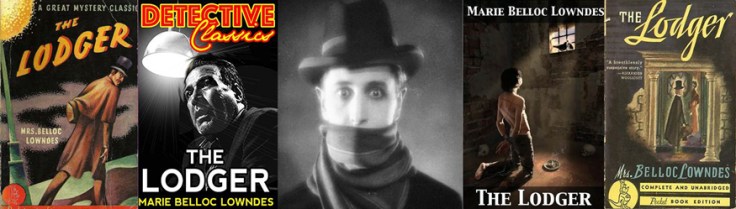
 Colin Wilson, who died in 2013, (left) was the kind of man with whom the British establishment, certainly in the 1950s and 60s, was most deeply ill at ease. He was, as much by his own proclamation as that of others, intellectually formidable. He burst on the literary scene in 1957 with The Outsider, a journey through an existential world in the company of, among others, Camus, Nietzsche, Kafka, Sartre, Hermann Hesse and Van Gogh. His novel that concerns us is Ritual In The Dark. Published, after a long gestation, in 1960, it examines how The Ripper legend transposes itself onto the London streets of the late 1950s. It must be remembered that many of the murder sites were still more or less recognisable, at that time, to Ripper afficionados. The tale involves three young men, Gerard Sorme, Oliver Glasp and Austin Nunne. Sorme goes about his life well aware of the significance of past deeds, but also knowing that a present day killer is out and about, emulating the horrors of 1888. Wilson could be said to be one of the pioneers of psychogeography, a linking of past and present much used by modern writers such as Iain Sinclair and Peter Ackroyd. Sorme says,
 “I am lying here in the middle of London, with a population of three million people asleep around me,
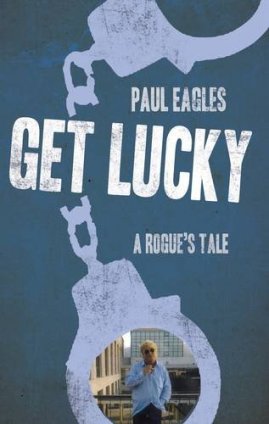 So was Mr Eagles a late 20th century Flashman? In some ways he seems to have all the charm of the fictional ne’er-do-well. He talks his way into posh company, is equally at home whether womanising, boozing or brawling, and thinks nothing of stealing a priceless Rubens painting from a Dutch museum.
 THE QUESTION WAS …..


 fullybooked2017