
My first three selections were in the Best Dialogue, Best Historical Novel and best Psychological Thriller categories, and you can review those by clicking this link. Here are my next three ‘best of’ choices.

BEST NON-UK NOVEL
Murder In Mt Martha by Janice Simpson
There was certainly some red hot competition in this category, particularly from such American superstars as Harlan Coben and Walter Mosley, but there was something about this book that struck a chord. I’ll own up to being a fan of most things Australian, having lived and worked in The Lucky Country, but this story had something rather special.
On the one hand we have the murder itself, based on a real-life crime in the 1950s which remains unsolved to this day. It is true mystery in the sense of both words, but in the book we pretty much know who the killer is quite early in the piece. Simpson treads the tightrope of telling a story through different eyes and times, and she performs like a seasoned veteran, never once coming close to losing her balance. The modern day narrative involves a young Melbourne post graduate student, Nick Szabo, transcribing the memories of the elderly Arthur Boyle.
 The past times take us back to the 1950s, both in Melbourne and then further north in rural Queensland. We enter the home of the young Arthur Boyle, who is looked after by his adult sister. Also resident in the Melbourne home is Ern Kavanagh, a twenty-something young man who has ambitions to be something other than a car mechanic. He then leaves Victoria and travels north, in search of fortune, if not fame in Queensland.
One of the great qualities of this book is the way Simpson plays a game with us about the exact relationships between Arthur, Ern and ‘Sissy’. We think we know what’s what, but it becomes clear as the story unfolds that we most certainly do not. There is, if you will, a two part harmony here, because Simpson then introduces another ‘tune’ which involves the history of the Szabo family, refugees from the Hungarian uprising, and once again, as the two melodies complement each other, family secrets unfold like a timelapse video of a flower opening.
The ghost of the murdered girl, clubbed to death and brutalised in a seaside resort near Melbourne, never quite goes away, and the sheer pity and wasteful nature of her death winds like a deep purple thread of mourning through the fabric of the story. The details of ordinary life in the 1950s are compelling and are given with a sense of wistfulness which never descends into mawkish sentiment. The conclusion of the book is brilliant, and the story comes to an end in a way which I least expected, but is entirely fitting and in keeping with the tone of the narrative. Murder In Mt Martha is published by Hybrid Publishers.

BEST POLICE PROCEDURAL
Death Ship by Jim Kelly
Odd couples are many and varied in the world of crime fiction, and many authors have explored the Yin & Yang possibilities that open up. There are many critical appraisals of the device, such as this one from Early Bird Books. I have chosen a beautifully mis-matched duo who are perfect foils for each other. They are Detective Inspector Peter Shaw and Sergeant George Valentine of Norfolk Constabulary, based in King’s Lynn.
Shaw is the younger of the two. In fact, so much so that Valentine actually served on the force with Shaw’s late father. Shaw is a physical fitness enthusiast, a cerebral deep thinker, and is married to an exotic wife whose family is of Caribbean origin. George Valentine is a widower, a suicidally heavy smoker, curmudgeonly but with a razor sharp eye for detail. Together, they have appeared in Jim Kelly’s ‘Death’ series, the previous novels being Death Wore White, Death Watch, Death Toll, Death’s Door and At Death’s Window.
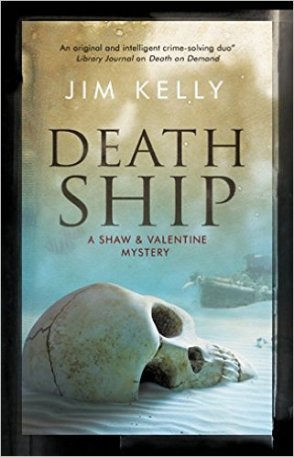 In Death Ship, as with all the previous books, the sea is never far away. The seaside town of Hunstanton has been literally rocked by an explosion on its crowded beach. Something buried deep beneath the sand is triggered by some boys determined to dig a sink-hole sized pit before the tide sweeps in. There is a brief moment when something metallic and shiny appears in the wall of their excavation, but then hell is unleashed. Miraculously, no-one is seriously hurt, but the beach is closed to holidaymakers while forensic experts and a bomb disposal team from the army do their stuff.
But the sea holds other mysteries. In the terrible storm of January 31st 1953, a tempest that battered the East Anglian coast and claimed over 300 lives, a dilapidated Dutch coaster, the Coralia, went down, taking its captain and crew with her. With this in mind, Shaw’s investigations are further complicated by the discovery of a dead diver, tethered to the underwater remains of Hunstanton’s Victorian Pier, destroyed by storms in 1978. Eventually, he learns that the murdered diver is the son of one of the crew members of another wrecked ship, the ill-fated Lagan, whose remains are rotting on the seabed a couple of miles distant from the pleasure beach.
Shaw and Valentine eventually pull the different threads of the mysteries together, with a combination of good solid police work and a touch of vision – the classic combination of perspiration and inspiration. All fine novels offer something extra, however, and as in all Jim Kelly’s novels, there is a deep rooted awareness of the past and the long shadows it can cast over the present. In Death Ship the past is like a sunken ship that has lain undisturbed on the sea bed for decades. Then, with a freak tide, or maybe some seismic shift, the ship’s blackened timbers surface once again, breaking through the surface of the present. There can be few novels where the metaphor is more apt. Death Ship is published by Severn House.
BEST PI NOVEL
A Time of Torment by John Connolly
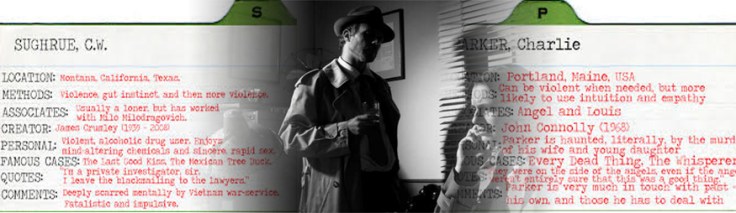
It is safe to say that Irish author John Connolly has taken the PI genre out of its care home for elderly gentlefolk, given it a good scrub down, bought it a new suit of clothes, given it a good slap and generally breathed new life into it. The beneficiary of this rejuvenation? A haunted (literally) and violent investigator from Portland Maine by the name of Charlie Parker.
 Parker’s ghosts are those of his wife and daughter, brutally and shockingly murdered years ago by men whose physical presence was all too temporal, but men whose puppet strings were being pulled by evil forces not entirely of this world. In this novel, Parker is contacted by a former public hero who went from hero to zero when child pornography was found on his computer. Jerome Burnel was given a long jail sentence and suffered the usual fate at the hands of other prisoners for whom sex crimes against children are worse than murder.
Moved by the man’s brutal jail-time story, Parker tries to reassure him that he can rebuild his life. Bernel disappears, however, and his conviction that his days are numbered becomes sadly prescient. Parker and his two New York associates, Louis and Angel, track down Burnel’s chief prison tormentor, Harpur Griffin, also now a free man. Griffin is found in a bar with two companions who register off the scale on Parker’s danger meter. When Griffin is found burned alive in his car shortly after the meeting, Parker, Louis and Angel realise that they are dealing with men who are fueled with something more potent than simple criminality.
Eventually, Parker narrows down his search for Burnel’s tormentors, and his investigations lead him to an isolated – and incestuous – community in Plassey County, West Virginia. The people and their village are known as The Cut, and they have lived in Amish-like seclusion for as long as anyone can recall. The comparison with the Amish begins and ends with reclusiveness, as the god of The Cut isn’t the one found in The Bible. Their god is called The Dead King.
Parker and the people of The Cut circle each other relatively cautiously in the fashion of partners in a courtly dance, but when they do engage, the last 50 pages of the book are violent and remorseless. This is dry mouth time – superb entertainment, but very unsettling too. A Time of Torment is published by Hodder & Stoughton.
 Gunther is something of a ladies’ man, and he usually manages to attract the attention of females, most of whom are either damaged, or damaging, and sometimes both. Here, he makes a night-time visit to an English woman who says that she is anxious to meet Somerset Maugham with a view to writing a biography.

 He is asked to investigate a disappearance and a death. The disappearance is of a minor functionary of the Raj from the country town he helped administer, and the death is that of the son of a powerful – and widely disliked – British entrepreneur and colonialist. Le Fanu’s search for the missing Southlake, and the all-too-dead Hargood takes him far from Madras, and to the exotic Malay island of Penang, where he finds a beguiling mixture of colonial and Chinese culture. He also finds himself in the equally beguiling arms of a beautiful Chinese woman. Unfortunately, she is the daughter of a wealthy merchant who appears to be right at the centre of Le Fanu’s investigations.

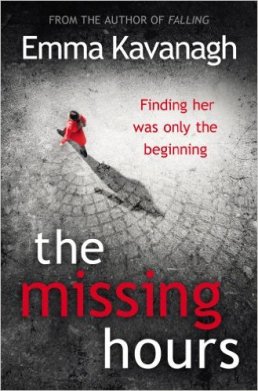 The police investigation into Selena’s disappearance is handled by an unusual crime fiction pairing. Finn Hale and Leah Mackay are brother and sister. Finn has leap-frogged his sister in the promotion stakes, despite her evident superiority – evident, that is, to us readers, but not the local constabulary personnel department. Kavanagh plays the relationship between the siblings with the touch of a concert violinist. There are all manner of clever nuances and deft little touches which enhance the narrative.

 Miss Christie Regrets by Guy Fraser-Sampson
 presented. This is the debut novel from Joseph Knox (right) and by contrast with Miss Christie Regrets and its golden tinge, this is very much noir territory. The book opens in a bleak Manchester street and, as you might expect, it’s raining. DC Waits, a young Manchester detective is drawn into an investigation of the disappearance of Isabel Rossiter and he finds that her home life is complex. Meeting her rich and influential father, Waits has to mine down beneath the conventional surface of the Rossiter family until the truth begins to emerge – and it is far from pretty.



 Murder In Mt Martha is one such book. For those who have never visited Melbourne, Mount Martha is a town on the Mornington Peninsula, best known as what we Brits would call a seaside town. The ‘Mount’ is a shade over 500 ft, and is named after the wife of one of the early settlers. Author Janice Simpson (left) has taken a real-life unsolved murder from the 1950s as one thread, and created another involving a present day post-grad student who is interviewing an old man about his early life in the post-war Victorian city. Simpson has woven the two threads together to create a fabric that shimmers, shocks and surprises.
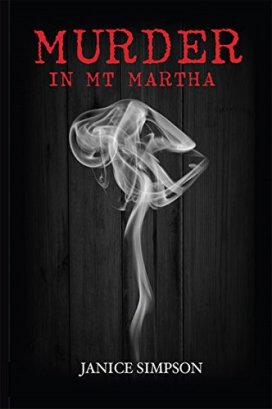 Simpson keeps Szabo blissfully unaware that Arthur Boyle is a relative of Ern Kavanagh. Arthur only recalls him in fits and starts, believing that he was his uncle, but Simpson lets us into the secret as she describes Ern’s life over half a century earlier. The book opens with a graphic description of the brutal murder of an innocent teenager whose parents have reluctantly allowed her to travel alone to her first party. There is never any doubt in our minds that Ern Kavanagh killed the girl, but we are kept on a knife-edge of not knowing if he will get away with the murder.

 Highbridge, by Phil Redmond
 Down, But Not Out, by Gary Tulley
 All Of A Winter’s Night, by Phil Rickman

 My crime / mystery novel,
 I do not write crime as one who has jumped on the current-trend bandwagon. I was raised in a home of The Sweeney and The Bill. On migrating to Australia as a child there was weekly doses of Homicide, Division Four, and Matlock Police. My enjoyment of the genre comes not from wanting to venture into life’s darker side, but from my penchant for solving problems and conundrums. I confess though, that youthful aspirations saw me as a leading criminal lawyer. It transpired that I had neither the aptitude nor attitude to devote seven years to the cause. Ironically, I later devoted just as many years to writing and literary studies!


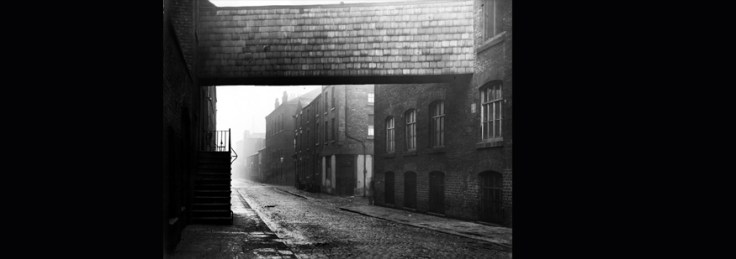
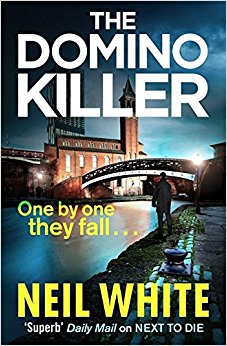 It is in Manchester that author Neil White introduces us to an unlikely crime fiction duo. Not Inspector and Sergeant, not toff and manservant. not analytical genius and bumbling foil, but brothers. With a difference. Sam Parker is a policeman, while his brother Joe has opted to on the other side of the tracks. Not a criminal himself, you understand, but a solicitor who earns his daily bread by being summoned to police stations across the city to try to advise felons on what they should and shouldn’t say in the interview room. The authenticity of Joe Parker as a character is boosted by the fact that Neil White, as well as writing CriFi bestsellers, is actually a criminal lawyer.
 The plot of The Domino Killer is full of scarcely plausible coincidences, but Neil White (pictured right) is a good enough writer to plough through these potential blockages and delivers a novel full of drama, suspense and prose which hooks the reader in, and doesn’t let go.


 There are few places more English than the lovely town of Evesham, the setting for Beyond All Doubt, by local author Paige Elizabeth Turner. The River Avon adds majesty to the Worcestershire town, but can also yield unpleasant discoveries, as when the bloated corpse of Juanita Morales is finally released by the riverbed weeds, much to the horror of passers by, and to the vexation of local police officers DI Marchant and DS Watts.

 COMPETITION – Win a copy of Mercy Killing by Lisa Cutts, and read how the apparent murder of a registered sex offender places huge strains on the community, and asks the local police force a big question about where their loyalties lie; to local people, or to the letter of the law? You can read our first take on Mercy Killing


