Search

fullybooked2017

Author

fullybooked2017

A retired Assistant Head Teacher, mad keen on guitars. Four grown-up sons, two delightful grandchildren. Enjoys shooting at targets, not living things. Determined not to go gently into that good night.

INTERVIEW . . . Joseph Knox

sirens-interview-banner

Sirens, the debut novel from Joseph Knox, has hit the crime fiction world like a cruise missile in these first days of 2017. On one level a police procedural, Sirens takes off in several different directions, and is full of wickedly sharp prose and a kind of grim poetry that shines an unforgiving light on modern Manchester and its criminal underworld. You can read our review of the book here, but it is a pure pleasure to have the author answering a few questions.

Tell us something about your background, and how you came to be a writer.

I began writing from a very young age. I was an insomniac as a kid and my parents quickly realised that giving me books and notebooks would stop me wandering round the house at night making trouble. I was sketching out short stories, comedy routines and characters as soon as I could hold a pen. Every word of it was shit – but it was a great early lesson in what writing really is: sitting alone for many hours, trying to reach that perfect moment where you forget you’re a person, forget you’re a boy in his bedroom writing, and begin to inhabit whatever world you’re writing about.

For readers who have yet to meet Aidan Waits, run through his CV.

Aidan is already on his very last chance as a detective when he’s caught stealing drugs from evidence. Although he uses substances, the reasons for his theft aren’t so cut and dry. He’s already an outsider. An unnatural fit for the job, he has a keen eye for detail and human frailty but is disconnected from those around him and filled with anger. The source of this anger, and Aidan’s self-destructive tendencies, is a key plot point of the book. There are flashes that he might be a keen detective, even a good man, but due to several things, might be too compromised to do the right thing.

sirensIt seems from Sirens that you have a love-hate relationship with Manchester. Give us some idea of your impressions of the city. Was it a wrench to move to London, or a relief?

A perceptive question! I’d say my relationship with Manchester leans more towards love. I grew up in Stoke on Trent and, to me, Manchester was the big city. It was where I dreamt of running away to, where I did run away to when the time came. It was the first place I ever really had my heart broken. The first place I had my nose broken. I failed in every way possible when I lived there – financially, romantically and personally. But I always appreciated it; to be surrounded by beautiful buildings, many of which clashed with garish modern things; to be surrounded by more art, artists, love and imagination than I could understand; to walk from one side of the city to another over the course of several hours, watching all kinds of strange, new people. The more I write and think about it, the more I love it. But I know my life would be very different if I’d stayed. Perhaps I never would have made it out of those basement bars Aidan’s stuck in?

Staying with Greater Manchester, it seems to me that it has always ‘punched above its weight’ in terms of awful criminal deeds. Given the history of villainy which includes Brady and Hindley, Trevor Hardy, Harold Shipman and Dale Cregan, do you think that is a fair assessment?

Punching above its weight is a pretty good line for Manchester in general. Like all truly great cities, it offers possibilities. Annihilation and salvation. The atmosphere of Manchester is both breathtakingly beautiful and bluntly cruel. Why wouldn’t that broadcast out to the population?

Sirens is almost blacker than Noir. Which authors from the darker end of the crime fiction street have influenced you?

James Ellroy is very important to me. As are the obvious hard noir guys like David Peace etc – and the weirder ones like James Sallis. The biggest influence on me as a writer, though, is Ross MacDonald. Archer is a man trying to understand people, trying to give them the benefit of the doubt. As the world gets crueler, that’s more important. Certainly as Aidan finds himself surrounded by enemies and, at a certain point in the novel I think it’s fair to say, finds himself totally doomed, his sympathy – rather than his bravery – is what I admire most.

jnSirens is a great title. Are we talking blue flashing lights or voluptuous ladies luring sailors to their death?

Thank you. The first time I thought of Sirens as a title for this book (working title was: Women Who Love Men Who Love Drugs) was when listening to There There by Radiohead. Thom Yorke’s wonderful line; ‘There’s always a siren, singing you to shipwrecks’ seemed to sum up Aidan’s plight.

There’s so much to love about the word. Sex, danger, lights, noises, police, women, temptation. Could be a straight description of the almost-mythic women in the novel. A nod towards Aidan’s weakness for them. A nod towards what might happen to him if he succumbs to this weakness. But, yes, also a reference to the police. Their corruption is a major theme of Sirens. A combination of the two meanings, a police siren and a destructive siren, could even give the impression that the real danger in this novel is on the side of the law…

The craze for anything Scandinavian in crime fiction seems to have passed. With your experience of selling crime books to the public, what do you think will be ‘the next Big Thing’?

Ah! No one ever gets this shit right and why would they want to? The joy of books is surprise – a line, a title, a bestseller. I also read as much around the map as possible to avoid trend books. With that said, in general fiction I’ve recently been enjoying a lot of Faction. That is to say, novels which combine fact with fiction – perhaps even ones where the authors themselves can be characters. Perhaps not a future trend, but an idea of some crime books that’d turn my head.

What next for Aidan Waits?

Aidan Waits will return in 2018 in The Smiling Man. Based on a real-life unsolved murder. One of the most maddening and confounding I’ve ever encountered, mesmerising, kaleidoscopic evil, with surprisingly little written about it. I want each of the Waits novels to be a different kind of crime novel. The first is the undercover book. This is Aidan and his monstrous partner Sutty investigating a real case and driving each other mad.

The Waterstones Exclusive of Sirens contains a Waits short story which takes place after the events of Sirens, and lightly sets up the events of book two…

sirens-1


SIRENS . . . Between the covers

sirens-banner
This debut novel from Joseph Knox
is a dark and existential policier set in a modern Manchester where the neon lights of drug fuelled night clubs cast their garish glow over abandoned nineteenth century warehouses flanking polluted rivers which once powered the cotton mills that made the city great. Out in the suburbs, in houses built for long dead mill-owners, girls barely past their GCSEs jostle each other to get the attention of the organised crime barons who control the flow of narcotics and young flesh.

Aidan Waits is a young policeman who has a liking for pharmaceutical products that anaesthetize him from life. All is well until he is snared in a sting. He is caught sampling marching powder from the police evidence locker, and he is, as they say, bang to rights. He is given a grim choice by his boss. Option one is that his corruption is made public, but he will then be suspended and disappear into the darkness of the Manchester night. Beneath this façade, however, he will actually be working to bring down one of the most dangerous and powerful of the gang bosses. Option two is similar, except that he will be hauled through the courts and given serious jail time. And we all know what happens to policemen when they are thrown into prison.

sirensSo, Waits plays a dangerous double game which involves being undercover yet in full view. This paradox is essential. Obviously drug lord Zain Carver will know that Waits is a suspended copper; the deception will only work if Waits can convince the gangster that he is prepared to damage his former employers with leaked information. It requires no acting ability whatsoever for Waits to appear dissolute, addicted and troubled – that is his normal persona. However, a big problem looms. A rich and influential Member of Parliament has “lost” his teenage daughter. Isabelle Rossitter is one of the satellites fizzing around the planet Carver. Daddy is desperate to get her back, and Waits is given the task.

To say that Waits is a complex character is an understatement to rival Laurence Oates’ gentle assertion that he was “just going outside, and may be some time.” Waits’ childhood is never far from his thoughts, and those thoughts are not positive. He and his little sister were effectively abandoned by a mother who simply didn’t want them. Footsteps echoing along the cold and love starved corridors of institutional homes still ring in his ears, and the distant rejection isn’t just a scar – it is an open wound.

When a grossly polluted brick of heroin cuts a fatal swathe through a teenage party, the result is every bit as deadly as an American High School shooting. In consequence, Waits is cut adrift by both his police handler and his underworld connections. Death stalks his every move, and he finds himself one of the few remaining pieces on the board in a deadly endgame. Waits lurches back and forth through a nightmare world of abusive sex, wasted lives, casual violence and police corruption. The novel scarcely ever emerges from the flickering strobe-lit decadence of the Manchester night. There are times when Knox writes with the kind of savage poetry that reminded me very much of the great Derek Raymond.

“ The daylight was awful. It floodlit the insane, the terminally ill, turned loose again for the day, laughing and crying and pissing their pants through the streets. It was like the lights going up at last orders, turning the women from beautiful to plain, exposing the men for what they all are at their worst. Ugly, identical.”

This is a brutal, clever and beautifully written book. Knox hands Waits a guttering candle of compassion, and he manages to keep it alight despite gusts of wind that carry the reek of decay, hatred, perversion and lust. It is scarcely credible that this is a debut novel. Knox has penned a black tale which is certainly not a comfort read. There are passages which made me physically wince, but the author has the confidence to give us an ending, once the mayhem has died down, which is both bitter-sweet and poignant. As Milton wrote, at the conclusion of Samson Agonistes:

“His servants he with new acquist
Of true experience from this great event:
With peace and consolation hath dismist,
And calm of mind all passion spent.”

Sirens is published by Doubleday, and will be available on 12th January

COMPETITION TIME …Win the new book by Eva Dolan

whdThe first Fully Booked competition for 2017 has a fantastic prize – the eagerly awaited fourth novel from a writer who is regarded as one of crime fiction’s fastest rising stars – Eva Dolan. Watch Her Disappear is not on sale until 26th January, but you could be well ahead of the game if you win this competition.

It’s a little trickier than usual, but great fun. Watch the YouTube video, and listen to the five famous pieces of music. Identify the composer of each, then take the first letter of their surname. That will give you an anagram of the surname of a famous screen detective.

whd-footer
DON’T WORRY ABOUT THE IMAGES!
They have nothing to do with the competition, but are just for looking at while you work out who the composers are.

So, for example, if there were six pieces of music, and you identified Liszt, Schubert, Orff, Handel, Mahler and Enescu, that would give you L, S, O, H, M and E making, of course HOLMES!

With your answer as the subject, just email:

fullybooked2016@yahoo.com

Your name will go into the hat, and a winner will be drawn in the usual way. The competition closes at 10.00pm GMT on Sunday 15th January. Due to postage costs, entry is restricted to people who live in Great Britain and the Irish Republic. Click the image to watch the video:

opening-title-1

RULES

  1. Competition closes 10.00pm London time on Sunday 15th January 2017.
  2. One entry per competitor.
  3. All correct entries will be put in the proverbial hat, and one winner drawn.
  4. The winner will be notified by email, and a postal address requested

tmd

PURGED … Between the covers

purged-banner

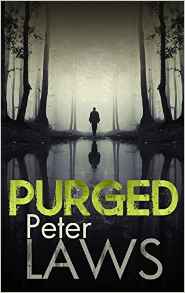
peter-lawsOrdained Baptist minister Peter Laws (right) has produced a 110mph debut crime thriller featuring Matt Hunter, a former clergyman and now devout sceptic who, like most fictional crime consultants, has special skills which make him invaluable to the police in murder cases. I don’t know if Laws has himself gone down the same Road to Damascus In Reverse as his fictional character, but the depth and bitterness of Hunter’s scepticism about God and all His works certainly makes for compelling reading.

Hunter is in a seemingly idyllic Oxfordshire village with his family, taking a sabbatical while his architect wife prepares to put in her bid for the contract to build an extension to Hobbs Hill church. If you are expecting a saintly country vicar with kindly eyes and a dwindling congregation, you will be in for a rude awakening. This church has become home to a congregation of over three hundred, and is led by a charismatic minister who goes in for full-immersion Baptism and the kind of wild call-and-response services which seem to be de rigeur in ‘new’ churches.

purged-coverFirst, an anorexic teenage girl goes missing, and then a lesbian artist who is in the terminal throes of stomach cancer disappears. Matt Hunter is sucked into the investigation via the simple ruse that photos of the missing women turn up as attachments in his email box. They stay there for a few hours but then mysteriously morph into pictures of a rainbow accompanied by a smiley face GIF.

The slightly manic minister of the Hobbs Hill church is no stranger to Matt Hunter. He and Chris Kelly studied together at bible college, where Kelly was an awkward and  unpopular student due to his fervent proselytising and strange behaviour. Hunter tries his best to be diplomatic with the over-intense church folk, if only to help his wife get the design commission, but when the isolated cottage where his family are staying becomes the target of sinister visitors, he senses that there is something malign lurking beneath the joyous born-again aura of Kelly and his congregation.

Peter Laws captures the essence of New Age Christian church groups in all their arm-waving, eyeball-rolling, tongues-speaking exuberance. We have the obligatory performance stage, complete with sound-system and live rock group, and every single man woman and child in the congregation has a steely determination to play The Ancient Mariner and grasp innocent visitors by the arm to save their souls from eternal damnation.

The concept of a small community gripped by a pervasive religious cult is not new. We have been there many times, and our tour guides have included Stephen King, John Connolly, Phil Rickman and John Wyndham. Laws grabs the cliché with great enthusiasm, and manages to conjure up menace from ostensibly benign surroundings. He also spins the tale cleverly so that we are persuaded to look in completely the wrong direction for the culprit, and he keeps us blind-sided until the last few pages of the book.

The only blot on the landscape for me was a literal one: the powerful and noisy waterfall, Coopers Force, which is central to events in the story, seemed out of place in the gentle hills and meandering streams of Oxfordshire. I could picture the feature in The Lakes, Scotland, Snowdonia, or the Pennines, but such an elemental force of nature didn’t seem to belong in the golden Cotswolds. That aside, I found Purged to be exciting, convincing and well written. Best of all, it has that one essential feature of all good novels – the reader actually cares what happens to the main actors in the drama.

Purged is published by Alison & Busby, and will be available on 16th February. You can pre-order a copy here.

purged-banner

ALL OF A WINTER’S NIGHT … Between the covers

aoawn-banner

The great journalist and broadcaster Ed Murrow said of Winston Churchill, “He mobilized the English language and sent it into battle..” I believe that the best writers do the same with the landscape their characters inhabit. My theory applies to ‘serious’ literature as well as crime fiction: just as Hardy used his thinly disguised Wessex, the London of Charles Dickens is a major character in many of his novels; Arnold Bennett’s tales brought the Staffordshire Potteries to life, while for both DH Lawrence and Alan Sillitoe, Nottinghamshire was vital to their writing. Phil Rickman’s terrain is the borderland between Herfordshire and Wales, with its isolated villages, abandoned chapels, insular farmers and villages where the past is sometimes more real than the present.

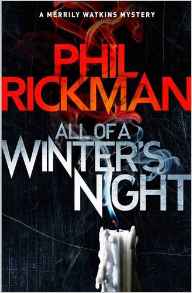
aoawnAll Of A Winter’s Night is the latest episode in the turbulent career of the Reverend Merrily Watkins. Her philandering husband long since dead in a catastrophic road accident, Merrily has a daughter to raise and a living to make. Her living has a day job and also what she refers to as her ‘night job’. She is Vicar of the Herefordshire village of Ledwardine, but also the diocesan Deliverance Consultant. That lofty term is longhand for what the tabloids might call “exorcist”. If you are new to the series, you could do worse than follow the link to our readers’ guide to The Merrily Watkins Novels.

A young man has died after his off-road vehicle has been mangled – along with his face – in a collision with a speeding white van on a country lane. Merrily presides over a funeral made difficult and perfunctory by the visible animosity between various members of the lad’s family. The fates are determined that Aidan Lloyd will not rest in peace, however. His body is disinterred, re-dressed in the uniform of a Morris dancing team from the village of Kilpeck, and then clumsily reburied.

At this point, three regular characters in this successful series intervene. Local JCB driver, drainage man, grave-digger and savant Gomer Parry is worried that his cemetery handiwork has been compromised, while emotionally fragile singer-songwriter (and boyfriend of Merrily) Lol Robinson just happens to be passing, along with Jane Watkins, daughter of Merrily, and full time pagan and environmental activist. They discover that mischief has been perpetrated on poor young Lloyd, little realising how their discovery will compromise Merrily, who is fighting what appears to be a losing battle to retain her job in the face of opposition from a modernising Bishop of Hereford.

The shocks and scares come thick and fast, but Rickman is much too good a writer to use a shovel to apply the chills and horror: instead, he uses the finest of squirrel-hair brushes, and we readers suffer endless torments of subtle suggestions, veiled threat and a pervading sense that all is far from well. There is more than enough conventional crime, dealt with – as always in the series – by expat Scouse cop Frannie Bliss and his secret girlfriend (and boss) Annie Howe, whose estranged father is making a bid to become the areas Police and Crime Commissioner.

The novel plays out against a bleak and gloomy Herefordshire November, where the brooding hills are shrouded with mist, and the outlying villages clinging to the steep slopes are uninviting, with doors remaining firmly shut in the faces of anyone “from off”. The sense of menace is compounded by the fact that both Merrily and the well-meaning local police come to realise that the death of Aidan Lloyd has opened a gateway into something which lies deeply embedded in the memory, landscape and folklore of a land where belief and conviction are older and more potent than modern concepts such as law and order. There are more deaths, and this time there is no pretence that they are accidental.

The snow, long threatened, sweeps in from the Black Mountains.

“NOT LONG AFTER ten p.m., it began like a few grey feathers blown from a nest. Soon it was filling the cracks in the walls and gleaming like epaulettes on the sagging shoulders of the graves in the churchyard.”

Merrily prepares for a service of Remembrance for the souls of both Aidan Lloyd and Kilpeck’s late vicar, but this no ordinary service. It coincides with the winter solstice, what John Donne called “The Year’s Midnight”, and will close with an appearance of the Kilpeck Morris, who will dance in honour of The Man of Leaves, one of the images carved into the church fabric. In a breathtaking conclusion to the book, this unique conjunction of the Sacred and the Pagan is shattered in the most dramatic way possible.

kilpeck-green-man

Whatever your New Year resolutions were, add another one to the list, but put it at the top. By fair means or foul, get hold of a copy of this book, switch the phone into answer mode, bolt the door and pretend there’s no-one at home while you are swept along by the brilliant writing. Oh, and a couple more things; if you thought that Sheelanagig was just a West Country folk band, you will be educated otherwise. And you’ll never look at a Morris dance team in quite the same way again.

All Of A Winter’s Night is published by Corvus, and is out on 5th January.

pr-footer

BOOKS OF THE YEAR 2016 … The winner!

boty

THE FULLY BOOKED BEST BOOK OF 2016

We already have selections for Best Dialogue, Best Historical Novel, and Best Psychological Thriller. Next up came the awards for Best Non-UK Novel, Best Police Procedural and Best PI Novel. Now, though, it’s drum roll time, and this is the book which, for me, was the outstanding publication of 2016.

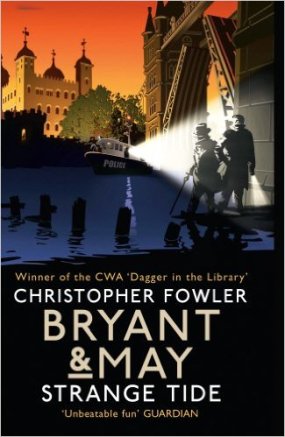
Strange Tide by Christopher Fowler

The Peculiar Crimes Unit is a kind of lost property facility for London’s Metropolitan Police. Orphan crimes, unsolved murders, unexplained disappearances – in short, investigations which would cost the cash-strapped Met Police valuable man hours are left on the doorstep of the PCU. Its two senior detectives, Arthur Bryant and John May are impossibly ancient but have an irreplaceable knowledge of London’s unique criminal history. The odd couple, particularly the apparently shambolic Bryant, have an almost visceral connection to the countless misdeeds committed on the capital’s ancient streets and lanes.

strange-tideBut all is not well. Arthur Bryant is physically sound enough, but his encyclopaedic mind is starting to betray him. He is suffering episodes of serious dislocation. He causes havoc in what he thinks is an academic library when he’s actually in the soft furnishings department of British Home Stores. While soaking up the ambiance of a Thames-side crime scene, all he can sense are the sights, sounds and smells of the early 20th century docks. John May and the more sprightly members of the PCU have to keep Arthur virtually under lock and key, for his own protection.

While trying to stop Arthur from wandering off and doing himself a mischief, the PCU team are investigating a bizarre death. A disturbed young woman has been found – drowned – chained to a concrete block on what had been an artificial Edwardian beach on a neglected section of the riverbank. She was several months pregnant, but her insouciant chancer of a boyfriend is innocent of both her demise and her impregnation. Why was there only one set of footprints leading towards the corpse?

As well as being among Britain’s best current crime writers, Fowler also carries the torch passed on by the great English humourists. With his gentle, quirky but needle sharp observations of the sheer daftness of the way we live now, he links hands with such writers as George and Weedon Grossmith, JB ‘Beachcomber’ Morton,  John Betjeman, Israel Zangwill and Colin Watson.

Behind the gags, the knowing cultural references, the ingenious plotting and the clever characterisations, we have Fowler’s unique take on London itself. No living writer save, perhaps, in their different ways, Peter Ackroyd and Iain Sinclair, knows London quite like Christopher Fowler. In other books in the series he has turned his expert eye on the theatres, the city’s lost rivers, and its medieval legends. The star of the show in Strange Tide is the River Thames itself. The crime is eventually solved, Arthur’s malaise is mostly cured, but the powerful river remains the city’s lifeblood. In a telling paragraph, Fowler reveals the deep, dark, blue centre of what he is about.

“…the metropolis is ultimately changeless. Its people remain the same because London is a state of mind. They do not make London. London makes them.”

Strange Tide is published by Doubleday.

b-and-m-footer


BOOKS OF THE YEAR … part two

boty

My first three selections were in the Best Dialogue, Best Historical Novel and best Psychological Thriller categories, and you can review those by clicking this link. Here are my next three ‘best of’ choices.

best-non-uk

BEST NON-UK NOVEL

Murder In Mt Martha by Janice Simpson
There was certainly some red hot competition in this category, particularly from such American superstars as Harlan Coben and Walter Mosley, but there was something about this book that struck a chord. I’ll own up to being a fan of most things Australian, having lived and worked in The Lucky Country, but this story had something rather special.

On the one hand we have the murder itself, based on a real-life crime in the 1950s which remains unsolved to this day. It is true mystery in the sense of both words, but in the book we pretty much know who the killer is quite early in the piece. Simpson treads the tightrope of telling a story through different eyes and times, and she performs like a seasoned veteran, never once coming close to losing her balance. The modern day narrative involves a young Melbourne post graduate student, Nick Szabo, transcribing the memories of the elderly Arthur Boyle.

mimmThe past times take us back to the 1950s, both in Melbourne and then further north in rural Queensland. We enter the home of the young Arthur Boyle, who is looked after by his adult sister. Also resident in the Melbourne home is Ern Kavanagh, a twenty-something young man who has ambitions to be something other than a car mechanic. He then leaves Victoria and travels north, in search of fortune, if not fame in Queensland.

One of the great qualities of this book is the way Simpson plays a game with us about the exact relationships between Arthur, Ern and ‘Sissy’. We think we know what’s what, but it becomes clear as the story unfolds that we most certainly do not. There is, if you will, a two part harmony here, because Simpson then introduces another ‘tune’ which involves the history of the Szabo family, refugees from the Hungarian uprising, and once again, as the two melodies complement each other, family secrets unfold like a timelapse video of a flower opening.

The ghost of the murdered girl, clubbed to death and brutalised in a seaside resort near Melbourne, never quite goes away, and the sheer pity and wasteful nature of her death winds like a deep purple thread of mourning through the fabric of the story. The details of ordinary life in the 1950s are compelling and are given with a sense of wistfulness which never descends into mawkish sentiment. The conclusion of the book is brilliant, and the story comes to an end in a way which I least expected, but is entirely fitting and in keeping with the tone of the narrative. Murder In Mt Martha is published by Hybrid Publishers.

police-procedural

BEST POLICE PROCEDURAL

Death Ship by Jim Kelly
Odd couples are many and varied in the world of crime fiction, and many authors have explored the Yin & Yang possibilities that open up.  There are many critical appraisals of the device, such as this one from Early Bird Books. I have chosen a beautifully mis-matched duo who are perfect foils for each other. They are Detective Inspector Peter Shaw and Sergeant George Valentine of Norfolk Constabulary, based in King’s Lynn.

Shaw is the younger of the two. In fact, so much so that Valentine actually served on the force with Shaw’s late father. Shaw is a physical fitness enthusiast, a cerebral deep thinker, and is married to an exotic wife whose family is of Caribbean origin. George Valentine is a widower, a suicidally heavy smoker, curmudgeonly but with a razor sharp eye for detail. Together, they have appeared in Jim Kelly’s ‘Death’ series, the previous novels being Death Wore White, Death Watch, Death Toll, Death’s Door and At Death’s Window.

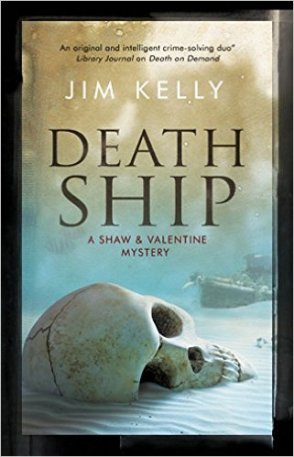
death-shipIn Death Ship, as with all the previous books, the sea is never far away. The seaside town of Hunstanton has been literally rocked by an explosion on its crowded beach. Something buried deep beneath the sand is triggered by some boys determined to dig a sink-hole sized pit before the tide sweeps in. There is a brief moment when something metallic and shiny appears in the wall of their excavation, but then hell is unleashed. Miraculously, no-one is seriously hurt, but the beach is closed to holidaymakers while forensic experts and a bomb disposal team from the army do their stuff.
But the sea holds other mysteries. In the terrible storm of January 31st 1953, a tempest that battered the East Anglian coast and claimed over 300 lives, a dilapidated Dutch coaster, the Coralia, went down, taking its captain and crew with her. With this in mind, Shaw’s investigations are further complicated by the discovery of a dead diver, tethered to the underwater remains of Hunstanton’s Victorian Pier, destroyed by storms in 1978. Eventually, he learns that the murdered diver is the son of one of the crew members of another wrecked ship, the ill-fated Lagan, whose remains are rotting on the seabed a couple of miles distant from the pleasure beach.

Shaw and Valentine eventually pull the different threads of the mysteries together, with a combination of good solid police work and a touch of vision – the classic combination of perspiration and inspiration. All fine novels offer something extra, however, and as in all Jim Kelly’s novels, there is a deep rooted awareness of the past and the long shadows it can cast over the present. In Death Ship the past is like a sunken ship that has lain undisturbed on the sea bed for decades. Then, with a freak tide, or maybe some seismic shift, the ship’s blackened timbers surface once again, breaking through the surface of the present. There can be few novels where the metaphor is more apt. Death Ship is published by Severn House.

private-eyes

BEST PI NOVEL

A Time of Torment by John Connolly
It is safe to say that Irish author John Connolly has taken the PI genre out of its care home for elderly gentlefolk, given it a good scrub down, bought it a new suit of clothes, given it a good slap and generally breathed new life into it. The beneficiary of this rejuvenation? A haunted (literally) and violent investigator from Portland Maine by the name of Charlie Parker.

atotParker’s ghosts are those of his wife and daughter, brutally and shockingly murdered years ago by men whose physical presence was all too temporal, but men whose puppet strings were being pulled by evil forces not entirely of this world. In this novel, Parker is contacted by a former public hero who went from hero to zero when child pornography was found on his computer. Jerome Burnel was given a long jail sentence and suffered the usual fate at the hands of other prisoners for whom sex crimes against children are worse than murder.

Moved by the man’s brutal jail-time story, Parker tries to reassure him that he can rebuild his life. Bernel disappears, however, and his conviction that his days are numbered becomes sadly prescient. Parker and his two New York associates, Louis and Angel, track down Burnel’s chief prison tormentor, Harpur Griffin, also now a free man. Griffin is found in a bar with two companions who register off the scale on Parker’s danger meter. When Griffin is found burned alive in his car shortly after the meeting, Parker, Louis and Angel realise that they are dealing with men who are fueled with something more potent than simple criminality.

Eventually, Parker narrows down his search for Burnel’s tormentors, and his investigations lead him to an isolated – and incestuous – community in Plassey County, West Virginia. The people and their village are known as The Cut, and they have lived in Amish-like seclusion for as long as anyone can recall. The comparison with the Amish begins and ends with reclusiveness, as the god of The Cut isn’t the one found in The Bible. Their god is called The Dead King.

Parker and the people of The Cut circle each other relatively cautiously in the fashion of partners in a courtly dance, but when they do engage, the last 50 pages of the book are violent and remorseless. This is dry mouth time – superb entertainment, but very unsettling too. A Time of Torment is published by Hodder & Stoughton.

BOOKS OF THE YEAR 2016 … part one

boty

Newspapers, television, radio, bloggers – they’re all at it in these dog days between Christmas and New Year. Alert followers will have noticed that Fully Booked has a rather Post-Brexit feel to it, with content dating only from late June 2016. That is, as they say, is another story, but I have been reading and enjoying CriFi all year. Here are my views on the books that made a big impact during 2016. Six categories, and then one final book which, for me, was simply The Best.

best-dialogue

BEST DIALOGUE

The Other Side of Silence by Philip Kerr
Kerr has cleverly positioned Bernie Gunther – former Berlin cop, soldier, lover and sometime anti-hero – squarely astride the most eventful years of the 20th century. This enables him to meet a stellar cast of fascinating historical characters, including Eva Peron, Adolf Eichmann, Reinhardt Heydrich, Paul von Hindenberg and now, in his latest saga, the celebrated writer W. Somerset Maugham. It is 1956 and Gunther is working under an assumed name as a concierge at a smart hotel in St Jean Cap Ferrat. As well as recognising that a hotel visitor is a former high ranking Nazi, Gunther discovers a plot to blackmail Somerset Maugham.His meetings with the great man are full of excellent verbal sparring.

“I dislike a man who’s not precise about what he wants to drink,” said Maugham. “You can’t rely on a man who’s vague about his favourite tipple. If he’s not precise about something he’s going to drink then it’s clear he’s not going to be precise about anything.”

the-other-side-of-silence-e1458288166948Gunther is something of a ladies’ man, and he usually manages to attract the attention of females, most of whom are either damaged, or damaging, and sometimes both. Here, he makes a night-time visit to an English woman who says that she is anxious to meet Somerset Maugham with a view to writing a biography.

“Oh, I’m glad it’s you, “ she said. “I thought it might be the gardener.”
“At this time of night?”
“Lately he’s been giving me a funny look.”
“Maybe you should let him water the flower beds.”
“I don’t think that’s what he has in mind.”
“The heat we’ve been having? He’s in the wrong job.”
“Did you come here to mow my lawn, or just to talk?”

Despite the smart talk and the wisecracks, there is always something deeply serious going on in the Gunther novels, and in this case it’s the fact that the former Nazi who Gunther recognises  at the hotel was responsible for the death of his lover, a young woman who, along with 9,400 others, perished when the troop ship Wilhelm Gustloff was sunk in January 1945. Near the end of the book, Gunther confronts Harold Hennig.

“You’re not the type to kill me, remember?” He was starting to sound scared now. “You said so yourself, Gunther. You’re a decent man. I knew that the first time I saw you.”
“No, I said I wasn’t the type to leave a man to die chained to a radiator, like an abandoned dog. But this is different.” I pointed the gun at him.
“This is for those nine thousand people who died on the Wilhelm Gustloff in January nineteen forty-five. It’s been eleven years in coming, and for them this is an act of vengeance. But for Captain Achim von Frisch, Irmela Louise Schaper and her unborn child – my unborn child – it’s revenge, pure and simple.”

Gunther is a flawed hero, but a beguiling  one, and his interactions with the famous and infamous men and women of the century are fascinating on their own, but in this novel, as in all the previous stories, it is Gunther’s speaking voice that brings the man to life. The Other Side of Silence is published by Quercus.

best-history

BEST HISTORICAL NOVEL

A Straits Settlement by Brian Stoddart
Superintendent Christian Le Fanu is an English policeman working in Madras. Despite considerable bravery during World War I, he has vowed never to set foot in the land of his birth again. His lover is a woman of mixed race, and he strives to do his job efficiently while treating law abiding Indian people with fairness and respect.

assHe is asked to investigate a disappearance and a death. The disappearance is of a minor functionary of the Raj from the country town he helped administer, and the death is that of the son of a powerful – and widely disliked – British entrepreneur and colonialist. Le Fanu’s search for the missing Southlake, and the all-too-dead Hargood takes him far from Madras, and to the exotic Malay island of Penang, where he finds a beguiling mixture of colonial and Chinese culture. He also finds himself in the equally beguiling arms of a beautiful Chinese woman. Unfortunately, she is the daughter of a wealthy merchant who appears to be right at the centre of Le Fanu’s investigations.
Brian Stoddart is a university professor who has studied South Asia extensively, and his knowledge of India and its history is immense. The beauty of his writing, however, is that he shares his learning with the lightest of touches, so that after a chapter or two you’ll feel you know all the steps in the elaborate dance between the British administration and the steadily growing but irresistible forces of Indian nationalism.

The title refers to three British colonies at the time called Straights Settlements – Penang, Malacca and Singapore. Not least of Stoddart’s skills is his ability to weave together different themes to make a beautiful whole. Thus, we have a police procedural, a political thriller, an historical drama, a romance, and an intense portrait of a gifted but very complex man. No-one currently writing manages this with as little fuss and fanfare as Stoddart. A Straits Settlement is published by Crime Wave Press.

psychologybanner

BEST PSYCHOLOGICAL THRILLER

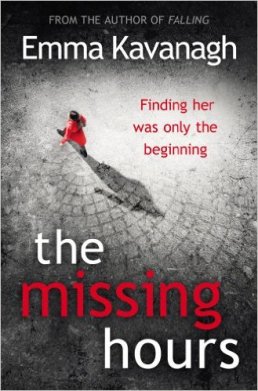
The Missing Hours by Emma Kavanagh
One of the most secretive service industries in the modern world is that of K & R consultants. The initials stand for kidnap and ransom, and the operatives who pit their wits against kidnappers play their cards very close to their collective chests. Emma Kavanagh trained as a psychologist and, after leaving university, started her own business as a psychology consultant, specialising in human performance in extreme situations. For seven years she provided training and consultation for police forces and NATO and military personnel throughout the UK and Europe. Here, in this tense and  nerve-tingling novel, she puts all her insights and experience to good use, telling the tale of a woman who disappears, but then mysteriously reappears, but with no recollection of the intervening hours.

Selena Cole is a widow, her husband having been killed while working for The Cole Group. Since his death she has pretty much handed over the running of the group to her sister-in-law, Orla Britten, and her husband Seth. Their centre of operations is the Cole’s elegant period house in a village not far from Hereford. Then, Selena goes missing. One minute she is watching her girls Heather and Tara play on the swings in the playground. The next, she is gone, and a neighbour has gathered up the distressed children, and the police are called.

tmhThe police investigation into Selena’s disappearance is handled by an unusual crime fiction pairing. Finn Hale and Leah Mackay are brother and sister. Finn has leap-frogged his sister in the promotion stakes, despite her evident superiority – evident, that is, to us readers, but not the local constabulary personnel department. Kavanagh plays the relationship between the siblings with the touch of a concert violinist. There are all manner of clever nuances and deft little touches which enhance the narrative.

Kavanagh reveals the inner workings of K & R consultants by letting us browse through the files of The Cole Group in between chapters focusing on one or other of the main characters. The police procedural aspect of the novel is sure-footed and convincing, while the touches of domestic noir work well, despite following a well-trodden path. After all, who has ever read a novel where a detective has a blissfully happy marriage with a fully supportive spouse?

The plot twists come, as they should, at regular intervals, but we see the big reveal with only a few pages to go. By then you will have been totally hooked by the excellent writing, Kavanagh’s well-tuned ear for dialogue and her handling of the intricate plot. The Missing Hours is published by Century.


THE POSTMAN DELIVERS … Fraser- Sampson & Knox

tpd-23_12

Just days away from the big day, and my postie is still delivering the goods, in this case two handsome looking novels to go into my reading and reviewing schedule.

gfsMiss Christie Regrets by Guy Fraser-Sampson
Fraser-Sampson (left) clearly has an eye and an ear for all things Golden Age, and many of you will have read his recreations based on EF Benson’s characters Mapp and Lucia. His earlier crime novel, Death In Profile, successfully merged aspects of Golden Age fiction with a present day setting. The author calls the series The Hampstead Murders and, as before, a team of detectives led by Superintendent Collison finds that death is no respecter of prime London locations. It seems that we even have a guest “appearance” by a distinctly famouus former resident, and the back cover of the book tells us.

“Above the series hovers Hampstead, a magical village on a hill hauntingly evoked, the elegance of an earlier time, and the elegiac memory of the Queen of Crime herself”

Miss Christie Regrets is published by Urbane Publication, and will be available on 12th January.

Sirens by Joseph Knox
I already had a sneak preview – and a very atmospheric extract read by the author – at the Michael Joseph bash a few weeks ago, but the finished article is beautifully jknoxpresented. This is the debut novel from Joseph Knox (right) and by contrast with Miss Christie Regrets and its golden tinge, this is very much noir territory. The book opens in a bleak Manchester street and, as you might expect, it’s raining. DC Waits, a young Manchester detective is drawn into an investigation of the disappearance of Isabel Rossiter and he finds that her home life is complex. Meeting her rich and influential father, Waits has to mine down beneath the conventional surface of the Rossiter family until the truth begins to emerge – and it is far from pretty.

Sirens will be available on 12th January, and you can look out for full reviews of both of today’s featured novels nearer the publication date.

tpd2-23_12


Blog at WordPress.com.

Up ↑