Dear God, I hate the winter and all its dismal,dripping, dank, defeated dreariness. (enough alliteration already! – Editor) In my youth, distant though it now is, I was a great fan of the stories of Billy Bunter, written by the wonderful Frank Richards, aka Charles 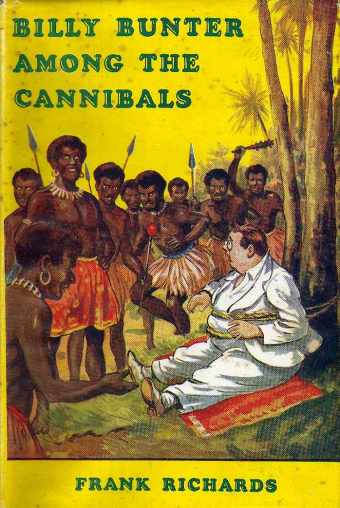 Hamilton. The tales were strewn with classical and biblical references which, in those days, most of us understood. One of my favourites was used whenever Bunter was at low point in life, but then, miraculously, found a forgotten toffee in his pocket, or perhaps an unguarded slice of chocolate cake in the common room. Richards would say, “but for Bunter, there was Balm in Gilead.” This meant, of course, that the woes of the world inhabited by The Fat Owl of The Remove were, temporarily, eased. Gilead is a hilly region in modern day Jordan, and the balm was a herbal medicine known to the inhabitants in biblical times.
My ‘Balm In Gilead’, particularly at this time of year, could be described as deliverance by delivery. ( Fret ye not, I have exhausted the ‘d’ page of my Bloggers Dictionary) Three lovely books arrived this week. One has been out for a while, but by the time the other two are available, Spring will hopefully have sprung. So, after the lengthy preamble, to the books.
 David R Ewens (right) lives and works in Kent, and Fifth Column is the fourth book featuring PI Frank Sterling. We are in the world of international skullduggery, but it isn’t all first class lounges and dangerous blondes. Sterling says:
“People wonder what a PI gets up to. Most of the time, the work is really tedious. It means a lot of hanging around and getting involved in some of the more sordid aspects of human behaviour. It can be really dangerous too – like the time I got banged up in a cellar in a Flanders farmhouse and tortured with a cigarette. But sometimes it’s interesting and exciting. And  one of the best things about it is that I can pretty much do as I damn well please, and that wasn’t the case when I was on the job and had a sergeant or inspector breathing down my neck. One thing is certain. I was never a team player so how I currently earn my living suits me just fine…”
Now, the former police officer is entrusted with foiling an impending terrorist atrocity, and so we can assume that his days of hanging around and doing nothing particular are – temporarily – over. The books is already available, and you can check out buying options here. It is worth saying that the paperback edition is beautifully printed and bound and has a very classy feel to it. Fifth Column is published by Grosvenor House Publishing.
 “April, come she will,
When streams are ripe and swelled with rain.”
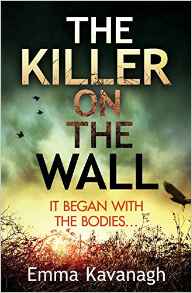
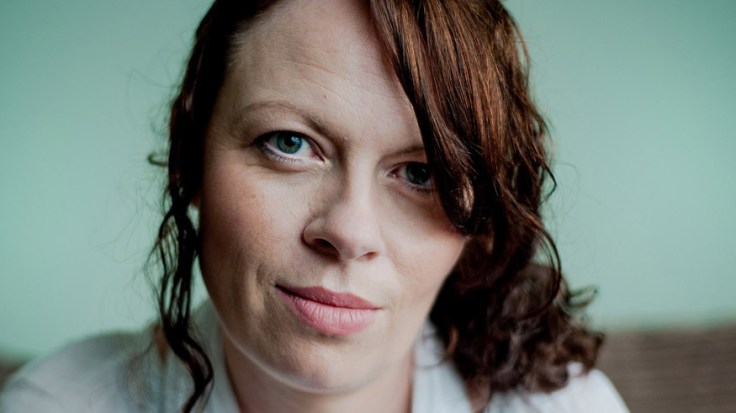
So sang Paul Simon in 1966, and most of you will have to wait until then to read the latest book from Emma Kavanagh. We reviewed – and loved – her previous book, and you can read why it was so good by clicking the link to The Missing Hours Now, we travel north from Herefordshire to the rugged grandeur of Northumberland, and Hadrians Wall. Emma Kavanagh (below) is a professional forensic psychologist, and she has put this experience to good use by relating the story of Isla Bell, a specialist who is trained to get into the minds of serial killers. She has a very special expertise, though. As a teenager, she found three bodies propped up against the crumbling remains of the great Roman defensive rampart. The killer was eventually found and convicted, but for Isla, years on from that trauma. there are more deaths, and she has to face the prospect that the killer has returned. The Killer On The Wall is published by Arrow, and will be out on 20th April.
 DC Max Wolfe has become established in the crime fiction firmament, thanks to his creator, Tony Parsons (left). Of the previous book in the series, The Hanging Club, I wrote:
“I am a sucker for a good London setting, and Parsons doesn’t disappoint. Wolfe’s little rooftop flat within sight and sound of St Paul’s Cathedral is a delight, and the eventual location of the hangings is a complete surprise. I finished The Hanging Club in just a couple of long sessions, such was its grip.”
One of the reasons I admire Tony Parsons as a writer is that he is not afraid to get to grips with the undoubted problems in many of our big cities caused by foreign gangs, imported criminal networks, and the resuscitation of an 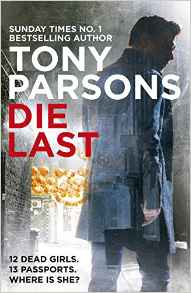 abomination that we thought we had seen the back of in the nineteenth century – slavery. Parsons doesn’t flinch from portraying evil for what it is, but neither does he preach. Wolfe’s latest case starts when a refrigerated lorry is found abandoned in London’s Chinatown. Inside are twelve women. Twelve corpses – frozen to death. But in the cab of the lorry are thirteen passports. Where is the missing woman? Max Wolfe’s determination to solve this conundrum takes him to darker places than even his world-weary soul could ever have imagined. Die Last is published by Century, and will be available on 6th April.

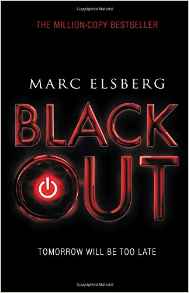
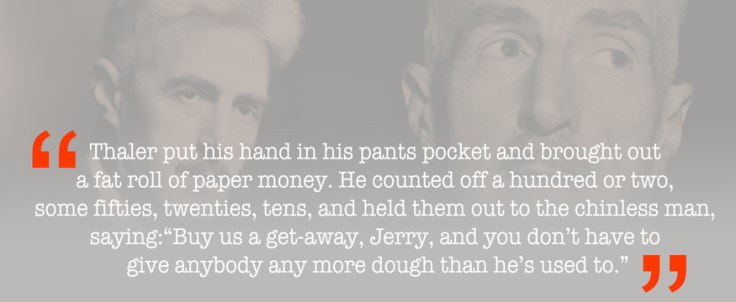
 This fiendish competition has been devised by American crime writer Mike Mayo. He says:
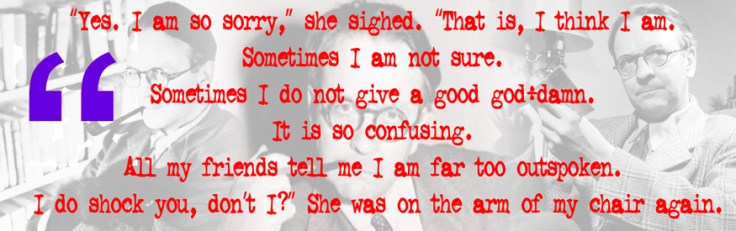
 THE PRIZE? A copy of Marc Elsberg’s new bestseller, Blackout. This has been around in one form or another since 2012, but since it is billed as “a 21st century high-concept disaster thriller”, it is probably safe to assume that the latest edition has been made future-proof. Elsberg (aka Marcus Rafelsberger) was born in Vienna, and after training as an industrial designer worked as a strategy consultant and creative director in the advertising world. Blackout has a simple but rather scary premise. Quite simply, hackers decide to shut down Europe. They start in Milan, with the electricity grid. Then they rack up the attacks further afield. Half the continent is plunged into darkness while people freeze and struggle to find food and water. Elsberg turns this nightmare scenario into an entertaining but disturbing thriller.
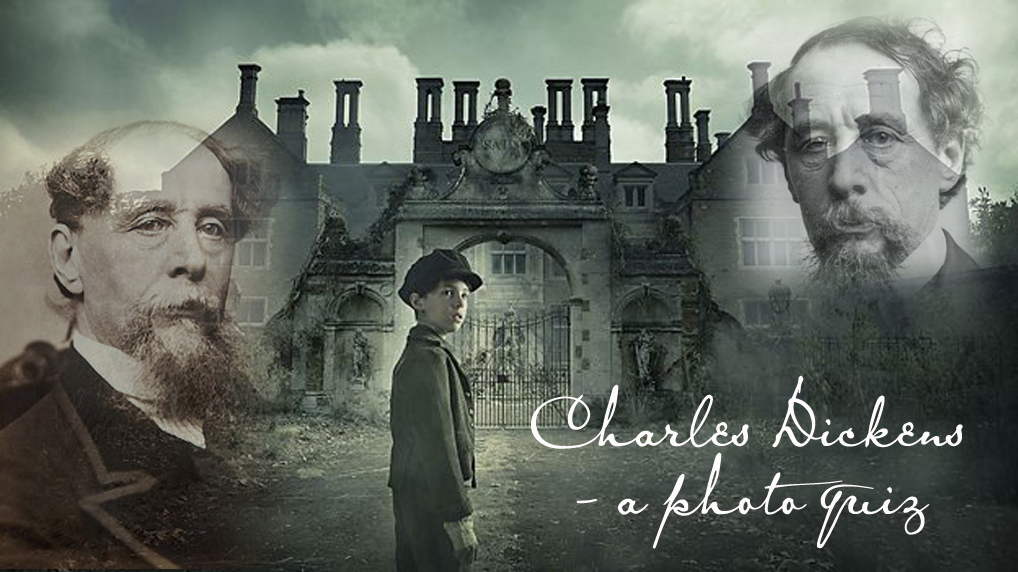
 To celebrate the birthday of Charles Dickens on 7th February, we have a tasty quiz involving six of the great man’s most memorable villains. To enter the draw for the prize – Claire Tomalin’s highly regarded Charles Dickens – A Life – you need to look at the six photographs, taken from screen versions of Dickens novels. To be in with a chance of winning, identify three things. First, the name of the book. Second the name of the character. Third, the name of the actor pictured. For those of you who love a touch of the cryptic crossword, there are six fairly helpful clues to go with each picture, and folk who are adept at pub trivia questions should enjoy the references. Do the best you can – all entries will go into the hat, and the person most correct answers gets the prize!


 Not the least of Eva Dolan’s achievements in this remarkable novel is to pinpoint with painful accuracy and honesty what happens to children and wives when a father – originally Colin Sawyer – decides to abandon the male role and become a woman. Even after the nightmare scene where Sawyer’s daughters come back to the house unexpectedly, and find their father en femme at the sink, doing the dishes, Jessica and Lily have come to think of their dad as ‘mum’. The pain that this must cause a biological mother in this situation can only be imagined, and it is interesting that Nina Sawyer is drawn as a fairly unpleasant piece of work.
 Aside from the nuanced description of gender politics and psychological challenges faced by the characters in this novel, we have to ask the burning question. Does Watch Her Disappear work as a crime story? My answer is a resounding and emphatc ‘Yes”. The whodunnit aspect of the story is teasingly effective, with Dolan (right) scattering little hints, false leads and blind alleys in her wake as she races along ahead of us. Crime fiction is full almost to the brim with Detective Inspectors and their trusty Sergeants, but Dolan breathes on those particular embers and makes them fire up afresh in the shape of Detective Inspector Dushan Zigic and Detective Sergeant Mel Ferreira of the Hate Crimes Unit. The neat twist is, of course, that both Zigic and Ferreira are themselves children of immigrants, and the chemistry between the two is potent and complex.


 With a father, Leif Gustav Willy Persson a Swedish criminologist and novelist who was a professor in criminology at the Swedish National Police Board, it is hardly surprising that
 Barbara Nadel (right) is best known for her long running and highly successful crime series set in Istanbul, featuring the established cast of Çetin İkmen, a chain-smoking and hard-drinking detective on the Istanbul police force, and his colleagues Mehmet Süleyman, Balthazar Cohen and Armenian pathologist Arto Sarkissian.
 Falling Creatures by Katherine Stansfield will appeal to those who like a good period drama, a dead body or two, an atmospheric setting and a sense of Gothic looming over everything. 1844? Tick. Beautiful girl found with throat cut? Tick. Bodmin Moor, beloved of Arthur Conan Doyle and Daphne du Maurier? Tick. Mists, marshes and malevolent men? Tick. The author grew up on Bodmin Moor, and her debut novel The Visitor, won the Holyer an Gof Fiction Prize in 2014. You can find out more about the author (pictured left) by visiting her website

 Being as this book is, in one sense, a police procedural, an introduction to the investigating officers is essential. Detective Sergeant Karen Willis is an elegant and well educated woman, whose personal life is complex. She is courted by two suitors; the first, Dr Peter Collins, is a consultant psychologist who, although undeniably clever, may not be entirely of sound mind himself, as he is prone to nervous attacks. When with Karen, he also tends to drop into a Lord Peter Wimsey persona and, yes, he does insist on calling Karen “Harriet”. The other claimant to the hand of Willis is Detective Inspector Bob Metcalfe, a much more grounded fellow who certainly does not mimic characters from Golden Age fiction. In fact, he could be said to be very worthy, but rather dull. Overseeing the investigations is Detective Superintendent Simon Collison, an urbane and civilised man who is regarded with a certain suspicion by more belt-and-braces officers such as Chief Inspector Tom Allen. One stock police character who is very much noticeable by his absence is a badly dressed, misanthropic and foul mouthed Detective Inspector type, much loved of many crime authors. If any such person did operate out of Hampstead nick, he must long ago have been transferred elsewhere.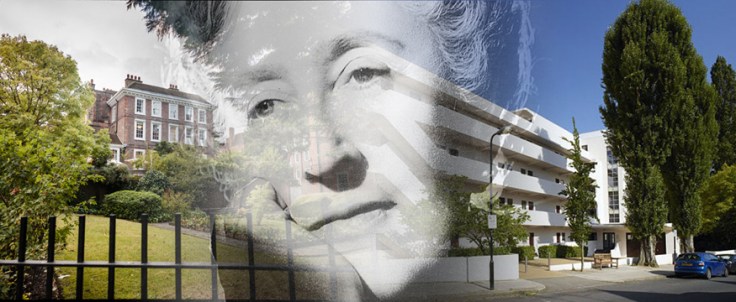
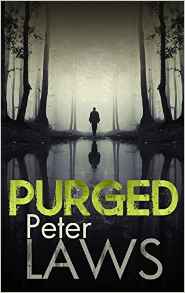


 The town of Kiewarra is a dusty five hour drive from Melbourne. Five hours. Six, maybe, if you weren’t that anxious to get there. Five hours, under the same relentless sun, but it might as well be fifty, for all the similarity there is. Melbourne, with its prosperity, its glass and steel central business district, its internationally renowned restaurants and its louche air as a cosmopolitan city. Kiewarra. A pub, a couple of bottle shops and a milk bar; a run-down school, starved of funds; a farming economy choked and parched by two years without rain; families turned bitter and taciturn by the shared misery of failed crops and burgeoning overdrafts. Author Jane Harper (left) takes us right into the deep dark blue centre of this community.
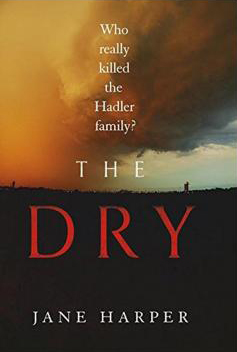 Seeing the coffin of a contemporary being carried through the church is bad enough for Falk, but when it is followed by two smaller ones, one being very much smaller, that is a different thing altogether. For the other two coffins are occupied by Hadler’s wife Karen, and his young son Billy. The story has played out across the mainstream media as a suicide-killing. Luke Hadler, driven mad by debt, failure, jealousy, despair – who knows? – has shot dead his wife and son, and then turned the gun on himself, albeit leaving his thirteen month old daughter Charlotte in her cot, screaming, terrified, but very much alive.
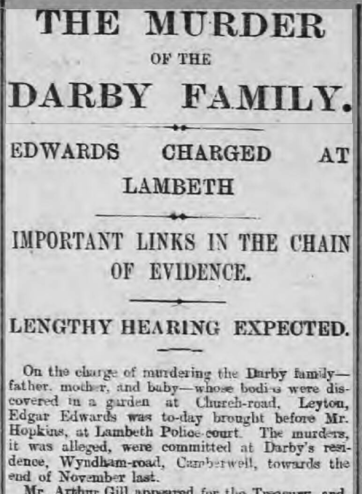 Having done the deed, Edwards concealed the bodies in a room above the shop, and installed his shop manager, a man named Goodwin. Goodwin and his wife ran the business for a few days, presumably oblivious of the dead bodies lying above the shop. In the meantime, Edwards had taken Darby’s gold watch and chain, and pawned it for cash. He had also rented a separate premises in the east London borough of Leyton, and on 10th December he explained to Goodwin that he was going to sell the Camberwell shop.
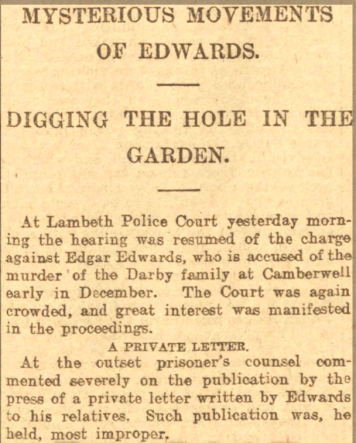 His trial at The Old Bailey was something of a foregone conclusion, brightened only by speculation as to whether Edwards would plead insanity. It was revealed that there was a strong streak of mental illness in his family. His mother and an aunt had died insane; one of his cousins was in an asylum and two others were what contemporary newspapers called “mental defectives”. Edwards was found guilty and apparently burst into manaical laughter when he was sentenced to death. As he stood on the scaffold on 3rd March 1903, it is alleged that he turned to the prison chaplain, giggled, and said, “I’ve been looking forward to this lot!”


 fullybooked2017