
The introduction to this feature on Colin Watson,
including a biographical timeline, is here.
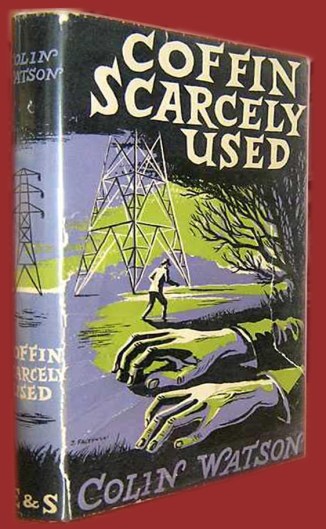 Coffin Scarcely Used – the first of The Flaxborough Chronicles – begins with the owner of the local newspaper dead in his carpet slippers, beneath an electricity pylon, on a winter’s night. Throw into the mix an over-sexed undertaker, a credulous housekeeper, the strangely shaped burns on the hands of the deceased, a chief constable who cannot believe that any of his golf chums could be up to no good, and a coffin containing only ballast, and we have a mystery which might be a Golden Age classic, were it not for the fact that Watson was, at heart, a satirist, and a writer who left no balloon of self importance unpricked.
The permanent central character of Inspector Walter Purbright is beautifully named. ‘Purbright’ gives us a sense of sparky intelligence gleaming out from a solid, quintessentially English, impermeable foundation. He is described as a heavy man, with corn coloured hair. He has a deceptively reverential manner when dealing with the aldermen and worthies of Flaxborough, but he is no-one’s fool.
The sheer joy of this book in particular, and the Flaxborough novels in general, is the language. Perhaps it looks back rather than forward, but there are many modern writers who would happily pay homage to the unobtrusive Lincolnshire journalist. Of Mr Chubb, the Chief Constable, Watson observes:
“Not for the first time, he was visited with the suspicion that Chubb had donned the uniform of head of the Borough police force in a moment of municipal confusion when someone had overlooked the fact that he was really a candidate for the curatorship of the Fish Street Museum.”
Of the detecting skills of Sergeant Love, Purbright’s long-suffering subordinate, we learn:
“The sergeant was no adept of self effacing observation. When he wished to see without being seen, he adopted an air of nonchalance so extravagant that people followed him in expectation of his throwing handfuls of pound notes in the air.”
With such an ability to turn a phrase, it is almost irrelevant how the book pans out, but Watson does not let us down. Purbright uncovers a conspiracy involving loose women, a psychotic doctor and a distinctly underhand undertaker – hence the title. Watson himself remains mostly unknown to today’s reading public, but is rightly revered by connoisseurs of crime fiction. He was politically incorrect before the phrase was even invented and, although his pen pictures of self important provincial dignitaries are sharply perceptive, they also portray a fondness for the mundane and the ordinary lives lived beneath the layers of pretension.
There were to be be eleven more Flaxborough novels, and the final episode was Whatever’s Been Going On At Mumblesby? It again features Mr Bradlaw, the shamed undertaker from the very first novel. He has served his time for his part in those earlier misdeeds, however, and has returned to Flaxborough, thus giving the series a sense of things having come full circle. In 2011, Faber republished the series digitally, but the Kindle versions are not cheap and you might be better off seeking a secondhand paperback.
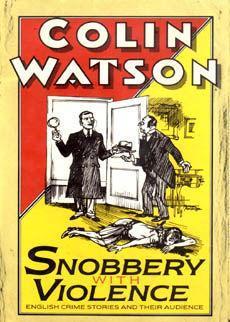 In addition to such delightful titles as Broomsticks Over Flaxborough and Six Nuns And A Shotgun (in which Flaxborough is visited by a New York hitman) Watson also wrote an account of the English crime novel in its social context. In Snobbery With Violence (1971), he sought to explore the attitudes that are reflected in the detective story and the thriller. Readers expecting to find Watson reflecting warmly on his contemporaries and predecessors will be disappointed. The general tone of the book is almost universally waspish and, on some occasions, downright scathing.
He is particularly unimpressed by the efforts of writers such as H C McNeile (Sapper), Arthur Henry Sarsfield Ward (Sax Rohmer) and E W Hornung. Whereas modern commentators might smile indulgently at the activities of Bulldog Drummond, Denis Nayland Smith and Arthur J Raffles, and view them as being ‘of their time’, Watson has none of it. He finds them racist bullies, insuperably snobbish and created purely to pander to the xenophobic and blinkered readership of what we would now call Middle England.

Watson’s apparent contempt for the Public School ethos prevalent in these writers of the first part of the twentieth century seems, at first glance, strange. He was educated at Whitgift School in Croydon, but in his day the school was a direct grant school, meaning that its charter stipulated that it provide scholarships for what its founder, Archbishop John Whitgift, termed,”poor, needy and impotent people” from the parishes of Croydon and Lambeth. The school has been fully independent for many years, but in Watson’s time there may have been an uneasy mix of scholarship boys and those whose wealthy parents paid full fees. Despite Watson and other local lads having gained their places by virtue of their brains, it is quite possible that they were looked down on by the ‘toffs’ who were there courtesy of their parents’ wealth.
As Watson trawls the deep for crime writers, even Dorothy L Sayers doesn’t escape his censure, as he is irritated by Lord Peter Wimsey’s foppishness and tendency to make snide remarks at the expense of the lower classes. Edgar Wallace and E Phillips Oppenheim who, between them, sold millions of novels, are dismissed as mere hacks, but he does show begrudging admiration for the works of the woman he calls ‘Mrs Christie’, despite rubbishing her archetypal English village crime scene, which he scorns as Mayhem Parva. Watson admires Conan Doyle’s clever product placement, Margery Allingham’s inventiveness and ends the book with a reasonably affectionate study of James Bond, although he is less than sanguine about 007’s prowess as a womaniser:
‘The sexual encounters in the Bond books are as regular and predictable as bouts of fisticuffs in the ‘Saint’ adventures or end-of-chapter red herrings in the detective novels of Gladys Mitchell, and not much more erotic.”
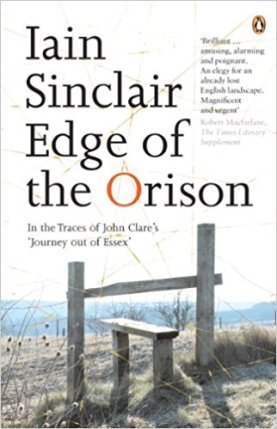 In the end, it seems that Watson had supped full of crime fiction writing. Iain Sinclair sought him out in his later years at Folkingham, and wrote
“Gaunt, sharp-featured, a little wary of the stranger on the step, Watson interrupted his work as a silversmith. Eyeglass. Tools in hand. He couldn’t understand where it had all gone wrong. His novels were well-received and they’d even had a few moments of television time, with Anton Rodgers as the detective. The problem was that Watson, lèse-majesté , had trashed Agatha Christie in an essay called ‘The Little World of Mayhem Parva’.
Watson put away his instruments, took me upstairs to the living room. He signed my books, we parted. He was astonished that all his early first editions were a desirable commodity while his current publications, the boxes of Book Club editions, filled his shelves. He would have to let the writing game go, it didn’t pay. Concentrate on silver rings and decorative trinkets.” (Iain Sinclair “Edge of the Orison” Hamish Hamilton 2005.)

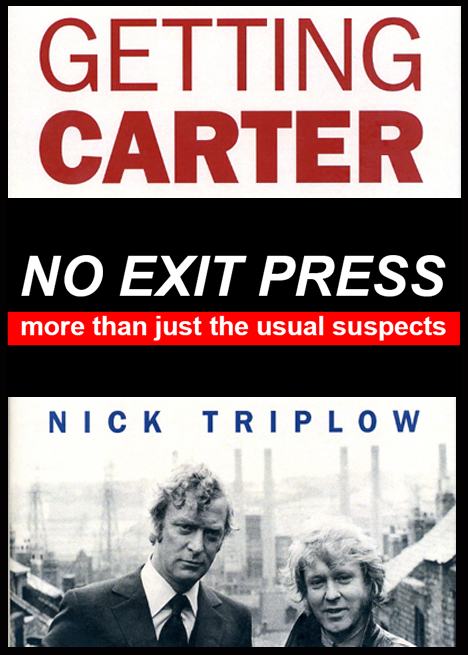

 I’ve been waiting for this one! Just published by No Exit Press is a new study of the doomed genius, Ted Lewis. Written by Nick Triplow, it carries the blurb:
 choices. Lewis suffered a downward spiral involving alcoholism and family breakdown. He died in 1982, just forty two years old. Triplow (right) has emulated his subject in one regard, however, as he now lives in Barton on Humber, where Lewis went to school. Ted Lewis’s first mentor was an English teacher called Henry Treece, about whom you can read a little more in this short feature.
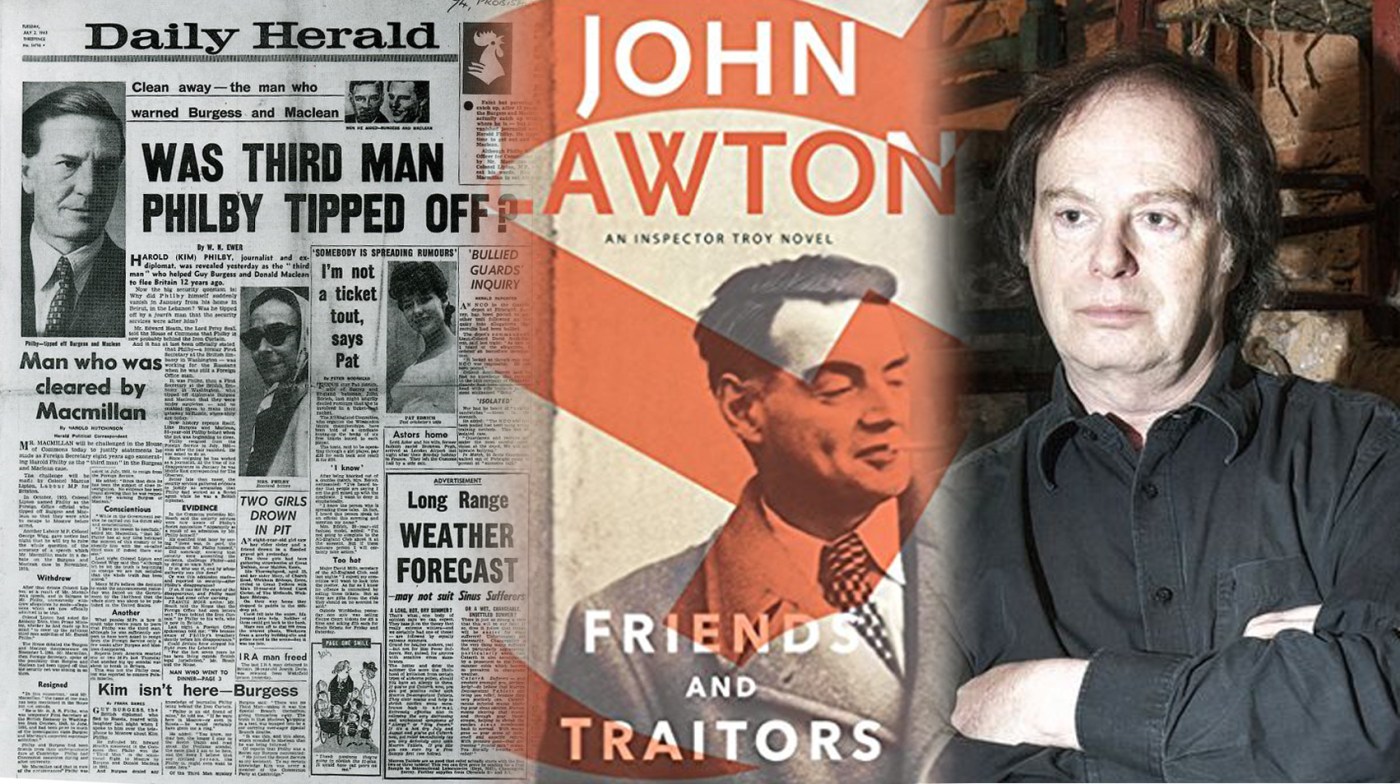

 Friends and Traitors focuses mostly on the 1951 defection – and its aftermath – of intelligence officer Guy Burgess, to the Soviet Union. A huge embarrassment to the British government at the time, it was also about personalities, Britain’s place in the New World Order – and its attitudes to homosexuality. Burgess’s usefulness to the Soviets was largely symbolic, but the crux of the story is the events surrounding Burgess’s regrets, and heartfelt wish to come home. Troy interviews him in a Vienna hotel.
 Lawton (right) was born in 1949, so would have only the vaguest memories of growing up in an austere and fragile post-war Britain, but he is a master of describing the contradictions and social stresses of the middle years of the century. Here, he describes Westcott, a notoriously persistent MI5 interrogator, sent to quiz Troy on the events in Vienna:

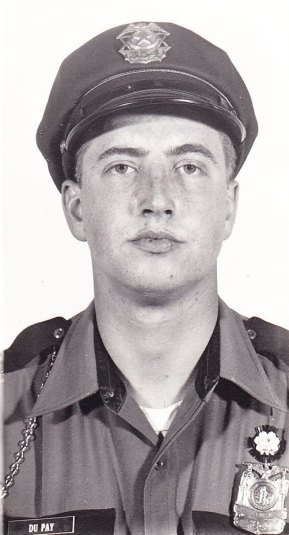 “April 6, 1961, I was sworn in as a brand new police officer in a ceremony held in the office of Ray Smith, the city auditor, in City Hall. I was nervous, proud of myself for passing all the tests, not least of all surviving an interview with the shrink, and now I stood with my hand up, swearing to serve the citizens in an honorable manner.”
 Dupay was convinced that Manning had been killed for some infraction or a bad debt in the violent and ruthless world of those who deal in narcotics. But why were senior officers of the Portland Police Bureau determined to bury the case? Why did Dupay arrive at the office the day after the body had been found, and found that all the details had been wiped from the status board listing ongoing and unsolved cases?
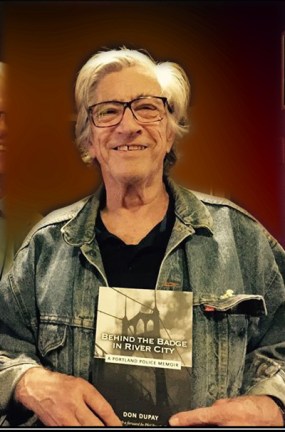 “I tossed my badge on the Captain’s desk, telling him that I was sick of the job and tired of the hypocrisy of people like him. I told him my health had been suffering and I hated the work, only because I hated some of the people I was forced to work with. I also hated being told that I could not investigate a particular 1975 ‘suicide’ that I knew to be a murder.”


 I used to be a massive fan of Patterson and his Washington DC profiler Dr Alex Cross, and particularly when he was battling his two most deadly opponents Kyle Craig and Gary Soneji. Recently, though, I have felt that Patterson, particularly with his collaborative novels, has spread himself a bit thin. I am mindful, however, of the massive work he does for charities, and no-one can accuse him of just wanting to make money. This is the first Alex Cross novel I have been sent for a long time, and I am actually looking forward to renewing my acquaintance with Dr C, and his regular cast of co-stars. Although the saturnine Gary Soneji is long dead, he still has followers, and it is after a shoot-out with them that Cross finds himself on the wrong side of the court room. The People vs Alex Cross is published by Century, and will be
  This is the third outing for Dublin copper Inspector Tom Reynolds. He first appeared in With Our Blessing in 2015, and you can read our review of the second in the series,
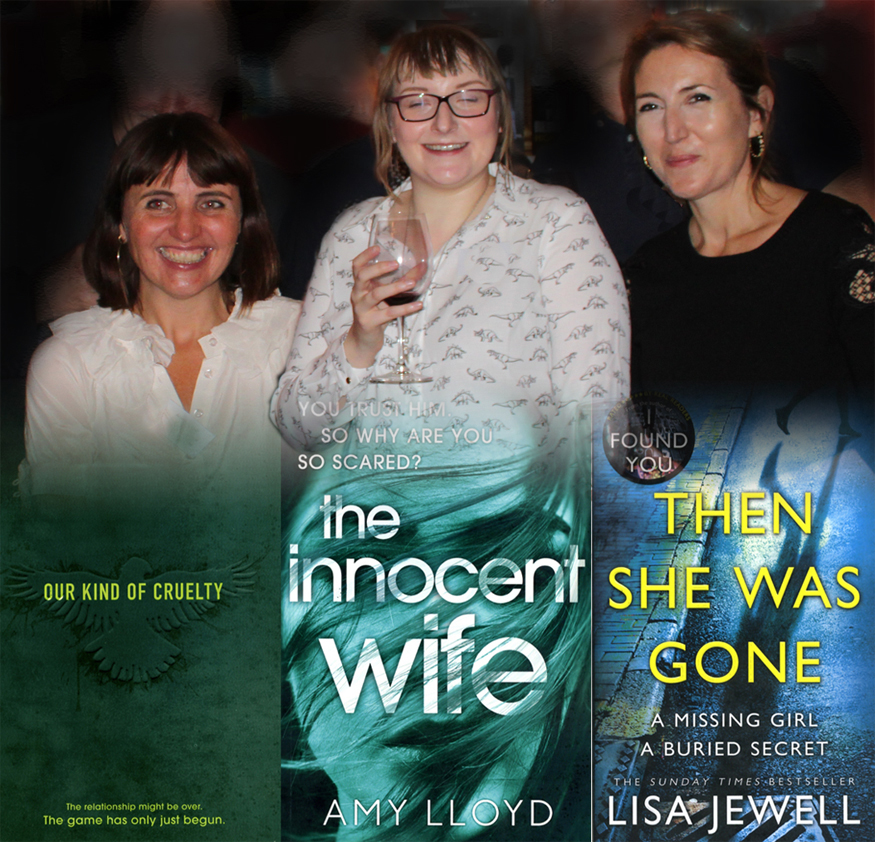

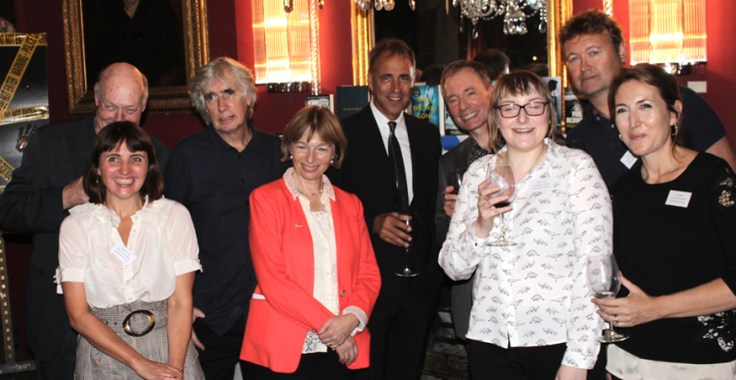
 It was a privilege to talk to two authors who represent the next generation of fine crime writers. Amy Lloyd is from Cardiff, but her debut novel is set far, far away in the badlands of Florida. The Innocent Wife tells the story of a convicted killer whose claims to innocence attract the attentions of the worldwide media – and those of Samantha, a young woman from England. She is obsessed with his case and, after an intense relationship based on letters, she leaves home and marries him. It is only when the campaign for his release is successful that Samantha’s problems begin in a deadly fashion. Amy, by the way, has already won the Daily Mail and Penguin Random House First Novel Competition with The Innocent Wife.
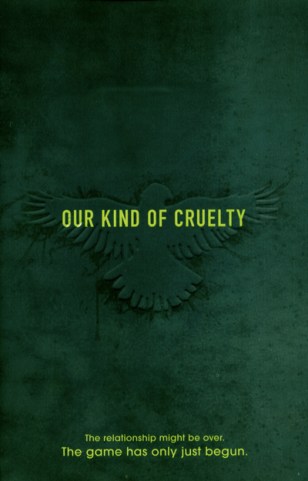 Araminta Hall is no novice author, as she has written successful psychological thrillers such as
 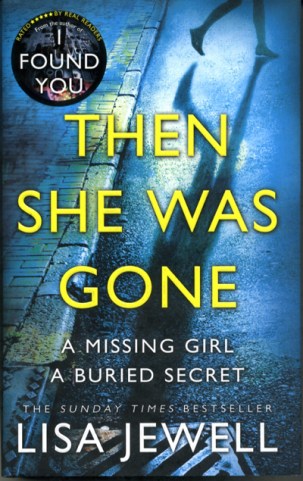 Lisa Jewell knows a thing or three about locating the strings that pull on a reader’s senses, particularly those of anxiety, sympathy and tension. In

 There is, however, that strange smell. A certain je ne sais quoi which will not go away, despite the couple’s best efforts. When Jack finally plucks up the courage to climb up into the roof space, he finds the physical source of the smell but unpleasant as that is, he also finds something which is much more disturbing. Simon Lelic (right) then has us walking on pins and needles as he unwraps a plot which involves obsession, child abuse, psychological torture and plain old-fashioned violence.


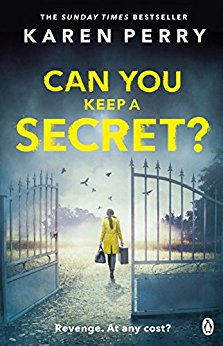 Lindsey Morgan is our narrator. She is a photographer with the Irish police, the Garda Síochána, and her frequent visits to gory crime scenes mean that she must don a cloak of cold objectivity as she looks through her camera at the damage people do one another. The distance between the person behind the viewfinder and the scene captured by the lens is a key motif in the story, as you will discover when you read the book.


 fullybooked2017