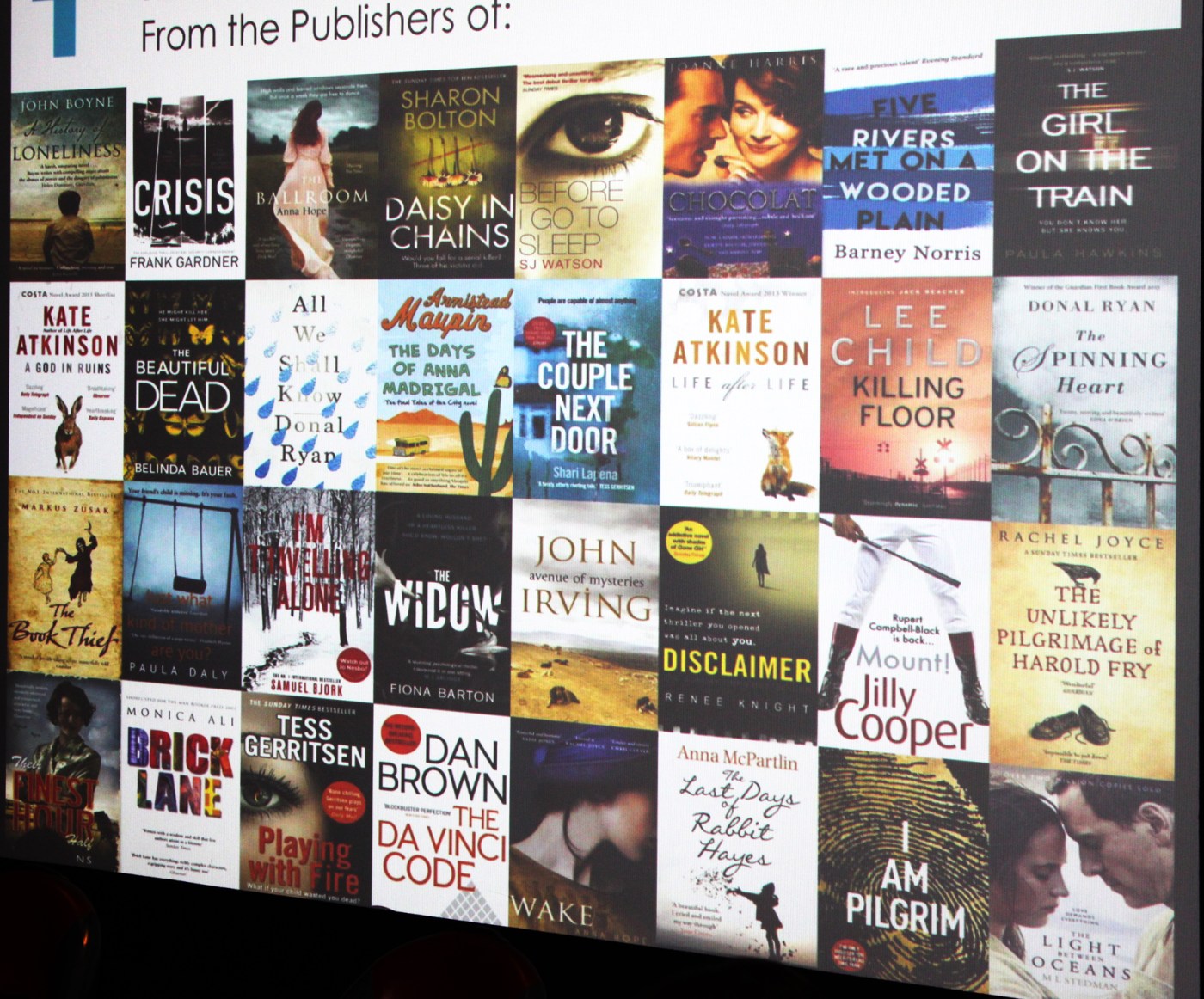

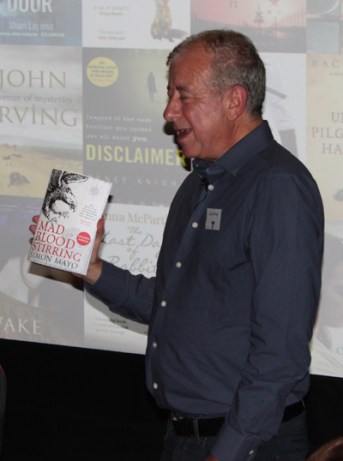
 I was lucky enough to be invited to the distinctly upmarket Charlotte Street Hotel in London’s Fitzrovia, as a guest of Transworld for their evening showcasing what they hope will be their best-sellers for 2018. Managing Director Larry Finlay (left) took the stage first, and showed his perfectly justifiable pride in how the group’s editors had managed to pick some astonishingly successful novels over the last few years. Judging what readers might want to read months – if not years – ahead, taking a punt on the talent of someone as yet unknown to book fans, and then backing your judgment with publicity and marketing; these are the skills by which publishers stand or fall, and Larry and his team at Transworld seem to be getting the hard bits right.
Journalist, editor and host of The Vintage podcast, Alex Clark, then invited the featured authors to join her on-stage. Ruth Jones is no stranger to the world of entertainment. Television viewers will know her as writer and co-star of Gavin and Stacey, and her compelling portrayal of Hattie Jacques in Hattie. Her debut novel, Never Greener is all about the dangers of taking second chances in life. Referring to the grass implied by the title, she says,”It’s still grass. Just a different patch of it, that’s all.” As to her writing, she says that she falls in love with her characters, and relishes the fact that this work doesn’t require the make-up trolley. Her tip? Always make a note of every experience, no matter how inconsequential – you never know when it will come in handy.

Karen Cleveland had the furthest to travel for the event – a little matter of 4,000 miles or so – from her home in Virginia. Avid readers of espionage thrillers will be well aware of the principle employers in the town of Langley, Virginia – none other than the staple ingredient of most international conspiracy novels, The Central Intelligence Agency. Karen actually spent years behind The Agency’s high security gates, working as an analyst and specialising in identifying potential foul play from Russia. It’s no surprise then, that her debut novel Need To Know describes a young mother and CIA analyst digitally searching files in hopes of unmasking a Russian sleeper cell in the US, but then making a shocking discovery that threatens her job, her family and her life. Karen’s tip for tyro authors – fit in your writing in any time you can, no matter what other balls you have in the air at the same time.

Anne Youngson is one of my generation – she has reached her biblical allowance of three score and ten – but she is living proof that it is never to late to write a debut novel. Unsurprisingly, Meet Me at the Museum features two people with more of their lives behind them than ahead. Anne has a formidable CV away from her writing; she worked for Land Rover, as Chief Engineer, Defender replacement and, finally, MD of the Special Vehicle Operations. Her two fictional protagonists make an unexpected connection through a love of ancient history, personal treasures, and nature. Anne’s writing tip is simple, but powerful – the more you write, the better you get.

There is nothing more intriguing than other people’s houses. A bourgeois obsession, maybe, but one to which many of us, given the thumbscrew treatment, would reluctantly admit. Rebecca Fleet’s debut novel makes the most of the darker side of the swap. A failing marriage, a mutual loss of faith, no future except one in which personal conflicts guarantee to destroy love; Caroline and Francis hope that new surroundings will provide a jump start to their stalled relationship. Marrying domestic noir with the psychological drama, The House Swap is guaranteed to chill and thrill in equal measure. Rebecca was happy to quote Samuel Johnson as her writing tip.
“A man may write at any time if he will set himself doggedly to it.”

Simon Mayo is a widely respected radio presenter. His weekly good-natured sparring with Mark Kermode on Friday afternoons on BBC Radio Five Live are not to be missed. But Mayo the writer? I have to put my hand up and say that I was unaware of his popular young adult fiction. My excuse is that I am certainly not young, and my detractors will query my being described as adult. However, Simon Mayo’s forthcoming debut in adult fiction sounds fascinating. The Anglo-American conflict of 1812 is one of history’s forgotten episodes, but as well as The White House being torched by British troops, many Americans were taken prisoner and shipped back to Britain, where they were incarcerated within the iconically grim granite walls of Dartmoor Prison. The Shakespearean title of Mayo’s novel is Mad Blood Stirring (Romeo and Juliet) and it tells the story of the violent consequences that followed the segregation of black and white prisoners in Dartmoor. Mayo offers this advice to aspiring novelists. (1) Write to find out, (2) Never be intimidated – if you have an idea that you believe in, stick with it, hold on to it, and to hell with the detractors.
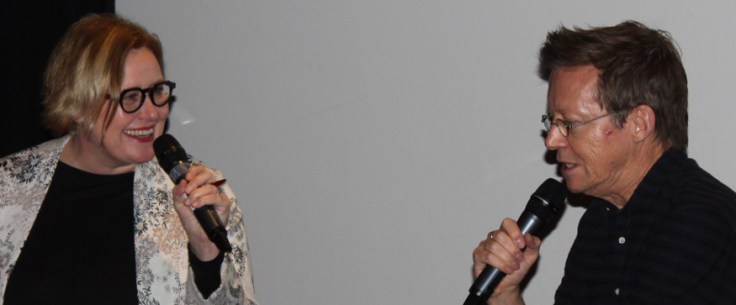


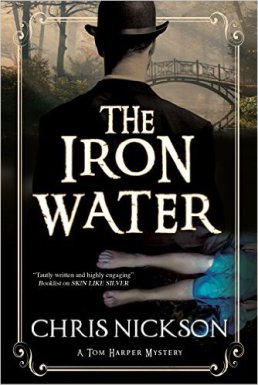
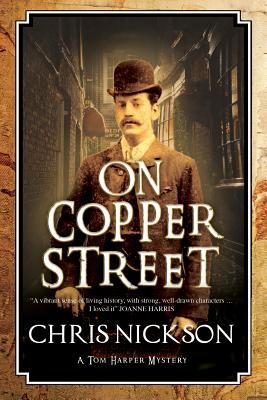
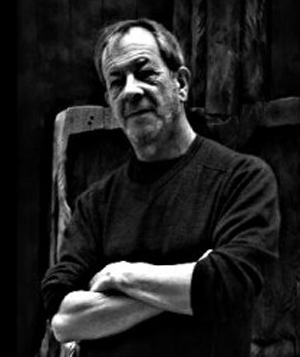 I have become a huge admirer of the writing of Chris Nickson (left) . He says on his website:
 You will be pushed to find better opening words to a novel even were you to search all year:


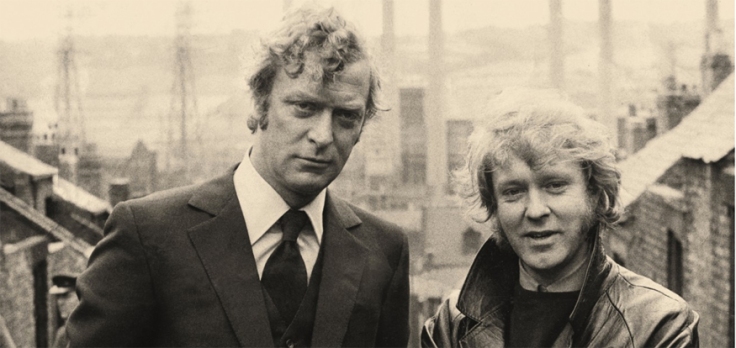
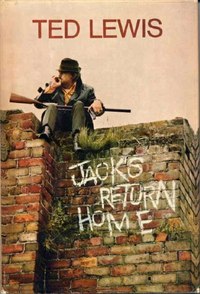 In 1965, All the Way Home and All the Night Through was published. It is a thinly disguised autobiographical novel, but Lewis’s breakthrough came in 1970 with the publication of Jack’s Return Home. The title was, bizarrely, taken from a spoof melodrama acted out by Tony Hancock, Hattie Jacques, Sid James and Bill Kerr as an episode of Hancock’s Half Hour. The novel, however, has few laughs. It describes the revenge mission of a London-based enforcer, Jack Carter, as he returns to his northern home town to investigate the death of his brother. The novel was adapted and filmed as Get Carter, and the rest, as they say, is history. Fame – and money – did not sit comfortably on Lewis’s shoulders, however. A mixture of drink and personal demons led to the break-up of his marriage, and a solitary return to Barton to live with his widowed mother. He died there, of heart failure connected to his ruinous drinking, in 1982.
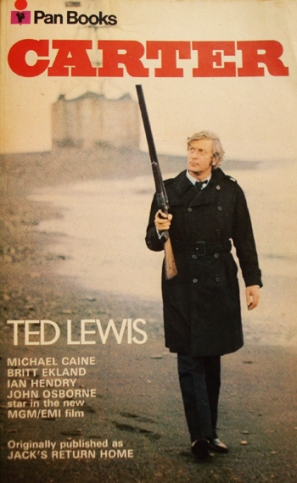 The centrepiece of Triplow’s book is, quite rightly, concerned with the novel itself, and its journey from a brutally honest and ground-breaking novel through to a partial re-imagining as one of the finest crime films ever made. Of Jack Carter, Triplow stresses that, despite the iconic image created by Michael Caine and director Mike Hodges
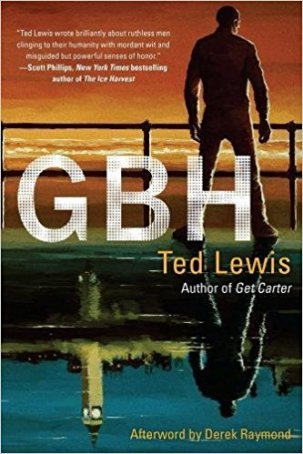 Aside from describing what must have been harrowing conversations with Lewis’s widow and children, Triplow employs both the depth and breadth of his knowledge of British crime fiction to convince us just how good Ted Lewis was. It is intriguing that Triplow, supported by no less an authority than the magisterial Derek Raymond, makes a fascinating case for GBH being the apotheosis of Lewis’s talent, despite the groundbreaking style and success of Jack’s Return Home. Getting Carter is a sober and sombre account of the life of a man whose talent both defined and destroyed him, and Triplow makes no attempt to sanitise his subject. Lewis was clearly a man of huge personal charm when not in the grip of drink, but from the early days of illegally bought pints of beer in the 1950s through to the grim years of decline and death, alcohol had him firmly by the throat.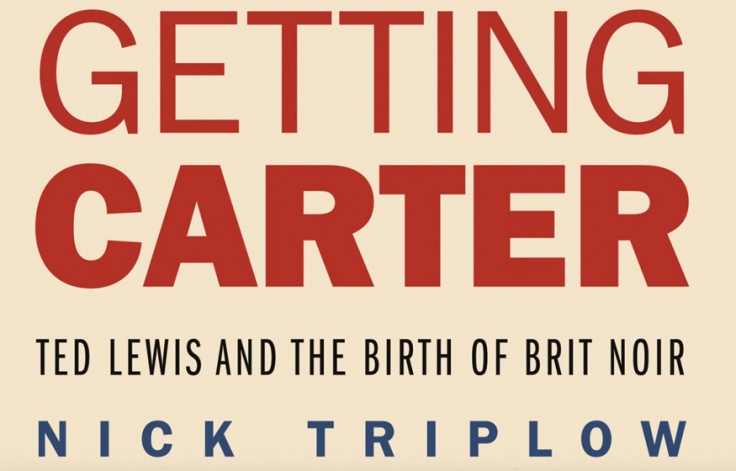

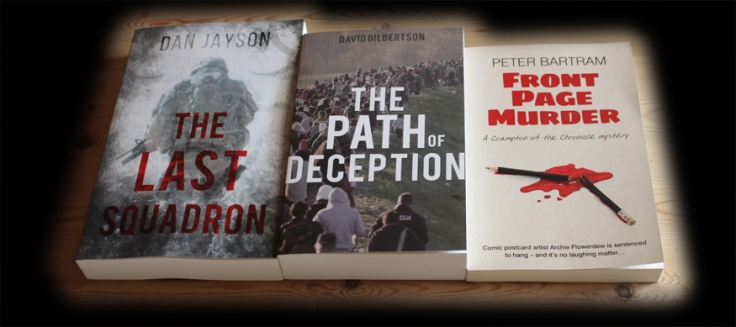
 The Last Squadron is a military thriller from debut author Dan Jayson, and it is set fifteen years from now, and the most pessimistic soothsayers have been proved right. The ethnic and religious schisms which had been festering for decades have bloomed into an apocalyptic hell of different wars across the globe. Nowhere is safe, and unlikely political alliances have been forged. A squadron of mountain troops has been serving on the inhospitable Northern Front, but as they fly home for much needed rest, their aircraft is shot down – and they realise that their nightmare is only just beginning. Dan Jayson’s bio tells us that he is the co-founder of an underwater search and salvage company. He is a Fellow of the Institute of Marine Engineers and served in the British Territorial Army. He is based in south-west London.The Last Squadron is published by Matador, and is
 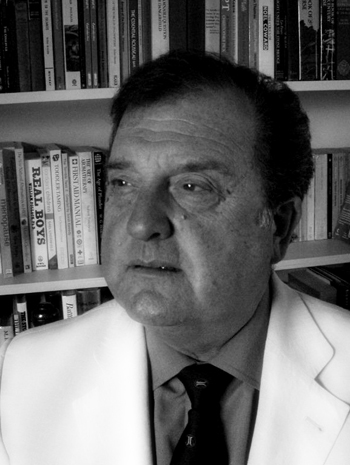 David Gilbertson (right) is a writer whose knowledge of policing and counter-terrorism is second to none. He had a long and varied career as a police officer. He served in uniform and CID in the UK and abroad, (attached to the New York City Police Department in 1988 and seconded to South Africa in 1994 as the Director of Peace Monitors for the first post-Apartheid elections). His latest novel, The Path of Deception, is set in a Britain devastated by a terrorist atrocity of hitherto unimagined scale. The police and security services are faced with the very real possibility that their attempts to prevent the outrage have been sabotaged from within. Suddenly, the task of making safe the imminent coronation of King Charles III is thrown into a very different focus. You can read more on the
 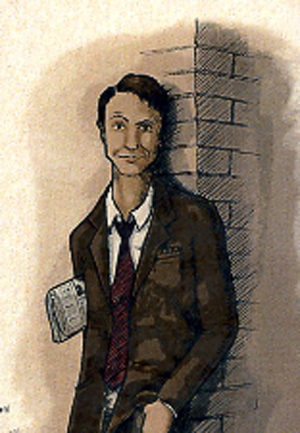 Crime reporter Colin Crampton (as imagined by Frank Duffy, left) is a delightful invention by journalist and author Peter Bartram. Only he could verify the extent to which Colin is autobiographical, but suffice it to say that Bartram has spent in his working life in journalism, and knows Brighton in and out, top to bottom, and backwards and forwards. In Front Page Murder, Crampton once again becomes involved in a very literal matter of life and death. Set in the 1960s before the abolition of the death penalty, Crampton is persuaded to establish the innocence of Archie Flowerdew – awaiting the hangman’s noose for the murder of a rival artist. Peter Bartram wrote an excellent piece for Fully Booked on the peculiarly English attraction known as What The Butler Saw machines, and you can read the entertaining feature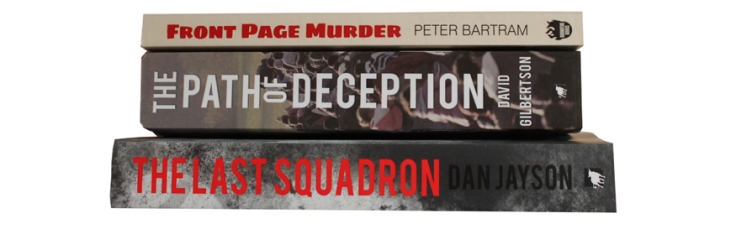
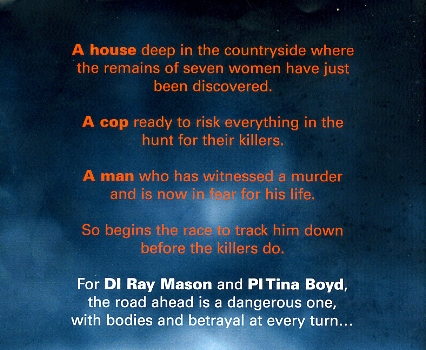

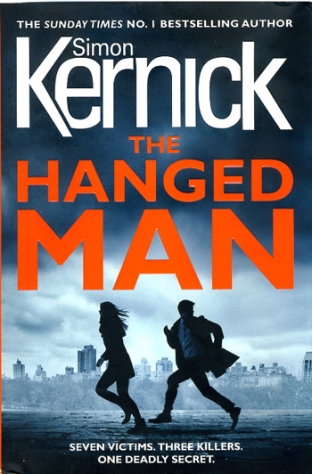 In The Bone Field, Mason tried – and failed – to bring the gang down. The bloody conclusion to the confrontation at a remote Welsh farm haunts him. His bitterness and sense of a score still not settled drive him on, but he is now working under the mandate of the National Crime Agency – and they play by the rules. The fire and desire for retribution burning in Mason’s soul will force him to abide by those rules only as far as they suit him. His personal background – a childhood shaped by violence and cruelty – has endowed him with a sense of what is right and what is wrong which diverges dramatically from the code followed by his boss, Sheryl Trinder.
 Mason has a girl-friend. Tina Boyd is a former copper herself, but fate has forced her to ‘go private’ and she is now a successful and well-known enquiry agent. As she tries to unravel the complex tangle of relationships and loyalties which bind together the various members of Kalaman’s gang, she puts herself in harm’s way. She is smart and has a nose for danger, but does she have the killer gene which will enable her to tackle Mr Bone on his own terms?
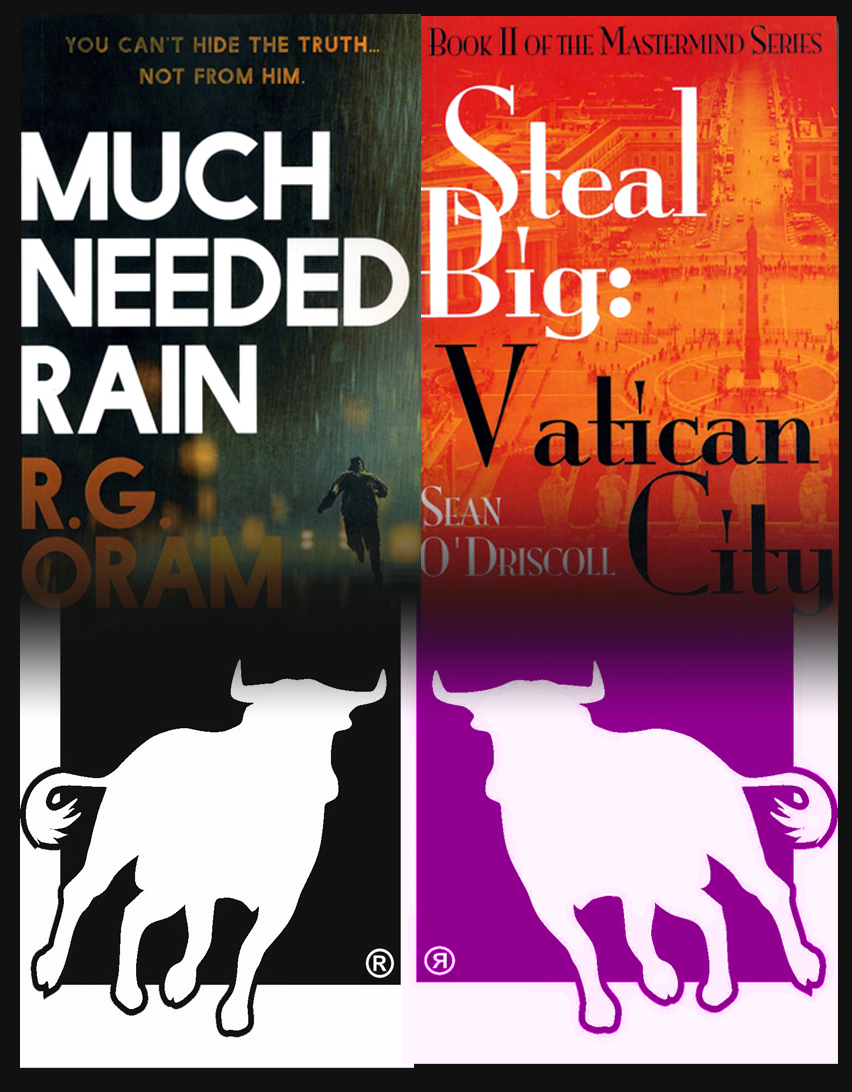

 RG Oram (left) is Welsh through and through, being born in Swansea and living most of his life in Carmarthenshire. His debut novel Much Needed Rain introduces David Lewelyn, who is the human equivalent of a polygraph, as he has developed a unique sense of perception which recognises dozens of little facial tics and mannerisms which indicate that the subject is lying. His relationship with the Los Angeles Police Department – in the shape of Detectives Forsythe and Baker – undergoes a dramatic volte-face, however, when his secretary is found murdered, and he becomes a prime suspect rather than a valued consultant. Much Needed Rain is out now in Kindle and paperback, is published by Matador, and is available
  From the principality of Wales we dart across the Irish Sea to the beautiful city of Cork, where we find Sean O’Driscoll (right) and his latest novel, Steal Big: Vatican City. This is the second in the series exploring the exploits of a daring criminal called The Mastermind. He cannot be accused of lacking ambition, since the first book in the series, Steal Big: New York, has our man planning to walk away with a cool 6.7 billion dollars. Now, he takes on not only the FBI, but perhaps the most powerful, secretive and ruthless non-governmental body in the world – the Catholic Church.


 Alex Cross is in trouble. Big trouble. He is the victim of a beyond-the-grave revenge attack from his very first opponent, Gary Soneji. Gary is long dead, blown up by his own bomb in a subway. It is not beyond Patterson’s audacity to resurrect someone, but in this case it is supporters of the late Mr Soneji who are responsible for Cross being accused of homicide. He is lured to a warehouse where members of the Soneji cult are waiting for him. In the fire fight that follows, members of the cult are killed and wounded, but when Cross summonses emergency backup, no weapons other than Cross’s own can be found. The words happy, trigger and cop are immediately rearranged into a well-known phrase or saying by the sensation-hungry media.
 Hand on heart, I have to admit to really enjoying this book. Patterson (right) hasn’t achieved his world-wide pre-eminence as a best selling writer by not being able to tell a story. The action comes thick and fast and in this book at least, the portrayal of Cross disproves the old adage about familiarity breeding contempt. Yes, Nana Mama is still there, serving up delicious meals for all and sundry and being annoyingly stoical in the face of her grandson’s adversity. Yes, Cross’s annoyingly geeky nine year-old son spots something that a top FBI data analyst has missed, but at least our man’s current love interest seems to be a good sort.
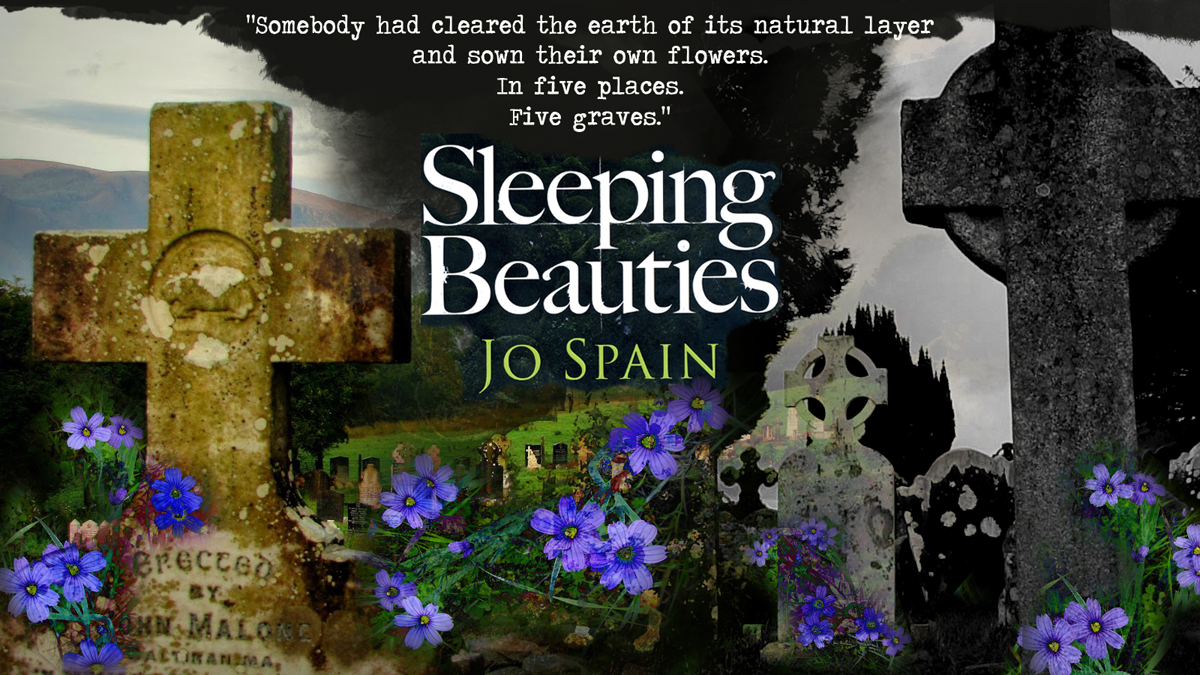

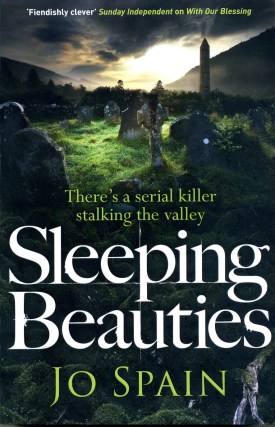 In the beautiful valley of Glendalough there are ancient stones, shades and spirits of the holy men who prayed in the monastery – and in the cemetery, lichen-covered headstones of generations of Byrnes, Cullens, Farrells, Nolans, Waldrons – all, both monks and villagers, at peace now. But the body of a young woman has been found. Interred without sacrament, beyond the gaze of those who would mourn her. In a shallow grave on a hillside, wearing the clothes she disappeared in. It is all that remains of Una Dolan, a twenty four year-old lass from Waterford. Last seen April 29th, 2011.
 Jo Spain writes like an angel. No fuss. No bother. No pretension. The narrative flows as smoothly as a glass of Old Bushmills slips down the appreciative throat, and she has us looking this way and that as we stand beside Tom Reynolds as he searches for the killer. This is, on one level, a police procedural, but Jo Spain doesn’t let methodology bog the story down. We know that she knows how the police operate, and that is more than enough. Her rural Ireland is beautifully described without unnecessary frills and furbelows, and she gives us as perceptive a story of the heights and depths of human behaviour as you will read all year. If you have come a little late to the Tom Reynolds party, the first episode of his career is





 fullybooked2017