There are 25 delightful windows for you to open in the countdown to Christmas. Each one reveals an excellent crime fiction novel, with a few seasonal images and some beautiful music thrown in for good measure. Here are the windows for Week 1.




There are 25 delightful windows for you to open in the countdown to Christmas. Each one reveals an excellent crime fiction novel, with a few seasonal images and some beautiful music thrown in for good measure. Here are the windows for Week 1.


 After I had read Death In Profile, and saw that it was billed as the first of an intended series, I did softly uttered something akin to “hmmmm…?”, quietly questioning if there was any room in the crowded contemporary crime fiction market for books which unashamedly borrowed tropes and mannerisms from books written seventy years ago. I have just finished A Death In The Night, the fourth in the series, and I am now a true believer, and devoted disciple. Guy Fraser-Sampson (left) has created a delightful repertory company of characters, and set them to work catching killers in the highly exclusive avenues and cul de sacs of London’s Hampstead.
Principally, we have a quartet of investigators. Chief Superintendent Simon Collison, Inspector Bob Metcalfe and Sergeant Karen Willis all work for the Metropolitan Police, while Dr Peter Collins is a psychologist and criminal profiler who acts as consultant to the Hampstead coppers. In the first three books, Metcalfe and Collins are jointly suitors of the radiant and ravishing Willis. This strange ménage à trois has now resolved itself, however; Collins has Willis to himself, and Metcalfe has a new object of his passion. (To read our review of an earlier book in the series, A Whiff of Cyanide, just click the link)

Naturally enough, this being a murder mystery, the examining pathologist discovers not only that Bowen was murdered by smothering, but she was also three months pregnant. Further investigations by Collison and colleagues uncover that Bowen was in a relationship – along with countless other bedazzled women – with a libidinous and charismatic QC, Simon Fuller. It seems that he and his wife have come to ‘an arrangement’. Mrs F has neither interest nor ability in the sexual side of marriage, so she is quite content to let Mr F seek his pleasures where he will, provided that he remains her husband, in a strictly social sense.

As Collison and Co. scrape away at the wall of lies and deflection which surrounds the truth about Bowen’s murder, they get the distinct feeling that as fast as they chip and chisel, someone else is busy repairing and replacing the brickwork. Of course, the killer is revealed in the end, but not before Fraser-Sampson puts his company through their paces. Collison is educated, urbane and thoroughly professional. Metcalfe is dogged, decent and determined. Willis belongs on the cover of Vogue, but is also blindingly intelligent, and a damn good copper. Collins? Well, he is an exercise in eccentricity. He is possessed of a mind which can think three or four steps ahead of less gifted people, but he does have his little moments. Such as when, in times of great stress, he imagines that he is Lord Peter Wimsey, and that Karen Willis is his Harriet Vane.
To borrow and adapt from Matthew chapter 7, verse 20, “Therefore by their tea-times ye shall know them..”, we are not surprised that Peter Collins serves up Earl Grey to accompany anchovy toast: we would expect nothing less of him. Without extending the metaphor too much beyond its breaking point, I can say that Fraser-Sampson’s writing is – just like Dr Peter’s four o’clock fare – elegantly presented, fragrant, but with a salty piquancy to add balance. I have become a great admirer of the Hampstead Murders series. They may be making a reverential nod in the direction of Christie, Sayers and Allingham et al, but they are beautifully written, cleverly plotted and, above all, superbly entertaining. After all, isn’t that why we open crime fiction books in the first place?
You can buy A Death In The Night here, but if you fancy a freebie, simply click on the image below, and that will take you to our competition page.


Guy Fraser Sampson continues to delight fans of The Golden Age with his witty and stylish recreations of 1930s crime mysteries set in modern Hampstead. If you would like to enter a prize draw for a copy of his latest novel, A Death In The Night, (click the link to read our review) then entering couldn’t be easier.
Email us at the address below, simply putting Hampstead in the subject box …
fullybooked2016@yahoo.com
Go to our Facebook page and ‘like’ the post.
The competition closes at 10pm GMT on Sunday 3rd December. The first name out of the digital hat will be contacted and the book sent to their postal address. The competition is worldwide, so any fans in the USA, Europe or Australasia are welcome to enter.
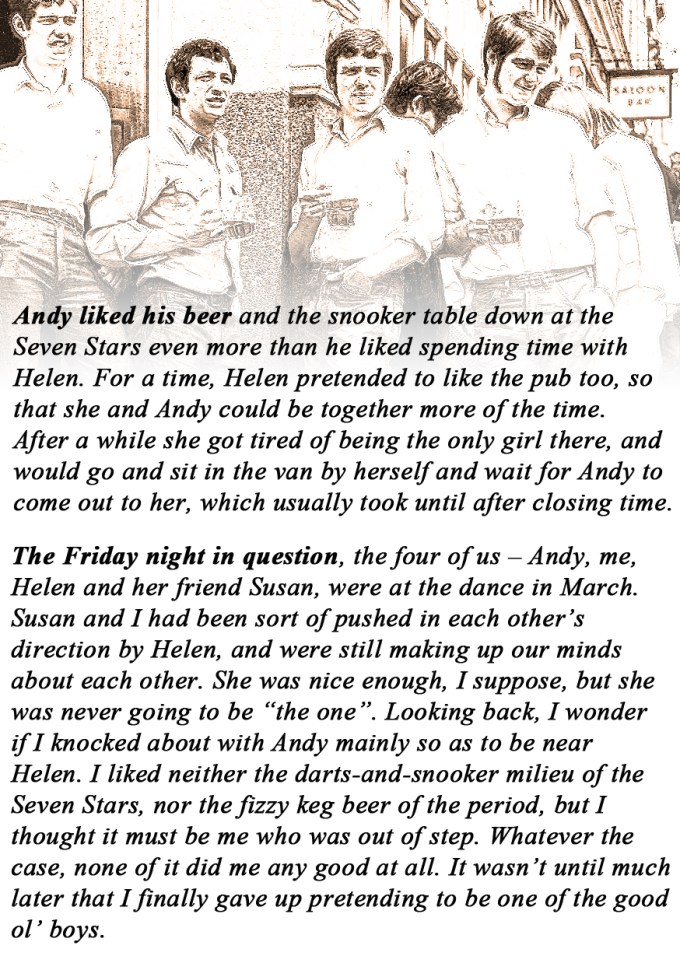
Andy and I were up at the bar as usual, while Helen and Susan were in the dance hall itself. The worst thing about these dances was that, sooner or later, the lads from March would pick a fight with the lads from Guyhirn or wherever, usually on the pretext that somebody had tried it on with their girlfriend or sister or whatever. Lads were always trying to get off with Helen, and would then fall out on Andy or me in a fit of jealous resentment. I noticed two or three groups from previous encounters. The atmosphere was tense, threatening. It was time to exit the premises.
Andy has had a fair bit to drink, but he knows the road across the fen and home to Christchurch like the back of his hand, could do it blindfold. We’re cruising along, no problems, when a white Ford Escort pulls alongside and a lager can smashes against Andy’s side window. The Escort is crammed full of goons from the dance-hall, shouting and screaming foul abuse, mainly directed at Helen. They want us to chase them, want a race. Sober Andy wouldn’t have risen to the challenge, but drunk Andy does.
The back roads across the Fens are dead-straight, but narrow and undulating, being laid down right on top of the river-banks, where the alluvial silt provides a firmer base than would the peat-soil of the adjacent fields, most of which have shrunk and subsided down to a level well below that of the roadway, or even of the rivers themselves. It is easy to go off the road and plunge down into the river on the one side, or into the deep, steep-sided ditches draining the adjacent fields on the other side. Sections of the tarmac have subsided, or are crumbling at the edges, through lack of maintenance. I never understood why they wasted so much time at school warning us about unsafe sex and drugs when far and away the commonest cause of early death amongst our schoolmates was through motor accidents, cars going off the road and ending upside-down in a freezing-cold river or ditch.

It takes me a while to come to, something warm trickling down my face. My right leg is at an unlikely angle and there are white shards of bone sticking out through my trouser-leg, below the knee, although I can’t feel anything yet. Andy is up against the steering-wheel, blood coming out of his mouth. Helen is between us, her head under the dashboard, not moving. Susan is lying on her front out on the bonnet; she must have gone straight through the windscreen, which is completely shattered. I can’t see her face, which is probably just as well.
A police car arrives, followed by an ambulance. I can only hear their voices, can’t see anything now.“Smells like a brewery in here – suppose they’re all pissed as usual. Cover that one’s face, for God’s sake, I can’t look at her like that. It’s worse when it’s a girl.”
 Andy was killed in a motor accident shortly after his 23rd birthday, when his car went off the Ramsey Forty-Foot road in the middle of the afternoon; no other vehicle was involved, but none of us was greatly surprised.
The Friday night dances were a cruel lesson in the realities of life and about where you stood in the pecking-order. Lads fought and competed over the lovely Helen Atkins, who wanted no-one but Andy, who in turn was inseparable from his drinking-mates down at the Seven Stars. Nice, plain-faced girls went home alone while the local lads drank themselves into a coma or got into fights with lads from neighbouring villages and towns. Nobody got what they wanted. As youngsters, we aimed high, stars in our eyes. Most of us learned to lower our sights and settled for the kind of life that was available to the likes of us, something on our level, somebody of our own class. We spent our salad days chasing rainbows, in pursuit of the lovely Helen, or others like her; but we mostly ended up marrying and settling down with one of those plump, plain-faced local girls, for better or worse. Some of us went away for a time, but we all came back sooner or later, because here is where we belong.
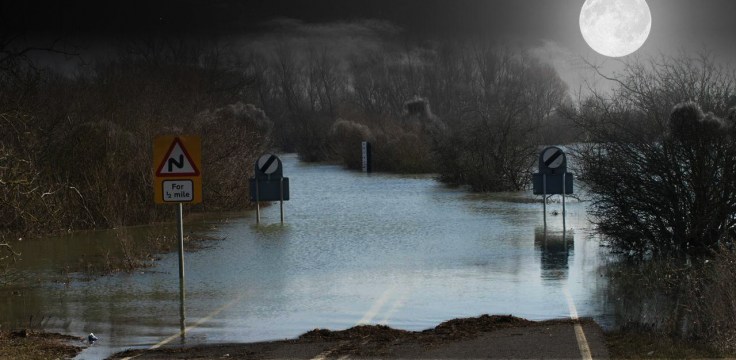
The back road between the Old and New Bedford rivers, my road home, is on a slightly lower level than the surrounding fields and water-meadows. Floodwater begins to spill off the fields and starts to trickle over the lowest section of the road ahead. Time to be getting back. This is what it will feel like when the world ends. This is what it will feel like for the last man left alive, as tidal waves cascade over the last remaining hillock of dry land.

But the worst is behind me now. The road rises steeply to the bridge across the Old River and the lights of the Lamb & Flag. So good to see the road surface again, and to feel dry land under my boots. Safe on the bridge, I look back at the opaque watery blackness and shiver.
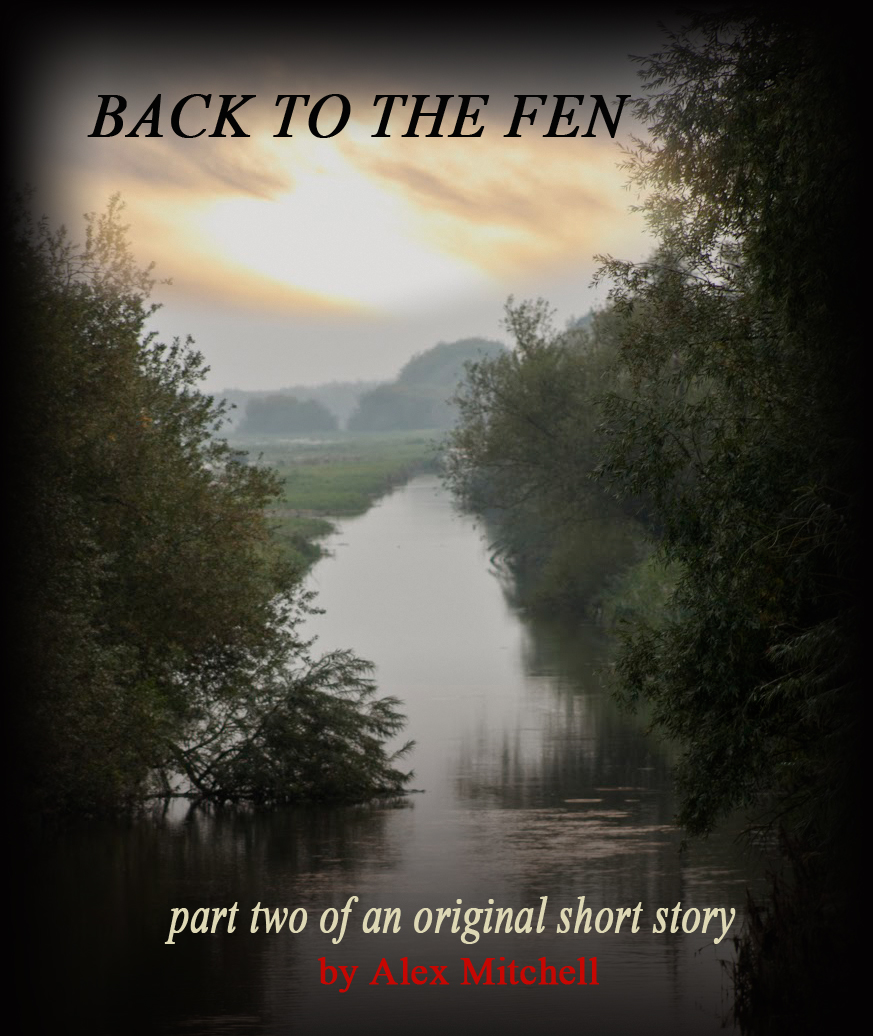
CLICK THE IMAGE BELOW TO READ PART ONE OF BACK TO THE FEN


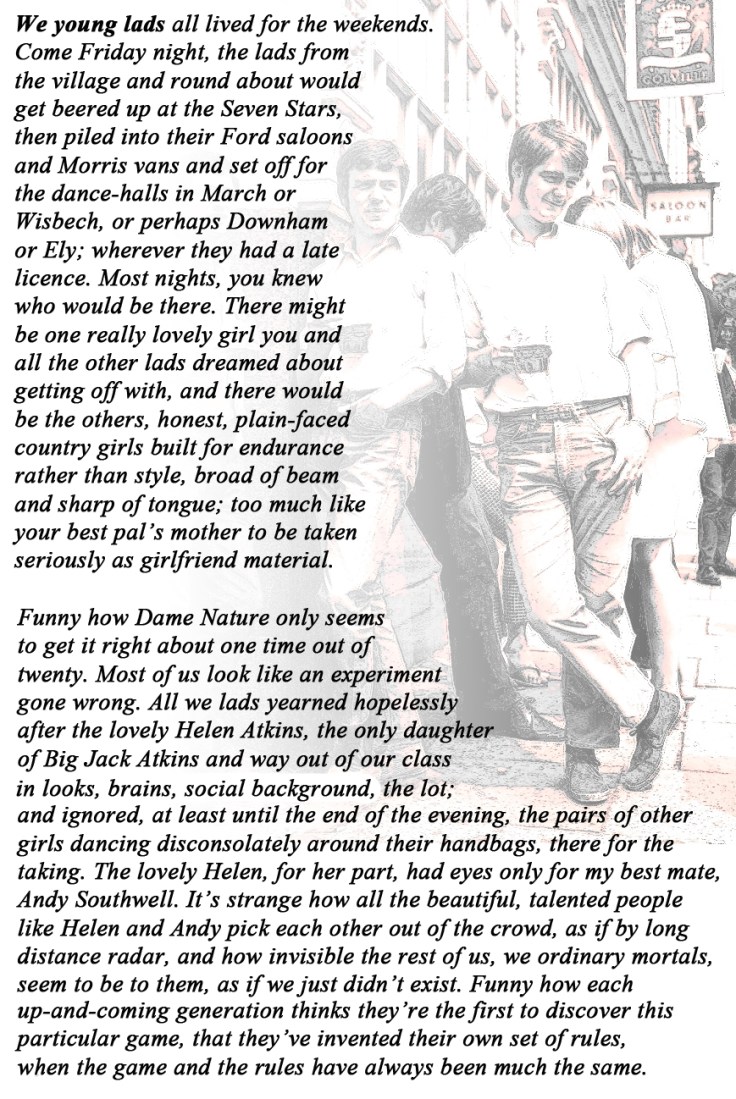
There didn’t seem to be a great deal to look forward to; no proper jobs, not for we lads, anyway; no real prospect of getting a place of your own unless you settled for being trailer-trash, stuck in a freezing cold caravan in some farmer’s cow field. The Fen villages were just fading away. The smaller ones always had a kind of half-hearted or make-do appearance, like temporary staging posts in some dead-loss location in the Wild West of America. But now you could draw up a check-list and watch one thing disappear after another; High St. shops, family businesses from way back, the train service into town, the railway station itself, the late bus, then all the buses, the secondary school, the primary school, the cottage hospital, the doctor’s surgery, the public library, the banks, the police station, the vicar, then the church itself, the Post Office and then, the last thing of all to go, the pubs.
We all knew of local lads, older brothers, whatever, who had moved to the city, Peterborough or further away, to find a job and a place of their own. They had a hard time finding work as a country boy with no local contacts, nobody to pull strings or put in a word for them. You had to live in a bedsit or whatever for years before they’d even put you on the waiting list for a council place, and even then, the best you could hope for was a flat on the worst crime & drugs-infested high-density estate on the outer edge of the city. So there we all were, stuck, with no way out, or round, or through. Whether you moved or stayed, there wasn’t much to get enthusiastic about.

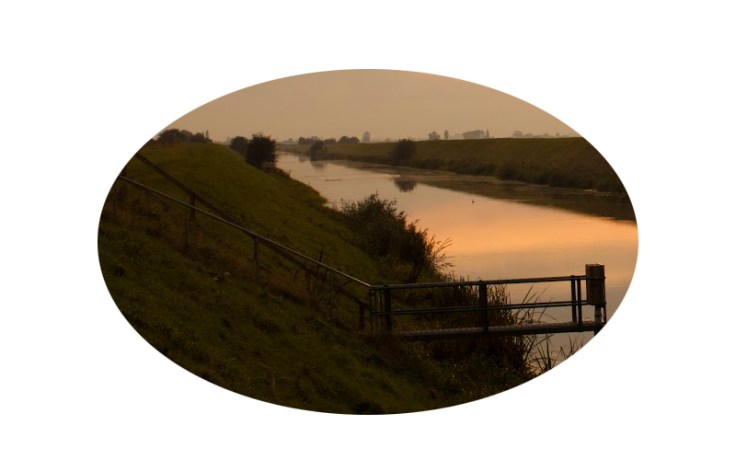
What is it that draws us back to the water, again and again? Why do we feel such a sense of peace and tranquility here, and nowhere else but here? Is this where the ancestral fish-thing in each of us feels most at home? Or are there still fishy things deep in there now, calling us home?
The Fen villages stand on what used to be islands of higher ground, surrounded until quite recently by marsh and fen. They were isolated communities, cut off from the outside world by the surrounding marshland and water. In the past, the Fens were a place of refuge for fugitives, outlaws and persecuted religious groups. The Fen people were nicknamed “yellow-bellies” on the basis of their aquatic way of life and because their ancestors were supposed to have interbred with the water-dwelling local wildlife of frogs, newts and toads. More to the point, the isolated character of the Fen villages, and the difficulty of travelling from one village to another, meant that the Fen communities were prone to in-breeding. This problem was eventually diminished by the draining of the Fens for purposes of agriculture and, as in other rural areas, by the advent of the bicycle, which allowed eager young lads access to girls in more distant communities and to distribute their genetic inheritance more widely in the process; but people still say that babies in the remoter villages are born with webbed feet.
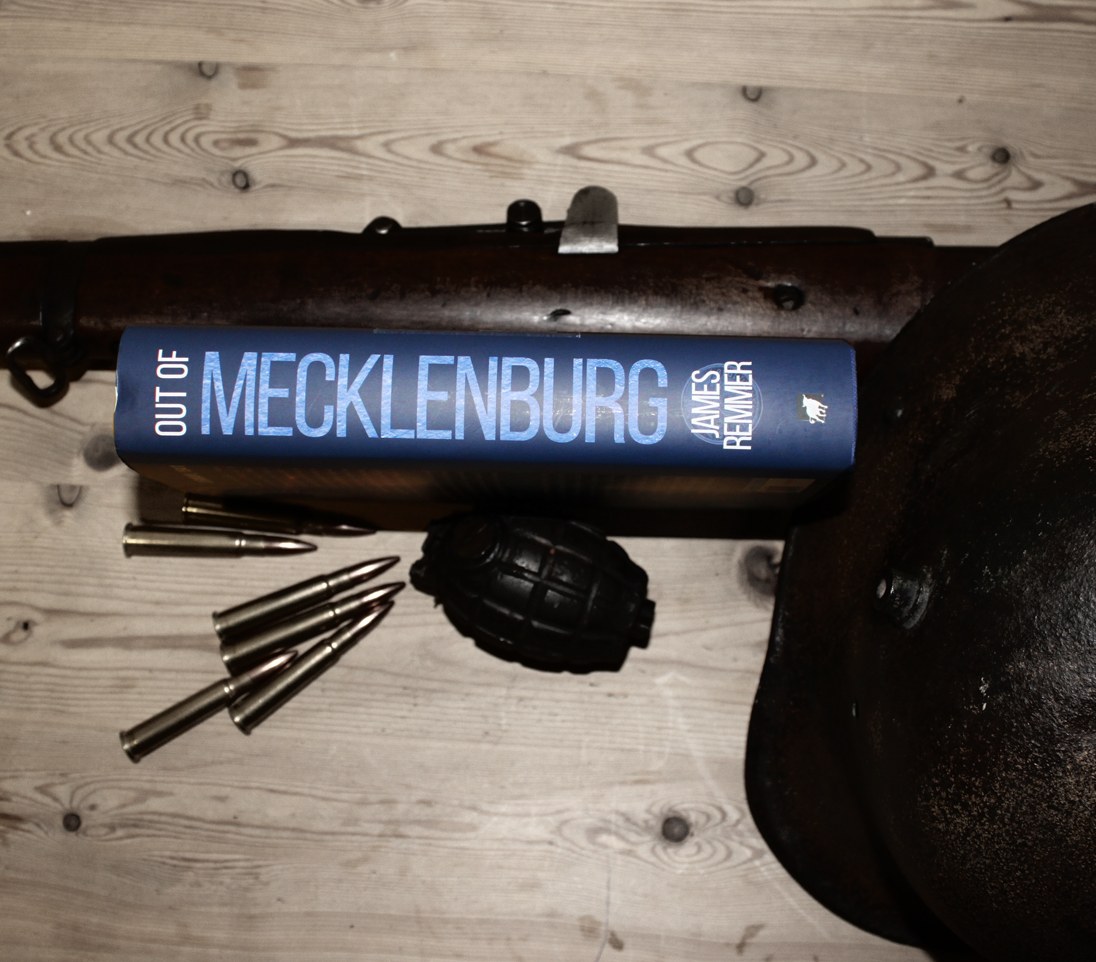

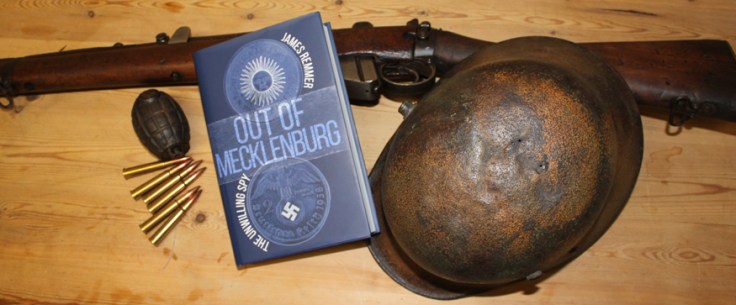
 The full title of this debut novel from former intelligence operative James Remmer is Out of Mecklenburg – The Unwilling Spy. All the elements of a good WWII thriller are in place, including the usual staples of fanatical Nazis, spies, U-Boats, love, lust – and gold bullion. What gives this novel a boost is the injection of an usual element – the early days of the soon-to-be-famous Argentine army officer, Juan Domingo Peron. Remmer (left) brings a distinctive authenticity to his story, having practiced the dark arts of intelligence gathering – and the spreading of disinformation – in a long and distinguished career in the service of this country.

Out Of Mecklenburg is published by Matador, which is an imprint of Troubador Books. It is out now and available from all good bookshops – and online.

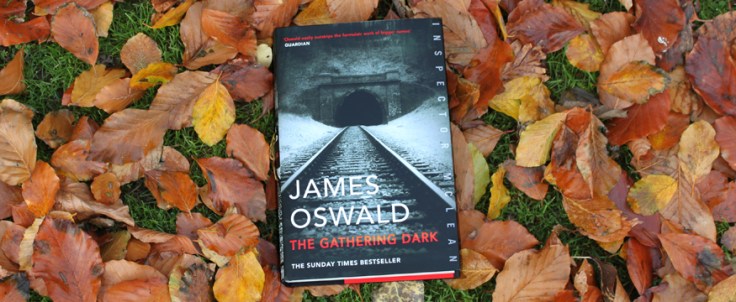
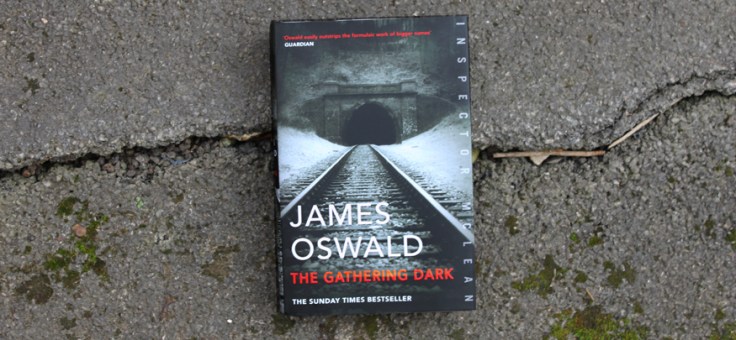
James Oswald has knocked on the door, and been admitted to the hall wherein are gathered the great and the good of Scottish crime fiction. His DI Tony McLean is now well established, and McLean’s Edinburgh is every bit as authentic as that of his older – and more curmudgeonly – colleague John Rebus. In The Gathering Dark, McLean tries to establish the truth after a catastrophic event – possibly an accident, but who knows? – where a loaded truck ploughs into a crowd of people at a bus stop, with fatal consequences.

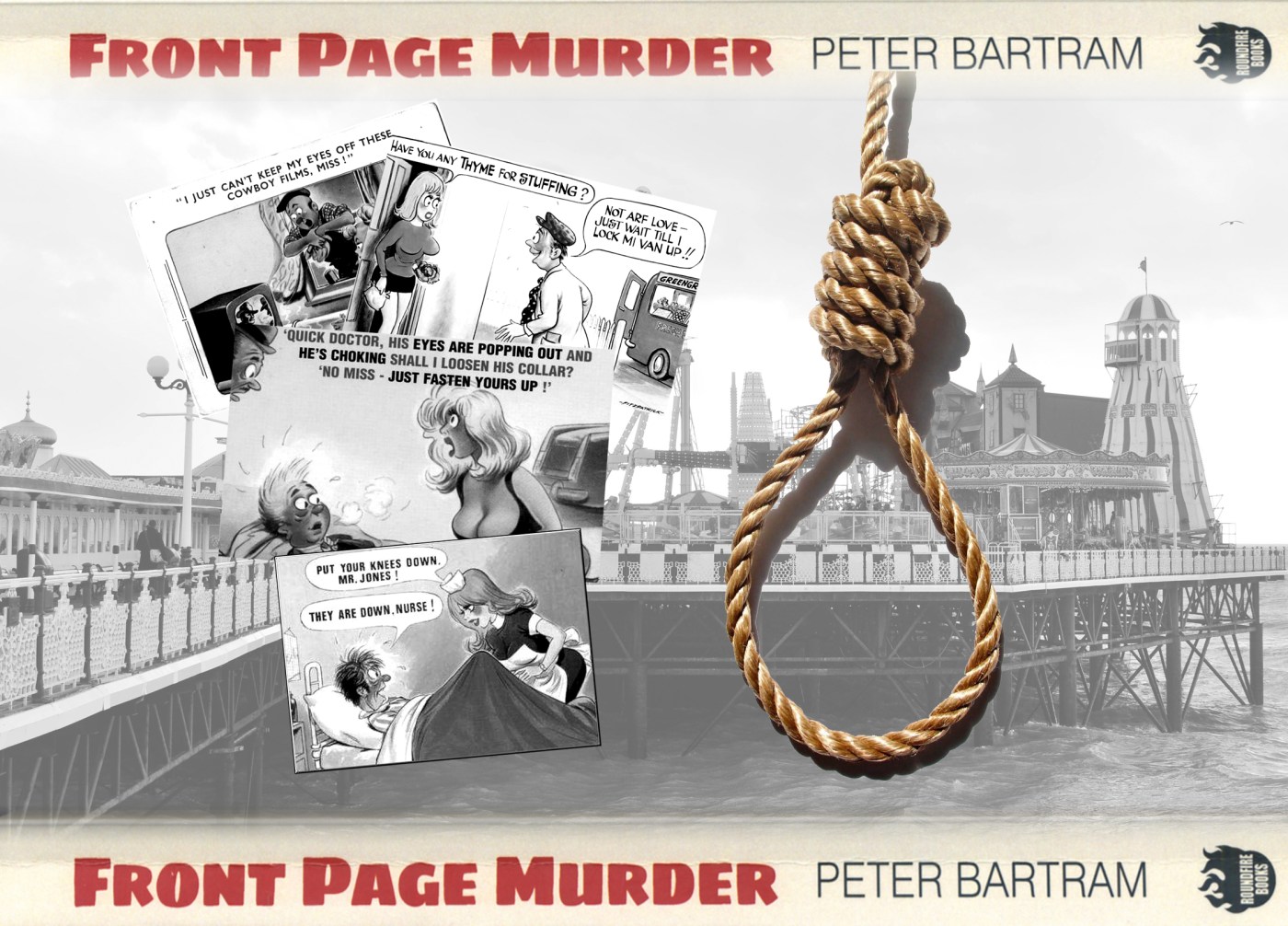

 In the latest novel from Peter Bartram (left) his alter ego Colin Crampton, a reporter for the Evening Chronicle in 1960s Brighton, faces his toughest challenge yet. Local artist Archie Flowerdew is due to be hanged on Christmas Eve unless Crampton and his intrepid Australian girlfriend Shirley can stop this affront to Christmas cheer by proving that Flowerdew did not murder a rival artist.
For historical background it is well to remind ourselves that the last people to be executed in England were Peter Anthony Allen and Gwynne Owen Evans. Both were hanged at Walton Prison, Liverpool, on 13th August 1964. The Murder Act of 1965 suspended the death penalty in Great Britain, but not for Northern Ireland.
Back in Brighton, Crampton gets to grips with the Flowerdew case. Flowerdew’s alleged victim was the deeply unpleasant and embittered Percy Despart, a talented but disappointed artist whose main income came from designing that peculiarly English art form – the risqué seaside postcard. Despart’s misanthropic nature had won him many enemies, and he combined his artistic talents with his malevolent nature to put caricatures of these enemies on his best-selling postcards.
 Persuaded by the condemned man’s niece, Tammy, Crampton gets to work, and finds no shortage of other Brighton folk who would have clapped their hands in glee upon hearing of Despart’s demise. The plot thickens delightfully, as we encounter a crooked art dealer, a lecherous vicar, a camp artist (complete with velvet trousers) and the usual cast of boozy, chain-smoking searchers-after-truth (or a good headline) on the staff of the Evening Chronicle.
Those of you who have read and enjoyed the two previous Crampton of The Chronicle stories, Headline Murder and Stop Press Murder, will be familiar with Bartram’s style. The jokes come thick and fast. Most of them work, and although some don’t, Bartram keeps up a rapid fire delivery of gags that have an accumulative impact. Amid the merriment, however, there is a backbone of seriousness which consists of perceptive observation of the 1960s social milieu and – of course – a totally authentic newspaper background in the days of battered Remington typewriters and hot metal typesetting.
 Bartram introduces a fascinating contemporary note by featuring the Home Secretary at the time, Henry Brooke. He was appointed by Harold Macmillan after the Prime Minister’s infamous ‘Night of The Long Knives in 1962. Brooke (left) was to prove one of the least distinguished holders of the post, however, and he was pilloried without mercy by the BBC’s satirical show That Was The Week That Was. They dubbed the hapless Brooke ‘The most hated man in Britain’, and Bartram recalls their mocking phrase, “If you’re Home Secretary, you can get away with murder.”
Front Page Murder is a joy from start to finish. Yes, it is escapist. Yes, we guess that the the admirable Crampton will, in the end, prevail. No, Bartram doesn’t take us deep down into the dark world of serial killers but, my goodness, Front Page Murder is wonderful entertainment, and is one of those rare books where there is a definite sense of sorrow that you have reached the final page.
Peter Bartram wrote an entertaining piece on What-The-Butler-Saw machines as an accompaniment to the plot of the previous Colin Crampton novel, Stop Press Murder. The links to both items are below. Front Page Murder is published by Roundfire Books (click the link to visit their website) and will be available on 24th November.


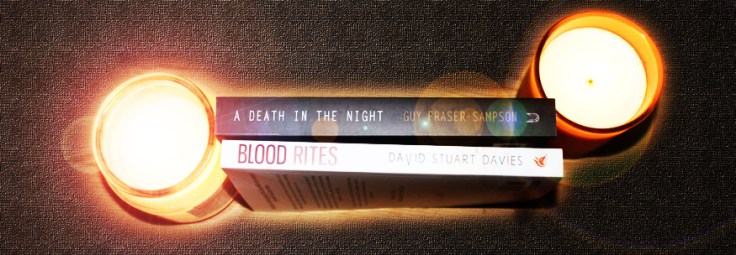
 Two books from Urbane Publications this week, and they both look very tasty. I’ve become an avid fan of Guy Fraser-Sampson’s quirky Hampstead Murders series, but David Stuart Davies (left) and his copper DI Paul Snow are, for me, unexplored territory. David Stuart Davies is, as well as being an original author, is a noted editor of ghost stories and classic detective fiction, and an expert on Sherlock Holmes. In Blood Rites, Paul Snow has a problem. A Yorkshire police station in the 1980s is not the most favourable place or time to announce that you are a homosexual, and so Snow remains firmly ‘in the closet’. The self doubt and personal turmoil do not sit easy with Snow, especially when he is trying to bring to justice a killer whose crimes are clearly connected but apparently random. Snow’s lack of success sees him removed from the case, but he is determined to find the killer, and sets about the task privately. You can buy Blood Rites here, and check out two previous DI Snow titles, Brothers In Blood and Innocent Blood.
 Guy Fraser-Sampson (right) is clearly a man who has an affinity with an England which, sadly, no longer exists. Precision and subtlety of language, exquisite manners and faithful adherence to social niceties are all terribly unfashionable, but Fraser-Sampson’s respect for them is shown in his revival of EF Benson’s Mapp and Lucia characters, as in Lucia on Holiday and Au Reservoir.
Imagine presenting a premise for a new crime series to a world-weary literary agent. The two principle police officers are as follows: a sane, sober and happily married senior chap, with no personal demons or particular beef with his bosses; we also have a very posh lady detective who, if she didn’t go to Roedean, might well have. Throw into the mix a fragile and waif-like consultant psychologist who, when things get tough, imagines that he is Lord Peter Wimsey, and addresses the love of his life (the female detective) as “Harriet, old thing…” To compound the felony, the stories are set in the rarified atmosphere of one of England’s (if not the world’s) most exclusive locations – Hampstead, in London.
Now, be serious. This shouldn’t work, should it? Please take it from me that not only does it work, but it works in Spades. Fraser-Sampson is totally up-front about his influences, and what he is setting out to do. When I read the first book, Death In Profile, I was quite prepared to scoff, but within a very few pages, I was converted. This was followed in short order by Miss Christie Regrets and A Whiff of Cyanide.
The Hampstead team make a welcome return in A Death In The Night. We have professors, barristers, serial adulterers and exclusive clubs. Of course, we can’t have a crime novel without at least one body, and in this case it is that of the wife of a prominent lawyer. Can Metcalfe, Collins and Willis triumph over a distinct lack of evidence and bring a killer to justice?
If your local bookshop doesn’t stock it, then Amazon will have
To read the Fully Booked reviews of previous novels in the series, click the link


 fullybooked2017