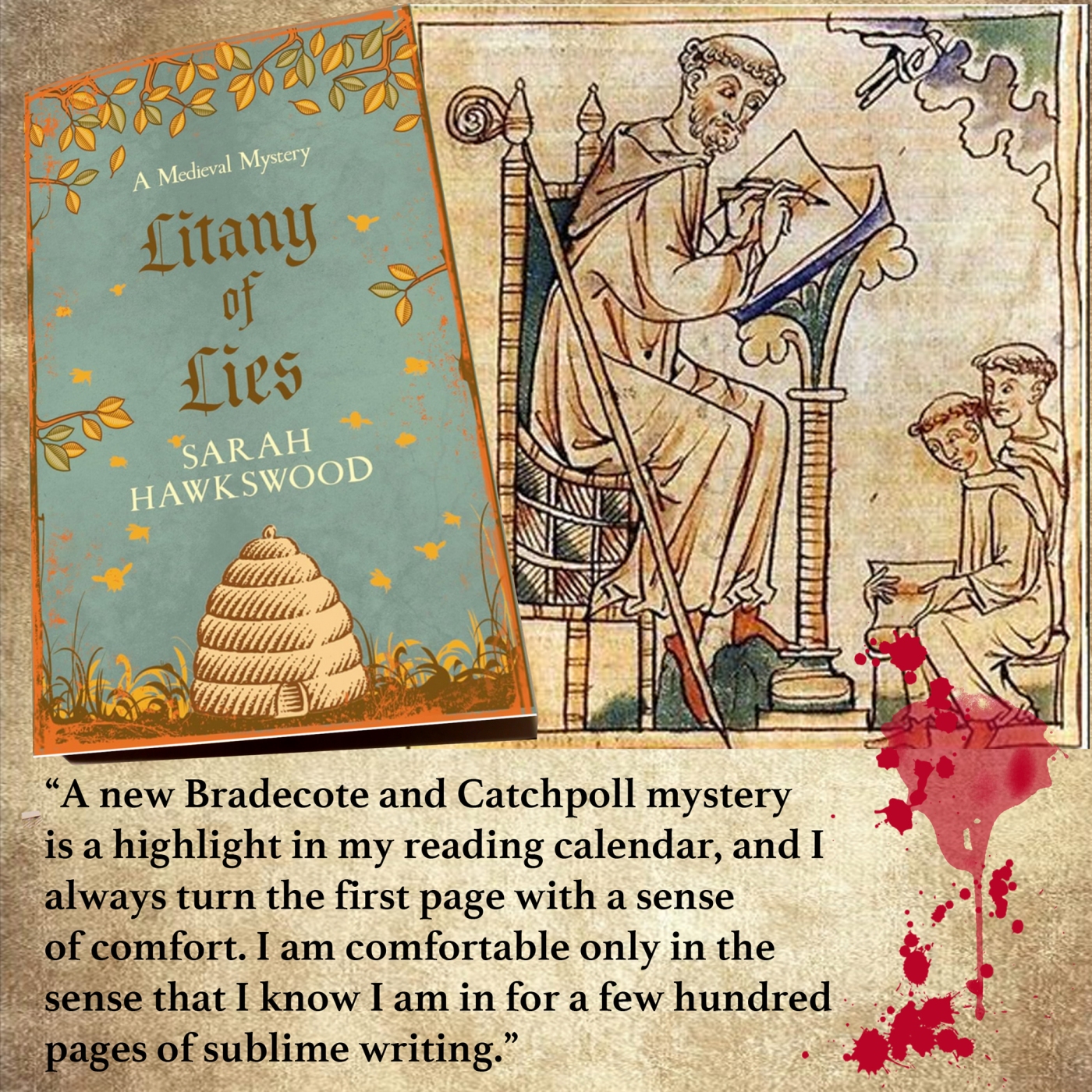

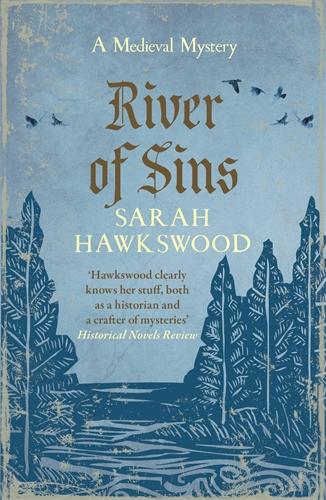
We are back in 12th Century Worcestershire, with Undersheriff Hugh Bradecote and Serjeant Catchpoll. Together with Underserjeant Walkelin, they are sent to Evesham to investigate a body found at the bottom of deep shaft being dug for a new well. Evesham sits partly within a deep curve of the River Avon. Its most notable building is the Benedictine Abbey, but on the other side of the river, built to protect the bridge, is Bengeworth Castle. It is not a grand place. Built by the Beauchamp family, High Sheriffs of the county, on an earthen mound and surrounded by a palisade of wooden stakes, it is damp and insanitary.
The man at the bottom of the well pit is discovered to be Walter, Steward of the Abbot of Evesham. The main part of his job was to collect rents on behalf of the religious order, as they own most of land in the town. We know, as readers, that Walter was involved in a scuffle with another townsman, who bested him by cracking his head open with a rock, before rolling his body into the pit. Bradecote soon reaches the correct answer to the question, “how?” But, although learning the “why?”, of Walter’s death, it some time before “who?” becomes apparent.
Relations between the Abbey authorities and the Bengeworth castellan and his soldiers are anything but cordial, and soldiers from the castle are suspected of stealing barrels of wine from the Abbey cellars, as well as illegally demanding a toll from everyone who enters the town via the bridge. When Bradecote examines documents at the Abbey, they show that Walter has been reporting several tradesman around the town as coming up short with the quarterly rent. This gives Sarah Hawkswood to tell us a little about the tradesmen in the town, and also serve a reminder of the occupational origins of some English surnames. We meet Aelred the Tailor, Baldwin the Dyer, Hubert the Mason and Martin the Fuller. The work of a Fuller was to take rolls of woven wool cloth and – by using some fairly unpleasant substances – remove all traces of grease, dirt (and worse) that remained in the cloth since it was wool on the sheep’s fleece.
Between them, Bradecote, Catchpoll and Walkelin interview the tradesmen, and find that each had paid their rents in full, and on time, to Steward Walter, leading to one conclusion only, and that was that Walter was ‘skimming off’ the rents, and taking a cut for himself. But it seems that none of the tenants knew that they were being cheated, so how could any of them have a motive for murder?
As the investigation seems to be going round in circles, another body is found. It is that of Old Cuthbert a bitter and lonely man. Years ago, he had been a Coppersmith, but found himself accused of murdering a local woman as a result of a love triangle. Taken before the justices, there was little evidence either for against him, and so he was subject to the barbaric Trial by Hot Iron. The accused had to hold a red hot iron bar in his hand and walk nine feet. If, after a few days, the wound healed, it was a sign that God pronounced him ‘not guilty’. If it festered, he was guilty, and would be hanged. Cuthbert was ‘not guilty’, but thereafter, his hand remained clenched as a fist, and so he was unable to carry on his skilled trade. Just about the only occupation left to him was that of a Walker in the fulling process, whereby he walked up and down all day in troughs of urine, treading – and therefore cleansing – the cloth in the liquid.
Of course, Bradecote and Catchpoll solve both murders, as we know they will. What lifts this book above the ordinary is Sarah Hawkswood’s magical recreation of a long lost world. Yes, it was a hard living by modern standards. Yes, medical interventions were scarce and mostly misguided. Yes, justice was rough and frequently random. But the description of the wonderful Worcestershire landscape, now mostly covered in concrete, car parks and convenience stores is sublime. The Avon is still unpolluted, and the Evesham Abbey bees still harvest pollen free of toxic chemicals. How the people in those days spoke to each other, or in what tongue or accent, neither the author nor I can have any real idea, but to me what Sarah Hawkswood has them saying sounds just about right.
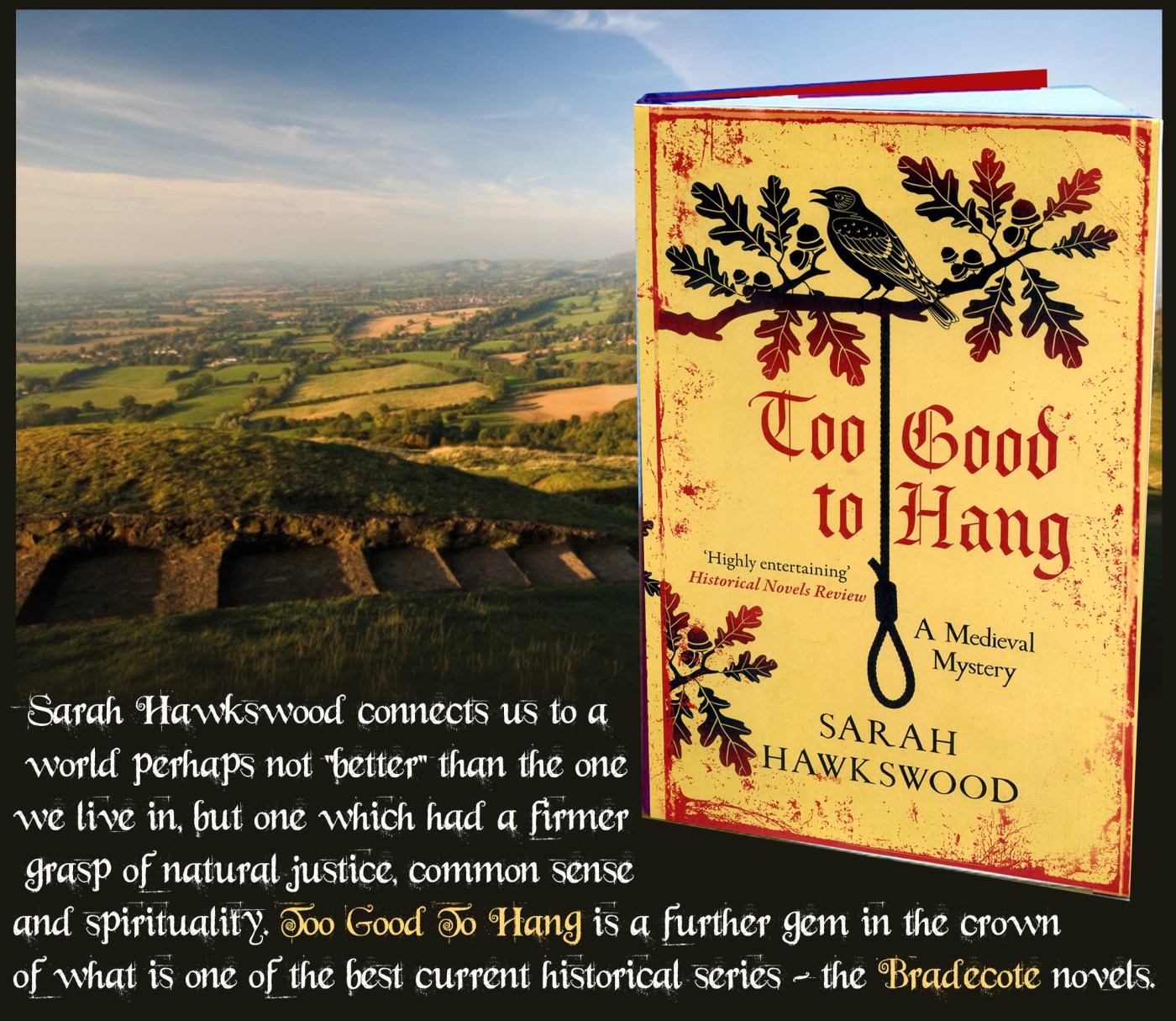
A new Bradecote and Catchpoll mystery is a highlight in my reading calendar, and I always turn the first page with a sense of comfort. I am comfortable only in the sense that I know I am in for a few hundred pages of sublime writing. ‘ Comfort’ does not mean ‘ Cosy’, and Sarah Hawkswood continues to show us that greed, malice, vindictiveness and subterfuge were just as common in mid-12thC England as they would prove to be in 1930’s LA, or modern day London. Litany of Lies is published by Allison & Busby and is available now.


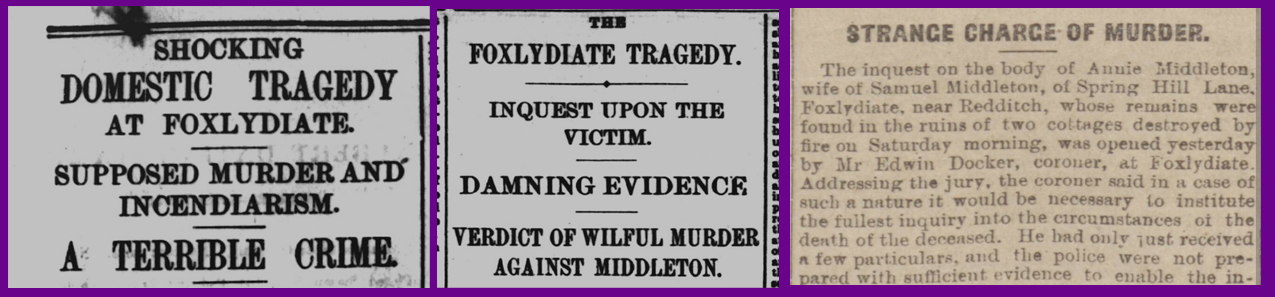
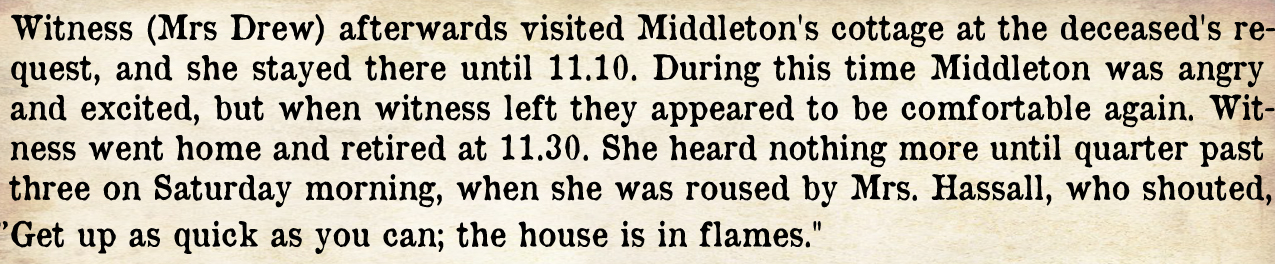
 SO FAR: On the evening of 10th/11th May 1902, Foxlydiate couple Samuel and Hannah Middleton had been having a protracted and violent argument. At 3.30 am the alarm was given that their cottage was on fire. When the police were eventually able to enter what was left of the cottage there was little left of Hannah Middleton (left, in a newspaper likeness) but a charred corpse. Samuel Middleton was arrested on suspicion of murdering his wife. The coroner’s inquest heard that one of the technical problems was that Hannah Middleton’s body had been so destroyed by the fire that a proper examination was impossible.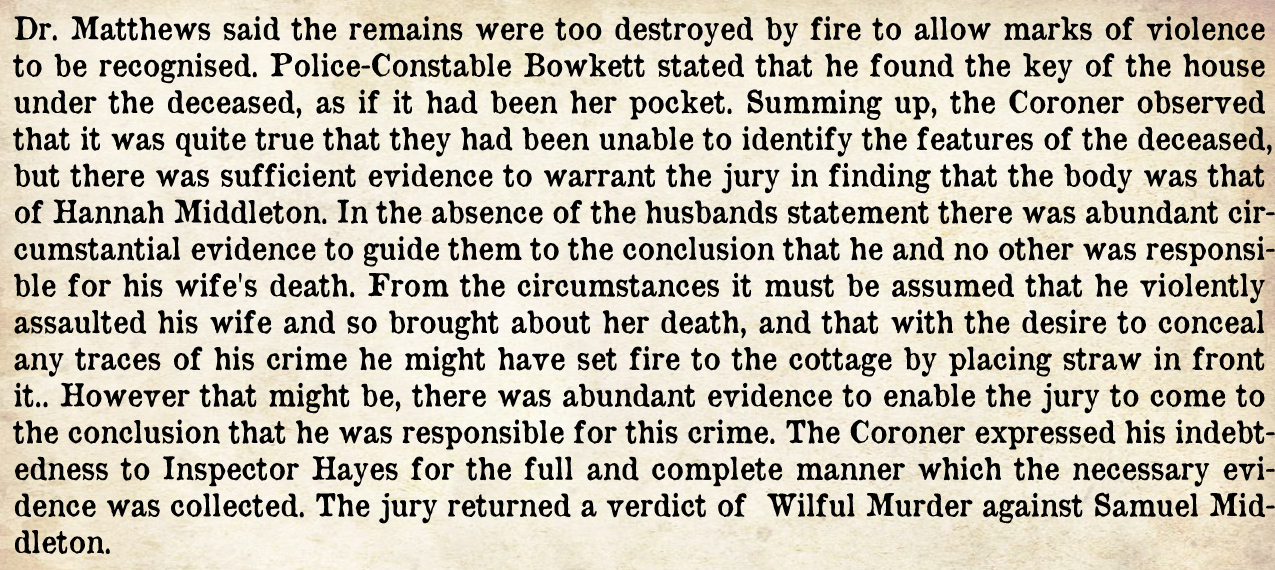
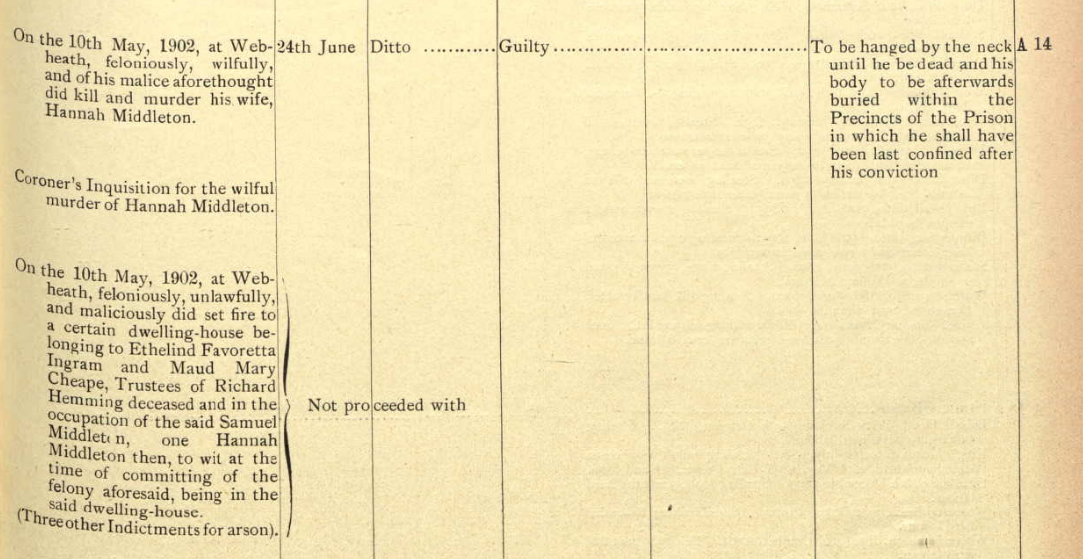
 Samuel Middleton was sent for trial at the summer assizes in Worcester. Assize courts were normally held three or four times a year in the county towns around the country, and were presided over by a senior judge. These courts were were for the more serious crimes which could not be dealt with my local magistrate courts. At the end of June, Samuel Middleton stood before Mr Justice Wright (left) and the proceedings were relatively short. The only fragile straw Middleton’s defence barristers could cling to was the lesser charge of manslaughter. Middleton had repeatedly said, in various versions, that his wife had clung to him with the intention of doing him harm – “She would have bit me to pieces, so I had to finish her.” It was clear to both judge and jury, however, that Middleton had battered his wife over the head with a poker, and then set fire to the cottage in an attempt to hide the evidence. Mr Justice Wright delivered the inevitable verdict with due solemnity.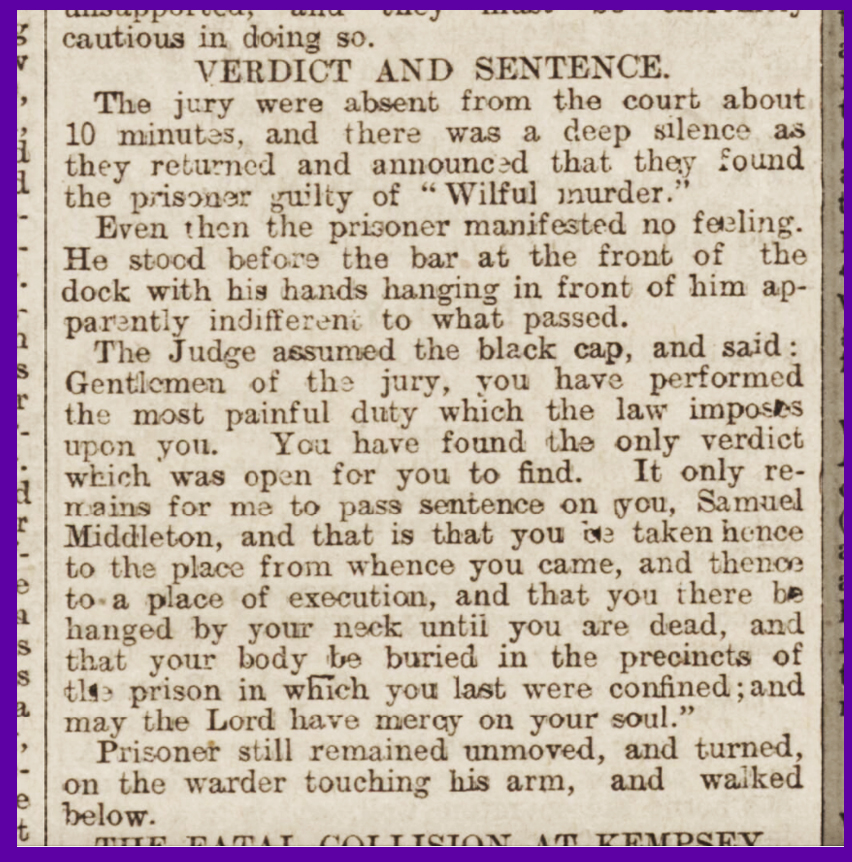




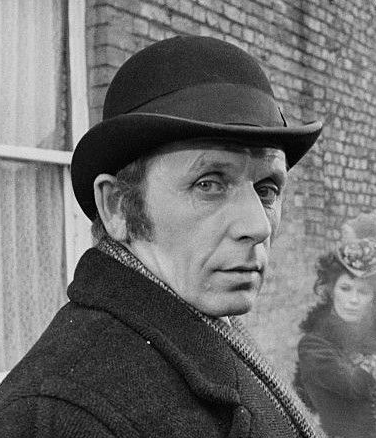 To Bath now, and a character created by (I think) Britain’s longest living (and still writing good books) crime author. Peter Lovesey was born in Middlesex in September 1936 and, after National Service and a career in teaching, he published his first novel in 1970. Wobble To Death was the first of a hugely successful series of historical novels featuring Sergeant Daniel Cribb and his assistant Constable Thackeray. Older readers will remember the superb BBC TV adaptations starring Alan Dobie (left) as Cribb. The stories were also dramatised by BBC radio.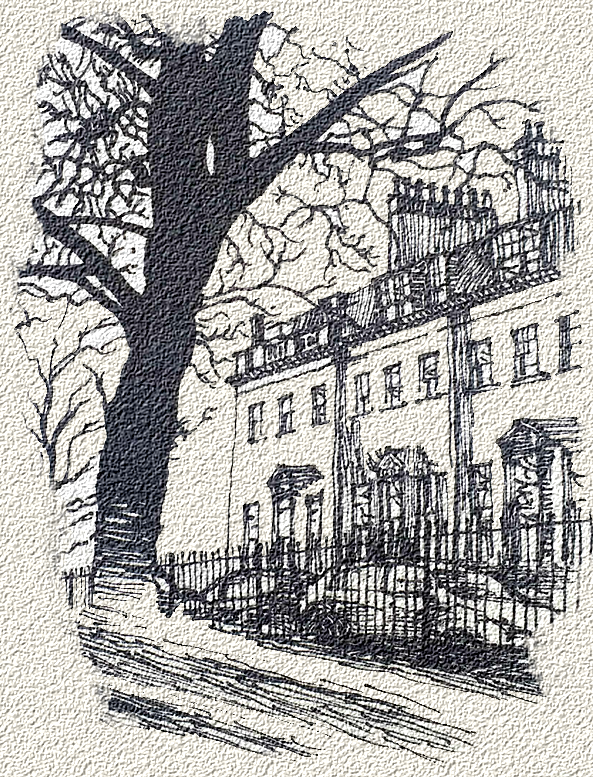


 Rather


 fullybooked2017