Search

fullybooked2017

Tag

Victorian England

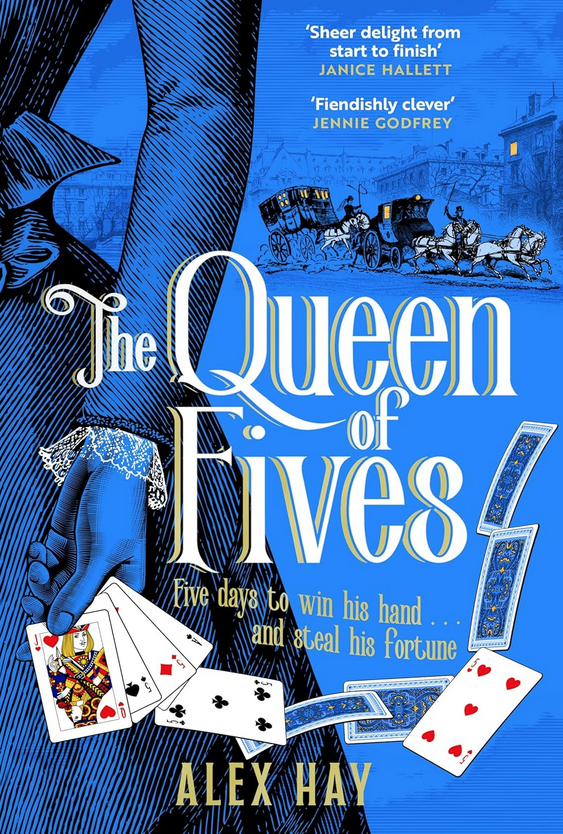
THE QUEEN OF FIVES . . . Between the covers

qo5005 copy

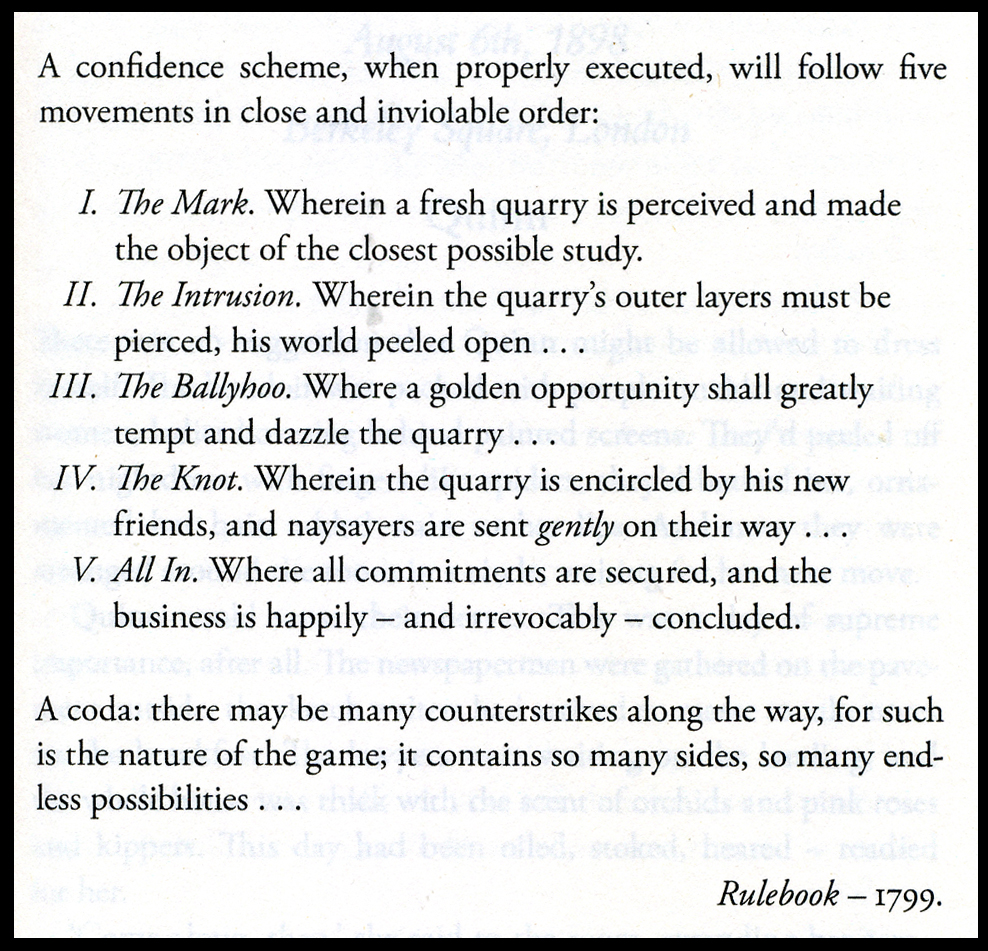
Alex Hay spins a yarn that is a preposterous as they come, but the more audacious the schemes of Quinn le Blanc become, the more entertainment the book provides. Quinn is a confidence trickster, dedicated to separating fools and their fortunes. Her home is a house in Spitalfields, and we are in the last years of Queen Victoria’s reign, a full ten years since the streets and alleys near le Blanc’s house echoed with the cries of “murder!” as yet another lady of the night was struck down by Britain’s most infamous serial killer. I may be be wrong, but the author may be giving a nod to Victorian theatre techniques, and the ability of its writers and directors to fool audiences with special effects. These, superbly described in The Fascination, by Essie Fox, are from a time long before CGI and earlier studio fakery. Le Blanc has one task. In five days, she has to meet and snare one of London’s most eligible bachelors, Max Kendal. He is alleged to be improbably wealthy, but possibly a case of ‘asset rich,  cash poor.’ With the aid of Mrs Airlie, a refined former fraudster, she prepares to set her trap. The ‘Fives’ in the book’s title refers to a kind of protocol which has five separate stages to guide the potential fraudster.
Gospel

Quinn receives a surprise invitation to the Duke’s ball, but she is suspicious:

“Quinn could smell it: the scent of the game, sweet and rotten. She didn’t trust the Duke, didn’t trust this card. She needed to find out what exactly he was concealing. The serpent was uncoiling in her heart.”

Being a high class female confidence trickster is not just a matter of desire, deception and decolletage. Quinn has to be able to do the kind of small talk the woman she was impersonating would be comfortable with. At the Duke’s ball:

“Yes, she was entranced by hunting, shooting, fishing, riding, stalking, hymns, cows,, dogs, lakes, children, her dear- departed parents, embroidery, automobiles and English beef.”

By the time Quinn has worked her way to the third stage of the scheme – The Ballyhoo – Alex Hay has made us aware that there is at least one other player in the game who intends nothing but malice and and disruption to Quinn’s plans. This mysterious person is introduced as The Man in the Blue Silk Waistcoat, but they clearly have shape shifting powers when they metamorphose into The Woman in the Cream Silk Gown. This person is not the only challenge facing Quinn. Victoria – Tor- Kendal, Max’s sister, is a force of nature. She is unconventional and a sexual predator, but her main concern is for her own fortunes should Max marry. The siblings’ stepmother, Lady Kendal is deceptively demure, but beneath her lightweight airs and graces is a formidable intelligence and steely self-will.

“There was something impenetrable about Lady Kendall. Something opaque, as if her roots had been dug deep, deep into the ground. She gave the outward impression of perfect, doll-like refinement, but there was absolute strength there.”

Alex Hay eventually lets us know the identity of the mysterious shape-shifter who is determined to sabotage Quinn’s attempt to snare the Duke and his fortune. Then, in a delicious twist, we learn that the Duke’s apparent sincerity regarding a marriage is just as insubstantial as that of Quinn. Not to spoil the fun, but I can’t resist a little teaser. If you recognise these lines, then you will know what is going on.

“He sipped at a weak hock and seltzer
As he gazed at the London skies”

Throughout the novel, the prose is rich, florid, and decidedly decadent – totally appropriate to what cultural historians have termed the ‘fin de siècle’, a period of dramatic contrasts between rich and poor, morally indulgent and haunted by the ghosts of Swinburne, Wilde, Beardsley, Verlaine and Sickert. The wedding breakfast prior to the marriage of Quinn and Max is wonderfully grotesque. Hieronymus Bosch had been dead for nearly four centuries, while it would be twenty more years before Otto Dix and George Grosz assaulted bourgeois sensibilities with their savage cartoons. Alex Hay trumps them all:

“Around them, the footmen were placing mountains of food upon the table. Collared eels, roast fowl, slabs of tongue, joints of beef, biscuits, wafers, ices, cream and water. The mayonnaise shuddered, glutinous and sick-making. Everything smelled taut, stewed, drenched in vinegar.”

This is a wonderful example of how a spectacularly good novel does not have to feature characters with whom we claim moral kinship. Quinn is simply awful – an unscrupulous predator with the moral compass of a centipede. Tor Kendal is a narcissistic ‘problem child’ with zero awareness of social or human sensibilities. Perhaps the closest to being a ‘good chap’ is Duke Maximilian, but it is not easy to decide if he is “nice but dim” or just another player in the brutal chess game played by the minor nobility in late Victorian England. This is a terrific read which assaults our senses with descriptions of the more bizarre aspects of English social life in the dying years of the 19th century. Best of all, it has gyroscopic plot which spins on its own axis innumerable times before Alex Hay persuades us that it all makes sense. Published by Headline Review The Queen of Fives is available now.
THE FASCINATION . . . Between the covers

Screen Shot 2023-06-08 at 19.51.27

Essie Fox takes us back to Victorian times with her novel The Fascination. It is the late summer of 1887. Keziah and Tilly Lovell are twins, but they are far from identical. At some point, Tilly simply stopped growing and, as she gets older, she is a woman in a child’s body. They escape from the brutish attentions of their drunken father, and are taken on by a showman called The Captain who senses a financial opportunity in the diminutive Tilly. She has the looks and voice of an angel, made all the more alluring by her tiny body.

Their paths cross that of Theo Seabrook. Cursed by being a (literal) bastard he is brought up by his aristocratic but malevolent grandfather, who eventually disinherits him. He finds work as assistant to Dr Eugene Summerwell – a former physician, but now another showman – who runs a ‘Museum of Anatomy’ in London. Despite its lofty title it is just another opportunity to make money out of punters who pay to marvel at preserved freaks of nature and medicine, mostly contained in glass bottles and cases.

The Fascination is described by the publicists as a ‘Gothic novel’. Church buffs will be aware of the architectural term, insofar as it applies to the three great periods of English medieval architecture – Early English, Decorated and Perpendicular – but what does it mean when applied to a novel? Although Wikipedia is frequently wrong, its definition of Gothic Fiction isn’t far off the mark:

Gothic fiction is characterized by an environment of fear, the threat of supernatural events, and the intrusion of the past upon the present. Gothic fiction is distinguished from other forms of scary or supernatural stories, such as fairy tales, by the specific theme of the present being haunted by the past.”

The anonymous author might have added:

A fascination with human deformity, ever-present reminders of death, physical beauty ruined by excess, the darkness of human imagination – and a general absence of normality.”

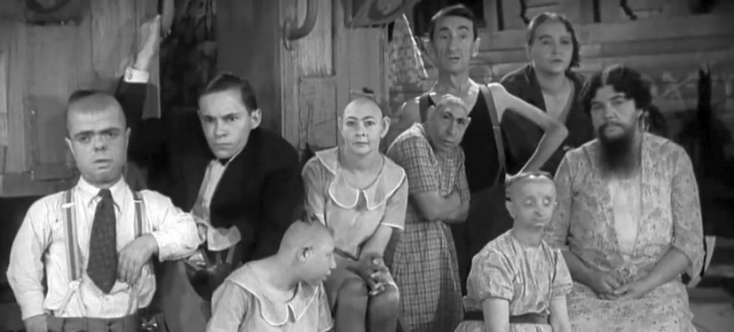
Away from the intriguing story – of which more in a moment – Essie Fox raises interesting questions about our age-old fascination with physical and mental differences in our fellow humans. I am old enough to remember traveling fairs in 1950s Britain, where people would still part with their hard-earned bobs and tanners to view The Bearded Lady, The Irish Midget or The Rat Woman. Most of these owed more to make-up than genuine deformity, but let’s not forget the 1932 American film (banned for many years) called Freaks. Directed and produced by Tod Browning. It was a melodrama set in a traveling circus. The basic plot was that a scheming female trapeze artist sets out to defraud a dwarf called Hans of a sizeable sum of money. In doing so, she invokes the wrath of Hans’s fellow ‘freaks’ – some of whom actually had severe physical deformities.

Screen Shot 2023-06-08 at 20.22.01

In these ‘enlightened’ days many enjoy a slightly more refined fascination with grotesques when they tune in to watch shows like Britain’s Got Talent and Love Island. Back in Victorian times, however, these pleasures were much more raw and face-to-face, and this is where Essie Fox places her characters. Few deviations from ‘the norm’ are excluded; in no particular order she offers us kidnap, prostitution, paedophilia, drug addiction, child abuse, grave robbing, pornography and debauchery.

FReaks
Under the skilful management of El Capitano, Tilly becomes a star of the London variety stage. It doesn’t hurt that she has a lovely singing voice, but the bottom line is that there is a sexual attraction, too. Essie Fox doesn’t lay this on with a trowel, but the fact is that Tilly is a nubile teenager, but one encased in the body of a nine year-old. It is this that brings her to the attention of Lord Seabrook, Theo’s syphilitic grandfather, and his scheming new wife. Tilly is kidnapped, and the intention is to use her as the central attraction at a Hellfire Club-style orgy in the crumbling mausoleum of Dornay Hall. After a daring rescue by El Capitano and his retinue of rather odd characters, Tilly’s virtue is saved, but not before several family skeletons are dangled in public view.

The Fascination is supercharged melodrama from start to finish and, on one level, gloriously over the top, but discerning readers will admire the many subtle counterpoints in the story, such as the intriguing relationship between Tilly and Keziah. The most telling twist only emerges in the final paragraph when the author reminds us that the proverbial ‘eye of the beholder’ is capable of powerful insight. This novel was published by Orenda Books on 22nd June.

A CASE OF ROYAL BLACKMAIL . . . Between the covers

acorb header038

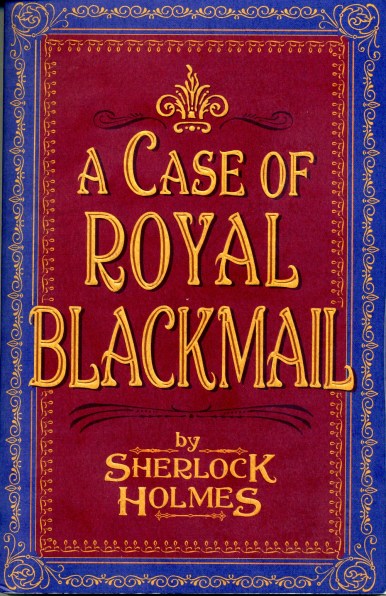
Sherlock Holmes pastiches, if not a growth industry, provide regular and steady employment for many writers. There is an erudite and entertaining feature on Holmes impersonations by Stuart Radmore here, but now we have a new entrant to the lists. It is written by none other than the great man himself (of which more later) and the 24 year-old sleuth has stolen some of his future companion’s thunder by recounting the case in his own words.

acorb cover039We are in London in the summer of 1879, and young Holmes has yet to meet the man who will write up his greatest cases. Holmes works for a guinea a day, and is striving to build his reputation. Within the first few pages, he has been hired to investigate two cases on behalf of a man who was already a celebrity, and another who would become infamous in his lifetime, but revered and admired after his death. The celebrity is Albert Edward, Prince of Wales, the future King Edward VII, a notorious Lothario whose battleground has been country houses and mansions the length and breadth of the country, the vanquished being a long list of cuckolded husbands. It seems that the heir to the throne has been in the habit of entering his sexual achievements in a diary – a kind of fornicator’s Bradshaw, if you will – but it has gone missing, and Holmes is charged with recovering it.

The second case is a strange request by a 25 year-old Irish aesthete and writer – one Oscar Fingal O’Flahertie Wills Wilde, who has lost – of all things – an amethyst tie-pin, a gift from his mother, the formidable Jane Francesca Agnes, Lady Wilde, and is desperate for Holmes to find it before an impending visit from Wilde mère.

Rosa_Corder,_by_James_McNeill_WhistlerOne hundred pages in, and it is clear that the author is enjoying a glorious exercise in name-dropping. James McNeill Whistler, Lillie Langtry, Francis Knollys, Patsy Cornwallis-West, Frank Miles, Sarah Bernhardt, John Everett Millais and Rosa Corder (right) are just a few of the  real life characters who make an appearance, and it is clear that ‘Sherlock Holmes’ moves in very elegant circles.
In the course of his investigations our man presages some of the talents for which he will later became famous when the as-yet-unmet Dr John Watson takes over the narrative. He disguises himself as a waiter at a royal banquet on one occasion, and manages to impress his clients with his uncanny observational skills. The case is complicated when Holmes becomes inadvertently involved with the attempt by scandal-sheets to sell papers off the back of the very public rift between Lillie Langtry and her husband Ned. The case of Oscar’s missing tie pin rather goes on the back-burner as the hunt for the royal blackmailer intensifies, but it is resolved at the very end of the book with a rather delicious twist.

So just who, exactly, is this particular Sherlock Holmes? The last five words of the book reveal the true identity of the author, but I won’t do all the work for you. A little clue that you can Google – this person is a peer of the realm, an old Etonian, and wrote the biography Never Fear: Reliving the Life of Sir Francis Chichester.

The worst that can be said of A Case of Royal Blackmail is that is a little over-egged with the cast of celebrity names, but once in a while we all need a few hours of enjoyable escapism, and this well-researched and cleverly plotted homage fits the bill perfectly. It is published by Affable Media, and is available now.

acorb footer040

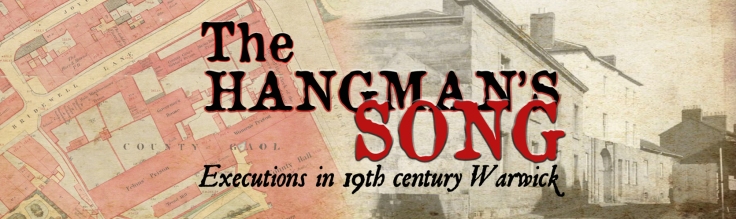
THE HANGMAN’S SONG . . . Executions in 19th century Warwick (2)

THS header

PART TWO

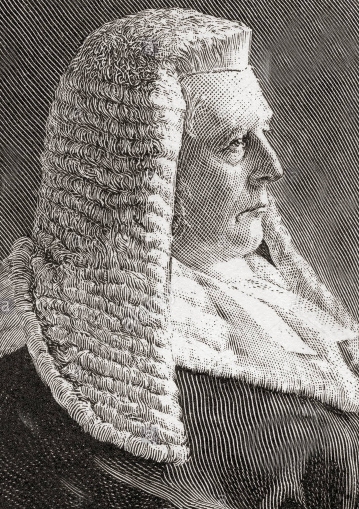
WillsOn 6th April 1863, Henry Carter, aged 20, was hanged for the murder of his sweetheart, 18 year-old Alice Hinkley, in December the previous year. The murder occurred in Bissell Street, Birmingham, and was relatively unusual for a ‘domestic’, as it involved a firearm, in this case a double-barrelled pistol. When the case came to Warwick Spring Assizes Carter’s defence was that the pistol had been discharged accidentally, but the jury was having none of it. They found him guilty, but with a recommendation to mercy. Mr Justice Willes (left) donned the black cap, and told Carter”

“I must implore you not to entertain any fond hope that the recommendation can save your life from the consequences of so awful and dreadful an act.”

He was right to be pessimistic. Home Secretary Sir George Grey was disinclined to be merciful, and Henry Carter was hanged. The newspaper reported thus:

“Yesterday morning Henry Carter was executed at the County Gaol, Warwick, in the presence of an immense assemblage of persons. It will be remembered that the culprit was tried at the recent assizes on the 28th ult. before Mr. Justice Willes, for the wilful murder of a young woman named Alice Hinkley, to whom he was paying his addresses, at Birmingham. He admitted when taken into custody that he had shot the unhappy girl. The execution took place at ten minutes after ten o’clock, and it is understood that the culprit confessed his crime ; but as Warwick is one of the gaols from which the press is rigorously excluded, any details are impossible to be given.”

Another account had more detail:

“Henry Carter, brass-founder, aged about twenty, was executed in front of the County Gaol at Warwick, on Thursday, for shooting with a pistol Birmingham, on the 4th of December last, his sweetheart. Alice Hinkley. The facts of the case have been recently reported. Carter had been Sunday-school teacher at Car’s Lane chapel, Birmingham, and spent the chief part of his time since his condemnation in religions devotions. On Thursday week a petition was forwarded the Secretary of State praying for commutation sentence, the grounds of Carter’s youth. An intimation that the the law must take its course was received on Saturday, and the warrant for execution once made out.

The services of Smith* of Dudley, Palmer’s executioner, were retained as hangman. The ceremony commenced shortly before ten o’clock on Thursday morning, when the prisoner attended prayers in the chapel of the gaol, then formed one of the procession of the prison officials to the pinioning room, and thence on to the scaffold. He was asked whether the pistol went off accidentally, and he said, “No. There was no quarrel between us while talking. I shook her hand, and kissed her before parting, and then shot her. It was through jealousy.” On reaching the scaffold in his prison dress he addressed the crowd below, warning them not to give way to similar feelings lest they should meet the fate which he was about to receive. and which, he well deserved. He then repeated a prayer from a book entitled “The Prisoner’s Memorial,” after which the bolt was removed and the drop fell. Death ensued almost instantly.”

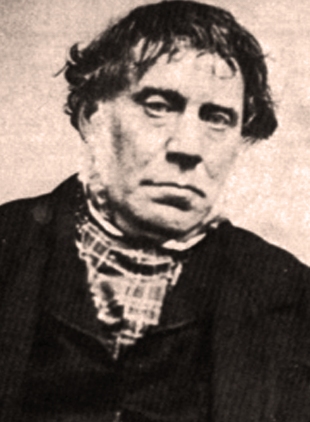
George-Smith*George Smith (1805–1874, pictured right), popularly known as The Dudley Throttler , was an English hangman from 1840 until 1872. He was born in Rowley Regis in the West Midlands where he performed the majority of his executions. Although from a good family he became involved with gangs and petty crime in his early life, and was imprisoned in Stafford Gaol on several occasions for theft.

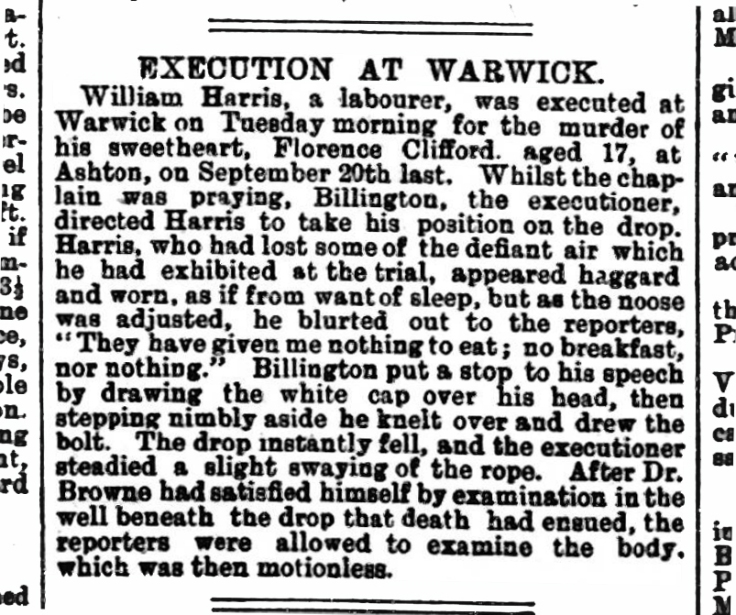
Carter was the last person to be publicly executed in Warwick, and the last to die in front of the old gaol. A new prison was built on Cape Road and the old gaol was converted into a militia barracks. There were to be seven more executions, the last being William Harris on 2nd January 1894. Harris, also known as Haynes, had murdered his girlfriend, Florence Clifford in Aston, Birmingham in September the previous year. The 17 year-old girl, tired of Harris’s brutal behaviour towards her, had decided to leave him, and went to her mother’s house to collect some clothes. Harris followed her there, and murdered her with an axe. He then went on the run, but gave himself up to Northamptonshire police. At his trial, he said:

“I wish I could have chopped the girl’s mother up, and then I should have been satisfied. I would have chopped her into mince-meat, and made sausages of her. I am ready for execution now.”

Defiant and unrepentant during his trial, Harris cut a sorrier figure when he went to the gallows.

Harris execution

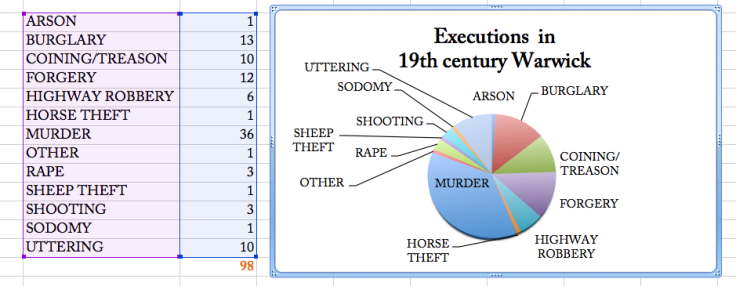
It is worth remembering that the death penalty was widely available for a large range of offences until penal reforms in 1835 saw the end of capital punishment for crimes other than murder or attempted murder. The chart below gives an analysis of executions in Warwick during the 19th century. “Uttering” was, basically what we would now call fraud, while “coining” was the crime of counterfeiting or otherwise interfering with currency. It was also considered to be high treason.

Screen Shot 2021-07-14 at 13.08.13

PEOPLE OF ABANDONED CHARACTER . . . Between the covers

There can be no historical event – save, perhaps, the assassination of John F Kennedy – which has attracted more theories, speculation and books, both fiction and non-fiction, as the killings attributed to Jack The Ripper in the autumn of 1888. My feature JACK THE RIPPER . . . In fiction, from the early days of this website, looks at just a few novels which have retold the tale.

People001

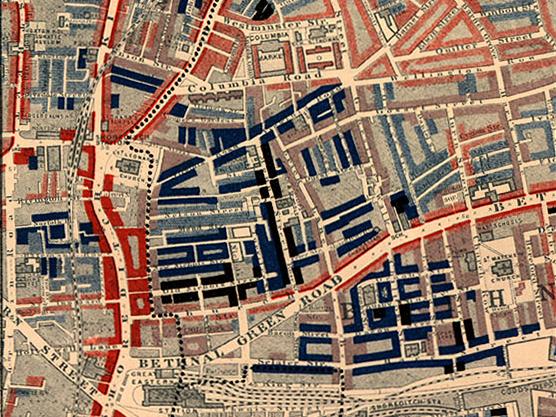
Now, debut novelist Clare Whitfield has her moment on the stage with People Of Abandoned Character. Susannah Chapman is a rather unusual woman, in her early thirties, who has known at first hand the dreadful deprivation of that part of the east End of London known as The Nichol. The contemporary map of the area (below) grades streets with colours according to the level of poverty, with red indicating relatively comfortable residents through blue to black – the depths of squalor.

Poverty_map_old_nichol_18891

Susannah has no recollection of her father, and a memory of her mother so horrifying that she only turns to it in her nightmares. She is eventually rescued by her grandparents who take her to live with them in Reading. She chooses to become a nurse, and is accepted as a trainee at The London Hospital on Whitechapel Road, seen below in a 19thC photograph.

london-hospital-exterior

When Susannah attracts the attention of a young doctor, Thomas Lancaster and, after a whirlwind romance, she leaves The London as Mrs Lancaster to become the mistress of a delightful riverside home in Chelsea. Mistress? Not quite. The first sign that all may not be well is that Thomas Lancaster has a housekeeper named Mrs Wiggs, and the lady is a graduate of the Mrs Danvers school of domestic management. Yes, I know that’s an anachronism, but fans of Judith Anderson and Rebecca will know what I mean.

The early passion and harmony of the marriage soon dissipates, and Susannah begins to be disturbed both by her husband’s violent sexual demands and his frequent nocturnal absences, from which he returns feverish and dishevelled. Soon, the narrative of the novel begins to synchronise with what we know about the actual Ripper murders. Ripperologists can take the roll call of well-known characters safe in the knowledge that The Gang’s All Here. We meet the victims themselves, of course, but also the walk-on parts such as the actor Richard Mansfield, John Pizer, the Police Surgeon Dr Phillips and dear old Fred Abberline put in an appearance.

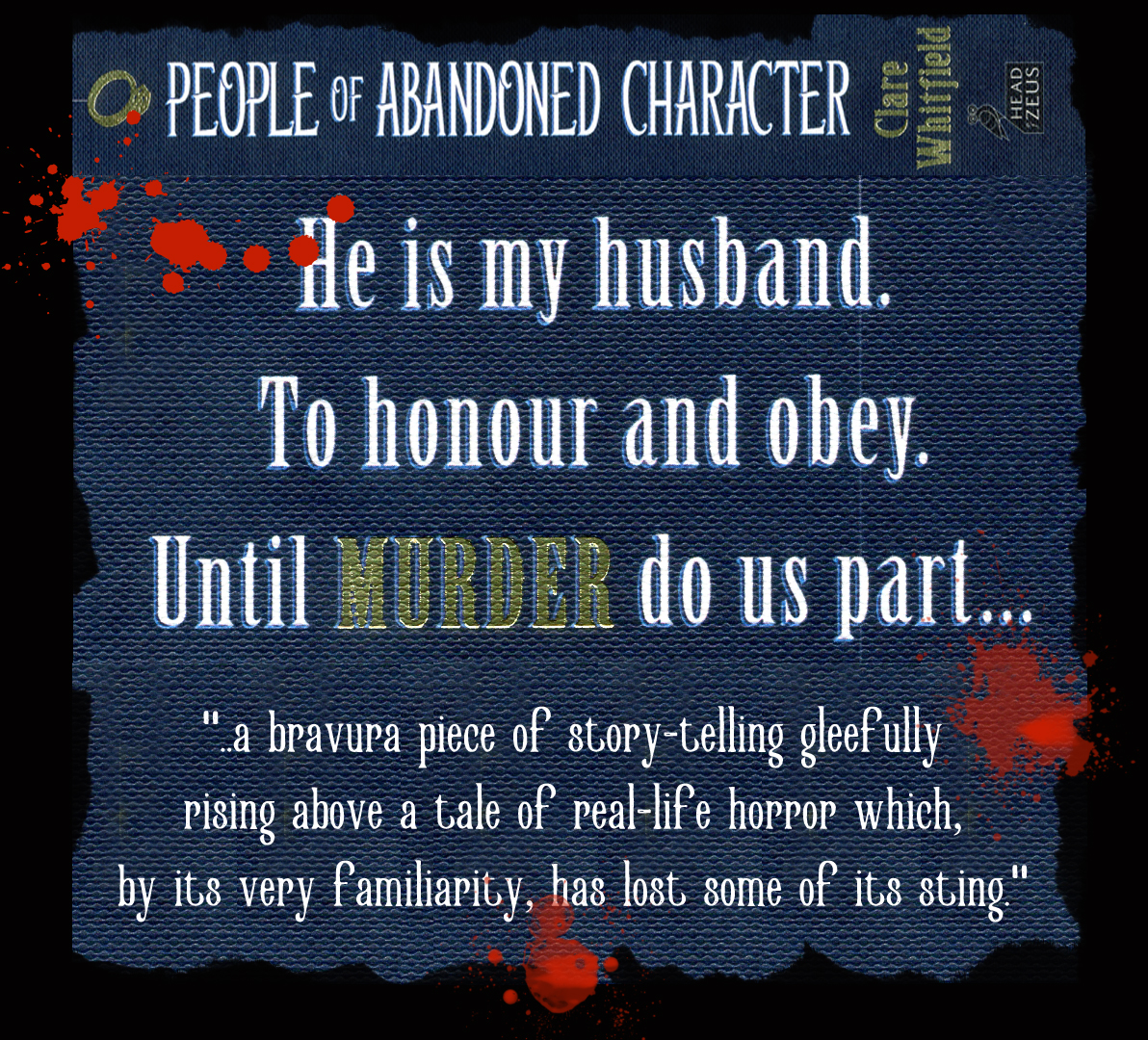
People Of Abandoned Character is a bravura piece of story-telling which gleefully rises above a tale of real-life horror which, by its very familiarity, has lost some of its sting. We eventually learn that Susannah is not quite the put-upon damsel in distress she might want us to believe in. The conclusion of the story is as astonishing and enterprising a solution to the eternal Ripper mystery as I have ever read, and fans of Gothick gore and melodrama will certainly not be disappointed. It is published by Head of Zeus and is out now.

THE UNFORGETTING . . . Between the covers

unforg spine022

As she gazes up at her bedroom ceiling, Lily Bell daydreams of becoming an actress. She is, to be sure, beautiful enough, with her long almost-white blond hair and her flawless complexion, but for the stepdaughter of a struggling artist in the London of 1851, her dreams of becoming Ophelia, Juliet or Desdemona are just foolish fantasies. Until the day her penniless stepfather receives a visit from one of his creditors, a mysterious self-styled Professor – Erasmus Salt. Salt is actually a theatrical showman, with a macabre interest in that overwhelming Victorian obsession, communicating with the dead. He offers Alfred Bell respite from the debt in return for Lily accompanying Salt and his spinster sister Faye to become the star of a new production, in which he will convince audiences that he has raised the dead.

Unforgetting coverDespite her misgivings, Lily is intrigued by what appears to be a chance to achieve her ambition. After all, Salt’s theatrical illusion may be faintly sinister, but who knows what career doors it might unlock? Bell, despite the tears and misgivings of his wife, cannot get Lily out of the door fast enough, and soon the girl is on her way south, to the seaside town of Ramsgate, where Salt’s production is due to be presented at The New Tivoli theatre.

Salt’s production is, literally, smoke and mirrors. Lily is not to appear on stage at all, but is confined to a cubicle, where her image is projected onto the stage via a huge mirror and the swirling aura produced by the burning of quicklime. On stage, an actor plays the role of a grieving husband trying to summon up the image of his dead wife. When she ‘appears’, he tries to clasp her to his arms but her wraith vanishes, and he ends it all, courtesy of a knife and a bladder of pig’s blood concealed under his shirt.

At first, Lily does not object to her new career, strange though it might be. Things take a turn for the worse, however, when Salt – in order to further foster the illusion of Lily’s miraculous reincarnation – publishes notices announcing her death, and has a headstone bearing her name erected over an (empty) grave in a nearby cemetery.

By now we, as readers, know much more about Salt than does the hapless Lily. Having experience a terrible trauma in his youth, the balance of his mind has been disturbed; he may also be a murderer, and his obsession with the dead could be leading further than simply the creation of a melodramatic theatrical illusion.
Lily is an admirable character and becomes more resilient as her fortunes take a downturn at the hands of Salt, but the most intriguing part of the story is the way that Rose Black brings Faye Salt more and more centre stage, from being a slightly forbidding Mrs Danvers-like character, to becoming a vivid and compassionate woman. In the end the book was, for me, more about Faye than it was about Lily.

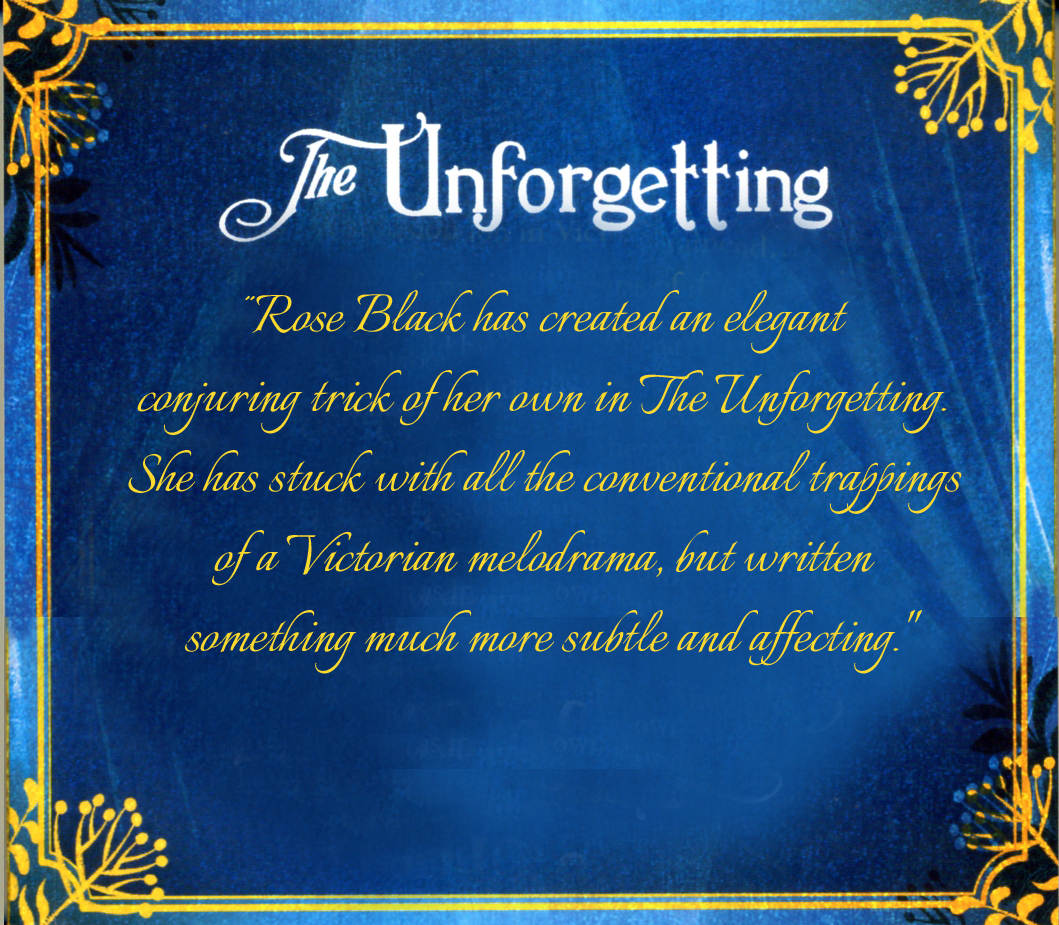
Rose Black has created an elegant conjuring trick of her own in The Unforgetting. She has stuck with all the conventional trappings of a Victorian melodrama, but written something much more subtle and affecting. Yes, we have a sneering villain, his grotesque henchman, a gothic mansion witness to a terrible tragedy, a wronged woman, a dying mother, exotic travelling gypsies, a noble young man who turns the tables on the degenerate despoiler – but there is more, so much more than that. The Unforgetting is published by Orion and is out now.

Ghost

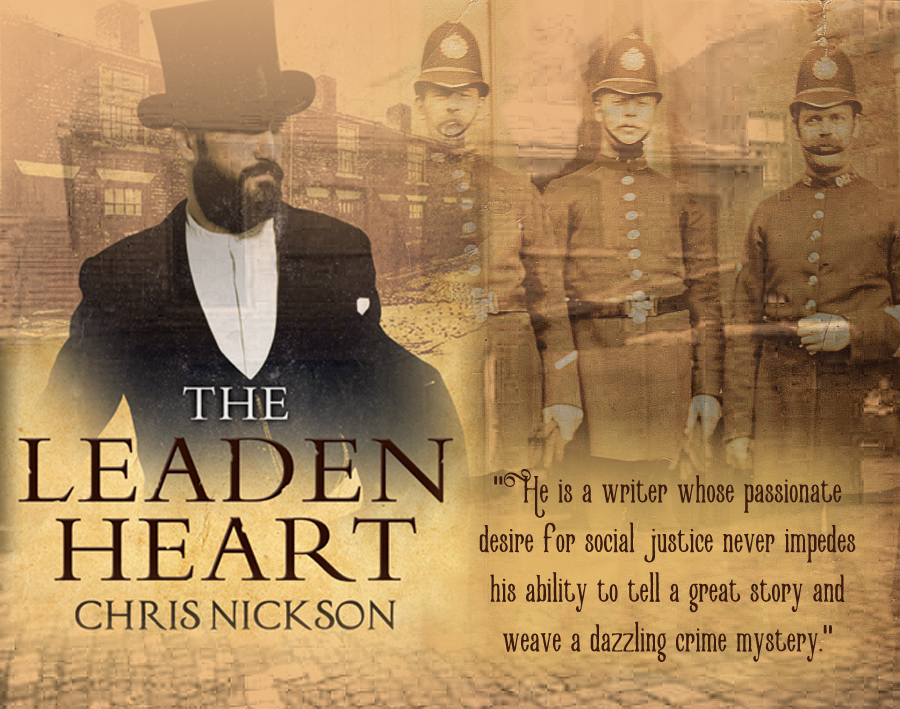
THE LEADEN HEART . . . Between the covers

TLF HEADER

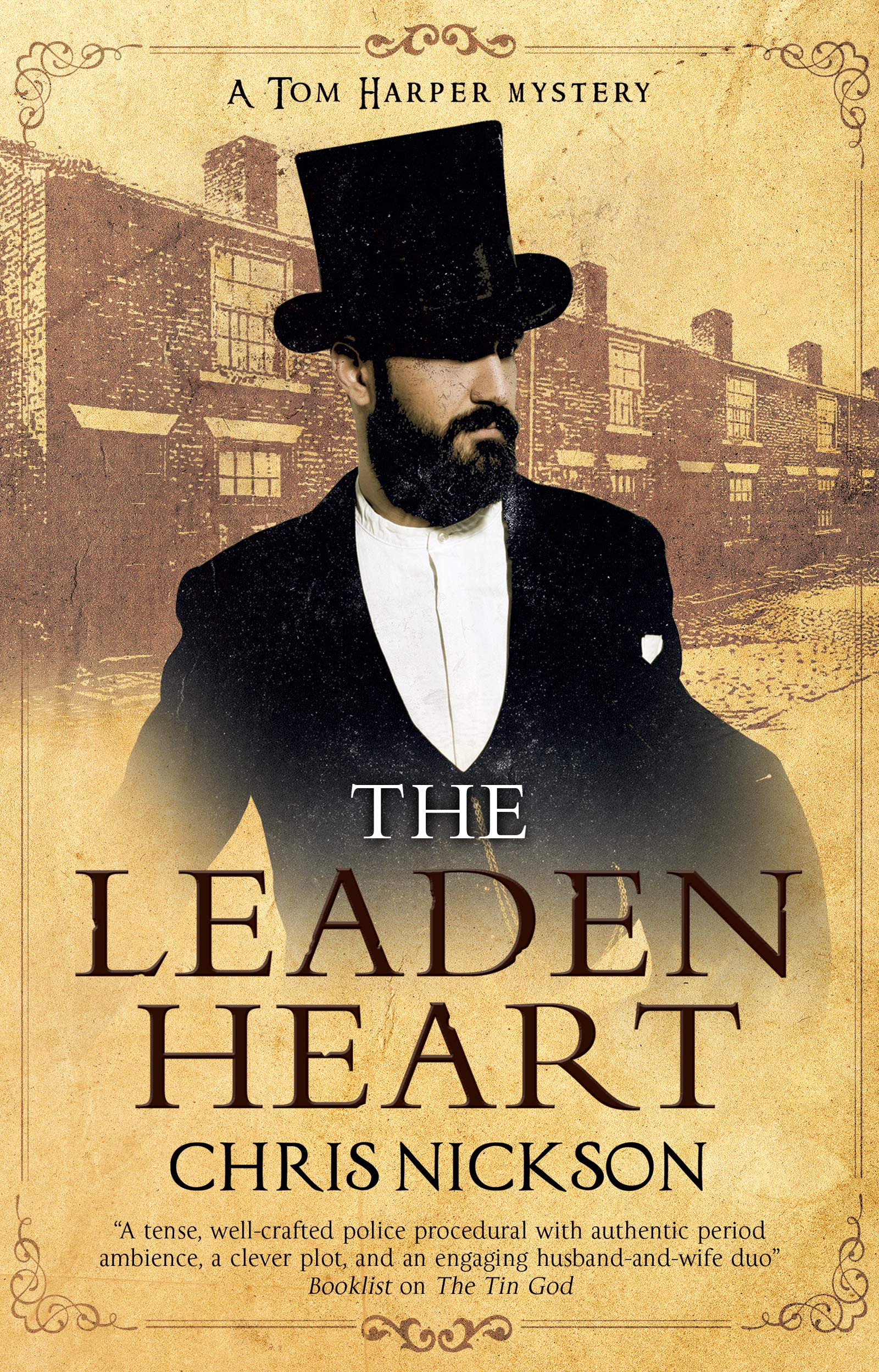
England, 1899. We are in the city of Leeds and the hottest summer in living memory is taxing the patience of even the most placid citizens. The heavy industry which has transformed the quietly prosperous Yorkshire town continues to clatter and roar, while the smoke from its thousand chimneys coats everything in grime, and the air is thick with soot. Superintendent Tom Harper of the city’s police force has mixed feelings about his recent promotion. The pile of paperwork on his desk adds to the tedium, and he wishes he could be out there on the busy streets doing what he believes to be a copper’s real job.

TLHHarper lives above a city pub, the Victoria. His wife, Annabelle, is the landlady, but she is also a fiercely determined advocate of women’s rights, and she has made waves by being elected to the local Board of Guardians, a largely male-dominated organisation which is tasked with administering what, in the dying years of Queen Victoria’s reign, passed for social care. When the brother of Harper’s one-time colleague, Billy Reed, commits suicide the death is dismissed, albeit sadly, as commonplace, but Reed believes that his brother’s death is due to something more sinister, and he asks Harper to investigate.

Charlie Reed was a small time shop-keeper, but his shop was in an area where large scale commercial developments are being planned, and his premises – along with many others – have been targeted by thugs who are possibly in the pay of two wealthy – but utterly corrupt and ruthless – city councillors. Like a dog with a bone, Harper chews and gnaws away at the shrouds of secrecy with which these men have surrounded themselves, but Charlie Reed’s tragic suicide is eclipsed by a string of savage killings committed by a deranged pair of brothers who are clearly acting at the behest of the two councillors and their lawyer.

Against a background of heartbreaking poverty, where needless deaths and bureaucracy trump common humanity at every turn, Harper eventually gets to come face to face with the killers and their suave masters, but not before his family is put in peril, and his own life comes to hang from a thread.

The most chilling aspect of The Leaden Heart is that it is brutally contemporary. Town and City councillors might, these days, be seen as bumbling and pompous local jobsworths, full of piss and wind, but relatively harmless. Nothing could be further from the truth. Now, as in 1899, such people have huge power over planning applications and budgets which are in the millions. Now, as then, the corrupt and venal live among us and will, no doubt, be putting themselves up for re-election in May 2019.

The author’s empathy with the downtrodden and exploited, and his disgust at crooked councillors and unfeeling public guardians burns like an angry flame. The most haunting image in the book is of two drowned children killed, yes, by their drunken father, but also failed by their helpless mother and the rigid workhouse system. Nickson is a writer, however, whose passionate desire for social justice never impedes his ability to tell a great story and weave a dazzling crime mystery. What is more, he does the job with minimal fuss; there’s never a wasted word, a redundant adjective or an overblown description. His prose is pared down to the bone, but always sharp and vivid. I often think Nickson would have found lasting kinship with the great campaigning journalist and author GR Simms, (incidentally an almost exact contemporary of Tom Harper) whose most celebrated work is echoed in some aspects of The Leaden Heart. The book is published by Severn House and will be out on 29th March.

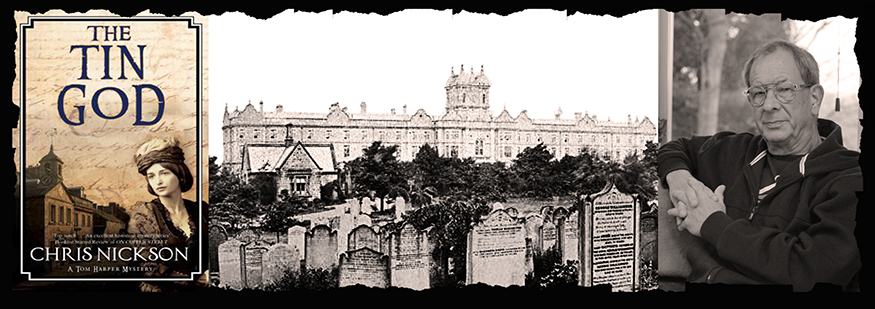
Regular visitors to Fully Booked will know that I am an unashamed fan of everything Chris Nickson writes. If you click on the image of the man himself, you can read other reviews and features on his work.

chris-nickson

THE TIN GOD . . . Between the covers

TTGheader

“And the guardians and their ladies,
Although the wind is east,
Have come in their furs and wrappers,
To watch their charges feast;
To smile and be condescending,
Put pudding on pauper plates.
To be hosts at the workhouse banquet
They’ve paid for — with the rates.”

Verse two of the celebrated – and often parodied – ballad poem by the Victorian campaigning journalist George R Sims, In The Workhouse, Christmas Day. Most of us older folk know the poem and its melancholy message. An old man is sitting down to his Christmas dinner in the workhouse, but one memory is too much for him, and he angrily relates the tale of his late wife, who was forced to die of hunger on the streets because of the harshness of the workhouse regulations. The relevance of this to Chris Nickson’s The Tin God lies in the first line of the verse above, because the heroine of the story is the wife of Leeds copper Tom Harper, and she is standing for election to the workhouse Board of Guardians.

So? This Leeds in October 1897, and women simply did not stand for office of any kind, and when Annabelle Harper, along with several colleagues from the fledgling Suffrage movement decide to enter the election, it is a controversial decision, because the concept of women migrating from their proper places, be they the bedroom, the withdrawing room or the kitchen, is anathema to most of the ‘gentlemen’ in Leeds society.

TTG coverOutraged leading articles appear in local newspapers, but someone believes that the sword – or something equally violent – is mightier than the pen, and a homemade bomb destroys a church hall just before Annabelle Harper is due to speak to her supporters. The caretaker is tragically killed by the explosion, and matters go from bad to worse when more bombs are found, and several of the women candidates are threatened.

Superintendent Tom Harper is already involved in investigating the criminal aspects of the case, but when the husband of one of the women is murdered while sitting at his own kitchen table, the affair becomes a hunt for a murderer. The killer leaves a few tantalising clues, and Harper becomes conflicted between devoting every hour that God sends to tracking down the killer – and keeping his wife from becoming the next victim.

Nickson drops us straight onto the streets of his beloved Leeds. We smell the stench of the factories, hear the clatter of iron-shod hooves on the cobbles, curse when the soot from the chimneys blackens the garments on our washing lines and – most tellingly – we feel the pangs of hunger gnawing at the bellies of the impoverished. We have an intriguing sub-plot involving a smuggling gang importing illegal spirits into Leeds, authentic dialogue, matchless historical background and, best of all, a few hours under the spell of one of the best story tellers in modern fiction.

Kidson

You want more? Well, it’s there. Nickson is a fine musician and a distinguished music journalist, and he cunningly works into the plot one of the more notable musical names associated with Leeds and West Yorkshire, the folksong collector Frank Kidson (above). The killer shares Kidson’s passion for the old songs – if not his humanity and feelings for his fellow human beings – and he leaves handwritten fragments of English songs at the scenes of his attacks.

annabellebig

The Tin God is published by Severn House and is available now. It will be obvious that I am a great admirer of Chris Nickson’s writing, and if you click the images below, you can read the reviews for some of his other excellent novels.

TYOTG

CS

TIW


FFAD

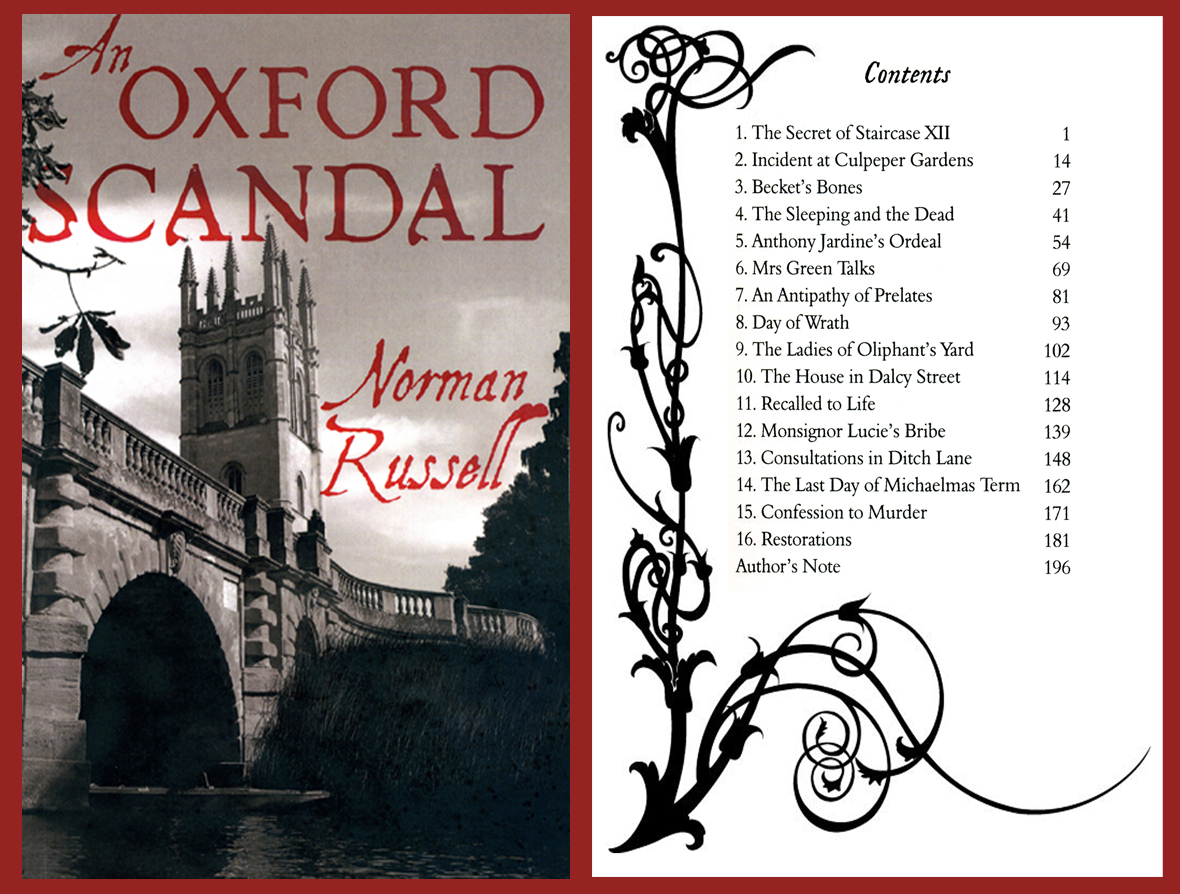
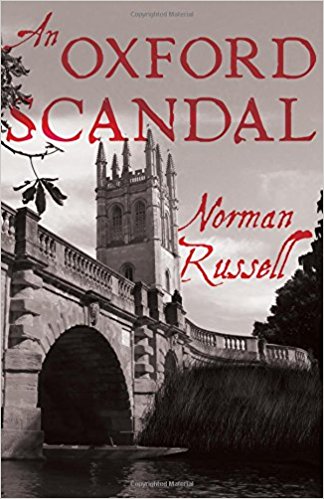
AN OXFORD SCANDAL … Between the covers

AOS header

AOSOxford, 1895. The spires may well be dreaming, but for Anthony Jardine, Fellow of St Gabriel’s College, the nightmare is just beginning. His drug addicted wife is found stabbed to death, slumped in the corner of a horse tram carriage. His mourning is shattered when his mistress is also found dead – murdered in the house she shares with her elderly eccentric husband. With a background story of an archaeological discovery threatening to shake the English religious establishment to its very roots, Inspector James Antrobus must avoid the temptation to make Jardine a swift and easy culprit. Helped by the uncanny perception of Sophia Jex-Blake, a pioneering woman doctor, Antrobus finds the answer to the killings lies in London, just forty miles away on the railway.

norman-russellNorman Russell (right) is a writer and academic, who has had fifteen novels published. He is an acknowledged authority on Victorian finance and its reflections in the literature of the period, and his book on the subject, The Novelist and Mammon, was published by Oxford University Press in 1986. He is a graduate of Oxford and London Universities. After military service in the West Indies, he became a teacher of English in a large Liverpool comprehensive school, where he stayed for twenty-six years, retiring early to take up writing as a second career.

Russell skilfully avoids the trap into which some well-intentioned historical fiction writers fall – that comprising copious and elaborate period detail which chokes the plot itself. Yes, all the Victoriana boxes are ticked; we have horse-drawn trams, the ‘upstairs-downstairs’ ambience of prosperous homes, extravagant dinner menus – and even the doomed but heroic consumptive so beloved of period painters and dramatists. Despite all these familiar tropes, the search for the killer is a genuine whodunnit, and the narrative rattles along nicely.

Not the least of the pleasures of An Oxford Scandal for me was to be reminded of the prickly – not to say downright malevolent – relationships between various versions of the Christian church. Russell enjoys a joke at the expense of the Roman Catholics, the ‘High’ Anglicans, and their humourless cousins in the ‘Low’ Church of England. The joke will probably be shared by just the few of us but I do remember, back in the day when I thought such things were important, that St Ebbe’s church in Oxford was a place to be studiously avoided by those of us who liked a whiff of incense with our worship.

Although Inspector Antrobus ends the novel frail, housebound, and trying to avoid the sight of his bloodstained handkerchief, it looks as though he may survive to undertake another adventure as a consultant detective. I do hope so. The earlier books in the series were An Oxford Anomaly and An Oxford Tragedy. An Oxford Scandal is published by Matador, and is available here.

AOS footer

Blog at WordPress.com.

Up ↑