Search

fullybooked2017

Tag

True Crime

TWO FAMILIES, TWO TRAGEDIES. . . The murder of Florence Jackson (part two)

GRR header

SO FAR: Grantham man Dick Rowland had seen action in the trenches from 1915 until 1918. Unlike his two brothers, he survived, but was wounded and gassed. Spring 1919 found him back in Grantham, aged 29, just another ex-soldier. He had, however, met and fallen for a Fulbeck girl, Florence Jackson. She was ten years his junior and there, I think, lay the problem. She was pretty, fun-loving and with no shortage of local suitors, not to mention dashing officer types from what was to become Royal Air Force College Cranwell. Florence’s mother thought Dick Rowland too old for her daughter, but she could never have envisaged the events of 31st May 1919. It was the day of Caythorpe Feast, an annual event always held on the last Sunday in May. Dick and Florence were there, with hundreds of other local people both young and old. Dick Rowland had become insanely jealous, and every smile or wave Florence gave to some other young man cut him to the quick. He was particularly vexed when Florence decided to share a fairground ride – the wooden swing-boats with some other chaps.

On the swing-boats

Sometime around 10.00pm, Dick and Florence decided to walk home to Fulbeck. That road, now the A607, was known as the Lincoln Road. Many other people were on that road, but they would have been spread out and it was very dark. I have no idea if there was a moon that night, but one man heard something in the darkness as he rode his bicycle up to Fulbeck. He was later to give evidence at a Coroner’s inquest. This a verbatim report from a local newspaper:

Richard James Nelson, dairyman, Welbourn, spoke of visiting Caythorpe feast on Saturday night last. He saw the deceased girl in the swing boats with a man called Edward Knights. He left the feast about 1045. When he had reached Gascoigne’s gate in the parish of Fulbeck a man called out to him:
“Chummy, stop!”
He stopped, and man who was a stranger asked him to fetch a motorcar from the top as there had been a nasty accident. Witness asked him what it was, and he said:
“A girl has tried to cut my throat and now she has cut her own.”
He noticed the man’s throat was cut and bleeding and he also saw the body of the girl lying on the ground just inside the gateway. Witness attempted to go through the gateway towards the girl. but the man pushed him away and told him to get on his bicycle and fetch a motor car. He then rode off for the police.

There is a horrible irony in that the next people to arrive at the scene were none other than Florence’s older sister and her young man.

Laura Emma Jackson, the deceased’s sister, a land worker employed at Fulbeck Heath, said on Saturday night she was at Caythorpe feast where she saw deceased with Dick Rowland who was courting her. They seemed alright together. Witness left the feast at 10:15 and walked towards home with Percy Graves, a friend. When they got to Gascoigne’s gate she saw a man standing there. He said,
“Mr, Mr, come and look what I have done.”
She told Graves not to go as the man was drunk, but the man came towards them holding out his hands and said,
“Is that Laura?”
Witness replied,
“Yes.”
And he then said,
“I am Dick – I have killed your Flo. Another man wanted her. I have tried to kill myself but could not. Go and tell them at home.”
Witness noticed that Roland had blood down the front of his clothing and was bleeding from the throat. She did not notice her sister. She went home and reported the matter to Mr Palethorpe. Rowland was not drunk but seemed to be rather excited. Witness was at the Grantham statute fair on 17th May  with her sister and Rowland. Flo went to speak to some soldiers and Roland asked her to keep an eye on her and watch that she did not go with the soldiers. She told him not to be so silly and that she would not go. Rowland shook his head and remarked,
“Flo’s alright. If I don’t have her I will see no one else does.”
Flo was with the soldiers three or four minutes and then she rejoined Rowland and witness.

The Fulbeck Doctor also gave evidence at the inquest:

Doctors Evidence
Mr Justice Greer

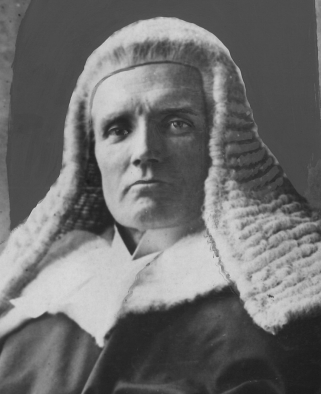
Dick Rowland was arrested for the murder of Florence Ann Jackson. The Coroner recommended that he be charged with murder and the case was sent to the Sleaford Magistrates who agreed, and arranged for Rowland to appear at the Summer Assizes in Lincoln. Rowland’s bizarre defence that somehow Florence had received her fatal wounds in some kind of struggle for the razor was abandoned, and his legal team asked for a postponement of the trial so that further investigations could be carried out into the man’s mental health. This delay was granted, and so it was that Dick Rowland appeared before the Lincoln jurors and judge Mr Justice Greer (left) in November 1919. He was found guilty and sentenced to death despite the jury recommending a merciful punishment. There was an immediate appeal against the death penalty, but that was thrown out, with the appeal judge famously opining that Rowland was no more mad than Othello,(the newspaper managing to mis-spell the village name, and relocate it to Essex}
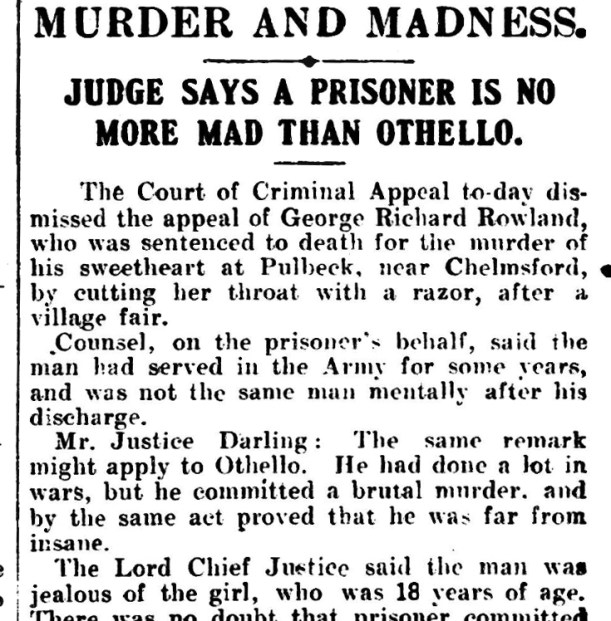
Othello

So, Dick Rowland sat in his condemned cell awaiting his fate, probably unaware that he had been compared to one of Shakespeare’s greatest tragic characters. Othello, of course, racked with guilt, stabs himself, which is precisely what Rowland claimed he had tried to do on that fateful evening back in May, but he was to have better luck than the Moor.

Reprieve

In the event, it appears that Dick Rowland was released in April 1935. He married, and the records tell us that he died in Cleethorpes in 1954. Had he become unhinged by his wartime service, a victim of what we now call PTSD? Or had his own chilling words – ” If I don’t have her I will see no one else does.” become a dreadful deed? You must make up your own minds. Incidentally, the fatal spot where Florence died is still there for anyone wishing to stand and contemplate.

GG watercolour

Incidentally, a local man, Jonathan Wilkinson has written a novel based on the events I have described. It is very well written, and focuses on what the author believes happened in the months and weeks leading up to Florence’s death. It is available from the Fulbeck Craft Centre (07410 968333)

Jealous

I have been researching and writing about historic Lincolnshire murders for some years,and those wishing to find out more about our county’s macabre past should click this link
TWO FAMILIES, TWO TRAGEDIES . . . The murder of Florence Jackson (part one)

GRR header

Fulbeck sits amid the hills and hollows of what is known as The Southern Lincolnshire Edge whose most obvious geological feature is the cliff-like ridge which is easy to see when driving along the A17 from Newark. Nearby Leadenham seems to perch on the very edge of this cliff. Fulbeck could almost be mistaken for a Cotswold village, with its abundance of limestone buildings, but most of that stone came from the quarries around Ancaster, just a few miles away. In 1919 the railway ran nearby and there was a station at Caythorpe. These days, the village is bisected by a very busy main road, the A607, which links Leicester and Lincoln. It was just beside this road that the tragedy of the title took place, but our story starts a few years earlier in Grantham, just over ten miles to the south.

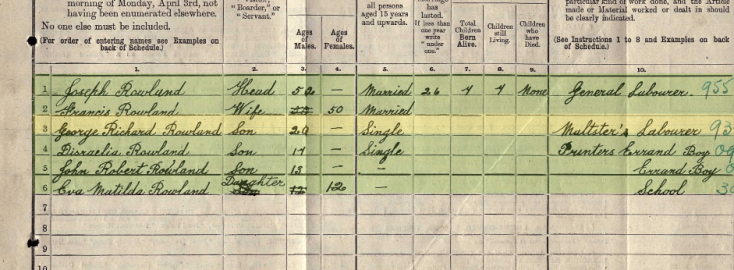
The 1911 census shows that at 50 New Street, a tiny terraced house which still stands, lived the Rowland family.

1911 census

There was another brother, Joseph William Rowland, but he had left to join the army, and in 1911 was overseas with 1st Battalion Lincolnshire Regiment. By the time war broke out, he had married and was living in Portsmouth. The Rowland family was to pay a heavy price during that war. Both George Richard – known always as Dick – and brother John answered the call of King and Country. Dick joined the Lincolnshire Regiment but John, although he enlisted in Grantham, would go on to serve with The Seaforth Highlanders.

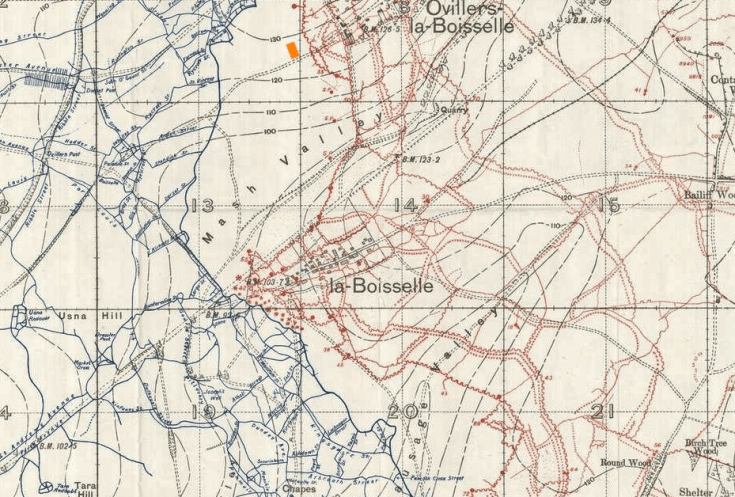
On 1st July 1916, Joseph Rowland was with the 2nd Battalion Lincolnshire Regiment facing the German front lines at Ovillers.

Screen Shot 2023-08-31 at 18.43.38

The story of that dreadful day is well known, and not strictly relevant to this story, but suffice it say that Joseph Rowland was one of the 20000 British men killed on that day. A letter would have been delivered to 50 New Street, Grantham, initially saying that Joseph was ‘missing’. Another letter would have followed saying that he was ‘missing, presumed dead’. His body was never found, and his name is one of the 72000 engraved on the Thiepval Memorial to the Missing.

Joseph William CWGC

Worse was to follow. Ever anxious to deliver the final crushing blow to the enemy, the British High Command devised yet another huge offensive to punch a hole in German lines. This was to be east of the city of Arras, 20 miles or so north of the Somme killing grounds. The offensive, more properly known as The First Battle of The Scarpe,  began at Easter 1917, in a snow storm. Once again, a death notice would find its way to Grantham. This time, although it would have been of little consolation, a body was found and given a decent burial.

JR Rowland

Dick returned to Grantham in late 1918, apparently unscathed, at least physically, but we know he had been in action since 1915, and had been both gassed and wounded. Once the euphoria at ‘beating the Hun’ had died away, there was little awaiting men like Dick Rowland in a country that should have been – but wasn’t – grateful. He managed to get work at Rustons in Grantham. On a side note, it is worth remembering that it was at the Ruston works in Lincoln that the first tanks were developed, as well as the iconic aircraft known as the Sopworth Camel.

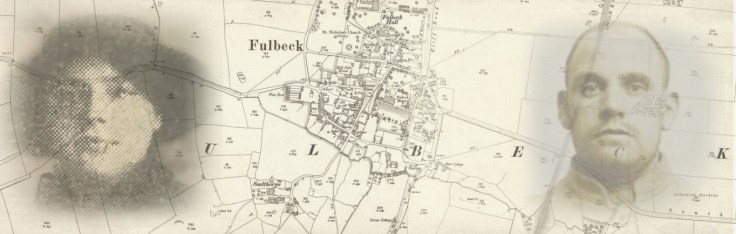
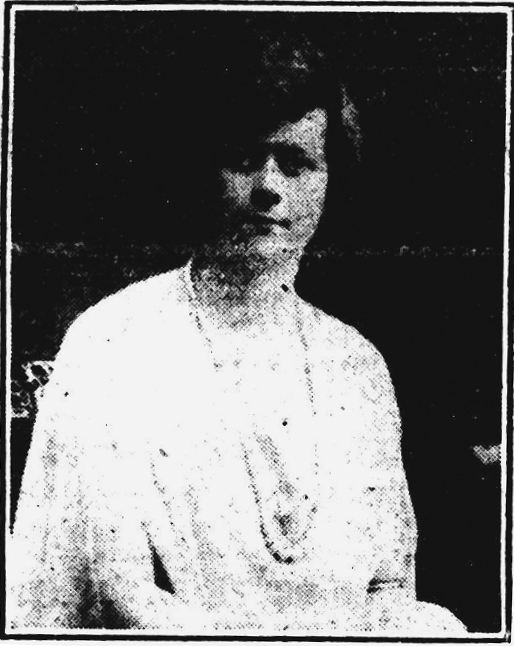
FlorenceNow, though, we must return to Fulbeck. Only a grainy newspaper image of Florence Jackson remains, but it doesn’t take a great leap of imagination to picture a pretty, round-faced girl with a confident gaze for the camera. Once again, the 1911 census is of service. She lived in Fulbeck with her family. Florence would not live to be noted in the 1921 survey. Opportunities for young women of humble birth  in rural communities in those days were limited to farm work, or domestic service. There are suggestions that Florence has been in service at Barkston, or had returned to Fulstow in anticipation of a similar post. At some point she met Dick Rowland, and he was smitten, considering himself deeply in love. He was now 29, with a lifetime of horrors condensed into four years of hell on the Western Front, Florence was just 19, pretty, vibrant and untouched by the death and misery of The Great War.
Florence 1911


IN PART TWO
A courtship
A fatal ride on the swing-boats
Gascoigne’s Gate
The Lincoln Assizes

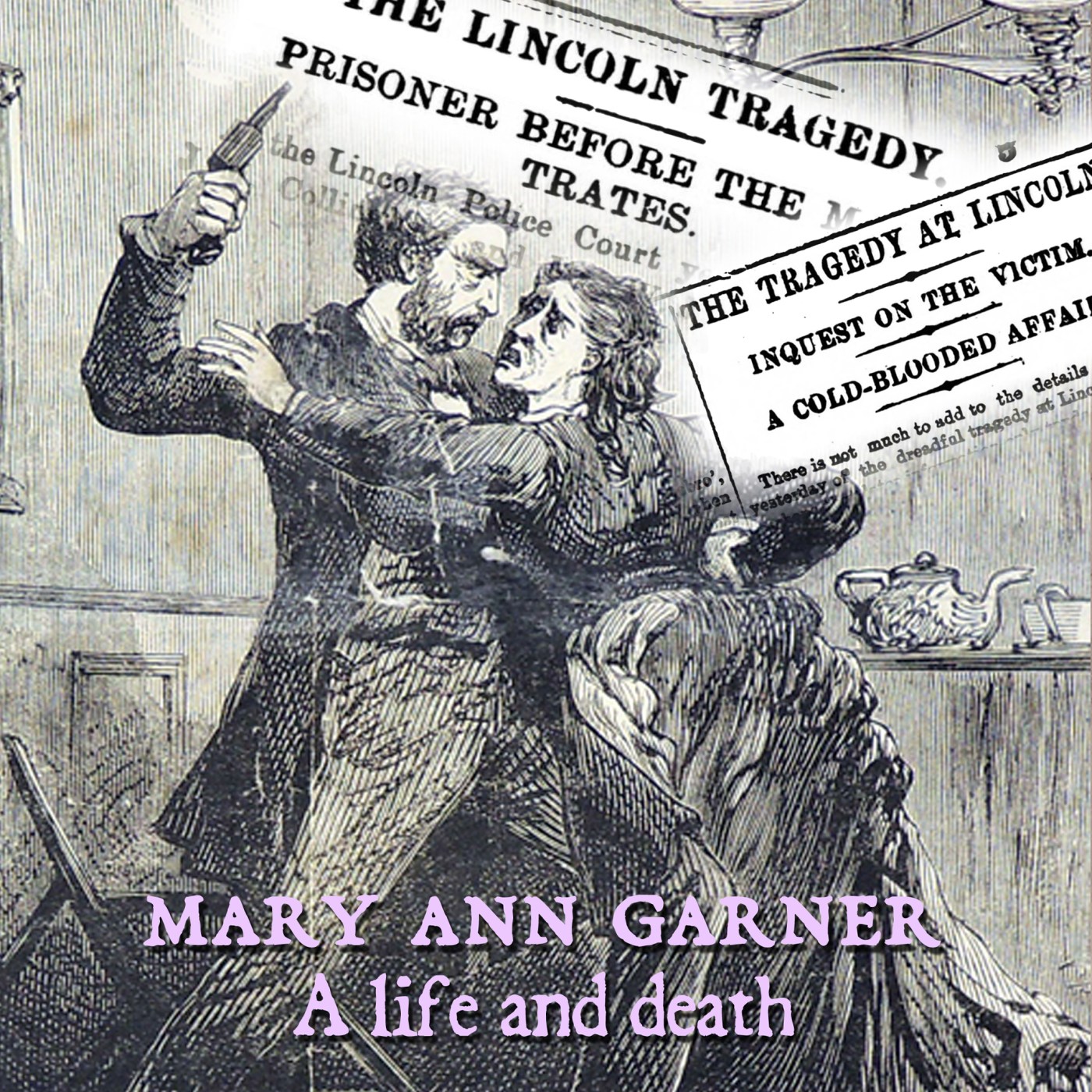
MARY ANN GARNER . . . A life and death (1)

Mary Ann header

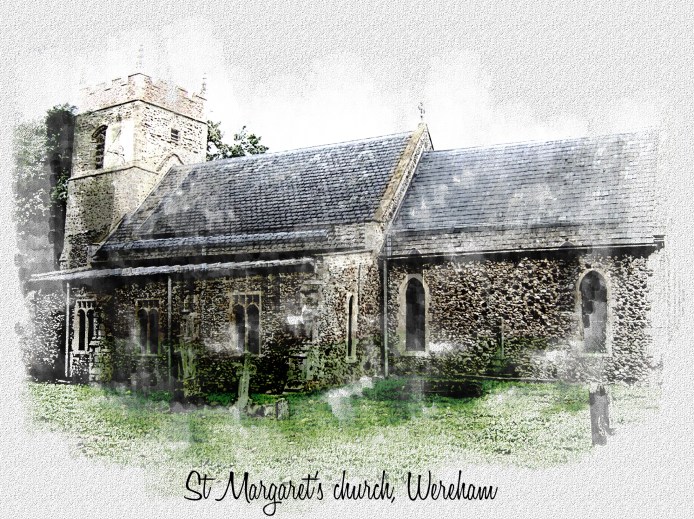
Mary Ann Elizabeth Witrick (or Witterick) was born in Wereham, Norfolk in 1857. Her baptism (above) is recorded in the village church (below) as taking place in 1859. Her parents, John and Ann (née Rust) were poor, hard-working and, like so many other families across the land, produced children on a regular basis. There was no contraception other than abstinence, and child mortality tended to keep a lid on the birth-rate.

St Margarets Wereham

Her life was to end, violently, in a Lincoln terraced house on the evening of 31st March 1891. We know that the family were still in Wereham in 1861, but the remainder of her youth  – and where she spent it – remains something of a mystery. We do know that in 1880, she married a Lincoln widower, Henry Garner. Garner’s wife Charlotte (née Foster) had died in 1879. They had one son, John Henry, who had been born on 23rd April 1875. Mary Ann and Henry went on to have three children, Arthur Garner (b1882) Ernest Witterick Garner (b1883) and Ada Florence Garner (b1886).

Bracebridge

What was to be a run of misfortune for Mary Ann Garner began in 1889, with the death of her husband. He died on 19th August 1889, in Lincoln Lunatic Asylum, Bracebridge (above). ‘Bracebridge’ was a potent word in Lincolnshire, certainly when I was growing up. I spent many hours being looked after by my grandmother in Louth, and when I played her up (which was frequently) she didn’t mince her words. “You’ll have me in Bracebridge, you little bugger!”

Henry Garner had just turned 40.  I can only speculate on his cause of death. One possibility might be, given his age, was what was euphemised as GPI (General Paralysis of the Insane) or Paresis. When researching family history one has to be prepared for unpleasant surprises, as was the case with my great grandfather. He died in an asylum, of Paresis. It is actually the final and fatal stages of syphilis. The disease could be contracted when young, but then the visible symptoms would disappear, only for the disease to return later in life, manifesting itself as delusions of grandeur, erratic behaviour, brain inflammation and, finally, death.

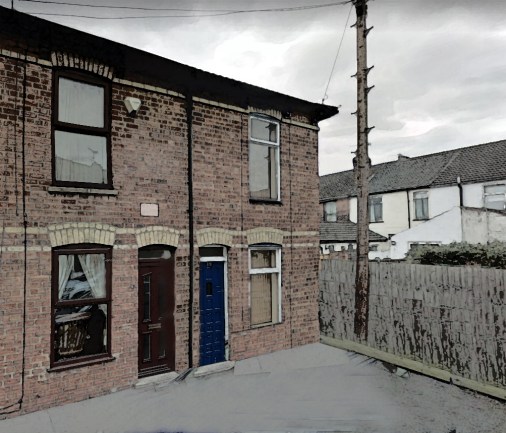
It is unlikely that Henry Garner left his widow very much by way of an inheritance. The early spring of 1891 found her in a tiny end-of-terrace, 19 Stanley Place, pictured below as it is now. To make ends meet, she was taking in washing and, according to a newspaper report, was also taking in lodgers. This is scarcely credible from a modern viewpoint, looking at the size of the house, but that was a very different time in terms of privacy and living space.

Stanley Place

At some point after the death of her husband, Mary Ann met a young man called Arthur Spencer. He was ten years her junior and came originally from Blyth in Nottinghamshire. His trade was pork butcher. For a time, he lodged at 19 Stanley Place, and one must assume that he shared Mary Ann’s bed. He asked her to marry him, but she refused, saying they were better off apart. After this, he left the house, and went back to live over the shop where he worked. Spencer was clearly besotted with Mary Ann, and on the evening of Sunday 29th March, he returned to Stanley Place and told her that if she wouldn’t marry him, he would shoot her and then turn the gun on himself. Mary Ann did not take him seriously, and sent him packing. The following evening, 30th March, Spencer came again to see Mary Ann. A newspaper reported, rather cryptically:

“They appear to have gone upstairs together, leaving the eldest child, a boy of 14, in the kitchen, the other children being in bed.”

What happened next was to send a shudder or revulsion through both the citizens of Lincoln, and cities, towns and villages across the land.

IN PART TWO
Gunshots
Trial and retribution

THE MURDER OF LUCY LINGARD . . . A Grimsby tragedy (part one)

LL header

Lucy Margaret Mullins was born in the village of Worlaby in 1869. Her father James was Irish, and worked as a groom. Her mother Jane was from the Lincolnshire village of Great Limber. In the 1881 census the family had moved to Little Limber Grange, near Brocklesby. In April 1889, Lucy married John Lingard in St James Church, Grimsby, and the census two years later shows that they were living at 6 Vesey’s Buildings in Grimsby, and they already had two children, Rose (2) and William (10 months). By 1901 they had moved to Sixth Terrace, Hope Street, and had two more children, Nellie (8) and Arthur (4). Also living in the house were two of Lucy’s adult relatives.

The 1901 census was taken on 1st April, and by the autumn of the next year John and Lucy Lingard had separated, Lucy remaining in Hope Street with the children. By the autumn of 1902 she had given birth to another child, born earlier in the year. The census also tells us that a fisherman named Samuel Henry Smith was also living in Hope Street, apparently on his own. His background has been difficult to track. The census records that he was born in Norfolk, but later newspaper reports suggest that his home town was Brixham in Devon.

It is not clear if Harry Smith was in any way responsible for the break up of the Lingards’ marriage, but by November 1902 it was clear that Lucy Lingard and Harry Smith (also separated from his spouse) were in a relationship, when he was not out on the North Sea on a trawler.

At this point, it is worth pausing the story to compare how people lived – in terms of house occupancy – back in the day. It was very common for ordinary working people to share houses with others. I was born in 1947, and my parents rented a room in a Victorian terraced house, which was shared with another couple and the owner, a single man. Each had a bedroom to themselves, and the kitchen and scullery were shared. There was no bathroom. There was running water, but also a pump in the scullery which drew water from a well. There was no electricity until, I think, 1951 and lighting was from gas lamps which were lit by pulling a little chain, which struck a flint, rather like the mechanics of a cigarette lighter.

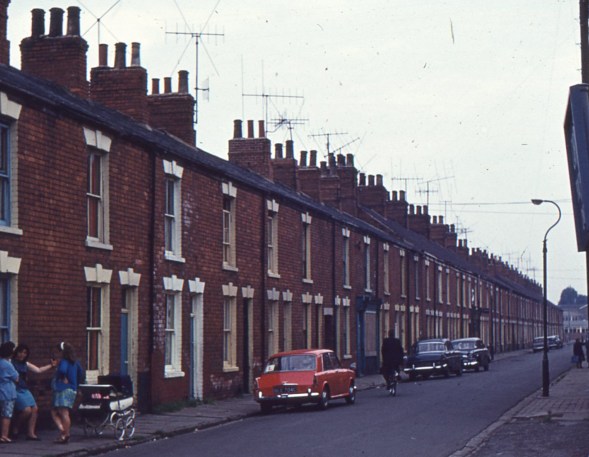
Before demolition

Screen Shot 2022-09-10 at 18.37.47Hope Street in Grimsby was cleared of its terraces in the late 1960s (pictured above, thanks to Hope Street History), but a late 19th century map shows back-to-back houses opening directly onto the street, and every so often there would courtyards, each open area being surrounded on three sides by further dwellings. For those interested in the history of Hope Street, there is a Facebook page that gives access to an excellent pdf document describing the history of the street. That link is here. It is also worth pointing out that house ownership, certainly in 1902, would have been in the hands of landlords. The great majority of people in streets like Hope Street would be tenants.

We must now move on to the events of 18th November 1902. Harry Smith’s trawler docked that morning, and he had spent the best part of the afternoon and early evening in the company of Lucy Lingard. Smith at one point went down to the docks to collect his wages from his latest voyage. He and Lucy Lingard were at each other’s throats, perhaps because she had refused him ‘conjugal rights’, and he had struck her several times, giving her two black eyes. In spite of this, they went out drinking again, but what happened when they returned to Hope Street later that evening was to send a shiver of revulsion through the whole area.

IN PART TWO
A daughter’s testimony
Denial, trial – and the black cap

THE OXFORD STREET ATROCITY . . . Murder most foul in Leamington, 1907 (part one)

HEADER

13 Oxford StreetNumber 13 Oxford Street is a narrow three-story terraced house used these days, I believe, for student accommodation. It was advertised recently as a six bedroom let, a snip (!) at £3,360 pcm. The Bank of England inflation calculator tells me that in 1891, Edward Moore and his family would have been paying just under £26 a month. He had a large family comprising his wife Fanny Adelaide (36) and children Edwin James Moore (16), Fanny A Moore (14), William A Moore (13), Joseph C Moore (11), Rose Hannah Moore (10), Percy E Moore (8), Leonard J Moore (7) and Ernest F Moore (4).

Edward Moore was a cab-driver – horse drawn in those days, of course – and what became of seven of his eight children is a fascinating investigation for another day, but our story focuses on Edwin James Moore and, to a lesser extent, his youngest brother Ernest Moore, known as Bertie. Born in 1875, Edwin Moore appears to have become the black sheep of the family. Court records tell us that he had served time in prison for stealing potatoes, and between 1903 and 1906 had been convicted of minor offences such as drunkenness, using foul language and assault.

Record

It also seems he had found time to join the army, and had served in India, but in the spring of 1907, this prodigal son was back in Leamington. On the evening of Saturday 3nd March, at about 8.00p, Moore returned to the family home, the worse for drink. The only people in the house were his mother and brother Bertie, by then aged eleven. Mrs Moore has been cooking Edwin’s supper – herrings – in the oven, and she put the plate in front of him on the table. He was far from impressed. Complaining that the fish was “stinking the place out”, he first pushed the plate aside and then flung it to the floor, where it shattered. He kicked the broken pieces of pottery and the remains of his dinner across the kitchen, and in his rage, picked up a nearby oil lamp and hurled it at his mother. She fended off the lamp, and it broke against the wall, bursting into flames. Mrs Moore made to escape, but her son snatched a piece of newspaper from the table, twisted it into a spill, lit it from the burning oil lamp and having seized his mother by the arm thrust it like a sword at her body. Her flanelette blouse immediately caught fire, and she rushed into the scullery to try to put out the flames with tap water.

Young Bertie, understandably terrified by what he had seen, ran to the door and screamed “Help! Murder! He’s setting my mother on fire!” Neighbours Henry Beeby and a Mr Phillips rushed into the house, and saw Edwin Moore flapping at the flames that were devouring his mother’s upper body with his bare hands. Beeby managed to put out the flames and, having been cursed at and struck by Edwin Moore, later testified that the younger man ran from the house. Fanny Adelaide Moore was beyond help, however, and was pronounced dead when medical help arrived in the person of Dr Bernard Rice, who later carried out a post-mortem on the poor woman. His findings were reported in The Leamington Spa Courier.

Medical

IN PART TWO – ARREST, TRIAL AND SWIFT RETRIBUTION

MURDER COMES TO LADBROKE (1) . . . true crime from 1926

Ladbroke header

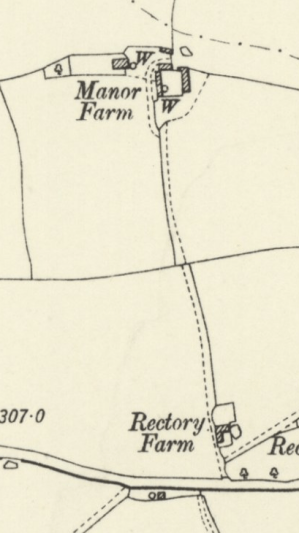
Screen Shot 2021-12-12 at 18.11.45Manor Farm in Ladbroke dates back, according to the data on British Listed Buildings, to the mid 18th century. For architectural historians, it adds:
Squared coursed lias with quoins and coped gables. Slate roof with brick end stacks. L-shaped plan. 2 storeys plus attic; 3-window range of C20 three-light casements in original openings with stone flat arches to ground floor. C20 door with stone flat arch. 2 gabled dormers. C20 one-storey lean-to to left. Interior: noted as having stop-chamfered spine beams and large open fireplace, refaced C19. C18 central staircase with turned balusters.

In September 1925, the farm had been bought by Cecil Crabtree and his wife, Milly Illngworth Crabtree, (neé Fawcett). The couple had married in 1923 in Halifax, and had a son, Brian, aged eighteen months and a daughter, Betty, just six months old.

Crabtree was clearly a man with ambitions, and also had farming interests at Burton Farm, Neston, Cheshire. When the family moved down to Ladbroke, a young man called George Sharpes accompanied them as stockman. It appears that Cecil Crabtree had taken on Sharpes in a spirit of benevolence, as the the young man had, for four years, been an inmate of the Farm Training Colony, a reformatory for boys at Newton-le-Willows, and was considered to be “a wrong ‘un”. Sharpes’s parents lived in Crewe, where his father was a railway worker.

A young girl called Kathleen Coleman, aged 10, lived in one of the farm cottages with her mother and father – who worked for Mr Crabtree. Kathleen often helped out in the house, and on the afternoon of 13th January 1926, she made a chilling discovery. She went upstairs to Mrs Crabtree’s room, as one of the babies was crying. She told the inquest:

” I saw George lying on the bed with his throat all bleeding, and he told me to tell daddy to come. I ran and told father, who was in the cowshed.”

Her father, Sibert Pearson Coleman ran to the house, and saw George Sharpes, but was about to make another much more terrible discovery:

“His (George’s) throat was bleeding. I asked him what was the matter, and he said —’ Never mind me; go down to the missus. I have killed her.’ I ran down to the sitting-room, and found Mrs Crabtree lying dead in a pool of blood. She was bleeding from wounds in the face and the back of the head. I saw that she was past aid. One of the children was on the settee crying.”

Manor Farm

Inspector Cresswell, of Southam, was called to Manor Farm (above, as it was at the time) and when he arrived he found Mrs Crabtree lying on the floor of the sitting room, face downwards. There was a large quantity of blood near the head, and marks of blood on bureau, and also on the wall about five feet up. He found a hammer lying on the sofa, with blood and hair adhering to it. Seeing there was nothing he could do for Mrs Crabtree, the inspector returned to Sharpes, who was lying on the bed in Mrs Crabtree’s bedroom with a wound in his throat. There was a bloodstained shoemaker’s knife on the bed beside him. The wound was slight. There was towel and a suit of pyjamas wound round his head.

On seeing the Inspector, Sharpes muttered,“Let me die! Leave me alone, and let me die!”

The inspector called for a car and Sharpes was removed to the hospital in Leamington Spa, where he was detained. Cresswell said later that it seemed Mrs Crabtree’s skull was crushed in on the left side above and below the left ear.and probably done with one blow.

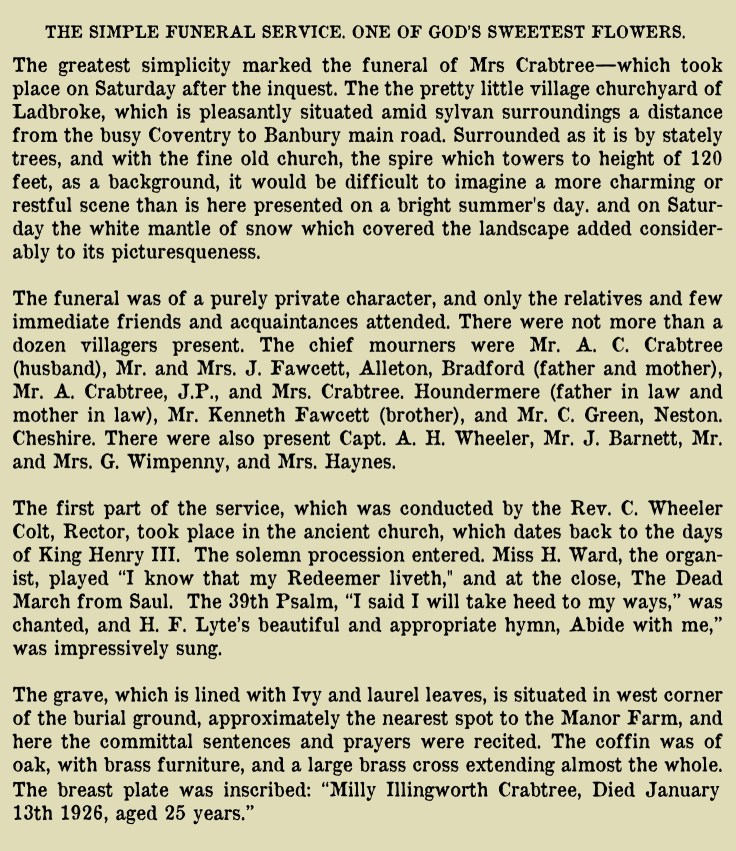
Cecil Crabtree was contacted and returned as fast as he could, in a state of understandable shock. There was little doubt who was responsible for his wife’s murder, and once the inquest had been comcluded, she was buried in Ladbroke churchyard on a snowy winter afternoon. The report in The Rugby Advertiser of Friday 22nd January was heartfelt:

Funeral report

Milly

IN PART TWO – Trial, motive – and justice

THE DUBLIN RAILWAY MURDER . . . Between the covers

drm header018

It is a November evening in 1856, and we are in Galway, the city on the west coast of Ireland. A mail train is due to leave to cross the country to Dublin, a distance of some 125 miles. On its way, the train will call at many stations, some no bigger than halts, and collect cash boxes containing the day’s takings. These boxes will, eventually, find their way into an office in Dublin’s Broadstone Station, the headquarters of the Midland Great Western Railway Company. Thee cash boxes will be emptied, the cash counted and the sums entered into the ledgers by 42 year-old George Little, the chief cashier.

Little was a modest man of good education, but the cruelties of fate had left him the sole provider for four widows – his mother, his aunt and his sister. His diligence, attention to detail and willingness to work whatever hours it took to get the job done had endeared him to his superiors, and he was highly thought of – if not lavishly well paid. Little was known to stay after hours if there was a particularly large amount of money to deal with, but was always at work on the dot the next morning.

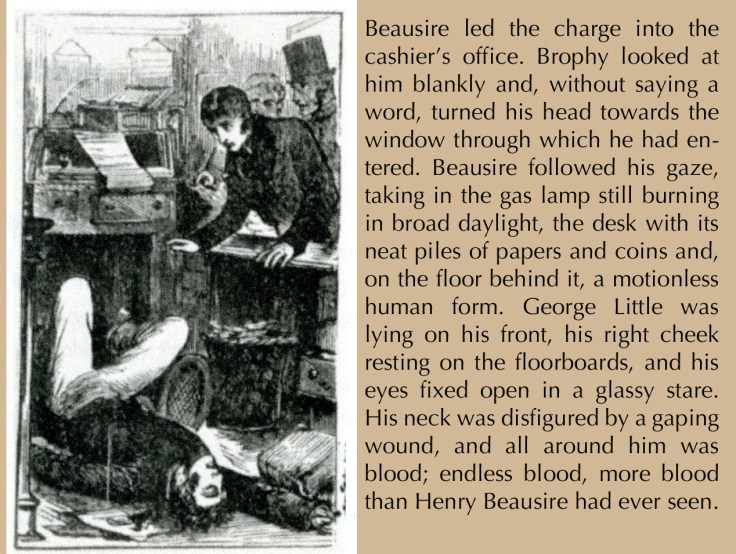
It was lunchtime on Friday 14th November before anyone suspected that something might be wrong; Little’s sister, Kate, had come to the station to ask after her brother, who had not come home the previous evening. His office, however, is locked. When the worthies of the MGWR eventually manage to break in to George Little’s office, they are faced with a scene from hell.


DRM body text

What follows is a classic locked room mystery as the police hunt for the killer of George Little.  Even establishing a motive is a puzzle, as most of the money George had been counting was still there in various piles on his office table. The initial investigation is lead by three Dublin detectives – Acting Inspector Daniel Ryan and his two subordinates, Sergeants Craven and Murphy. Try as they might, their enquiries uncover more questions than answers, and Superintended Augusts Dye is brought in to head up the hunt for the killer.

drm engine019 copy

Days, weeks and then months go by. Suspects come and go, and are released for lack of evidence and motive. Fast forward now to Wednesday 24th June 1857. Crown Solicitor Thomas Kemmis, who had initially been involved with the murder investigation was working from home – a handsome house in Kildare Street, Dublin. A servant announces that he has a visitor, and a middle aged woman is shown into the room. She is Mary Spollin, and she has an astonishing piece of news. She tells Kemmis that her husband James – a local painter and handyman – is the murderer of George LIttle. Her evidence is clear and damning, and James Spollin is arrested.

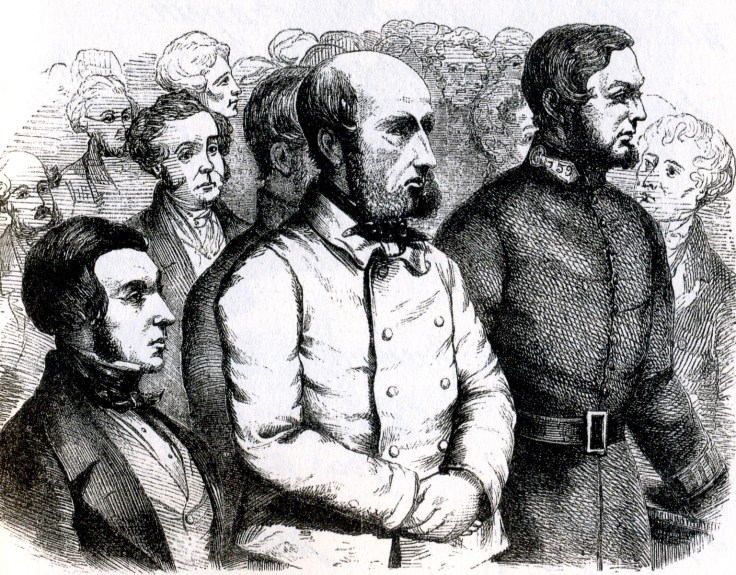
There is a problem, however, for the legal team. Under the law, a wife is not allowed to give evidence against her husband in a criminal trial unless she herself is the victim. It also becomes abundantly clear that the relationship between James and Mary Spollin is, to put it bluntly, a poisonous one. When Spollin’s trial, presided over by Lord Chief Justice Thomas Langlois Lefroy and Chief Justice James Henry Monahan, the accused man’s defence team are not slow to capitalise on this. A contemporary engraving (below) shows Spollin in the dock.

drm spollin021

On Tuesday 11th August 1857, shortly after 4.00pm, the jury in the trial of James Spollin returned to the courtroom, having reached their verdict.
“Mr Alley, the clerk of the court, called out the names of the jurors to check they were all present.
When he was satisfied, he asked, ‘Gentlemen of the jury, do you agree on your verdict?’
‘Yes,’ said the foreman, handing him a piece of paper.
James Spollin had risen from his seat in the dock and leant uneasily on the railing in front of him. Mr Alley unfolded the slip and examined its contents carefully. The courtroom remained in breathless silence as he lifted his eyes and  announced in a sonorous voice:
‘You say James Spollin is not guilty.'”
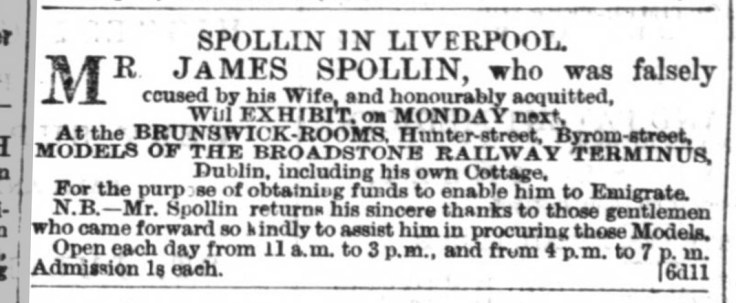
Spollin Liverpool

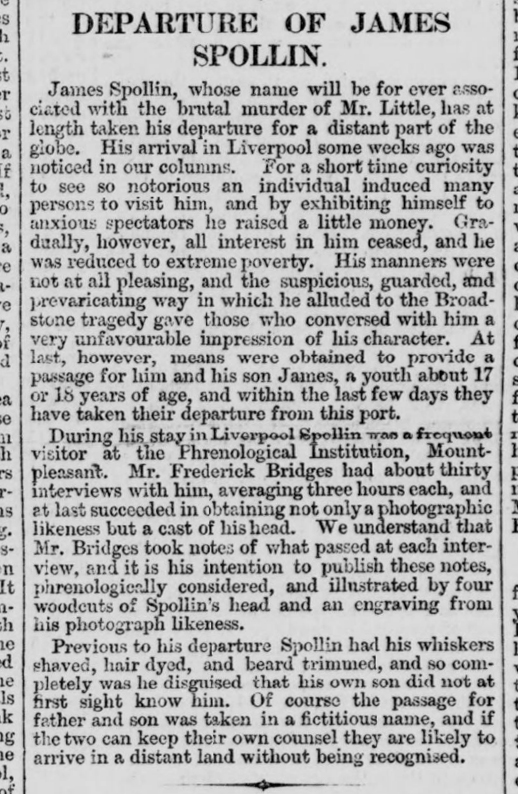
Astonishingly, James Spollin went on to capitalise on his notoriety by going on tour with a kind of celebrity show, which included, among other exhibits, a scale model of the scene of the crime. He then emigrated to America. Author Thomas Morris has written a book which brings Victorian Dublin to life, and he written as erudite, well researched and entertaining a True Crime story as you could wish to read. It is published by Harvill Secker and is out now.

Spollin departure

HORROR IN HOLLY STREET . . . A shocking murder in 1901 Leamington (3)

HIHS HEADER

SO FAR – Bessie Lockyer has been sentenced for committing murder while insane. She virtually decapitated her baby son with her husband’s cut-throat razor, and has been sent to Broadmoor. Normally, with these true crime cases, that is the end of the matter, and the killers invariably die in captivity, either by their own hand or other illnesses. Here, though we have something of a turn up for the books. I found a record listing a number of prisoners detained in mental institutions. There are four columns at the right hand side of the page, and they are headed Recovd. (recovered) Reld. (released) Not impd (?) and Died. Against Bessie Lockyer’s name there is written 4th September ’04, and a tick in the Recovd. column.

Broadmoor

‘Recovered’, just three years after murdering her baby? I thought there must be an error, but looked for the Lockyers in the 1911 census. Astonishingly, Bessie and Thomas were reunited and living at 6,Park Drive, Ilkeston, Derbyshire. Not only that, they had two young children, Stanley Walter Lockyer, aged 5 and born in Fulham, and Edward Norman Lockyer, aged 1 and born there in Ilkeston.

Ilkeston 1911
Redemption is not something often found in these stories, but it seems to have happened here. What became of the family after that is not so clear. There is a Bessie Lockyer recorded as dying in Spen Valley, Yorkshire in 1949 at the age of 74, and also a Stanley W Lockyer dying in the same district in 1968, at the age of 62. Both of these records fit what we know of the family. As for Thomas, there is little certainty about what happened to him. Searching the 1939 register proved fruitless.

All we can be thankful for is that Thomas and Bessie Lockyer had the chance to rebuild their lives together – and took it –  after that terrible morning in Holly Street, back in September 1901.

A CHAPTER OF HORRORS . . . A tragedy from 1890 (3)

ACOH header3

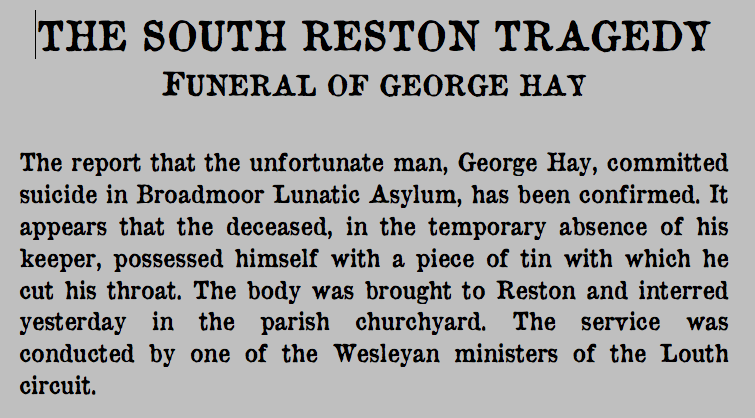
SO FAR – George Hay, a gentleman farmer from South Reston, has taken a shotgun and killed his brother-in-law, and left his young wife Louisa horrifically injured, and clinging to life by a thread. He is in police custody in nearby Alford. It is 25th May, 1890.

There were no backlogs of court cases in rural Lincolnshire back in the 1890s. Later on the Saturday after his appalling crimes had been discovered, George Hay was before the magistrate in Alford, charged with murder and attempted murder. He had tried to injure himself while in custody, and had been strapped to a chair to prevent such an occurrence. He was, of course, remanded in custody to await trial at Lincoln Assizes in July.

The other integral part of the justice system in the case of violent death is the Coroner’s Inquest. This was convened in South Reston on Monday 26th May and was presided over by Mr Frederick Sharpley. What was going to be a melancholy affair anyway was made more dramatic by the announcement that Louisa Hay had died. Not only that, but she had died while giving birth.

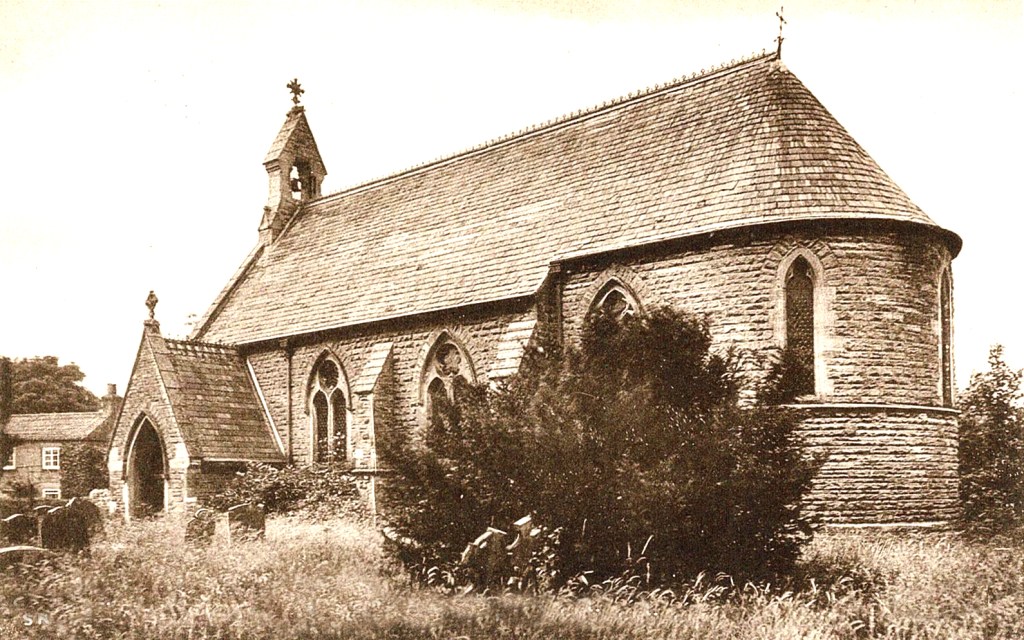
I have called this story A Chapter of Horrors, with good reason. The very thought of that poor woman – just 22 years old – having suffered horrific injuries but  then having to go through the trauma of childbirth just hours afterwards is truly appalling. She was buried in South Reston Graveyard on 28th May. The church of St Edith has long since been demolished.It is pictured below. (photo courtesy of Louth Museum)

The Hay family has a corner of the graveyard (below), and members of the family were interred as recently as the 1960s, but the gravestones are terribly weathered. I could not locate Louisa’s grave, but we can assume that she lies among her family. One can only hope that she found more peace in heaven than she did on that terrible night in May 1890.

It seems that George Hay had suspected Louisa of having an affair with a young man from a nearby village. This seems to be another of his delusions, because the young man, named Banks – and members of his family – appeared at Lincoln Assizes in July 1980 to testify that there was nothing between the pair. At the Assizes trial he was, obviously, found guilty of a double murder, but there was no doubt in the minds of the judge and the jury that George Hay was insane. He was sentenced to be detained “at Her Majesty’s pleasure.” There was to be one final, brutal twist to this terrible saga. On Thursday 14th August 1890, the Hull Daily Mail reported:

Blog at WordPress.com.

Up ↑