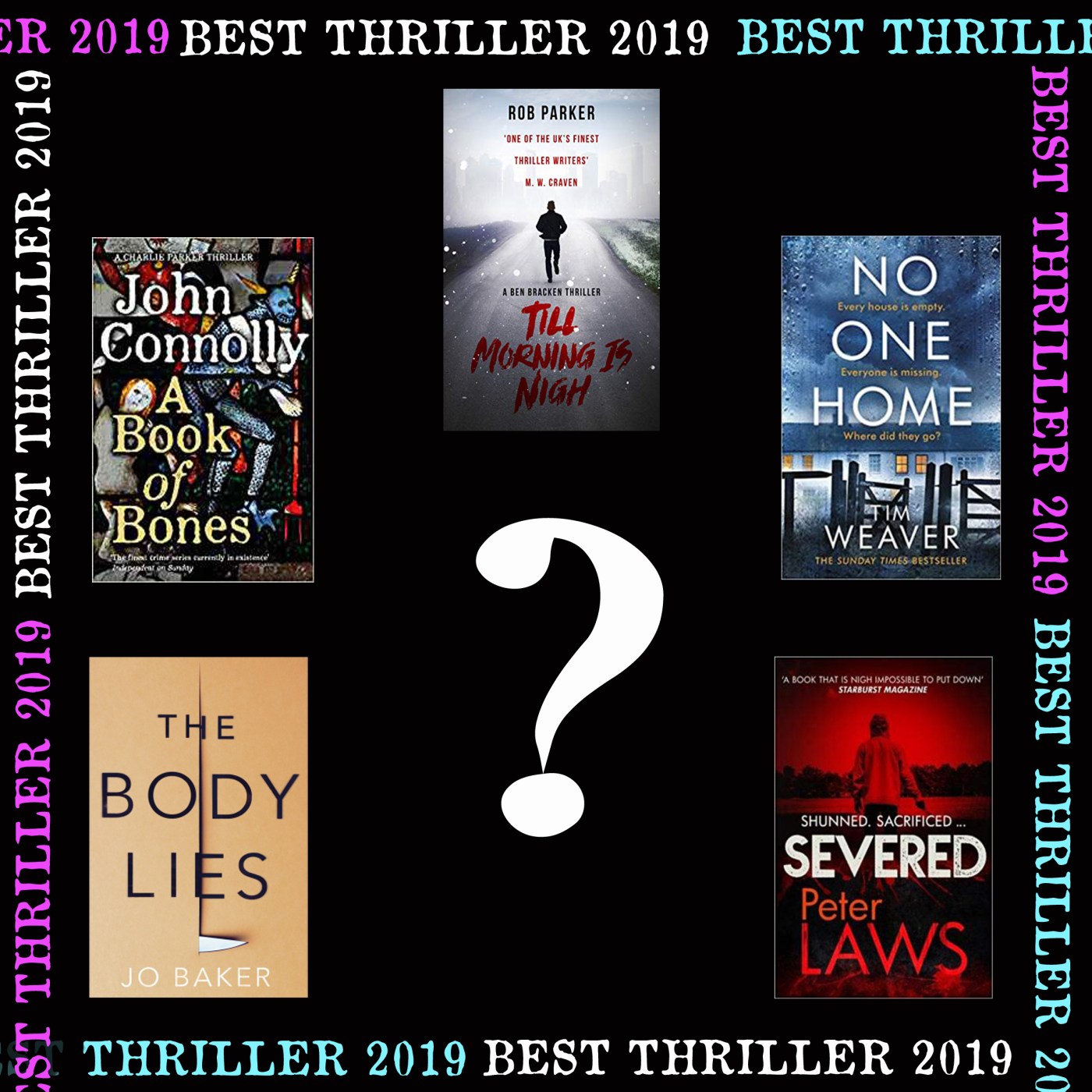

In the dear, dead days beyond recall, when I was still working as a teacher – casting (as a friend once memorably said) artificial pearls before real swine – someone suggested we apply the WILF principle when explaining to sullen teenagers how to improve their work. WILF stood for What I’m Looking For. Applying the WILF principle to what constitutes a thriller, I would suggest a mixture of the following: severe personal stress, violence, unexplained events, evil masquerading as benevolence, mysterious threats – feel free to add your own criteria, but those will do for me. Click the links to read a full review of each novel.
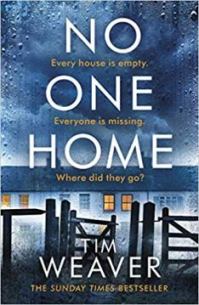 Tim Weaver’s intrepid searcher for the physically lost, David Raker, faced his hardest challenge yet in No One Home when he was hired to find not merely a missing husband or a disappeared friend, but an entire community, albeit a tiny moorland hamlet. As ever Tim Weaver provided a plausible solution to what seemed an impossible conundrum.
 Clergymen writing crime novels? That can only mean cosy village mysteries centred around tweedy villages and eccentric old ladies, surely? Not if Peter Laws has his way. He is a minister in the Baptist Church in Bedforshire, but his Matthew Hunter novels are dark, scary and blood-spattered. In Severed, Hunter encounters a reclusive sect whose primitive and baleful version of Christianity has left a trail of death and disruption.
 Ben Bracken is a Jack Reacher do-alike transported to contemporary England. Much as I have enjoyed the invincible Reacher over the years, Rob Parker has created a more thoughtful and vulnerable – at least psychologically – version in Ben Bracken, a former soldier who exists in the shady hinterland which lies between law enforcement, special services and officially-sanctioned skullduggery. Till Morning Is Nigh is the fourth in the series and is, by some way, the best yet. Our man infiltrates an extremist far-right group and contributes to a spectacular shootout at a school nativity play.
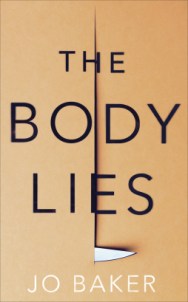 Sad to say, there is no-one more vulnerable in modern society – at least in novels – than a single mother trying to bring up her child. In The Body Lies Jo Baker takes a look at the dichotomy between fictional tropes and reality. Her unnamed protagonist is a lecturer at a minor university, separated from her husband and trying to juggle a job and childcare. Baker spins a delightfully elaborate yarn which begins when the woman is targeted by a stalker.
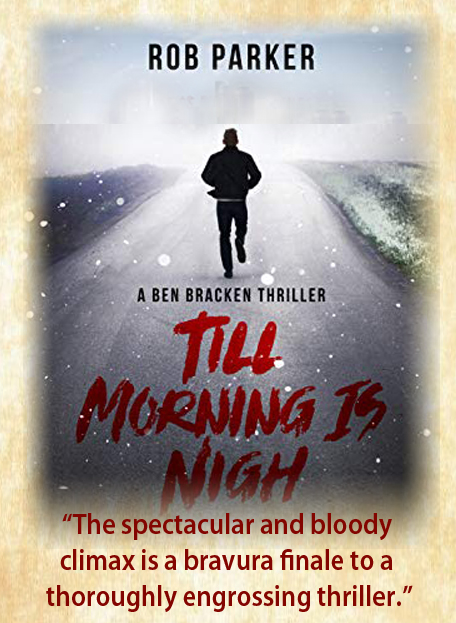

 here is an debate in the Twittersphere at this time of year about whether Die Hard is, or isn’t a Christmas movie. Maybe there is also a discussion to be had as to whether this latest adventure for Rob Parker’s invincible iron man, Ben Bracken, is a Christmas thriller. Those with young children, or fond memories of their own childhood, will surely recognise the source of the book’s title. Preface it with the words “And stay by my cradle ..” and you should have the answer.
 We are in a wintry Manchester. The time is the present. As usual, the giant plastic Santa is hoist by his breeches on the Victorian gothic façade of the town hall, dispensing silent jollity to the shoppers and merry-makers scurrying beneath his furry boots. In Albert Square, homeless men try to find solace in their threadbare coats, wondering where the next coffee, the next Greggs pasty – or the next fix of chemical oblivion – is going to come from.
 mong these sad footnotes to the tidings of comfort and joy, Ben Bracken moves, asking questions. The former soldier, imprisoned in nearby Strangeways for something he didn’t do, has escaped and now leads a perilous existence employed by a shadowy government agency who have uses for his particular skillset, which involves an immense capacity for violence and superb fieldcraft honed both in the killing fields of Afghanistan and the mean streets of Britain’s cities.
 ack in the real world for a moment, we are told by experts that the biggest terrorist threat to our society in Britain comes from right wing extremist organisations. Only a few days ago a number of men – all fans of Hitler, Breivik and other assorted homicidal lunatics – were convicted of planning terrorism via social media. The fictional group which Ben Bracken infiltrates are, however, not pimply twenty-somethings operating out of a bedroom in their mum’s house, but serious players, ex-military and financing their ambitions via the trade in hard drugs. They are well trained, armed with more than just a Facebook account, and they mean business.
 Parker is a fine young writer. He can muse ruefully on the inadequate protection the human body has against steel wielded with extreme malice:


 fullybooked2017