Search

fullybooked2017

Tag

Thriller

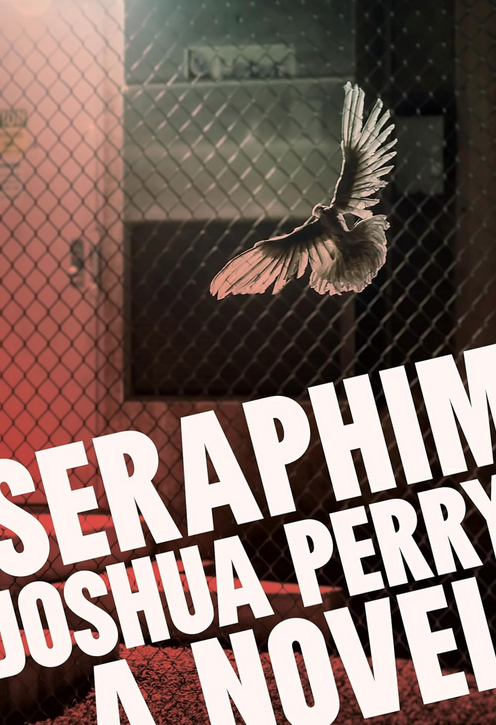
SERAPHIM . . . Between the covers

SERAPHIM HEADER

Seraphimred-winged angels which, with Cherubim, are among the first hierarchy of angels next to the throne of God. According to the Book of Isaiah in the Old Testament, they had six wings, one pair for flying, another covering the face and the third pair covering the feet.

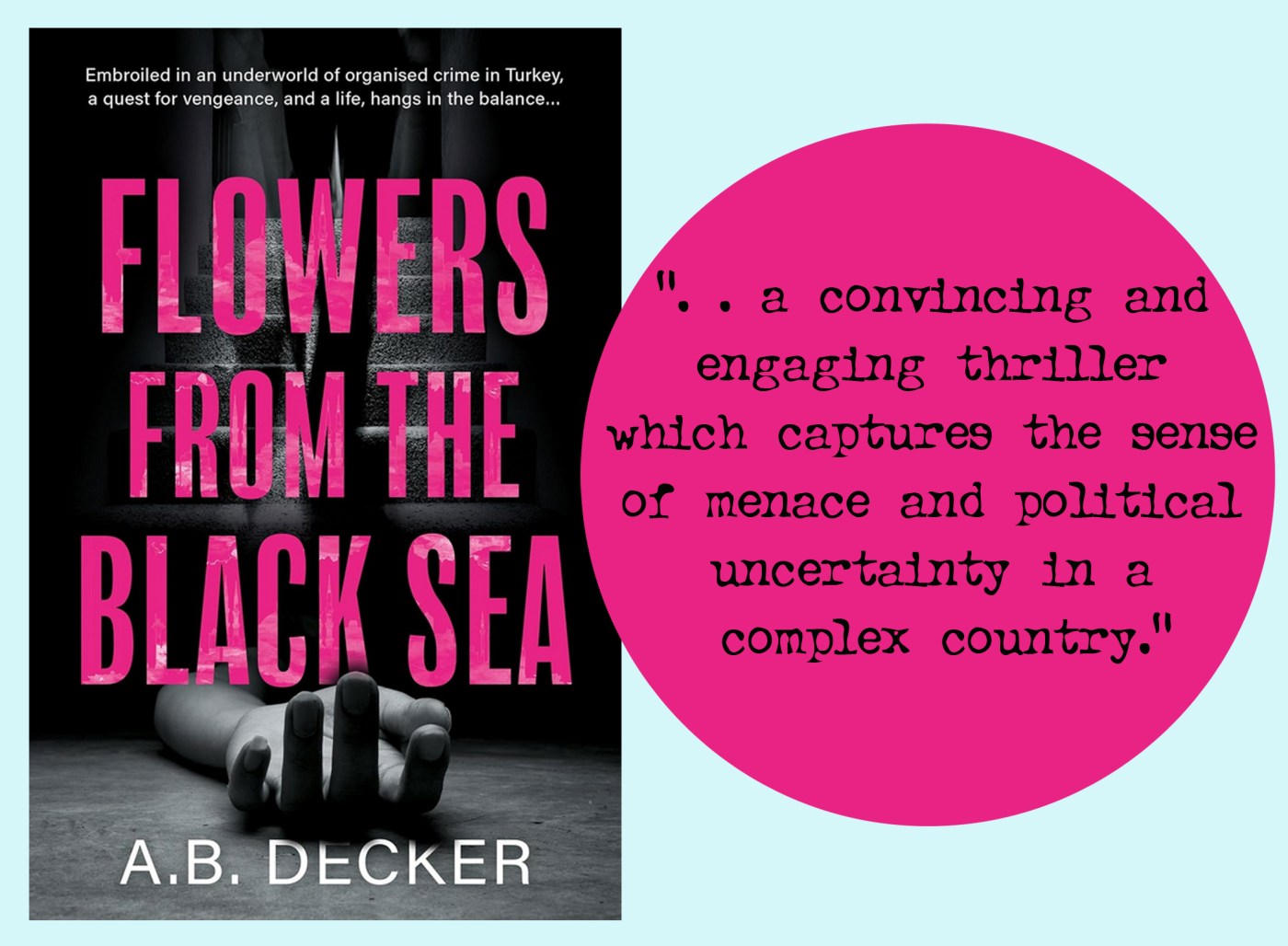
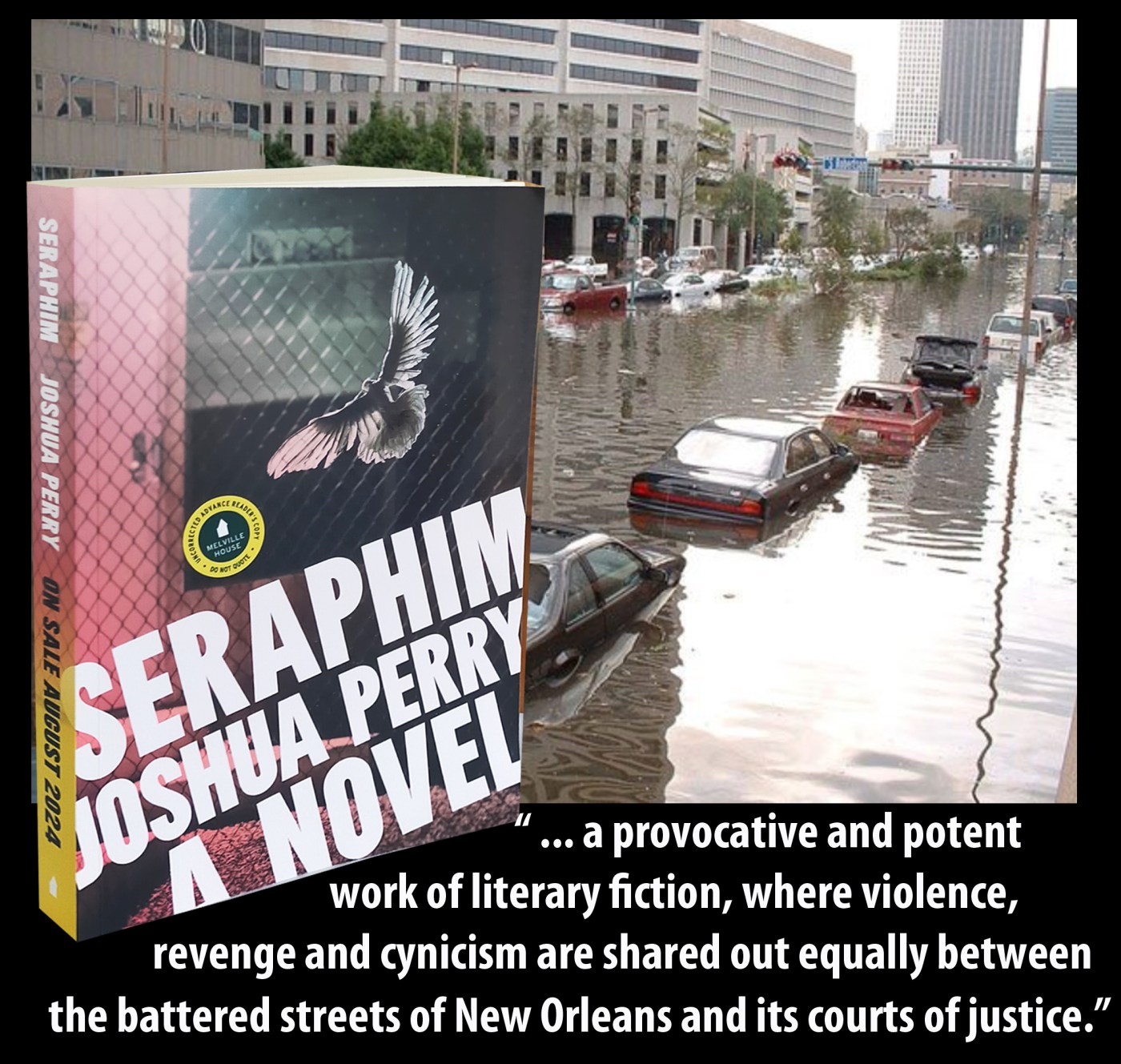
Ben Alder is a Jewish lawyer from Massachusetts, but currently working, with his partner Boris, in post Katrina New Orleans. The pair work for the Public Defender’s Office, meaning they pick  up what we in the UK call Legal Aid work. It is badly paid and they deal with people who are at the very bottom end of society. The novel deals with Ben’s attempts to save a father and son from a lifetime in jail. The father, Robert McTell is accused of burglary by going equipped with tools to steal copper pipe from a school abandoned after the destruction of Storm Katrina. His son, Robert Johnson is in much more serious trouble. He has admitted shooting dead a much loved community figure, Lillie Scott, who has been a leading light in the attempts to rehabilitate and rebuild the city after the devastation of the storm. Another savage murder, where four youngsters, were gunned down while they were listening to music in a stationary car, works its way into the story

Reviewers  of crime fiction like to put books in genre pigeon holes. If nothing else, it gives potential readers a heads-up about the content and style of a novel. After all, there are thousands of new CriFi books published every year and, for many readers, leisure time is a valuable commodity. I have to say that Seraphim refuses to be categorised. The closest I can get is to call it literary crime fiction. Despite the blurbs, it certainly isn’t a legal thriller. There are no tense courtroom exchanges between defenders and prosecutors. The world Ben Alder inhabits is a dystopia of broken lives, broken homes and broken promises, fogged in a miasma of disillusionment, cynicism and expediency.

One commodity that is notable for its absence in the criminal justice world of New Orleans is truth. Everyone, from the judge down, through legal counsel to the men shackled in cells –  lies. Habitually and constantly. The prisoners don’t deal in truth, because experience tells them it will bring only pain. The lawyers’ version of truth is to put a story together that a jury might possibly believe, and this tale can be many miles away from what actually happened.

The timeline of the novel needs you to pay attention. Some sections are the here and now, while others are pre-Katrina. Other events take place far away from New Orleans in places like Memphis, where the homeless are temporarily re-homed. Neither Ben nor readers of this powerful novel ever do find out who shot Lillie Scott. There was certainly another boy, Willard, present on that fateful evening, but in spite of Ben’s elaborate narrative – designed to be told in court – that Willard was smaller and much more clever, and Robert was clinging to him as his only friend, the ‘truth’ never emerges. This, of course, is entirely in keeping with the premise of the novel, which is basically that there is no such thing as truth. Ben, shyly homosexual, even invents two mythical sons so that he can throw them into conversations to boost rapport with his clients.

The narrative is shot through with grim poetry, sonnets of death, rejection and betrayal. Despite not being a devoted Jew, Ben’s upbringing and education make the symbolism of the Hebrew bible very important to him, hence the title of the book. Seraphim is a provocative and potent work of literary fiction, where violence, revenge and cynicism are shared out equally between the battered streets of New Orleans and its courts of justice. Published by Melville House, it is available now.

Screen Shot 2024-08-01 at 20.03.46

FIRE AND BONES . . . Between the covers

FAB SPINE066 copy

Screen Shot 2024-07-13 at 20.24.17To use a cricketing term, the Dr Temperance Brennan book series by Kathy Reichs (left) is 24 not out, and still looking good. The series featuring the forensic anthropologist began with Déjà Dead in 1997. For anyone new to the novels, I’ll just direct you here for background information. Tempe (her preferred nickname) is in her Charlotte NC autopsy room and has just finished one of her trademark investigations into long-dead human remains. She is planning a few days away with her long-time boyfriend, Quebec cop Andrew Ryan, but when she gets home, she has a series of ‘phone calls  which persuade her to drive to Washington DC to help with the investigation of a fatal fire in an old house in Foggy Bottom.

The Victorian property had been most recently used as a low rent boarding house, and amid the devastation, there are four dead bodies, all victims of the fire. When part of the ground floor gives way under the weight of one of the fire officers, a hidden cellar full of alcoves and passages is revealed, and it is in one of the chambers that Tempe discovers another corpse tied inside a burlap sack. While the charred remains of the four fire victims are quickly identified, the corpse in the burlap bag is more mysterious. The body is that of a woman, small and slender, but how long she had been in that bag, in that cellar is more problematic. Via one of those nerdish experts who specialise in arcane knowledge, Tempe learns that the sack in which the victim was confined probably dates from the late 1940s.

Screen Shot 2024-07-13 at 19.53.48

Tempe, with the help of a TV reporter called Ivy Doyle, learns that the reason for the fire may be connected to a group of hoodlums back in the prohibition era. The Foggy Bottom Gang. The ringleaders were Leo, Emmitt, and Charles “Rags” Warring, who had worked as laborers in their father’s barrel shop. When the (illegal) booze started flowing, all three quickly got caught up in the wild and sometimes violent underworld of Washington, D.C. But what is the connection between events decades ago and modern day Washington DC? Eventually, Tempe finds out the truth, and it reinforces the old adage about revenge being a dish best served cold and, in this case, slow.

The book rattles along at breakneck speed, and Tempe Brennan is her usual sassy, quick-thinking self, a persona that Kathy Reich’s millions of readers have come to know and love over the 27 years since Tempe first appeared. Thy narrative style is unmistakably and uniquely American – slick, witty, and sharp as a tack. It won’t appeal to readers who like gentle cosy crime mysteries set in idyllic British locations, but it is a testament to its style and commercial appeal that a TV series based on the books ran from September 13, 2005, concluding on March 28, 2017, airing for 246 episodes over 12 seasons. 

Fire and Bones is gripping and addictively readable, despite the fact that  – like books in other long-running American series by writers like Jonathan Kellerman, James Patterson and Harlan Coben – it is formulaic. The formula works, readers love it, so you will hear no complaints from me. It is published by Simon & Schuster, and is out today, 1st August.

Screen Shot 2024-07-13 at 20.20.13

IMPOSTER SYNDROME . . . Between the covers

imposter spine064 copy

Joseph Knox made his name with a deadly dark trilogy of police procedural novels featuring Manchester copper Aidan Waits (click to read the reviews) and followed these with the standalone True Crime Story. His latest novel takes a leaf out of the book of Josephine Tey, whose novel  Brat Farrar (1949) many consider to be her finest work. That novel was inspired by a real case, known as The Tichborne Claimant, where a New South Wales butcher claimed that he was Roger Tichborne, heir to a huge fortune, but who  was supposed to have perished in a shipwreck. The butcher, Arthur Orton, was eventually found guilty of fraud in 1874 and given a long jail sentence.

Here, we meet Lynch, a young English conman. He flies out of Paris, with only the cheap suit he is standing up in, with no money, no prospects and only the bitter memory of his latest failed venture on his mind. En route, he meets a milfy heiress called Bobbie Pierce who mistakes him for her long lost brother, Heydon. Lynch immediately corrects her mistake, but is intrigued. Heydon is assumed to be dead. No trace of him has been found since his abandoned car was found on a Thames bridge five years earlier. Bobbie is something a ship foundering on storm tossed rocks, as she is on her way to yet another expensive bout of rehab in the States. She sends him a text message which contains the key codes to her parents’ house, and suggests that, as he is broke and pretty much down and out, he might find plenty of valuable items in the house to relieve his immediate Micawberish state.

Lynch, as much out of curiosity as anything else, goes to the house but, once inside, he is detained by security men. He then meets Miranda Pierce, the family matriarch and former film star, and Bobbie’s sister Reagan. Lynch makes no claim to be the missing Heydon, but Miranda has a use for him. Just before he disappeared, Heydon Lynch borrowed money from a loan shark called Bagwan, and left a case containing family items as security. Badwan has contacted the family, calling in the loan – now greatly inflated. Miranda and Reagan want Lynch, posing as  Heydon, to meet Badwan, pay him off, and recover the  case.

The case is recovered, and one of the things it contains is Heydon’s phone. Through what it contains, Lynch learns two things: one, Heydon Pierce was convinced he was being targeted by some shadowy organisation; two, he had become involved with a man calling himself Vincent Control, basically a conman trying to lure gullible people into a crypto currency scam. Lynch confronts Control and learns that there was, indeed, some dark security agency involved, but their conversation is interrupted by a masked gunman. Control is shot dead, but Lynch escapes.

At this point, half way through the book, I did ask myself why Lynch didn’t just disappear. He now has plenty of money, having being richly rewarded by Miranda Pierce, so why not simply get away, maybe fly back to Paris on his forged passport, and use his new-found wealth to fund another project designed to separate fools from their money? He then sets out his reasons. He has discovered that he is dealing with some very powerful and resourceful people who, he figures, will be able to find him and settle scores wherever he goes, and however long it takes.

The plot is of Chandleresque complexity, as Lynch ducks and dives  between various encounters which prove fatal for some of the characters. He suspects first one person, and then another, as he tries to find exactly why he was hired in the first place, and what actually happened to Haydon Pierce. The truth is only revealed to him (and us) in the final pages of the book.

This is a clever, tense and nervy thriller, which dwells on betrayal and the pernicious effect that the misuse of digital communications and media can have on human lives. Lynch is a long way from being an admirable character, but his street-smarts and survivalist instincts are straight out of the How To Be A Conman instruction manual.. Imposter Syndrome was published by Doubleday on 11th July.

CALICO . . . Between the covers

calico spine063 copy

Lee Goldberg baits the hook irresistibly within the first few pages of this novel. Disgraced former LAPD cop Beth McDade has been exiled to the desert wastes of Barstow, on edge of the Mojave Desert. She attends what seems to be a routine road death- pedestrian collides with motor home, only one winner – but the autopsy on the victim is astonishing. He was wearing jeans that hadn’t been made that way since the 1880s. What remains of his dental fillings reveal an amalgam not used in decades. His tobacco tin isn’t just repro. It is original, and contains tobacco not produced commercially since the end of the nineteenth century.

Things become even more baffling when a construction company doing groundwork for a new development unearth an old coffin containing equally old bones. Beth finds her ultra rational mindset severely challenged when the bones are dated to the early 20th century, but contain titanium implants only available to surgeons in more recent times. She then receives a visit from a former LA colleague (and lover) who is  on a missing persons case. He is looking for Owen Slader, a very 21st century social media personality and chef,who was last seen filling up his car with gas on the way to visit his daughter.

There are two parallel narratives, one being that of present day Beth McDade, and the other being the views and experiences of Owen Slader. On that February night he was engulfed by what appears to be a lightning storm and, when he recovers his senses, the freeway no longer exists, and he is stranded near the primitive and rumbustious silver mining settlement of Calico. And it is 1882. Slader hides his hired Mercedes in a cave, rigs up a solar battery charger to power his iPhone and, using his 21st century culinary skills, caries out a profitable life for himself cooking up delicacies for the hungry miners of Calico. He meets – and marries another refugee from another time, a woman called Wendy, but she was ‘taken’ by the Time Gods a couple of decades earlier than Slader. This is when the complexities and total unknowables of the time travel concept begin to cause brain hurt, and the obvious questions like the one below, can never be answered:
“If stamps on the titanium implants found in the bones within the ancient coffin identify the recipient as Owen Slader who, identifying as Ben Cartwright (1960s TV Western reference!), died in the early 1900s, how did he then father a daughter in the early decades of the 21st century?”

The author certainly has fun with some of the more bizarre aspects of being a time traveller. He has Ben Cartwright buying copies of new novels by writers like Mark Twain and Robert Louis Stevenson knowing that (as first editions) they will become immensely valuable decades ahead. When a cholera epidemic hits Calico, Cartwright, nursing the town judge in what seems to be his final fevered moments, takes out his iPhone and plays the dying man some music. Problem is, the judge doesn’t die, and when he recovers he goes around loudly humming ‘Somewhere Over The Rainbow.’

Meanwhile, Beth McDade struggles to reconcile facts that are, at the same time, impossible but also incontrovertible. She even finds, boarded up in a cave, the 2019 rental that Owen Slader was driving when he disappeared. It is, needless to say, improbably decayed and weathered given that it can only have been there a matter of months. Eventually, our heroine tackles – and bests –  the FBI and the implacable American military machine.

Lee Goldberg’s audacious plot and premise will not be for everyone, particularly those who think that Hamlet’s famous remark to Horatio was just the rambling of a confused and conflicted young man. Of course, time travel novels are nothing new, and Goldberg does nod in homage to the grand-daddy of the genre, Herbert George Wells, but also develops the ‘stepping on a butterfly’ trope that began with Ray Bradbury’s 1952 short story ‘A Sound of Thunder’. Key question, though. Does Lee Goldberg’s book work? Of course it does. The writer is also an experienced screenwriter, producer and TV executive, far too well versed in his trade to stretch  the credulity of his readers and viewers to beyond breaking point. Calico is immensely entertaining, with a runaway-train narrative drive. Published by Severn House, it came out in hardback and Kindlle in November 2023 and this paperback edition was published on 4th July.

Screen Shot 2024-06-28 at 21.01.23

RESOLUTION . . . Between the covers

iresolution spine062 copy

Edinburgh copper Ray Lennox last appeared a couple of years ago in The Long Knives. Now, he has quit the  force and, given his predilections, is in a strange place on what might be thought foreign soil – England’s south coast, a partner in a security firm based in Horsham, with his customer base ranging from the gay green madness of Brighton, to the villas of Eastbourne, where the silence is only punctuated by the quiet hum of wheelchair tyres and the creak of zimmer frames.

His business partner is  George Marsden, in some ways the antithesis of Lennox, in that he is English public school, suave, urbane, and speaks the esoteric language of the English middle classes. He is no man’s dupe, however, as we are given hints that he once served with the Special Boat Service.

Lennox is deeply in lust with a local chemistry lecturer, Carmel Devereux, some years his junior, and it is at a meet and greet party with potential wealthy sponsors of her research, that he is staggered to see the face of Mathew Cardingworth, a character from wounding nightmares. In an Edinburgh underpass, all those years ago, Cardingworth was one of a gang that captured Lennox and his teenage mate Les Brodie, and subjected them to grim sexual and physical abuse.

Fantasising about getting even with Cardingworth, Lennox actually meets him socially and then makes the error of accepting Cardingworth’s offer of a couple of tickets for the executive box at Brighton’s next Premiership home game against Liverpool. An even worse mistake is inviting Les Brodie down from Scotland, standing him the air fare as a treat. Whereas Lennox’s vengeance against his abuser have stayed firmly inside his head, Les Brodie is more volatile. He catches sight of Cardingworth as they drink their pints and graze at the buffet; it only takes seconds for Brodie to recognise his abuser, and he is just as quick to smash his glass on the bar counter and thrust it into Cardingworth’a face.

As his obsession with Cardingworth deepens, Lennox discovers that there is a tenuous – but intriguing link between the businessman and several youngsters who disappeared from the ‘care’ of Sussex Children’s Services. The fact that all local and national newspaper references to those years – print, microfiche and digital – have all disappeared. In another puzzle, at least for the reader, one of the non-Brighton, non-now narratives in the book is in the voice of an Englishman, perhaps a merchant seaman, who has killed a man in a Shanghai bar fight and been incarcerated sine die in a vile Chinese prison. He is clearly a deeply damaged and dangerous man, and he appears to be directing his story at Lennox, but who is he?

Lennox, as he peels back the layers of the recent past, all too late realises he is in way over his head, but with almost suicidal and terrier-like tenacity, he presses on regardless, perhaps echoing the thoughts of his famous fictional countryman, who mused:

I am in blood
Stepped in so far, that, should I wade no more,
Returning were as tedious as go o’er”

Fans of Welsh will love this, and feel at home with how the story darts back and forth between various characters, the Scottish conversational vernacular, the violence, the sex – and the grim humour. There is one wonderful example of the latter when contractors installing a new security system in a retirement home fall foul of a particularly demented resident, and all hell breaks loose. The titular resolution does not happen until the final pages of the book and it occurs, ironically, in the same care home where the contractors came so comically to grief. The violence is gloriously excessive, and none of it – despite the cover image – involves anything so clean and crisp as a handgun. You can take your pick from acid attacks, being dismembered by a sabre, facial surgery via a beer glass, poisoned wine, inhalation of liquid concrete and being hurled through a a high window. Resolution is published by Jonathan Cape and will be out on 11th July.

Screen Shot 2024-06-25 at 19.13.06

REDEMPTION . . . Between the covers

Redemption header

Young Joshua Moore loved rabbits and hares. He had pestered his mom and dad – Evelyn and Tobias – for a pet, and so they bought him a white rabbit. The family had only just moved from London to San Diego, and the rabbit in its hutch mesmerised the nine year old boy. Reluctantly, because they were only just finding their USA feet, Evelyn and Tobias allowed Joshua to go away on a school camp in the nearby desert. On arriving, Joshua had seen a desert hare and, as darkness fell, it appeared again in the moonlight. Chasing it to get a closer look, and running across the highway, Joshua was struck by a car and killed instantly. The driver of the car didn’t stop.

Evelyn spends the next eleven years brooding over her son’s death, and plotting revenge. We get an early indicator which reveals her mindset:

“I spent a whole month in bed after the funeral, listening to the rabbit we’d bought for him hopping around in its hutch on the other side of the window. The rustling of the sawdust. The chomping and crunching of the vegetables. I lay there for a month loathing it, it’s mere existence feeding my rage until it was a living, breathing thing, for bigger and stronger than me. When I finally got out of bed, the first the thing I did was stride towards that hutch and snap the rabbits neck. It never did get a name.”

Driving the car was Aaron Alexander. a young, gay, drug-addicted drifter. He was traced, tried, and jailed. Now, eleven years later, he is out of prison, and scratching a living as a pump attendant at a gas station in Beatty, Nevada. Evelyn, with Tobias a reluctant passenger, gets in the car and heads for Nevada. Among minimal clothes changes and toiletries in her bag are a handgun, boxes of ammunition, rope, duct tape and a black canvas roll containing every variety of butchers’ knife. The relationship between Evelyn and Tobias has long since soured. She cannot bear his touch, and yet he clings on desperately, hoping she will someday emerge from her frozen state.

At the motel where they rest up for that first night, Evelyn does what she had obviously been planning for ages. While Tobias sleeps, she takes his wallet, cards, phone and shoes, and drives off into the early dawn. The remainder of the book is a hypnotic dance of death that plays out in cockroach infested motels, desolate gas stations miles from anywhere and the endless Nevada desert, where rapidly encroaching wildfires make the air sting. Very simply, Tobias is trying to get to Aaron before Evelyn can kill him, and it becomes a very bloody affair. Fans of dentist torture à la Laurence Olivier in Marathon Man mustn’t miss the scene where Evelyn, driven mad with toothache, removes the offending molar herself, with the help of a hammer, chisel and pair of pliers.

There is an ironic problem with the premise that Tobias’s main aim is to save Evelyn from herself, by stopping her from killing Aaron, because by the time they are grimly reunited,in a desolate former auto repair shop, she has already done enough damage to ensure that – always assuming that she survives – she will be put away for a very long time.

Redemption – noun, the action of saving or being saved from sin, error, or evil.

How apposite, then, is the book’s title for the three main characters? Perhaps it is for Aaron and Tobias. For sure, Aaron’s upbringing was tough, but his brother Chris survived, and it was Aaron being open about his sexual preferences which precipitated a slide into self pity and woeful lifestyle choices. By the end of the book, he has come through the firestorm of events with something akin to self-respect and moral courage. Tobias is more complex. He is the Hamlet of the piece, beset by doubt, a reluctance to act decisively and timidity in the face of Evelyn’s white hot anger. But he survives, and no-one comes out the other side of the horrific violence towards the end of the story a weaker person. Evelyn? For me, her ever increasing derangement puts her beyond any sense of redemption, but you must make up your own minds.

There was a termGrand Guignol – applied, retrospectively, to the blood-stained stage dramas of the Jacobean period and, in the twentieth century there was, in Paris, Le Théâtre du Grand-Guignol, which specialised in acting out scenes of horrific violence with spectacular special effects. Redemption certainly has elements of Grand Guignol, but it is a powerful novel which lays bare the dreadful things people will do to each other when they are – physically and emotionally – pushed beyond the limit. Published by Simon and Schuster, it is out today, 20th June.

THINK TWICE . . . Between the covers

think twice spine053 copy

A bit of back story. Myron Bolitar (read my review of an earlier book in the series HERE) is a New York sports agent who, before a career-ending knee injury, was a top basketball player. One of his bitterest rivals on the court – and in romance –  was Greg Downing. Bolitar went on to become his agent, but not before impregnating Downing’s soon-to-be wife Emily, a young woman they had fought over. The resultant child, Jeremy, now a serving soldier, was brought up to be the Downings’ son. Citing psychological problems, Downing retired from sport, and went to the Far East to “find himself”. He never returned, but his death was announced, and his ashes returned to the USA. Bolitar, being a decent man and putting past grievances to one side, gave the eulogy at his memorial service.

Understandably, Bolitar’s jaw drops when two FBI agents enter his office, and tell him that Downing’s DNA has been found at a recent murder scene. We know from the very start of the book that someone is very good at committing murder and putting someone else in the frame by acquiring their DNA via, say, a hairbrush or a used tissue, and leaving it at the scene of the crime. To say more would be to spoil the fun, but all I will say is that readers should not make assumptions. Across New York and its suburbs, people are looking at serious jail time for crimes we know they didn’t commit but, strangely, as well as irrefutable forensic traces, the suspects have motive, too. Like the young woman who worked a building contract with her father, for a big developer. When that developer simply refused to pay them, citing shoddy workmanship, was she finally driven to desperation, borrowed her father’s rifle and shot the crooked developer dead?

Many fictional American investigators have a brutal sidekick who can be relied upon to dish out extreme violence from time to time. Robert B Parker’s Spenser had Hawk, John Connolly’s Charlie Parker has Louis, and Myron Bolitar has Windsor Horne Lockwood III, a billionaire playboy who loves guns – and using them. Here, he rescues Bolitar from having a toe removed by mobsters, and plays an important part at the end of the book. The relationship between Win and Myron is complex. Win is borderline psychotic, and he does things which, in his mind, are for the good, while knowing full well that Myron would not conscience such behaviour. He doesn’t utter the words, but he is thinking, “I will do this so you don’t have to.”

The plot becomes more complex page by page, and I trust it is not a spoiler to say that Greg Downing is very much alive and well. What neither Bolitar, Win, Emily, Jeremy nor we readers know is why Downing faked his death and – most importantly – with whom. The FBI involvement develops far beyond the two agents we met at the beginning of the novel, and heads right to the core leadership of the agency, but all the while, the pieces of the puzzle stubbornly refuse to fit together, until Coben creates a tense and violent conclusion played out – of all places – under the gloomy Gothic shadow of the Dakota Building on the edge of Central Park, while a busker does his unknowingly ironic stuff with John Lennon’s Imagine.

The book is trademark Harlen Coben – razor sharp East Coast dialogue, relentlessly entertaining, witty, and with enough violence to keep noir fans satisfied. The back cover blurb describes the author as a ‘Global Entertainment Brand.’ I am a bit old fashioned, and would much rather think of him as an immensely talented writer. Think Twice is published by Century and will be out on 23rd May.

THE FINE ART OF UNCANNY PREDICTION . . . Between the covers

Fine Art Spine020 copy

I must confess to not having read anything by Robert Goddard (left) for a few years. Back in the day I enjoyed his James Maxted trilogy, which comprised The Ways of the World (2013), The Corners of the Globe (2014) and The Ends of The Earth (2015), which focused on a young former RAF pilot and his involvement in the political fallout in Europe after the Versailles Conference ended in 1920. I reviewed his standalone novel Panic Room in 2018 (click the link to read what I thought), and I quickly became immersed in his latest novel The Fine Art of Uncanny Prediction. Goddard introduced his unusual Tokyo private detective Umiko Wada in The Fine Art of Invisible Detection (2021). She returns in this novel, which is intricately plotted and rather complex at times. A widow, (her husband died as a result of the 1995 Tokyo Sarin Gas attack) she was once assistant to PI Kozuto Kodaka, but since his death she has shaped the business in her own way.

The strange title refers to a Japanese urban legend, which states that an unknown woman known as the Kobe Sensitive –  predicted both the Kobe earthquake in 1995 and the tsunami which caused the Fukushima nuclear disaster 1n 2011. On both occasions she phoned the authorities, and on both occasions she was ignored, or so the story goes. The book spans over 70 years, but in three time frames – the immediate aftermath of Japan’s defeat in WW2, the 1990s and the present day. In the wreckage of 1945 Tokyo we meet Goro Rinzaki, the teenage factotum to the owner of an orphanage. After an accident in the ruins, Rinzaki allows his boss to die, but escapes with the a steel box which was locked in  the orphanage’s safe, and it is Rinzaki who sits at the centre of Goddard’s narrative web like a malevolent spider. What the box contains is integral to the story.

We then switch to the present day where Wada is engaged by businessman Fumito Nagata who wants her to make contact with his estranged son Manjiro. The 1995 time frame begins with the late Kozuto Kodaka being hired by  Terruki Jinno, millionaire chairman of Jinno Construction, to investigate the financial dealings of his recently deceased father – and founder of the company – Arinobu Jinno. If this all sounds complicated, that’s because it most certainly is, but it’s how Goddard pulls the disparate threads together that makes this such an intriguing read.

There is, almost inevitably, an American connection. Clyde Braxton was an American Army officer who was very much a ‘Mr Big’ during the post war occupation, and one of his remits was to monitor a reviving Japanese film industry. By ‘monitor’, I mean that exercised an absolute veto on the subject matter of new films. After leaving the army, he used his (probably ill-gotten) wealth to start a Californian winery, but when his family died in a catastrophic earthquake of he dedicated his time and money to the  possibility of predicting  future disasters, which is where his Japanese connections came good. One of the film-makers who prospered under his authority was none other than Goro Rinzaki. And Rinzaki believes he can offer Bryant the Kobe Sensitive.

As Wado searches for Manjiro Nagata she uncovers a conspiracy that puts her life in danger, as well as the lives of her friends and family. At every turn, both in Tokyo and California – where she goes to try to unravel the mystery – it seems that Goro Rinzaki has strings to pull and people on the inside of all major institutions – the press, the government and industry. We eventually learn what was in the steel box rescued from the ruins in 1945, but along the way Goddard entertains us with an intricate and elegant plot, with Wada – calm, resourceful and courageous – at its very centre. The book is published by Bantam and is available now.
https://www.amazon.co.uk/Fine-Art-Uncanny-Prediction-Between/dp/1787635104/ref=tmm_hrd_swatch_0?_encoding=UTF8&qid=1693469403&sr=8-1


THE WIT AND WISDOM OF BERNIE GUNTHER

PK

Over the thirty years and fourteen books of the series, Philip Kerr’s wonderful antihero Bernie Gunther was never afraid to speak his mind, both to us as readers, and often to the real-life characters – as diverse as Reinhardt Heydrich, William Somerset Maugham and Eva Peron – who peopled the stories. Sometimes he could be profound, sometimes savagely funny, but always observant. Here is a selection of his best lines.

Most of us who love great novels were aware that Philip Kerr was ill, and it was a moment of great sadness when we learned of his death in March 2018. We could not grieve in the full sense of the word. That was for his family. But we could only dream of what other adventures PK could have dreamed up for his magnificent creation, had he been granted more years. As it was, Metropolis – ironically, the book featuring Bernie at his youngest – was published posthumously. The Gunther books will be read as long as people have the desire to learn about 20thC history and the people who – for good or ill – shaped it. Also, as long as there are readers who enjoy a well-turned insult and a melancholy gaze into the human soul, Bernie Gunther will live for ever.

Blog at WordPress.com.

Up ↑